
Wholesale Handbags in Bulk: The Smart Buyer's Complete Guide
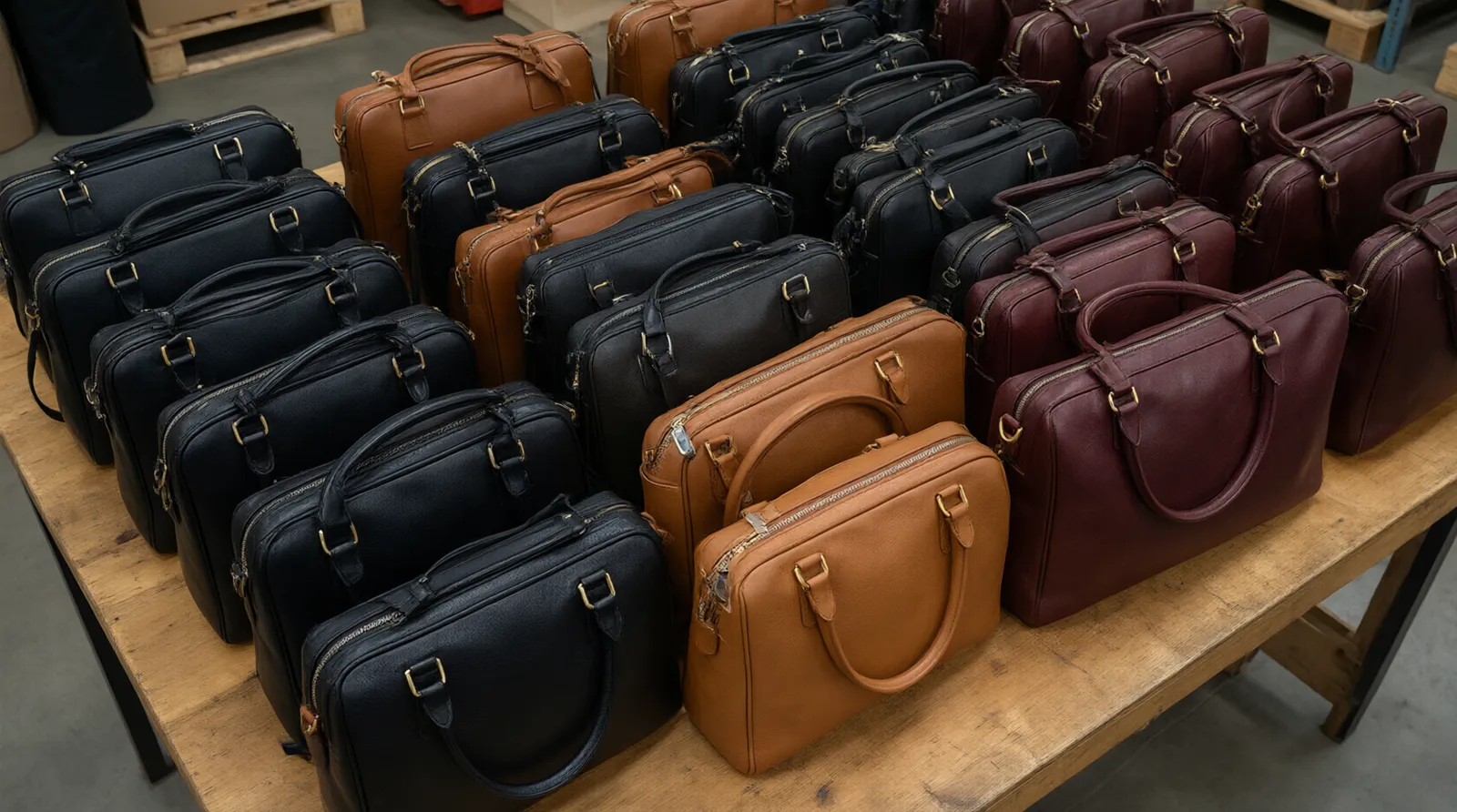
Wholesale Handbags in Bulk: The Smart Buyer's Complete Guide
Buying wholesale handbags in bulk gives retailers and importers a direct path to higher margins, consistent inventory, and stronger supplier relationships. Whether you run a DTC store, manage procurement for a boutique chain, or import accessories for regional distribution, understanding how bulk handbag sourcing works — and what separates a reliable supplier from a risky one — is the difference between a profitable product line and an expensive mistake.
This guide walks you through every stage of the process: what bulk wholesale means in practice, how to find and vet suppliers, what procurement criteria to evaluate before placing an order, and how to protect your business at every step.
Quick definition: Wholesale handbags by the bulk refers to purchasing handbags directly from manufacturers or distributors at volume-based pricing, typically with a minimum order quantity (MOQ), for the purpose of resale or retail distribution rather than personal use.
What Is Buying Wholesale Handbags in Bulk?
Wholesale handbag sourcing means purchasing directly from a manufacturer, factory-affiliated agent, or authorized distributor rather than through retail or middleman channels. The "bulk" component typically refers to meeting or exceeding a supplier's MOQ — the minimum number of units required per order, which can range from a handful of pieces to hundreds depending on the supplier's model.
There are three tiers most buyers encounter:
Factory-Direct Wholesale
You negotiate directly with the manufacturing facility. Lead times are longer, customization is possible (materials, hardware, linings, branded labels), and per-unit cost is lowest. This route suits importers and larger DTC brands that have the volume and lead time to work with production cycles.
Distributor-Level Wholesale
A distributor holds stock from multiple manufacturers and sells at modest markup over factory price. MOQs tend to be more flexible, lead times are shorter, and product variety is wider. Ideal for buyers who need ready-to-ship inventory or who are testing a new category.
Wholesale Aggregators and Marketplaces
Platforms that pool listings from many suppliers. Useful for discovery and price benchmarking, but quality verification is more difficult and supplier vetting must be done independently.
Understanding which tier fits your business model is the first decision to make before reaching out to any supplier.
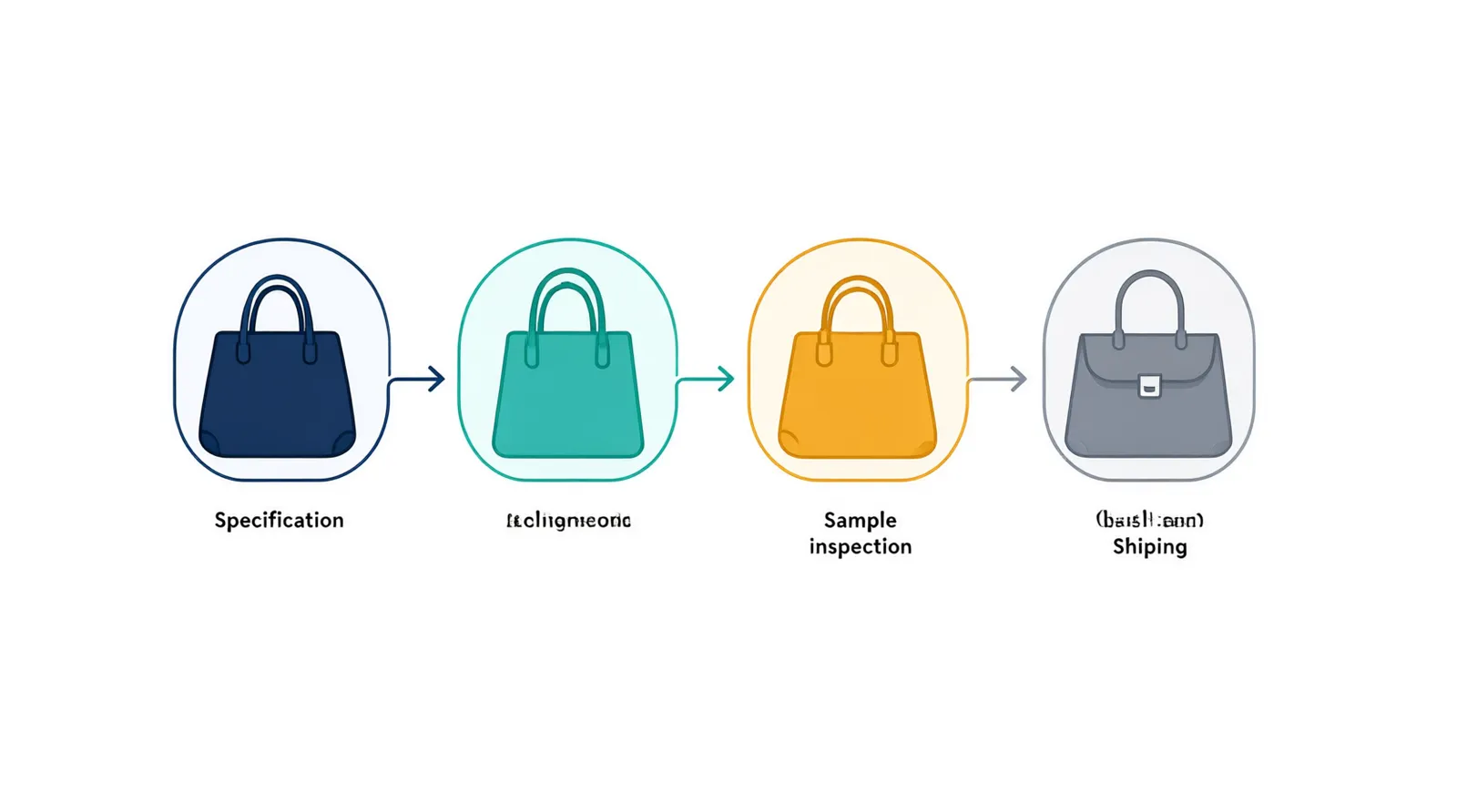
How to Source Wholesale Handbags in Bulk: A Step-by-Step Process
Sourcing bulk handbags is not a single transaction — it's a procurement cycle. Here is how experienced buyers approach it:
Step 1: Define Your Product Specification
Before contacting a single supplier, document what you actually need. Specify: material type (genuine leather, vegan leather, canvas, nylon), hardware finish (gold-tone, silver, brushed brass), dimensions (length × height × depth in cm), lining material, zipper or clasp type, strap style (fixed, adjustable, detachable), and color palette. Buyers targeting MENA markets, for instance, often prioritize gold-tone hardware and structured silhouettes — those specifications belong in your brief from day one.
Step 2: Establish Your Volume and Budget Range
Calculate realistic sell-through for your channel. Overbuying to hit a lower per-unit price is only profitable if the inventory actually moves. Set a target MOQ range you can commit to, and build in budget for freight, customs duties, and quality inspection before finalizing supplier negotiations.
Step 3: Identify and Shortlist Suppliers
Trade directories, industry exhibitions (Canton Fair, Magic Las Vegas, Premiere Classe Paris), and category-specific sourcing platforms are the primary discovery channels. Shortlist three to five suppliers that match your spec, volume, and price range. Check how long they have been operating, whether they have export experience to your target market, and whether they can provide references from existing buyers.
Step 4: Request Samples Before Committing to Bulk
Never place a bulk order without reviewing physical samples. Assess stitching consistency, hardware attachment, zipper pull quality, lining finish, and whether the product matches the photos and description. Sample cost and lead time vary — ask explicitly what both are before requesting.
Step 5: Negotiate Terms and Place the Order
Once samples are approved, negotiate: unit price at your target MOQ, payment terms (common structures include a deposit-on-order, balance-before-shipment arrangement), production lead time, packaging specifications, and any branding or labeling requirements. Get everything in writing.
Why Bulk Handbag Procurement Matters for Your Business
The most immediate reason buyers turn to wholesale handbags in bulk is unit economics. Buying at scale reduces per-unit cost, which improves gross margin at the same retail price — or creates room to compete on pricing in a crowded market without sacrificing profitability.
Beyond cost, bulk sourcing delivers supply chain consistency. When you have an established supplier relationship with agreed lead times and production standards, you can plan inventory cycles, run promotional campaigns, and fulfill larger retail or wholesale orders with confidence. Reactive, piece-by-piece purchasing creates gaps in availability that cost sales.
There's also a product differentiation argument. Buyers who source wholesale in bulk — particularly factory-direct — gain access to customization options that retail or marketplace purchasing cannot offer: proprietary colorways, branded hardware, custom dimensions, or exclusive material combinations. That differentiation matters for DTC brands trying to build a recognizable product identity.
The parallel applies across accessory categories. If you're also building out a jewelry or accessories range, the same supplier-vetting principles hold — our guide on How to Buy Jewellery Wholesale: The Smart Buyer's Complete Guide covers the evaluation framework for gemstone and metalwork sourcing in comparable depth.
When Should You Buy Handbags Wholesale in Bulk?
Bulk procurement makes sense under specific conditions — and forces the wrong outcomes when those conditions are not met.
Buy in bulk when:
- You have validated demand for the product or style through smaller test orders or sales data
- Your storage and cash flow can absorb the inventory commitment
- Your sell-through timeline is predictable enough to avoid extended carrying costs
- You are preparing for a seasonal push (pre-holiday restock, pre-summer collection) with enough lead time to receive and process goods
Hold off on bulk when:
- You are testing a new product category for the first time — start with smaller trial quantities even if the per-unit cost is higher
- Your supplier cannot produce samples that meet your quality standard — bulk will only magnify that problem
- You are still evaluating multiple suppliers — commit to bulk only after a clear preferred supplier is identified
A common mistake among first-time wholesale buyers is treating bulk volume as an automatic shortcut to lower cost without accounting for the capital tied up in unsold inventory. The margin advantage of bulk pricing disappears quickly if goods sit in a warehouse.
Key Benefits of Wholesale Handbags in Bulk
Lower Cost Per Unit
Volume purchasing is the most straightforward benefit. Suppliers price bulk orders lower per unit because they can plan production runs, reduce packaging overhead, and consolidate shipping. The per-unit savings can be material at moderate volume — though exact figures depend on the supplier, material quality, and your MOQ. Always ask for a tiered pricing sheet to understand how savings scale with volume.
Consistent Product Quality
Working with a single supplier at volume means you can establish clear quality standards, provide detailed technical specifications, and hold the supplier accountable to those standards over repeat orders. Inconsistency in handbag construction — irregular stitching, mismatched hardware, variation in leather grade — is harder to monitor when you're sourcing reactively from multiple channels.
Customization and Branding Opportunities
Most factory-direct and distributor-level suppliers offer customization at bulk volume that is not available for small orders. This includes: embossed or debossed brand marks on hardware or leather panels, custom lining prints or colors, branded dust bags and box packaging, and custom zipper pulls or buckle designs. For DTC brands, this is the fastest path to a product that looks and feels proprietary.
Stronger Supplier Relationships
Consistent bulk purchasing creates leverage in your supplier relationship — faster production slots during peak periods, priority access to new materials or styles, and more flexible payment terms over time. A supplier treats a reliable high-volume buyer differently than a one-time small order.
Streamlined Logistics
A single bulk shipment is simpler and cheaper to manage than multiple small shipments spread across weeks. Consolidation reduces freight cost per unit, simplifies customs documentation, and reduces the administrative overhead of managing multiple purchase orders.
How to Evaluate a Wholesale Handbag Supplier
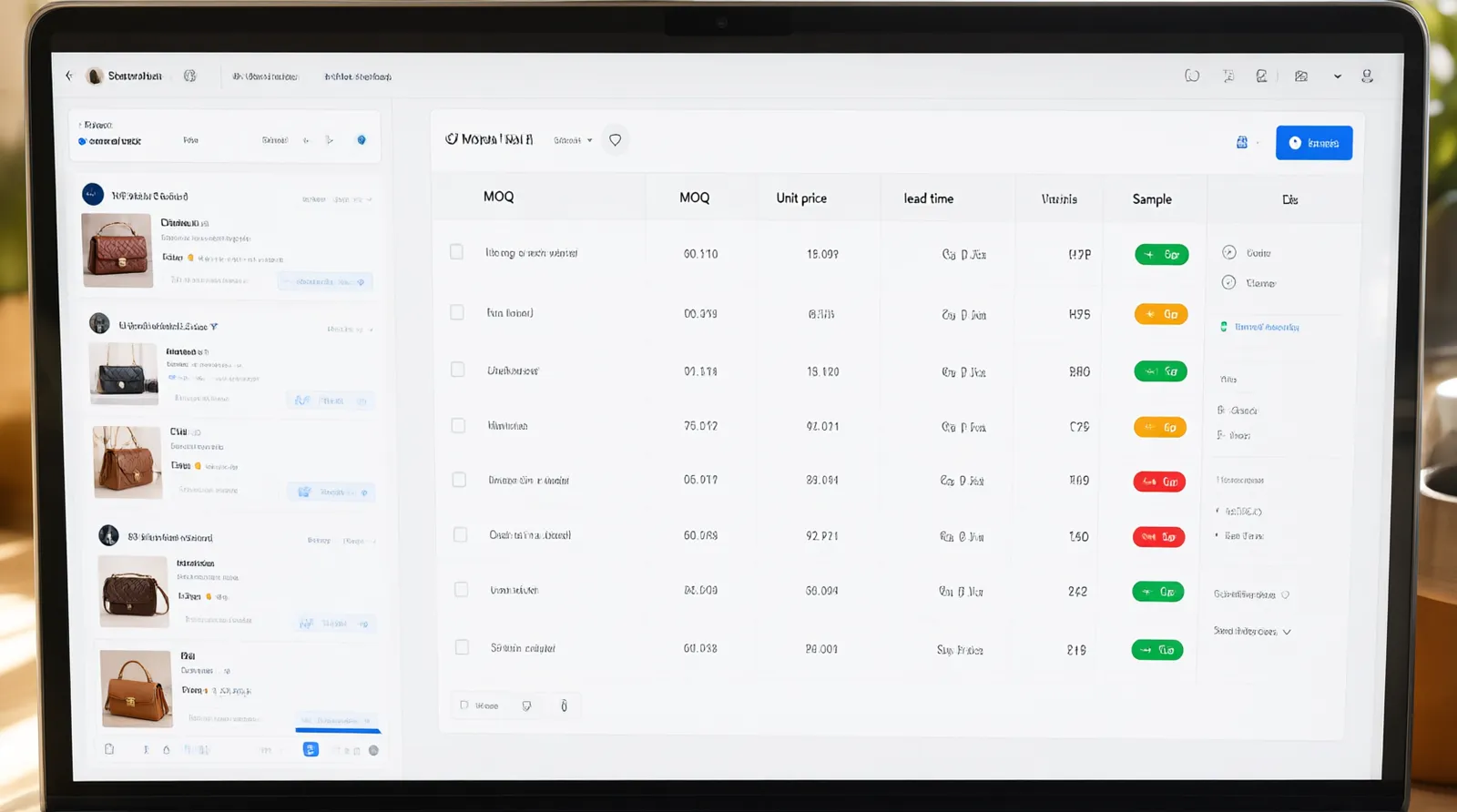
Not every supplier advertising wholesale handbags in bulk can actually deliver what they promise. Evaluation should be systematic.
Production Capacity and Lead Time
Ask specifically: what is the standard production lead time for a bulk order at your MOQ? What happens during peak seasons — does capacity shrink? Can they accommodate rush production, and at what premium? Suppliers who give vague answers on lead time are a risk to your inventory planning.
Material Sourcing and Quality Documentation
For leather or vegan leather goods, ask for material specification sheets. What tannery or material supplier do they use? What is the weight (gsm or oz per sq ft) and finish specification of the leather? For hardware, is it zinc alloy, brass, or steel? What is the plating micron thickness? These are not pedantic questions — they determine how the product ages and whether it matches your product description to end customers.
Factory Audit and Compliance
If you are importing into regulated markets (EU, UK, US), ask whether the supplier holds relevant compliance certifications — particularly for chemical safety standards on dyes and finishes (REACH in the EU, CPSIA in the US). For buyers in MENA markets, ask whether packaging and labeling meets import requirements for your specific destination country.
Returns and Quality Dispute Process
Before placing any bulk order, understand the supplier's process for defective goods. What percentage of defects triggers a replacement or credit? What is the inspection window? What documentation is required? A supplier who cannot answer these questions clearly should not receive a bulk purchase order.
Procurement Checklist: What to Ask Before You Order
Use this as a working checklist in every supplier conversation:
- MOQ: What is the minimum order quantity per style? Per colorway?
- Lead time: From order confirmation to goods-ready-to-ship, how many days/weeks?
- Sample lead time and cost: How long for a pre-production sample? Is sample cost credited against bulk order?
- Customization options: What can be modified at your volume (hardware, lining, label, packaging)?
- Payment terms: What is the deposit percentage? When is the balance due?
- Shipping options: Do they offer FOB, CIF, or DDP pricing? Which freight forwarders do they work with?
- Quality inspection: Do they allow third-party inspection before shipment?
- Compliance documentation: What certifications are available?
- Defect and returns policy: What is the acceptable defect rate and resolution process?
Getting clear answers on all of these before committing to an order is standard practice for professional procurement teams — not exceptional diligence.
Building a Long-Term Wholesale Handbag Program
One-off bulk purchases are a starting point, but the most profitable sourcing relationships are built over multiple order cycles. Here is what that progression typically looks like:
Cycle 1 — Trial: Small bulk order (at or near MOQ) to verify production quality, lead time accuracy, and communication reliability. Set expectations, document any deviations, and assess whether the supplier is worth developing further.
Cycle 2 — Expansion: If Cycle 1 meets or exceeds expectations, increase volume and introduce customization requests. Negotiate improved pricing at the higher volume tier. Build a clear re-order schedule.
Cycle 3 — Strategic partnership: At consistent volume, explore exclusivity on certain styles or materials, joint development of new SKUs, and preferential production scheduling. This is where the real competitive advantage of wholesale bulk sourcing materializes.
The same relationship-building logic applies across the broader accessories category. If your product range extends to fine or fashion jewelry, the sourcing process shares significant structural similarities — which is why we recommend reading our guide on How to Buy Jewellery Wholesale: The Smart Buyer's Complete Guide as a companion reference for building out your full accessories program.
What to Do If a Shipment Doesn't Meet Your Standard
Even with careful vetting, quality discrepancies happen. How you handle them determines whether a supplier relationship survives or ends.
Document everything immediately upon receipt: photograph defects with clear close-up shots, log the defect rate (number of defective units as a percentage of total), and notify the supplier in writing within your agreed inspection window. Most professional suppliers will offer replacement units, credit against a future order, or partial refund — but the process is far smoother when your quality specifications were agreed in writing before the order was placed.
If a supplier disputes your defect claim, a pre-shipment third-party inspection (companies like SGS, Bureau Veritas, or QIMA operate globally) provides documented evidence that removes ambiguity from the dispute.
Ready to Source Wholesale Handbags in Bulk?
The right bulk handbag supplier is not the one with the lowest price sheet — it's the one that consistently delivers to specification, communicates clearly, and treats your business as a long-term partner rather than a transaction.
Start by documenting your product specifications and volume requirements in detail. Then reach out to shortlisted suppliers with a specific brief rather than a vague inquiry. The clarity of your request directly signals the seriousness of your intent — and serious buyers get better treatment from serious suppliers.
If you are ready to explore a wholesale handbag program with vetted sourcing and quality-assured production, [Contact the supplier] to request a product catalog, MOQ pricing tiers, and sample lead time for your target styles.
STRAND publishes sourcing guides for overseas accessory buyers, DTC store owners, and procurement professionals navigating wholesale markets across jewelry, fashion accessories, and beyond.
Frequently Asked Questions
What is wholesale handbags by the bulk?
Wholesale handbags by the bulk refers to the procurement of handbags in large quantities — typically starting at a minimum order quantity (MOQ) of 50–500 units per style — purchased directly from manufacturers or vetted distributors at tiered pricing below retail. For DTC stores, importers, and procurement teams, this model reduces per-unit cost while allowing curated selection across materials such as genuine leather, PU leather, or canvas, with standard lead times of 30–60 days depending on customization. STRAND sources and vets each collection for construction quality and finish consistency, ensuring buyers receive investment-grade inventory — not commodity filler — with flexible shipping options including FOB, CIF, and door-to-door freight to key markets including the GCC and wider MENA region.
How to wholesale handbags by the bulk?
To wholesale handbags in bulk through STRAND, connect directly with vetted manufacturers or curated sourcing platforms that offer transparent MOQ tiers (typically starting at 50–200 units per style), verified material specs (full-grain leather, structured canvas, brass hardware), and documented lead times of 30–60 days. Consolidate your order by selecting styles with standardized dimensions to streamline freight — most overseas buyers ship via sea freight (FCL/LCL) for cost efficiency, with DDP or FOB terms negotiated upfront. STRAND's procurement process emphasizes craftsmanship and quality control at every production stage, ensuring each bulk order meets consistent standards rather than compromising on finish or durability for volume.
Why is wholesale handbags by the bulk important?
Purchasing handbags in bulk through wholesale channels allows DTC stores, importers, and procurement teams to secure consistent inventory at significantly lower per-unit costs, protecting margins while meeting sustained customer demand. For retailers operating in competitive markets — including MENA regions where curated, quality-forward accessories command strong buyer loyalty — bulk wholesale sourcing ensures supply chain reliability with predictable lead times and consolidated shipping arrangements. STRAND's vetted wholesale program supports buyers with transparent MOQ structures and crafted collections, enabling partners to scale confidently without compromising on product integrity.
When should I use wholesale handbags by the bulk?
Purchasing wholesale handbags in bulk is ideal when you're stocking a retail or DTC store ahead of peak seasons (Q4, Eid, or major gifting periods), allowing you to secure favorable per-unit pricing while meeting minimum order quantities (MOQs typically starting at 50–200 units per style). It's also the right approach when you're an importer or procurement team consolidating a container shipment to optimize freight costs across multiple SKUs. With STRAND, bulk ordering makes particular sense when you need consistent quality across a curated assortment — vetted construction, uniform hardware finishes, and reliable lead times (generally 30–45 days) that support your own customer commitments downstream.
What are the benefits of wholesale handbags by the bulk?
Purchasing handbags in bulk through STRAND gives retailers and importers significant per-unit cost advantages, allowing for stronger margins without compromising on material quality or craftsmanship standards. Bulk ordering also streamlines procurement by consolidating lead times — typically 30–45 days for vetted production runs — reducing the logistical overhead of frequent small reorders. For DTC stores and procurement teams, consistent bulk supply ensures inventory stability and brand cohesion across collections, supporting long-term customer retention.