
Custom Jewelry Buying Guide: How to Source Smart for Your Brand
Custom Jewelry Buying Guide: How to Source Smart for Your Brand
Custom jewelry gives you control over silhouette, material, branding, and exclusivity — four things no stock catalog can provide. Whether you're building a private-label earring line, launching a DTC collection, or replacing an underperforming supplier, the decisions you make before placing an order determine quality, margin, and fulfillment reliability more than any single product choice.
This guide skips the background. It's built for buyers who already know they need custom pieces and need to evaluate their options fast.
Who This Guide Is For
You're a buyer, importer, or DTC store owner sourcing custom jewelry for commercial purposes — not a single gift, but inventory that has to land right, land on time, and land within budget. You may be expanding a catalog, entering a new market, or recovering from a quality failure with your current vendor. The stakes are real: a bad custom order means tooling fees you can't recover, lead time you've lost, and SKUs you can't sell. This guide gives you a structured evaluation framework so you don't get there.
What Custom Jewelry Actually Does
Custom jewelry solves a margin and differentiation problem, not just a product gap. When you source off a shared catalog, any other buyer — including your direct competitors — can order the same piece. A custom OEM program gives you mold exclusivity, your own colorways, and a product your customers can't price-compare on Google.
The trade-off is complexity. Custom orders introduce tooling costs, longer lead times, and stricter QC requirements than stock purchasing. Most experienced buyers start with a supplier's existing catalog to validate quality and logistics, then move into custom tooling once the relationship is established and the volume justifies the tooling investment.
Key Decision Factors
1. Material & Finish Specification
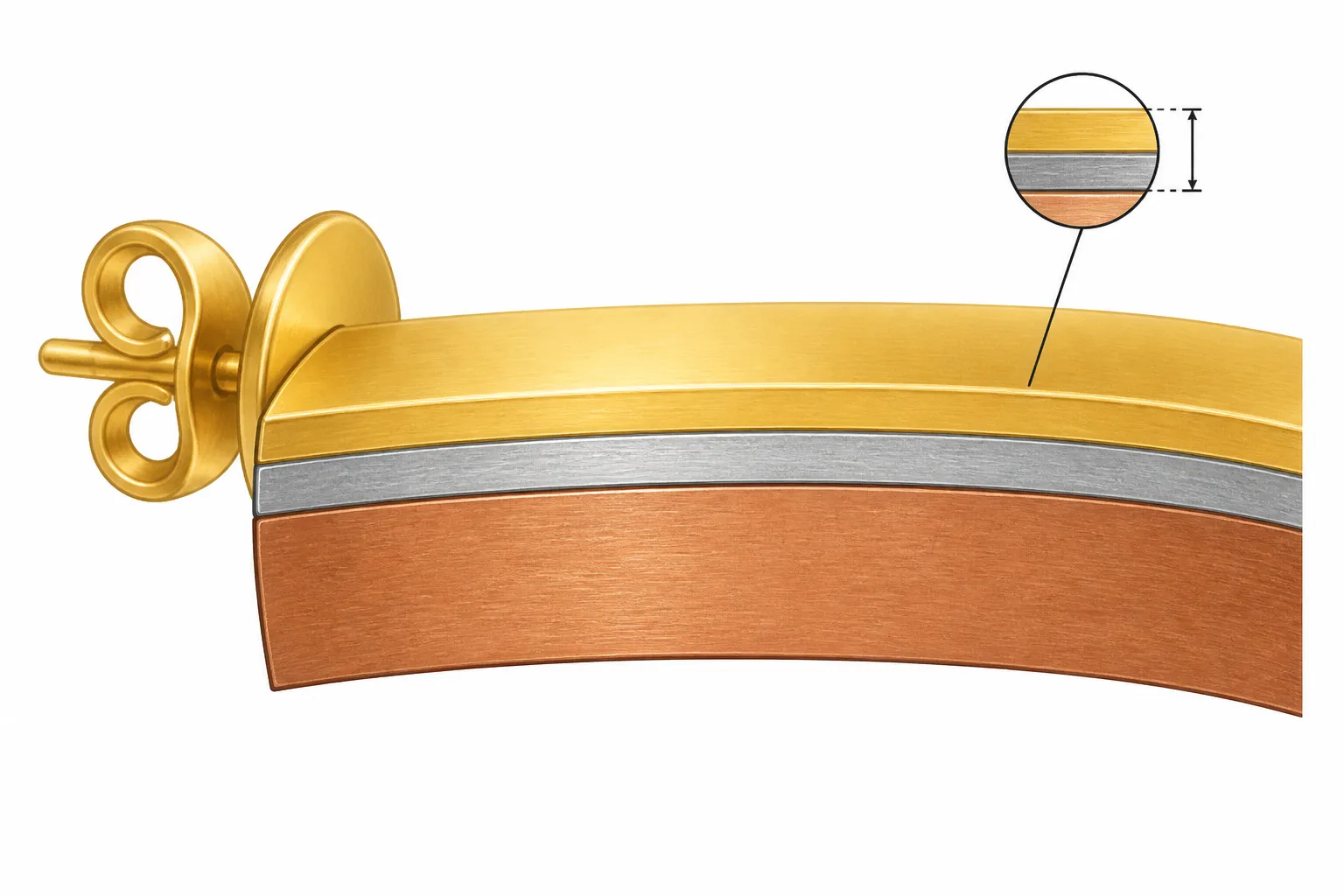
The base metal and plating type determine longevity, customer return rates, and retail positioning. Common constructions for fashion jewelry are gold-plated copper, rhodium-plated copper, and 925-style silver finishes. Plating thickness is the hidden variable — anything under 0.5 microns wears off quickly and drives returns. Ask for micron specs in writing, not just "gold-plated" in a product description.
Gemstone choice shapes perceived value and target demographic. Natural stones — amethyst for a February gifting collection, garnet for warm-toned editorial styling, peridot for spring drops, turquoise for Southwest or boho aesthetics — position pieces at a higher price tier. For fashion-forward lines where visual impact matters more than provenance, high-quality glass beads, gradient crystals, and rhinestones deliver strong shelf appeal at lower unit costs. Metal options across the market range from sterling silver and stainless steel to white gold, gold-plated, and vermeil — each hitting different retail price points and compliance thresholds.
What "good" looks like: A supplier provides a written spec sheet covering base metal, plating metal, plating thickness in microns, stone type (natural vs. synthetic vs. glass), and any surface coatings. If they can't produce this document on request, their QC has no benchmark to test against.
2. MOQ & Order Flexibility
Minimum order quantity is the first hard filter for most buyers. Low MOQ lets you test a new style without overcommitting inventory capital. What matters is transparency — a supplier who publishes their numbers upfront saves you a round-trip email before you can run the math.
STRAND, for instance, lists 12 pcs/style on 109 of its 114 catalog styles, with select styles available from 1 pc — specific enough to plan a buy before the first conversation. For full OEM with new tooling, MOQs are typically higher because tooling costs need to amortize across units. Factor tooling into your per-unit cost comparison, not just the quoted unit price.
3. Customization Depth
Not every supplier means the same thing by "custom." Before you request a quote, map exactly what you need:
- Personalization on stock blanks — engraving, names, dates on existing pieces
- Colorway custom — your specified stone color or finish applied to an existing mold
- Partial custom — modifying a stock silhouette (chain length, clasp type, stone swap)
- Full OEM — new mold, new design, your IP, exclusive production rights
The key question for exclusivity: does the supplier own the mold, or does it sit in an open catalog? If it's open catalog, any buyer can order the same piece regardless of what you paid to develop it.
4. Pricing Model & Cost Transparency
Custom jewelry pricing has three components: unit cost, tooling/mold fees, and sampling fees. Suppliers who bundle these opaquely make re-order negotiations harder and landed cost comparisons nearly impossible.
Request a quote broken into: per-piece cost at your target volume, tooling cost (one-time or amortized), and sampling cost (refundable on order or not). Trade terms add another layer — EXW pricing looks cheaper but places all freight risk on you from the factory gate, while FOB pricing includes loading at origin port. Compare quotes on the same trade-term basis or you're comparing different numbers.
5. Lead Time & Production Capacity
Stock items ship faster than custom. For OEM programs, realistic milestones look like: design approval (3–7 days), sample production (10–20 days), bulk production (20–45 days depending on complexity and order size). Q4 orders placed in September regularly face delays if the supplier is capacity-constrained heading into the gifting season.
Ask for a production calendar with milestone dates — design sign-off, sample dispatch, bulk start, bulk completion, ship date. A supplier who can provide this is managing your production; one who gives you "4–6 weeks" without milestones probably isn't.
6. Quality Assurance & Compliance
QC is where promises meet reality. The key question: does inspection happen in-house before shipment, or does QC mean you catching problems after the goods arrive? Pre-shipment inspection — with documentation, photos, or video — gives you a decision point before the goods leave the factory. STRAND conducts in-house QC inspection before every shipment, which is the standard you should require from any supplier you work with.
For EU and UK markets, REACH compliance for restricted substances is mandatory. US buyers sourcing items near children's categories need CPSC test data for lead and cadmium content. Ask for test reports by material; a credible OEM supplier can produce them.
7. Supplier Reliability & Communication
How a supplier communicates during the sales process predicts how they'll communicate during a production problem. A team that takes five days to answer a basic MOQ question will take longer to resolve a mid-production QC issue.
Multilingual capability reduces spec errors for international procurement teams. Buyers across the US, EU, UK, and MENA sourcing chains benefit from suppliers who handle inquiries in English, French, Arabic, Spanish, German, or Russian — translation gaps are a leading cause of spec deviations in OEM production.
For a deeper comparison of supplier types before you build your shortlist, this breakdown of the 6 best custom jewelry sources in 2026 covers OEM suppliers and retail benchmarks side by side.
8. Payment Terms & Financial Risk
Standard cross-border payment methods for jewelry orders include T/T bank transfer, Western Union, PayPal, L/C (letter of credit), and platforms like Xtransfer. L/C provides the strongest buyer protection for large orders but adds banking fees and processing time. PayPal is fast but has fee overhead and commercial dispute limitations that don't suit high-value OEM orders.
A 30–50% deposit with the balance due on shipment is industry standard for established relationships. New suppliers who demand 100% upfront payment before sample approval are either cash-constrained or avoiding buyer-protection exposure — neither is a good sign.
Budget Tiers
| Tier | Typical Unit Cost (FOB) | What You Get |
|---|---|---|
| Entry / Stock Catalog | $2–$8 /pc | Published catalog styles, no tooling cost, MOQ as low as 12 pcs/style, gold-plated or rhodium-plated copper, glass bead or rhinestone construction |
| Mid-Market / Colorway Custom | $5–$18 /pc | Existing mold with your specified stone color, finish, or minor modifications; low tooling cost; mid-range MOQ |
| Full OEM / New Tooling | $10–$40+ /pc | New mold (ownership negotiable), exclusive design rights, your branding; tooling fees typically $200–$1,500+ depending on complexity; higher MOQ required |
| Luxury / Fine Metal | $40–$200+ /pc | 925 silver, vermeil, or 18K gold-plated; natural stones including diamond, amethyst, garnet; hallmarking; compliance certifications |
Unit costs vary by order volume, material spec, stone quality, and supplier. Request a line-by-line quote for your specific SKUs before comparing tiers.
Red Flags to Avoid
- No published MOQ — suppliers who won't share MOQ upfront are protecting information that would eliminate them from your shortlist before the first meeting.
- No sample option before bulk — every credible OEM supplier offers samples. No sample process means no accountability for spec.
- Vague material specs — "gold color" is not a specification. If a supplier can't confirm base metal, plating type, and plating thickness in microns, they have no baseline for QC.
- 100% payment upfront on a first order — this signals either cash-flow problems or deliberate avoidance of buyer protections. Walk away.
- No pre-shipment inspection process — if they can't describe their QC workflow step by step, they don't have one.
- Inconsistent communication — a sales team that misremembers your spec between emails will produce a product that misses your spec.
- Open-catalog designs sold as "exclusive" — if the same silhouette is available to any buyer without exclusivity protections, your "custom" collection is someone else's stock order.
Buying Process Checklist
- Define requirements — material spec, silhouette type, target retail price, compliance requirements (REACH / CPSC), branding and packaging needs, exclusivity requirements
- Shortlist suppliers — filter by MOQ, OEM vs. stock capability, geographic origin, certifications, communication responsiveness, and language support
- Request itemized quotes — compare on identical terms: same spec, same trade term (FOB vs. EXW), same quantity tier; reject bundled pricing that obscures tooling costs
- Order samples — evaluate plating quality, stone setting, clasp function, finish consistency, and packaging before committing to bulk
- Check references — request 2–3 buyer references in your segment; ask specifically about on-time delivery rate and how QC issues were resolved
- Negotiate contract terms — lock in unit price, MOQ, lead time, tooling ownership, IP clause (who owns the mold), and payment schedule in writing
- Approve pre-production sample — sign off in writing; this document anchors all subsequent QC inspections
- Pre-shipment inspection — request photos or video of a random pull from the bulk order before final payment and shipment release
Questions to Ask Vendors
- What is your MOQ per style for stock items, and separately for custom OEM with new tooling?
- What base metal and plating thickness (in microns) do you use as your standard, and can you provide this in a spec sheet?
- Do you own the molds for your catalog styles, and can custom molds be designated exclusive to my brand?
- What is your sample lead time, and what does a sample cost — is that fee credited against the bulk order?
- What trade terms do you offer (EXW / FOB), and what shipping methods are available (air, sea, express courier)?
- What payment methods do you accept, and what is your standard deposit and balance structure for new buyers?
- Do you conduct pre-shipment QC inspection in-house, and can you provide a QC report or photographic documentation?
- Can you provide REACH compliance test reports or CPSC test data for the materials you use?
- What is your realistic production lead time for a bulk order at my target volume, broken into milestones?
- How do you handle defective or non-conforming pieces discovered after delivery?
- Do I retain exclusive IP rights to custom designs and molds I commission?
- Can you provide buyer references from companies sourcing into the US, EU, UK, or MENA markets?
Recommended Next Steps
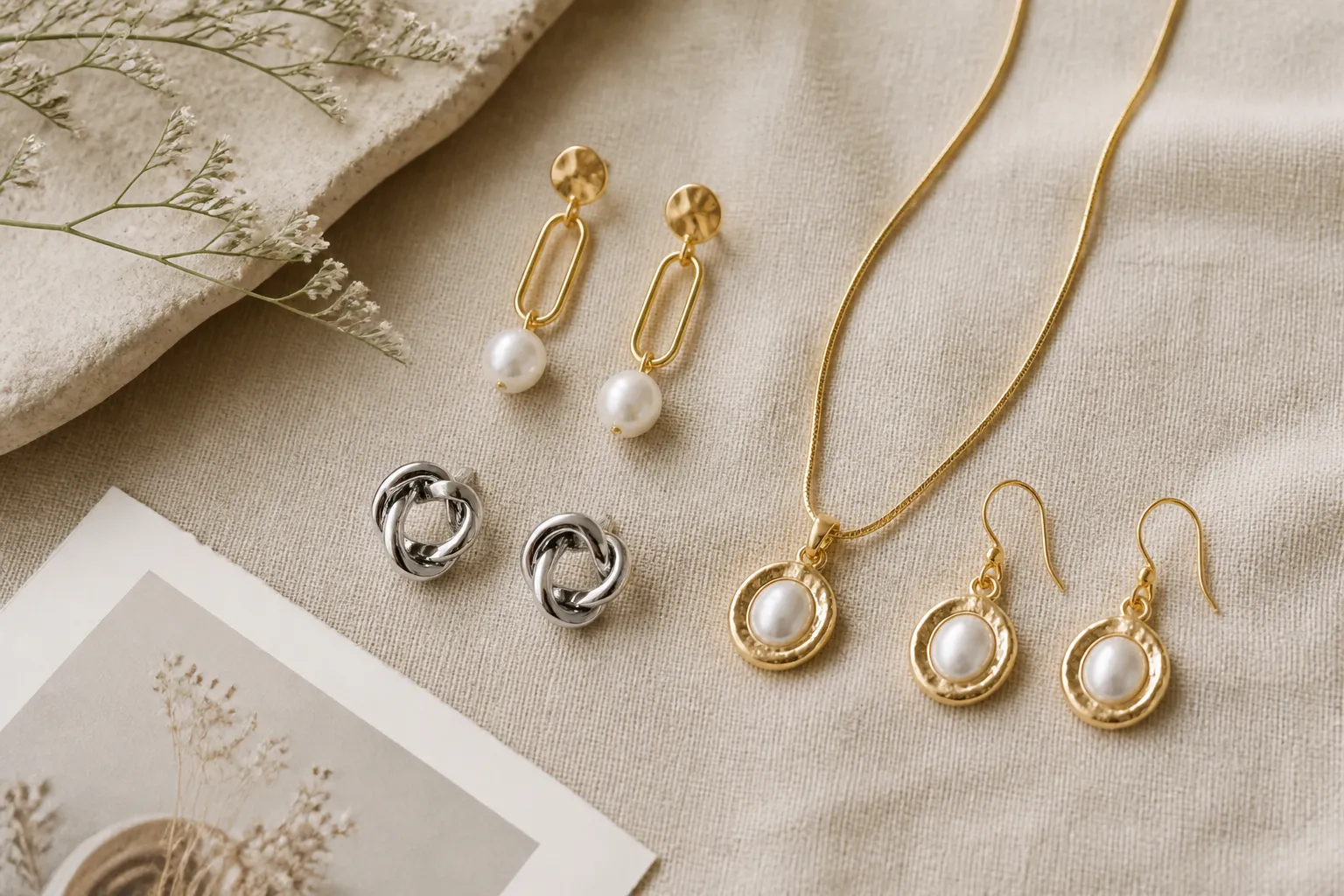
Brands like Kendra Scott built their identity on distinctive, recognizable silhouettes. Retailers that once relied on mall staples like Jared stores are now sourcing directly from manufacturers to control margin and product exclusivity. That same direct-from-manufacturer access is available to buyers at almost any scale — the barrier isn't geography or volume, it's finding a supplier who matches your MOQ, communicates without friction, and can prove their QC before you commit.
The next practical step is a sample order. Run one style through the full QC evaluation before you commit to tooling or a bulk program.
STRAND connects US, EU, UK, and MENA buyers directly to vetted Hangzhou workshops, with multilingual sales support in English, French, Arabic, Spanish, German, and Russian. In-house pre-shipment QC inspection runs on every order. Stock catalog starts at 12 pcs/style across most designs; custom OEM programs are available with full written spec documentation and flexible trade terms including EXW, FOB, T/T, PayPal, L/C, and Xtransfer.