
8 Best Alternatives to Custom Jewelry for Every Budget
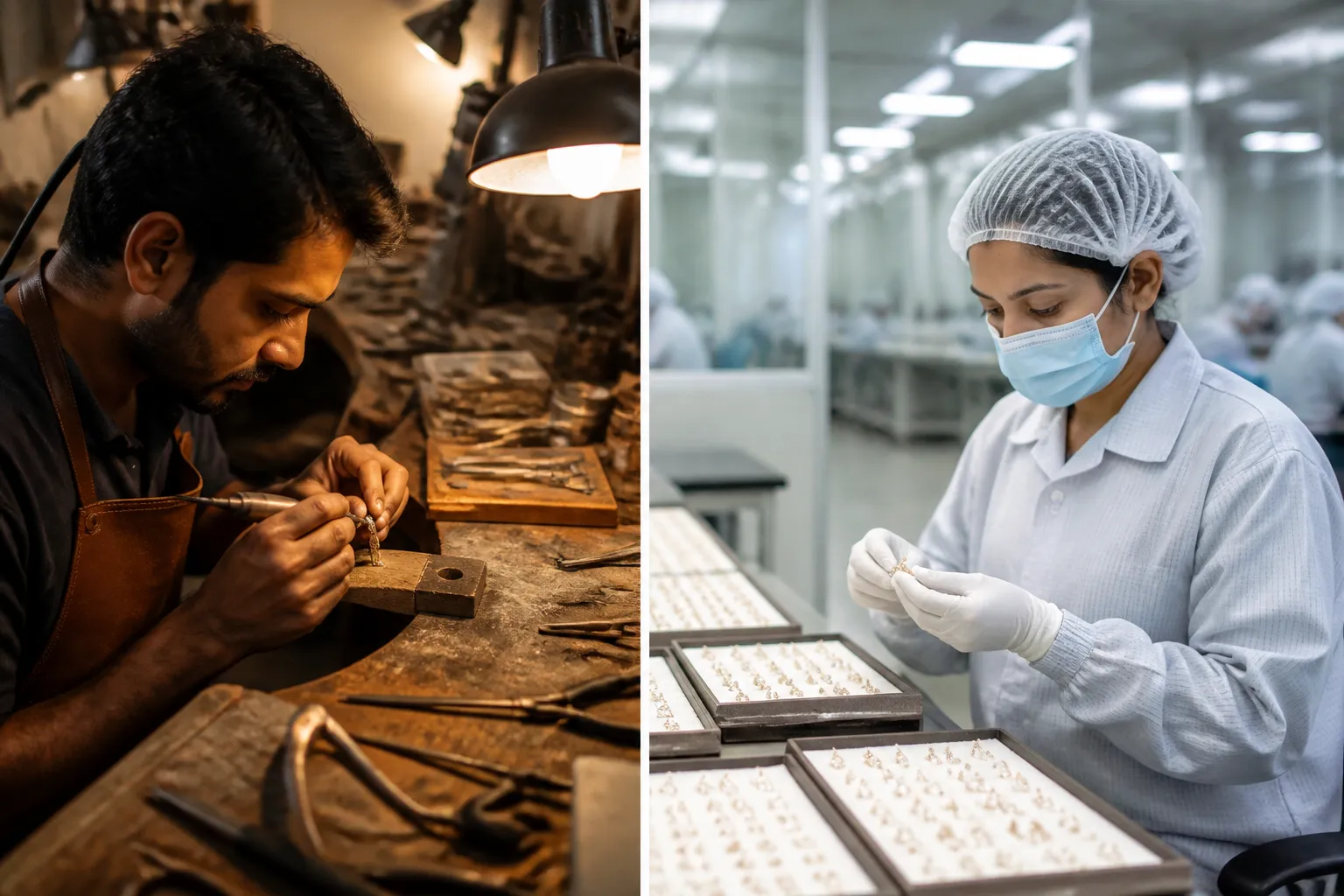
8 Best Alternatives to Custom Jewelry for Every Budget
Custom jewelry sounds perfect on paper — a one-of-a-kind piece built exactly to spec. The reality for most buyers is slower lead times, steep per-unit costs, high minimum orders, and quality that varies wildly from maker to maker. Whether you're a DTC store owner sourcing a new earring line, an importer comparing OEM options, or a retail buyer chasing a better margin, these eight alternatives give you more control, better pricing, or lower risk than traditional bespoke production.
Why Look for Alternatives to Custom Jewelry?
Traditional custom jewelry — pieces designed from scratch by a single studio or workshop — carries several structural costs that compound fast at commercial scale. The first is time. A fully bespoke piece can take four to twelve weeks from sketch to delivery, which makes restocking unpredictable and kills your ability to react to trend cycles.
The second is price. Custom design fees, tooling charges, and small-batch production premiums stack up quickly. For buyers ordering 50–200 units of a style, the per-piece cost of true custom work often makes the retail margin untenable. Many jewelry stores and DTC brands discover this only after their first production run.
The third pain point is consistency. When each item is made one at a time, finish quality, plating depth, and stone-setting tightness vary. A 100-piece run from a custom studio is rarely as uniform as the same quantity from a factory-backed supplier with in-house QC. Buyers who've had to reject a shipment over color inconsistency or bent clasps know exactly what this costs — not just in money but in reorder lead time.
What to Look for in a Custom Jewelry Alternative
Before shortlisting suppliers or platforms, evaluate each option against these six procurement criteria:
- MOQ and scalability: Does the supplier allow testing at low quantities before scaling? An MOQ of 12–50 pieces per style lets you validate demand before committing to a large run.
- Finish and material options: Gold-plated or rhodium-plated copper, 925-style silver, natural stone, glass bead — the range of finishes should match your product line.
- Lead time: Stock catalog items ship faster than full OEM; know which applies to each supplier before signing a purchase order.
- Quality assurance: Who inspects before shipment? In-house QC is a stronger guarantee than "third-party inspection available on request."
- Payment flexibility: International buyers need options beyond wire transfer — PayPal, L/C, or trade finance instruments reduce friction.
- Multilingual support: If your procurement team operates in Arabic, French, Spanish, or German, a supplier who handles communications in your language cuts costly misunderstandings.
Top Alternatives to Custom Jewelry
1. Jewlr
Best for: DTC gift-focused brands and retailers selling personalized jewelry to end consumers
Pricing: Personalized Name Necklaces start from $84 (regular $158); Double Heart Gemstone Rings from $164; birthstone rings from $139
Key strengths vs custom jewelry:
- Extensive personalization across rings, necklaces, earrings, bracelets, and sets — with engraving, birthstone selection (garnet for January, amethyst for February, and more through the full calendar), and stone shape choices including round, heart, princess, oval, and baguette
- 99-day returns policy and free shipping substantially reduce buyer risk — two policies most custom studios can't match
- Available in sterling silver, stainless steel, white gold, gold-plated, and vermeil — covering most retail price tiers
- Buy Now, Pay Later payment plans accessible at checkout
Limitations / trade-offs:
- Retail-facing model — not designed for B2B wholesale or large-quantity procurement
- Personalization stays within their existing template library, not ground-up custom design
- Per-unit retail pricing is a poor proxy for import or resale margin calculations
How it compares to custom jewelry: Jewlr eliminates the long lead times and tooling costs of true custom work by offering a configurable catalog with deep personalization. For a DTC store owner who needs differentiated gifting products without building a custom supply chain, it's a practical starting point. The limitation is that you're building on their templates — your competitors can access the same styles.
2. Made By Mary
Best for: Minimalist DTC brands targeting the personal-meaning segment — new moms, milestone gifting, everyday fine jewelry
Pricing: Mid-range retail; no wholesale pricing published publicly
Key strengths vs custom jewelry:
- Strong brand story built around minimal gold-fill and solid gold pieces with personalized initial discs, name bars, and birthstone accents
- Well-photographed product images that translate easily to DTC content marketing without additional creative investment
- Loyal repeat-purchase community built around sentiment-driven jewelry narratives
Limitations / trade-offs:
- No OEM or private-label option — you're reselling their brand, not building yours
- No published MOQ for wholesale buyers; no international procurement infrastructure
- Product range is curated and narrow, limiting category expansion
How it compares to custom jewelry: Made By Mary works if you want curated, market-ready pieces you can drop into a gifting category. It does not replace custom jewelry for anyone building a proprietary line or sourcing at commercial volume.
3. Kay Jewelers
Best for: Luxury retail buyers who want brand-recognized diamond and bridal custom jewelry with a nationwide in-store footprint
Pricing: Mid-to-high luxury tier; lab-grown diamond options available at lower price points than mined diamond equivalents
Key strengths vs custom jewelry:
- In-store custom design service for engagement jewelry across the US, plus an online configurator spanning nine center stone shapes: princess, round, oval, pear, emerald, marquise, cushion, radiant, and heart
- "Create Your Own" Neil Lane Wedding Ring Set adds licensed brand equity that independent custom jewelers cannot replicate
- Lab-grown diamond engagement rings offered as a custom style option, reducing diamond cost significantly versus mined stone equivalents
- Appointment-based in-store consultation model that reduces return risk for high-value purchases
Limitations / trade-offs:
- Retail price points — not relevant for import buyers or DTC resellers
- Customization is design-selection from an existing range, not ground-up original fabrication
- Engagement and bridal focus limits applicability to fashion or everyday jewelry categories
How it compares to custom jewelry: For the end consumer who wants a luxury experience with the safety of a recognized brand, Kay offers genuine value. For importers or OEM buyers, it's a different category entirely.
4. STRAND — Low-MOQ OEM Custom Jewelry Direct from Hangzhou
Best for: Importers, DTC store owners, and procurement teams in the US, EU, UK, and MENA seeking reliable OEM jewelry at commercial volumes with multilingual support
Pricing: Request a quote at strandjewelry.com; trade terms EXW or FOB; payment via T/T bank transfer, PayPal, Western Union, L/C, or Xtransfer
Key strengths vs custom jewelry:
- MOQ of 12 pieces per style on 109 of 114 catalog styles — select designs available from 1 piece — letting buyers test demand before scaling in a way most custom houses won't permit
- 114-style stock catalog covering drop earrings, stud earrings, and necklace-and-earring sets in vintage crystal, gradient glass bead, two-tone rhinestone, and natural stone styles; custom OEM development available beyond the stock range
- In-house QC inspection before every shipment, covering finish consistency, plating quality, and clasp integrity — no third-party dependency
- Multilingual sales team in English, French, Arabic, Spanish, German, and Russian, a meaningful advantage for international procurement teams who've experienced costly miscommunication with Mandarin-only suppliers
- Materials span gold-plated and rhodium-plated copper, 925-style silver finishes, glass bead, faux pearl, and natural stone — covering most mass-market and mid-market jewelry categories
Limitations / trade-offs:
- OEM development works from a catalog base rather than a fully blank-page bespoke process
- International shipping lead times apply; air, sea, or express options available — plan accordingly
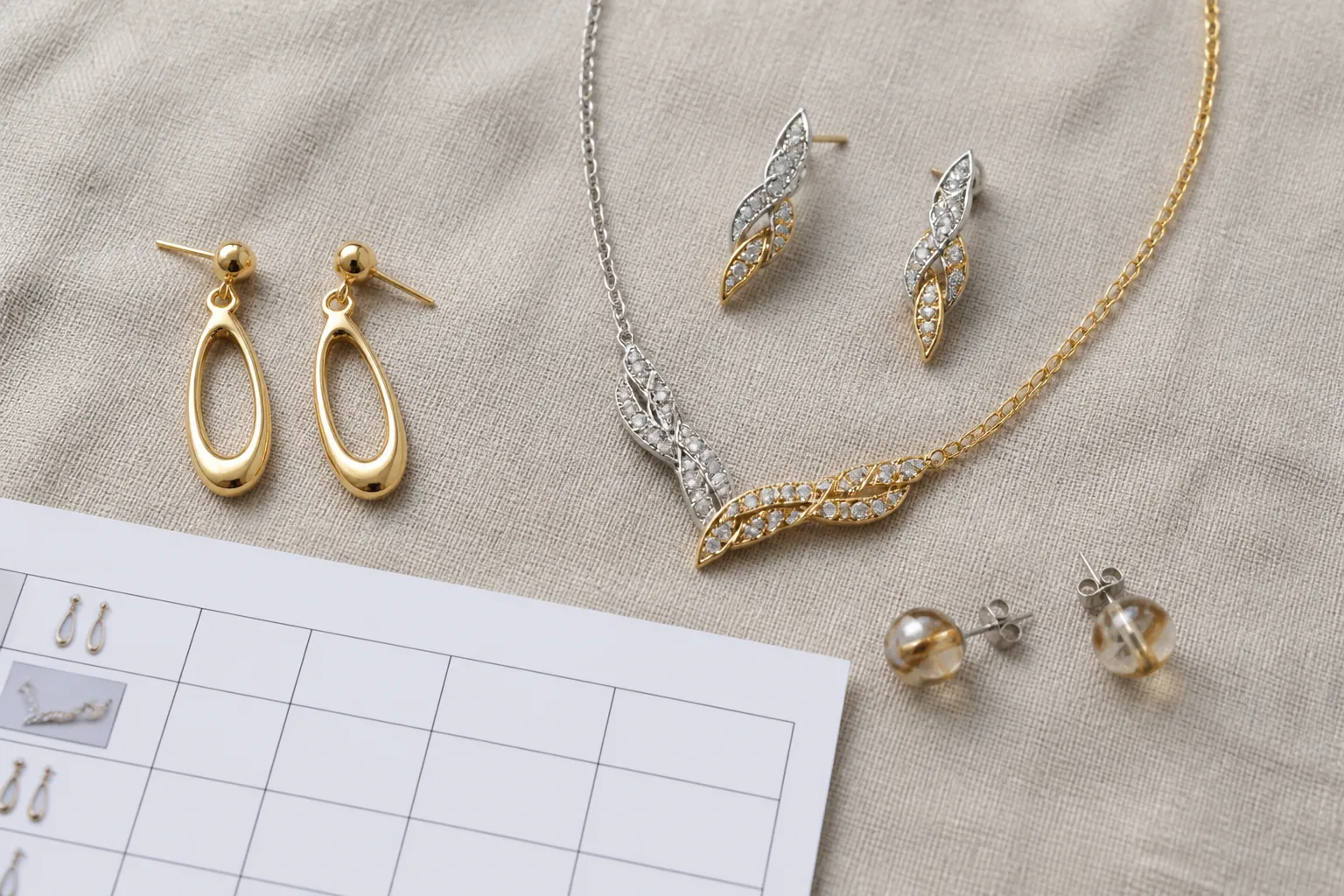
How it compares to custom jewelry: Traditional custom jewelry production typically requires design fees, tooling charges, and weeks of waiting before you see a single sample. STRAND collapses that cycle by offering a deep stock catalog with real OEM customization capability, starting from MOQ 12. For a DTC store owner launching a new earring line or an importer building a private-label collection, this is where custom jewelry's cost and timeline disadvantages disappear. The Vintage Green Crystal Geometric Jewelry Set and the Two-Tone Rhinestone Fireworks Set show what retailer-ready, reorderable styles look like at this scale.
5. Kendra Scott
Best for: US fashion retailers studying a proven model for color-customizable, mid-market jewelry — and for buyers exploring Kendra Scott's wholesale program
Pricing: Retail mid-range; wholesale terms by application
Key strengths vs custom jewelry:
- The Color Bar concept — letting customers swap stones in amethyst, turquoise, peridot, garnet, and dozens of other options from a physical tray — demonstrates how color customization drives repeat purchase traffic without bespoke production overhead
- Recognized brand with a strong following among US retail buyers aged 25–45
- In-store experiences in Kendra Scott stores and department store shop-in-shops create brand touchpoints that custom jewelry lacks entirely
Limitations / trade-offs:
- Color Bar is a retail-experience feature, not an OEM customization pathway for private-label buyers
- Minimum order and wholesale terms require direct application; not self-serve for new buyers
- No private-label option — your customers know they're buying Kendra Scott
How it compares to custom jewelry: Kendra Scott's customization model is instructive for retailers trying to build a "choose your stone" experience. As an alternative for commercial OEM sourcing, it falls short. Its primary value here is as a retail-concept benchmark to replicate at production scale with another supplier.
6. Brook & York
Best for: Personalized fashion jewelry at accessible DTC price points, particularly for gifting occasions
Pricing: Mid-range DTC; initial and name jewelry typically starts under $100
Key strengths vs custom jewelry:
- Template-based personalization — name necklaces, initial jewelry, birthstone accents — delivered at faster production timelines than bespoke custom work
- Clean bestseller catalog with reliable reorder availability, reducing the stockout risk that plagues small custom studios
- Accessible gifting price points that convert without requiring a luxury commitment from the buyer
Limitations / trade-offs:
- No wholesale or OEM path for buyers wanting proprietary branding
- Customization stays within their existing design templates — not new design creation
- Limited to consumer retail channels; no international procurement infrastructure
How it compares to custom jewelry: Brook & York occupies the same consumer-facing personalization space as Jewlr with a more streamlined product range. The tradeoff versus custom jewelry is identical: faster and cheaper, but you're selling their product in their aesthetic.
7. Catbird NYC
Best for: Upscale DTC and boutique retailers sourcing high-margin, trend-aware fine and demi-fine jewelry with strong brand recognition
Pricing: Premium DTC; fine jewelry pieces from the mid-hundreds, select items higher
Key strengths vs custom jewelry:
- Curated designer aesthetic — particularly strong in delicate stacking rings and charm necklaces — that commands premium retail margins without extensive sales explanation
- Personalized pieces available (birthstone settings, initial charms) alongside a strong ready-to-wear line
- Brand positioning supports premium retail pricing that custom studio jewelry rarely achieves at the same product category
Limitations / trade-offs:
- No OEM or private-label — you're selling Catbird product under Catbird's brand
- Premium pricing limits volume-driven margin strategies for multi-SKU buyers
- Distribution focus is primarily US; international procurement infrastructure limited
How it compares to custom jewelry: Catbird is a strong alternative for boutique retailers who want curation and brand equity without commissioning custom work from scratch. For importers or volume buyers building a proprietary line, it's the wrong category.
8. Jared
Best for: Luxury jewelry buyers who want in-person consultation and financing options for diamond custom pieces in the US
Pricing: Mid-luxury to high luxury; custom diamond engagement starting in the low thousands
Key strengths vs custom jewelry:
- Jared stores offer dedicated jewelry consultation experiences for custom engagement and bridal, including diamond selection and setting customization with certified gemologists on staff
- Strong financing options for large single-piece purchases — a capability independent custom studios rarely have
- Nationwide US store footprint reduces the risk of remote ordering for high-value luxury pieces
Limitations / trade-offs:
- Retail pricing — not relevant for commercial buyers, importers, or wholesale procurement
- Customization scope is limited to setting choices and diamond selection, not original design
- No wholesale or OEM pathway
How it compares to custom jewelry: Jared competes in the luxury engagement segment where custom jewelry's appeal is strongest — the sentimental, one-of-a-kind bridal piece. For that specific buyer, Jared's brand trust and in-store experience reduce risk compared to an independent studio. For any commercial buyer, the two are incomparable.
Side-by-Side Comparison Table
| Dimension | Traditional Custom Jewelry | Jewlr | Kay Jewelers | STRAND | Kendra Scott | Catbird NYC |
|---|---|---|---|---|---|---|
| MOQ | 1 (bespoke) | 1 (retail) | 1 (retail) | 12 pcs/style (most styles) | Wholesale by application | 1 (retail) |
| Customization depth | Full bespoke design | Template personalization | 9 stone-shape selection | Stock + full OEM custom development | Color/stone swap | Personalization accents |
| Target buyer | Individual / gifting | Consumer DTC | Consumer / bridal | Importer, DTC brand, OEM buyer | Retailer | Boutique retailer |
| Material range | Variable by studio | Silver, gold-plate, vermeil | Gold, platinum, lab diamond | Gold-plate, rhodium-plate, glass bead, natural stone | Gold, silver, plated brass | Gold-fill, sterling, fine gold |
| Lead time | 4–12 weeks typical | Days | 2–4 weeks in-store | Stock: fast; OEM: by project | Standard stock | Days to weeks |
| QC / returns | Studio-dependent | 99-day return policy | Brand warranty | In-house QC before every shipment | Brand warranty | Brand policy |
How to Pick the Right Alternative
Your best-fit option depends on three buyer scenarios:
You're an importer or DTC brand owner sourcing a proprietary earring or jewelry line. You need OEM capability, a low enough MOQ to test SKUs without overcommitting, and a supplier who communicates fluently in your operating language. Traditional custom studios can't scale with you; big-name retail brands won't private-label for you. A Hangzhou-based OEM supplier like STRAND — MOQ 12 per style on most designs, multilingual support in six languages, in-house QC before every shipment — is built for this position. Request pricing and sample terms at strandjewelry.com before committing to any supplier.
You're a retailer or gifting brand selling personalized pieces to end consumers. Jewlr's template-based system, free shipping, and 99-day return policy reduce your operational risk versus commissioning custom work. Made By Mary and Brook & York offer similar consumer-facing personalization without production complexity. You're trading proprietary design for speed and operational simplicity — worthwhile if differentiation isn't your primary goal.
You're sourcing luxury bridal or diamond jewelry for a US-based retail context. Kay Jewelers and Jared stores each offer in-person consultation, lab-grown diamond options, and brand-backed warranties that a custom independent studio can't replicate at the same price point. If diamond and luxury are the non-negotiables, these chains are the lower-risk choice.
You're building a color-forward fashion jewelry line for mid-market retail. Study Kendra Scott's Color Bar model — the ability to swap stones in amethyst, turquoise, peridot, and garnet builds repeat purchase behavior. Then source the actual production through an OEM supplier at commercial scale rather than paying brand markup on finished goods.
Conclusion
The right alternative depends entirely on where you sit in the supply chain. Consumer-facing personalization platforms like Jewlr handle gifting efficiently and with strong buyer protection. Luxury retail chains like Kay and Jared anchor the bridal segment with brand equity and in-store support. For commercial buyers — importers, DTC brand owners, and multi-channel retailers across the US, EU, UK, and MENA — the sharpest alternative is a vetted OEM supplier with documented low MOQ, transparent trade terms, in-house quality control, and the multilingual infrastructure to make procurement straightforward.
Custom jewelry's core pain points — too expensive to test, too slow to scale, too inconsistent to reorder reliably — are exactly what a structured OEM relationship is built to solve. If you're launching or expanding a jewelry line and need to validate demand before committing to volume, that's the conversation to start now.