
Best Alternatives to Custom Jewelry in 2026: Buyer's Guide
Best Alternatives to Custom Jewelry in 2026: Buyer's Guide
Updated July 2026 | 2,400 words | For buyers, importers, and DTC store owners
Why Look for Alternatives to Custom Jewelry?
Custom jewelry has long been the gold standard for differentiation — a product that carries personal meaning, reflects brand identity, or stands apart in a crowded market. But for buyers, importers, and DTC store owners who rely on jewelry sourcing as a business function, the traditional custom jewelry process introduces friction at nearly every stage of the procurement cycle.
The cost barrier is real. Conventional custom jewelry — whether from a local goldsmith, a boutique atelier, or a legacy OEM manufacturer — often carries high setup fees, steep per-unit costs at low volumes, and lengthy back-and-forth before a single sample ships. For a DTC brand testing a new earring silhouette or a boutique importer placing a trial order before committing to a seasonal SKU, the economics rarely pencil out at small quantities.
Lead times kill agility. Fashion jewelry moves fast. Trend cycles in the US, EU, and MENA markets can compress from runway to retail shelf in weeks, and traditional custom jewelry production — with its mold-making, sampling rounds, and revision loops — often runs on timelines that lag the market. Buyers locked into 60–90 day lead times miss windows that faster-moving competitors capture with more flexible sourcing models.
Communication gaps compound the problem. Sourcing custom jewelry internationally, particularly from manufacturing hubs in China, has historically meant navigating language barriers, opaque pricing, and inconsistent quality control. Without a trusted intermediary or in-house sourcing team, importers often receive product that diverges from approved samples — a costly outcome that erodes margins and damages customer relationships.
These pain points don't mean custom jewelry is the wrong category. They mean buyers need alternatives that deliver the differentiation of custom with fewer of the operational headaches. The options below address exactly that.
What to Look for in a Custom Jewelry Alternative
Before evaluating alternatives, establish your procurement criteria. The right replacement depends on your business model, order volume, and end market. Key dimensions to evaluate:
- Minimum order quantity (MOQ): Can the supplier accommodate your trial-order volume without punishing unit economics?
- Customization depth: Does the alternative support logo engraving, colorway selection, packaging customization, or full OEM design — or only surface-level personalization?
- Lead time and production capacity: What is the realistic sample-to-bulk timeline, and can the supplier scale if your initial order performs?
- Quality assurance process: Is there in-house or third-party QC before shipment, or do you bear inspection risk yourself?
- Trade terms and transparency: Are pricing, payment milestones, and shipping terms clearly documented upfront?
- Multilingual or local support: For non-English procurement teams or MENA/LATAM-facing operations, does the supplier offer support in your operating language?
- Compliance and certifications: Particularly for EU and UK markets, does the supplier provide documentation for REACH, nickel-free, or other regulatory requirements relevant to jewelry?
Top 8 Alternatives to Custom Jewelry
1. STRAND — OEM Fashion Jewelry from Vetted Chinese Workshops
Best for: DTC brands, importers, and boutique retailers in the US, EU, UK, and MENA seeking low-MOQ OEM jewelry with direct-factory pricing and multilingual support.
Pricing: Quote-based; contact for MOQ and per-unit pricing at strandjewelry.com
Key strengths vs. custom jewelry:
- Hangzhou-based, directly linked to vetted manufacturing workshops — eliminates the middleman markup that inflates traditional custom jewelry costs
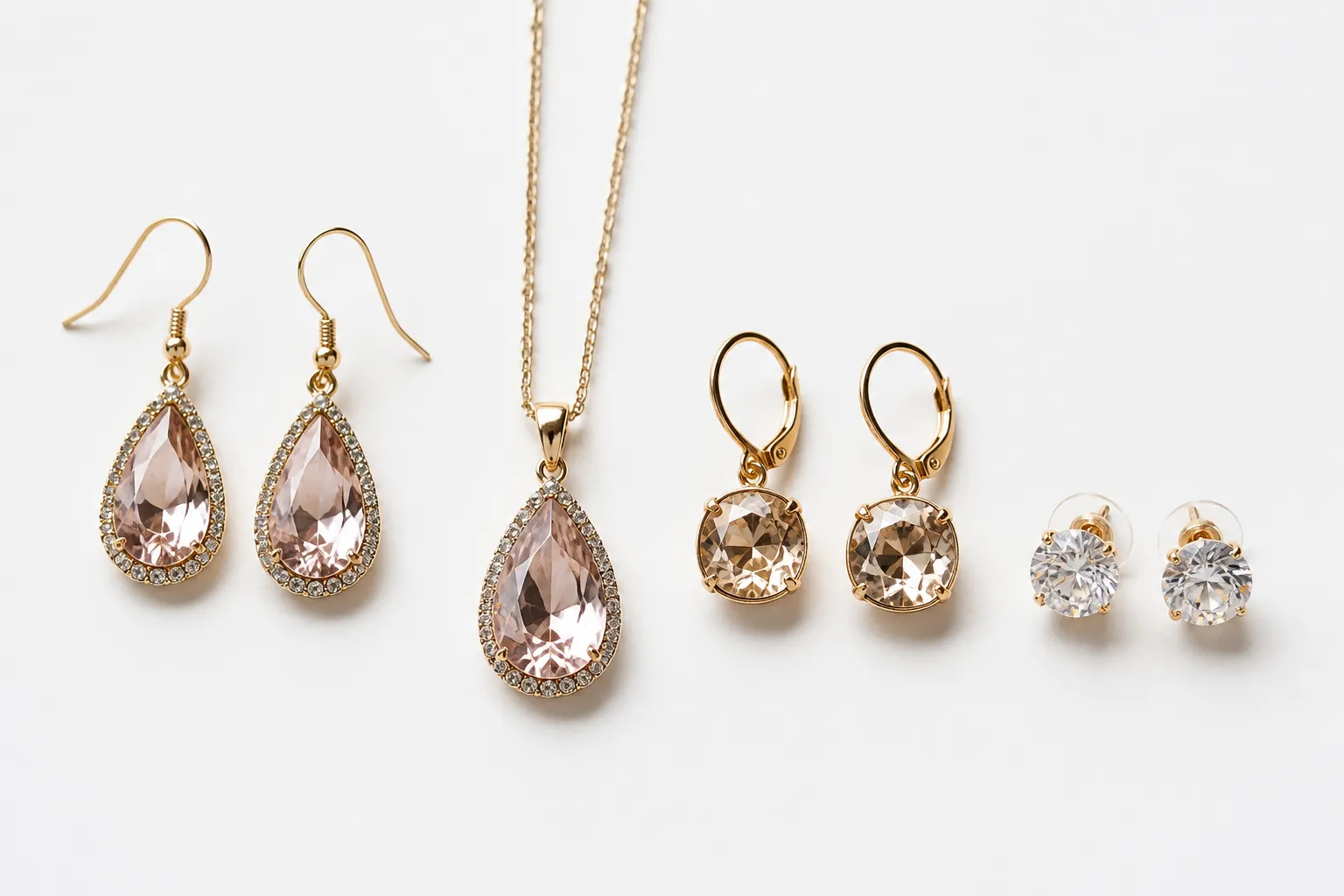
- OEM capability covering drop earrings, stud earrings, necklace + earring sets in vintage, gradient crystal, two-tone glass bead, and rhinestone styles
- Multilingual service team (English, Arabic, Spanish) — purpose-built for multilingual procurement teams and MENA/LATAM-facing buyers
- In-house QC before shipment reduces inspection burden on the importer side
Limitations / trade-offs:
- Primarily fashion jewelry (non-precious metals, crystal, glass bead, rhinestone) — not a fit for fine jewelry or precious stone requirements
- Quote-based pricing requires direct contact to evaluate unit economics
- Best suited for buyers comfortable with international sourcing workflows
How it compares to custom jewelry: Traditional custom jewelry production typically requires navigating multiple vendor touchpoints — designer, manufacturer, QC agent, freight forwarder — each adding cost and coordination overhead. STRAND consolidates this into a single supplier relationship, combining OEM design customization with direct workshop access, transparent trade terms, and pre-shipment quality vetting. For buyers who want the differentiation of custom jewelry without the fragmentation of managing a multi-vendor supply chain, STRAND functions as an all-in-one sourcing partner.
2. Jewlr — Personalized Jewelry for DTC Retail Positioning
Best for: DTC brands or retailers whose end customers expect personalized, made-to-order pieces with a polished online experience.
Pricing: Consumer-facing; mid-market retail pricing with personalization premium
Key strengths vs. custom jewelry:
- Fully realized DTC personalization platform with name engraving, birthstone selection, and metal choice — reduces the complexity of running custom jewelry as a consumer product
- Strong UX for online gifting and personalization flows
- Established brand trust signals that individual custom jewelers often lack
Limitations / trade-offs:
- Consumer-oriented — not designed for wholesale, bulk import, or OEM private-label use cases
- Limited customization depth for buyers who need branded packaging, proprietary silhouettes, or exclusive colorways
- Margins thin if reselling; not a sourcing platform
How it compares to custom jewelry: Jewlr solves for consumer-level personalization (names, dates, birthstones) rather than the production-stage customization that importers and OEM buyers need. If your use case is powering a consumer-facing gift or personalization offering rather than sourcing original product for resale, Jewlr's infrastructure is more relevant than a raw manufacturing relationship.
3. Made by Mary — Handcrafted Personalized Jewelry
Best for: Boutique retailers and DTC brands targeting the handmade-aesthetic, minimalist jewelry segment.
Pricing: Mid-to-premium retail; personalization pieces typically $50–$150+
Key strengths vs. custom jewelry:
- Strong brand storytelling around craftsmanship and intentionality — commands a premium in the gifting segment
- Personalized necklaces, bracelets, and rings with handcrafted positioning
- Responsive to the "demi-fine" consumer trend blending accessibility with artisanal aesthetics
Limitations / trade-offs:
- Consumer retail brand, not a wholesale or OEM sourcing partner
- Limited SKU depth; not suitable for high-volume or fast-fashion jewelry sourcing
- Geographic focus on the US market; MENA or EU-specific compliance documentation not a core offering
How it compares to custom jewelry: Made by Mary competes on brand narrative rather than manufacturing flexibility. For buyers evaluating it as a sourcing or resale option, the positioning gap is significant — it's a finished consumer brand, not a customizable production supplier. The comparison is instructive: it illustrates the premium that "handcrafted" branding commands, which OEM buyers can replicate by sourcing original designs from vetted manufacturers and building their own brand story around them.
4. Icebox — High-End Custom and Fine Jewelry
Best for: Luxury retailers or buyers sourcing premium, precious-metal custom jewelry for high-net-worth consumer segments.
Pricing: Fine jewelry pricing; custom pieces start in the four-figure range
Key strengths vs. custom jewelry:
- Established reputation in high-end custom jewelry, particularly for diamond and precious stone pieces
- Full custom design service from concept to finished piece
- Strong brand recognition in the luxury segment
Limitations / trade-offs:
- Price point prohibitive for fashion jewelry or volume sourcing use cases
- Not a fit for importers or DTC brands needing repeatable SKUs at scale
- Long lead times inherent to fine jewelry production
How it compares to custom jewelry: Icebox represents the high end of the custom jewelry spectrum — bespoke, precious-metal, singular pieces at luxury pricing. For buyers sourcing fashion jewelry for resale or import, the operational model is incompatible: Icebox is not a production supplier, and its price-per-unit economics don't translate to commercial sourcing. It is, however, a useful reference for understanding the ceiling of custom jewelry craftsmanship and what end consumers associate with "true" customization.
5. Kay Jewelers Personalized — Mass-Market Personalization
Best for: Retailers benchmarking consumer expectations for personalized jewelry in mainstream US market segments.
Pricing: Mass-market retail; personalized pieces from ~$50 to several hundred dollars
Key strengths vs. custom jewelry:
- National retail infrastructure with broad consumer trust
- Extensive personalization options (engraving, birthstones, name jewelry) accessible at accessible price points
- Well-integrated omnichannel experience for consumer-facing personalization
Limitations / trade-offs:
- Retail brand, not a sourcing or OEM partner
- Limited style differentiation — mass-market positioning means widely available aesthetics
- No wholesale, import, or white-label capability
How it compares to custom jewelry: Kay's personalized line defines what "custom jewelry" looks like at the mass-market consumer level — name necklaces, engraved pendants, birthstone rings. For importers and DTC brand owners, it's a market-signal reference rather than a sourcing option. Understanding what Kay sells at what price point helps buyers calibrate their own product positioning and retail pricing when sourcing comparable styles through OEM channels.
6. Automic Gold — Inclusive Custom Jewelry
Best for: DTC brands targeting inclusive, size-diverse, or body-positive jewelry segments.
Pricing: Mid-range retail; custom/personalized pieces in the $50–$200 range
Key strengths vs. custom jewelry:
- Strong brand positioning around inclusivity and diversity — differentiates in a crowded personalized jewelry market
- Solid DTC model with direct consumer engagement
- Consistent quality for gold-filled and solid gold fashion jewelry
Limitations / trade-offs:
- Consumer brand, not a wholesale or OEM supply channel
- Niche positioning limits breadth of style categories
- US-centric; limited relevance for MENA or EU-focused procurement
How it compares to custom jewelry: Automic Gold's value is in its brand positioning rather than manufacturing flexibility. Like Made by Mary, it demonstrates that successful jewelry brands can be built on a specific values-led narrative — a model that DTC store owners sourcing their own product through OEM channels can replicate by developing brand identity around their sourced product line.
7. Alibaba / Global Sources — Open-Market OEM Sourcing
Best for: Experienced importers with in-house sourcing teams who can manage supplier vetting, sampling, and QC independently.
Pricing: Factory-direct; highly variable by supplier and MOQ
Key strengths vs. custom jewelry:
- Broadest selection of jewelry manufacturers and styles globally
- Highly competitive pricing at volume
- Full OEM capability available across many suppliers
Limitations / trade-offs:
- Significant due diligence burden — vetting supplier legitimacy, quality consistency, and trade term reliability falls entirely on the buyer
- No consolidated multilingual support; language and communication gaps common
- QC responsibility rests with the buyer; sampling and inspection costs add up
How it compares to custom jewelry: Alibaba-style open marketplaces offer the widest selection and lowest potential unit cost but transfer all sourcing risk to the buyer. For teams without dedicated sourcing infrastructure, the hidden costs of failed samples, inconsistent quality, and communication gaps often eliminate the pricing advantage. Buyers who want factory-direct economics without the due-diligence overhead benefit from working with a vetted intermediary like STRAND, which pre-vets workshops and provides in-house QC as part of the service.
8. Private Label / White-Label Jewelry Services
Best for: DTC store owners who want branded packaging and exclusive SKUs without designing from scratch.
Pricing: Quote-based; depends on packaging scope and product volume
Key strengths vs. custom jewelry:
- Faster path to branded product than full custom OEM — existing silhouettes, branded packaging
- Lower development cost than designing original styles
- Accessible MOQs at some suppliers
Limitations / trade-offs:
- Limited design exclusivity — white-label silhouettes may appear across multiple brands
- Packaging customization depth varies by supplier
- Quality and compliance documentation often inconsistent at the lower end of the market
How it compares to custom jewelry: White-label jewelry sits between off-the-shelf wholesale and full custom OEM. It delivers branded packaging and some product exclusivity without the design investment of true custom development. For buyers scaling from wholesale into branded product, it's a logical intermediate step — though the long-term brand equity argument favors moving toward genuine OEM, where silhouettes and styles are developed exclusively for your label.
Side-by-Side Comparison Table
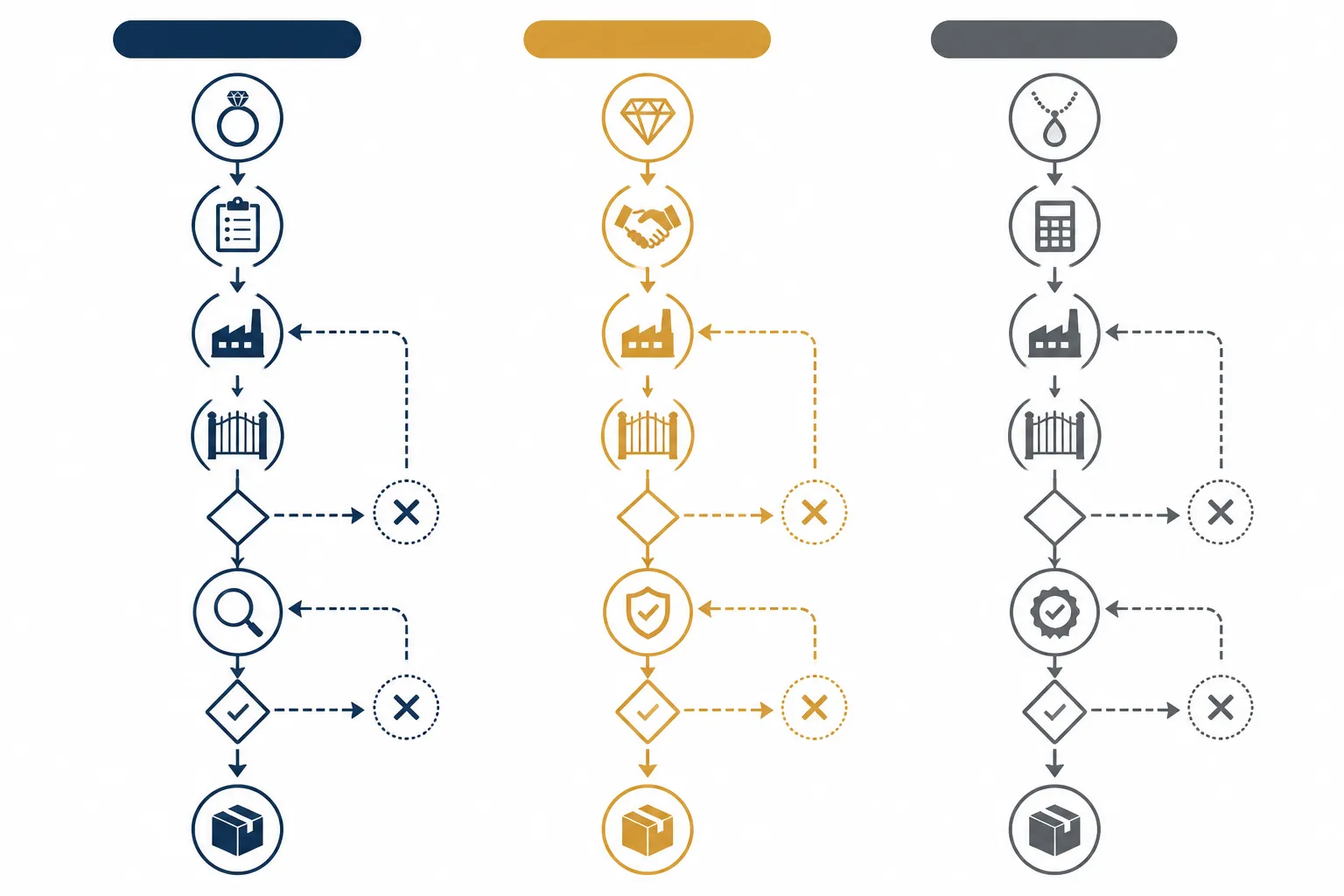
| Dimension | Traditional Custom Jewelry | STRAND (OEM) | Jewlr / Made by Mary | Icebox | Alibaba / Global Sources | White-Label Services |
|---|---|---|---|---|---|---|
| Target buyer | Consumers / small brands | Importers, DTC brands, retailers | End consumers | Luxury consumers | Experienced importers | DTC store owners |
| Customization depth | High (full bespoke) | High (OEM design + colorway) | Low–medium (personalization) | Very high (fine/precious) | High (varies by supplier) | Medium (packaging + SKU) |
| MOQ | Low (1–few pieces) | Low–medium [contact for MOQ] | N/A (consumer) | Very low (bespoke) | Medium–high | Medium |
| Lead time | Long (weeks–months) | Fast [contact for lead time] | 1–3 weeks (consumer) | Very long (bespoke) | Variable | Medium |
| QC assurance | Buyer-dependent | In-house pre-shipment QC | Platform-managed | Atelier-managed | Buyer-managed | Inconsistent |
| Multilingual support | Rare | Yes (EN / AR / ES) | English only | English only | Minimal | Rare |
| Price tier | Mid–high per piece | Factory-direct (quote-based) | Mid retail | Luxury | Lowest potential | Mid |
How to Pick the Right Alternative
The right alternative depends on where you sit in the supply chain and what problem you're actually solving.
If you're a DTC store owner building a branded jewelry line: You need OEM capability, not a consumer personalization platform. Focus on suppliers who can develop or modify designs for exclusive use, offer branded packaging, and provide consistent quality across reorder batches. STRAND's OEM offering and low MOQ structure is designed for exactly this use case — it lets you develop a proprietary product line without the capital commitment of traditional custom jewelry manufacturing.
If you're an importer or wholesale buyer sourcing for multiple retail accounts: Volume consistency, reliable lead times, and QC documentation are your primary criteria. Evaluate suppliers on their production capacity, reorder reliability, and whether they provide QC reports or inspection access. Open-market platforms like Alibaba offer breadth but require you to absorb the vetting burden. A vetted sourcing partner with in-house QC materially reduces that risk.
If you're sourcing for MENA or multilingual markets: Language and trade term transparency matter as much as product quality. A supplier with native Arabic or Spanish support, clear Incoterms documentation, and experience shipping to your target region will save significant operational overhead compared to navigating a language gap on every order cycle.
If you're benchmarking consumer expectations before sourcing: Review what Jewlr, Made by Mary, and Kay are selling — their popular personalized styles, price points, and marketing language reflect what your end customer has been trained to expect. Then source OEM equivalents (or superior styles) that let you deliver comparable consumer value at your target retail margin.
If you need fine or precious jewelry: STRAND and most fashion jewelry OEM suppliers are not the right fit. Icebox and comparable fine jewelry ateliers serve that segment. Be explicit about material specifications (solid gold, platinum, precious stones) when evaluating any supplier.
Conclusion: Top Picks by Buyer Profile
Best for DTC brands building original product lines: STRAND. The combination of OEM customization, low MOQ, in-house QC, and multilingual support makes it the most complete sourcing solution for DTC store owners who want fashion jewelry that's genuinely their own — not a white-label SKU shared across competitors.
Best for consumer-facing personalization products: Jewlr or Made by Mary, depending on whether your brand positioning is polished-DTC or handcrafted-artisan.
Best for high-volume importers with in-house sourcing teams: Alibaba/Global Sources for maximum selection and competitive pricing — with the caveat that QC and supplier vetting remain buyer responsibilities.
Best for luxury segment buyers: Icebox for fine, precious-metal custom pieces at the high end of the market.
Best for MENA and multilingual procurement teams: STRAND, specifically because of the Arabic and Spanish language support alongside English — a differentiator that eliminates a significant operational friction point for multilingual buying organizations.
Ready to Source? Request a Quote from STRAND
If you're evaluating OEM jewelry sourcing for your brand or import operation — whether you're placing your first trial order or scaling an existing line — the next step is a direct conversation about your MOQ, target styles, and lead time requirements.
STRAND's team responds in English, Arabic, and Spanish. Bring your reference designs, target price range, and volume projections — the team will respond with production options, sample timelines, and transparent trade terms.
Get MOQ & Pricing | Request a Sample | Ask About OEM Customization
STRAND is a Hangzhou-based cross-border fashion jewelry brand connecting overseas buyers directly to vetted Chinese manufacturing workshops. Specialties include drop earrings, stud earrings, and necklace + earring sets in vintage, gradient crystal, two-tone glass bead, and rhinestone styles. OEM available with multilingual service for buyers in the US, EU, UK, and MENA.