
Custom Jewelry vs. Ready-Made Stock: The B2B Buyer's Guide
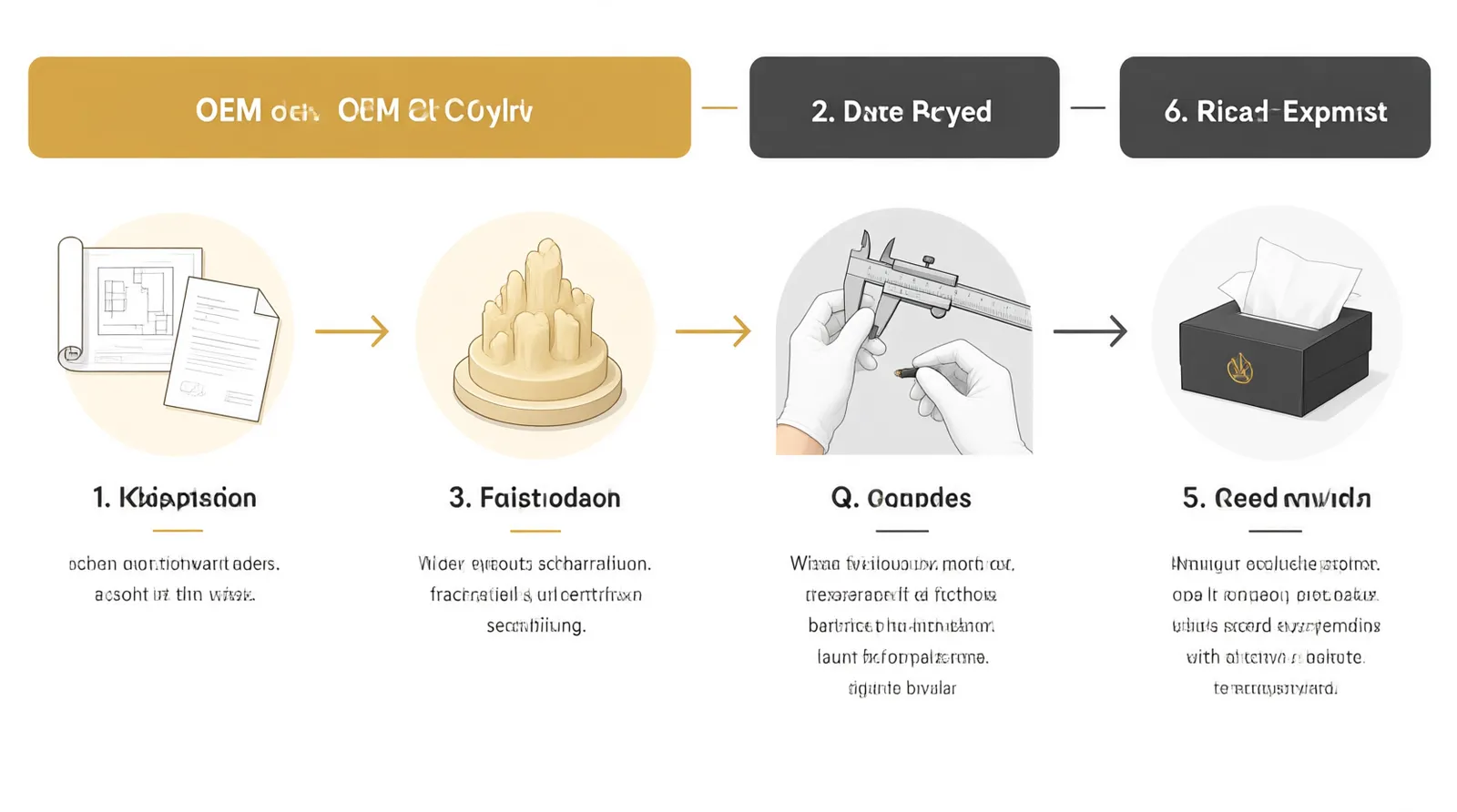
Custom Jewelry vs. Ready-Made Stock: The B2B Buyer's Guide
Custom OEM jewelry and ready-made stock sourcing are not interchangeable — they serve fundamentally different business models, margin structures, and timeline requirements. This guide cuts through the options so importers, DTC store owners, and procurement teams can make the call that matches their actual situation.
TL;DR / Quick Verdict
If you need brand differentiation, exclusive SKUs, or packaging that carries your label, custom OEM jewelry is the clear path. If you need to move fast, test a new category with zero design investment, or fill a seasonal gap, ready-made stock or retail-adjacent alternatives are the pragmatic choice. Most serious DTC operators end up running both tracks simultaneously — stock catalog to stay stocked, custom OEM for hero products. For buyers evaluating China-sourced fashion jewelry with low MOQs, STRAND sits at the intersection: a multi-style stock catalog (with most styles carrying a 12-piece MOQ as of early 2025) plus full custom OEM capability in gold-plated and rhodium-plated copper, glass beads, natural stone, and faux pearls.
At-a-Glance Comparison Table
| Dimension | Custom OEM Jewelry (e.g., STRAND) | Ready-made Stock / Retail Alternatives |
|---|---|---|
| Minimum Order | From 12 pcs/style (stock); custom MOQ varies by spec | 1 pc (retail/DTC) to higher wholesale minimums |
| Lead Time | 3–8 weeks for custom production | In-stock: ships within days |
| Exclusivity | Full brand exclusivity possible | Shared catalog — competitors can list same SKU |
| Price per Unit | Factory-direct wholesale margins | Retail markup; wholesale tiers vary by platform |
| Customization Depth | Deep — logo, finish, stone, packaging | Limited — engraving, name inserts, color variants |
| Trade Terms | EXW / FOB; T/T, PayPal, L/C, Xtransfer | Credit card, net terms vary by platform |
| QA Control | In-house inspection before shipment | Brand-controlled (retail); variable for third-party wholesale |
| Languages Supported | EN, FR, AR, ES, DE, RU | Primarily English; varies by platform |
| Best For | Importers, OEM buyers, DTC brands building identity | Fast-fill, market testing, consumer gifting |
Custom Jewelry Overview
Custom jewelry in a B2B context means manufacturing pieces to your specification — your design, your finish, your packaging — produced by a factory or workshop and shipped under your brand. This is distinct from buying named styles off a shelf or personalizing a consumer product with an engraved name.
For importers and DTC operators, the appeal is clear: no two stores carry the same product. A buyer who orders gold-plated drop earrings with gradient amethyst-colored glass and a proprietary back stamp cannot be undercut on Google Shopping by someone listing the same ASIN. That exclusivity compounds into brand equity over time.
STRAND's approach connects overseas buyers directly to vetted Hangzhou workshops. The stock catalog — covering drop earrings, stud earrings, and necklace-earring sets in vintage, gradient crystal, two-tone glass bead, and rhinestone styles — functions as a sampling and fast-fill layer. Custom OEM sits on top: buyers can adjust finishes (gold-plated, rhodium-plated copper, 925-style silver finishes), specify stone type (natural stone, glass beads, faux pearls), modify packaging, and add brand elements. The low stock MOQ (typically 12 pcs/style on most designs, with select styles available from 1 pc as of early 2025) lets smaller DTC brands test new directions before committing to custom production runs.
Multilingual sales support in English, French, Arabic, Spanish, German, and Russian is a practical differentiator for procurement teams in the US, EU, UK, and MENA who are tired of slow quote turnaround because the factory's sales team only handles English email chains.
For a deeper look at how the sourcing landscape stacks up, Custom Jewelry: 6 Sources Buyers & DTC Brands Need in 2026 benchmarks factory-direct sourcing against other supplier types with specific evaluation criteria.
Alternatives Overview
"Alternatives" in this context covers three distinct tracks that buyers actually compare against custom OEM sourcing:
1. Retail jewelry chains (reference benchmarks, not wholesale sources) Brands like Kay Jewelers operate consumer-facing stores and a personalized jewelry category online — but they're relevant here as market benchmarks, not as B2B supplier channels. Kay's consumer catalog covers rings, necklaces, earrings, bracelets, engagement styles (solitaire, halo, three stone, gemstone), and lab-grown diamond jewelry. Retail chains like Jared or Kendra Scott stores serve the end consumer; their relevance to a wholesale buyer is as a signal of what price points and styles are moving in US and EU retail.
2. DTC personalized jewelry platforms Platforms like Jewlr, Made by Mary, Brook & York, and Everthinejewelry serve individual consumers seeking personalized pieces — birthstone options (turquoise, garnet, peridot), name necklaces, custom initial rings. These are B2C businesses, not B2B sourcing channels. A DTC store owner cannot private-label from them or set minimum runs on bespoke styles.
3. Off-the-shelf wholesale and stock catalog sourcing This is the genuine B2B alternative to custom OEM: buying pre-made designs from a factory or distributor's existing catalog, with no custom specification work. You get faster delivery, lower risk, and no sampling cycle — but also no exclusivity and less margin control.
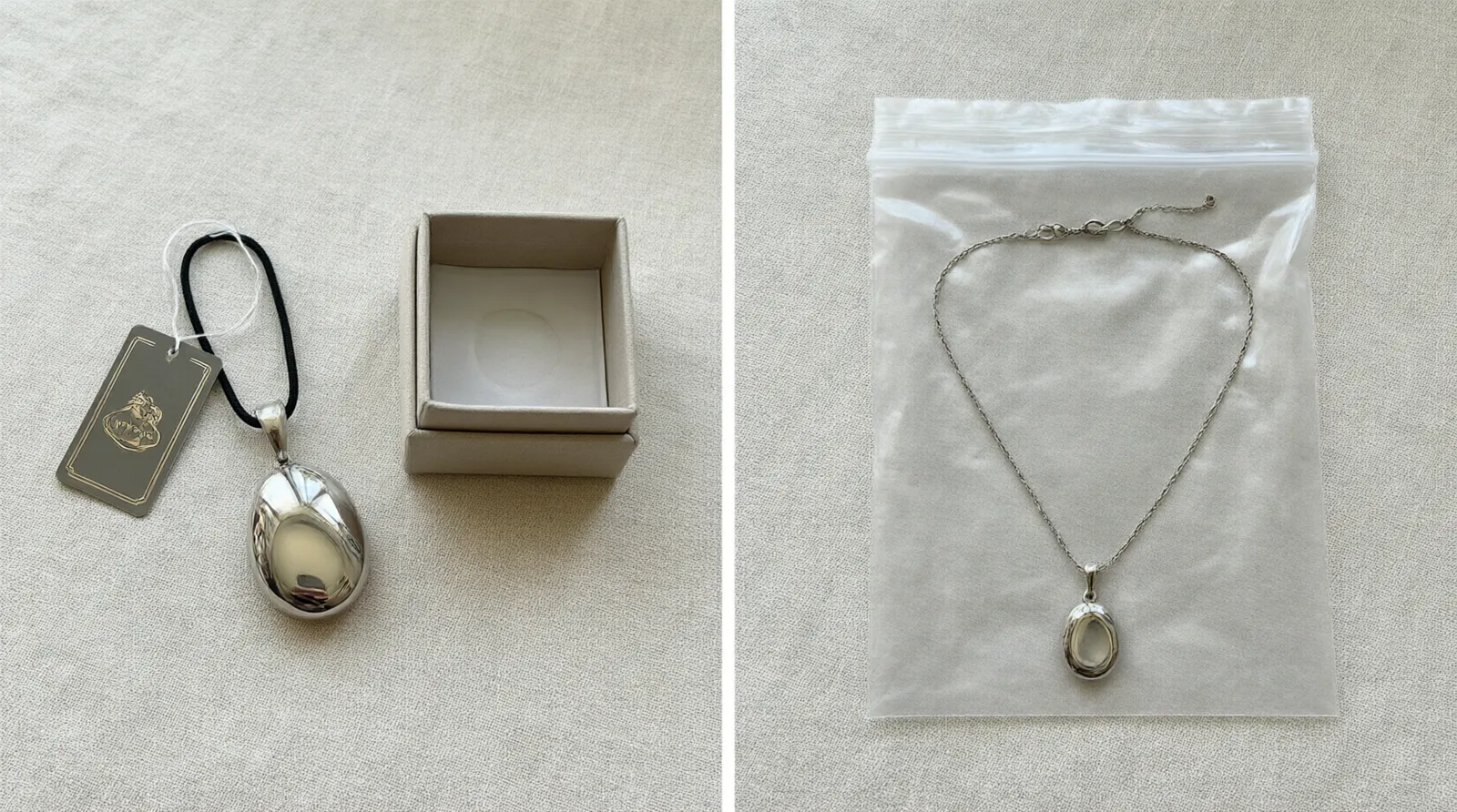
Feature-by-Feature Breakdown
Pricing and MOQ
Custom OEM pricing depends on specification complexity, materials, finish type, and order volume. The structural advantage of factory-direct sourcing is the removal of intermediary margins. STRAND's stock catalog carries tiered minimums — typically 12 pcs/style across the vast majority of its range, with select styles available from 1 pc as of early 2025 — a meaningful difference from the typical wholesale minimum of 50–100 units that locks smaller operators out of catalog variety.
Off-the-shelf wholesale from catalog suppliers offers lower per-unit cost at scale, but pricing often reflects tiered minimums that penalize small operators. Retail channel references like Kay — where engagement rings under $2,000 form a distinct shopping category — signal end-consumer price expectations, useful for calculating margin headroom when setting DTC retail prices.
Customization Depth
Custom OEM gives buyers control over every material and aesthetic variable: stone type (amethyst, turquoise, natural stone, glass bead), plating (gold, rhodium, silver-finish), hardware (ear wire gauge, post thickness), and packaging. Luxury positioning is achievable because nothing in the product points back to a shared factory catalog.
Ready-made alternatives offer surface customization — engraving, color variants, name personalization. These modifications serve consumer gifting well but do not produce a proprietary SKU. A competitor searching the same wholesale supplier finds the same product.
Lead Times and Production Capacity
Stock catalog orders from established suppliers like STRAND ship by air, sea, or express, with in-house QC inspection completed before dispatch. Custom production adds a sampling and approval phase, typically extending the cycle. Buyers planning seasonal inventory — holiday, Valentine's Day, graduation — should build that lead time into their buying calendar.
Off-the-shelf wholesale: in-stock items can ship within days to a week. No sampling, no production wait. The trade-off is that everyone else in the market can order the same lot tomorrow.
Quality Assurance and Compliance
In-house QC before shipment is a baseline expectation that not all wholesale platforms provide explicitly. For buyers shipping into the EU or UK, nickel-release limits under EU Regulation 1907/2006 (REACH) apply to jewelry that contacts skin. Rhodium plating on copper is a standard compliance approach. Ask any supplier — including STRAND — for their specific certifications and test reports before finalizing a purchase order; published marketing copy is not a substitute for documentation.
Supplier Communication and Support
Procurement teams sourcing from China into MENA or francophone European markets regularly hit a communication bottleneck: slow responses, spec ambiguity from translation gaps, and unclear terms. Multilingual support in six languages (EN, FR, AR, ES, DE, RU) is a procurement efficiency issue, not a marketing feature. A misunderstood spec on a 500-unit run is an expensive mistake.
Retail-adjacent alternatives and DTC platforms are English-first by design, which creates friction for non-English procurement teams or brands building for Arabic or Spanish-speaking markets.
Scalability
Custom OEM scales with you: as your order volume grows, so does your leverage on unit price, lead time negotiation, and packaging investment. A brand that starts with 12-piece stock runs and builds to a 500-unit custom OEM order is a better-positioned buyer than one locked into a fixed catalog with no path to exclusivity.
Off-the-shelf sourcing scales easily in quantity but not in differentiation. The ceiling on brand distinctiveness is low.
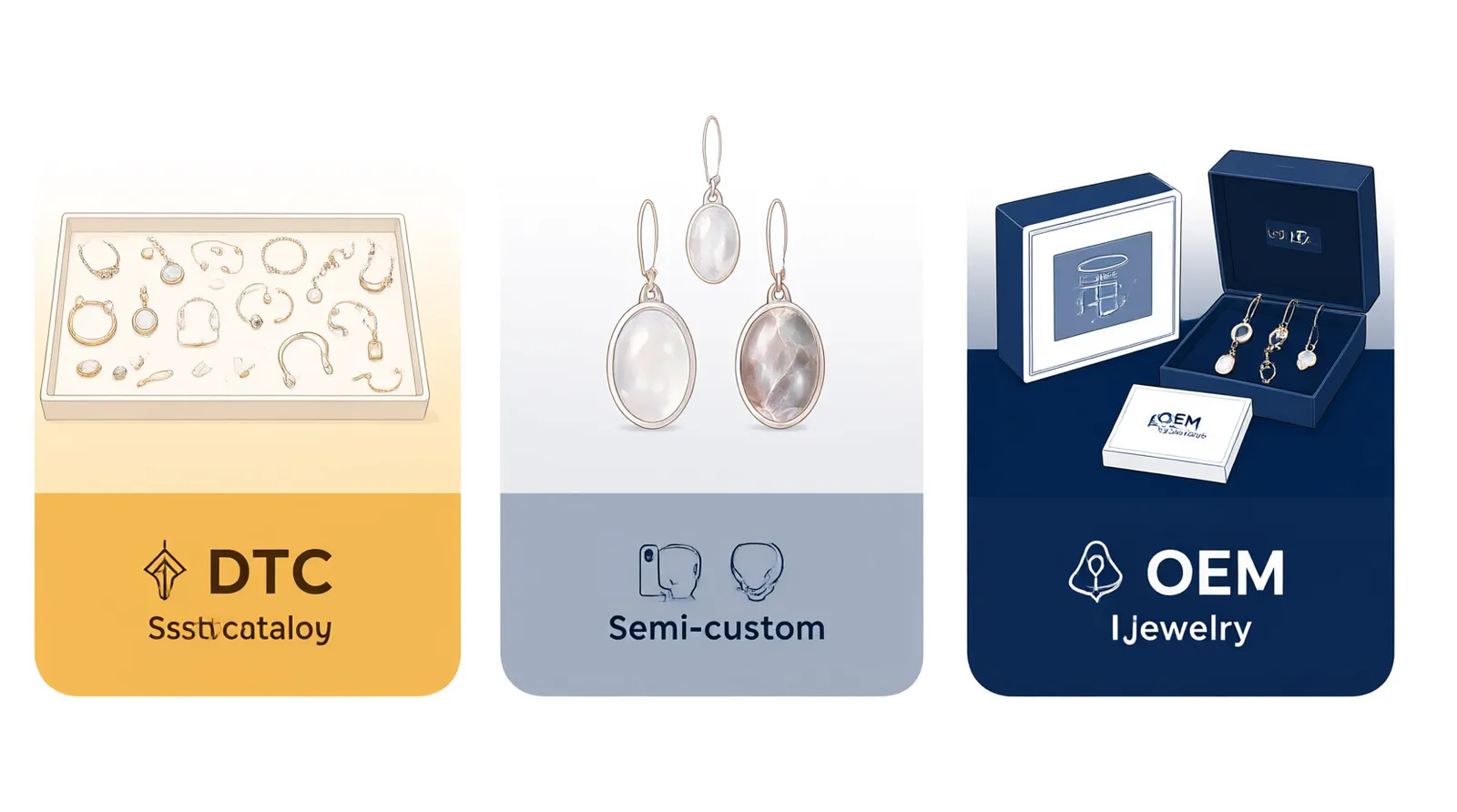
Pros and Cons
Custom OEM Jewelry — Pros
- Full brand exclusivity; no identical SKUs in competitor catalogs
- Control over materials, finishes, stones, and packaging
- Factory-direct pricing removes intermediary margins
- Flexible trade terms (EXW/FOB, multiple payment methods including L/C and Xtransfer)
- Multilingual support reduces procurement friction for global teams
- In-house QC inspection before every shipment
Custom OEM Jewelry — Cons
- Longer lead times versus in-stock alternatives; production cycles require planning
- Sampling phase adds upfront time and cost before first order
- Design and spec preparation requires internal bandwidth (or a supplier with strong sampling support)
- Custom MOQs vary by complexity — confirm before committing to a design spec
Ready-made Stock / Retail Alternatives — Pros
- Immediate availability; test market response without production wait
- No design investment; factory handles all aesthetic decisions
- Low risk for first-order exploration of a new category
- Consumer-facing personalized platforms (engraving, birthstone options like diamond, garnet, peridot) serve gifting use cases well
Ready-made Stock / Retail Alternatives — Cons
- Zero exclusivity; the same design is available to any buyer
- Margin compression as competitors list identical SKUs at lower prices
- Limited brand-building potential — the product carries no proprietary identity
- DTC personalized platforms (Jewlr, Made by Mary) are not wholesale channels; they don't serve B2B buyers
When to Choose Custom Jewelry
You're building a private-label or DTC brand. If your product photos need to sell a brand story — not just a pendant — custom production is the only path to consistency across your catalog and your packaging.
You source for a multi-door retail account. A buyer bringing new SKUs into Kendra Scott-adjacent boutique stores or independent specialty retailers needs something that isn't already in every Jared or department store display case.
You serve a non-English procurement market. MENA, francophone EU, and Spanish-speaking Latin American buyers moving serious volume need a supplier who can communicate spec changes and negotiate terms in their language without four-day email delays.
You're replacing a dependency on a single supplier. Buyers who were sourcing luxury-adjacent fashion jewelry from a manufacturer that failed a QC audit need a vetted alternative with documented inspection protocols, not just a cheaper catalog.
Your margin model requires factory-direct pricing. An importer running a 40%+ gross margin target on gold-plated copper fashion jewelry cannot get there through distributors. Factory-direct with low MOQ is the structure that makes the math work.
For a ranked comparison of the top OEM sourcing options in this category, 6 Custom Jewelry Sources Ranked: OEM Suppliers & Retail Benchmarks for 2026 walks through evaluation criteria that procurement teams can apply directly.
When to Choose Alternatives
You need inventory in two weeks. No custom production cycle can match in-stock fulfillment. If a pop-up event, a seasonal campaign, or a sudden viral moment creates demand you didn't plan for, pulling from a stock catalog is the right answer.
You're testing a new category for the first time. Before committing to a custom MOQ run in rhodium-plated turquoise bead necklaces, ordering a small stock lot to validate customer response is rational risk management.
Your customer base is a one-time gifting audience. Consumer-facing personalized jewelry platforms like Brook & York serve individual shoppers buying a single engraved necklace. That's not a B2B wholesale channel; it's the right tool for that specific job.
You operate a consumer personalization service, not a branded product line. If your business model is selling named or date-engraved pieces directly to consumers — similar to what Kay's personalized jewelry category represents — you need a different sourcing and production stack than an importer building a product catalog.
Final Verdict
Custom OEM jewelry and ready-made alternatives are not competitors in any real sense — they serve different stages of a brand's lifecycle and different business models. The operative question is whether your growth plan requires a defensible product identity.
Buyers who treat their jewelry assortment as a branded asset — not just a resale category — need custom production. The exclusivity, margin structure, and brand equity that come from OEM sourcing are not replicable from a shared catalog, regardless of how many diamond or amethyst variants a stock supplier offers.
That said, fast-fill catalog sourcing has a permanent place in any serious buyer's toolkit. The buyers who win are the ones who use low-MOQ stock orders to validate new directions quickly, then shift winning styles into custom production once demand is confirmed.
STRAND's structure — a broad stock catalog with low piece-count minimums (as of early 2025, most styles sit at 12 pcs/style with select options from 1 pc) plus full custom OEM capability — is built for exactly that two-track model. Shipping by air, sea, or express; payment by T/T, PayPal, Western Union, L/C, or Xtransfer; multilingual sales across six languages; in-house QC before every shipment.
If you're ready to evaluate custom OEM terms, MOQs, or want to request samples from the stock catalog, contact STRAND directly at strandjewelry.com to request a quote or discuss your sourcing requirements with the procurement team.