
Custom Jewelry vs. Ready-Made: B2B Sourcing Guide for Importers & Brands
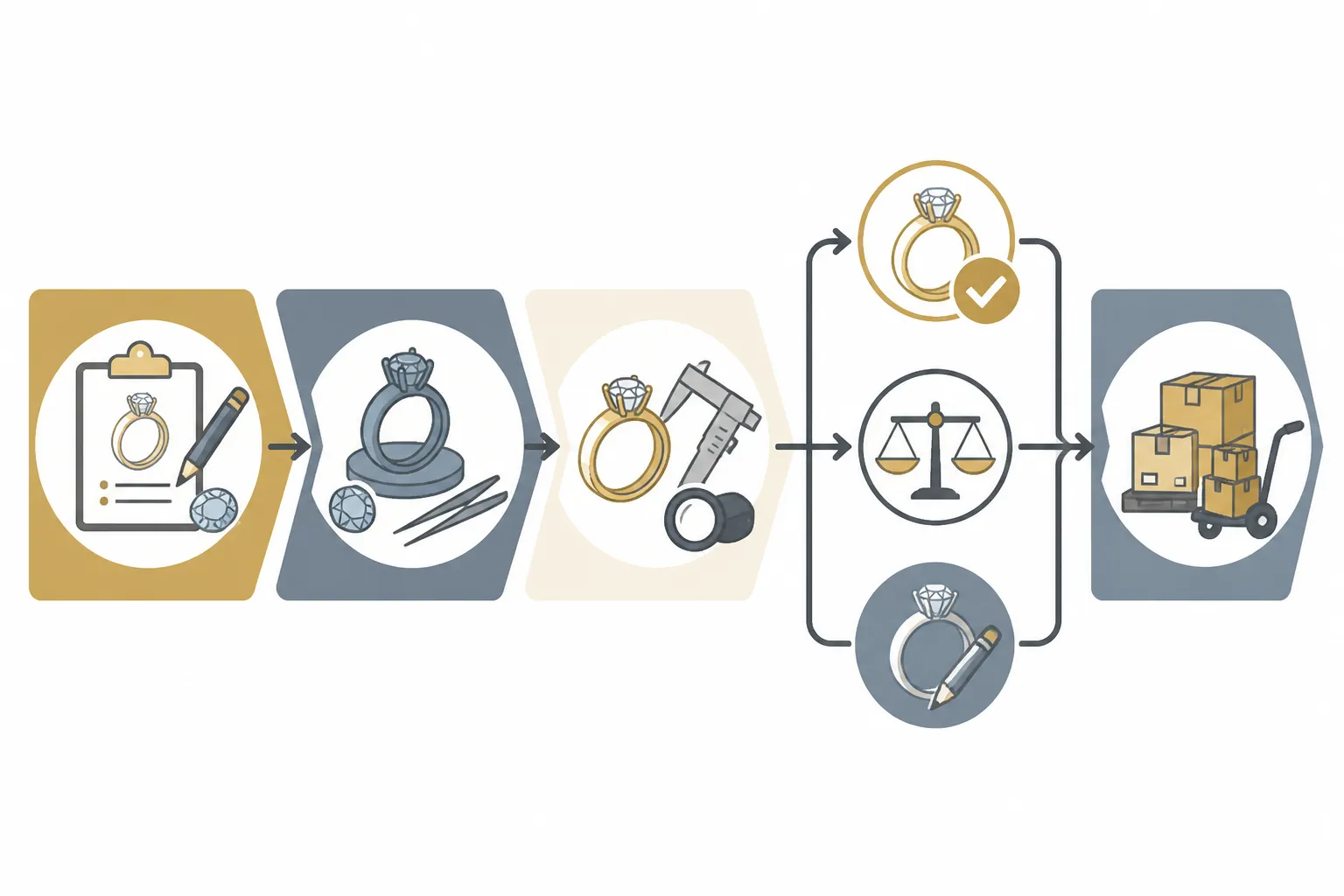
Custom Jewelry vs. Ready-Made: B2B Sourcing Guide for Importers & Brands
Custom OEM jewelry gives buyers full control over design, branding, and margin — but requires upfront planning around lead times and minimum quantities. Ready-made stock and retail personalized platforms trade that control for speed and low commitment. Which path fits your business depends on whether you're building a differentiated product line or filling a short-term gap.
TL;DR / Quick Verdict
Custom jewelry sourcing (OEM/wholesale) is the right move for importers, DTC brands, and resellers who need branded product, wholesale pricing, and a repeatable supply chain. Ready-made alternatives — including retail personalized platforms — work for concept testing, one-off purchases, and end-consumer gifting. They are not designed for volume buyers who need margin, exclusivity, or multilingual procurement support.
At-a-Glance Comparison Table
| Dimension | Custom Jewelry (OEM/Wholesale) | Ready-Made Alternatives (Retail Personalized Platforms) |
|---|---|---|
| Pricing model | Wholesale ex-factory; unit cost scales with volume | Retail or near-retail MSRP; no trade tier |
| MOQ | From 12 pcs/style (stock); negotiated for full OEM | 1 piece per order; no bulk tier |
| Customization depth | Full: materials, plating, stones, dimensions, packaging | Surface: name/date engraving, birthstone, metal color |
| Branding control | Full private label / white label available | Platform branding; co-branding not available |
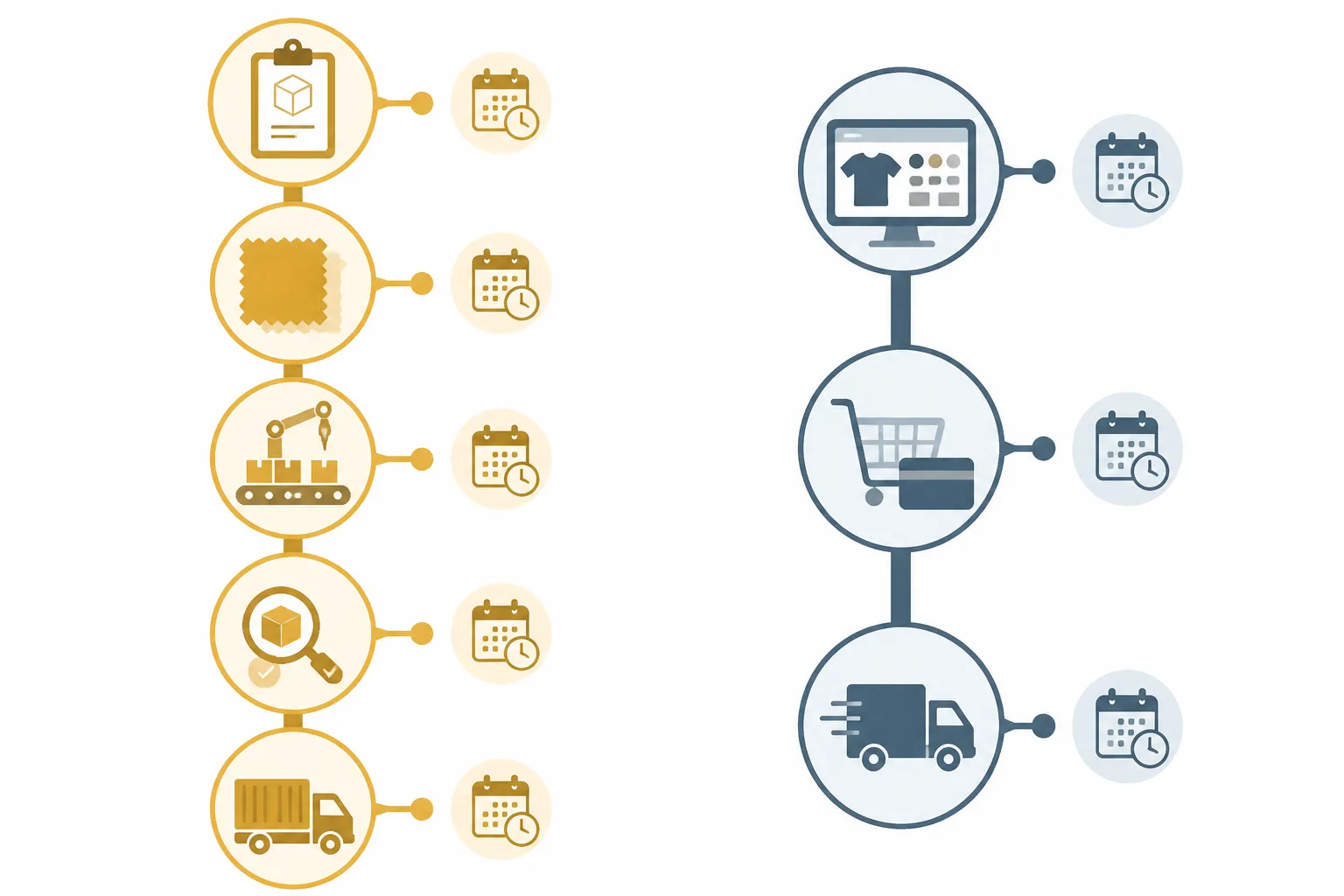
| Lead time | Stock: days to ~2 weeks; custom OEM: 30–60+ days | 1–5 business days; quick-ship options on select items |
| Payment options | T/T, Western Union, PayPal, L/C, Xtransfer | Credit card, buy now/pay later |
| QC process | In-house inspection before every shipment | Brand-internal QC; no buyer-facing inspection access |
| Support languages | EN, FR, AR, ES, DE, RU | English primary |
| Shipping terms | EXW or FOB; air, sea, or express freight | Prepaid; free shipping common |
| Best for | Importers, DTC brands, resellers building margin | End consumers, gifters, low-volume specialty retail |
Custom Jewelry Overview
Custom jewelry in the B2B context means working directly with a manufacturer to produce pieces built to your specifications — your design, your branding, your margin structure. This is OEM or private-label sourcing, and its core advantage is differentiation: pieces produced under your label can't be undercut by a marketplace listing of the same SKU.
STRAND, a Hangzhou-based jewelry brand, connects overseas buyers in the US, EU, UK, and MENA directly to vetted Chinese workshops. Their stock catalog covers 114 styles, with 109 of those carrying a 12 pcs/style MOQ and select designs available from 1 piece. Custom OEM production goes further — buyers can specify metal base, plating type (gold-plated or rhodium-plated copper), stone selection, finish, and private-label packaging. Trade terms are EXW or FOB, with freight options across air, sea, and express.
For multilingual procurement teams, STRAND supports sales in English, French, Arabic, Spanish, German, and Russian — a practical requirement when sourcing coordination spans regions with different working languages.
Alternatives Overview
The main alternatives to custom OEM fall into two categories. First: stock catalog buying without customization — picking ready-made designs from a wholesaler's existing inventory. Second: retail personalized jewelry platforms — consumer-facing services like Jewlr that offer name engraving, birthstone selection, and metal color options.
Retail personalized platforms are built for end consumers. Jewlr, for example, offers personalized rings, necklaces, earrings, bracelets, charms, anklets, and sets in metals including Sterling Silver, Stainless Steel, White Gold, Gold Plated, and Vermeil. Buyers can choose from stone shapes including Round, Heart, Princess, Oval, Baguette, Pear, Marquise, and Cushion. Jewlr offers a 99-day return policy and a one-year warranty — terms built for gifters.
None of that translates to a B2B sourcing strategy. These platforms don't offer trade pricing, private-label output, or buyer-facing QC access. For a buyer running a DTC jewelry brand or managing import volumes, the question isn't "should I buy from Jewlr?" — it's "can I offer comparable personalization depth through my own catalog, at margins that support a real business?"
Stock catalog buying without customization sits between the two poles: faster than full OEM, lower commitment than a custom run, but with no branding exclusivity.
Feature-by-Feature Breakdown
Pricing and Unit Economics
Custom OEM pricing follows a wholesale ex-factory model. Unit costs decrease with volume, and trade terms — EXW or FOB — mean the buyer controls landed cost through freight and logistics decisions. That structure supports real margin management.
Retail personalized platforms price at MSRP. Promotional discounts appear periodically, but no trade tier exists. There is no margin available for resale.
Stock catalog buying from a wholesaler is the middle position: catalog prices are wholesale, and a 12-piece MOQ entry point on most STRAND styles lets buyers test a new design before committing to a larger custom run.
Customization Depth
This is where the gap between custom OEM and retail alternatives is widest. Custom OEM through a manufacturer gives a buyer control over:
- Metal base and plating: gold-plated, rhodium-plated copper, 925-style silver finishes
- Stone and material type: glass beads, rhinestones, natural stone, faux pearls, gradient crystal
- Design geometry: shape, hardware, dimensions
- Packaging and labeling for private label
Retail personalized platforms offer consumer-facing customization: name or date engraving, birthstone choice by birth month, metal color selection. Meaningful to a gift buyer. Not meaningful to a B2B buyer building a branded catalog.
Minimum Order Quantities
MOQ is the procurement sticking point that comes up most often when buyers evaluate moving from retail sourcing to OEM. STRAND's stock catalog starts at 12 pcs/style on 109 of 114 catalog styles, with select designs available from 1 piece. Custom OEM quantities are negotiated based on design complexity and production run size.
Retail platforms have no MOQ — 1 piece per order by design. That's appropriate for their customer. For a buyer placing a 200-piece mixed order across 15 styles, there is no equivalent tier on a consumer platform.
Quality Assurance and Inspection Access
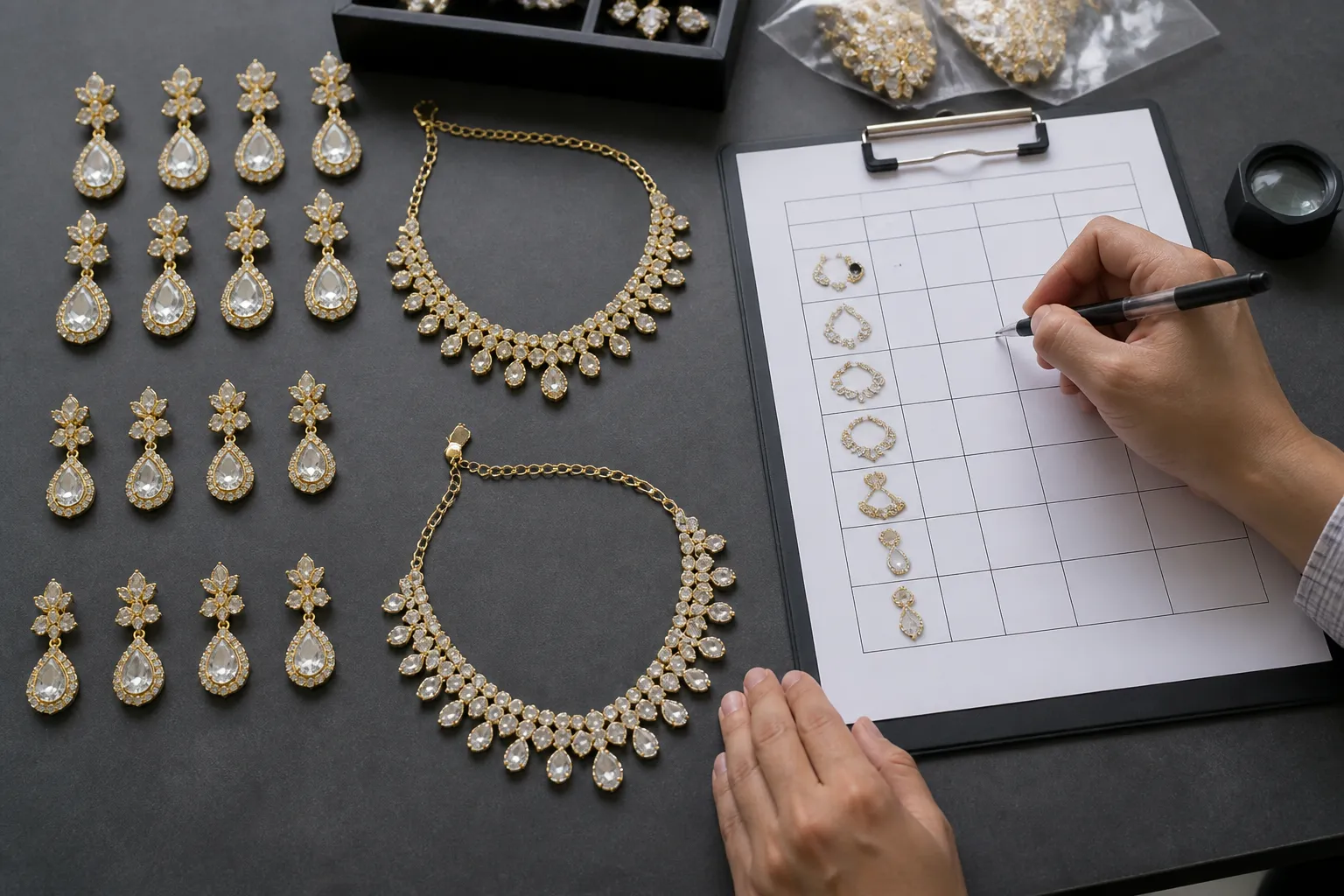
Custom OEM sourcing puts QC in the buyer's hands in a way stock retail never does. STRAND conducts in-house QC inspection before every shipment. For buyers who need documented inspection results — for import compliance, retailer requirements, or internal product standards — that's a procurement requirement, not a bonus feature.
Retail platforms maintain their own brand QC internally. Buyers have no visibility into the process and no ability to specify tolerances, finish standards, or rejection thresholds.
Payment Terms and Trade Finance
Payment options differ sharply. Custom OEM suppliers support trade payment methods: T/T bank transfer, Western Union, PayPal, L/C (letter of credit), and cross-border platforms like Xtransfer. L/C matters specifically for larger-volume importers who need bank-backed transaction security on six-figure orders.
Retail platforms accept credit card and buy now/pay later — built for consumer transactions, not for a $20,000 import order with cross-border compliance requirements.
Multilingual Support and Regional Coverage
For procurement teams operating across the US, EU, UK, and MENA, language support in sourcing is an operational requirement. A buying team coordinating in Arabic, or a French importer managing product specs and QC feedback, needs a sales and support channel in their working language. STRAND's team covers English, French, Arabic, Spanish, German, and Russian.
Retail personalized platforms operate primarily in English. That's adequate for a consumer. It's insufficient for a MENA-based importer managing a multi-style custom OEM brief.
Pros and Cons
Custom Jewelry (OEM / Wholesale)
Pros
- Full design and branding control; private label available
- Wholesale unit costs; margin structure designed for resale
- Low entry MOQ — 12 pcs/style on most of a 114-style catalog
- Payment rails including T/T, L/C, PayPal, Western Union, Xtransfer
- In-house QC inspection before every shipment
- Sales support in six languages: EN, FR, AR, ES, DE, RU
- Flexible shipping: EXW or FOB, air / sea / express
Cons
- Custom OEM lead times run 30–60+ days depending on design complexity
- Fully custom work requires a design brief and sampling phase
- Per-unit cost advantage requires volume to materialize
- Logistics and customs under EXW terms are the buyer's responsibility
Ready-Made Alternatives (Retail Personalized Platforms)
Pros
- Immediate availability; quick-ship options on select items
- No MOQ — suitable for 1-piece demand validation
- Built-in personalization tools without tooling cost
- Consumer-friendly return windows (e.g., 99-day at Jewlr) and warranty coverage
- Buy now/pay later payment options
Cons
- Retail pricing; no margin available for resale
- No private label or branding control
- Personalization is surface-level; no material or structural customization
- English-primary support
- No buyer-facing QC visibility or documentation
- Not scalable for volume importers or brands building a differentiated product catalog
When to Choose Custom Jewelry
You're building a DTC brand that needs its own product identity. If your store competes on product rather than price, you need SKUs no other seller is carrying. A stock earring sourced at wholesale under your own label — for example, a two-tone rhinestone fireworks set positioned as a hero item in your catalog — cannot be cross-listed by a competitor on a marketplace. That's differentiation with real commercial value.
You're an importer managing margin across a mixed line. EXW or FOB trade terms, T/T and L/C payment rails, and documented in-house QC are procurement requirements at import scale. Stock catalog options with a 12-piece MOQ let you test new designs before committing to a custom production run. That's risk management, not experimentation.
Your procurement team spans multiple regions or languages. Sourcing coordination in Arabic, French, or German — through specification, sampling, QC review, and logistics — is a real operational problem for MENA and European buyers. Multilingual sales support makes that feasible without adding translation overhead to every touchpoint.
You need a repeatable, scalable supply chain. One-off orders from consumer platforms don't build the supplier relationship, production consistency, or inventory predictability that a growing brand requires. A vetted factory connection with in-house QC gives you a supply partner, not a one-time vendor.
When to Choose Alternatives
You're testing a concept at very low volume. If you need 3–5 pieces of a personalized necklace to validate whether a product concept resonates before investing in a catalog, a platform like Jewlr delivers product in days with no tooling cost or MOQ commitment. That's market research. It's not a sourcing strategy.
You're a specialty retailer with occasional gifting needs. A boutique gift shop buying 2–3 personalized pieces for display or bespoke customer orders doesn't fit the OEM model. Retail platforms are the appropriate channel for that scale.
Speed outweighs cost and control absolutely. If you need inventory in 48 hours and a custom production run isn't feasible, retail platforms with quick-ship options serve that need. That's a tactical tradeoff with a real opportunity cost — you're paying retail pricing for speed — not a strategic sourcing choice.
Your product category requires niche configurations a retail platform already handles. Very short runs (1–3 pieces) of specific stone shapes or engraving configurations may be more efficiently handled through a consumer platform than through a custom OEM brief with a manufacturer.
Final Verdict
The choice isn't really about custom jewelry versus alternatives in the abstract — it's about what your business actually needs from a supply chain.
If you're building volume, margin, and brand identity — as an importer, DTC brand, or reseller — custom OEM sourcing is the only path that scales. Retail personalized platforms don't offer trade pricing, private label output, buyer-facing QC, or multilingual procurement support. They're consumer products, priced and designed accordingly.
Retail alternatives earn their place for low-commitment validation and one-off specialty retail. They're also useful as competitive benchmarks — understanding how a retail personalized jewelry platform positions and prices its product line tells you something about what the end consumer is paying and what they expect. That's market intelligence, not sourcing.
For buyers ready to evaluate a custom jewelry supply chain — MOQ tiers, pricing, lead times, OEM capabilities — the next step is a direct conversation with a supplier who works at your scale.