
Jewellery Wholesale Supplies: The Smart Buyer's Guide
Jewellery Wholesale Supplies: The Smart Buyer's Guide
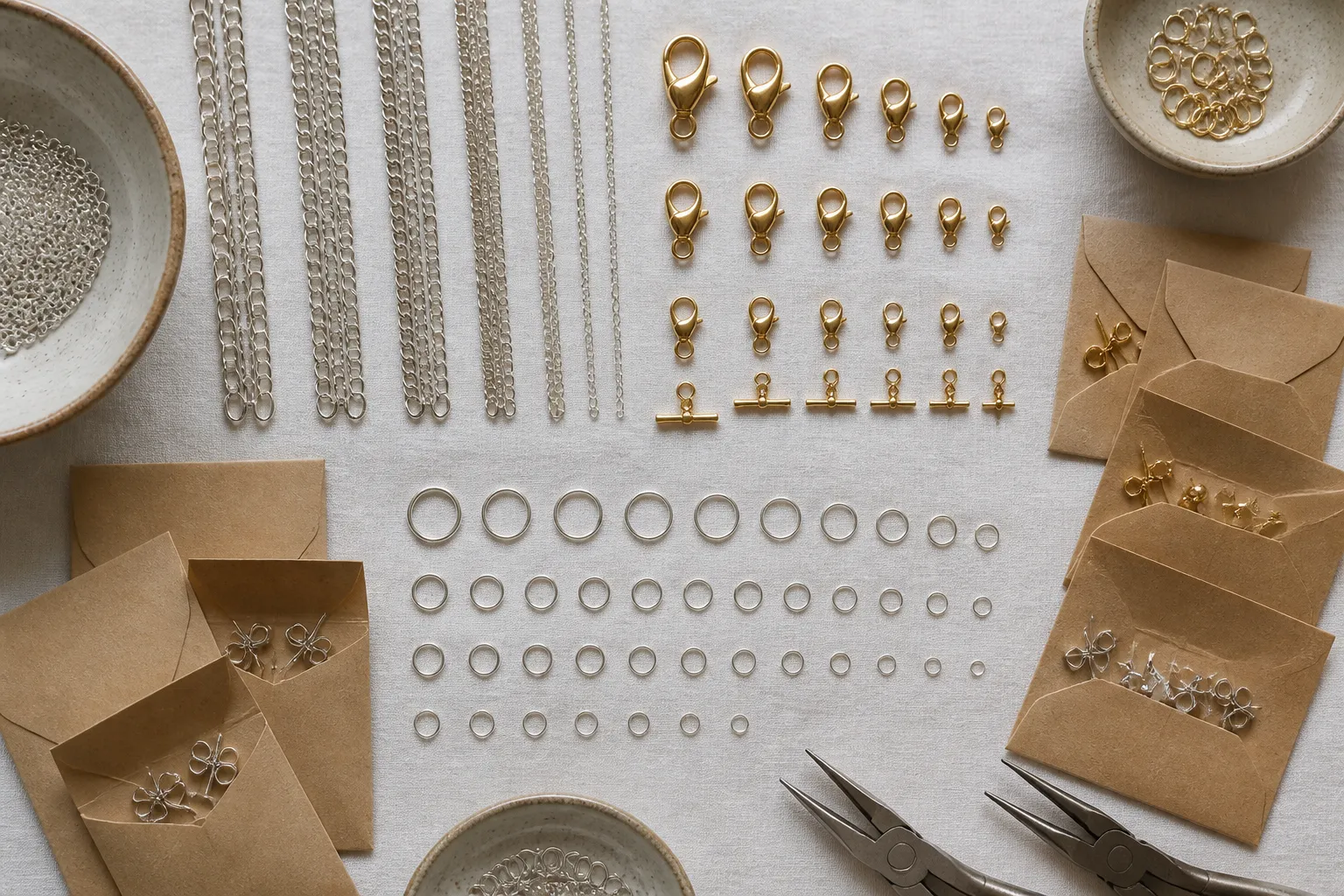
Jewellery wholesale supplies are the raw materials, components, and finished findings—chain lengths, clasps, beads, wire, earring posts, jump rings, and more—purchased in bulk from manufacturers or distributors at below-retail unit pricing. For DTC store owners, importers, and procurement teams, accessing the right wholesale supply network is the structural difference between a squeezed margin and a scalable product line.
This guide covers the full procurement picture: what's available, how to evaluate suppliers across the dimensions that matter, what questions to ask before committing, and how to protect your business at every stage of the sourcing process.
What Are Jewellery Wholesale Supplies?
Jewellery wholesale supplies fall into two broad categories: components (the individual parts assembled into finished pieces) and finished wholesale jewellery (ready-to-retail items sourced in bulk). For most professional buyers—studios, importers, branded labels—components are the core focus.
The main component categories include:
- Findings: clasps, jump rings, earring posts and clutches, lobster claw closures, barrel clasps, toggles, head pins, eye pins
- Chain: cable, curb, Figaro, box, snake, Singapore, and specialty patterns in a range of gauges and finishes
- Beads and spacers: seed beads, daisy spacer beads, patterned sterling silver oxidised beads, end caps
- Wire: dead-soft to half-hard in sterling silver, gold-filled, and copper, across gauges from 18 to 26
- Blanks and bases: pendant blanks, ring bases, and bracelet blanks for stone-setting or enamel work
- Tools and consumables: chain-nose pliers, flush cutters, soldering boards, mandrels
For a broader look at the accessories segment and how component sourcing fits into a wider purchasing strategy, The Complete Buyer's Guide to Jewellery Accessories Wholesale covers the full accessories landscape in detail.
The Materials Matrix: Choosing the Right Metal for Your Market
Material selection drives both your cost structure and how your products are positioned to end customers.
| Material | Characteristics | Market Fit |
|---|---|---|
| Sterling silver (925) | Hallmark-verifiable, versatile, industry standard | Universal |
| Gold-filled | Thick bonded karat gold layer; far more durable than plated | MENA bridal, European fashion |
| Rose gold-filled | Warm pink tone, strong gift and bridal demand | Gulf, Levant, North American markets |
| 14-karat solid gold | Fine jewellery tier, lower volume | Fine jewellery studios |
| Oxidised silver/copper | Darkened patina finish for vintage aesthetics | European artisanal, US boho |
| Stainless steel | Hypoallergenic, durable, lower price point | Fashion and accessible segments |
A supplier with established range depth across all these materials—one benchmark in the trade carries 834 sterling silver products and 516 gold-filled products in active catalogue—can consolidate your sourcing into fewer accounts, which reduces procurement overhead significantly.
Why Wholesale Sourcing Matters for Serious Jewellery Buyers
The unit economics are obvious: bulk pricing lowers cost-per-piece, which either widens your margin or gives you room to price more competitively without sacrificing quality. But the less-discussed advantages are equally important.

Batch-to-batch consistency protects your quality control downstream. When you build a product line around a specific gauge of gold-filled chain or a particular clasp profile, variance between orders creates real production problems—components that don't align, closures that don't match, finish tones that drift. Vetted wholesale suppliers work to standardised alloy specs and gauge tolerances. The 20-gauge cable chain in your second order should match the first.
Supply continuity is the operational benefit buyers most frequently underweight. Retail jewellery supply stores stock what sells in retail volumes; wholesale distributors hold deep inventory across their core SKUs specifically because professional buyers cannot afford stockouts mid-production. Suppliers who have served the jewellery trade for over 40 years maintain running stock in findings, chain, and beads across multiple finishes as a core business commitment, not an afterthought.
Access to new product introductions is where wholesale relationships compound. Suppliers regularly extend their catalogues—new oxidised jump rings in 19 and 20 gauge, new sterling silver patterned beads, new permanent jewellery supplies—and established wholesale accounts typically have early access.
Matching Wholesale Strategy to Your Business Model
- DTC stores: consistent component supply is paramount so listings stay in stock. Prioritise suppliers with real-time inventory visibility and reliable dispatch lead times.
- Importers and distributors: pricing tiers, currency terms, DDP vs. DAP shipping options, and consolidation across a broad SKU range matter most.
- Procurement teams at branded labels: you need supplier documentation—alloy certification, nickel-compliance statements, country of origin paperwork—for compliance and brand integrity.
How to Evaluate a Jewellery Wholesale Supplier
Not every supplier that uses the word "wholesale" is the right partner. These are the dimensions to assess before your first order.
Credential Verification and Business Account Access
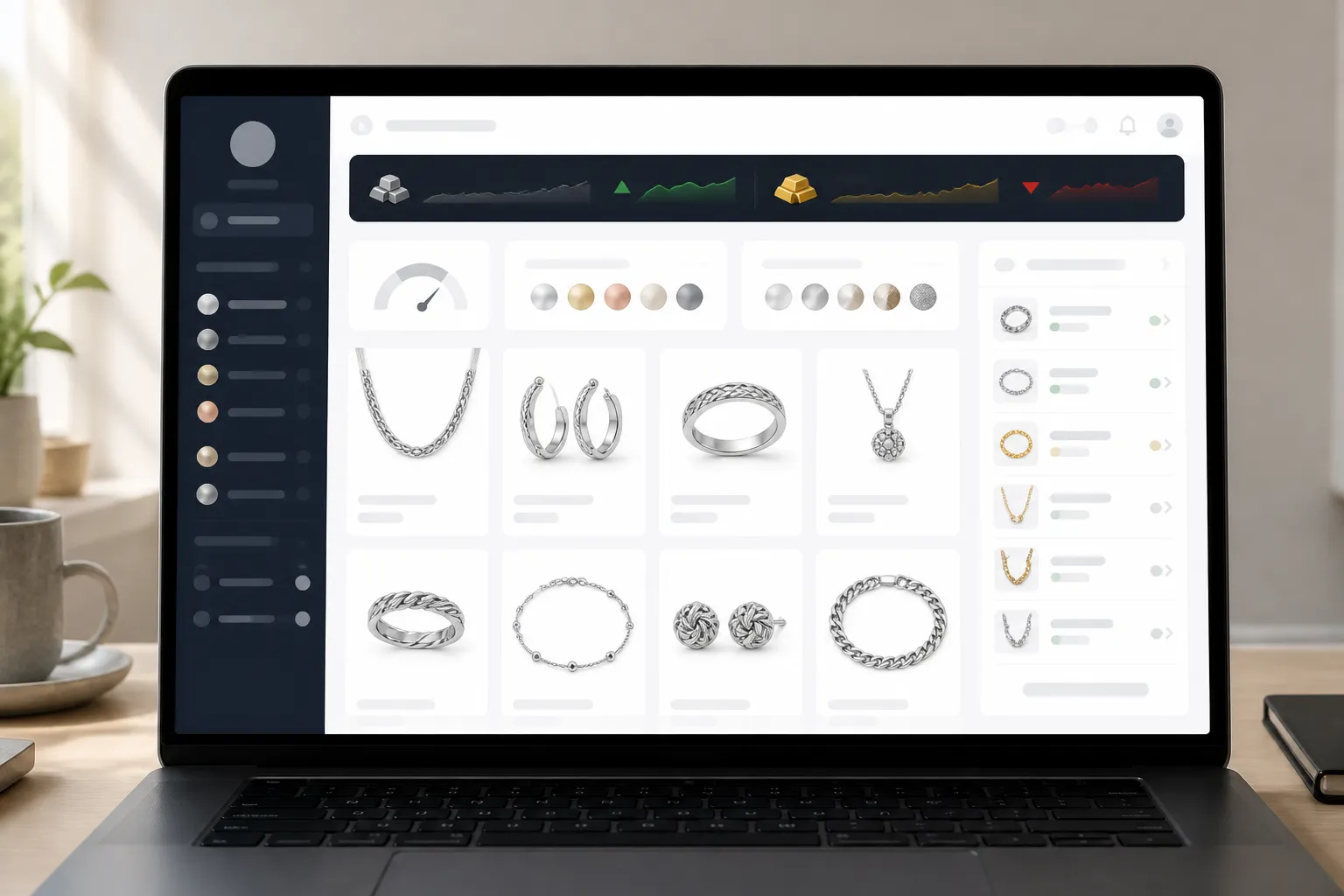
Legitimate wholesale suppliers gate their pricing behind business verification. Requiring state-issued or government business credentials before granting wholesale access is standard practice among established suppliers—it protects the pricing integrity of their professional accounts. If a supplier offers "wholesale" pricing with no verification step, their pricing is likely retail in disguise.
For overseas buyers, this typically means submitting a business registration document, VAT or tax ID, or equivalent proof of trade status. Build this paperwork into your supplier onboarding process.
Pricing Structure: Market-Based or Fixed?
For precious metal products—sterling silver, gold-filled, 14k gold—market-based pricing updated against the daily spot rate is the honest model. Suppliers who embed a surcharge on top of the metal market price are effectively adding a hidden margin to every order. Suppliers who do not add a surcharge to the metal market price offer cleaner, more predictable cost structures.
Questions to ask any prospective supplier:
- Is the daily metal market price published transparently on the site?
- Is there a surcharge applied on top of the market metal price?
- How frequently is pricing updated—daily, weekly, or monthly?
Range Depth Across Your Key Categories
Depth of range reduces vendor fragmentation. A supplier whose catalogue runs to 369 chain products, 342 findings, 228 charms, 175 post-and-clutch options, 56 earwires, and 41 clasps can cover the majority of a professional studio's sourcing in a single account. Fewer accounts means less administrative overhead, consolidated shipping, and a single relationship to manage.
For MENA-focused buyers, specifically verify that the supplier carries strong gold-filled and rose gold-filled ranges—warm gold tones dominate Gulf and Levant markets in gift, bridal, and everyday wear—and that oxidised silver options are available for the broader Middle Eastern artisanal segment.
MOQ Structure: Per SKU or Per Order?
Minimum order quantities vary significantly. For standard components—jump rings, earring posts, head pins—many suppliers sell in lots of 25, 50, or 100 units rather than requiring high-volume commitments per SKU. For chain, spool pricing is almost always more economical than cut lengths.
The critical variable: does the MOQ apply per SKU or per order? A per-SKU MOQ across 40+ components can tie up working capital quickly. A per-order MOQ with flexible per-SKU minimums gives you more inventory control. Clarify this before you assume your order structure will work.
Key Product Categories to Build Your Sourcing Around
A structured sourcing approach—rather than reactive, order-by-order purchasing—starts with understanding which categories are highest-leverage for your product line.
Findings: The Functional Hardware of Every Piece
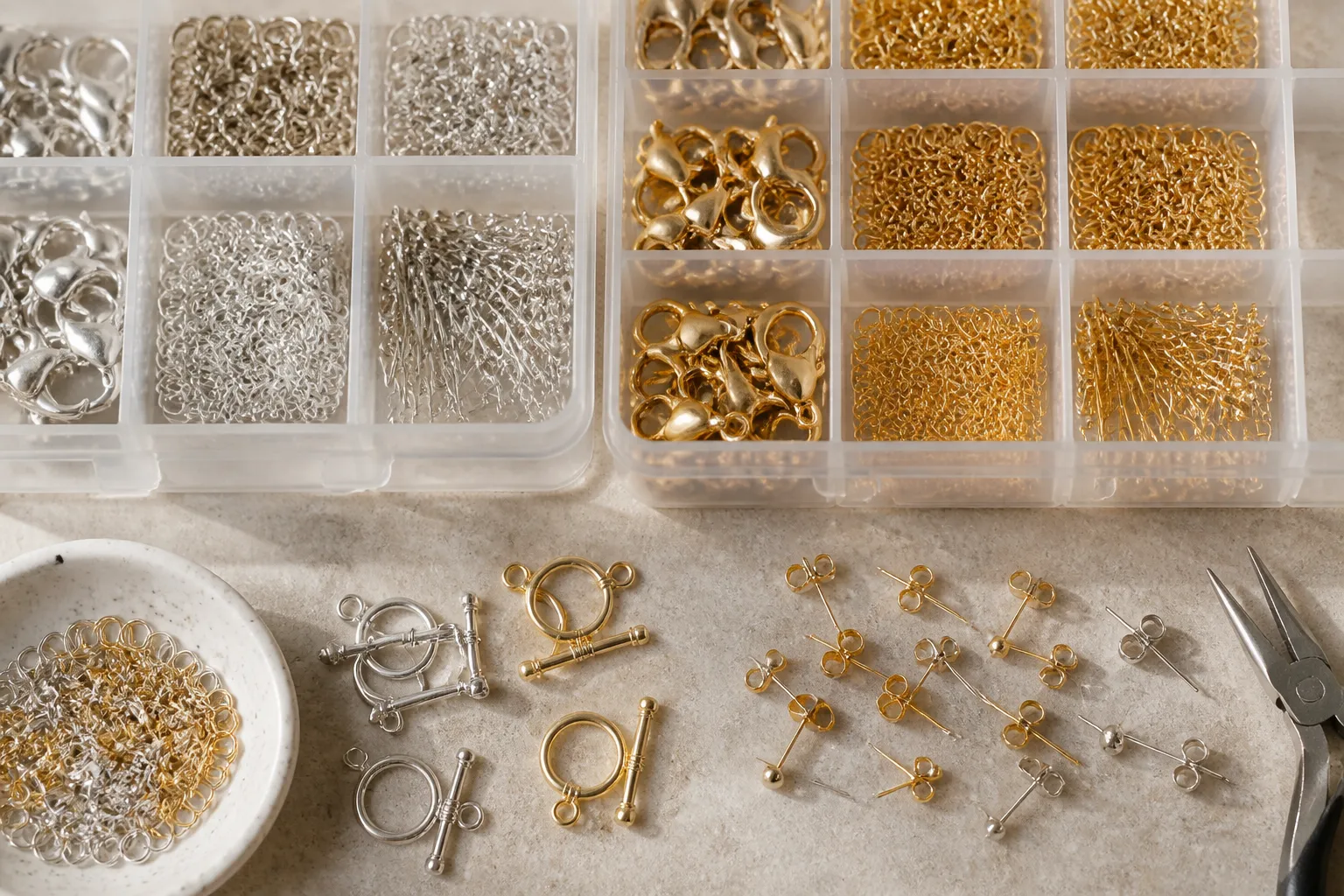
Findings are the closures, connectors, and hangers that determine whether a piece functions reliably over years of wear. Quality findings protect your returns rate and your customer satisfaction scores.
Clasps are the most purchase-critical finding. Key options:
- Lobster claw: the most versatile and universally stocked; easy single-hand operation
- Toggle: decorative and functional; popular in bridal and gift jewellery
- Box clasp: secure multi-strand closure for heavier pieces
- Magnetic: convenient, often preferred for older customers or those with limited dexterity
- Spring ring: economical and reliable for lighter chain
Jump rings seem like a minor detail until a batch comes in with inconsistent inner diameter or wire gauge. Oxidised jump rings in 19 and 20 gauge are increasingly popular for artisanal and vintage-aesthetic lines. Confirm gauge tolerance with your supplier before placing volume orders.
Earring findings—posts, clutches, French hooks, lever backs—are high-reorder items. For markets with skin-sensitivity concerns, surgical steel posts reduce returns and complaints significantly.
Chain: Your Highest-Volume Line Item
Chain is typically the largest spend category for component buyers. Key purchase decisions:
- Pattern selection: cable (most versatile across price points), curb (classic profile, strongly associated with gold jewellery in MENA and Mediterranean markets), Figaro, box chain, Singapore (delicate, excellent for layering)
- Gauge: heavier 18-20 gauge for standard necklace chains; finer 22-26 gauge for delicate pendants and layering pieces
- Form: spool is the most economical for production volume; pre-cut lengths suit smaller-volume or mixed-order operations
Specialty Supplies Worth Building Into Your Range
- Beading wire and stretch cord: for strung jewellery production, these are as essential as metal findings; look for suppliers who carry branded options like Soft Flex beading wire and Stretch Magic cord
- Permanent jewellery supplies: a fast-growing category for studio buyers offering on-site jewellery services
- Solder and fabrication tools: if your buyers include fabricating studios rather than pure assemblers, a supplier who stocks these consolidates even more of their procurement
Pricing, MOQ, and Lead Time: The Three Variables That Determine Your Supplier
Every wholesale supplier conversation ultimately resolves into three variables. Qualify on all three before you commit to a relationship.
Price: What You're Actually Paying For
For precious metal components, you're paying: metal content cost + manufacturing premium + supplier margin. Transparency on the first element is the strongest signal of overall pricing integrity. A supplier who publishes a daily market price for silver and gold, and does not add a surcharge to that market rate, is giving you genuine pricing visibility.
For non-precious metals—stainless steel, copper, plated findings—pricing is typically fixed and should be compared across suppliers on a per-unit basis at your expected order volume.
MOQ: What You Need to Spend to Get Started
Understand both the minimum to open an account and the minimums per SKU. If you're building a range across 30+ component SKUs, a $20 minimum per SKU adds up to a substantial opening order. If your initial range is focused on 5-8 key components, that structure is manageable.
Ask specifically about sample ordering if you're evaluating a new supplier—testing the actual product quality before placing a volume order is a basic procurement discipline, and suppliers confident in their quality will accommodate it.
Lead Time: In-Stock vs. Backordered
For standard findings and chain, dispatch lead times on in-stock items should be measured in business days. Multi-week lead times on standard sterling silver jump rings signal thin inventory depth. Ask separately about:
- In-stock item dispatch time (target: 1–5 business days)
- Backorder or low-stock replenishment timeline
- Custom or special-order timelines (custom gauge, custom alloy spec, custom finish)
For international shipments, add realistic customs clearance time for your destination market to any supplier-side lead time figure.
When to Scale Your Wholesale Sourcing Strategy
Most buyers formalise their wholesale sourcing at one of three inflection points:
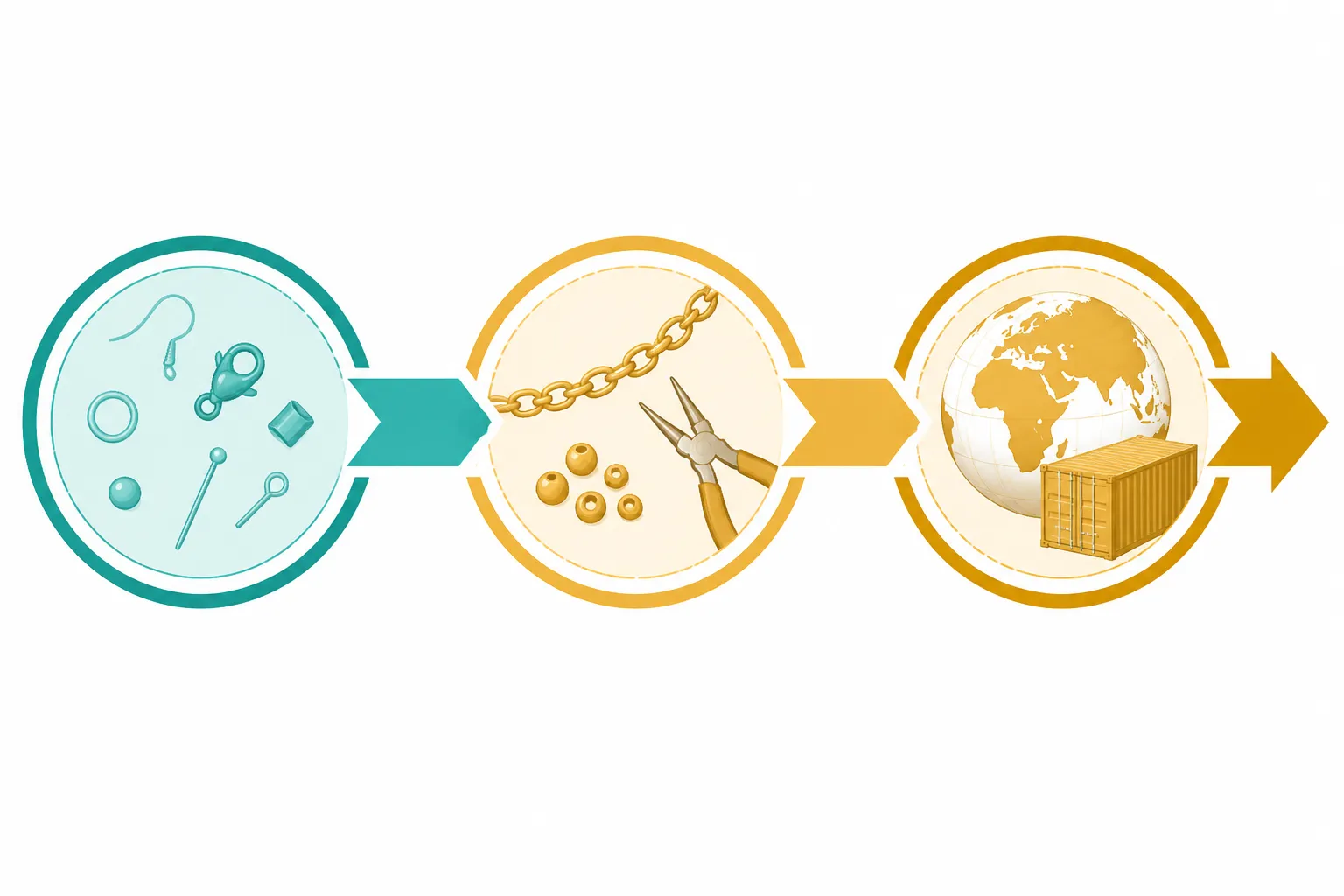
Stage 1: Volume threshold hit. You're reordering the same component repeatedly from a retail supplier. The crossover point varies by component, but most buyers reach it once they're purchasing in dozens or spools rather than individual units. The calculation is simple: take your current retail unit price, find the wholesale equivalent at your monthly volume, and multiply the difference by 12 months.
Stage 2: Product line expansion. Adding a new metal finish, a new category (hoops, permanent jewellery), or a new price tier requires new components. Wholesale accounts let you sample new SKUs at cost before committing to a production run—critical for risk management on product development.
Stage 3: Market expansion. Entering a new geography requires matching your component range to that market's preferences. Gulf markets require strong gold-tone and rose gold-filled ranges; oxidised silver is well-suited for European artisanal retail; surgical steel findings are essential for EU-compliant earring lines. Either find a new specialist supplier for that market or consolidate with a supplier who carries all relevant ranges.
Quality Assurance and Returns: What to Verify Before You Scale
Quality issues in jewellery supplies cluster into three categories: dimensional inconsistency (wrong gauge, wrong inner diameter on jump rings), finish inconsistency (plating variation across a batch, uneven oxidisation), and material misrepresentation (lower-karat alloy than specified on the label).
Pre-Order Verification Steps
Before placing a large volume order with any new supplier:
- Request a sample order if the supplier's policy allows it. Test clasp spring tension, check jump ring inner diameter with a calliper, verify chain gauge against a micrometer, assess plating adhesion.
- Request alloy certification or material data sheets for precious metal products. If you're selling into markets with hallmarking requirements—as many MENA and EU buyers are—this documentation needs to exist at the supplier level.
- Confirm the defective goods policy in writing. A supplier confident in their quality maintains a clear, specific process for faulty batches. Vague policies on this point are a substantive warning sign.
Nickel Compliance for International Markets
EU and UK buyers must account for nickel release limits under EN 1811 for jewellery with prolonged skin contact. Sterling silver, gold-filled, and surgical steel findings are generally compliant; plated products vary. Confirm compliance status with your supplier for every plated component in your range before selling into regulated markets.
How STRAND Fits Into Your Wholesale Supply Strategy
STRAND sources and vets jewellery supplies specifically for overseas buyers—DTC stores, importers, and professional procurement teams who need more than a catalogue, they need a sourced, quality-checked supply chain with documentation to match.
STRAND's positioning is crafted and vetted supply, not commodity bulk. Every product in the STRAND range has been assessed for material consistency, finish quality, and suitability for the international markets our buyers serve. For MENA buyers, this means a strong gold-tone and rose gold-filled range—warm metals and quality hallmarking are baseline requirements in Gulf and Levant markets, not optional. For EU and UK buyers, nickel compliance documentation is available as standard.
If you're evaluating jewellery wholesale supplies for your business, the right next step is a direct conversation about your specific requirements: target markets, materials, volume tiers, and lead time expectations.
[Contact STRAND] to discuss your sourcing requirements and request current pricing and availability.
Wrapping Up: The Procurement Steps That Actually Move the Needle
Jewellery wholesale supplies are the foundation of every professional jewellery business, from a solo studio to a multi-market import operation. The sourcing decisions you make at the component level—material quality, supplier reliability, pricing transparency, MOQ structure—compound across every order you place.
The concrete action to take this week: identify the two or three components you currently source at retail pricing, calculate your monthly volume on each, and request a wholesale account quote from a vetted supplier. The unit price difference on something as routine as sterling silver jump rings or gold-filled chain will make the case for formalising a wholesale account faster than any general recommendation.
To expand your sourcing knowledge beyond components into the wider accessories category, read The Complete Buyer's Guide to Jewellery Accessories Wholesale—it covers sourcing strategy, supplier evaluation, and category selection across the full accessories range.
Ready to formalise your supply chain? [Contact STRAND] with your product requirements, target markets, and estimated volumes. We'll respond with specific options, pricing ranges, and lead time estimates for your range.
Frequently Asked Questions
What is jewellery wholesale supplies?
Jewellery wholesale supplies refers to the bulk procurement of finished pieces, components, and raw materials — such as sterling silver findings, gemstone beads, gold-filled chains, and clasps — sourced directly from manufacturers or distributors at trade pricing for resale or production purposes. For DTC stores and importers, this typically involves negotiating MOQs (minimum order quantities), lead times, and shipping terms to maintain consistent inventory. STRAND curates vetted collections across metals, stones, and styles, giving procurement teams a reliable supply of crafted pieces that meet quality and compliance standards for international markets.
How to jewellery wholesale supplies?
To source jewellery wholesale supplies through STRAND, overseas buyers — DTC stores, importers, and procurement teams — can request a curated catalogue specifying materials (925 sterling silver, 18K gold vermeil, brass with PVD coating), minimum order quantities (typically 50–200 units per SKU), and lead times (15–30 days for standard lines, 45–60 days for custom). Sampling is strongly recommended before bulk orders to verify finish quality, stone setting, and dimensional accuracy (provide target dimensions in mm and weight tolerances upfront). For MENA markets, STRAND offers gold-tone and modest-design collections with halal-compliant material documentation available upon request; all shipments are supported by DHL/FedEx express and sea freight options with full commercial invoicing for customs clearance.
Why is jewellery wholesale supplies important?
Jewellery wholesale supplies are essential for DTC stores, importers, and procurement teams because they provide consistent access to vetted materials — metals, stones, findings, and components — at volume pricing that makes retail margins viable. For overseas buyers, a reliable wholesale supply chain reduces lead times, simplifies logistics, and ensures quality consistency across repeat orders. STRAND positions this as a crafted sourcing relationship rather than bulk commodity purchasing, giving buyers confidence in material integrity, MOQ flexibility, and traceable production standards.
When should I use jewellery wholesale supplies?
You should use jewellery wholesale supplies when scaling production for a retail or DTC operation — particularly when your order volume justifies MOQ thresholds and you need consistent material quality across collections. STRAND recommends sourcing wholesale when you require repeatable specifications (alloy grades, stone cuts, findings dimensions) across seasonal or ongoing lines. It's also the right move when consolidating procurement to reduce per-unit landed cost while maintaining the crafted, vetted standard your end customers expect.
What are the benefits of jewellery wholesale supplies?
Jewellery wholesale supplies allow retailers, importers, and DTC brands to source vetted, consistent pieces at scale — reducing per-unit cost while maintaining margin without compromising on material quality or finish standards. Buying wholesale through a trusted supplier like STRAND gives procurement teams access to curated collections with defined MOQs, predictable lead times, and reliable shipping logistics, which simplifies inventory planning across markets. For overseas buyers, it also means fewer sourcing intermediaries, stronger quality control at origin, and the ability to build long-term supplier relationships that support seasonal restocking and custom or private-label development.