
Custom Jewelry Buying Guide: Source, Evaluate & Order with Confidence
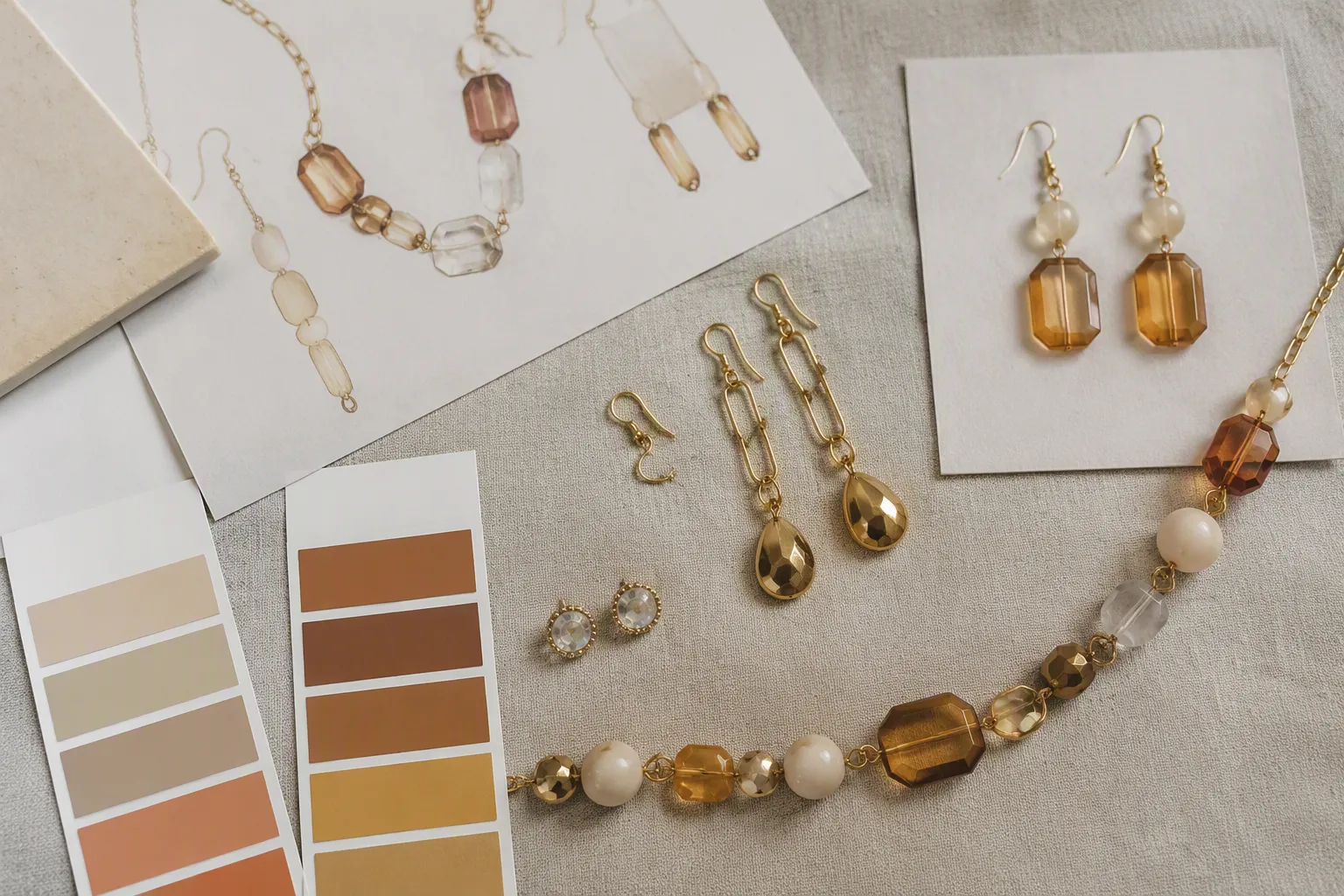
Custom Jewelry Buying Guide: Source, Evaluate & Order with Confidence
Custom jewelry sourcing comes down to four variables: material quality, minimum order quantities, production lead times, and supplier accountability. Get all four right and you have a profitable, defensible product line. Miss one and you're absorbing returns, delays, or a wasted sampling budget.
Who This Guide Is For
This guide is for buyers who are past the browsing phase — DTC store owners building a private-label line, importers adding earring or necklace sets to their catalog for US, EU, UK, or MENA retail, and procurement managers comparing OEM quotes from multiple workshops. If you have a style brief, a quantity range, and a launch window, this guide gives you the evaluation framework to move from shortlist to purchase order.
What Custom Jewelry Actually Does for Your Business
Custom jewelry removes you from the commodity race. Stock wholesale puts your store on the same rack as a dozen competitors carrying identical SKUs; a custom OEM program gives you proprietary colorways, your own branding, and margin that isn't eroded by price-matching.
The practical split is between two models. OEM production starts from your design brief — you supply artwork or CAD files, the manufacturer creates a new mold and produces to your specification. It demands higher MOQs and longer timelines but delivers fully proprietary product. Stock-with-customization means selecting from an existing catalog and modifying finish, stone, or packaging — lower barrier, faster turnaround, ideal for testing a new category before committing to tooling costs.
Brands like Kendra Scott built their DTC premium on proprietary shapes and colorways. The same logic applies at the importer level: a turquoise-and-gold-plated drop earring in your own packaging is harder to undercut than a generic style any Jared-adjacent retailer can source from the same factory floor.
Key Decision Factors
1. MOQ and Order Flexibility
Minimum order quantity is the most common deal-breaker in fashion jewelry sourcing. A manufacturer quoting 500 pieces per style per color locks out most DTC entrants and makes range testing impossible. The benchmark to beat for stock designs is under 50 pieces per style — STRAND, for example, sets MOQ at 12 pieces per style on 109 of its 114 catalog designs, with select styles available from a single piece.
Always confirm whether the MOQ applies per style, per SKU (style × color × size), or per total order. That distinction changes your cash outlay by a factor of three or more.
2. Metal Finish and Material Specifications
Gold-plated and rhodium-plated copper are the workhorses of fashion jewelry. Before signing, get the plating thickness in microns (μm) in writing. A 0.5μm flash plate looks identical to a 2.0μm plate at delivery but tarnishes within months — particularly in humid or salt-air environments common across MENA and coastal EU markets. Specify a minimum thickness contractually, not verbally.
Confirm the base metal. Copper alloy responds differently to skin contact than nickel-free alloys, and EU REACH regulations restrict nickel release from items in prolonged skin contact. Non-compliance can block customs clearance in Germany, France, or the Netherlands and trigger recall costs that dwarf any unit-price saving.
3. Stone and Crystal Sourcing
Material designation matters more than the product listing implies. "Turquoise" can mean natural, treated, reconstituted, or dyed howlite — four different materials with different customs classifications, costs, and consumer disclosure obligations. The same ambiguity applies to amethyst, garnet, and peridot listings: confirm whether you're buying natural gemstones, synthetic lab-grown, or glass simulants before your photographer shoots the collection.
For fashion jewelry, glass beads, faux pearls, and rhinestones are the practical core. Ask how stones are set: glued settings fail faster than prong or bezel sets and generate returns, especially in earrings worn frequently.
4. Pricing Model and Trade Terms
Quotes arrive in three standard formats. EXW (Ex Works) means you arrange all freight from the factory gate — cheapest headline price, highest logistics risk. FOB (Free On Board) means the supplier delivers to the export port; this is the B2B standard for most China-to-US and China-to-EU lanes and the term most freight forwarders expect to work from. CIF (Cost, Insurance, Freight) means the supplier covers freight to your destination port — convenient for first-time importers but typically priced at a premium.
Payment flexibility also signals supplier maturity. Established OEM manufacturers support T/T bank transfer, Western Union, PayPal for samples, and L/C for large orders. A supplier that accepts only informal or untraceable payment methods carries financial risk regardless of price.
5. Quality Assurance Process
Ask for the supplier's QC workflow, not just a compliance certificate. A credible supplier conducts in-house inspection before every shipment: dimensional checks, plating adhesion (tape test or cross-hatch), stone security, and clasp function. Pre-shipment photos or video should be available as part of standard order terms.
Third-party audit options — SGS, Bureau Veritas, Intertek — exist for buyers placing larger volumes. For pilot orders, requiring pre-shipment QC documentation is a low-cost, enforceable proxy.
6. Lead Time and Production Capacity
Stock designs typically ship within 7–15 business days from order confirmation. Full OEM — new mold creation, first sample, revision, approval, production — runs 45–90 days depending on complexity and factory queue. Ask for current lead times at the moment of inquiry. Seasonal spikes around Q4, Valentine's Day, and Mother's Day compress factory availability globally, and published brochure timelines rarely reflect peak-season reality.
Map your supplier's lead time to your launch calendar before committing. A 60-day OEM run ordered in October arrives in December — adequate for spring floor sets, catastrophic if you needed goods for holiday gifting.
7. Supplier Reliability and Communication
Multilingual support is a procurement efficiency issue, not a nice-to-have. A buying team in Paris coordinating with a Hangzhou factory needs someone who can address a stone-color discrepancy in French without a 48-hour relay delay. Suppliers serving the MENA region should have Arabic-capable contacts. Confirm working languages with the sales and QC teams before your production timeline depends on the answer.
Beyond language: How long has the supplier operated? Do they have verifiable export history to your target market? References from buyers in the same region carry more weight than generic platform reviews.
8. Customization Scope and Sampling
OEM capability ranges from "we can add your logo to the polybag" to "we can produce a new style from your CAD file, including tooling." Clarify which tier you're buying before sampling. Ask whether the sampling fee is deductible from the production invoice — it should be. A supplier that charges non-refundable, non-deductible sampling fees is structuring risk entirely on your side.
Turnaround on a revised sample can gate your entire launch. Suppliers who commit to a defined sample revision window (10–15 business days is reasonable) are meaningfully different from those who answer "as soon as possible."
Budget Tiers
| Tier | Typical Unit Price | MOQ | What You Get |
|---|---|---|---|
| Entry / Sampling | $2 – $6 per piece | 1–12 pcs/style | Stock designs, standard plated finishes, minimal customization; use this to test sell-through before scaling |
| Mid-Market (Stock + Custom Finish) | $4 – $12 per piece | 12–100 pcs/style | Catalog styles with custom metal color, stone swap, or branded packaging; the right starting point for most DTC launches |
| Growth (Custom OEM) | $8 – $20 per piece | 100–300 pcs/style | New design from your brief, custom mold, full packaging suite; appropriate once you have validated styles worth tooling costs |
| Enterprise / Volume | Negotiated | 300+ pcs/style | Volume pricing, priority production slots, potential style exclusivity, dedicated account management |
Ranges reflect fashion jewelry in gold-plated or rhodium-plated copper with glass, crystal, or faux pearl stones. Luxury fine jewelry with natural diamond, certified amethyst, or other precious gemstones carries a different cost structure entirely.
Red Flags to Avoid
- No verifiable address or factory documentation. A legitimate OEM supplier can provide workshop location, business registration, and production floor photos. Vague answers about "partner factories" with no accountability trail signal a trading company with no direct QC control.
- MOQ quoted without clarifying the unit of measure. "MOQ 100" is meaningless without knowing whether that's per style, per color variant, or per total order. Suppliers who resist clarifying are writing terms in their favor.
- Plating specs verbal-only. If the micron thickness isn't on the proforma invoice or spec sheet, it doesn't exist as an enforceable contract term. Flash-plated pieces will look identical at delivery and tarnish within one selling season.
- No sample process offered. Any supplier producing custom pieces that won't provide a physical sample — or charges non-refundable, non-deductible sample fees — is misaligned with your risk profile.
- Payment only via informal channels. No T/T, no PayPal, no L/C — only informal transfer methods — means no dispute resolution path if goods arrive non-conforming or not at all.
- Pressure to skip written documentation. "We always work on trust" is not a purchase order. Spec sheets, proforma invoices, and QC reports are standard B2B practice, not bureaucratic overhead.
- All quality complaints attributed to shipping damage. A supplier who has never acknowledged a production defect either doesn't inspect pre-shipment or doesn't disclose findings. Both outcomes leave you absorbing the cost.
Buying Process Checklist
- Define requirements. Before contacting anyone, document: styles (drop earrings, studs, necklace sets), metal finish (gold-plated, rhodium-plated), stone materials (glass, faux pearl, rhinestone — or natural: amethyst, garnet, turquoise), quantities per style, trade term preference (EXW or FOB), and packaging requirements.
- Shortlist suppliers. Identify 3–5 candidates with documented OEM capability and confirmed export history to your target market. Our ranked comparison of OEM suppliers and retail benchmarks separates factory-direct sources from middlemen — use it to calibrate the field.
- Request comparable quotes. Send identical spec briefs to every shortlisted supplier. Quotes are only comparable when the inputs are identical — same metal, same stone, same finish, same packaging, same trade term.
- Order samples. Never place a production order without a physical sample. Evaluate plating coverage, stone security, clasp function, and packaging quality. Document defects in writing and send back with a numbered feedback list.
- Check references. Ask for two or three buyer references in your region (US, EU, UK, MENA). A US importer's experience with a Hangzhou factory is more predictive than an EU buyer's — freight lanes, customs requirements, and market expectations differ.
- Negotiate contract terms. Lock in unit price, MOQ, payment terms, lead time commitment, pre-shipment inspection rights, and remedies for non-conforming goods. Get plating thickness, stone material, and base metal on the invoice itself.
- Run a pilot order. Start with one to three styles at minimum quantity. Measure sell-through rate, return rate, and customer feedback before scaling to growth or enterprise volumes.

Questions to Ask Vendors
- What is your MOQ per style, per color variant, and per total order — and does that differ between stock and OEM production?
- What is the plating thickness in microns on your standard gold-plated and rhodium-plated finishes, and will you put that figure on the spec sheet and invoice?
- What is the base metal, and do you have documentation confirming compliance with EU REACH nickel-release limits?
- How do you classify the stones in your pieces — glass, crystal, synthetic lab-grown, or natural? Can you provide material certificates for any styles listed as natural gemstones (amethyst, garnet, peridot, turquoise)?
- Walk me through your pre-shipment QC process. What documentation do you provide with each order?
- What payment terms do you offer, and what options are available for a first-time buyer?
- Which trade terms do you quote (EXW, FOB, CIF), and which freight methods — air, sea express, standard sea freight — do you use regularly to my market?
- Which languages does your sales and QC team work in?
- What is your current lead time for stock orders? For a new OEM style requiring mold creation?
- Can you provide two or three references from buyers in my region?
- If goods arrive non-conforming or damaged in transit, what is your remedy process?
- Is the sampling fee deductible from the production order? What is your typical sample turnaround time?
Recommended Next Steps
Mass-market retail chains operate their own custom design programs — Kay Jewelers, for instance, runs an In-Store Custom Design Center and an online configurator covering stone shapes from princess to emerald — but those consumer-facing programs reflect end-buyer expectations, not B2B sourcing terms. The evaluation criteria above apply regardless of whether your product brief calls for fashion pieces with glass beads and rhinestones or higher-end styles with natural diamond or gemstone accents.
For a closer look at how OEM sourcing compares to retail personalization programs before you finalize your shortlist, the Custom Jewelry vs. Retail Personalization: The B2B Buyer's Guide breaks down where each model wins and where it breaks down for different buyer profiles.
Your concrete next action: draft your style brief with quantities, confirm your trade term preference (EXW or FOB), then request quotes from at least three vetted suppliers using identical specs. For buyers who want a direct line to a factory-linked source with multilingual support (EN, FR, AR, ES, DE, RU), low MOQ on stock designs, and confirmed OEM capability in gold-plated and rhodium-plated copper — STRAND is built for exactly that procurement profile.