
How to Buy Jewellery Wholesale: The Smart Buyer's Complete Guide
How to Buy Jewellery Wholesale: The Smart Buyer's Complete Guide
Jewellery wholesale is the purchase of finished jewellery — or jewellery-making components — in bulk directly from manufacturers or specialist distributors, at per-unit prices well below retail. For DTC store owners, importers, and procurement teams buying on behalf of boutiques or online shops, sourcing through wholesale channels is one of the most direct levers for protecting margin and building a consistent product catalogue.
This guide covers every dimension of that decision: what wholesale actually means in the jewellery context, when it makes sense, how to evaluate suppliers, and what to ask before you commit. Whether you are placing your first bulk order or renegotiating terms with an existing supplier, the framework here is built for buyers who treat sourcing as a craft — not a commodity exercise.
For a broader foundation before diving into specifics, The Smart Buyer's Guide to Jewellery in Wholesale is a strong companion read covering buyer frameworks in detail.
What Is Jewellery Wholesale?
Jewellery wholesale sits between the manufacturer and the end consumer. A wholesale supplier holds inventory — earrings, pendants, chains, clasps, charms — and sells it to retailers, importers, and online resellers at prices that account for volume. The buyer then marks those pieces up for sale to end customers.
That definition sounds simple, but the category covers significant variation in what "wholesale" actually means in practice:
- Finished jewellery wholesale: ready-to-sell pieces — earrings, rings, bracelets, necklaces — sourced from a supplier and sold under your brand or as-is.
- Jewellery findings and components wholesale: the building blocks used in jewellery making — clasps, jump rings, chain lengths, ear wires, bails. Suppliers like Wholesale Jewelry Supply Co., which has served the jewelry trade for over 40 years, specialise in this tier.
- Jewellery-making supplies wholesale: full kits of materials — wire, sheet metal, beads, tools — bought in bulk by jewellers who manufacture their own pieces.
For most DTC stores and importers, the relevant category is finished jewellery wholesale: curated SKUs sourced from a supplier, photographed and listed under your own storefront. The wholesale supplier handles manufacturing and quality control; you handle brand presentation and customer relationships.
Understanding which tier you are buying from matters because it affects minimum order quantities (MOQ), lead times, and the level of customisation available to you.
Why Jewellery Wholesale Matters for Your Business
Margin is the most obvious reason, but it is not the only one. Wholesale sourcing gives buyers three structural advantages that compound over time.
1. Unit economics that actually work
Retail jewellery pricing is notoriously difficult to sustain when pieces are sourced one at a time. Wholesale pricing — typically available once you meet a supplier's MOQ threshold — cuts per-unit cost substantially. That gap is your operating room: it funds shipping, packaging, returns, customer acquisition, and still leaves margin.
Precious metal market prices shift daily. Suppliers like Halstead, which has supplied wholesale silver and gold-filled jewellery for 50 years, display real-time gold and silver market prices on their site so buyers can track material cost movements before committing to a large order. Knowing where metal prices stand before placing bulk orders lets procurement teams time purchases more deliberately.
2. Catalogue depth and consistency
A reliable wholesale supplier carries catalogue depth that individual sourcing cannot replicate. Halstead, for example, lists 76 wholesale earring SKUs, 53 rings and bracelets, 49 charms, and 18 chain styles — all in-stock and available to ship immediately. That breadth means a buyer can build a coherent, multi-category collection from a single sourcing relationship, which simplifies logistics and supplier management considerably.
3. Repeatability
One of the quieter benefits of established wholesale relationships is repeatability. When a product sells well, you can reorder the exact same SKU — same material, same dimensions, same finish — without renegotiating from scratch. For stores building brand identity around specific aesthetics, that consistency matters.
When Should You Use Jewellery Wholesale?
Not every purchase scenario calls for wholesale sourcing. Here is how to identify when it is the right channel:
You are building or restocking a product catalogue
If you are launching a jewellery store — online or physical — or replenishing a line that has sold through, wholesale is almost always the right move. Buying finished pieces at wholesale prices and selling at retail gives you the margin structure to run a business, not just break even on product.
Your volume justifies MOQ
Most reputable wholesale suppliers require a minimum order quantity. That threshold varies by supplier and product category, but it exists to make the economics work for both sides. If your projected sales volume can absorb the MOQ within a reasonable sell-through window (typically 30–90 days), wholesale makes sense. If you are testing a new product type, consider requesting samples first before committing to full MOQ.
You need material consistency
For markets where material quality is a purchasing criterion — MENA buyers in particular, where gold tones and hallmarked metals carry significant weight — wholesale suppliers who specify material grades (Sterling Silver 925, 14K Gold-Filled, stainless steel with specific plating microns) give you documentation to back up your product claims. This is a compliance and trust issue, not just a quality preference.
Your logistics require predictable lead times
Spot-buying from retail channels or non-specialist marketplaces produces erratic lead times that compound into stockouts. Established wholesale suppliers — especially those carrying in-stock inventory — ship on predictable schedules, which lets you plan inventory cycles without guesswork.
How to Source Jewellery Wholesale
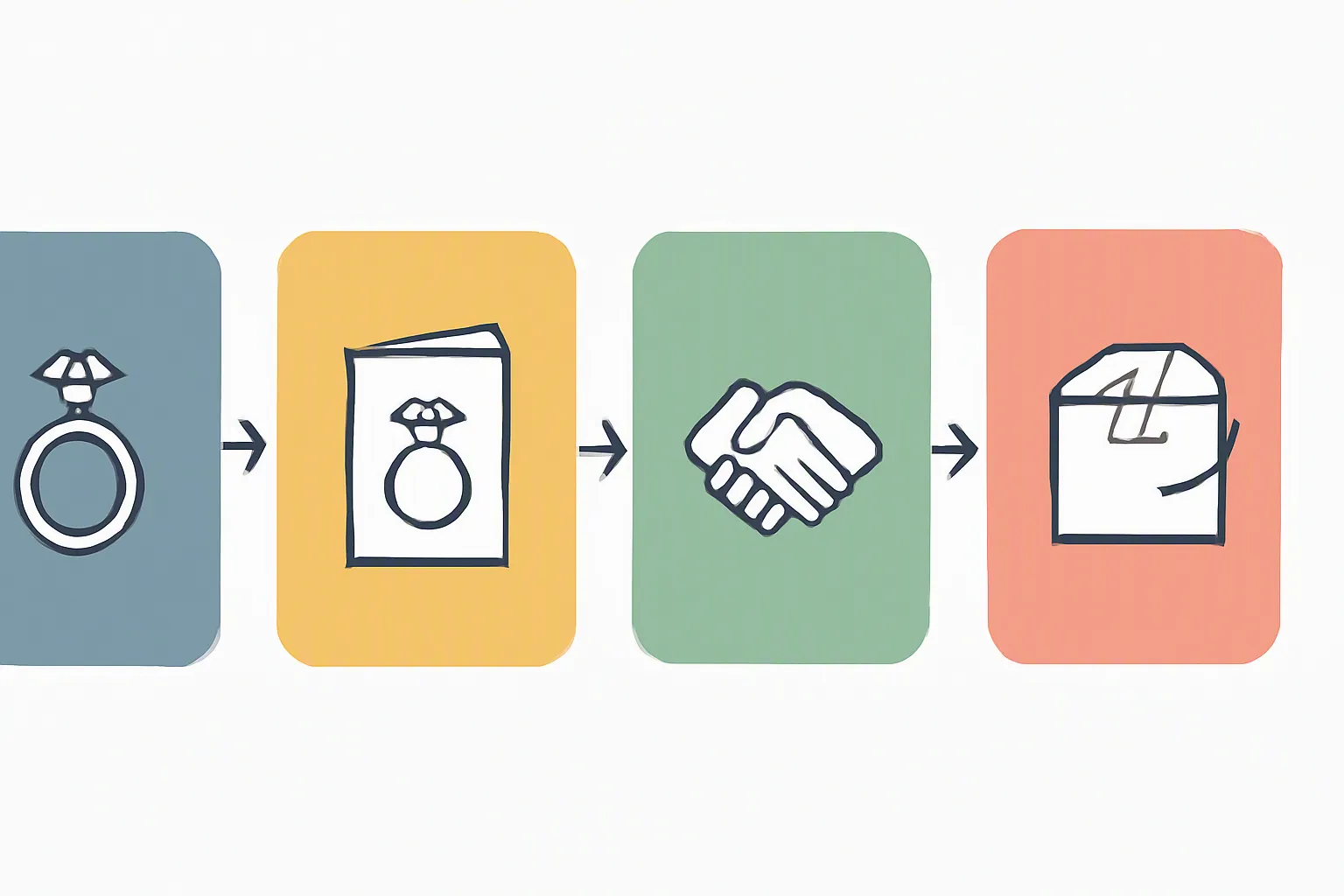
Sourcing well is a process, not a single decision. Here is a structured approach that reduces the risk of costly mistakes.
Step 1: Define your product and material specifications
Before approaching any supplier, know what you are buying. Specify:
- Material: Sterling Silver (925), Gold-Filled (typically 14K), Gold-Plated Sterling, stainless steel, copper, oxidized finishes. Wholesale Jewelry Supply Co. carries all of these. Each has different price points, tarnish resistance, and suitability for different markets.
- Finish: Polished, brushed, oxidized, hammered. This affects both aesthetics and how pieces age.
- Dimensions: Especially relevant for clasps, chains, and findings. Gold-filled push gate clasps, for example, come in 10mm, 12mm, and 14mm variants — sizing matters for compatibility with other components.
- Style categories: Thematic collections (nature, beach, minimalist, heritage) shape supplier selection significantly.
Step 2: Identify suppliers with depth in your categories
A supplier who carries 149 Sterling Silver products and 47 Gold-Filled pieces gives you more flexibility than one with a thin catalogue. Cross-reference claimed inventory with actual in-stock availability — "available to order" and "ships immediately" are very different things for a buyer managing a tight restocking window.
Look specifically for:
- Transparent material sourcing and hallmarking
- Published wholesale pricing (some suppliers, like Halstead, require account registration to reveal wholesale tiers — that is normal and not a red flag)
- Documented office hours and a reachable customer service line (knowing when a supplier is available — e.g., Monday–Thursday 9:00 AM–4:30 PM, Friday 9:00 AM–4:00 PM — matters when you have time-sensitive order issues)
Step 3: Request samples before committing to MOQ
No catalogue image substitutes for holding the piece. Request physical samples of any SKU you plan to carry at scale. Evaluate:
- Weight and finish consistency
- Clasp or closure function (does it operate smoothly under repeated use?)
- Plating adherence (rub test, light scratch test)
- Packaging and labelling as shipped
For STRAND's vetted catalogue, the approach is crafted and curated — not volume-first. Every piece worth stocking should pass a physical review before bulk order.
Step 4: Negotiate terms
Key terms to align on before placing your first order:
| Term | What to Ask |
|---|---|
| MOQ | Minimum units per SKU or per order? |
| Lead time | In-stock vs. made-to-order timelines |
| Shipping | Carriers, incoterms, insurance options |
| Returns | Policy on damaged or non-conforming goods |
| Reorder | Same SKU availability guarantee duration |
For buyers importing into international markets, confirm whether the supplier ships with commercial invoices and country-of-origin documentation. Customs clearance delays are a common source of friction for first-time importers.
For deeper sourcing guidance on components and findings, Jewellery Wholesale Supplies: The Smart Buyer's Guide covers the materials layer in granular detail.
The Benefits of Jewellery Wholesale — Broken Down by Buyer Type
The advantages of wholesale sourcing are real, but they land differently depending on who is buying and at what stage of business.
For DTC Store Owners
The primary benefit is margin control. Wholesale pricing gives you room to run promotions, absorb returns, and invest in photography and content without eroding profitability at the unit level. A well-structured wholesale relationship also means you can build a seasonal refresh cycle — rotating in new styles each quarter without rebuilding your sourcing network from scratch.
For Importers and Distributors
Volume pricing across a broad catalogue lets importers supply multiple downstream clients from a single supplier relationship. The economics compound: buying 500 units across 10 SKUs at wholesale prices gives you both the per-unit margin and the catalogue breadth to serve diverse retail clients. Suppliers with diverse material offerings — sterling silver, gold-filled, stainless steel, copper, oxidized finishes — reduce the number of separate supplier relationships required.
For Procurement Teams at Boutiques and Gift Stores
Specialty stores benefit from the thematic catalogue depth that established wholesale suppliers carry. A gift store running a beach-themed seasonal display, for example, needs coordinated pieces — earrings, pendants, charms — that read as a collection, not random individual buys. Suppliers who curate themed lines (nature, Western, Christian, beach, pets) make that visual coherence achievable without custom manufacturing costs.
What to Evaluate Before Placing a Wholesale Order
This section addresses the procurement criteria buyers near a purchasing decision need to work through. Treat it as a checklist.
Price and Availability
Wholesale pricing should be confirmed at account level, not estimated from catalogue displays. Many suppliers show retail pricing by default and reveal wholesale tiers only after account approval. Confirm current metal market prices before locking a large order — gold and silver prices shift daily, and some suppliers peg their pricing directly to spot rates.
Availability: distinguish between "in catalogue" and "in stock." In-stock inventory ships within days; made-to-order inventory may add weeks.
Shipping and Lead Time
For international buyers, the relevant questions are:
- Does the supplier ship to your destination country directly?
- What incoterms apply (FOB, CIF, DDP)?
- Is insurance included or optional?
- What is the realistic door-to-door timeline, including customs clearance?
Never assume a supplier's stated "ships immediately" translates directly to your received date. Build 10–15 business days buffer into your inventory planning for international shipments.
Quality and Material Verification
Ask for material certifications or test reports for Sterling Silver and Gold-Filled pieces. At minimum, expect:
- Sterling Silver: 92.5% silver content, hallmarked
- Gold-Filled: 1/20 14K or 1/20 12K designation, bonded layer thickness disclosed
- Plated pieces: plating micron thickness (2.5 microns is a common quality threshold for fashion jewellery)
For MENA market buyers specifically: gold tone and material authenticity carry significant purchasing weight. Pieces marketed as gold-filled should be documented as such — buyers in these markets will ask, and your supplier documentation is your credibility.
Returns and Quality Warranty
Confirm the supplier's policy on:
- Damaged goods on arrival (DOA)
- Pieces that fail within a stated warranty period
- Non-conforming goods (wrong size, finish, or SKU shipped)
A supplier with a clear, documented returns process is a lower-risk sourcing partner than one who handles issues informally.
Building a Long-Term Wholesale Sourcing Strategy
The buyers who get the most from jewellery wholesale treat it as a relationship discipline, not a transactional habit. A few structural principles that hold:
Diversify across 2–3 suppliers, not 10. Deep relationships with a small number of vetted suppliers give you priority treatment, better service on rush orders, and early access to new catalogue additions. Spreading thinly across many suppliers reduces leverage everywhere.
Anchor on materials, not trends. Trend-driven wholesale buying produces unsellable inventory when the trend breaks. Anchoring on high-quality materials — Sterling Silver, Gold-Filled, quality stainless steel — means your inventory retains value even as aesthetic preferences shift. These materials also hold better in markets where resale value and durability matter to the end buyer.
Track metal market prices. If you are buying Sterling Silver or Gold-Filled pieces at scale, spot prices directly affect your cost basis. Building a simple tracker that logs metal prices against your order dates helps you identify better timing windows for large restock orders.
For a comprehensive breakdown of accessory categories within the wholesale context, The Complete Buyer's Guide to Jewellery Accessories Wholesale is worth reading before your next supplier conversation.
Conclusion: Your Next Step as a Wholesale Buyer
Jewellery wholesale rewards buyers who are specific, systematic, and relationship-oriented. Knowing your material requirements, asking the right questions about MOQ and lead time, and vetting suppliers on quality documentation — not just price — separates a sourcing strategy that scales from one that creates constant friction.
The market is large and the supplier landscape is established. Companies like Halstead have operated in this space for five decades; Wholesale Jewelry Supply Co. for over forty years. Reputable sourcing options exist. The work is in matching the right supplier to your specific product requirements, market context, and operational constraints.
Your immediate next step: prepare a supplier brief. List your top five to ten target SKUs with material, finish, dimension, and quantity requirements. Bring that brief to your first supplier conversation. It signals seriousness, accelerates pricing discussion, and gives you an apples-to-apples comparison across multiple supplier responses.
Ready to source? [Contact the supplier] to request a wholesale catalogue, confirm current MOQ tiers, and ask about sample availability before placing your first bulk order.
Frequently Asked Questions
What is jewellery wholesale?
Jewellery wholesale is the practice of purchasing jewellery in bulk quantities directly from manufacturers or distributors at discounted per-unit prices, then reselling to retailers or end consumers at a markup. For overseas buyers — DTC stores, importers, and procurement teams — it means sourcing vetted pieces at trade pricing, typically with defined MOQs (minimum order quantities), lead times, and shipping terms negotiated upfront. STRAND operates in this space as a curated wholesale partner, connecting international buyers with crafted jewellery collections rather than commodity bulk goods.
How to jewellery wholesale?
To wholesale jewellery through STRAND, start by selecting from curated collections in materials such as 925 sterling silver, 18K gold vermeil, or brass with PVD coating — each piece vetted for finish consistency and durability before it reaches your inventory. MOQs typically begin at 50–100 units per style, with lead times of 15–30 days depending on customization, and shipping available via DHL, FedEx, or sea freight for larger orders. Reach out to STRAND's procurement team with your target categories, volume requirements, and destination market to receive a tailored product deck and pricing sheet.
Why is jewellery wholesale important?
Jewellery wholesale is important because it enables retailers, importers, and DTC brands to source vetted, consistent product at scale — securing better unit economics while maintaining the quality standards their end customers expect. For overseas buyers, a reliable wholesale partner reduces sourcing risk by consolidating supplier vetting, quality control, and logistics into a single relationship. STRAND addresses this by offering crafted, carefully curated collections with transparent MOQs and lead times, giving procurement teams the confidence to build dependable inventory pipelines.
When should I use jewellery wholesale?
Jewellery wholesale is the right choice when you're stocking a retail store, fulfilling large procurement orders, or building out a consistent product range that requires reliable supply at scale. It's particularly valuable when your per-unit cost needs to support healthy retail margins — typically when ordering above MOQ thresholds that unlock tiered pricing on vetted, quality-controlled pieces. For DTC brands and importers sourcing through STRAND, wholesale also ensures consistency in materials, finish, and lead times across repeat orders, reducing the sourcing risk that comes with one-off purchasing.
What are the benefits of jewellery wholesale?
Jewellery wholesale allows retailers, importers, and DTC stores to access curated collections at significantly lower per-unit costs, improving margins while maintaining quality standards. Buying in bulk reduces per-piece sourcing overhead and simplifies supply chain management, particularly for businesses managing seasonal inventory or launching new product lines. With partners like STRAND, wholesale buyers also benefit from vetted craftsmanship, consistent material standards, and reliable lead times — reducing the risk that comes with unvetted mass suppliers.