
How to Source a Bracelet from China: The Ultimate Buyer's Guide
How to Source a Bracelet from China: The Ultimate Buyer's Guide
Sourcing bracelets from China refers to the process by which overseas jewelry buyers, DTC stores, and procurement teams identify, evaluate, and import wristwear directly from Chinese manufacturers. It encompasses material selection, minimum order quantities (MOQ), quality assurance, and logistics planning for acquiring crafted pieces rather than mass-produced fast fashion goods. For international buyers, understanding how to navigate this supply chain is the difference between stocking generic inventory and curating a vetted, high-margin collection.
The global demand for these pieces continues to scale. On visual discovery platforms alone, over 10,000 people searched for 'Chinese bracelet' on Pinterest recently, with the platform categorizing these searches into highly specific subtopics including Tutorial, Diy, Knot, Jade, Men, Traditional, and Ancient designs (Source). This data signals that end consumers are not just looking for any wristwear; they are actively seeking out culturally rich, materially distinct, and stylistically varied options. For procurement teams and importers, aligning your sourcing criteria with this level of consumer intent is essential.
Whether you operate a boutique in Dubai focusing on modest styling and gold tones, or a contemporary DTC brand in London targeting artisanal jade, sourcing a bracelet from China requires a structured approach. You must evaluate price and availability, shipping lead times, material certifications, and return policies before reaching out to a supplier. This guide breaks down exactly what you need to know to source crafted, high-quality wristwear from Chinese manufacturers, ensuring your inventory reflects the standards of a curated brand like STRAND.
What Exactly Is a Bracelet from China?
When overseas buyers search for a Chinese bracelet manufacturer, they are tapping into a production ecosystem that spans thousands of years of metallurgical and lapidary history. However, the modern sourcing landscape is far more diverse than traditional stereotypes suggest. Platforms connecting global buyers with factories list an extensive range of product categories, including Silicone Bracelet, Gold Bracelet, Leather Bracelet, Crystal Bracelet, Tungsten Bracelet, Jade Bracelet, Amber Bracelet, and Wholesale Bracelets (Source).
For a discerning DTC store or importer, the goal is rarely to buy unvetted bulk items. Instead, the focus is on manufacturers capable of producing crafted pieces with precise dimensions, verified material purity, and consistent finishing. A bracelet from China in the context of premium retail means working with suppliers who can deliver specific alloys—such as 18k gold plating over brass cores with exact micron thicknesses—or ethically sourced natural stones like nephrite jade cut to millimeter-precise tolerances. If you are navigating this space for the first time, reviewing a luxury jewelry sourcing guide can help clarify the standards expected at the premium tier.
Understanding this distinction is critical for procurement teams. The manufacturing hubs in regions like Guangzhou, Shenzhen, and Yiwu house both low-tier mass producers and high-end artisanal workshops. Your job during the sourcing phase is to filter for the latter. Look for manufacturers that provide detailed spec sheets outlining exact dimensions (e.g., inner circumference of 17cm for standard women's sizing, or 20cm for men's), material composition, and plating longevity. This ensures the pieces you add to your cart meet the aesthetic and durability standards your customers expect.
How to Source and Procure a Bracelet from China
Executing a successful sourcing run requires moving past simple web searches and implementing a rigorous vendor evaluation framework. B2B platforms serve as the initial bridge, providing a space for sourcing bracelets directly from manufacturers and wholesalers across the country (Source). But finding the supplier is only the first step; vetting them determines your final margin and product quality.
Evaluating Materials and Dimensions
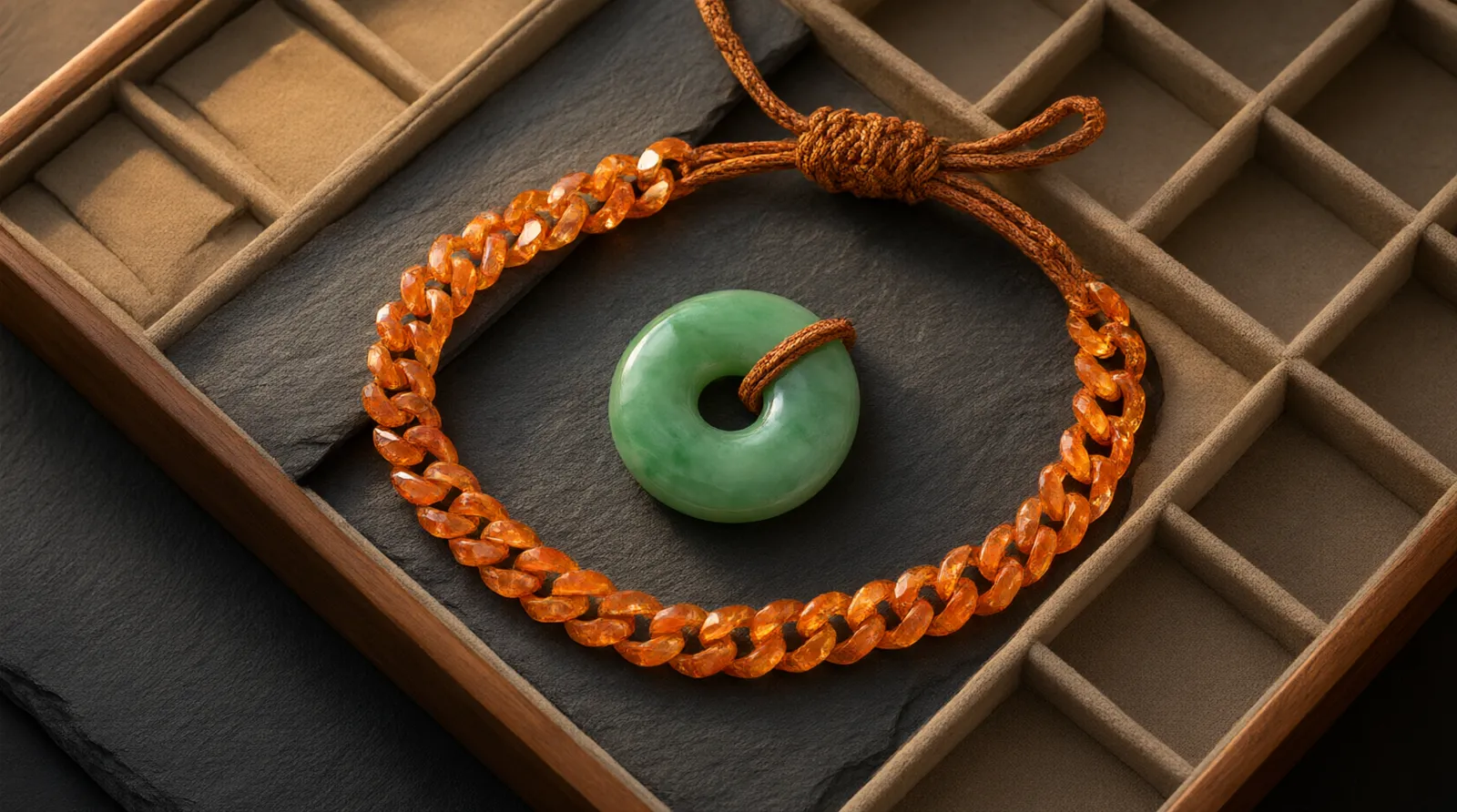
Before requesting samples, define your exact material requirements. If you are sourcing a jade piece, specify whether you require Type A (natural, untreated) jadeite or nephrite, and request a gemological certificate. For metalwork, such as a Vintage Gemstone Cuban Chain Bracelet-Orange — STRAND (СТРЭНД), confirm the base metal, the plating thickness (measured in microns), and the type of setting used for the gemstones. Vague descriptions like "gold color" or "natural stone" are red flags. Demand precise specifications: alloy ratios, stone carat weights, link gauges, and clasp mechanisms.
Navigating MOQs and Lead Times
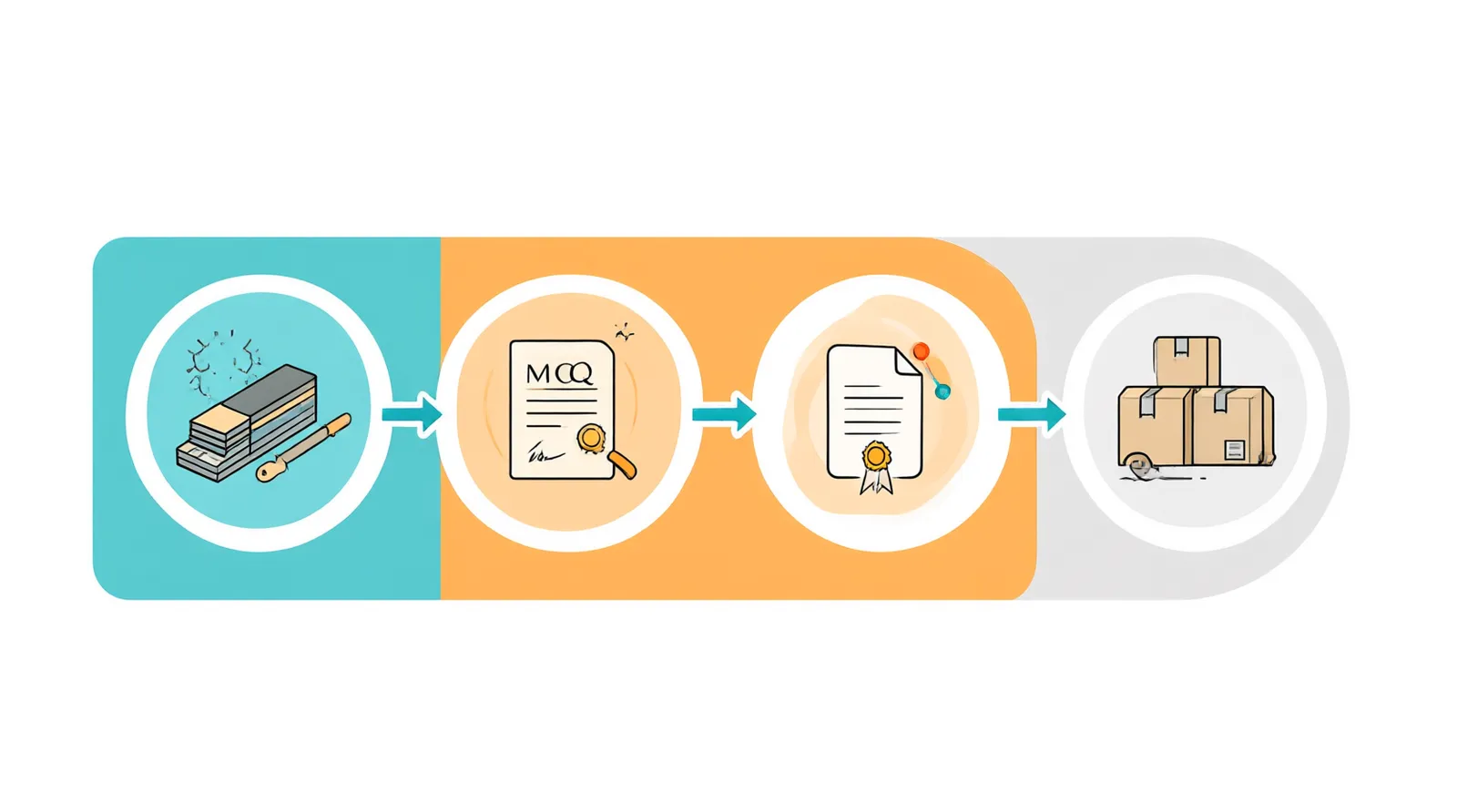
Minimum Order Quantities (MOQ) vary drastically based on the complexity of the design and the size of the factory. High-end workshops crafting intricate knot work or custom-cut amber will naturally have different MOQ thresholds compared to automated casting facilities. Always ask for tiered pricing: what is the cost per unit at 50 pieces versus 500 pieces? Similarly, clarify production lead times. A standard sampling period might take 7 to 14 days, while full production runs for custom designs often require 30 to 45 days before the item is ready to be added to your shipping manifest. Never assume a timeline; get it in writing.
Shipping Options and Logistics
For international buyers, shipping logistics dictate cash flow. Air freight is faster but significantly increases the landed cost per bracelet, making it suitable only for high-value, lightweight items like solid gold or premium jade. Sea freight is cost-effective for larger volume orders but extends your lead time by several weeks. Discuss Incoterms (like FOB or EXW) with your supplier early so you know exactly where their responsibility ends and your freight forwarder's begins.
Why Sourcing a Bracelet from China Matters for Global Buyers
Why should a DTC brand or regional importer prioritize a Chinese supply chain over domestic artisans or other manufacturing hubs? The answer lies in the intersection of material access, specialized craftsmanship, and scalable production without sacrificing the handcrafted feel.
China remains the world's primary processing center for specific materials, most notably jade and amber. Sourcing a Chinese Style Green Jade Peace Buckle Jewelry Set (Earrings + Necklace) — STRAND (ستراند) directly from the origin market allows MENA-based buyers to acquire culturally resonant, high-quality pieces that align with regional preferences for modest elegance and rich, warm tones. By cutting out intermediate Western distributors, procurement teams secure better margins while maintaining strict quality control. To understand how these margins translate into long-term profitability, explore our insights on sourcing wholesale bracelets.
Furthermore, the diversity of techniques available is unmatched. The Pinterest data revealing high interest in "Knot," "Traditional," and "Ancient" styles indicates that consumers want heritage craftsmanship (Source). Chinese manufacturers possess generational knowledge in techniques like macramé knotting, cloisonné enameling, and filigree metalwork. For a buyer, this means you can offer a product line that carries genuine artisanal weight, distinguishing your store from competitors selling generic, machine-stamped alternatives.
When Should You Use a China-Based Bracelet Supplier?
Timing your engagement with a Chinese manufacturer depends heavily on your retail calendar and product development cycle. Procurement teams should initiate contact well ahead of peak buying seasons. If you are preparing inventory for the fourth-quarter holiday rush or specific cultural events like Ramadan and Eid—which drive significant demand for gifting in the MENA region—you must account for production and transit times. Reaching out 90 to 120 days before your required delivery date is a standard practice to buffer against unexpected delays.
You should also turn to Chinese suppliers when expanding into new material categories. If your current inventory relies heavily on sterling silver, and market research shows growing demand for tungsten or crystal pieces, Chinese factories offer the fastest route to prototyping these new materials. They have the tooling and raw material supply chains already in place to produce short sampling runs, allowing you to test market viability before committing to large-scale purchase orders.
Additionally, use these suppliers when you need customization. Whether it is laser engraving a brand logo onto a clasp or adjusting the inner diameter of a bangle to fit specific demographic sizing charts, established Chinese manufacturers are equipped to handle bespoke modifications that off-the-shelf wholesale distributors cannot accommodate.
Key Benefits of Procuring Bracelets from China
Integrating a direct-from-China sourcing strategy offers tangible advantages for overseas buyers focused on building a premium, curated catalog.
- Direct Access to Raw Materials: Proximity to pearl farms, advanced metallurgy centers, and major gemstone processing hubs means lower raw material costs and higher authenticity.
- Scalable Craftsmanship: Unlike purely handmade local artisans who may cap out at 10 units a month, vetted Chinese workshops can blend hand-finishing with precision machinery to deliver hundreds of identical, high-quality units.
- Design Versatility: From the heavy, architectural links seen in a Vintage Gemstone Cuban Chain Bracelet-Orange — STRAND (СТРЭНД) to delicate silk-knot traditions, the manufacturing ecosystem supports every aesthetic.
- Margin Optimization: By purchasing directly from the factory floor via B2B networks, DTC brands eliminate two to three layers of middleman markups, allowing for competitive retail pricing or significantly higher gross margins.
These benefits compound when you establish long-term relationships with reliable factories. Over time, trusted suppliers will prioritize your orders during peak manufacturing seasons and offer proactive insights into emerging material trends.
Quality Assurance, Returns, and Warranty Criteria
No procurement strategy is complete without addressing risk. When evaluating a manufacturing partner, quality assurance (QA) protocols must be established before the first production run begins. Do not rely solely on the supplier's internal checks.
Pre-Shipment Inspections
Hire third-party inspection agencies operating in China to conduct pre-shipment inspections (PSI). These inspectors will pull a randomized sample from your finished batch—typically following the AQL (Acceptable Quality Limit) standard—and check for dimensional accuracy, plating adhesion, stone security, and clasp functionality. If a Cuban chain link is soldered poorly or a jade cabochon has micro-fractures hidden by polish, a PSI will catch it before the goods leave the factory floor.
Defining Return and Replacement Policies
International returns are logistically complex and expensive. Therefore, your contract should focus on replacements and credits rather than physical returns. Negotiate terms stating that if the defect rate exceeds a specific percentage upon arrival, the supplier will issue a credit toward the next order or manufacture replacement units at no additional cost. Ensure these terms are documented in your Purchase Order (PO), not just discussed over messaging apps.
Material Warranties
Ask suppliers about warranties regarding plating wear and material integrity. While a manufacturer cannot warranty a bracelet against customer misuse, they should guarantee that a 1-micron gold plating will not tarnish under normal storage conditions within a specified timeframe. Request written guarantees on the composition of alloys to ensure compliance with international regulations, such as REACH standards in Europe or nickel-free requirements for sensitive markets.
Cultural Considerations for International Markets
Selling jewelry requires deep cultural fluency, especially when importing a design for resale in diverse global markets. Procurement teams targeting the Middle East and North Africa (MENA) must understand that aesthetic preferences are closely tied to cultural values. Modesty in design often translates to pieces that are elegant, substantial, and avoid overly provocative motifs. Gold tones, particularly warm yellows and rich rose hues, carry historical significance and remain highly sought after in these regions.
When selecting items from a Chinese manufacturer, cross-reference the designs with the cultural expectations of your target demographic. A beautifully crafted Chinese Style Green Jade Peace Buckle Jewelry Set (Earrings + Necklace) — STRAND (СТРЭНД) appeals to buyers who value the symbolism of the "peace buckle" (Ping An Kou)—a traditional motif representing safety, harmony, and completeness. Educating your retail staff or DTC website copywriters about these cultural origins transforms a simple accessory into a meaningful artifact, justifying a premium price point.
Similarly, if you are sourcing men's bracelets, recognize that the definition of masculine jewelry varies by region. In some Western markets, minimalist leather or tungsten bands dominate. In contrast, MENA and South Asian markets may favor heavier gold-toned metals or intricate knot work. Communicate these specific regional preferences clearly to your Chinese manufacturer so they can adjust their tooling and finishing processes accordingly.
Actionable Next Steps for Buyers
Sourcing a bracelet from China successfully demands rigor, clear communication, and a refusal to compromise on material verification. The difference between a thriving DTC inventory and a stagnant one lies entirely in how deeply you vet your supply chain. Start by auditing your current catalog to identify gaps in materials or styles—whether that means introducing carved jade, upgrading to heavier Cuban chains, or exploring traditional knot work. Once your product needs are defined, map them against the capabilities of specialized manufacturers rather than generalist trading companies.
To expand your knowledge on integrating culturally significant pieces into a modern retail lineup, review our detailed breakdown of the Chinese Style Green Jade Peace Buckle Jewelry Set (Earrings + Necklace) — STRAND (ستراند). Understanding how these specific designs are constructed and presented will sharpen your eye when evaluating factory samples.
Your immediate next step is to draft a formal Request for Quotation (RFQ). Include your exact dimensional requirements, desired materials, target MOQ, and requested lead time. Send this RFQ to three to five vetted manufacturers to compare not just pricing, but their responsiveness and technical comprehension. Once you receive quotes, order physical samples from your top two choices before committing to a production run. Evaluate those samples under magnification, test the clasps repeatedly, and verify the weight. When the sample meets your standards, finalize your purchase order and arrange your freight logistics. Ready to start building your next collection? [Contact the supplier] to request current catalogs, discuss custom specifications, and get a quote today.
Frequently Asked Questions
What is bracelet china?
"Bracelet china" refers to bracelets crafted by vetted manufacturing partners in China and curated by STRAND using materials such as 18k gold vermeil, 925 sterling silver, and natural gemstones. STRAND offers standard dimensions of 16–20 cm with custom sizing, MOQs starting at 50 units per style, and production lead times of 15–25 days. Finished pieces ship globally via DHL Express or sea freight, with gold-tone options specifically tailored for modesty-conscious MENA buyers.
How to bracelet china?
To source bracelets from China through STRAND, specify your required materials (such as 18k gold-plated brass or natural stone), dimensions, and target MOQ, which typically begins at 300 units for vetted, crafted production. Standard lead time is 4–6 weeks after sample approval, with shipping options including air freight for urgent deliveries or sea freight for larger orders. For MENA markets, STRAND recommends prioritizing modest designs in rich gold tones to align with regional preferences.
Why is bracelet china important?
China remains essential for sourcing crafted bracelets because STRAND partners with vetted ateliers capable of precision work in 18k gold-plated brass, sterling silver, and natural gemstones—ideal for modesty-conscious MENA buyers seeking rich gold tones. We support scalable procurement with MOQs starting at 50 units per SKU, standard dimensions of 16–20cm adjustable chains, and reliable 30-day production lead times. Finished orders ship via DHL Express or FOB sea freight, ensuring importers and DTC stores receive consistently crafted inventory rather than bulk commodity goods.
When should I use bracelet china?
Source bracelet china through STRAND when your procurement team needs vetted, crafted pieces—such as 18k gold-plated brass or 925 sterling silver cuffs (e.g., 60mm inner diameter, 3–5mm width)—with MOQs starting at 100 units and production lead times of 25–35 days. For MENA buyers, STRAND prioritizes modesty-appropriate designs in rich gold tones, shipped via DHL Express for samples or FOB sea freight for bulk orders. This ensures DTC stores and importers receive artisanal-quality inventory rather than mass-produced goods.
What are the benefits of bracelet china?
Sourcing bracelet china through STRAND gives procurement teams access to vetted craftsmanship in materials like 18k gold-plated brass, 925 sterling silver, and natural jade, with standard dimensions of 16–19cm adjustable lengths. STRAND maintains MOQs starting at 300 units and lead times of 25–35 days, supported by DDP air freight or sea shipping options tailored for DTC importers. For MENA markets, STRAND curates culturally mindful designs featuring modest, non-figural motifs and rich gold tones that align with regional preferences.