
7 Must Have Brand Jewelry Pieces for Serious Retail Buyers
7 Must Have Brand Jewelry Pieces for Serious Retail Buyers
Must have brand jewelry refers to curated, high-demand accessories that define a retailer’s assortment and drive consistent sell-through due to recognized quality, distinct design identity, and proven market appeal. For overseas buyers and DTC store owners, these pieces are not merely decorative inventory; they are strategic assets that signal vetted craftsmanship and align with specific cultural or aesthetic preferences, such as the gold tones and modest elegance often sought in MENA markets. Identifying these items requires evaluating material integrity, dimensional consistency, and supplier reliability rather than chasing transient trends.
Building a profitable jewelry collection depends on distinguishing between generic bulk accessories and branded pieces that carry intrinsic value and customer loyalty. When procurement teams prioritize must have brand jewelry, they secure products with higher perceived value, better margin protection, and reduced return rates caused by quality discrepancies. This guide breaks down the specific criteria, product categories, and sourcing questions necessary to build an assortment that converts browsers into repeat customers while maintaining the premium positioning of brands like STRAND.
Defining Must Have Brand Jewelry for International Markets
What Is Must Have Brand Jewelry?
Must have brand jewelry encompasses accessories that serve as foundational pillars for a retail assortment, characterized by superior material standards, cohesive design language, and reliable supply chain performance. Unlike fast fashion items designed for single-season disposal, these pieces are crafted for longevity and repeated wear, featuring materials like durable glass composites, rhinestones with secure setting, and plating that resists tarnish in humid climates. For importers targeting regions like the Middle East and North Africa, this definition extends to cultural resonance; designs must respect local aesthetics, favoring substantial gold tones, intricate sunburst motifs, and turquoise accents that align with regional heritage without appearing costumey.
Retailers identify these essentials through sales data and qualitative feedback, noting which SKUs maintain steady velocity across multiple seasons. A true must-have item from a brand like STRAND demonstrates consistent color matching across production runs and precise dimensional adherence, ensuring that the necklace length or earring drop matches the product page specifications exactly. This predictability reduces customer service friction and builds trust in the brand name, making reorders faster and less risky for procurement teams managing cross-border logistics.
Why Is Must Have Brand Jewelry Important?
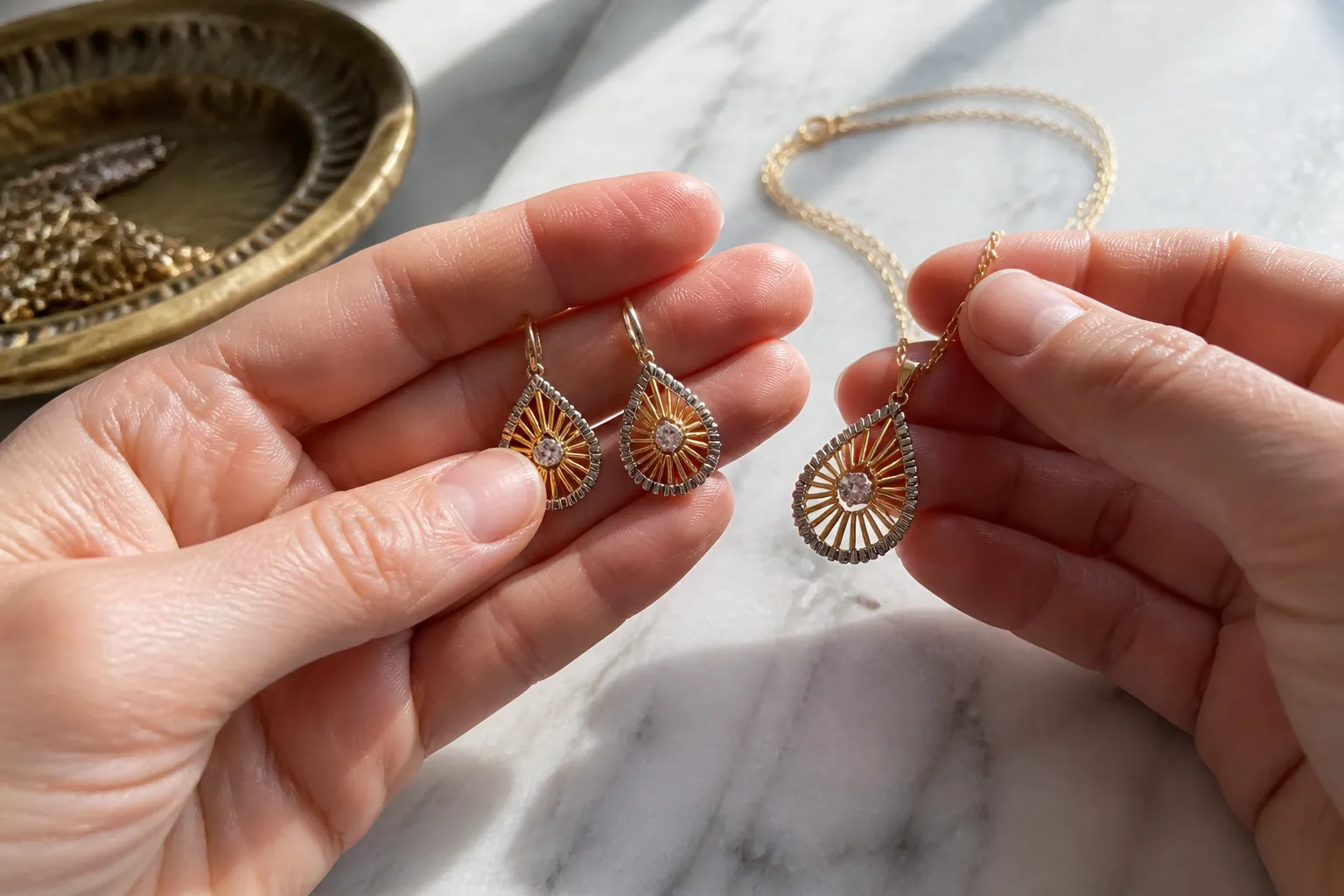
Stocking verified must have brand jewelry directly impacts three critical business metrics: average order value, return rate reduction, and brand equity transfer. Customers purchasing recognized quality pieces are statistically more likely to add complementary items to their cart, increasing basket size compared to shoppers buying unbranded basics. Furthermore, when buyers source from established entities like STRAND, they inherit the manufacturer’s quality assurance reputation, which is crucial for DTC stores competing against marketplaces flooded with inconsistent goods. The importance lies in risk mitigation; knowing that a Two-Tone Sunburst Teardrop Earrings & Necklace Set-Gold — STRAND (ستراند) meets specific weight and finish standards allows retailers to price confidently without building in excessive margins for potential defects.
Cultural alignment further amplifies importance in international trade. Jewelry that respects modesty norms while delivering luxury aesthetics performs significantly better in MENA markets than Western-centric minimalist designs. Must have brand jewelry for these regions often features opaque stones, covered settings, and warm metallic finishes that complement traditional attire as well as modern fusion wear. Ignoring these nuances leads to dead stock, whereas culturally attuned selections create emotional connections that drive word-of-mouth referrals within tight-knit communities.
Evaluating Craftsmanship and Material Integrity
Assessing Glass and Stone Quality
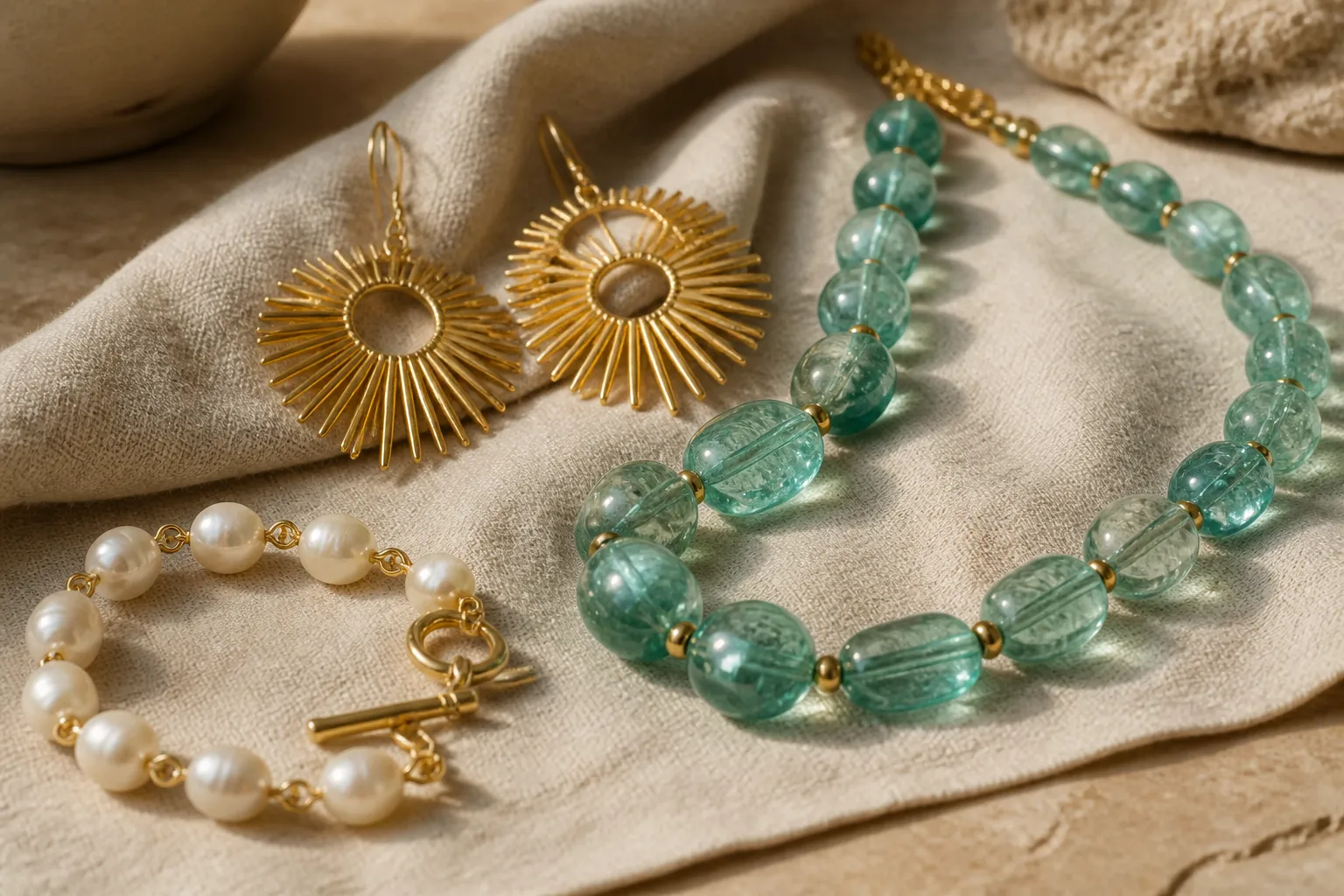
Material verification is the first step in determining if a piece qualifies as must have brand jewelry. High-quality glass jewelry should exhibit uniform opacity, smooth polishing without sharp edges, and consistent coloring that does not fade under UV exposure. When evaluating sets like the Turquoise & Pearl Glass Jewelry Set (Necklace & Bracelet) — STRAND (ستراند), buyers should request macro photography or physical samples to inspect the interface between glass beads and metal findings. Gaps, excess adhesive, or uneven drilling indicate rushed manufacturing that will lead to breakage during shipping or wear. Genuine pearl elements should show natural luster variations rather than the plastic-like sheen of synthetic coatings, signaling authenticity that justifies premium pricing.
Rhinestone components require equal scrutiny regarding setting security and brilliance. Fireworks-style arrangements, seen in pieces like the Two-Tone Rhinestone Fireworks Jewelry Set (Earrings & Necklace) — STRAND (ستراند), demand precision placement where each stone sits flush against the base metal. Loose stones or visible glue residue are immediate disqualifiers for must-have status. Buyers should ask suppliers about stone retention testing methods and warranty policies covering missing stones within the first 30 days of retail sale. This level of detail separates curated brand partnerships from speculative bulk buying.
Metal Finish and Plating Durability
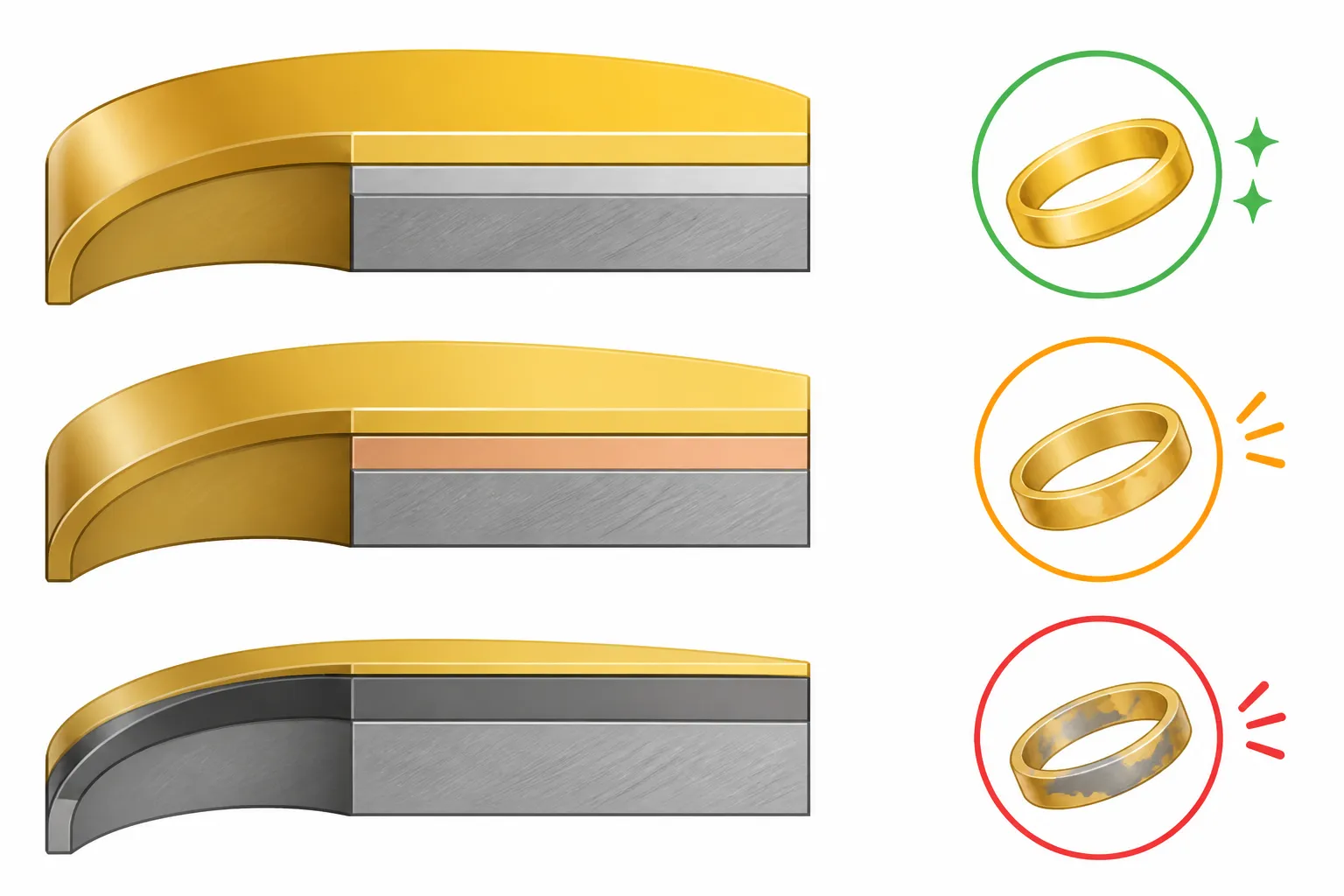
For overseas buyers, especially those importing to hot or humid climates, plating thickness and composition are non-negotiable evaluation criteria. Must have brand jewelry intended for MENA markets typically features gold-tone finishes ranging from 18K to 24K color profiles, applied over nickel-free base metals to prevent allergic reactions. Buyers must inquire about micron thickness; while specific numbers vary by collection, industry standards for durable fashion jewelry generally exceed 0.5 microns for plated items to withstand regular wear without exposing base metal. Silver-tone alternatives, such as the Two-Tone Sunburst Teardrop Earrings & Necklace Set-Silver — STRAND (ستراند), should utilize anti-tarnish treatments or rhodium plating to maintain brightness during ocean freight transit and warehouse storage.
Dimensional accuracy in metalwork also signals brand discipline. Clasp mechanisms should operate smoothly with one hand, jump rings must be fully soldered or tightly closed, and chain links should lie flat without kinking. These functional details matter as much as visual appeal because they determine whether a customer keeps the item or returns it citing "poor quality." Procurement teams should establish a pre-shipment inspection checklist covering these mechanical aspects before authorizing final payment, ensuring every unit meets the must-have standard promised to end consumers.
Strategic Assortment Planning for DTC Stores
Balancing Statement Pieces and Everyday Essentials
A successful must have brand jewelry assortment balances high-impact statement items with versatile daily wearables to capture both gift buyers and self-purchasers. Statement pieces like sunburst teardrop sets serve as traffic drivers and social media content anchors, showcasing the brand’s design capability and attracting new customers. However, conversion and retention depend on offering complementary everyday items that encourage repeat purchases. Buyers should analyze their current catalog gaps: if statement necklaces dominate but simple stud earrings or adjustable bracelets are absent, customers may leave to find basics elsewhere. STRAND collections often address this by offering coordinated sets that allow shoppers to buy complete looks, increasing attachment rates.
Seasonality and cultural calendars must inform assortment timing. In MENA markets, demand for gold-tone and turquoise jewelry peaks around Ramadan, Eid, and wedding seasons, requiring inventory arrival 6-8 weeks prior to key dates. Buyers should map must have brand jewelry releases against these events rather than following Western retail calendars. This cultural synchronization ensures marketing spend aligns with actual purchase intent. Additionally, maintaining core bestsellers year-round prevents lost sales during off-peak periods when novelty items slow down; evergreen must-haves provide revenue stability that funds seasonal experimentation.
Pricing Architecture and Margin Protection
Determining viable price points for must have brand jewelry requires understanding total landed cost, not just unit price. Overseas buyers must factor in shipping, duties, insurance, and potential currency fluctuations when calculating margins. Premium positioned brands like STRAND command higher wholesale prices but offer better margin retention through lower discounting needs; customers pay for assured quality rather than waiting for clearance. Buyers should request tiered pricing structures based on MOQ commitments to optimize unit economics. While specific price points vary by collection and volume, sustainable DTC margins typically require a 3x-4x markup on landed cost to cover marketing, returns, and operational overhead.
Transparency in pricing discussions builds long-term supplier relationships. Ask manufacturers about cost drivers: does a price increase reflect raw material spikes or improved plating processes? Understanding value justification helps communicate worth to end consumers. Also clarify payment terms and deposit requirements early; some suppliers offer discounts for upfront payment while others require staged payments tied to production milestones. Aligning cash flow with inventory receipt prevents capital strain. For must have brand jewelry, investing slightly more upfront in verified quality often yields superior lifetime value compared to chasing lowest-cost alternatives that erode brand trust.
Sourcing Logistics and Supplier Evaluation
Lead Times and Production Reliability
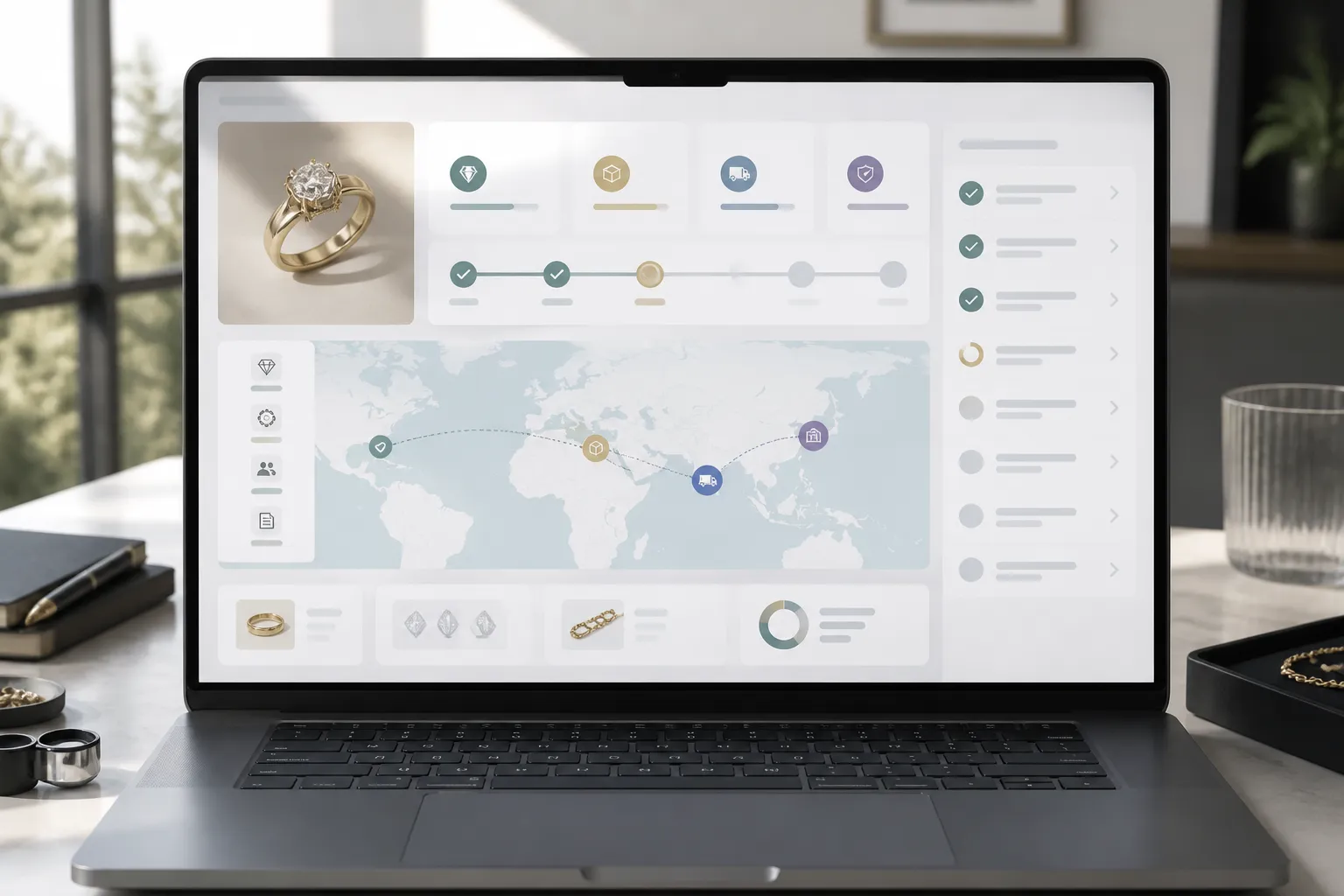
When sourcing must have brand jewelry internationally, lead time predictability matters more than speed alone. Buyers need accurate timelines for sampling, production, and shipping to plan marketing launches and avoid stockouts. Ask suppliers for historical fulfillment data rather than optimistic estimates; a reliable partner provides realistic windows accounting for material sourcing, quality checks, and customs documentation. For brands like STRAND, production cycles may be longer than fast fashion due to craftsmanship steps, but this duration correlates with product integrity. Buffer extra time for initial orders to accommodate learning curves and sample approvals; subsequent reorders typically move faster once specifications are locked.
Communication protocols during production prevent costly surprises. Establish preferred contact channels (email, WhatsApp, portal) and expected response times before placing orders. Request progress photos at critical stages: after metal casting, post-plating, and pre-packaging. This visibility allows course correction before bulk completion. For must have brand jewelry, never skip pre-production samples even when reordering; minor tooling changes or material batch variations can alter outcomes. Document all approved specs in writing to serve as reference for quality disputes. Reliable suppliers welcome this rigor because it protects their reputation too.
Shipping Options and Customs Compliance
International jewelry shipments face unique regulatory and logistical challenges that buyers must navigate proactively. Must have brand jewelry containing glass, pearls, or rhinestones requires proper HS code classification to avoid customs delays or incorrect duty assessments. Work with suppliers experienced in your destination market’s import requirements; they should provide commercial invoices, packing lists, and certificates of origin formatted correctly. Discuss packaging standards that protect delicate items during transit: individual polybags, reinforced boxes, and moisture barriers for sea freight. Damaged goods upon arrival negate any savings from cheaper shipping methods.
Evaluate multiple shipping tiers based on urgency and budget. Air freight suits initial launches or restocks of high-velocity must-haves, while sea freight works for bulk replenishment of stable SKUs. Some suppliers offer consolidated shipping programs combining orders from multiple factories, reducing per-unit costs for smaller buyers. Clarify Incoterms (FOB, CIF, DDP) to understand responsibility boundaries; DDP simplifies logistics for buyers lacking import expertise but may carry premiums. For STRAND products targeting MENA markets, verify that shipping partners handle regional documentation efficiently to prevent clearance bottlenecks at ports like Jebel Ali or Jeddah.
Cultural Considerations for MENA Market Success
Design Sensitivity and Aesthetic Alignment
Success in MENA markets requires must have brand jewelry that honors cultural values while feeling contemporary. Modesty considerations influence preferences for certain silhouettes: longer necklace drops that sit below collarbones, earrings that frame rather than expose ears, and bracelets that pair well with abaya sleeves. Gold tones remain culturally significant, symbolizing prosperity and tradition, but modern consumers seek updated interpretations like two-tone mixes or geometric sunburst patterns that bridge heritage and global fashion. Brands like STRAND succeed by designing specifically for this intersection rather than adapting Western styles retroactively.
Color symbolism also guides selection. Turquoise carries protective associations in many Middle Eastern cultures, making it a perennial must-have beyond trend cycles. Pearl elements evoke maritime heritage relevant to Gulf states. Buyers should research regional sub-preferences; Moroccan tastes differ from Emirati or Saudi aesthetics. Engage local focus groups or consult regional merchandisers to validate assumptions. Avoid motifs with unintended religious or political connotations. Culturally intelligent curation transforms must have brand jewelry from commodity to meaningful purchase, fostering brand advocacy within communities where personal recommendation drives commerce.
Marketing Narratives That Resonate
Positioning must have brand jewelry in MENA markets requires messaging emphasizing craftsmanship, longevity, and occasion-worthiness over disposability. Highlight material origins, artisan techniques, and quality guarantees in product descriptions. Use imagery showing jewelry styled with both traditional and modern attire to demonstrate versatility. Social proof from regional influencers or trusted community figures builds credibility faster than generic advertising. Translate content accurately into Arabic dialects relevant to target countries; machine translation misses nuance and signals low commitment.
Timing campaigns around cultural moments amplifies relevance. Pre-Ramadan content might focus on gifting sets for family gatherings, while pre-wedding season highlights statement pieces for celebrations. Email segmentation by purchase history allows personalized recommendations: customers who bought turquoise sets receive alerts for matching bracelets, not unrelated silver items. Loyalty programs rewarding repeat purchases of must-have categories reinforce habit formation. Ultimately, respectful engagement with cultural context differentiates serious brands from opportunistic sellers, turning transactions into lasting relationships.
Next Steps for Building Your Collection
Securing must have brand jewelry requires moving beyond passive browsing to active supplier qualification. Start by auditing your current assortment against the criteria outlined here: material integrity, cultural alignment, and logistical reliability. Identify three to five gap categories where STRAND or similar vetted brands could strengthen your offering. Prepare specific questions about plating thickness, stone retention testing, MOQ tiers, and lead time buffers before initiating contact. Request samples of top candidates like the Turquoise & Pearl Glass Jewelry Set (Necklace & Bracelet) — STRAND (СТРЭНД) to verify quality claims physically.
Your next action should be direct supplier engagement with prepared specifications. Reach out to discuss current availability, sampling options, and partnership terms tailored to your market needs. Ask for documentation supporting quality assertions and references from other international buyers in similar regions. Test small quantities before committing to large volumes to validate sell-through and customer feedback. Building a must-have assortment is iterative; use initial performance data to refine future selections. Prioritize relationships with suppliers who demonstrate transparency and cultural awareness over those offering lowest prices alone. Sustainable growth in jewelry retail comes from trust earned through consistent quality and respectful market engagement. For buyers looking to expand beyond standard catalogs, exploring custom jewelry brands can provide exclusive differentiation in competitive markets.
[Contact STRAND to request samples and current wholesale terms]
Frequently Asked Questions About Must Have Brand Jewelry
How to Identify and Source Must Have Brand Jewelry?
Identifying authentic must have brand jewelry requires a systematic evaluation process that goes beyond aesthetic preference. Begin by analyzing historical sales data from your target market to identify recurring design themes, price points, and material preferences that drive repeat purchases. Cross-reference these findings with supplier capabilities: request detailed spec sheets covering dimensions, weight, plating micron counts, and stone setting methods. For overseas buyers, verify that potential partners like STRAND have experience exporting to your specific region and understand local compliance requirements. Order pre-production samples for every new SKU to test against your quality checklist before authorizing bulk manufacturing. This disciplined approach filters out suppliers who cannot consistently deliver on the standards that define must-have status.
Sourcing also involves negotiating terms that protect your investment. Ask about minimum order quantities per style versus total order value; flexible MOQs allow testing multiple designs without overcommitting capital. Clarify sample costs and whether they’re credited against future orders. Discuss exclusivity options for your territory if carrying unique must have brand jewelry is critical to your competitive position. Establish clear communication protocols for production updates and quality issues. Reliable suppliers proactively share progress photos and flag delays early; evasive communication during sampling often predicts problems during mass production. Document all agreements in writing, including acceptable defect rates and remediation procedures, to prevent disputes later.
When Should Retailers Use Must Have Brand Jewelry in Their Assortment?
Must have brand jewelry should anchor your assortment year-round, serving as the stable foundation upon which seasonal and trend-driven items are layered. These pieces are particularly critical during market entry phases when building customer trust is paramount; shoppers unfamiliar with your store need recognizable quality signals to convert. They also play essential roles during peak selling seasons like Ramadan, Eid, or wedding periods when demand surges and stockouts carry high opportunity costs. Maintain core must-haves continuously rather than cycling them out seasonally; consistency builds brand recognition and allows customers to develop attachment to specific designs they repurchase or recommend.
Use must have brand jewelry strategically during promotional periods as well. Rather than discounting these pillars deeply, bundle them with slower-moving inventory to clear stock while preserving perceived value. Feature them prominently in email campaigns and social content to drive traffic, then guide visitors toward complementary items. During slow seasons, refresh merchandising of existing must-haves through new styling photography or gift set configurations rather than replacing them entirely. This maximizes ROI on proven performers while maintaining assortment coherence. For DTC stores, must-haves also serve as reliable ad creative subjects; their consistent sell-through provides predictable ROAS benchmarks for paid media optimization.
What Are the Tangible Benefits of Prioritizing Must Have Brand Jewelry?
Prioritizing must have brand jewelry delivers measurable advantages across financial, operational, and brand-building dimensions. Financially, these items typically achieve higher full-price sell-through rates, reducing end-of-season markdown dependency and protecting margins. Their proven appeal lowers customer acquisition costs because marketing messages resonate more effectively with validated demand. Operationally, sourcing from established brands like STRAND simplifies quality control processes; standardized specs reduce inspection time and dispute resolution overhead. Lower return rates on verified quality pieces directly improve net profitability and reduce reverse logistics burdens.
Brand equity benefits compound over time. Consistently offering recognized quality builds shopper confidence that transfers to new product launches; customers trust your curation judgment. In MENA markets especially, carrying culturally resonant must-haves signals respect and commitment, fostering community advocacy that paid advertising cannot replicate. Supplier relationships deepen when you demonstrate serious partnership through consistent reorders of core items; this often unlocks preferential treatment like priority production slots or early access to new collections. Ultimately, must have brand jewelry transforms retail from transactional commodity selling into curated brand building, creating defensible competitive advantages that scale with business growth.
Final Considerations for Overseas Buyers
Navigating international jewelry procurement demands balancing ambition with diligence. The distinction between generic accessories and must have brand jewelry lies not in price alone but in verifiable quality, cultural intelligence, and supply chain reliability. Buyers who invest time upfront in supplier vetting, sample testing, and relationship building reap rewards through reduced operational friction and stronger customer loyalty. Remember that must-have status is earned through consistent performance, not declared through marketing claims. Let sales data and customer feedback validate your selections continuously.
For retailers targeting MENA markets specifically, success hinges on respecting regional aesthetics and values while delivering global quality standards. Gold tones, turquoise accents, and modest silhouettes aren’t trends to chase but enduring preferences to honor. Partner with manufacturers like STRAND who demonstrate this understanding through their product development and communication practices. Avoid suppliers treating your market as an afterthought; cultural misalignment manifests in poor sell-through regardless of objective quality. Your assortment should reflect deep market knowledge, not surface-level adaptation.
Take concrete action today by reviewing your current inventory against the frameworks presented here. Identify which existing SKUs qualify as true must-haves based on sell-through velocity, return rates, and customer feedback. Gap-analyze your assortment against cultural and category benchmarks outlined in this guide. Prepare targeted inquiries for potential suppliers covering material specs, MOQ flexibility, lead time buffers, and compliance documentation. Request samples of promising candidates like the Two-Tone Sunburst Teardrop Earrings & Necklace Set-Gold — STRAND (ستراند) to physically verify alignment with your standards. Building a resilient, profitable jewelry business starts with intentional curation grounded in evidence, not assumption. By systematically applying these principles, overseas buyers can transform procurement from a speculative gamble into a predictable engine for sustainable brand growth and lasting customer trust.
[Check Availability and Get a Quote from STRAND] [Check Availability and Get a Quote from STRAND]