
Best Custom Jewelry Alternatives for Retailers & Buyers
Best Custom Jewelry Alternatives for Retailers & Buyers
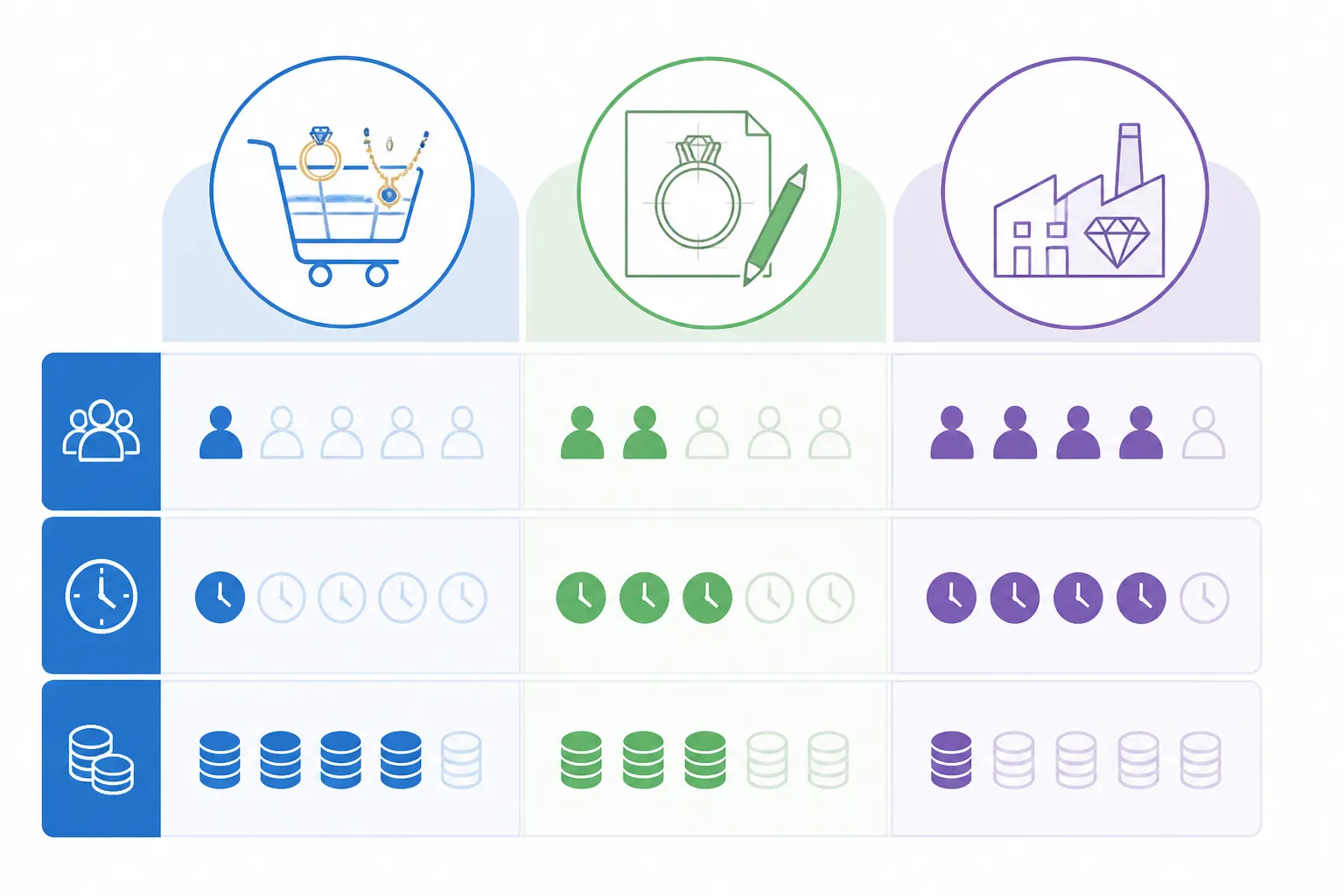
Fully bespoke custom jewelry typically requires minimum order quantities (MOQs) of 50–300 pieces per style and production lead times exceeding 45 days, making it inaccessible for many DTC brands and boutique retailers testing new collections. The most viable alternatives to custom jewelry include low-MOQ OEM suppliers with stock catalogs, semi-custom modification services, and curated wholesale marketplaces that offer personalization without the prohibitive development costs or timeline delays associated with ground-up manufacturing.
For procurement teams in the US, EU, UK, and MENA regions, the decision often hinges on balancing exclusivity with cash flow. While a fully unique design offers brand differentiation, the capital tied up in high MOQs and sampling fees can stall inventory turnover. Alternatives like STRAND’s hybrid model—offering 12-piece MOQs on 109 of 114 catalog styles alongside full OEM capabilities—bridge this gap by allowing buyers to validate market demand before committing to large-scale custom production runs.
Why Look for Alternatives to Custom Jewelry?
Traditional custom jewelry manufacturing creates significant friction for growing fashion jewelry brands. The primary barrier is financial risk; developing a new mold for gold-plated copper or rhodium-plated designs often incurs tooling fees ranging from $200 to $800 per SKU, which must be amortized across large production batches. For a buyer sourcing drop earrings or necklace sets, this means tying up thousands of dollars in unproven inventory. When trends shift toward vintage aesthetics or gradient crystals faster than a factory can retool, these sunk costs become liabilities rather than assets.
Operational complexity presents another hurdle. Managing a fully custom supply chain requires precise technical packs, multiple physical sample approvals, and rigorous quality control protocols that many small-to-mid-sized importers lack the bandwidth to oversee. Communication gaps regarding specifications for materials like amethyst, garnet, or peridot can result in costly rework cycles. Furthermore, established retail chains like Jared or Kendra Scott have dedicated engineering teams to manage these processes; independent DTC store owners do not. Without this infrastructure, the promise of "bespoke" often devolves into delayed shipments and inconsistent finishing.
Scalability constraints also limit growth. Many artisan workshops capable of high-end luxury customization cannot handle volume spikes during peak seasons like Q4 or Ramadan. Conversely, large factories may refuse orders under 300 pieces. This leaves mid-market buyers in a sourcing void where they need more flexibility than mass manufacturers offer but more reliability than solo artisans provide. Seeking alternatives isn't about abandoning uniqueness; it's about securing a supply partner whose operational model aligns with commercial reality.
What to Look for in a Custom Jewelry Alternative
- Verified Low MOQ Thresholds: Confirm specific numbers (e.g., 12 pcs/style vs. generic "low MOQ" claims) to ensure test-order feasibility.
- Material Versatility: Capability to source diverse components including glass beads, natural stones (turquoise, faux pearls), and plated metals within one facility.
- Transparent Trade Terms: Clear EXW or FOB pricing structures with defined shipping options (air, sea, express) to calculate true landed cost.
- Multilingual Support: Sales teams proficient in EN, FR, AR, ES, DE, or RU to eliminate specification errors during negotiation.
- In-House Quality Control: Mandatory pre-shipment inspection protocols rather than third-party reliance, ensuring consistency in plating and stone setting.
- Payment Flexibility: Acceptance of T/T, PayPal, Western Union, L/C, or Xtransfer to accommodate varying regional banking preferences.
- Stock-to-Custom Pipeline: Access to existing molds that can be modified, reducing development time from weeks to days.
Top Alternatives to Custom Jewelry
1. STRAND (Hybrid OEM & Stock Catalog)
Best for: Cross-border fashion jewelry buyers needing low-MOQ testing with OEM scalability. Pricing: Wholesale tiered; EXW/FOB terms based on material and quantity. Key strengths vs custom jewelry:
- Offers real low MOQs: 12 pieces per style on 109 of 114 catalog designs, with select styles available from 1 piece for sampling.
- Direct access to vetted Hangzhou workshops eliminates middleman markups common in traditional custom jewelry sourcing.
- Multilingual sales support (EN, FR, AR, ES, DE, RU) streamlines communication for international procurement teams.
- Specializes in trending categories like vintage gradient crystal sets and two-tone rhinestone fireworks jewelry. Limitations / trade-offs:
- Not suitable for fine jewelry requiring solid gold or precious gemstones; focused on fashion materials like copper, glass, and synthetic stones.
- Custom OEM still requires tech pack development for entirely new silhouettes outside the stock catalog. How it compares to custom jewelry: STRAND functions as a strategic middle ground. Unlike pure custom jewelry vendors demanding 100+ unit commitments upfront, STRAND allows buyers to purchase 12-piece lots of proven designs like the Vintage Green Crystal Geometric Jewelry Set to validate sell-through rates first. Once data confirms demand, the same supplier transitions to full OEM production, maintaining supply chain continuity while drastically reducing initial capital exposure.
2. Catbird NYC (Personalized Fine Jewelry)
Best for: Luxury retailers seeking ethically made, personalized fine jewelry with brand prestige. Pricing: Premium luxury tier ($200–$2,000+ retail). Key strengths vs custom jewelry:
- Established luxury brand equity that justifies higher price points compared to unbranded OEM goods.
- Specializes in personalized engraving and modular charm systems rather than ground-up manufacturing.
- Transparent ethical sourcing and Brooklyn-based production appeal to conscious consumers. Limitations / trade-offs:
- Pricing structure unsuitable for mid-market fashion jewelry margins.
- Limited to their proprietary aesthetic; cannot produce arbitrary OEM designs for private label. How it compares to custom jewelry: Catbird represents the premium end of personalization. While traditional custom jewelry focuses on structural uniqueness, Catbird focuses on emotional connection through engraving and curation. For buyers targeting the high-end gift market who don't need proprietary silhouettes, this model reduces R&D overhead while maintaining perceived value. However, it lacks the manufacturing flexibility needed for trend-driven fashion accessories.
3. Made By Mary (Semi-Custom Stacking)
Best for: DTC brands focused on minimalist stacking rings and everyday wearables. Pricing: Mid-tier accessible luxury ($50–$300 retail). Key strengths vs custom jewelry:
- Modular product architecture allows infinite combinations without new tooling.
- Strong influencer marketing playbook provides ready-made content strategies for retailers.
- Faster fulfillment than bespoke ateliers due to standardized component inventory. Limitations / trade-offs:
- Narrow category focus limits assortment expansion beyond dainty stacks and simple pendants.
- Design saturation in the minimalist space increases competitive pressure. How it compares to custom jewelry: Made By Mary proves that "custom" can mean configuration rather than creation. Traditional custom jewelry builds from zero; this alternative builds from a library. For buyers wanting to offer personalization without managing complex production specs, this semi-custom approach delivers faster speed-to-market. It sacrifices total exclusivity for operational efficiency and trend alignment.
4. Jewlr (Mass Personalization Platform)
Best for: High-volume e-commerce sites offering birthstone and engraving options at scale. Pricing: Value-oriented mass market ($30–$150 retail). Key strengths vs custom jewelry:
- Automated configurator technology handles thousands of SKU variations without manual quoting.
- Extensive material range including sterling silver, diamond simulants, and genuine stones like garnet and peridot.
- Scalable infrastructure supports peak season volume surges better than boutique workshops. Limitations / trade-offs:
- Generic aesthetic lacks the distinctive design language of true custom jewelry.
- Lower perceived value limits positioning to promotional or entry-level segments. How it compares to custom jewelry: Jewlr industrializes personalization. Where custom jewelry is inherently slow and expensive, Jewlr optimizes for throughput and affordability. This makes it ideal for buyers targeting the gift-giving demographic who prioritize sentiment over craftsmanship. However, it cannot replicate the tactile quality or design innovation of dedicated fashion jewelry OEM partners.
5. Icebox (High-Impact Statement Pieces)
Best for: Streetwear and hip-hop adjacent retailers seeking bold, customized statement jewelry. Pricing: High-end street luxury ($500–$10,000+ retail). Key strengths vs custom jewelry:
- Cultural relevance and celebrity endorsement drive immediate consumer recognition.
- Expertise in moissanite and lab-grown diamond settings mimics high-carat looks at accessible prices.
- Customization focuses on visual impact rather than subtle detailing. Limitations / trade-offs:
- Niche aesthetic limits crossover appeal to broader fashion demographics.
- Longer lead times for complex stone-setting projects compared to stock fashion jewelry. How it compares to custom jewelry: Icebox occupies the intersection of custom jewelry and pop culture. While traditional custom work serves bridal or heirloom markets, Icebox serves the hype cycle. For buyers in urban fashion spaces, this alternative offers cultural currency that standard OEM cannot provide. Yet, for everyday wearables like stud earrings or office-appropriate necklaces, its specialization becomes a limitation.
6. King Jewelers (Traditional Bespoke Service)
Best for: Brick-and-mortar stores offering in-house custom design services to local clients. Pricing: Service-based + materials (highly variable). Key strengths vs custom jewelry:
- Face-to-face consultation builds trust and captures high-ticket local clientele.
- Ability to repurpose customer-owned materials reduces net-new sourcing needs.
- Heritage positioning differentiates from digital-native competitors. Limitations / trade-offs:
- Not scalable for wholesale or cross-border e-commerce distribution.
- Dependent on individual artisan availability creating bottleneck risks. How it compares to custom jewelry: King Jewelers exemplifies the service-led custom model. Unlike product-focused custom jewelry suppliers, they sell expertise and experience. This works for localized retail but fails for buyers building national or international DTC brands. It highlights the distinction between custom as a service versus custom as a scalable product line.
Side-by-Side Comparison Table
| Feature | Traditional Custom Jewelry | STRAND (OEM/Stock) | Catbird NYC | Made By Mary | Jewlr |
|---|---|---|---|---|---|
| Primary Use Case | Unique brand IP creation | Trend validation & scalable fashion | Ethical luxury gifting | Minimalist stacking | Mass personalization |
| Typical MOQ | 50–300+ pcs/style | 12 pcs/style (stock); Custom OEM avail. | Retail only (B2C) | Retail only (B2C) | Retail only (B2C) |
| Lead Time | 45–90 days | Stock: Immediate; OEM: Varies | In-stock / Made-to-order | In-stock / Made-to-order | Automated production |
| Material Focus | Precious metals/stones | Copper, Glass, Rhinestone, Faux Pearl | Recycled Gold, Diamonds | Sterling Silver, Gold Vermeil | Silver, Simulants, Genuine Stones |
| Customization Level | Full ground-up design | Modify stock or full OEM | Engraving & Charm Config | Stack Configuration | Stone & Engraving Config |
| Best Buyer Profile | Established luxury houses | DTC Brands, Importers, Boutiques | Luxury Retailers | Lifestyle Influencers | E-comm Gift Sites |
How to Pick the Right Alternative
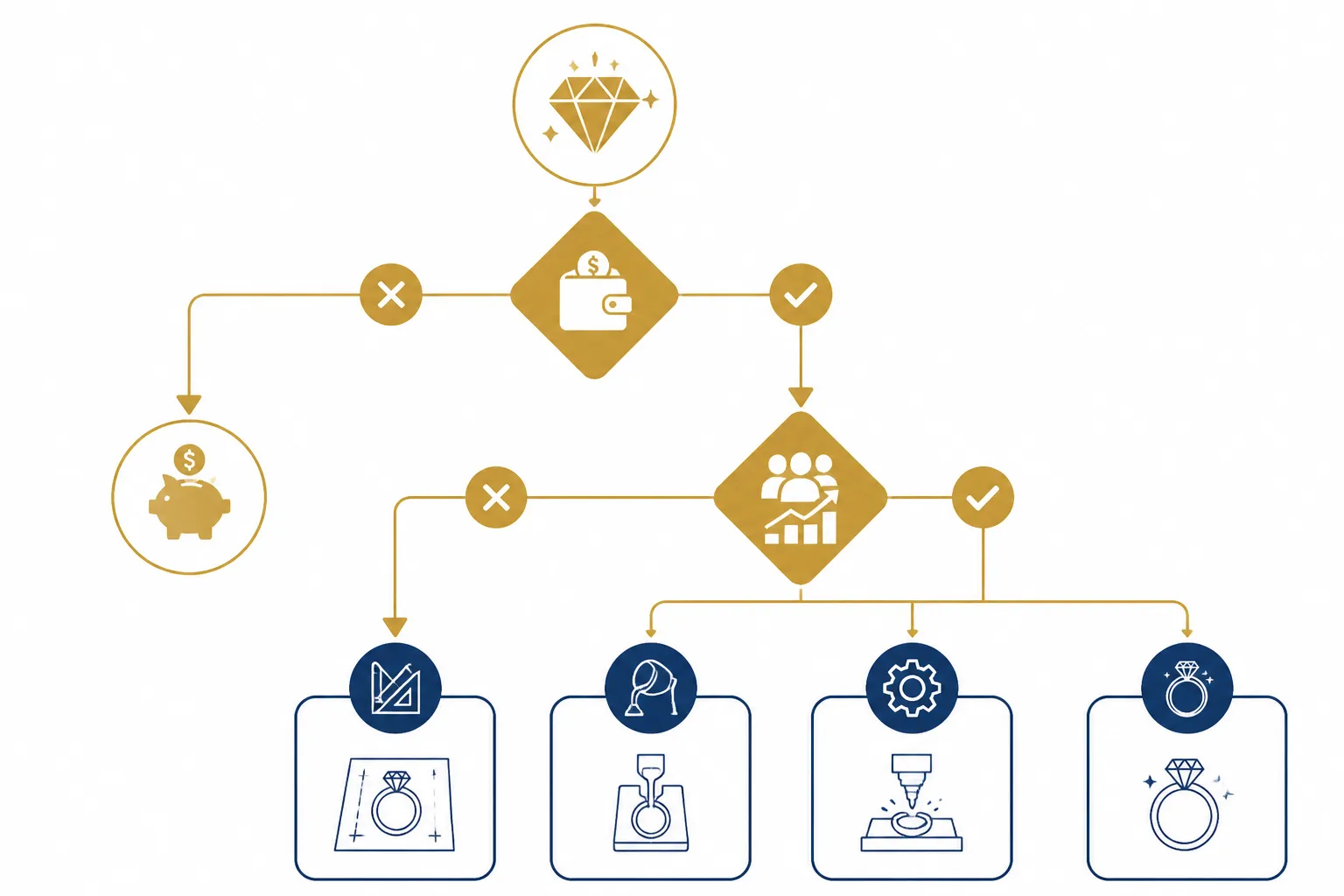
Your choice depends entirely on your current business stage and capital allocation. If you are a DTC store owner testing a new vintage aesthetic, starting with custom jewelry is financially reckless. Instead, leverage STRAND’s 12-piece MOQ on existing designs like the Two-Tone Rhinestone Fireworks Jewelry Set to gather sales data. Only move to full OEM once you have validated conversion rates. This de-risks your assortment planning while maintaining access to future customization.
For importers serving diverse markets across MENA and Europe, communication infrastructure matters as much as product quality. Alternatives lacking multilingual support create hidden costs through miscommunication and rework. Prioritize suppliers offering native-language sales teams in Arabic, French, German, Spanish, Russian, and English to ensure technical specifications for materials like turquoise or amethyst are accurately conveyed. This operational alignment prevents the delays that plague traditional custom jewelry projects.
Retailers positioned in the luxury segment should evaluate whether their customers actually want structural novelty or simply emotional resonance. If the latter, platforms like Catbird or Made By Mary deliver personalization without manufacturing complexity. Reserve true custom jewelry development for signature hero pieces that define brand identity, while using stock-hybrid alternatives for volume drivers and trend-responsive capsules. Refer to our upcoming guide on 6 Best Custom Jewelry Sources in 2026 for deeper supplier benchmarks.
Conclusion
The optimal alternative to custom jewelry isn't a single supplier but a strategic mix aligned with your risk tolerance and growth phase. For fashion jewelry buyers seeking the best balance of exclusivity, affordability, and operational ease, STRAND’s hybrid stock-to-OEM model offers the most practical path forward. Its 12-piece MOQ threshold allows for genuine market testing without the capital paralysis of traditional bespoke manufacturing, while its multilingual team and in-house QC address the logistical pain points that derail cross-border sourcing. For a comprehensive overview of additional sourcing strategies, explore our guide on best alternatives to custom jewelry for every business model.
Stop guessing which custom route fits your next collection. Review the 114-style stock catalog to identify immediate opportunities, then request a quote for OEM modifications on your top-performing categories. Visit strandjewelry.com to get current MOQ, pricing, and sample availability for your specific market needs.