
7 Smart Alternatives to Custom Jewelry for DTC Brands & Importers
7 Smart Alternatives to Custom Jewelry for DTC Brands & Importers
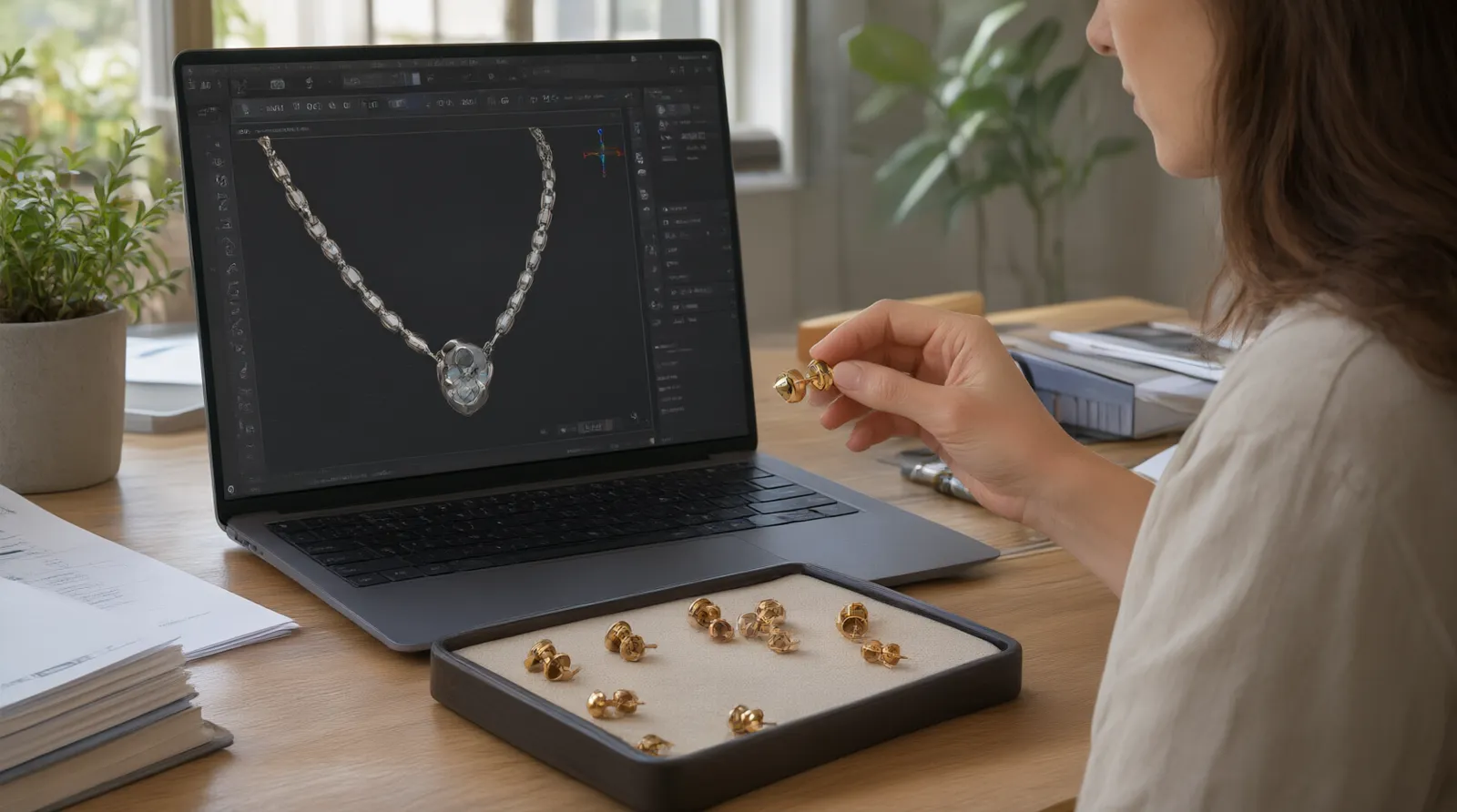
Buyers sourcing custom jewelry typically hit three roadblocks: high minimum order quantities (MOQs) that tie up capital, long production lead times that delay seasonal launches, and communication gaps with overseas workshops. The best custom jewelry alternatives range from low-MOQ OEM catalogs and wholesale fashion jewelry platforms to semi-custom retail services, depending on whether you are a DTC brand scaling a collection or an importer testing new markets in the US, EU, UK, or MENA.
Why Look for Alternatives to Custom Jewelry?
Sourcing fully bespoke custom jewelry sounds ideal until you face the procurement realities. For DTC store owners and importers, the traditional route often means committing to MOQs of 100 to 500 pieces per design just to get a factory’s attention. If you are launching a new line of drop earrings or testing a gradient crystal necklace set, tying up thousands of dollars in unproven inventory creates massive financial risk. Production timelines for ground-up designs routinely stretch past eight weeks, making it nearly impossible to react to fast-moving trends like vintage rhinestone styles or two-tone glass bead aesthetics.
Communication bottlenecks compound these delays. Multilingual procurement teams frequently struggle when dealing directly with regional workshops that only operate in local languages. A miscommunicated spec for gold-plated copper finishes or faux pearl placements can ruin an entire production run. You also face lock-in; once your CAD files and molds are held by a single manufacturer, switching suppliers mid-season becomes prohibitively expensive. Retail-level custom jewelers—like those found via Yelp directories in cities such as Chesapeake, VA, or through Reddit recommendation threads in Los Angeles—are built for individual consumers buying one-off engagement rings, not commercial buyers needing scalable, repeatable inventory.
For brands seeking the aesthetic appeal of luxury without the operational friction of full bespoke manufacturing, alternative sourcing models offer a middle ground. These options provide the visual distinctiveness of custom work while utilizing pre-vetted components, lower volume thresholds, and faster turnaround times suited for cross-border fashion jewelry commerce.
What to Look for in a Custom Jewelry Alternative
When evaluating replacements for traditional custom jewelry sourcing, commercial buyers should measure every option against strict procurement criteria rather than just aesthetics. Use this checklist before requesting a quote:
- Minimum Order Quantity (MOQ): Can you order test batches under 50 units per style, or does the supplier demand bulk commitments upfront?
- Material Versatility: Does the alternative support the specific bases you need, such as gold-plated copper, rhodium-plated copper, 925-style silver finishes, natural stone, or glass beads?
- Trade Terms & Logistics: Are terms clearly defined (e.g., EXW or FOB)? Do they offer flexible shipping by air, sea, or express?
- Quality Assurance: Is there documented in-house QC inspection before every shipment leaves the facility?
- Multilingual Support: Can your procurement team communicate specs and negotiate in EN, FR, AR, ES, DE, or RU without relying on third-party translators?
- Payment Flexibility: Do they accept standard B2B methods like T/T bank transfer, L/C, Xtransfer, alongside Western Union or PayPal for smaller sample orders?
- Catalog Depth vs. Bespoke Capability: Is there a baseline stock catalog you can pull from immediately, paired with an option for custom OEM modifications?
Top Alternatives to Custom Jewelry
1. STRAND (Cross-Border Fashion Jewelry OEM & Stock)
Best for: DTC brands, importers, and multilingual procurement teams sourcing scalable fashion jewelry from vetted Chinese workshops.
Pricing: B2B tiered pricing based on volume; request a quote for specific SKU costs. Trade terms available as EXW or FOB.
Key strengths vs custom jewelry:
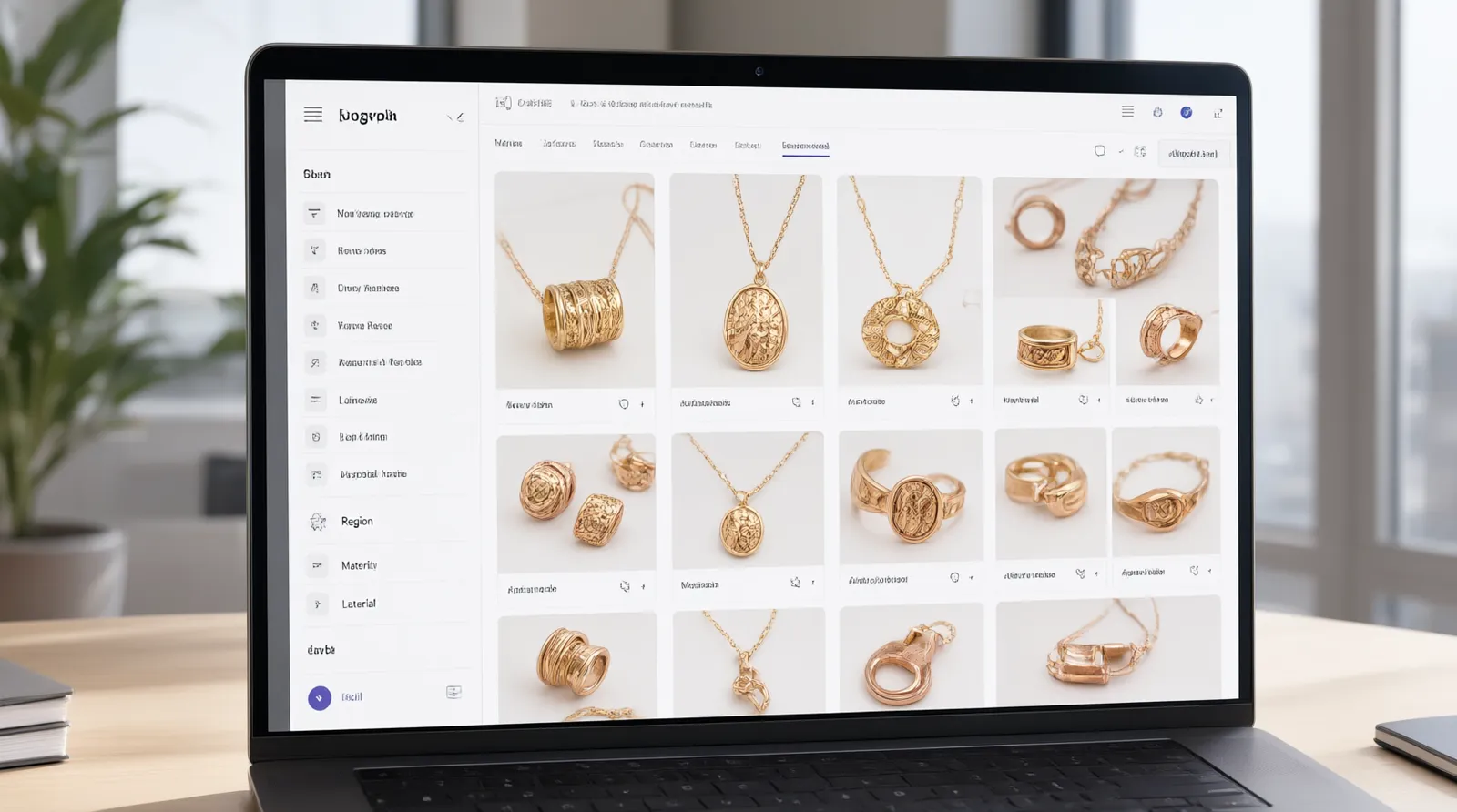
- Operates a 114-style stock catalog featuring drop earrings, stud earrings, and necklace + earring sets in vintage, gradient crystal, and rhinestone styles.
- Offers an MOQ of 12 pcs/style on most designs (specifically 109 of 114 catalog styles), with select styles available from 1 pc, drastically lowering the barrier to entry compared to traditional custom runs.
- Provides dedicated custom OEM services using gold-plated/rhodium-plated copper, 925-style silver finishes, glass beads, natural stone, and faux pearls.
- Supports multilingual sales teams (EN, FR, AR, ES, DE, RU) and handles in-house QC inspection before every shipment.
Limitations / trade-offs:
- Focused strictly on fashion and semi-fine materials (copper, glass, faux pearls) rather than fine investment-grade metals.
- Requires direct B2B communication to finalize logistics (air, sea, express) and payment methods (T/T, Western Union, PayPal, L/C, Xtransfer).
How it compares to custom jewelry: Traditional custom jewelry manufacturing forces buyers into high-volume commitments and lengthy prototyping phases. STRAND bridges this gap by linking Hangzhou-based vetted workshops directly to overseas buyers. Instead of starting from scratch, you can launch quickly using their low-MOQ stock catalog, then transition specific winning designs into custom OEM production. For a deeper look at how this model fits into broader sourcing strategies, review our guide on Custom Jewelry: 6 Sources Buyers & DTC Brands Need in 2026.
2. Morin Jewelers (Retail Custom Design Services)
Best for: Localized retail buyers or boutique owners looking for single-piece, high-end bridal or bespoke items rather than bulk commercial inventory.
Pricing: Retail bespoke pricing; varies entirely by material and labor.
Key strengths vs custom jewelry:
- Offers a hands-on "Build Your Own Ring" option for highly personalized consumer requests (Source).
- Specializes in custom bridal jewelry, providing a white-glove service experience (Source).
- Hosts specialized purchasing events, such as the Gold, Jewelry & Diamond Buying Event held in October 2024, allowing local buyers to source materials directly (Source).
- Located in Southbridge, MA, offering physical verification of craftsmanship for US-based clients (Source).
Limitations / trade-offs:
- Not viable for cross-border B2B importers or DTC stores needing scalable inventory.
- Lead times and costs per unit are significantly higher than overseas OEM manufacturing.
How it compares to custom jewelry: While Morin Jewelers provides excellent custom designs as a service for individual retail consumers, it operates on a completely different axis than commercial custom jewelry sourcing. An importer trying to fulfill a 500-unit order of amethyst or garnet-inspired fashion earrings cannot use a localized retail jeweler. However, for boutique owners needing a single statement piece or exploring diamond settings for a flagship store display, retail bench jewelers fill a niche that mass OEM cannot.
3. Amazon Fashion Jewelry Wholesale
Best for: Fast-fashion DTC sellers and dropshippers looking for immediate, zero-MOQ inventory without waiting for production.
Pricing: Varies by seller; generally low-cost, single-unit pricing.
Key strengths vs custom jewelry:
- Instant availability; no production lead times or prototyping required.
- Massive variety of existing styles, including pieces featuring simulated turquoise, peridot, and rhinestone aesthetics.
- Buyer protection policies handle disputes regarding item condition or delivery failures.
- Allows testing of consumer demand for specific silhouettes before committing to a custom OEM run.
Limitations / trade-offs:
- Zero exclusivity; your competitors can buy the exact same inventory instantly.
- Inconsistent quality control across third-party sellers, with no unified in-house QC inspection.
- No ability to customize plating, base metals, or packaging for brand identity.
How it compares to custom jewelry: Sourcing custom jewelry gives you proprietary designs and brand control. Amazon is the exact opposite—it offers speed and convenience at the total expense of exclusivity. Many DTC store owners use Amazon to reverse-engineer trends, buying a few samples of popular styles to understand what sells, before taking those concepts to an OEM partner like STRAND to produce exclusive versions in gold-plated or rhodium-plated copper.
4. Kendra Scott (Wholesale & Retail Programs)
Best for: Brick-and-mortar boutiques wanting established, branded fashion jewelry with recognizable colorways.
Pricing: Standard wholesale markup structures apply for approved retail partners.
Key strengths vs custom jewelry:
- Highly recognizable brand identity, particularly known for their signature color bar and use of vibrant stones like amethyst, turquoise, and peridot hues.
- Established supply chain means consistent restocking of core styles without managing raw material sourcing yourself.
- Built-in marketing collateral and brand recognition reduce customer acquisition costs for physical stores.
- Polished retail presentation out of the box.
Limitations / trade-offs:
- You are selling someone else's brand, limiting your own DTC brand equity.
- Strict retailer agreements dictate pricing, margins, and display requirements.
- Cannot alter designs, materials, or sizing to fit specific market feedback.
How it compares to custom jewelry: Working with Kendra Scott means opting into an established ecosystem rather than building your own. Custom jewelry sourcing allows you to create proprietary lines tailored exactly to your demographic. If your goal is to build a unique brand identity in the US or EU markets rather than acting as a third-party stockist, OEM custom jewelry remains the superior path.
5. Jared / Signet Jewelers (Commercial Fine Jewelry)
Best for: High-end retail buyers or individuals sourcing genuine luxury, diamond, and fine gemstone pieces rather than fashion jewelry.
Pricing: Premium retail/fine jewelry pricing.
Key strengths vs custom jewelry:
- Access to certified fine materials, including genuine diamond, garnet, and precious metal settings.
- Established luxury retail infrastructure with warranties and appraisal documentation.
- Physical stores allow for in-person verification of high-value goods.
- Existing customization programs for fine bridal and heirloom pieces.
Limitations / trade-offs:
- Entirely unsuited for fashion jewelry importers or DTC brands operating at scale.
- Prohibitive cost structures for commercial resale outside of the fine jewelry sector.
- Slow turnaround for any bespoke modifications.
How it compares to custom jewelry: Jared represents the traditional fine jewelry approach to customization. For buyers importing fashion jewelry—focusing on materials like glass beads, natural stone accents, and plated copper—fine jewelry retailers are irrelevant to the business model. Commercial custom jewelry focuses on trend velocity and margin optimization, whereas fine jewelry focuses on intrinsic material value.
6. Alibaba / Global Sources (Direct Factory Marketplaces)
Best for: Experienced importers with dedicated QA teams who want to bypass intermediaries and contract directly with raw factories.
Pricing: Factory-direct pricing; highly variable based on negotiation and volume.
Key strengths vs custom jewelry:
- Unrestricted access to thousands of manufacturers globally.
- Ability to negotiate raw material costs down to the gram for large-scale orders.
- Suitable for highly complex, non-standard engineering if you have the technical expertise to manage it.
- Escrow payment systems offer basic transactional security.
Limitations / trade-offs:
- High risk of IP theft; your custom designs can be sold to other buyers by the factory.
- Communication barriers are severe unless you have native-speaking procurement staff.
- Quality consistency is notoriously difficult to enforce without hiring third-party inspection agencies.
- MOQs are typically much higher than managed OEM services.
How it compares to custom jewelry: While platforms like Alibaba facilitate custom jewelry production, they leave the buyer entirely responsible for vendor vetting, QC, and logistics. Managed OEM providers (like STRAND) act as the bridge, consolidating workshop capabilities while guaranteeing in-house QC inspection, standardized trade terms (EXW/FOB), and multilingual support. For buyers without deep manufacturing expertise, open marketplaces carry significant operational risk. Explore how managed sources rank against open marketplaces in our breakdown of 6 Custom Jewelry Sources Ranked: OEM Suppliers & Retail Benchmarks for 2026.
Side-by-Side Comparison Table
| Feature | Traditional Custom Jewelry | STRAND (OEM + Catalog) | Morin Jewelers | Amazon Wholesale | Kendra Scott | Alibaba Direct |
|---|---|---|---|---|---|---|
| Target Buyer | Mid-to-large brands | DTC, Importers, B2B | Individual consumers | Dropshippers, fast-fashion | Boutiques, retail stores | Experienced importers |
| Typical MOQ | 100–500+ pcs/style | 12 pcs/style (109/114 styles) | 1 pc | 1 pc | N/A (Wholesale tiers) | 100–1000+ pcs/style |
| Lead Time | 8–12 weeks | Faster (stock + OEM hybrid) | 4–8 weeks | Immediate | Immediate (if in stock) | 6–10 weeks |
| Material Focus | Varies widely | Plated copper, glass, stone | Fine metals, diamond | Mixed / inconsistent | Branded alloys, stones | Varies widely |
| QC & Support | Depends on factory | In-house QC, multilingual | In-person retail | None guaranteed | Corporate retail support | Buyer's responsibility |
| Exclusivity | High | High (on OEM runs) | Absolute (1 of 1) | None | None (branded) | Moderate (IP risk) |
How to Pick the Right Alternative
Choosing the right replacement for custom jewelry depends entirely on your operational scale and target market. Referencing a comprehensive custom jewelry sourcing guide can help streamline this evaluation process based on your specific business needs.
If you are a DTC Store Owner or Importer scaling a brand: You need the exclusivity of custom jewelry without the paralyzing MOQs. Open marketplaces expose you to IP theft, and retail jewelers cannot fulfill commercial volume. A managed OEM provider offering a baseline catalog (to generate immediate cash flow) alongside custom modification capabilities is the optimal choice. Look for suppliers offering MOQs around 12 pcs/style so you can test variations—like swapping a garnet-colored glass bead for a turquoise one—without overcommitting capital. Ensure they support your required trade terms (EXW or FOB) and payment methods (T/T, L/C, Xtransfer, or PayPal for initial sampling).
If you are a Boutique Buyer stocking physical shelves: Your priority is sell-through rate and visual merchandising. If brand recognition drives your foot traffic, partnering with established names like Kendra Scott makes sense. If you need unique pieces that competitors down the street don't carry, sourcing low-MOQ stock designs from an OEM catalog allows you to curate a distinct aesthetic. You can order small batches of drop earrings or necklace sets, evaluate the response, and reorder rapidly.
If you are an Individual Consumer or Bridal Buyer: Commercial B2B sourcing isn't built for you. Retail-focused custom design services, like those offered by Morin Jewelers in Southbridge, MA, provide the hands-on consultation, "Build Your Own Ring" interfaces, and physical verification required for high-stakes personal purchases like diamond engagement rings or bespoke bridal jewelry.
Conclusion
The friction of traditional custom jewelry—high MOQs, slow turnarounds, and isolated communication—no longer has to bottleneck your product launches. For individual buyers, retail services handle bespoke needs effectively. But for commercial buyers, importers, and DTC brands operating across the US, EU, UK, and MENA, the shift toward hybrid OEM models is permanent. By utilizing suppliers that combine ready-to-ship catalogs (like 114-style inventories with 12-piece minimums) with true custom OEM capabilities in gold-plated copper, rhodium finishes, and natural stones, you secure both speed and exclusivity.
Stop waiting months for prototypes that may not align with current market trends. Review your current supplier's MOQ and lead time against your next seasonal launch date. If your capital is tied up in unproven inventory, reach out to STRAND's multilingual sales team to request a sample, verify current MOQs for specific styles, and get a formal quote for your next production run at strandjewelry.com.