
Best Alternatives to Custom Jewelry: 2026 Sourcing Guide
Best Alternatives to Custom Jewelry: 2026 Sourcing Guide
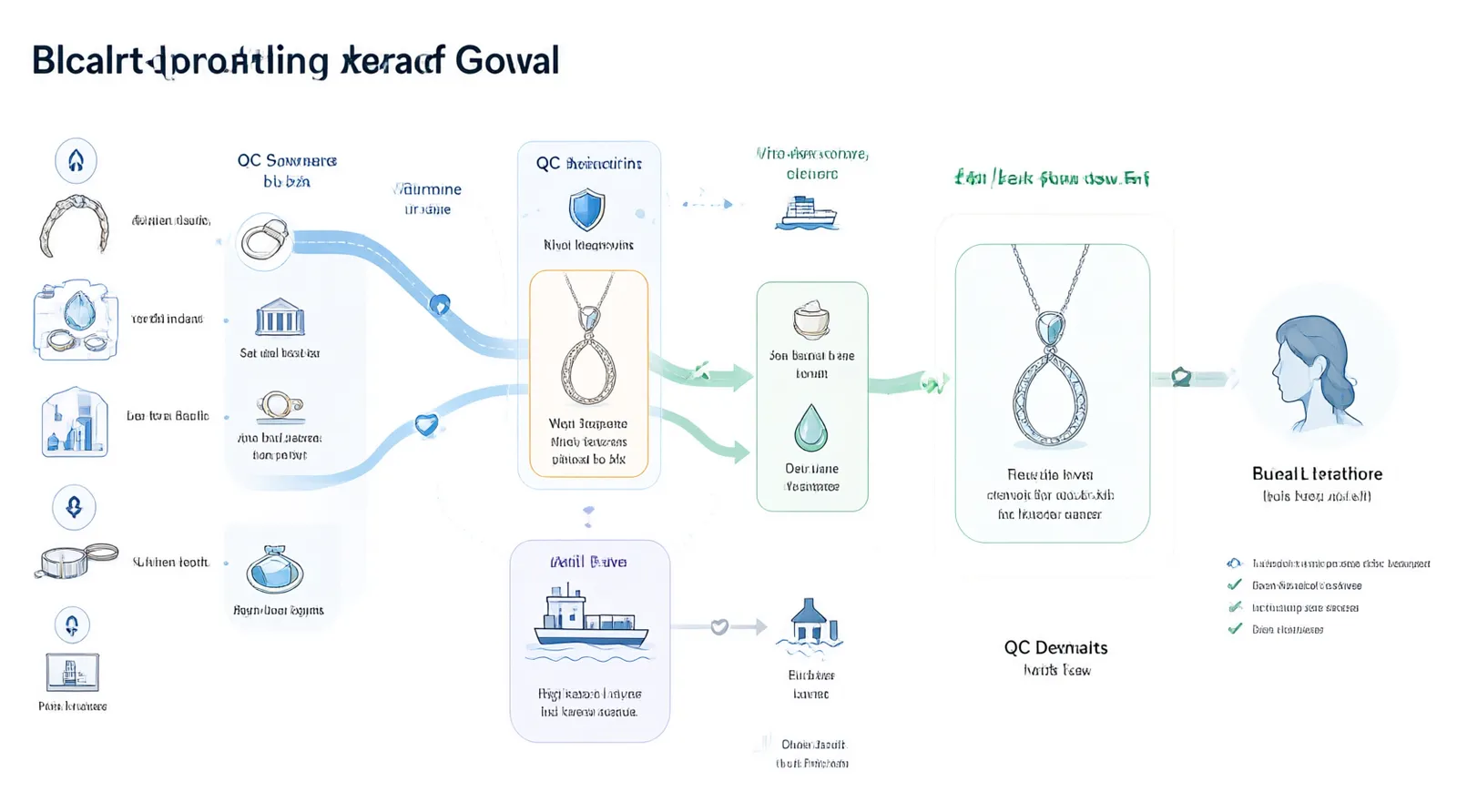
Buyers, importers, and DTC store owners evaluating custom jewelry typically face three friction points: unpredictable pricing at scale, rigid minimum order quantities (MOQs), and communication delays across time zones. If you are actively shopping for a replacement supplier or pivoting away from a current custom jewelry partner, your best alternatives range from direct-to-workshop OEM platforms with low MOQs to established personalized retail brands that double as sourcing benchmarks.
Why Look for Alternatives to Custom Jewelry?
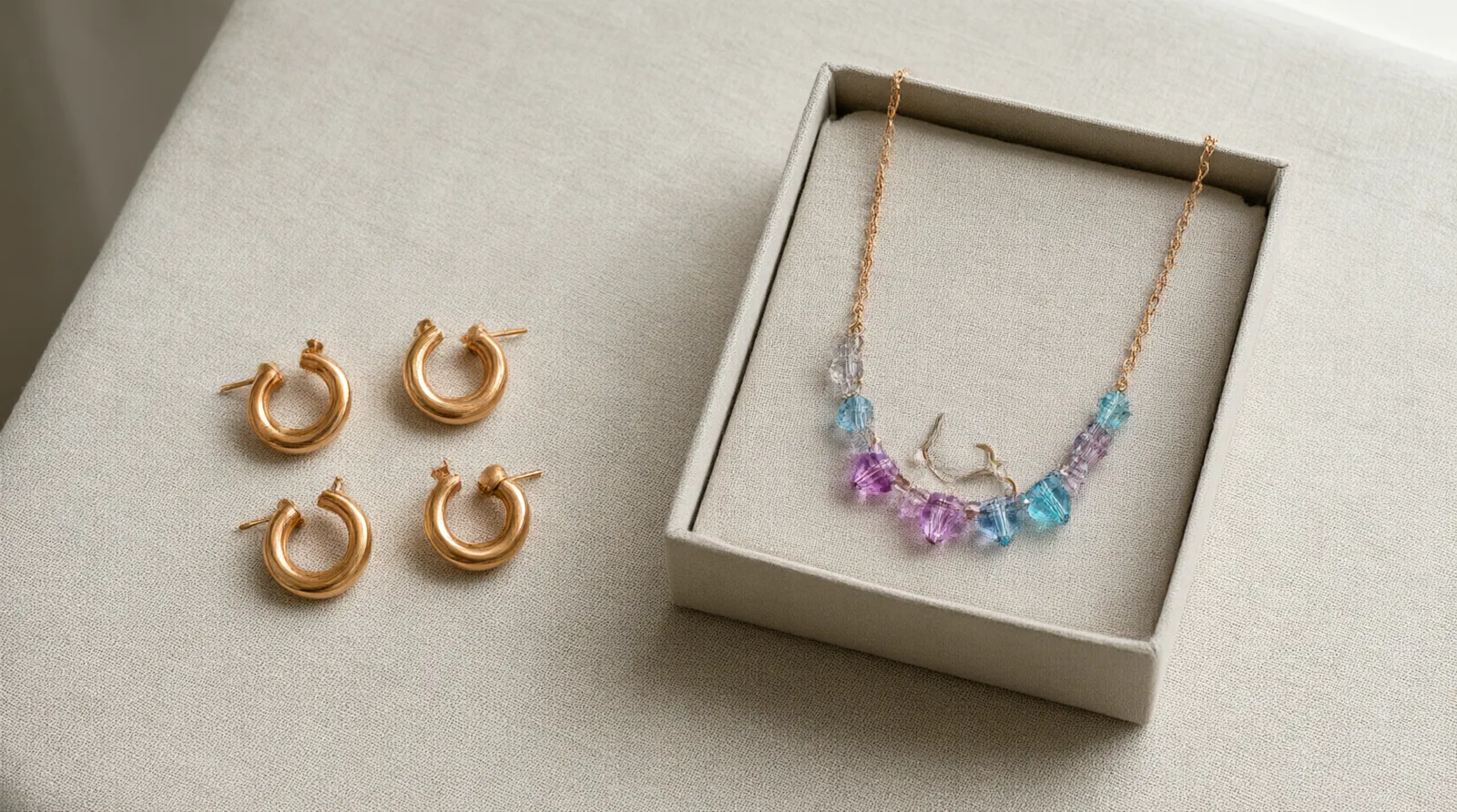
Sourcing custom jewelry often starts with excitement over unique designs but quickly runs into operational bottlenecks. For B2B buyers and DTC brand owners in the US, EU, UK, and MENA regions, the primary pain point is scale limits. Many traditional workshops require high MOQs that lock up capital, making it difficult to test new styles like vintage drop earrings or gradient crystal necklace sets without overcommitting inventory. When a supplier demands hundreds of units per style just to start production, agile brands lose their ability to react to market trends.
Pricing transparency is another major hurdle. Retail-focused custom jewelers build heavy margins into their products to cover consumer marketing and storefront overhead. Buyers looking to source gold-plated copper or rhodium-plated fashion pieces often find themselves paying luxury-tier prices for non-luxury materials simply because they are buying through a middleman rather than a direct workshop link. This margin compression makes it nearly impossible for independent stores to compete with larger retailers.
Finally, support structures frequently fail cross-border procurement teams. Language barriers, lack of in-house quality control before shipment, and limited trade terms (like strict EXW requirements when a buyer needs FOB) can derail entire purchasing cycles. If your current custom jewelry partner cannot communicate fluently in English, French, Arabic, Spanish, German, or Russian—or lacks flexible payment options like T/T, PayPal, or L/C—you are absorbing unnecessary risk. Exploring alternatives to custom jewelry means finding partners who treat manufacturing as a service, not just a transaction.
What to Look for in a Custom Jewelry Alternative
When replacing a custom jewelry supplier, evaluate potential partners against these specific procurement criteria:
- Minimum Order Quantities (MOQ): Look for suppliers offering MOQs as low as 12 pcs/style on stock catalogs, or even 1 pc for select styles, allowing you to test designs without massive upfront capital.
- Material & Finish Capabilities: Ensure the alternative can produce in your required materials—whether that is gold-plated copper, rhodium-plated finishes, 925-style silver, glass beads, natural stone, or faux pearls.
- Trade Terms & Logistics: Verify if they offer EXW or FOB terms and whether they handle air, sea, or express shipping directly.
- Quality Assurance: Confirm the presence of in-house QC inspections before every shipment leaves the facility.
- Multilingual Support: For international procurement teams, sales support in multiple languages (EN, FR, AR, ES, DE, RU) prevents costly specification errors.
- Payment Flexibility: Check for diverse payment methods including T/T bank transfer, Western Union, PayPal, L/C, and Xtransfer.
- Catalog Depth: A strong alternative should offer a ready-made stock catalog (e.g., 100+ styles) alongside true custom OEM capabilities.
For a deeper breakdown of how to evaluate suppliers across these metrics, review our guide on Custom Jewelry: 6 Sources Buyers & DTC Brands Need in 2026.
Top Alternatives to Custom Jewelry
1. STRAND (Direct OEM & Stock Catalog)
Best for: DTC store owners, importers, and multilingual procurement teams needing low-MOQ fashion jewelry directly from vetted Chinese workshops.
Pricing: B2B wholesale pricing; request a quote based on volume and material specifications.
Key strengths vs custom jewelry:
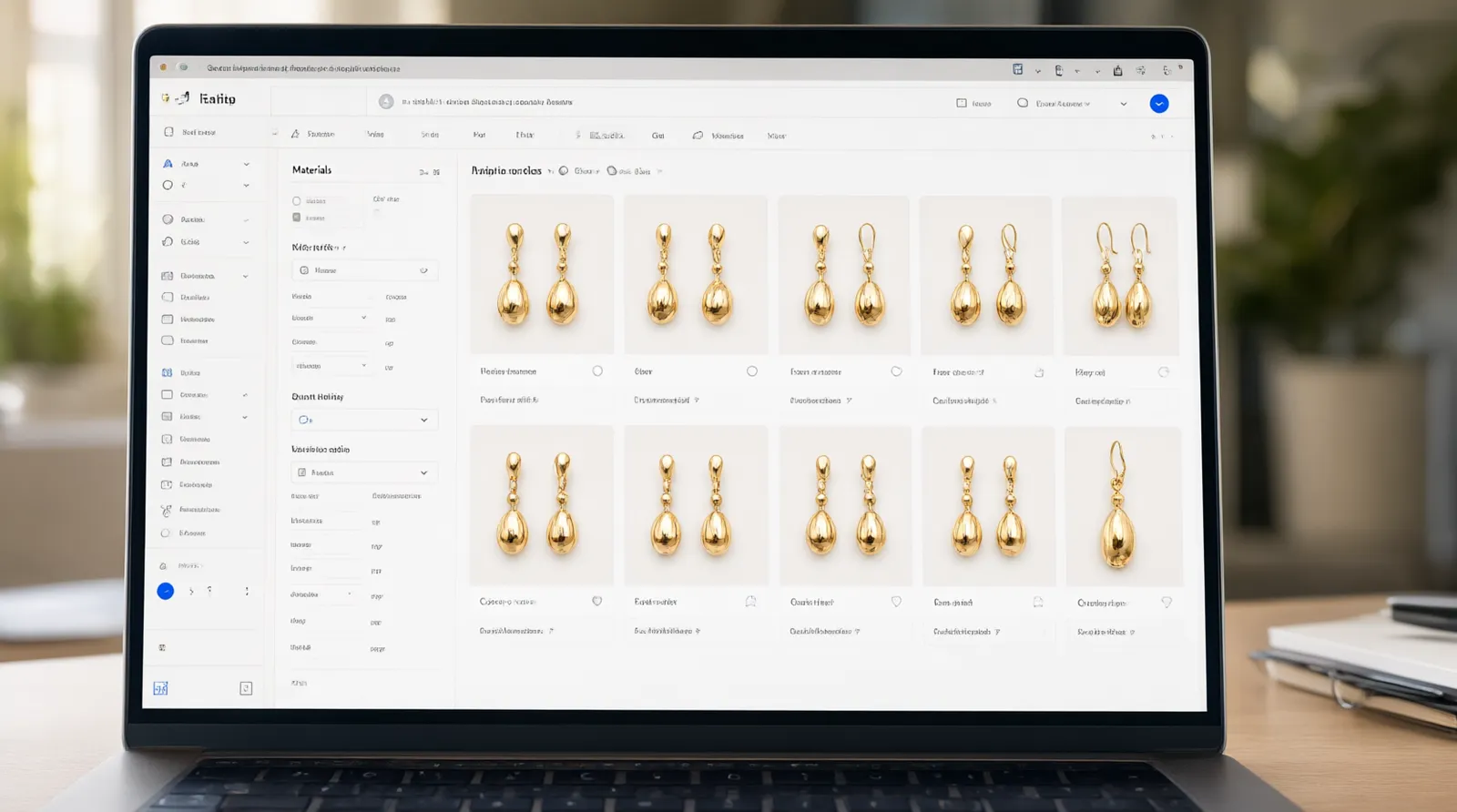
- Operates a 114-style stock catalog where 109 styles carry an MOQ of just 12 pcs/style, with select styles available from 1 pc.
- Hangzhou-based infrastructure links buyers directly to workshops, eliminating middleman markups on items like two-tone glass bead earrings or rhinestone necklace sets.
- Provides dedicated multilingual sales support in EN, FR, AR, ES, DE, and RU, removing cross-border communication friction.
- Offers comprehensive trade terms (EXW or FOB), multiple shipping methods (air, sea, express), and flexible payments (T/T, Western Union, PayPal, L/C, Xtransfer) backed by in-house QC inspection before every shipment.
Limitations / trade-offs:
- Focused on fashion jewelry materials (copper, glass beads, faux pearls) rather than fine jewelry precious metals like solid 18k gold.
- Requires B2B inquiry processes rather than instant add-to-cart retail checkout.
How it compares to custom jewelry: Traditional custom jewelry manufacturers often force buyers to choose between high MOQs for bespoke designs or settling for generic wholesale lots. STRAND bridges this gap by functioning as both a stock catalog supplier and a custom OEM partner. While standard custom jewelry workflows might take weeks of back-and-forth translation and negotiation, STRAND’s multilingual team and pre-vetted workshop network streamline the path from design brief to delivered product, specifically tailored for cross-border buyers in the US, EU, UK, and MENA.
2. Jewlr (Personalized Retail Benchmark)
Best for: Market research, trend benchmarking, and understanding retail price ceilings for personalized gemstone jewelry.
Pricing: Retail tier; for example, personalized name necklaces in 18K Gold Plated Silver run seasonal promotions, such as being marked down from $120 to $84, while engravable stacking pendants featuring stones like peridot and citrine reach higher price points ([Source: https://www.jewlr.com/personalized-jewelry]).
Key strengths vs custom jewelry:
- Massive retail catalog featuring 641 personalized jewelry products, providing excellent visibility into what end-consumers are currently buying ([Source: https://www.jewlr.com/personalized-jewelry]).
- Consumer-friendly policies including a 99-day return policy, free shipping, and a one-year warranty ([Source: https://www.jewlr.com/personalized-jewelry]).
- Broad category coverage spanning birthstone, engravable, rings, necklaces, bracelets, and earrings utilizing stones like garnet, cubic zirconia, and blue topaz ([Source: https://www.jewlr.com/personalized-jewelry]).
Limitations / trade-offs:
- Strictly a B2C retailer; offers no wholesale pricing, bulk ordering, or OEM manufacturing for store owners.
- Retail margins make it unviable as a sourcing partner for DTC brands looking to maintain profitability.
How it compares to custom jewelry: Jewlr represents the final retail destination for custom jewelry, not the sourcing origin. While a custom jewelry manufacturer builds the physical product, platforms like Jewlr show you exactly how those products are merchandised, priced, and returned by consumers. DTC store owners should use Jewlr’s extensive catalog to identify trending styles—such as interlocking heart pendants or baguette bypass rings—and then take those concepts to an OEM partner like STRAND to manufacture them at a fraction of the retail cost with a 12-piece MOQ.
3. KAY Jewelers (Big-Box Store Model)
Best for: Understanding mass-market retail positioning and appointment-based consumer buying behavior.
Pricing: Mass-market retail; features categories like engagement rings under $2,000 ([Source: https://www.kay.com/personalized]).
Key strengths vs custom jewelry:
- Extensive physical store footprint allows customers to book in-person appointments, a trust signal online-only custom jewelry brands struggle to replicate ([Source: https://www.kay.com/personalized]).
- Integrated financing options, such as proprietary credit cards, which lower the barrier to entry for high-ticket consumer purchases ([Source: https://www.kay.com/personalized]).
- Established brand recognition that drives immediate consumer trust for personalized and custom pieces ([Source: https://www.kay.com/personalized]).
Limitations / trade-offs:
- Not a sourcing platform; buyers and importers cannot purchase wholesale inventory here.
- Standardized designs limit true bespoke creativity compared to working directly with an OEM factory.
How it compares to custom jewelry: KAY operates as a massive retail distributor of personalized jewelry rather than a custom manufacturing alternative. For B2B buyers, studying KAY’s model reveals how large chains merchandise custom jewelry using physical stores and financing. However, if you are an independent DTC brand trying to compete with these stores, you need the agility and low MOQs of a direct-to-factory custom jewelry alternative to undercut their pricing while matching their trend speed.
4. Made By Mary (DTC Minimalist Brand)
Best for: Inspiration for minimalist, everyday personalized jewelry branding and packaging.
Pricing: Premium DTC retail pricing.
Key strengths vs custom jewelry:
- Highly curated aesthetic focused on delicate layering pieces and subtle personalization.
- Strong brand identity that commands premium pricing for relatively simple custom jewelry designs.
- Excellent visual merchandising that appeals heavily to millennial and Gen Z demographics.
Limitations / trade-offs:
- Closed ecosystem; they manufacture for their own brand and do not offer white-label or OEM services to other businesses.
- Limited material diversity compared to a full-scale custom jewelry workshop capable of handling heavy glass beads or complex rhinestone pavé.
How it compares to custom jewelry: Made By Mary proves that custom jewelry doesn't need to be overly complex to sell at a premium. However, for buyers looking to source similar minimalist aesthetics to sell under their own brand, Made By Mary is a competitor, not a supplier. To replicate their success, DTC store owners should source lightweight, gold-plated custom jewelry through an OEM partner, applying their own branding and packaging strategies to capture similar margins.
5. Catbird NYC (Luxury Indie Benchmark)
Best for: High-end, luxury market trend spotting in the personalized jewelry space.
Pricing: Luxury tier, utilizing solid gold and genuine diamond accents.
Key strengths vs custom jewelry:
- Positions personalized jewelry within a high-fashion, luxury context rather than a novelty gift category.
- Cult following among trendsetters, making their custom jewelry releases highly influential.
- Focuses on permanent and heirloom-quality pieces rather than fast fashion.
Limitations / trade-offs:
- Prohibitive pricing for mass-market DTC brands or importers targeting broader demographics.
- No B2B wholesale or manufacturing services offered.
How it compares to custom jewelry: Catbird represents the ceiling of the custom jewelry market. While their solid gold and diamond pieces cater to a luxury audience, the styles they popularize often trickle down to fashion jewelry markets. Smart importers monitor Catbird’s custom jewelry drops, then work with manufacturers like STRAND to produce accessible, gold-plated or rhodium-plated interpretations using materials like turquoise-colored glass or faux pearls, bringing high-end aesthetics to everyday buyers.
6. Brook and York (Accessible Fashion Personalization)
Best for: Analyzing mid-tier fashion jewelry assortments and best-selling personalized SKUs.
Pricing: Mid-tier retail.
Key strengths vs custom jewelry:
- Aggressive focus on best-selling personalized jewelry, reducing the risk of dead stock.
- Fast turnaround on trendy styles compared to traditional bespoke custom jewelry timelines.
- Approachable price points that encourage multi-item purchases.
Limitations / trade-offs:
- Primarily serves the end consumer; lacks the infrastructure to act as an OEM supplier for international buyers.
- Quality and material depth may not satisfy buyers looking for specialized finishes like 925-style silver plating on copper bases.
How it compares to custom jewelry: Brook and York excels at moving personalized fashion jewelry quickly, a strategy any DTC store owner can adopt. However, their model relies on existing retail supply chains. By replacing retail sourcing with a direct custom jewelry alternative, buyers can access the same types of fast-moving personalized styles but with greater control over materials, plating thickness, and profit margins.
Side-by-Side Comparison Table
| Feature | Traditional Custom Jewelry | STRAND (OEM/Stock) | Jewlr (Retail) | KAY (Retail) | Made By Mary (DTC) |
|---|---|---|---|---|---|
| Primary Audience | Individual Consumers | B2B Buyers, Importers, DTC | End Consumers | End Consumers | End Consumers |
| MOQ | Varies (often high) | 12 pcs/style (109 of 114 styles); 1 pc select | N/A (Retail) | N/A (Retail) | N/A (Retail) |
| Materials | Precious Metals/Stones | Copper, Glass Beads, Natural Stone, Faux Pearls | Plated Silver, CZ, Gemstones | Gold, Diamond, Sterling | Solid Gold, Diamonds |
| Trade Terms | Rarely offered | EXW, FOB | None | None | None |
| Multilingual Support | Usually English only | EN, FR, AR, ES, DE, RU | English | English | English |
| QC Inspection | Buyer's responsibility | In-house before shipment | Retail return policies | Retail warranties | Retail return policies |
How to Pick the Right Alternative
Choosing the right alternative to your current custom jewelry setup depends entirely on your position in the supply chain.
If you are a DTC Store Owner or Importer: Your priority is margin protection and inventory agility. You need an alternative that offers low MOQs so you aren't sitting on unsold stock. Platforms like STRAND are built specifically for this scenario, offering 12-piece MOQs on a 114-style catalog and the ability to pivot into custom OEM manufacturing when a specific style gains traction. You also need logistical flexibility. Ensure your partner offers EXW or FOB terms and handles multilingual communication so your procurement team isn't bottlenecked by language barriers. For a ranked breakdown of these exact supplier dynamics, read our analysis of 6 Custom Jewelry Sources Ranked: OEM Suppliers & Retail Benchmarks for 2026.
If you are conducting Market Research or Trend Forecasting: Retail platforms like Jewlr and KAY serve as vital data points. By analyzing their 641+ personalized products or tracking their sub-$2,000 engagement ring categories, you can reverse-engineer what consumers will demand next. Use these retail alternatives to spot trends in gemstone preferences—like spikes in turquoise or peridot styling—and then source those trends affordably through a manufacturing partner.
If you are building a Luxury or Minimalist Brand Identity: Study the merchandising and branding of Catbird or Made By Mary. They are not manufacturing alternatives, but they are strategic benchmarks. Once you understand their aesthetic positioning, use a custom OEM alternative to produce your own line of vintage-inspired or rhinestone-heavy pieces that fit your specific brand narrative.
Conclusion
Replacing a custom jewelry partner requires aligning your sourcing strategy with your actual business model. Retail giants like KAY and trendsetters like Catbird offer valuable market intelligence, but they cannot manufacture your inventory. Platforms like Jewlr provide deep insights into consumer pricing thresholds for personalized gemstone pieces, yet they remain closed to wholesale buyers.
For importers, DTC store owners, and multilingual procurement teams actively seeking a scalable manufacturing alternative, direct-to-workshop models stand out. The ability to order 12 pieces per style across a 114-design catalog, negotiate EXW or FOB trade terms, and communicate in six different languages transforms custom jewelry sourcing from a logistical headache into a competitive advantage.
Review your current supplier agreements today. If your MOQs are tying up cash flow or your communication channels are slowing down production, request a quote, get current MOQ and pricing details, or request a sample directly from STRAND at https://strandjewelry.com to test a more agile alternative for your next purchasing cycle.