
Best Alternatives to Custom Jewelry in 2026: 8 Options Ranked
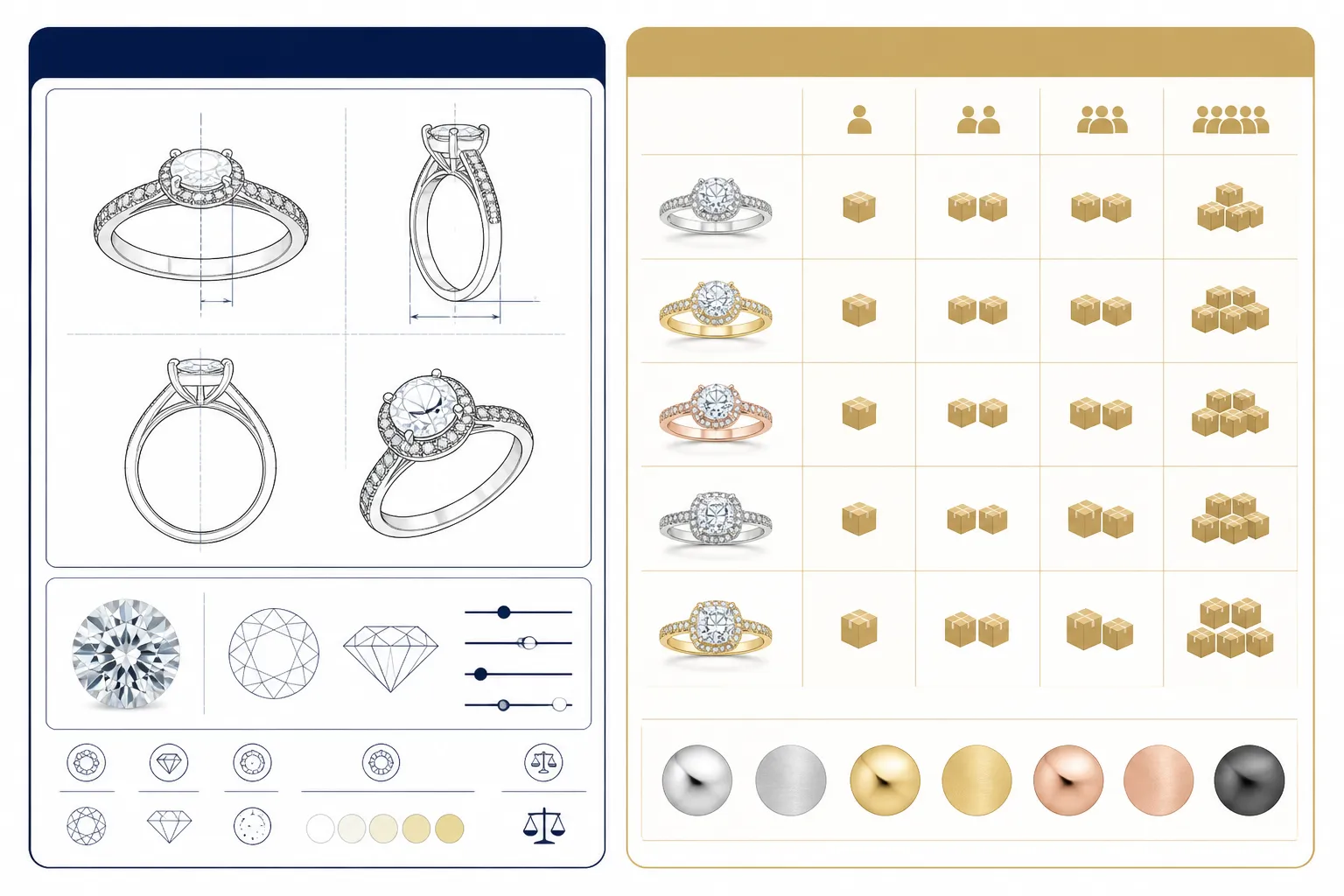
Best Alternatives to Custom Jewelry in 2026: 8 Options Ranked
Custom jewelry covers everything from a single bespoke engagement ring to a full OEM production run — and the right alternative depends entirely on which problem you're actually trying to solve. If your current supplier can't hit your MOQ, your lead times are killing product launches, or communication keeps breaking down on specs, the alternatives below address those gaps directly.
Why Look for Alternatives to Custom Jewelry?
The biggest complaint from buyers who've moved away from traditional custom jewelry services isn't quality — it's predictability. A local artisan studio might deliver stunning one-off pieces but can't reliably fill a 200-unit reorder on the same timeline with the same finish quality. Platforms that specialize in personalization often cater to individual consumers, not wholesale accounts, so their pricing per unit doesn't work for commercial buyers trying to build margin.
Price structure is the second pressure point. Full bespoke custom work — where a jeweler designs and fabricates from scratch — carries a significant labor premium. For buyers sourcing earrings, necklaces, or sets to resell, that premium collapses margin quickly. Even "custom" services from national chain stores often mean choosing from a limited set of preset configurations, which isn't truly custom but still costs significantly more than catalog wholesale.
Scale lock-in is the third issue. Many custom jewelry suppliers are set up for small runs by design. If your business grows from 50 units a month to 500, you may find your current supplier simply can't keep up — forcing a disruptive supplier change at the worst time. Buyers who plan for growth are increasingly looking for suppliers that can handle both low-MOQ starter orders and larger production runs without switching partners mid-season.
What to Look for in a Custom Jewelry Alternative
Not every alternative suits every buyer type. Before shortlisting options, check against these criteria:
- MOQ and scalability: Can the supplier handle your starting volume and your growth volume? Low MOQ is useful, but confirm what happens when you scale.
- Material transparency: Are specific plating finishes, base metals, and stone grades documented? Look for gold-plated or rhodium-plated copper specs, 925 silver finishes, or documented natural stone sourcing.
- Customization depth: Are you selecting from preset options, or can you submit your own design files (CAD, AI files, reference images)?
- Lead time and production capacity: Standard lead time for stock versus custom OEM should be clearly stated upfront — not quoted vaguely "upon request."
- Quality assurance process: Is there in-house QC, or does the supplier ship direct from the workshop with no inspection step before your goods leave the factory?
- Payment and trade terms: For cross-border orders, confirm accepted methods (T/T, PayPal, L/C, etc.) and incoterms (EXW, FOB).
- Communication and support: If your team operates in French, Arabic, Spanish, or German, multilingual support is a procurement non-negotiable — not a nice-to-have.
Top 8 Alternatives to Custom Jewelry
1. STRAND
Best for: B2B buyers, importers, and DTC store owners sourcing OEM jewelry from China at low MOQ
Pricing: Stock catalog from MOQ 12 pcs/style on 109 of 114 catalog styles; select styles available from 1 pc. Custom OEM pricing available on request.
Key strengths vs custom jewelry:
- Direct factory access via a Hangzhou-based brand with vetted Chinese workshops — removes the middleman markup that inflates per-unit costs on traditional custom jewelry
- 114-style stock catalog covering drop earrings, stud earrings, and necklace + earring sets in vintage crystal, gradient, two-tone glass bead, rhinestone, and faux pearl styles in gold-plated and rhodium-plated copper
- Full custom OEM available to your submitted design, in gold-plated and rhodium-plated copper, 925-style silver finishes, glass beads, natural stone, and faux pearls
- In-house QC inspection before every shipment, with air, sea, or express shipping options and payment via T/T, PayPal, Western Union, L/C, or Xtransfer
Limitations / trade-offs:
- Stock catalog is curated for wholesale fashion jewelry — not for luxury fine jewelry or diamond-set pieces
- Custom OEM requires lead time coordination; unsuitable for next-day or rush consumer personalization orders
- Positioned for commercial buyers; not set up for single-piece individual consumer commissions
How it compares to custom jewelry: Traditional custom jewelry services typically require high minimums or high per-unit costs for low volumes. STRAND's MOQ of 12 pcs/style on most stock designs makes it practical for smaller DTC stores testing new styles, while the full custom OEM capability scales for importers and larger retail chains. Multilingual sales support in EN, FR, AR, ES, DE, and RU makes it one of the few Chinese suppliers genuinely equipped for EU and MENA procurement teams. For buyers piecing together supply chains across multiple vendors, STRAND's OEM model consolidates that into one supplier relationship with documented terms.
2. Jewlr
Best for: DTC retailers studying the personalized jewelry market or benchmarking consumer-facing customization
Pricing: Consumer retail; personalized pieces across a wide range with various promotional offers throughout the year
Key strengths vs custom jewelry:
- Massive selection — 646 products in the personalized category alone, covering engravable, birthstone, and name-based rings, necklaces, bracelets, and earrings
- Gemstone options include amethyst, garnet, peridot, aquamarine, blue topaz, and citrine — strong selection for birthstone-driven personalization at the consumer level
- 99-day return policy, one-year warranty, and free shipping lower the purchase risk for end consumers
- Buy Now, Pay Later payment plans increase checkout conversion for gifting occasions
Limitations / trade-offs:
- Consumer-facing only — no wholesale or B2B accounts
- Customization is preset-path (name engraving, birthstone selection); does not support fully bespoke design briefs
- Materials are 18K gold-plated silver, 925 sterling silver, and vermeil — not fine gold or platinum
How it compares to custom jewelry: Where traditional custom jewelry requires a one-on-one design consultation, Jewlr automates personalization at scale across 646 products. That's a useful retail model to study if you're building a consumer-facing DTC jewelry brand. But for procurement teams sourcing wholesale inventory, it offers no B2B pathway — making it a market benchmark rather than a direct sourcing alternative.
3. Icebox
Best for: High-end buyers and retailers sourcing luxury custom pieces including diamond-set and celebrity-grade jewelry
Pricing: Organized into price tiers: Under $1,500; $1,500–$5,000; $5,000–$10,000; and $10,000+
Key strengths vs custom jewelry:
- Dedicated custom jewelry service for both men and women, with a flagship Atlanta store for in-person consultation
- Lifetime warranty and insured shipping — appropriate for high-value diamond and fine metal commissions
- Full range of men's and women's categories including chains, pendants, fashion rings, engagement rings, and wedding bands
- Celebrity clientele and a visible luxury brand positioning that smaller bespoke studios typically lack
Limitations / trade-offs:
- Premium price entry — the under $1,500 tier is the floor, not the average transaction
- Not a scalable wholesale option; designed for individual luxury commissions
- US-centric service model; limited meaningful support for international buyers outside North America
How it compares to custom jewelry: Icebox operates in the same space as traditional luxury custom jewelry but with stronger brand recognition and structured price tiers. For buyers who want fully custom diamond pieces backed by a well-known name, it outperforms a generic local jeweler. For commercial buyers sourcing mid-range fashion jewelry at volume, the price point is fundamentally misaligned with wholesale economics.
4. Catbird NYC
Best for: DTC retailers and brand owners studying the fine-but-accessible personalized jewelry market
Pricing: Fine jewelry positioning; personalized pieces spanning mid-range to premium price points across the catalog
Key strengths vs custom jewelry:
- NYC-based designer with strong editorial and influencer presence — a useful brand positioning reference for DTC operators
- Personalized jewelry including name necklaces, initial charms, and stacking rings in solid gold and sterling silver
- Natural stone and gemstone-set options including turquoise across their catalog
- Consistent aesthetic identity — the catalog feels curated rather than assembled, a useful benchmark for private-label brand development
Limitations / trade-offs:
- Retail-only; no wholesale or OEM pathway
- Personalization stays within catalog-based templates, not fully bespoke
- Higher price point than fashion jewelry alternatives for comparable design complexity
How it compares to custom jewelry: Catbird sits between mass personalization and true bespoke. Their strength is aesthetic coherence — every piece fits a recognizable visual identity. For DTC buyers developing a private-label line, comparing Catbird's product mix and retail positioning against their own STRAND-sourced pieces is a concrete competitive exercise with real pricing data.
5. Made by Mary
Best for: DTC store owners researching the personalized fine jewelry market and consumer gifting behavior in the US
Pricing: Fashion to fine jewelry; accessible price points oriented toward gifting occasions and everyday wear
Key strengths vs custom jewelry:
- Highly personal brand voice with a strong social following — relevant reference for DTC content and community strategy
- Personalized necklaces, rings, and bracelets with engraving, birthstone, and initial options
- Solid gold and sterling silver materials with a quality perception that resonates with US consumers
- Clear gifting-occasion positioning drives repeat purchase behavior that custom jewelry studios rarely replicate
Limitations / trade-offs:
- Consumer-only model; no B2B or wholesale path
- Personalization stays within preset templates rather than custom design briefs
- No international wholesale support
How it compares to custom jewelry: Made by Mary's model is essentially custom jewelry made accessible — consumer submits a name or birthstone, product ships in a few weeks. The limitation is the same as all consumer personalization brands: it doesn't scale for commercial buyers needing wholesale inventory with documented specs.
6. Kendra Scott
Best for: Retailers and buyers evaluating the customizable fashion jewelry market and in-store consumer behavior in the US
Pricing: Fashion jewelry positioning; in-store Color Bar customization available at standard retail pricing
Key strengths vs custom jewelry:
- Strong US retail footprint with stores in major markets, plus a direct DTC online channel
- The "Color Bar" customization concept — customers choose stone color and metal finish in-store — is a proven retail model for accessible semi-custom jewelry
- Wide gemstone range including amethyst and turquoise across their product lines
- Brand recognition across US consumers that independent custom jewelers can't match at scale
Limitations / trade-offs:
- No wholesale or B2B sourcing pathway; not a supplier relationship
- Customization is limited to stone and finish swapping within existing designs — not full custom OEM
- US-focused operations; limited relevance for EU or MENA buyers evaluating international supply chains
How it compares to custom jewelry: Kendra Scott demonstrates what scaled semi-customization looks like at the fashion jewelry level. The Color Bar proves that consumers respond to "choose your stone, choose your finish" without requiring a full bespoke process. For importers and DTC store owners, the insight is that a curated OEM line with switchable stone or finish options often satisfies consumer demand without the complexity of true custom production.
7. Jared
Best for: US-based buyers and retailers wanting a national-chain benchmark for full-service custom jewelry design
Pricing: Full spectrum from fashion to luxury; custom design consultations available in Jared stores nationwide
Key strengths vs custom jewelry:
- Physical stores in most major US markets — relevant for buyers whose customers want in-person design consultation
- Full-service custom design including diamond-set pieces, engagement rings, and branded collections
- Established warranty, service, and resizing programs that smaller custom studios often can't match
- Recognized national brand that consumers already trust for high-value jewelry purchases
Limitations / trade-offs:
- Retail pricing with chain-store overhead — not cost-competitive for wholesale sourcing
- Custom design process is designed for one-off consumer commissions, not B2B volume orders
- Limited international presence outside North America
How it compares to custom jewelry: Jared represents the traditional retail custom jewelry model at scale. The service quality and brand trust are high — but so are the prices. For buyers sourcing wholesale inventory, Jared's retail pricing sets the ceiling your sourced product needs to undercut to make the margin work. That math is where an OEM sourcing relationship starts to look very different.
8. King Jewelers
Best for: Buyers researching full bespoke custom jewelry design with in-house manufacturing capability
Pricing: Bespoke pricing on request; positioned as a premium custom design service
Key strengths vs custom jewelry:
- Dedicated custom jewelry design process with a structured design brief workflow
- In-house manufacturing allows tighter quality control than sourcing-only models
- Strong portfolio for engagement rings, wedding bands, and one-off statement pieces featuring natural stone and diamond settings
- Portfolio-based trust-building — past custom work is displayed to demonstrate craftsmanship range
Limitations / trade-offs:
- Small studio by design; not suitable for volume production or repeated reorders
- US-centric; no international wholesale capability
- Lead times for complex bespoke pieces can extend significantly depending on material sourcing
How it compares to custom jewelry: King Jewelers is custom jewelry in its purest form — a craftsperson-driven studio that takes a brief and builds to spec. That's exactly right for a single meaningful commission. For buyers who need repeatable, scalable production of a custom design across 50 or 500 units, a factory-backed OEM supplier with documented QC and production capacity is a more appropriate match.
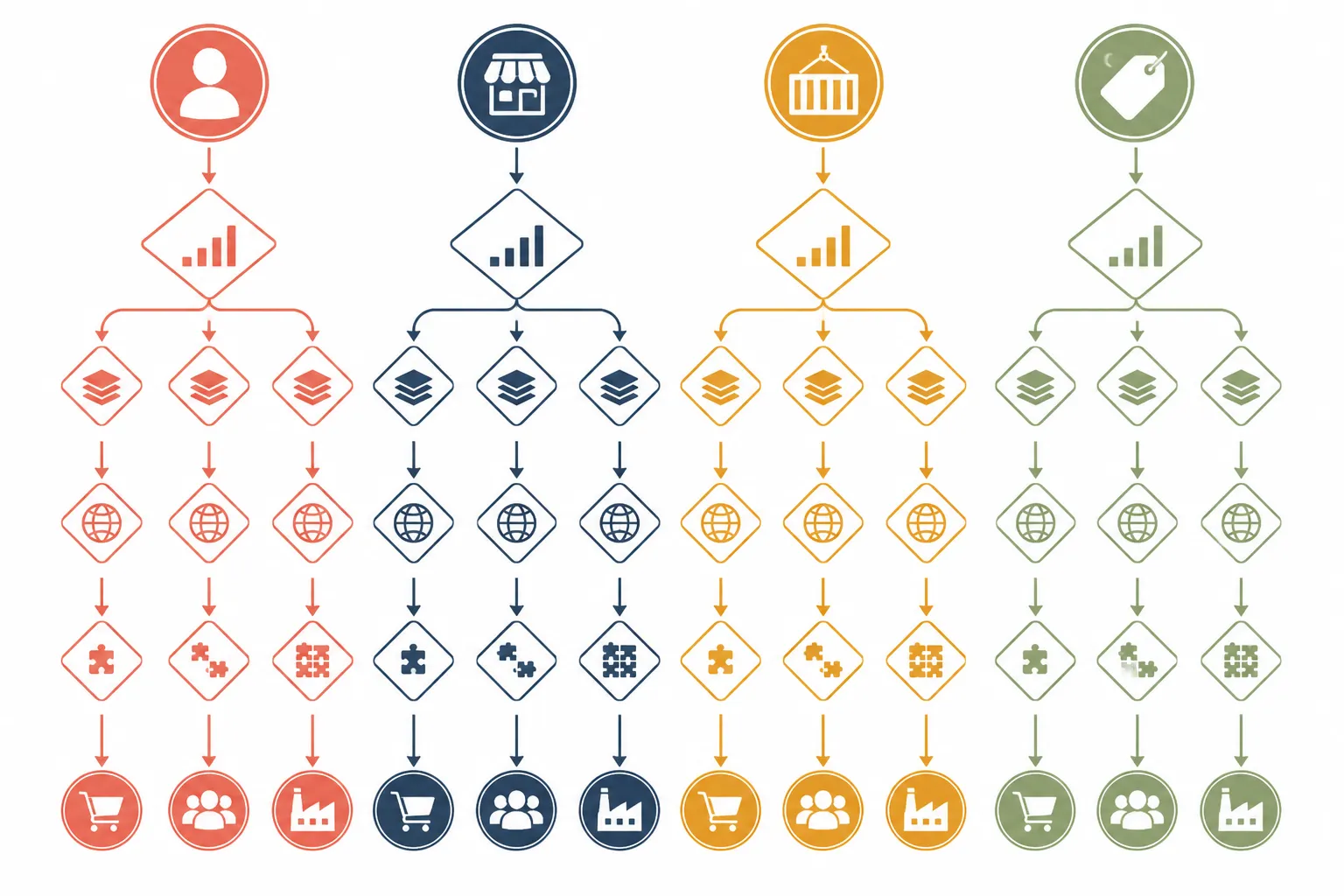
Side-by-Side Comparison Table
| Dimension | Traditional Custom Jewelry | STRAND | Jewlr | Icebox | Kendra Scott | Jared |
|---|---|---|---|---|---|---|
| Target buyer | Individual consumers | B2B / importers / DTC stores | Consumers | Luxury consumers | Consumers / US retail | Consumers / US retail |
| MOQ | 1 pc (high unit cost) | 12 pcs/style (most stock) | 1 pc | 1 pc | 1 pc | 1 pc |
| Customization depth | Full bespoke | OEM to your spec + stock catalog | Preset engraving / stone choice | Full luxury custom | Stone + finish swap | Full custom design |
| Material tier | Varies by artisan | Gold/rhodium-plated copper, 925-style, natural stone | 18K-plated silver, 925 silver | Fine metals, diamonds | Semi-precious stones, plated | Fine gold, platinum, diamond |
| International support | Rare | EN, FR, AR, ES, DE, RU | Limited | US-focused | US-focused | US-focused |
| QC / warranty | Depends on artisan | In-house QC pre-shipment | 1-year warranty | Lifetime warranty | Standard retail | Standard retail |
How to Pick the Right Alternative
If you're an importer or DTC store owner sourcing wholesale inventory: The traditional custom jewelry model — high per-unit cost, no wholesale path, inconsistent reorder quality — doesn't fit a commercial operation. You need a supplier with documented MOQ, trade terms, and the production capacity to reorder on the same spec. STRAND's 114-style stock catalog (MOQ from 12 pcs/style) plus custom OEM capability is built for this. The 6 Best Custom Jewelry Sources in 2026 article provides a broader OEM supplier comparison for this buying scenario.
If you're building a consumer-facing personalized jewelry brand: Jewlr's 646-product personalized collection shows the category ceiling in terms of product variety and checkout flow design. Building your own branded line from a STRAND OEM base gives you margin control and brand ownership that a consumer-platform relationship can't.
If your customers want luxury, bespoke pieces with fine metal and diamond: Icebox and Jared serve that end of the market with the structured service model and warranties that luxury buyers expect. Custom diamond, garnet-set, or peridot pieces with lifetime warranties are their territory.
If you're studying semi-custom retail models: Kendra Scott's Color Bar demonstrates that consumers respond to "choose your stone, choose your finish" without requiring full bespoke capability. Sourcing a core range with switchable stone options from an OEM supplier delivers a comparable consumer experience at a fraction of the development cost.
If you're a multilingual procurement team in the EU or MENA: Verify that your supplier genuinely supports your team's language — not just an auto-translated inquiry form. Documented multilingual sales coverage (EN, FR, AR, ES, DE, RU) is relevant here; most consumer-facing alternatives on this list are effectively English-only.
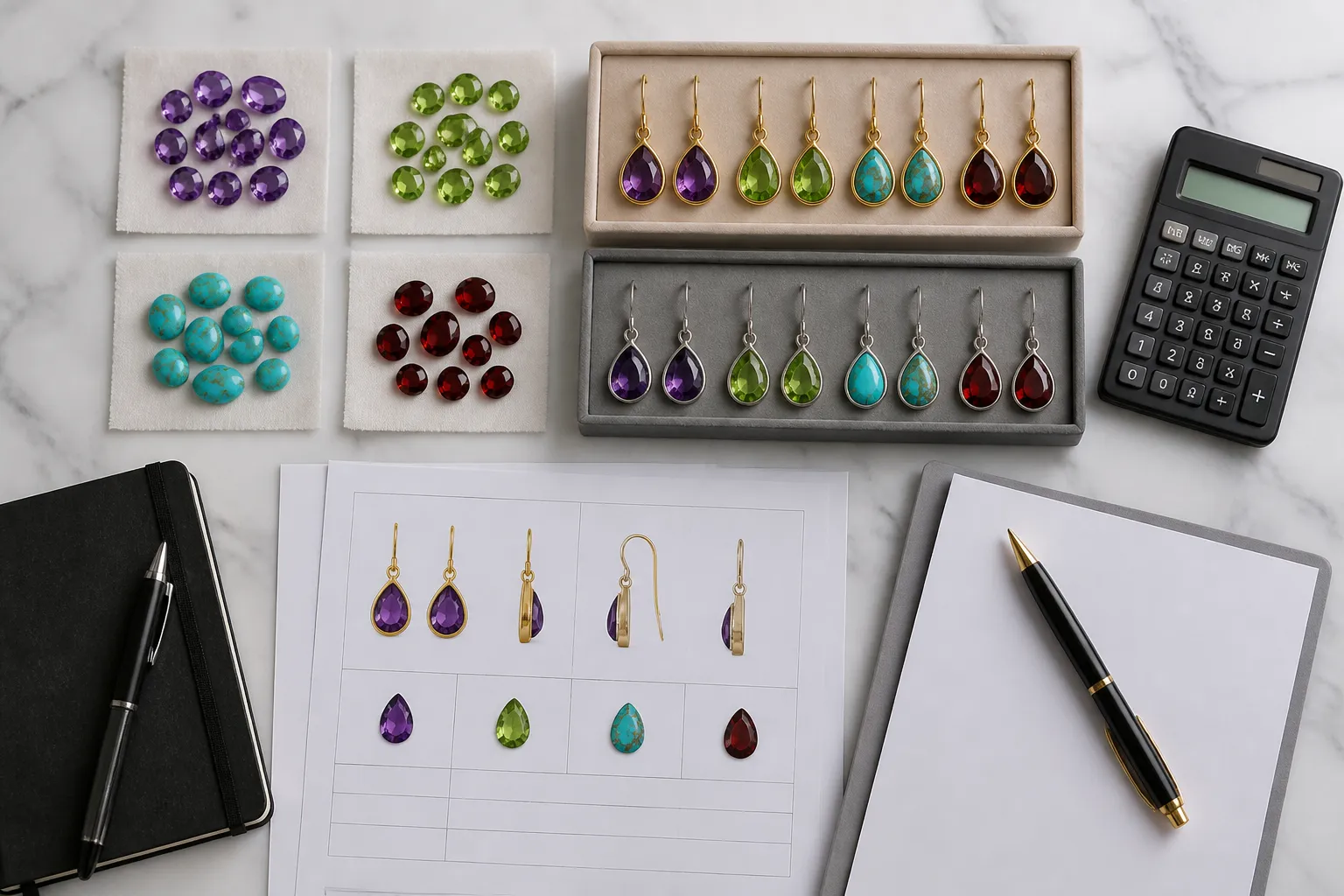
Bottom Line: Which Alternative Fits Your Situation?
For B2B buyers, importers, and DTC store owners: STRAND is the most direct alternative to the fragmented custom jewelry supply chain — low MOQ on documented stock styles, in-house QC pre-shipment, custom OEM capability, and multilingual sales support that matches where your buyers and team actually operate.
For consumer-facing personalization brands: Jewlr (scale and catalog depth) and Made by Mary (brand voice and community) are the clearest retail benchmarks to study and position against.
For luxury commissions: Icebox handles the high-end custom segment with structured pricing from under $1,500 up through $10,000+, a lifetime warranty, and insured shipping appropriate for fine and diamond-set pieces.
For understanding the US retail custom jewelry landscape: Jared stores and Kendra Scott's Color Bar give you the established chain-retail reference point — and the retail margins that make wholesale sourcing viable.
The fastest path to a decision: define your MOQ requirement, your material tier, and your buyer geography. Those three filters eliminate most of this list immediately.
If you're sourcing for commercial purposes and need a supplier that ships internationally with documented QC and flexible payment options — take the next step now. Request a quote or sample from STRAND at strandjewelry.com — include your target styles, quantity per style, destination country, and preferred incoterm (EXW or FOB) to get a grounded, accurate response from their sales team.