8 Best Custom Jewelry Alternatives for DTC Brands & Importers in 2026
8 Best Custom Jewelry Alternatives for DTC Brands & Importers in 2026
Why look for alternatives to custom jewelry?
Custom jewelry has a real appeal problem that most buyers only discover after the first production run. Lead times for genuinely bespoke work typically stretch 8–16 weeks. Design iteration cycles cost money before a single finished piece ships. And when you need 50 units across five earring styles, traditional custom jewelers either quote steep per-unit pricing or require minimums that lock your capital into one SKU with no fallback if it doesn't sell.
For DTC brand owners scaling a catalog, the math compounds. A custom piece that worked for a capsule collection becomes a supply chain bottleneck the moment you try to grow. Exclusive supplier relationships create exposure — if one partner misses a production window, you're out of stock with nowhere to pivot. Importers serving US, EU, or MENA retailers carry additional pressure: compliance documentation, multilingual communication, and shipping coordination that bespoke ateliers typically don't accommodate.
The market has matured enough that a credible range of alternatives now exists across every buyer profile. Retail chains like Jared stores and Kendra Scott, online personalization platforms like Jewlr, and Hangzhou-based OEM suppliers with 12-piece MOQs each fill a different part of the gap. The right alternative depends on whether you're a single-unit retail buyer, a DTC owner building a catalog, or a professional importer placing volume orders across multiple accounts.
What to look for in a custom jewelry alternative
Evaluate any alternative against these procurement criteria before committing:
- Minimum order quantity (MOQ): Can you test a new style at 12 pieces, or are you forced into a 500-unit commitment before knowing if it moves?
- Customization depth: Full OEM (your logo, your spec, your finish) versus surface-level personalization like engraving or stone swaps — these are different capabilities entirely
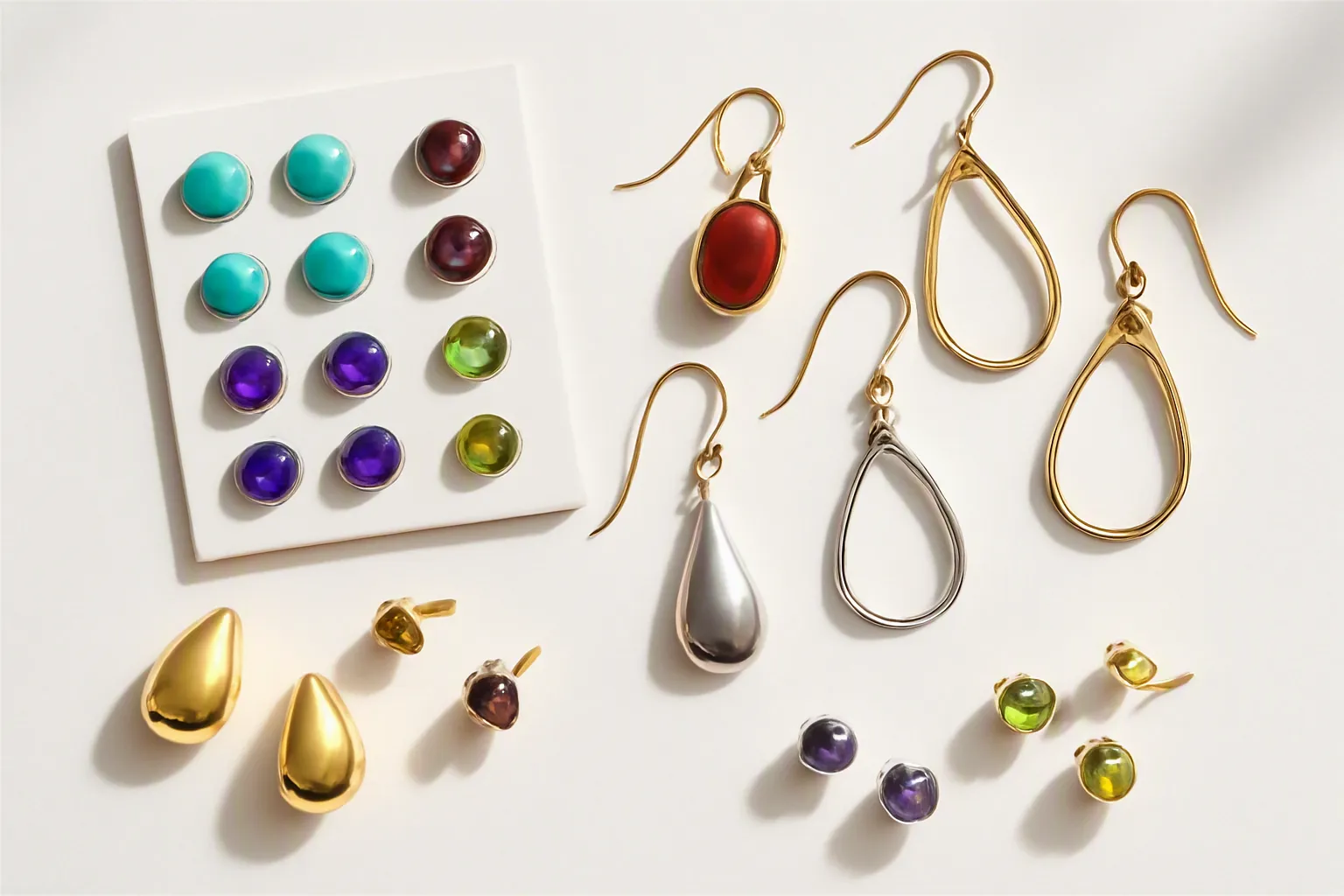
- Material and finish range: Gold-plated, rhodium-plated, 925-style silver finish, natural stone options (amethyst, garnet, turquoise, peridot) — broader material range means fewer supplier relationships to manage
- Certifications and compliance: REACH, CPSC, RoHS for EU and US markets — ask for documentation before placing your first order, not after
- Quality assurance process: In-house QC inspection with documentation versus informal spot-checking versus no formal QC at all
- Trade terms and payment flexibility: EXW vs. FOB; T/T, PayPal, L/C, Western Union — rigid payment terms eliminate otherwise viable suppliers before negotiations even begin
- Language and communication support: Multilingual sales teams eliminate weeks of back-and-forth that erodes timelines in international procurement
Top 8 Alternatives to Custom Jewelry
1. STRAND
Best for: Importers and DTC brand owners needing low-MOQ stock catalog jewelry or full OEM custom production from a vetted, factory-direct China-based supplier
Pricing: Trade pricing available on request; EXW and FOB trade terms; payment accepted via T/T bank transfer, PayPal, Western Union, L/C, and Xtransfer
Key strengths vs. custom jewelry:
- 109 of 114 catalog styles carry a 12 pcs/style MOQ — select styles are available from 1 piece — so buyers can test demand before scaling a SKU
- Full OEM custom production in gold-plated and rhodium-plated copper, 925-style silver finishes, glass bead, natural stone, and faux pearl constructions — structural customization, not just surface engraving
- Multilingual sales team covering English, French, Arabic, Spanish, German, and Russian — eliminates translation risk in procurement cycles involving non-English-speaking team members
- In-house QC inspection before every shipment, with documentation available for customs and compliance purposes
Limitations / trade-offs:
- Factory-direct trade supplier — not a consumer retail storefront for single-piece purchases
- Full OEM custom lead times require direct inquiry; catalog stock ships faster
- Very small single-unit orders (below 12 pcs/style for most styles) are handled case by case
How it compares to custom jewelry: Traditional bespoke custom jewelry forces a trade-off between price and volume: small runs cost too much per unit; volume runs require minimums most DTC brands can't justify for a new style. STRAND removes that binary by pairing a 114-style stock catalog (testable at 12 pcs/style) with genuine OEM capability for buyers ready to produce at scale. For procurement teams evaluating where OEM sourcing sits relative to retail alternatives, 6 Custom Jewelry Sources Ranked: OEM Suppliers & Retail Benchmarks for 2026 maps out the full landscape.
2. Kay Jewelers
Best for: Retail buyers wanting personalized jewelry with in-store service, financing, and an established brand behind each piece
Pricing: Kay's personalized category includes engagement rings under $2,000, with options across multiple price tiers
Key strengths vs. custom jewelry:
- Dedicated personalized jewelry section covering solitaire, halo, three-stone, gemstone, promise, and anniversary ring styles — broad coverage of the most common personalization requests
- Includes lab-grown diamond jewelry, which delivers a luxury diamond aesthetic at a lower price point than mined stone custom work
- In-store consultation with financing available — useful for retail buyers who need to see and feel a piece before personalizing
- National retail presence across the US means repairs, resizing, and warranty service are accessible
Limitations / trade-offs:
- Consumer retail only — no wholesale, OEM, or B2B procurement pathway
- Personalization is template-based (engraving, stone selection, ring style) rather than structural custom work
- Inventory and promotions shift seasonally — confirm current availability directly
How it compares to custom jewelry: Kay's personalized section is purpose-built for the most common customization needs — initials, birthstones, ring style selection — without the design-fee overhead and 8-week wait of bespoke work. For a retail consumer personalizing an engagement ring, it's a faster and often more affordable path. For importers and DTC brands, Kay is a retail benchmark to understand, not a sourcing channel to use.
3. Jewlr
Best for: Online buyers personalizing gifts — name necklaces, birthstone rings, engraved pieces — who want fast turnaround and a visual preview before purchasing
Pricing: Mid-range retail; specific current pricing at jewlr.com
Key strengths vs. custom jewelry:
- Fully online personalization with real-time 3D preview — buyers see the finished piece before ordering, eliminating the guesswork of traditional custom commission
- Wide birthstone and gemstone selection, including amethyst, garnet, and turquoise options across multiple jewelry types
- Turnaround significantly faster than bespoke work — many pieces ship within days, not weeks
- Lower price floor than traditional custom jewelers, making personalization accessible at a broader range of budgets
Limitations / trade-offs:
- Purely DTC consumer — no wholesale, trade, or private label program
- Personalization options are template-driven; structural customization is not available
- Quality positions at accessible rather than luxury — not the right fit for premium brand positioning
How it compares to custom jewelry: Jewlr compresses what would normally be a multi-week design consultation into a minutes-long online configuration process. The trade-off is depth: you're choosing from defined templates, not commissioning an original design. For DTC store owners benchmarking what a personalization-first customer experience looks like, Jewlr is a clear operational reference point.
4. Made by Mary
Best for: DTC buyers or brand owners targeting the dainty, everyday fine jewelry segment with personalized initial and name pieces
Pricing: Mid-to-high retail; current pricing at madebymary.com
Key strengths vs. custom jewelry:
- Tight, cohesive aesthetic built around minimalist, layerable pieces — demonstrates how a focused design vocabulary can substitute for full customization
- Strong social proof and brand presence in the US market, making it a useful benchmark for DTC brands positioning in the same space
- Natural stone accents, including turquoise and amethyst elements in select collections
- Name, initial, and symbol personalization available across multiple jewelry categories
Limitations / trade-offs:
- No B2B, wholesale, or OEM program — consumer brand only
- Style range is intentionally narrow; not useful for buyers who need variety across multiple aesthetics
- Design vocabulary is fixed — you're selecting within their world, not building your own
How it compares to custom jewelry: Made by Mary shows how a coherent aesthetic identity can create perceived uniqueness without requiring full bespoke production. For importers, it's a useful market reference for understanding what US everyday-fine jewelry buyers expect — not a sourcing option. What Made by Mary charges at retail, a factory-direct OEM supplier can produce at a fraction of the cost per unit.
5. Kendra Scott
Best for: Fashion jewelry buyers wanting gemstone-driven color customization within a bold, recognizable brand framework
Pricing: Fashion-to-mid luxury retail range; wide variety by collection
Key strengths vs. custom jewelry:
- In-store Color Bar concept lets customers swap gemstones across jewelry styles — a modular, retail-friendly alternative to structural custom work
- Extensive gemstone selection across collections, including turquoise, amethyst, peridot, and garnet, covering a wide range of color palettes
- Strong brand recognition in the US market — a useful competitive benchmark for importers supplying US retail accounts
- Consistent production quality and aesthetic identity, which reduces style risk for buyers relying on brand recognition
Limitations / trade-offs:
- Brand equity is entirely proprietary — buyers purchase into Kendra Scott's identity rather than building their own
- No OEM, private label, or wholesale-to-resell program available for independent importers
- Price reflects the brand premium; unit economics don't compare favorably to trade-priced alternatives
How it compares to custom jewelry: Kendra Scott's Color Bar is one of retail's clearest demonstrations that gemstone selection — amethyst vs. turquoise vs. peridot — functions as a personalization axis without requiring structural bespoke production. For DTC brand owners, this is the insight to carry: modularity around material and finish can deliver a custom feel at catalog economics. Replicating that modularity in a private label catalog is where an OEM supplier relationship becomes the practical path.
6. Jared
Best for: Luxury retail buyers who want in-store custom design consultation, diamond certification, and premium after-sale service
Pricing: Luxury retail tier; pricing varies widely by metal, stone, and design complexity
Key strengths vs. custom jewelry:
- In-store custom design services at Jared stores include genuine bespoke capability — design from scratch with an in-house jeweler
- Diamond and lab-grown diamond options with third-party certification (GIA, IGI), which retail customers increasingly expect
- Robust after-sale service — resizing, cleaning, warranty — that independent custom jewelers often can't match
- Luxury brand positioning and retail infrastructure provide credibility that standalone custom studios lack
Limitations / trade-offs:
- Consumer retail only — no trade, wholesale, or OEM pricing available
- Bespoke work at Jared carries full luxury retail markup; unit economics don't scale for volume buyers
- Primarily US physical retail; limited utility for overseas procurement teams
How it compares to custom jewelry: Jared stores represent the ceiling of what consumer-facing custom jewelry looks like in the US market — in-person consultation, diamond certification, luxury service. For individual retail buyers, it's one of the most thorough personalization paths available. For importers and DTC brands, Jared defines the luxury benchmark their sourced product is competing against or deliberately positioning below — which informs both product development and price anchoring strategy.
7. Catbird NYC
Best for: Buyers targeting the artisan-adjacent fine jewelry segment, particularly those studying what high-end US consumers expect from personalized pieces
Pricing: Fine jewelry retail, mid-to-high range; current pricing at catbirdnyc.com
Key strengths vs. custom jewelry:
- Strong editorial brand positioning — personalized section covers initial charms, name necklaces, and birthstone pieces with an artisan aesthetic
- Gemstone options including garnet, amethyst, and turquoise across multiple settings — demonstrates what stone variety looks like in a curated fine jewelry context
- Trusted by US fine jewelry buyers for dainty, stackable pieces — a useful style and market reference
- Small-batch production positioning creates perceived scarcity that retail customers respond to
Limitations / trade-offs:
- No wholesale, OEM, or private label pathway — fully DTC consumer brand
- Style range is intentionally curated and narrow; not designed for volume or variety
- Artisan provenance positioning means pricing far exceeds what the materials alone would justify
How it compares to custom jewelry: Catbird represents the editorial, artisan end of personalized jewelry — where brand story and handmade provenance drive purchase decisions more than structural customization. For importers sourcing earrings or necklace sets targeting a comparable aesthetic, Catbird is a style reference and competitive benchmark, not a sourcing channel. The gap between what Catbird charges at retail and what an OEM supplier produces at trade wholesale is precisely the margin opportunity for well-positioned DTC brands.
8. JewelryThis
Best for: Buyers looking to commission a custom jewelry piece from independent designers without committing to a single studio
Pricing: Project-based; variable by designer and design complexity
Key strengths vs. custom jewelry:
- Marketplace model connects buyers with multiple independent jewelry designers simultaneously — useful for comparative pricing on custom commissions
- Covers the full custom spectrum from engraving and stone setting to structural original design
- Shopping multiple designers can produce better pricing than approaching a single bespoke studio directly
- Suitable for one-off or limited-run pieces, particularly for prototype development
Limitations / trade-offs:
- Quality and consistency vary significantly across designers — no centralized QC process or production standards
- Not a viable path for volume orders; the marketplace model doesn't scale for importers needing consistent units
- Lead times and communication reliability depend on the individual designer, not a managed supplier relationship
How it compares to custom jewelry: JewelryThis occupies the commission marketplace segment — useful when you need a genuinely original design and want to evaluate multiple makers before committing. For a buyer prototyping a new concept before moving to volume production, it's a reasonable starting point. For importers and DTC brands that need consistent quality across production runs, a marketplace of independent designers is not a substitute for a structured OEM supplier with documented QC and trade pricing.
Side-by-Side Comparison Table
| Dimension | STRAND | Kay Jewelers | Jewlr | Made by Mary | Kendra Scott | Jared | Catbird NYC | JewelryThis | Traditional Custom Jewelry |
|---|---|---|---|---|---|---|---|---|---|
| MOQ / Order Size | 12 pcs/style (most catalog styles); 1 pc on select styles | Single unit (retail) | Single unit (retail) | Single unit (retail) | Single unit (retail) | Single unit (retail) | Single unit (retail) | Single unit (project-based) | Typically 1 pc at high per-unit cost |
| Customization Depth | Full OEM — structure, finish, material, private label | Surface (engraving, stone selection, ring style) | Template-based personalization | Surface (name, initial, symbol personalization) | Gemstone swap (Color Bar model) | Full bespoke design from scratch | Surface (initial charms, name necklaces, birthstones) | Full bespoke via independent designers | Full bespoke |
| Material Range | Gold-plated, rhodium-plated, 925-style, glass bead, natural stone, faux pearl | Gold, silver, diamond, lab-grown diamond | Silver, gold-plated, birthstones | Fine metals, turquoise, amethyst | Fashion metals, turquoise, amethyst, peridot, garnet | Precious metals, diamond, lab-grown diamond | Fine metals, garnet, amethyst, turquoise | Varies by independent designer | Depends on the individual jeweler |
| B2B / OEM Pathway | Yes — EXW/FOB, multilingual sales, trade terms | No | No | No | No | No | No | No | Sometimes — varies by studio |
| Typical Lead Time | Stock: faster; OEM: inquire directly | Retail (days to weeks) | Under 1 week for most pieces | Retail (days to weeks) | Retail (immediate to weeks) | Weeks for bespoke pieces | Retail (days to weeks) | Varies by designer | 8–16 weeks typical |
| Price Tier | Wholesale / trade pricing | Mid-to-luxury retail | Mid-range retail | Mid-to-high retail | Fashion-to-mid luxury | Luxury retail | Mid-to-high fine jewelry retail | Project-based / variable | High per-unit (bespoke premium) |
How to pick the right alternative
The right alternative depends on your buyer profile and the scale of the decision.
Importers and DTC brand owners sourcing at volume: Full custom jewelry is rarely the efficient path at scale. A stock catalog with OEM capability — testable at low MOQ — covers most catalog-building needs at better unit economics than bespoke work. The key questions to ask any supplier: what's the MOQ per style, what's the production lead time for a first run, and can they provide QC documentation for your destination market? For a structured breakdown of how to evaluate these trade-offs, Custom Jewelry: 6 Sources Buyers & DTC Brands Need in 2026 covers the sourcing landscape in detail.
Retail buyers personalizing a gift or engagement ring: Kay Jewelers and Jared stores handle the most common personalization needs with in-store consultation and financing. Online-first buyers with simpler needs — name necklaces, birthstone jewelry — will find Jewlr faster and often cheaper than bespoke alternatives.
Buyers benchmarking US consumer expectations: Kendra Scott anchors the fashion jewelry segment (turquoise, amethyst, peridot gemstone swaps at a mid-luxury price point); Catbird NYC anchors the artisan-fine segment; Jared and comparable luxury stores define the diamond-and-precious-metal tier. These benchmarks help importers price and position their sourced product relative to what end consumers already know.
Prototyping a new design before volume production: JewelryThis or a local custom jeweler is appropriate for a true one-off. The moment that prototype validates a style you want to produce consistently, switch to an OEM supplier with structured QC, trade terms, and documented compliance before scaling — the margin and operational efficiency gap is significant.
Conclusion
The right alternative to custom jewelry is the one matched to your actual procurement situation — not the one with the most editorial coverage. For retail consumers, Kay's personalized section and in-store bespoke consultation at Jared stores handle the most common needs with established service infrastructure. For fashion-forward buyers who want stone-driven personalization, Kendra Scott's Color Bar model with turquoise, amethyst, garnet, and peridot options is the clearest retail-shelf equivalent to modular customization.
For importers, DTC store owners, and professional procurement teams: the genuine alternative to custom jewelry is a vetted OEM supplier with real stock depth, documented QC, and structured trade terms. A 114-style catalog at 12 pcs/style MOQ — with full OEM production capability in gold-plated and rhodium-plated finishes — gives procurement teams a testable, scalable sourcing channel that bespoke custom work cannot match at volume or on unit economics.
The next step is simple: request a catalog, confirm MOQ and pricing for your target styles, and ask for QC documentation before placing a first order. Request a quote or get MOQ and pricing at strandjewelry.com — the multilingual sales team handles inquiries in English, French, Arabic, Spanish, German, and Russian.