
Best Alternatives to Custom Jewelry for Buyers & DTC Brands in 2026
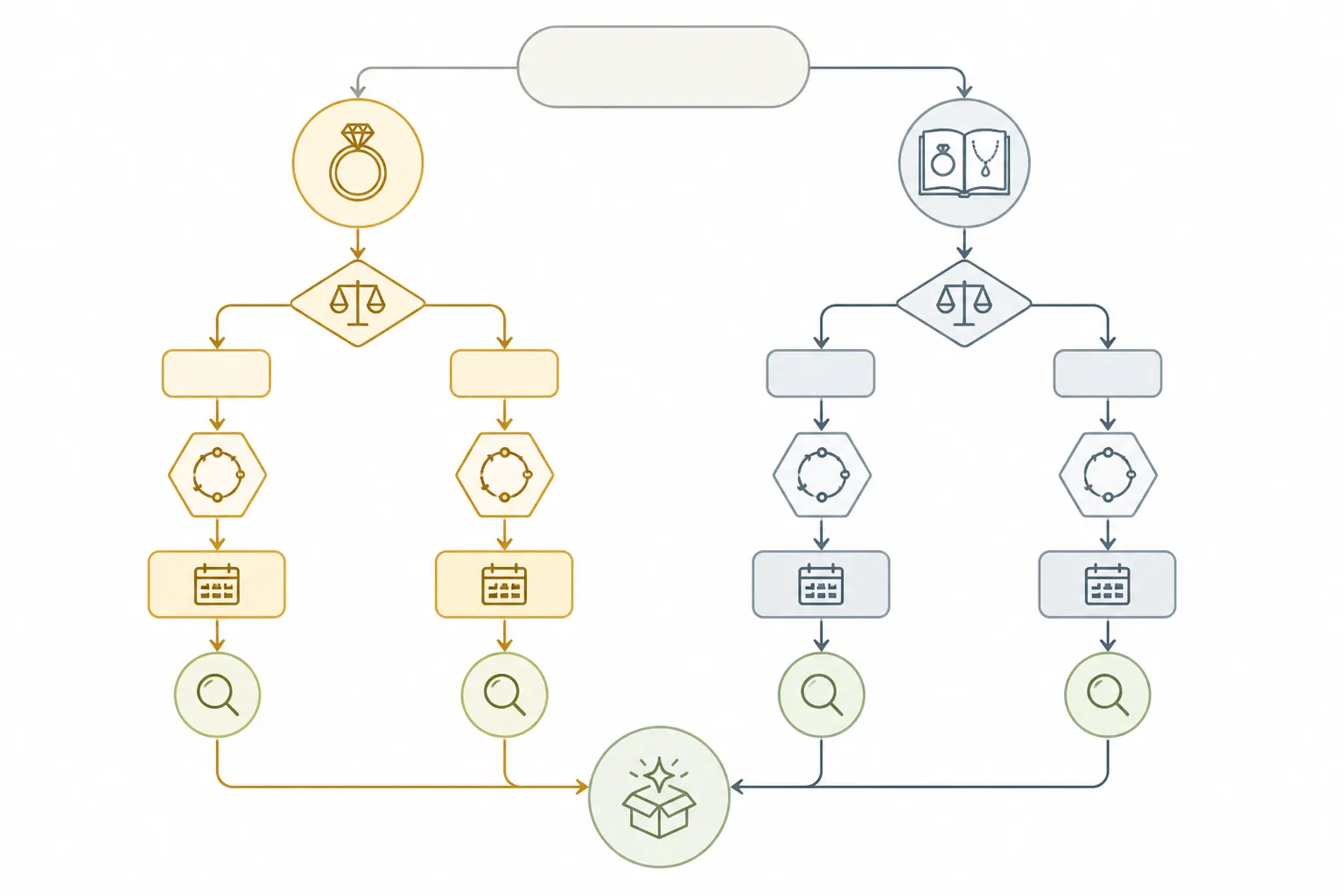
Best Alternatives to Custom Jewelry for Buyers & DTC Brands in 2026
Custom jewelry solves a real problem — pieces built to your spec, branded to your store, differentiated from what's already on the shelf. But custom also carries costs most buyers underestimate: tooling fees, multiple sample rounds, high minimum order quantities that lock capital into untested SKUs, and design approval cycles that burn weeks when the factory is 12 time zones away.
For buyers, importers, and DTC store owners who want the outcome of custom jewelry — distinctive, margin-worthy product — without the full overhead, strong alternatives exist at every order scale and price tier.
Why Look for Alternatives to Custom Jewelry?
Pricing and hidden costs. Quoted unit costs on custom jewelry rarely tell the full story. Tooling fees for custom dies or molds, first-sample charges, revision rounds, and defective units from an unproven production run all add to the true landed cost. Buyers who have been through this cycle once know: custom often looks cheaper on paper than it lands in the warehouse.
Lead time and launch risk. A standard custom jewelry order — from approved design brief to final QC-passed shipment — commonly runs 45–90 days, sometimes longer for novel construction or complex stone-setting. For DTC brands running seasonal drops or responding to trending styles, that window frequently conflicts with the speed the market demands.
Scale limits and lock-in. Custom jewelry typically demands high MOQs per design — a commitment that makes sense for proven bestsellers but creates real cash-flow exposure when introducing new styles. If a style underperforms, you own the excess inventory. And if the supplier relationship sours, your custom tooling, molds, and production files rarely travel with you.
What to Look for in a Custom Jewelry Alternative
Before evaluating any option, map your procurement priorities against these dimensions:
- MOQ flexibility — Can you test a style at 12 or 24 units before committing to 300+?
- Customization depth — Do you need branded packaging only, or actual design changes (materials, stone color, finish, shape)?
- Lead time — Is stock available to ship within days, or are you still looking at a production cycle?
- Quality assurance — Is there a documented QC step before shipment, or is inspection left to you on arrival?
- Market fit — Does the supplier's product style, stone selection (amethyst, garnet, peridot, turquoise, and other naturals), and finish range match your customer's aesthetic?
- Trade terms and payment — What currencies, payment methods, and shipping terms does the supplier support? This is critical for EU, MENA, and UK buyers managing FX exposure and customs classification.
- Multilingual support — Can your procurement team actually communicate with the supplier in their working language?
Top Alternatives to Custom Jewelry
1. STRAND — Low-MOQ Stock Catalog + Custom OEM from Hangzhou
Best for: Importers, DTC brands, and boutique owners in the US, EU, UK, and MENA who need factory-direct pricing with workable minimums and multilingual procurement support.
Pricing: Stock catalog at manufacturer-direct pricing; custom OEM quoted on request. MOQ starts at 12 pcs/style on 109 of the 114 catalog styles; select styles are available from 1 piece.
Key strengths vs. custom jewelry:
- 114-style ready stock catalog covering drop earrings, stud earrings, and necklace + earring sets in vintage, gradient crystal, two-tone glass bead, and rhinestone styles — zero tooling cost, no design rounds, no sample cycle
- Custom OEM available in gold-plated and rhodium-plated copper with 925-style silver finishes, glass bead and crystal designs — when a style genuinely needs bespoke production, the same vetted Hangzhou workshops handle it
- In-house QC inspection before every shipment; buyers don't rely on blind factory trust for quality outcomes
- Multilingual sales team covers EN, FR, AR, ES, DE, and RU — MENA and European procurement teams communicate without translation overhead
Limitations / trade-offs:
- Stock catalog is fashion jewelry (not fine), so buyers sourcing diamond or high-karat luxury SKUs should clarify scope upfront
- Custom OEM lead times and capacity require a direct quote — no self-serve configurator
- Catalog skews earring-heavy; buyers needing a necklace-first range will find narrower stock breadth there
How it compares to custom jewelry: Full custom means you own the design — but you also own the tooling cost, the sample cycle, and the MOQ exposure on every untested style. STRAND's stock catalog removes all three friction points for most fashion jewelry SKUs. For buyers who genuinely need unique construction, the OEM path is available. But the 12-piece-per-style minimum means you can test any stock design at low risk before scaling. That combination — test at low volume, scale at will, custom when needed — is why this model lands at the top of this list for B2B buyers.
For a structured comparison of how supplier models stack up across price, MOQ, and customization depth, see 6 Custom Jewelry Sources Ranked: OEM Suppliers & Retail Benchmarks for 2026.
2. Jewlr — Consumer-Facing Personalization Platform
Best for: DTC brands benchmarking retail personalization UX, or buyers whose end customers want name, date, or birthstone customization without bespoke manufacturing.
Pricing: Mid-range retail personalization; as of the August 2026 Back to School Sale, a Personalized Name Necklace started from $84 across a catalog of 645 personalized products.
Key strengths vs. custom jewelry:
- 645-product personalized jewelry catalog across rings, necklaces, bracelets, and earrings — breadth that most bespoke custom makers can't approach
- Materials span 18K Gold Plated Silver, 925 Sterling Silver, and Vermeil; stones include amethyst, garnet, peridot, aquamarine, and cubic zirconia for accessible luxury positioning
- 99-day return policy and one-year warranty reduce consumer purchase friction — a useful service benchmark for DTC store owners designing their own return policies
- Buy Now, Pay Later option broadens purchase accessibility
Limitations / trade-offs:
- Designed for D2C end consumers, not for wholesale importers or DTC brands building their own inventory
- No MOQ structure or B2B supply channel exists within the platform
- Brand and packaging are Jewlr's — no white-label path for resellers
How it compares to custom jewelry: Jewlr sits at the retail end of the personalization spectrum. If you're benchmarking what consumers expect from "personalized" jewelry — name engraving, birthstone selection, stacking pendants — the catalog is a useful reference point. As a supply channel for a wholesale buyer or DTC brand building their own SKUs, it doesn't function as a replacement for a B2B supplier relationship.
3. GLDN — Personalized Fine-Adjacent Jewelry
Best for: Buyers benchmarking higher-end personalized jewelry aesthetics for a US consumer audience in the accessible luxury tier.
Pricing: Mid-to-premium retail; fine-adjacent materials position GLDN above standard fashion jewelry price points.
Key strengths vs. custom jewelry:
- Solid personalization depth: name necklaces, initial pendants, birthstone options that convey a luxury feel without true fine jewelry pricing
- Clean editorial aesthetic — useful reference for DTC store owners positioning at the $100–$300 retail price point
- Direct-to-consumer brand with consistent photography that sets clear product expectations
Limitations / trade-offs:
- No B2B, wholesale, or OEM path; strictly a consumer brand
- Limited stone variety compared to suppliers offering natural turquoise, garnet, or amethyst selections at range
- Not a viable sourcing channel for importers or buyers building their own catalog
How it compares to custom jewelry: GLDN competes on aesthetics and personalization appeal, not on production customization. It's a useful benchmark for understanding what the US market perceives as "custom feel" in the accessible luxury tier — but it won't replace a manufacturing or wholesale relationship for buyers sourcing inventory at scale.
4. Made by Mary — Artisan-Style Personalized Jewelry
Best for: DTC store owners studying the artisan personalization market, particularly dainty and everyday-wear layering aesthetics popular in the US.
Pricing: Mid-range retail personalization; accessible price points for gifting and everyday wear.
Key strengths vs. custom jewelry:
- Strong community and repeat-purchase model built on disc pendants, engraving, and birthstone combinations
- Aesthetic reference for buyers considering dainty, layering-forward positioning
- The "personalized but not bespoke" model is instructive — customers feel individual without requiring a factory to produce unique units
Limitations / trade-offs:
- Consumer retail only; no wholesale or import pathway
- Narrower style range than a full stock catalog supplier
- No multilingual procurement support
How it compares to custom jewelry: Made by Mary illustrates that a large portion of what consumers call "custom" is actually "personalized within a defined template." Name, date, initial, stone color — selected by the buyer, produced from a stock form. This is a critical distinction for importers building product strategy: the market appetite for customization can often be satisfied through a stock-plus-personalization model rather than true bespoke manufacturing, at a fraction of the cost and lead time.
5. Brook & York — Personalized Sterling Silver Jewelry
Best for: Buyers benchmarking sterling silver personalized jewelry in the US mid-market, particularly for gifting-occasion positioning.
Pricing: Sterling silver retail pricing; mid-range accessible for gifting categories.
Key strengths vs. custom jewelry:
- Sterling silver-focused catalog with personalization options: initial charms, name plates, birthstone accents
- Strong gifting orientation — useful benchmark for DTC store owners targeting occasion-driven purchase traffic
- Consistently updated best-sellers collection demonstrates commercial taste-editing that buyers can reference when curating their own assortments
Limitations / trade-offs:
- No B2B, wholesale, or OEM path
- Limited geographic reach compared to a globally-shipping supplier
- Not a sourcing channel for importers; strictly a retail brand
How it compares to custom jewelry: Brook & York narrows the "custom jewelry" concept to a specific aesthetic (sterling silver, minimal, giftable) that performs well in the US market. For buyers who want this look in their inventory, the practical sourcing question becomes: which supplier can produce this style at your MOQ and price point? That answer points back to a B2B catalog or OEM supplier, not to a retail brand.
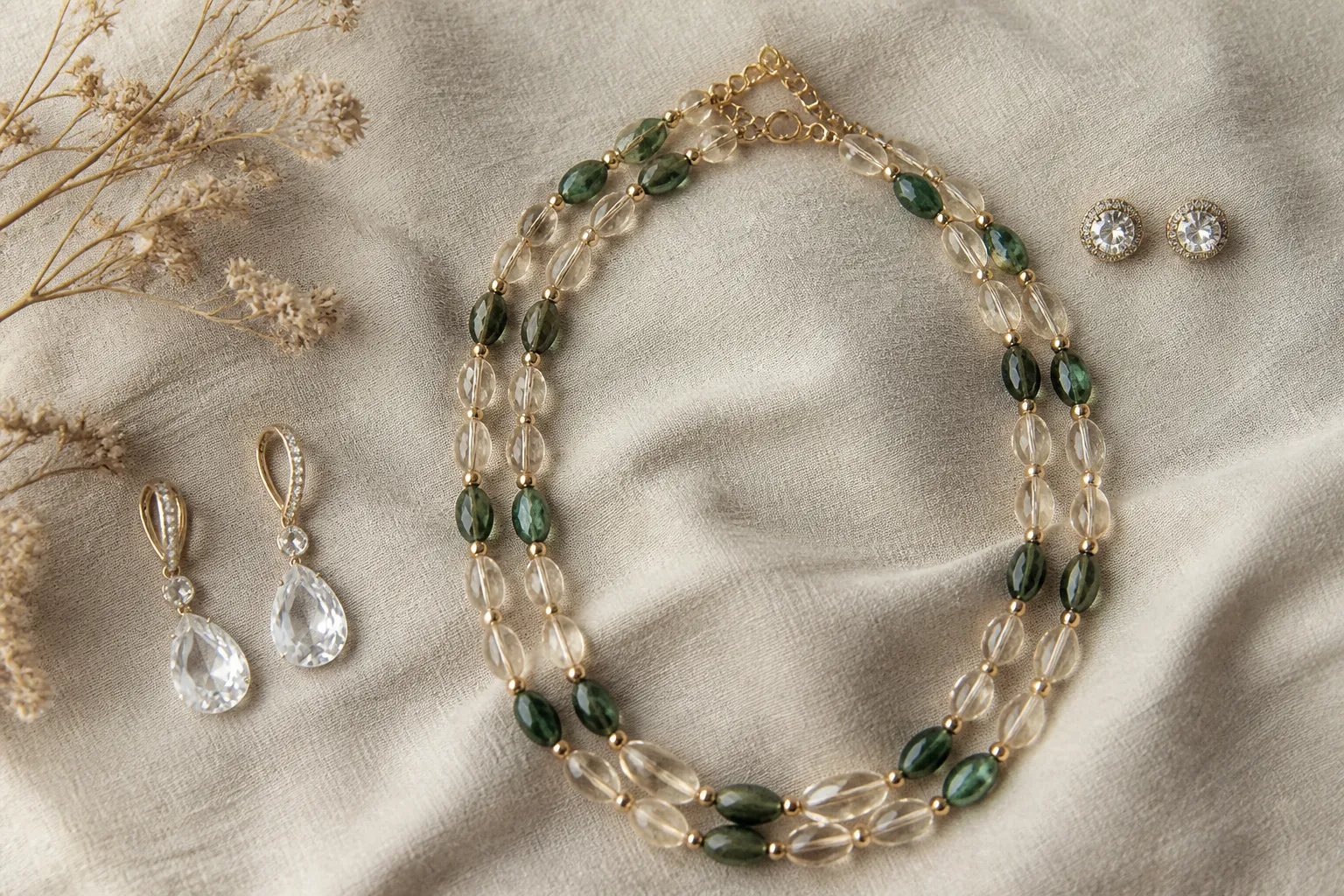
6. Kendra Scott — Fashion Jewelry with Broad Retail Stores Presence
Best for: Buyers benchmarking mid-luxury fashion jewelry with strong brand recognition and physical retail stores footprint in the US.
Pricing: Mid-to-premium fashion jewelry retail; accessible luxury positioning across stores and e-commerce.
Key strengths vs. custom jewelry:
- Strong brand recognition across physical retail stores in the US — a useful competitive benchmark for DTC brands calibrating customer expectations
- Color story approach built on signature stones including amethyst, turquoise, and similar naturals — a merchandising model worth studying for buyers building curated seasonal collections
- Kendra Scott's in-store personalization bar demonstrates how a retail format can deliver "custom feel" at scale without bespoke manufacturing
Limitations / trade-offs:
- No wholesale or B2B sourcing program for importers
- Premium pricing reflects brand investment, not manufacturing cost — not a comparable landed cost model for sourcing benchmarks
- Geographic concentration in US stores; limited relevance for EU or MENA buyers
How it compares to custom jewelry: Kendra Scott's success with color-forward fashion jewelry — built on signature stone selections and brand story rather than bespoke manufacturing — demonstrates that differentiation in the mid-market often comes from curation, not from custom tooling. For importers and DTC buyers, this is the signal: your customers may want the Kendra Scott feeling of personalization, which a well-curated stock catalog can deliver without the lead time and MOQ exposure of going fully custom.
7. Jared — Luxury Jewelry Stores Benchmark
Best for: Buyers entering the luxury or fine jewelry segment, or those benchmarking what a complete in-store custom experience looks like at the high end of the market.
Pricing: Fine and luxury jewelry retail; custom and bridal pricing on request at Jared stores.
Key strengths vs. custom jewelry:
- Full-service custom jewelry experience — design consultation, diamond and gemstone selection, metal and finish choices — at Jared stores represents the ceiling of what "custom" means to retail consumers
- Broad stone selection across diamond, amethyst, garnet, and turquoise among others, spanning multiple product categories
- The in-store service model illustrates how the luxury segment maintains custom as a genuine differentiator at premium price points
Limitations / trade-offs:
- Luxury retail pricing is incompatible with importers or DTC brands sourcing fashion jewelry inventory at scale
- No B2B or wholesale path; strictly a consumer retail operation
- Custom lead times at Jared reflect a high-touch retail service model, not an efficient manufacturing or wholesale framework
How it compares to custom jewelry: Jared represents the apex of what "custom jewelry" means in traditional luxury retail — one piece, built to the buyer's exact specification, at a price point that reflects the full service model surrounding it. For B2B buyers sourcing fashion or semi-fine jewelry, this is the benchmark to understand, not to compete with directly. The lesson: custom commands premium pricing when paired with premium service infrastructure. Without that service layer, custom manufacturing costs appear as margin erosion, not as value delivered to the end customer.
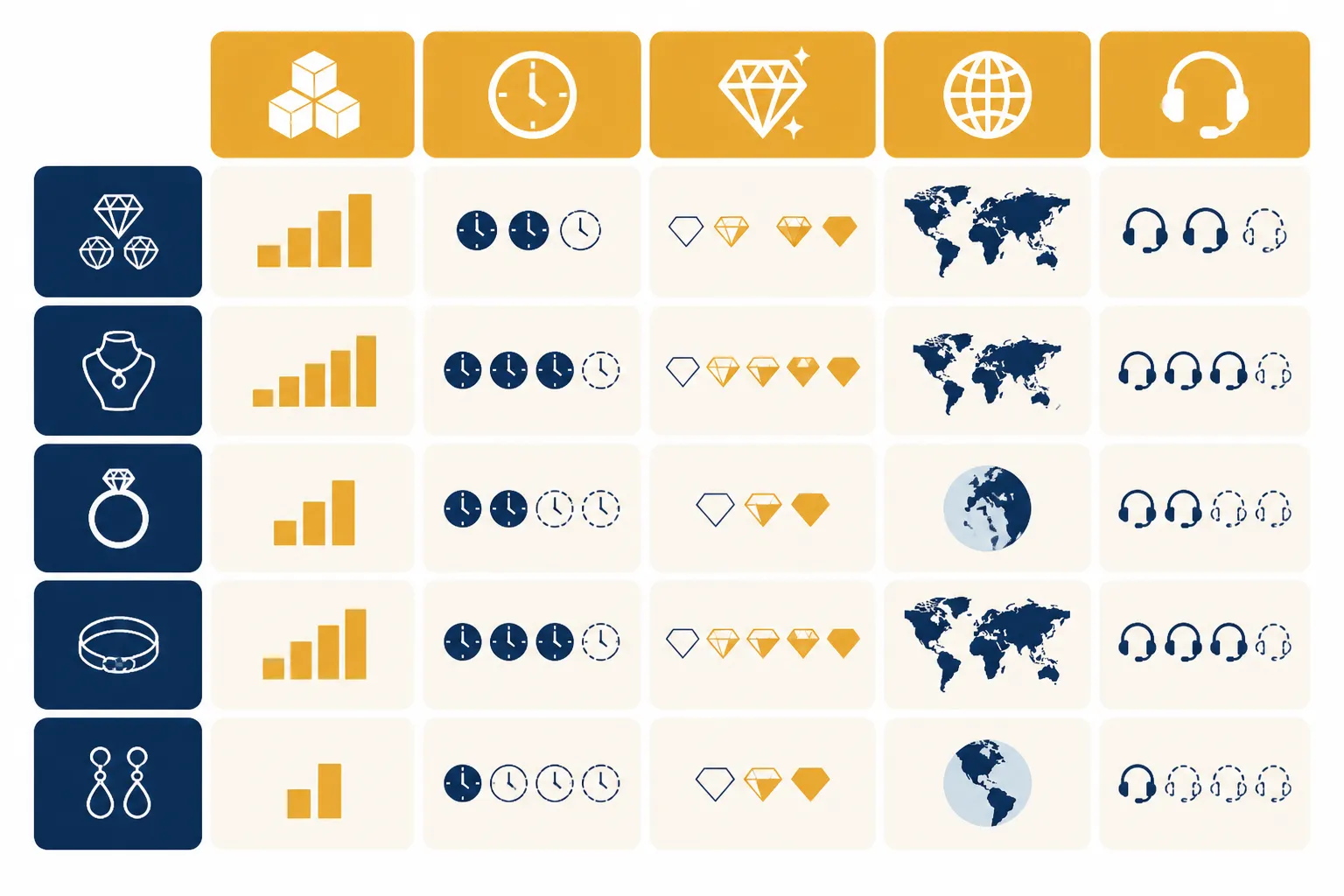
Side-by-Side Comparison Table
| Dimension | Custom Jewelry (Bespoke) | STRAND (Stock + OEM) | Jewlr | Kendra Scott | Brook & York | Jared |
|---|---|---|---|---|---|---|
| MOQ | High (typically 100–500+ per design) | 12 pcs/style (most stock) | N/A (retail) | N/A (retail) | N/A (retail) | N/A (retail) |
| Lead Time | 45–90+ days | Stock: days; OEM: quoted | Made-to-order | Ships from stock | Made-to-order | In-store / varies |
| Customization Depth | Full (design, material, stone, finish) | Stock catalog + OEM options | Name / date / stone | Limited (color) | Name / initial / stone | Full (fine, bridal, diamond) |
| B2B / Wholesale | Depends on supplier | Yes (EXW or FOB) | No | No | No | No |
| Price Tier | Mid–High (unit + tooling) | Factory-direct | Mid retail | Mid–Premium retail | Mid retail | Luxury retail |
| Multilingual Support | Varies widely by supplier | EN, FR, AR, ES, DE, RU | English | English | English | English |
How to Pick the Right Alternative
The right choice depends on the actual sourcing problem you're solving — not the category label.
You need inventory now, with a style range that tests at low risk. A stock catalog with low MOQ is the direct answer. A model that lets you put 5–10 new styles in front of your market at 12 pieces per style — without the cash exposure of a custom production run — lets you validate demand before scaling. If a style lands, expand it. If it doesn't, the exposure is contained.
You need true custom construction — your silhouette, your stone, your finish — but at a workable scale. This is where OEM with a vetted supplier makes sense. Before committing, nail down: who owns the tooling after production, how many sample revision rounds are included, what the QC policy covers, and what happens to your files if the relationship ends. For a framework on evaluating this against the retail personalization path, see Custom Jewelry vs. Retail Personalization: The B2B Buyer's Guide.
You're a DTC brand whose customers want "personalized" but you're not a manufacturer. Distinguish between true customization (your factory producing unique items per order) and personalization-within-template (name engraving, stone color selection, initial charms). Most of what consumers call "custom" is the second — achievable through stock suppliers with add-on personalization steps, at meaningfully lower cost and lead time than bespoke manufacturing.
You're sourcing for MENA or EU markets and need FX-flexible payment and multilingual support. This requirement filters the supplier list faster than most buyers expect. Many factory-direct suppliers operate strictly in USD with wire transfer only. Suppliers supporting L/C, Xtransfer, Western Union, and PayPal alongside T/T — and who can communicate in Arabic, French, German, Russian, or Spanish — represent a much smaller set.
You're benchmarking the luxury end of the market. Jared stores and Kendra Scott define what luxury and mid-luxury custom or personalized jewelry looks like at US retail. Neither is a supply channel, but both set the aesthetic and service expectations your end customers may carry into a purchase conversation.
Conclusion: Matching the Alternative to the Buyer
There is no universal replacement for custom jewelry — but for most buyers at the sourcing stage, the friction of custom is avoidable without sacrificing product distinctiveness.
Importers and DTC store owners who need testable stock at low minimums, factory-direct pricing, B2B-capable logistics, and multilingual support: a stock catalog with OEM availability is the most direct path around the costs and timeline of custom, with true bespoke production accessible when a design genuinely demands it.
DTC brands studying the personalization market: platforms like Jewlr — with 645 personalized products, a 99-day return policy, and gemstone options including amethyst, garnet, and peridot — offer concrete consumer UX benchmarks, even if they don't function as wholesale supply channels.
Buyers entering the luxury segment: Jared stores and Kendra Scott's retail footprint define what full-service custom and mid-luxury personalization look like at the high end — useful reference points for positioning your own product range.
If you're sourcing drop earrings, crystal necklace sets, rhinestone styles, or natural stone pieces for the US, EU, UK, or MENA market and want real MOQ terms, trade details, and a sample assessment, the next step is straightforward: request a quote at strandjewelry.com.