
8 Best Alternatives to Custom Jewelry for B2B Buyers in 2026
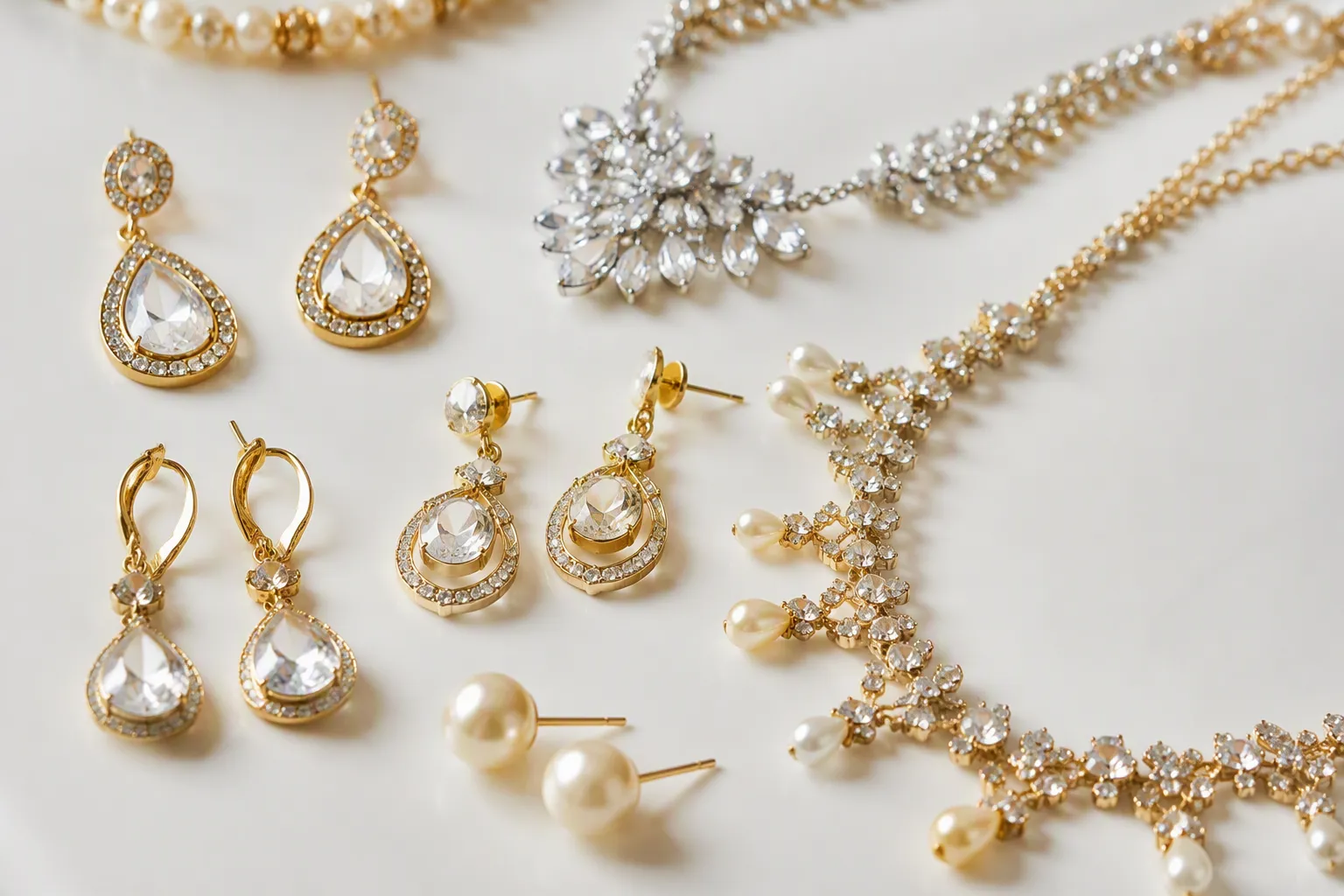
8 Best Alternatives to Custom Jewelry for B2B Buyers in 2026
Traditional custom jewelry production often means long lead times, high minimums, and workshops that won't budge on unit counts until your order is deep into the hundreds. For B2B buyers — importers, DTC store owners, boutique operators — those constraints kill deals before they start.
This guide covers eight proven alternatives, evaluated specifically against what custom jewelry typically delivers: design control, production flexibility, pricing structure, and supplier reliability. Each option is positioned for where it actually fits in your sourcing stack.
Why Look for Alternatives to Custom Jewelry?
Custom jewelry's core promise — a piece built exactly to spec — runs into a consistent set of practical problems. Most bespoke workshops in the US and Europe quote 8–16 week production cycles, charge tooling and setup fees that destroy margin on small runs, and focus almost entirely on fine jewelry categories: diamond rings, precious metal settings, maybe a handful of semi-precious cuts like amethyst or turquoise. That's fine for luxury retail. It's a wall for anyone building a fashion jewelry catalog.
The MOQ problem is the most common sticking point. A workshop that won't produce below 500 pieces per style isn't useful for a DTC brand testing whether a rhinestone drop earring or two-tone glass bead set will resonate in their market. You either over-order and tie up cash in untested inventory, or you don't order at all.
Communication is the less-discussed friction point, especially for multilingual procurement teams working across US, EU, and MENA sourcing chains. A supplier that only operates in English slows everything down when your buyers, agents, or logistics contacts work in French, Arabic, Spanish, or German. Alternatives that have actually built multilingual sales infrastructure solve a real operational problem, not just a nice-to-have.
What to Look for in a Custom Jewelry Alternative
Run every option through these criteria before shortlisting:
- MOQ flexibility: Can you order 12–50 pieces per style to test demand, or are you facing 500+ minimums from day one?
- Material and finish range: Does the supplier cover gold-plated and rhodium-plated copper, 925-style silver finishes, glass beads, natural stones (amethyst, garnet, peridot, turquoise), and faux pearls — or only diamond-focused fine jewelry?
- Trade terms and payment options: EXW vs. FOB affects your landed cost calculation. Payment flexibility (T/T, PayPal, L/C, Xtransfer) matters for cross-border procurement.
- Lead time transparency: Quoted in writing, or vague? Realistic production-to-shipment windows are non-negotiable for seasonal buying.
- Quality assurance process: Is there an in-house QC step before the shipment leaves the factory, or does quality control land on your receiving warehouse?
- Multilingual support: Can the supplier's sales team respond in the language your procurement team actually uses?
- Customization depth: Logo placement, colorway changes, stone substitutions, packaging — where does the custom work end, and what does it cost?
Top 8 Alternatives to Custom Jewelry
1. STRAND — OEM Jewelry Wholesale Direct from Hangzhou
Best for: Importers, DTC brands, and boutique buyers in the US, EU, UK, and MENA who need low-MOQ stock or full OEM production without large upfront commitments.
Pricing: Stock styles at wholesale rates; OEM pricing available on request.
Key strengths vs. custom jewelry:
- 114-style stock catalog, with 109 of 114 styles available at 12 pcs/style MOQ — select styles from as low as 1 piece, so you can test before scaling
- Full OEM capability covering gold-plated and rhodium-plated copper, 925-style silver finishes, glass beads, natural stone, and faux pearls across drop earrings, stud earrings, and necklace + earring sets
- Multilingual sales in English, French, Arabic, Spanish, German, and Russian — built for international procurement teams, not just English-speaking buyers
- In-house QC inspection before every shipment; trade terms include EXW and FOB with payment options spanning T/T, Western Union, PayPal, L/C, and Xtransfer
Limitations / trade-offs:
- Full OEM lead times require direct inquiry — not published as a public rate card
- Stock catalog focuses on fashion jewelry (vintage crystal, gradient glass bead, rhinestone, two-tone styles); not a channel for fine jewelry or diamond-set pieces
- Primarily B2B; not built for individual consumer orders
How it compares to custom jewelry: Where traditional custom jewelry workshops charge tooling fees and hold firm on 500+ unit minimums, STRAND's OEM operation is sized for buyers still validating styles. The 12 pcs/style threshold on most stock designs means you can test a vintage crystal drop earring or faux pearl set in your target market before committing to a full production run. For procurement teams working across multiple languages and payment systems, the multilingual sales structure and flexible payment terms remove friction points that typically kill deals with China-based suppliers. If you want a structured framework for evaluating OEM suppliers vs. retail personalization options, STRAND's B2B buyer's guide on custom jewelry vs. retail personalization lays out the full decision matrix.
Get MOQ & Pricing → strandjewelry.com
2. Kay Jewelers — National Retail Chain with Online & In-Store Custom
Best for: End consumers and small US retailers looking for brand-backed custom engagement rings or personalized gifts with in-store support.
Pricing: Retail tier; check Kay's site directly for current promotions.
Key strengths vs. custom jewelry:
- Online bridal configurator allows custom engagement ring builds by carat weight (1–4 ct) and center stone shape: Princess, Round, Oval, Pear, Emerald, Marquise, Cushion, Radiant, and Heart
- Lab-grown diamonds available as a cost-effective stone option within the custom ring builder — relevant for buyers benchmarking consumer price expectations
- In-store custom design appointments available at Kay locations nationwide, plus an engraving service across product lines
- STUDIO BY KAY proprietary collection expands design options beyond the standard catalog
Limitations / trade-offs:
- Retail-only pricing structure; no wholesale, trade, or OEM terms for B2B buyers
- Category limited to fine jewelry — no fashion earring sets, glass bead styles, or trend-driven gradient crystal designs
- Bespoke complexity requires in-store consultation; the online configurator is constrained to preset options
How it compares to custom jewelry: Kay operates in a fundamentally different lane. Their strength is consumer-facing personalization — a custom ring designed online, backed by a national store footprint and appointment scheduling. For importers or DTC operators sourcing fashion jewelry at volume, Kay's retail model doesn't translate into a sourcing channel. It is, however, a useful benchmark for what end consumers in the US expect from a personalized fine jewelry experience.
3. Jewlr — Online Personalized Jewelry Platform
Best for: DTC brands benchmarking consumer personalization UX; end consumers purchasing birthstone or name-engraved jewelry online.
Pricing: Mid-range consumer retail; no wholesale terms publicly available.
Key strengths vs. custom jewelry:
- Online configurator built specifically for personalized pieces — birthstone necklaces, engraved rings, initial bracelets — with clear visual previews
- Ships internationally, covering US and several other markets
- Faster order fulfillment on standard personalized pieces compared to full bespoke custom production
Limitations / trade-offs:
- Consumer-only platform — no B2B sourcing, bulk pricing, or OEM production access
- Limited material range: primarily sterling silver and gold-tone finishes; no fashion earring sets or statement jewelry categories
- Not suitable for buyers needing volume or catalog breadth
How it compares to custom jewelry: Jewlr is personalization at the consumer end, not manufacturing at the trade end. If you're a DTC operator trying to understand what your customers expect before you source your own personalized line, Jewlr is worth studying. If your next step is actually sourcing and private-labeling that product, you need a wholesale OEM supplier, not a consumer platform.
4. Made by Mary — DTC Personalized Jewelry Brand
Best for: DTC store owners studying a successful personalized jewelry brand before building their own product line and sourcing strategy.
Pricing: Consumer retail pricing; no trade terms.
Key strengths vs. custom jewelry:
- Strong brand positioning around dainty everyday personalized pieces — name necklaces, initial charms, birthstone jewelry — with a clear DTC identity
- High-conversion product photography and storytelling that demonstrates what good personalization marketing looks like
- Fast fulfillment on standard personalized orders within their own catalog
Limitations / trade-offs:
- No B2B access of any kind — no wholesale, no OEM, no bulk pricing
- Narrow product range: dainty fine-adjacent styles only, no fashion earring sets or statement pieces
- Margins and pricing are optimized for D2C retail, not trade buyers
How it compares to custom jewelry: Made by Mary shows what a polished personalized jewelry DTC brand looks like from the outside. For buyers building their own line, it's a reference for positioning and presentation — but the sourcing infrastructure is entirely different. Your equivalent output would come from an OEM partner who can deliver similar aesthetics (dainty, layered, stone-accented) at trade pricing and sensible minimum quantities.
5. Brook & York — Personalized Jewelry with Gemstone Options
Best for: Consumers and small boutiques looking for personalized pieces with semi-precious stone options, including amethyst, garnet, and peridot birthstone styles.
Pricing: Mid-to-upper consumer retail range.
Key strengths vs. custom jewelry:
- Broader gemstone range than most personalized jewelry brands — amethyst, garnet, peridot, and turquoise birthstone options built into their catalog
- Personalization applied to quality-focused base designs, not just engraving on generic blanks
- Clean online buying experience with clear product photography
Limitations / trade-offs:
- Consumer retail model only — no bulk, wholesale, or OEM access
- Lead times on personalized pieces are longer than stock orders; not suitable for fast-turn sourcing
- Limited to their own existing design catalog; no true custom OEM capability
How it compares to custom jewelry: Brook & York's stone selection maps well to what fashion jewelry buyers want to offer — amethyst, garnet, peridot, turquoise are strong sellers across gift and fashion categories. But as a sourcing channel for B2B buyers, it's a closed system. An OEM supplier can reproduce these stone types across your own designs and SKUs at wholesale economics. The consumer experience Brook & York offers is a useful template; the supply chain behind it is something you build separately.
6. Kendra Scott — Fashion Jewelry with In-Store Colorway Customization
Best for: Retailers studying the fashion jewelry customization model; consumers wanting stone-and-metal combinations from a luxury-adjacent brand available in Kendra Scott stores nationwide.
Pricing: Mid-to-luxury consumer retail across all Kendra Scott store locations.
Key strengths vs. custom jewelry:
- "Color Bar" in-store experience allows customers to choose stones and metal tones to configure their piece — a clever retail customization mechanic without full bespoke manufacturing
- Wide stone color range including turquoise and other semi-precious options
- Strong US retail brand recognition in the fashion jewelry and gift categories
Limitations / trade-offs:
- Customization confined to Kendra Scott's existing frame designs — not true OEM or bespoke capability
- Retail-only; no B2B terms, wholesale program, or trade pricing available publicly
- Luxury-adjacent positioning means per-unit costs don't support reseller margins
How it compares to custom jewelry: Kendra Scott's Color Bar is effective retail theater — it delivers a personalized feel without the manufacturing complexity of true custom production. For a DTC operator, the lesson is that consumer-facing "customization" doesn't require fully bespoke sourcing. An OEM partner that offers colorway flexibility and stone substitution on base designs achieves similar results at a fraction of the retail markup — and at volumes that actually work for a growing catalog.
7. Jared — Full-Service Custom Fine Jewelry Retail
Best for: US consumers and high-end small retailers seeking luxury-positioned custom fine jewelry, particularly engagement and bridal pieces.
Pricing: Luxury retail tier; custom pieces start well above mass-market positioning.
Key strengths vs. custom jewelry:
- Jared stores offer a full custom design experience — diamond and gemstone selection, in-person consultation with certified gemologists
- Strong fine jewelry credibility; positioned above Kay in the luxury spectrum
- Full-service staff at most locations for stone sourcing guidance and design iteration
Limitations / trade-offs:
- No wholesale, trade, or OEM access — entirely consumer-facing
- Diamond and precious metal focus only; no fashion jewelry, statement earrings, or trend-driven sets
- Custom turnaround times and pricing reflect the luxury positioning — not viable for volume sourcing or catalog-building
How it compares to custom jewelry: Jared sits at the luxury end of US retail custom jewelry. For a B2B buyer, it's a market reference — understanding what consumers expect from a premium custom ring consultation — rather than a sourcing channel. The OEM fashion jewelry supply chain operates in a completely different world from what happens at a Jared counter.
8. Etsy Custom Jewelry Sellers — Artisan Marketplace
Best for: Buyers testing micro-quantities of handmade or artisan-style custom concepts before committing to OEM production runs.
Pricing: Varies widely by seller; per-unit costs are typically higher than OEM manufacturing at equivalent quality levels.
Key strengths vs. custom jewelry:
- Access to individual artisans who can execute small-batch custom work quickly, often with direct communication and fast iteration
- Wide style range including vintage-inspired, gemstone-set, and mixed-material designs
- Low barrier to ordering a one-off prototype or concept piece
Limitations / trade-offs:
- No quality standardization across sellers — QC is entirely the buyer's responsibility
- Not scalable; artisan capacity limits prevent production volume
- Per-unit economics break down quickly compared to OEM wholesale at the same quality level
How it compares to custom jewelry: Etsy custom sellers are a prototyping tool, not a supply chain. They work for validating a concept — confirming that a particular rhinestone drop earring or amethyst pendant style resonates with your customers before you take it into OEM production. Past that prototype stage, the unit economics stop working. For a structured look at how OEM sourcing compares to these alternatives at full scale, the custom jewelry sources ranking guide from STRAND covers the full cost-and-capability comparison.
Side-by-Side Comparison Table
| Dimension | STRAND (OEM) | Kay Jewelers | Brook & York | Kendra Scott | Jared | Etsy Sellers |
|---|---|---|---|---|---|---|
| B2B / Wholesale Access | Yes — OEM + stock wholesale | No — retail only | No — retail only | No — retail only | No — retail only | Limited — per seller |
| MOQ | 12 pcs/style (most stock); 1 pc on select styles | N/A (retail) | N/A (retail) | N/A (retail) | N/A (retail) | 1 pc, high unit cost |
| Product Range | Drop earrings, studs, necklace sets; crystal, rhinestone, glass bead, pearl, natural stone | Fine jewelry, engagement, bridal | Personalized pieces, amethyst / garnet / peridot / turquoise gemstones | Fashion statement jewelry, colorway options | Fine jewelry, diamond, engagement | Varies by artisan |
| OEM / Private Label | Yes — full OEM in gold/rhodium-plated copper, 925-style silver | No | No | No | No | Limited artisan capacity |
| Multilingual Support | EN, FR, AR, ES, DE, RU | English primarily | English | English | English | Varies |
| Payment Flexibility | T/T, PayPal, Western Union, L/C, Xtransfer | Standard retail | Standard retail | Standard retail | Standard retail | PayPal, card |
| In-House QC | Yes — inspection before shipment | In-store QC | Brand QC | Brand QC | In-store QC | Buyer-managed |
How to Pick the Right Alternative
The best alternative depends on where you are in the sourcing cycle and what you need the supplier to actually do.
Launching a DTC fashion jewelry line: You need low MOQ, OEM capability, and repeatable quality across runs. An Etsy artisan validates the concept. An OEM supplier like STRAND takes that validated concept into production at economics that support retail margins. Retail chains — Kay, Jared, Kendra Scott — are irrelevant to this sourcing decision.
Importing for US, EU, or MENA boutiques: Trade terms (EXW or FOB), flexible payment, and multilingual sales support are non-negotiable. That rules out every consumer retail platform on this list. Wholesale OEM sourcing is the only channel that operates in this space.
Offering consumer-facing personalization: Study what Jewlr, Made by Mary, or Brook & York do at the UX level — then source the underlying product from a wholesale supplier who can deliver the same aesthetic (glass bead sets, vintage crystal drops, amethyst or turquoise stone pieces) at margin-friendly quantities. Don't source through the retail brands themselves; build your own product backed by OEM supply.
Testing a new style before committing to volume: Etsy custom sellers and low-MOQ OEM suppliers both work here. Etsy moves faster for a one-off sample; an OEM partner with a low sample MOQ gives you a more accurate preview of actual production quality and finish.
Fine jewelry or diamond-focused custom work: Kay Jewelers and Jared are the US retail benchmarks for this category. B2B buyers in fine jewelry operate in a supply chain entirely separate from fashion jewelry OEM sourcing.
The Right Supplier Is a Decision, Not a Discovery
The alternatives listed here fall into two categories: consumer retail platforms that inform your understanding of the market, and actual sourcing channels that get product into your warehouse. For most buyers in this article's target range — importers, DTC operators, boutique chains sourcing fashion earrings, necklace sets, and custom OEM jewelry — the viable sourcing channels are narrow.
If you're sourcing fashion jewelry for B2B resale and need low MOQ, trade payment terms, multilingual support, and in-house QC, start a conversation with a supplier built for that exact buyer profile. STRAND's catalog covers 114 styles across drop earrings, studs, and necklace sets — with OEM capability in gold-plated and rhodium-plated copper, glass beads, natural stone, and faux pearls. Most stock styles ship from a 12-piece minimum.
The next move is concrete: send an inquiry with your target styles, destination market, and estimated quantities.