# Small Gold Hoop Earrings: Complete US Buyer's Guide 2026
---
## Small Gold Hoop Earrings in the United States — Market Overview
The United States remains one of the world's largest and most dynamic markets for fine and fashion jewelry. Small gold hoop earrings sit squarely at the intersection of two durable consumer trends: the everyday fine jewelry movement and the minimalist aesthetic that has dominated American style since the early 2020s. Industry estimates suggest the broader U.S. jewelry market generates well over $70 billion annually, with earrings representing a significant share of units sold — and hoop earrings consistently ranking among the top three earring silhouettes by search volume and retail velocity.
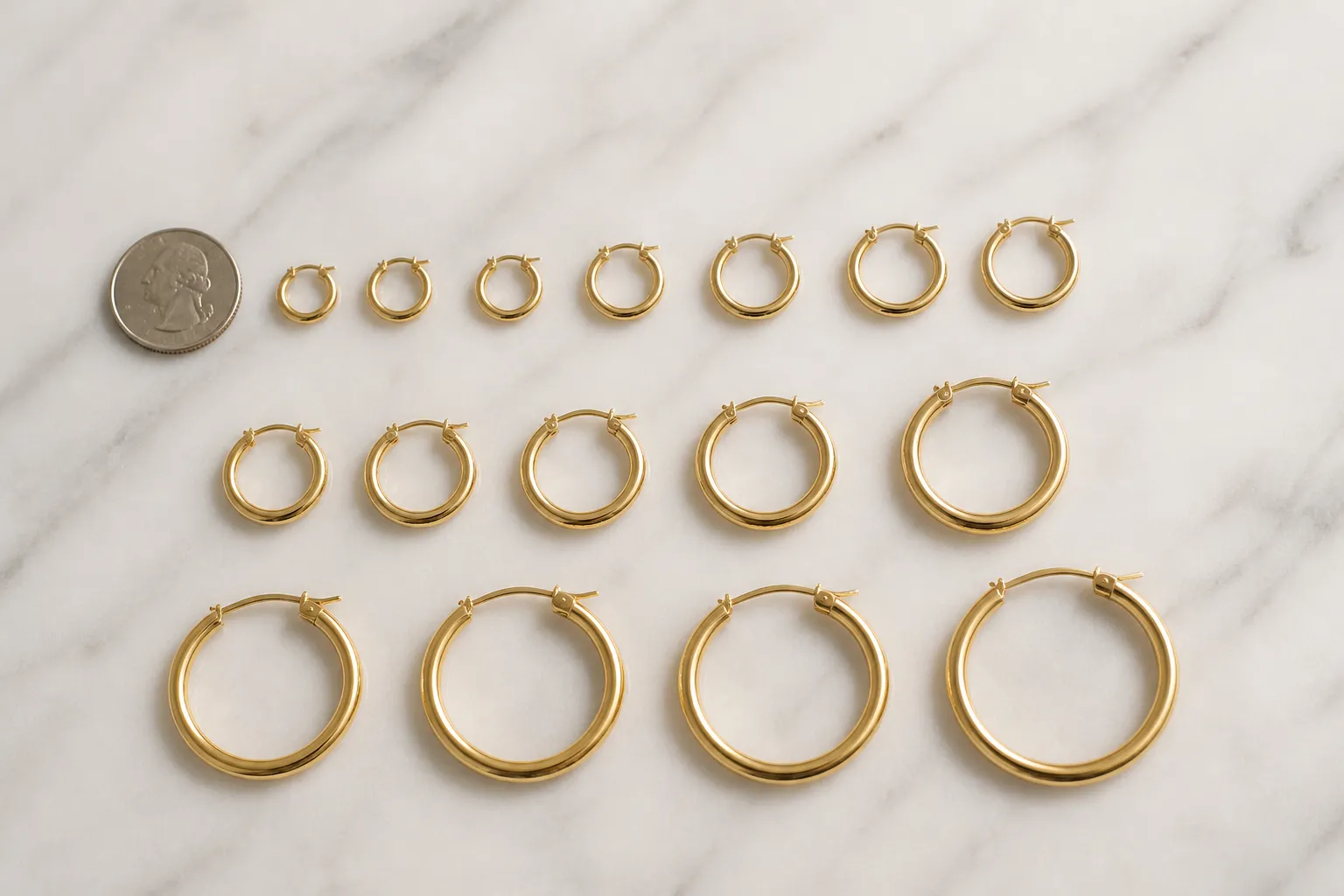
Demand for small gold hoops in the U.S. is driven by a mix of lifestyle factors. The shift toward remote and hybrid work created a new buying archetype: the consumer who wants polished, camera-ready accessories that read well on Zoom but are also comfortable enough to wear all day. Small hoops — typically defined in the American market as rings with an outer diameter between 10mm and 25mm — satisfy that brief precisely. They are also a perennial bestseller in the gifting category, anchoring Mother's Day, graduation, and Valentine's Day sales cycles that U.S. retailers and DTC brands plan their inventory around six to nine months in advance.
The buyer landscape in the U.S. is layered. At the retail end, independent boutiques, e-commerce DTC brands, and mass-market department stores (think Macy's, Nordstrom, and TJ Maxx) all carry small gold hoops at different price points. Behind them sits a robust sourcing chain of importers, wholesale distributors, and private-label OEM buyers who work directly with overseas manufacturers — increasingly from China's established jewelry manufacturing hubs like Hangzhou, Guangzhou, and Shenzhen — to bring competitively priced, quality-vetted pieces to American shelves. It is this B2B sourcing layer that represents the fastest-growing procurement channel, particularly as DTC brands seek to shorten supply chains and control product development more tightly.
---
## What's Specific About the United States
### Regulatory and Compliance Environment
The U.S. imposes several compliance requirements that any importer or buyer of gold jewelry must understand before placing orders.
**FTC Jewelry Guides (16 CFR Part 23):** The Federal Trade Commission's Guides for the Jewelry, Precious Metals, and Pewter Industries govern how gold content must be disclosed. Any piece marketed as "gold" must meet minimum fineness thresholds: 10 karat (41.6% pure gold) is the legal minimum for an item to be sold as "gold" in the U.S. Gold vermeil (gold-plated sterling silver) must meet a minimum plating thickness of 2.5 microns under FTC guidance. Buyers sourcing from overseas suppliers should request assay certificates and plating thickness reports to ensure compliance before goods enter commerce.
**CPSC and Nickel:** The U.S. Consumer Product Safety Commission does not currently impose a blanket federal nickel-release limit equivalent to the EU's EN 1811 standard, but several states — and increasingly, major retail buyers — are self-imposing nickel-safe or hypoallergenic requirements as a condition of purchase. If your end customer includes sensitive-skin demographics or you are selling into California (Proposition 65 applies to certain heavy metals), ensure your supplier provides Prop 65-compliant materials documentation.
**U.S. Customs and Import Duties:** Small gold hoop earrings imported from China typically fall under HTS Chapter 71 (natural or cultured pearls, precious stones, precious metals). Duty rates vary by material composition; gold-plated base metal earrings and sterling silver vermeil pieces carry different classifications than solid gold. Post-2025 tariff adjustments have made HTS classification review an essential step before finalizing sourcing agreements. Work with a licensed customs broker to confirm current rates.
**Payment Methods Common in U.S. B2B Procurement:** Wire transfer (ACH or international wire), PayPal Business, and trade credit via net-30/net-60 terms are standard. For first-time international supplier relationships, many U.S. buyers use Letters of Credit (LC) or Alibaba Trade Assurance as risk mitigation. Platforms like Wise Business are increasingly used for faster, lower-fee international payments.
### Cultural and Language Considerations
American buyers tend to communicate directly and expect fast response times — typically within one business day. English is the operating language, though in metropolitan sourcing markets (Los Angeles, New York, Miami), Spanish-language capability is a meaningful differentiator. Millennial and Gen Z buyers who dominate DTC purchasing decisions respond strongly to sustainability narratives, recycled metal claims, and transparent supply chain storytelling — all of which influence how product copy and supplier credentials should be presented.
---
## How to Choose a Small Gold Hoop Earrings Provider in the United States
Sourcing small gold hoops — whether for a boutique DTC launch or a large wholesale order — requires evaluating suppliers across several dimensions that are specific to the U.S. market context.
**1. Regulatory Documentation Readiness**
A credible supplier should be able to provide, on request: material composition certificates, plating thickness reports (especially for vermeil pieces), and Prop 65 compliance statements. Suppliers who cannot produce these documents introduce compliance risk the moment goods enter U.S. commerce.
**2. Gold Fineness Transparency**
Confirm exactly what "gold" means in your supplier's catalog. Is it solid 10K/14K gold, gold-filled (must be 1/20th gold by weight), gold vermeil (2.5µm+ plating on sterling), or gold-plated base metal? Each carries different price points, FTC disclosure requirements, and consumer expectations. Reputable suppliers will label this clearly and not conflate categories.
**3. OEM and Customization Capability**
For DTC brands and private-label importers, the ability to customize — ring diameter, wire gauge, clasp style, engravings, packaging — is often the deciding factor. Ask about minimum order quantities for custom runs, tooling fees (if any), and whether the supplier maintains in-house design support or relies on third parties.
**4. Quality Control Process**
Ask specifically: who inspects goods before shipment? Is QC performed in-house or outsourced? What is the defect rate benchmark, and what is the remedy policy (replacement, credit, refund)? Suppliers with in-house QC teams and documented inspection protocols carry significantly lower fulfillment risk for U.S. buyers managing customer return rates.
**5. Time-Zone Coverage and Language Support**
A Hangzhou-based supplier operating on CST (UTC+8) is 12–13 hours ahead of U.S. Eastern time. Suppliers with dedicated sales or support staff who maintain U.S.-business-hours availability — or who offer asynchronous communication via email with same-day turnaround — dramatically reduce sourcing friction. Multilingual capability (English, Spanish, Arabic) matters for diverse procurement teams.
**6. Lead Time and Production Capacity**
For seasonal buying cycles (holiday, Mother's Day, graduation), lead time predictability is critical. Standard production lead times for small hoop earrings from Chinese manufacturers typically range from [ask your supplier], with express options available at premium. Confirm whether the supplier holds safety stock of bestselling SKUs or operates purely on make-to-order.
---
## Pricing in the United States
Retail pricing for small gold hoop earrings in the U.S. spans a wide range, reflecting material quality, brand positioning, and channel.
| Segment | Material | Typical U.S. Retail Price Range |
|---|---|---|
| Fashion / fast jewelry | Gold-plated brass | $8 – $30 |
| Demi-fine | Gold vermeil (sterling base) | $30 – $120 |
| Bridge / semi-fine | Gold-filled | $40 – $150 |
| Fine | Solid 10K – 14K gold | $80 – $500+ |
| Designer / luxury | Solid 18K gold | $300 – $2,000+ |
*Note: Retail prices as observed across U.S. DTC and department store channels. Wholesale and OEM pricing from overseas suppliers is substantially lower and depends on volume, material, and customization.*
**What drives price in the U.S. market:**
- **Gold spot price:** Fluctuations in gold commodity pricing (tracked in USD/troy oz on COMEX) directly affect cost-of-goods for solid gold and gold-filled items. Fashion gold-plated pieces are less sensitive.
- **Tariff environment:** Import duties on Chapter 71 goods from China have been subject to revision; current rates should be confirmed with a licensed customs broker before finalizing landed cost calculations.
- **MOQ and volume:** Per-unit cost drops significantly with volume. Buyers consolidating SKUs into larger purchase orders will see meaningfully better unit economics than buyers running fragmented small-batch orders.
- **Customization and packaging:** Custom earring backs, branded polybags, hang tags, and gift boxes add to landed cost but are often necessary for premium DTC positioning.
- **Logistics and duties:** CIF (Cost, Insurance, Freight) versus FOB (Free On Board) terms affect who absorbs shipping and insurance costs. U.S. buyers should clarify Incoterms upfront.
---
## Common Challenges for Buyers in the United States
### Navigating Tariff and HTS Classification Uncertainty
The U.S.-China trade relationship has seen tariff layers added and modified repeatedly since 2018. Small gold hoop earrings may be subject to Section 301 tariffs in addition to standard MFN duty rates, depending on their HTS subheading. Misclassification at entry creates CBP audit risk and unexpected duty liability. Recommendation: engage a licensed U.S. customs broker before your first shipment and request a binding ruling from CBP if classification is ambiguous.
### Ensuring FTC Compliance on Gold Claims
The FTC's Jewelry Guides are specific and actively enforced. U.S. buyers who import and resell must ensure that every product listing, hang tag, and promotional material accurately describes gold content. The most common compliance failure is using the word "gold" for gold-plated base metal items without qualification. Your supplier should provide written material specifications for every SKU you carry.
### Supplier Reliability and Quality Consistency
First-order quality does not guarantee reorder consistency. Suppliers who pass initial sample review may substitute materials, change plating vendors, or alter manufacturing processes on production runs. Mitigation strategies include: requesting pre-shipment inspection reports, building AQL (Acceptable Quality Level) standards into your purchase order terms, and working with suppliers who have established in-house QC infrastructure rather than relying solely on self-reporting.
### Long Lead Times vs. Seasonal Buying Windows
The U.S. jewelry market has pronounced seasonality — Q4 (holiday), February (Valentine's Day), and May (Mother's Day) are peak demand periods. Buyers who do not account for 8–14 week production and transit lead times routinely find themselves out of stock during peak windows. Solution: build a forward-buying calendar, confirm your supplier's production capacity during peak periods (many Chinese manufacturers operate at reduced capacity during the Lunar New Year holiday in January/February), and consider holding safety stock for core SKUs.
### Logistics Costs and Carrier Reliability
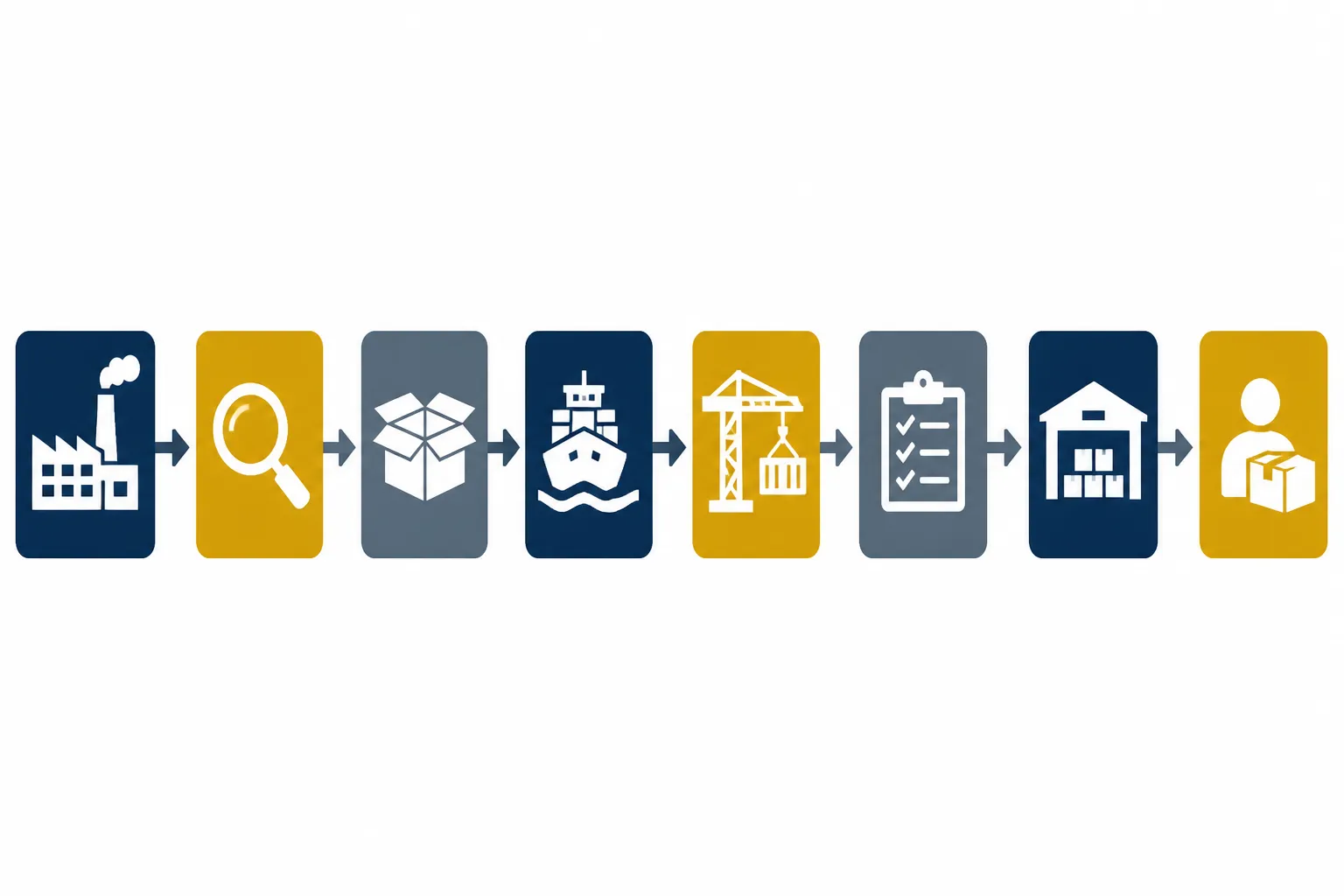
Air freight costs from China to the U.S. have remained elevated relative to pre-2020 baselines. Sea freight is more economical for large volume but adds 3–5 weeks of transit time. Buyers should evaluate total landed cost — not just unit cost — and factor in the cost of delayed inventory against the savings on freight.
---
## Frequently Asked Questions (United States-Specific)
**Q: What is the minimum gold content required to legally sell earrings as "gold" in the United States?**
A: Under FTC guidelines, 10 karat (41.6% pure gold) is the legal minimum for an item to be described simply as "gold" without qualification. Items below 10K cannot be marketed as gold. Gold vermeil and gold-filled pieces have their own separate disclosure requirements — the FTC Jewelry Guides are the authoritative reference.
**Q: Do I need a license to import and sell gold earrings in the U.S.?**
A: There is no specific federal license required solely for importing gold fashion jewelry into the U.S., but importers must have a valid Employer Identification Number (EIN) for customs purposes, comply with CBP import regulations, and adhere to FTC Jewelry Guide disclosure requirements. Depending on your business structure and state, a general business license and reseller permit may be required. Consult a trade attorney or licensed customs broker for your specific situation.
**Q: How do I verify that a Chinese supplier's small gold hoops meet U.S. nickel and heavy metal standards?**
A: Request third-party laboratory test reports from accredited labs (SGS, Intertek, Bureau Veritas are recognized globally). While the U.S. does not have a federally mandated nickel limit equivalent to the EU's, specify in your purchase order that items must meet nickel-safe benchmarks and provide Proposition 65 compliance documentation if selling in California. Reputable suppliers will have these reports available or can facilitate testing.
**Q: What Incoterms should I use when buying small gold hoops from a Chinese manufacturer?**
A: Most first-time importers use FOB (Free On Board) origin port terms, which give them control over freight, insurance, and customs brokerage from the point of loading. More experienced importers sometimes negotiate DDP (Delivered Duty Paid) for simplicity, though this shifts pricing control to the supplier. Avoid EXW (Ex Works) unless you have established freight forwarding infrastructure in China.
**Q: What MOQ is typical for custom OEM small gold hoop earrings from a Chinese supplier?**
A: MOQ varies widely by supplier and level of customization. For stock designs with minor modifications (size change, finish change), MOQs can be as low as [your supplier's MOQ]. For fully custom designs requiring new tooling, expect higher minimums. When evaluating suppliers, ask specifically about MOQ for: (a) stock SKUs, (b) custom dimensions, and (c) custom branding/packaging — these are often quoted separately.
**Q: How long does it typically take to receive a first order of small gold hoop earrings from China?**
A: Total lead time — from order confirmation to delivery at a U.S. warehouse — typically includes production time, QC inspection, export clearance, and transit. Air freight will be faster than sea freight. Ask your supplier to quote both options with estimated transit windows so you can plan around your selling calendar.
**Q: Can I request samples before placing a bulk order?**
A: Yes, and you should. Reputable suppliers will provide pre-production samples (proto samples) and production samples (counter samples from the actual production run) before full shipment. Sample fees and courier costs are typically borne by the buyer for the first order; many suppliers credit these costs back on confirmed bulk orders. Never skip the sample stage for new suppliers or new SKUs.
---
## Get Started in the United States
The U.S. market for small gold hoop earrings rewards buyers who combine trend awareness with sourcing discipline. Whether you are launching a new DTC jewelry brand, expanding an existing accessory line, or managing procurement for a multi-door retailer, the fundamentals are the same: lock down your compliance documentation, understand your total landed cost, and build supplier relationships that can scale with your business.
**STRAND** is a Hangzhou-based jewelry brand purpose-built for overseas B2B buyers, with a particular focus on the U.S., EU, UK, and MENA markets. STRAND connects buyers directly to vetted Chinese workshops for small gold hoop earrings, hoop sets, drop earrings, stud earrings, and necklace + earring combinations — including vintage-inspired, gradient crystal, two-tone glass bead, and rhinestone styles. Custom OEM is available with low minimum order quantities, in-house QC before every shipment, and multilingual procurement support in English, Arabic, and Spanish.
**Your next steps:**
1. **Define your SKU requirements** — diameter, wire gauge, gold fineness, finish, and any custom branding or packaging needs.
2. **Request compliance documentation** — ask for material certificates, plating thickness reports, and Prop 65/nickel-safe test reports before committing to any supplier.
3. **Get a landed-cost estimate** — factor unit cost, freight, duties, and any customization fees before comparing supplier quotes.
4. **Order samples** — validate quality in hand before placing production orders.
5. **Confirm lead time against your selling calendar** — especially if you are buying for a seasonal peak window.
**Ready to source small gold hoop earrings for your U.S. business?**
[**Request a Quote from STRAND →**](https://strandjewelry.com)
Contact STRAND's multilingual procurement team to receive MOQ details, unit pricing, sample availability, and OEM customization options tailored to your U.S. sourcing requirements. Fast response, transparent trade terms, in-house QC — built for buyers who need a supplier they can rely on.
---
*This guide is for informational purposes. Regulatory requirements change; consult a licensed customs broker and trade attorney for advice specific to your import situation.*

