
Custom Jewelry vs. Retail: A Sourcing Comparison for DTC Brands
Custom Jewelry vs. Retail: A Sourcing Comparison for DTC Brands
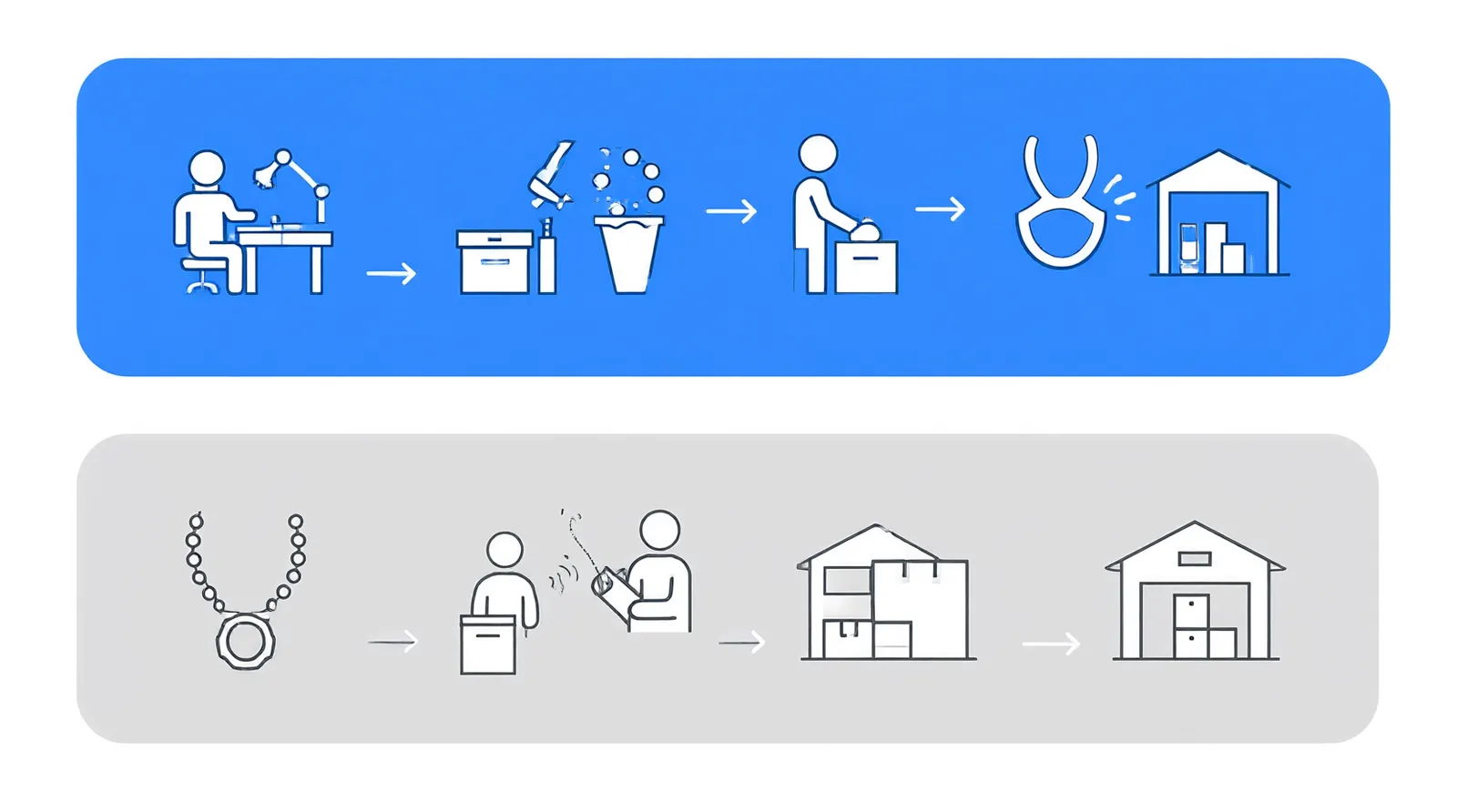
Custom jewelry sourcing through direct OEM manufacturers offers unit economics and design control that retail alternatives cannot match, while off-the-shelf or retail custom programs provide immediate availability with zero tooling lead time. For DTC store owners and importers in the US, EU, UK, and MENA regions, the choice between commissioning custom jewelry from vetted workshops and buying from established retail channels dictates margin structure, inventory risk, and brand differentiation. This comparison breaks down the operational realities of both paths so procurement teams can align their sourcing strategy with actual business constraints.
TL;DR / Quick Verdict
If you are a DTC brand owner, importer, or buyer needing proprietary designs—such as gradient crystal drop earrings or two-tone glass bead necklace sets—with low minimum order quantities per style, direct custom jewelry manufacturing is the correct path. If you need a single personalized piece for an end consumer immediately, or lack the timeline for production and cross-border shipping, retail alternatives like Kay Jewelers' personalization programs serve that specific demand. For commercial-scale fashion jewelry businesses, bypassing retail markups to work directly with manufacturers yields the margins required to compete.
At-a-Glance Comparison Table
| Dimension | Custom Jewelry (Direct OEM) | Alternatives (Retail / Stock) |
|---|---|---|
| Pricing Model | EXW or FOB; volume-based unit cost | Fixed retail MSRP; no wholesale tiers |
| MOQ | Low MOQs on most stock designs; select styles available from 1 pc | 1 piece (consumer purchase) |
| Materials Available | Plated base metals, silver finishes, glass beads, natural stone, faux pearls | Varies by retailer; often limited to specific branded collections |
| Design Control | Full CAD/mold customization; vintage, gradient, rhinestone styles | Limited to engraving, stone swapping, or selecting from pre-set templates |
| Lead Time | Production + international transit (air, sea, or express) | Immediate in-store pickup or standard domestic shipping |
| Payment Terms | Bank transfers and digital payment platforms suited for cross-border trade | Credit card, financing (e.g., store credit), PayPal |
| Support / Service | Multilingual sales teams for international buyers | Domestic customer service; typically English only |
| Quality Assurance | In-house QC inspection processes before shipment | Standard retail return policies |
Custom Jewelry Overview
Custom jewelry in a B2B context refers to designs manufactured specifically for a brand or importer, either through modifying existing factory molds or creating entirely new tooling. This model is built for DTC store owners, regional importers, and multilingual procurement teams who need to differentiate their product lines without paying luxury-tier markups.
A primary example of this model is STRAND, a Hangzhou-based brand linking vetted Chinese workshops directly to overseas buyers. Their operation centers on fashion jewelry—specifically drop earrings, stud earrings, and necklace-earring sets featuring vintage, gradient crystal, two-tone glass bead, and rhinestone aesthetics. The standout strength here is the intersection of low minimums and material variety. Buyers can source pieces in plated copper, silver finishes, natural stone, and faux pearls. With the vast majority of catalog styles available at a low minimum order quantity, brands can test market response across multiple SKUs without committing to thousands of units upfront. Trade terms are structured for international commerce (EXW or FOB), with logistics handled via air, sea, or express courier.
Alternatives Overview
Alternatives to direct custom manufacturing encompass retail personalization platforms, mass-market mall jewelers, and independent designer boutiques. These channels are built primarily for individual consumers, though some small boutique owners use them to fill gaps in their inventory when they lack the capital or timeline for overseas production.
Major retailers have formalized this space. For instance, Kay Jewelers provides a 'Custom' section that includes engagement rings, allowing shoppers to select settings and stones through a guided digital interface. Kay also offers a category for personalized and custom jewelry that extends beyond bridal into gifting. Similarly, Kay's custom offerings include branded collaborations like Neil Lane Ring Sets. Online-first platforms like Jewlr and Catbird operate in this same alternative space, offering name necklaces, birthstone rings, and engraved bands. While these alternatives offer speed and eliminate the complexities of international freight, they carry retail pricing structures that make them unviable for buyers intending to resell at a competitive margin. You are purchasing finished goods, not securing a manufacturing partnership.
Feature-by-Feature Breakdown
Pricing and Commercial Terms
Custom jewelry manufacturers price based on raw materials, labor, mold amortization, and order volume. Working with a supplier like STRAND means negotiating on EXW (Ex Works) or FOB (Free On Board) terms. Payment infrastructure supports cross-border transactions through bank transfers and various digital payment platforms. This flexibility allows importers to manage cash flow according to their region's banking norms.
Alternatives operate on fixed retail pricing. When a consumer buys a personalized pendant from a brand like Kendra Scott or a platform like Made By Mary, the price includes the retailer's marketing spend, storefront overhead, and profit margin. There is no EXW pricing, no bulk discount tiering, and no Letter of Credit acceptance. For a DTC brand trying to maintain a 3x to 5x markup, buying retail alternatives destroys unit economics.
Materials and Design Scope
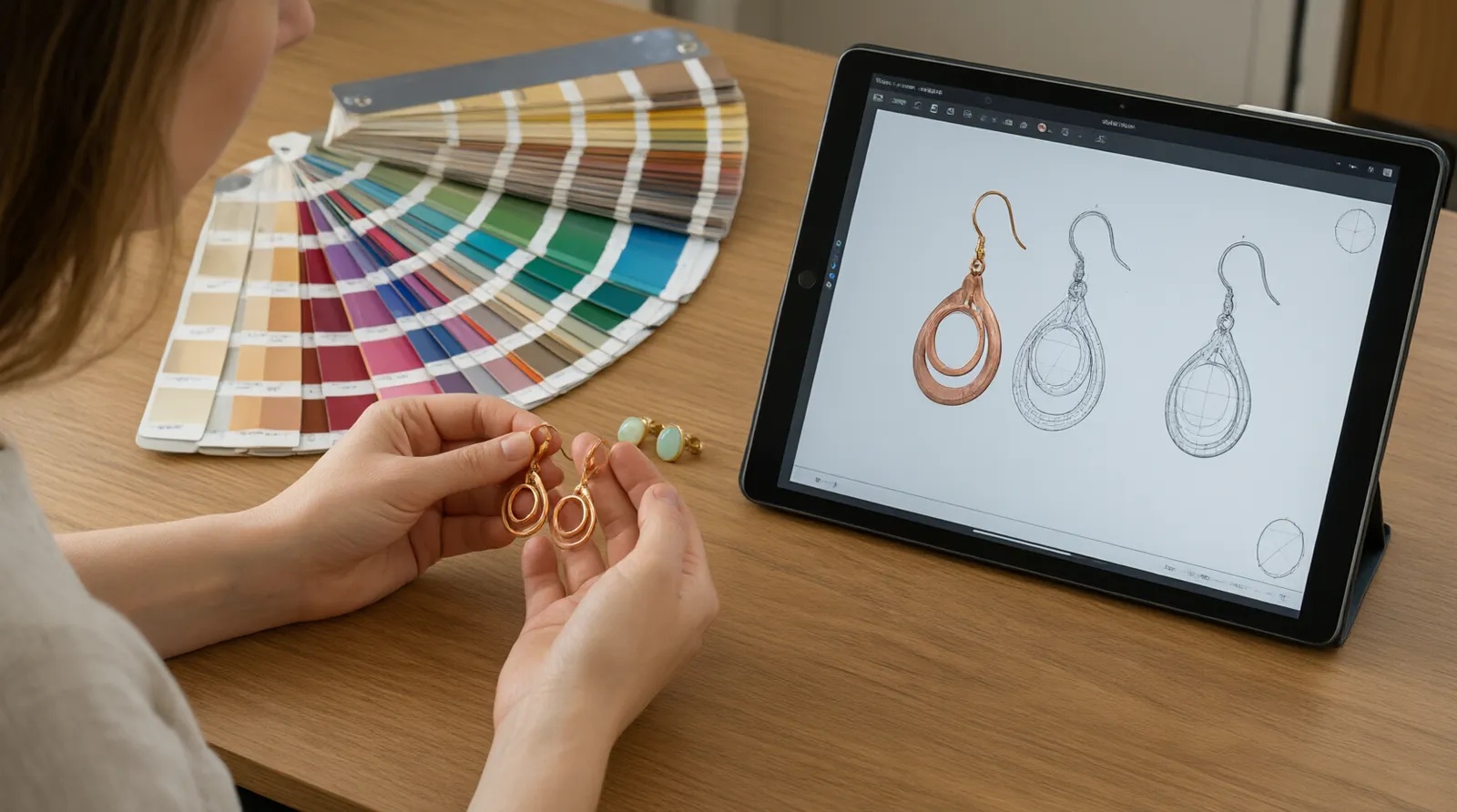
Direct OEM sourcing opens access to industrial material catalogs. Buyers can specify base metals (copper plated in gold or rhodium), finishes (925-style silver), and embellishments ranging from glass beads to natural stones like amethyst, garnet, peridot, and turquoise. If your brand identity relies on a specific gradient crystal effect on a drop earring, a custom manufacturer will formulate the plating and stone-setting process to match your tech pack.
Retail alternatives restrict you to their approved material lists. A mall jewer like Jared might offer diamond accents or specific gemstone cuts, but you cannot dictate the micron thickness of the plating or request a proprietary two-tone glass bead combination. You are choosing from a menu, not writing it.
Minimum Order Quantities (MOQ)
The MOQ is often the deciding factor for growing DTC brands. STRAND’s catalog demonstrates how modern OEM suppliers have compressed minimums, offering low MOQs per style across the vast majority of their stock designs, with select styles available from a single piece. Catalog sizes and minimum order thresholds change frequently, so buyers should verify current parameters directly with the supplier. This approach allows a buyer in the UK or MENA region to order a mixed batch of stud earrings and necklace sets to validate demand before scaling.
Alternatives inherently have an MOQ of one, as they are consumer-facing. However, if a boutique owner attempts to buy 50 personalized rings from a retail site to resell, they will pay 50 times the retail price and likely trigger fraud alerts or violate the retailer's terms of service regarding commercial resale.
Quality Assurance and Logistics
Cross-border custom jewelry requires rigorous quality control. Manufacturers like STRAND conduct in-house QC inspections before shipments leave the facility. Once cleared, logistics are tailored to the buyer's urgency—express air for fast restocks, sea freight for high-volume cost savings.
When buying from retail alternatives, quality assurance relies on the brand's return policy. Shipping is generally limited to domestic postal networks or standard international couriers, lacking the commercial freight options necessary for pallet-sized imports.
Multilingual Procurement Support
Sourcing chains spanning the US, EU, UK, and MENA require communication across time zones and languages. Direct custom jewelry suppliers address this by staffing multilingual sales teams. STRAND, for example, services procurement teams in multiple languages to support international buyers. This eliminates translation errors in technical specifications—a critical safeguard when detailing exact measurements for a rhinestone setting.
Retail alternatives offer support almost exclusively in their domestic language, occasionally expanding to Spanish or French for North American markets, but rarely accommodating Arabic or Russian for international B2B inquiries.
Pros and Cons
Custom Jewelry (Direct OEM)
Pros:
- Wholesale pricing structures (EXW/FOB) that protect DTC profit margins.
- Total control over materials, including specific plating types, natural stones, and faux pearls.
- Low MOQs enable agile inventory testing.
- Multilingual support streamlines communication for global procurement teams.
- Dedicated pre-shipment QC inspections reduce defect rates.
- Flexible payment methods suited for international trade.
Cons:
- Requires lead time for production and international shipping.
- Demands clear technical specifications or reference samples from the buyer.
- Cross-border logistics involve customs clearance and freight coordination.
Alternatives (Retail / Stock)
Pros:
- Immediate availability with no production wait times.
- No need for technical design files or material specification knowledge.
- Simple purchasing process using standard consumer payment methods.
- Easy returns for individual defective items under consumer protection laws.
Cons:
- Retail pricing eliminates viable resale margins.
- Designs are publicly available, preventing brand exclusivity.
- Material and sizing options are restricted to the retailer's current catalog.
- Not legally or practically structured for commercial bulk purchasing.
When to Choose Custom Jewelry
Choose custom jewelry manufacturing when your business model depends on exclusive designs and scalable margins. If you run a DTC store in the EU specializing in vintage-inspired fashion jewelry, working with an OEM supplier allows you to produce signature gradient crystal drop earrings that competitors cannot replicate.
This path is also mandatory when targeting diverse geographic markets. A MENA-based importer requiring documentation and sales support in Arabic, or a European distributor needing German-language communication, will find direct manufacturers equipped to handle these workflows. Furthermore, if your assortment strategy relies on testing multiple styles—such as introducing 20 new stud earring designs simultaneously—a low MOQ threshold makes this financially feasible without warehousing dead stock. For a broader look at how buyers evaluate these manufacturing partnerships, review our breakdown of Custom Jewelry: 6 Sources Buyers & DTC Brands Need in 2026.
When to Choose Alternatives
Retail alternatives are appropriate when the end goal is a single, highly emotional consumer purchase rather than commercial inventory. If a customer walks into a physical location wanting a personalized gift with a specific diamond arrangement or an engraved message by the weekend, retail platforms fulfill that localized, immediate need.
Alternatives also serve early-stage entrepreneurs who are validating a niche before registering a business or opening import accounts. Purchasing a handful of curated pieces from sites like Brook and York or Catbird NYC can help a stylist build a mood board or a pop-up display. However, once sales velocity demands restocking, transitioning to a custom OEM model becomes a financial necessity. We compare the transition points between retail sourcing and direct manufacturing in our guide ranking 6 Custom Jewelry Sources for Importers & DTC Stores.
Final Verdict
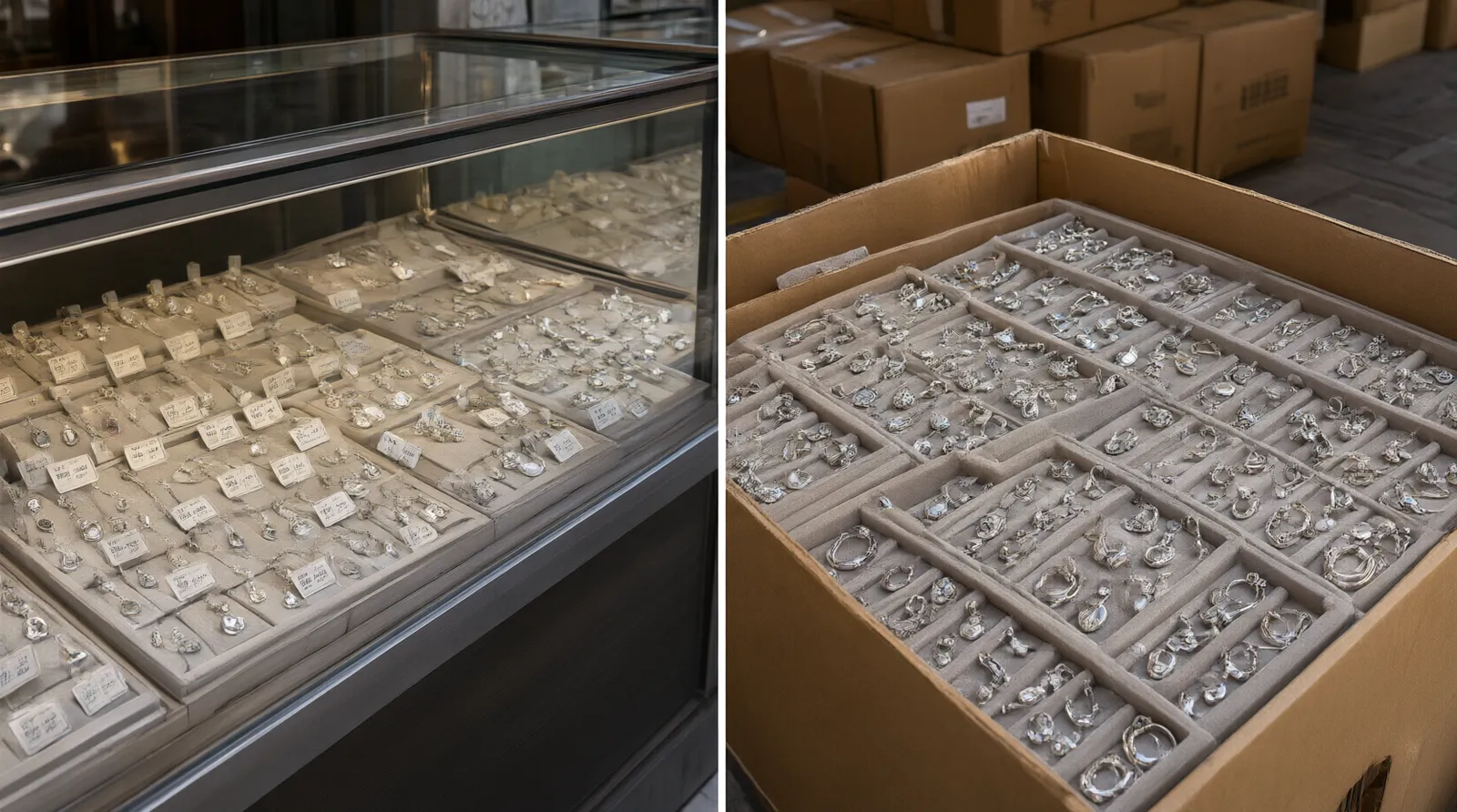
The decision between custom jewelry manufacturing and retail alternatives is fundamentally a choice between building a scalable brand and making a one-off purchase. For individual consumers seeking a personalized gift, retail alternatives provide speed and convenience. For buyers, importers, and DTC store owners operating in the US, EU, UK, or MENA regions, custom jewelry sourced directly from vetted manufacturers is the only commercially viable option. The ability to secure proprietary designs in gold-plated copper or natural stone at low minimum order quantities, backed by multilingual support and pre-shipment QC, directly translates to protected margins and differentiated storefronts.
If your procurement team is evaluating suppliers for your next seasonal drop of earrings or necklace sets, move past retail benchmarks. Request a sample, confirm current MOQ parameters, and get a quote directly from STRAND at https://strandjewelry.com.