
custom jewelry
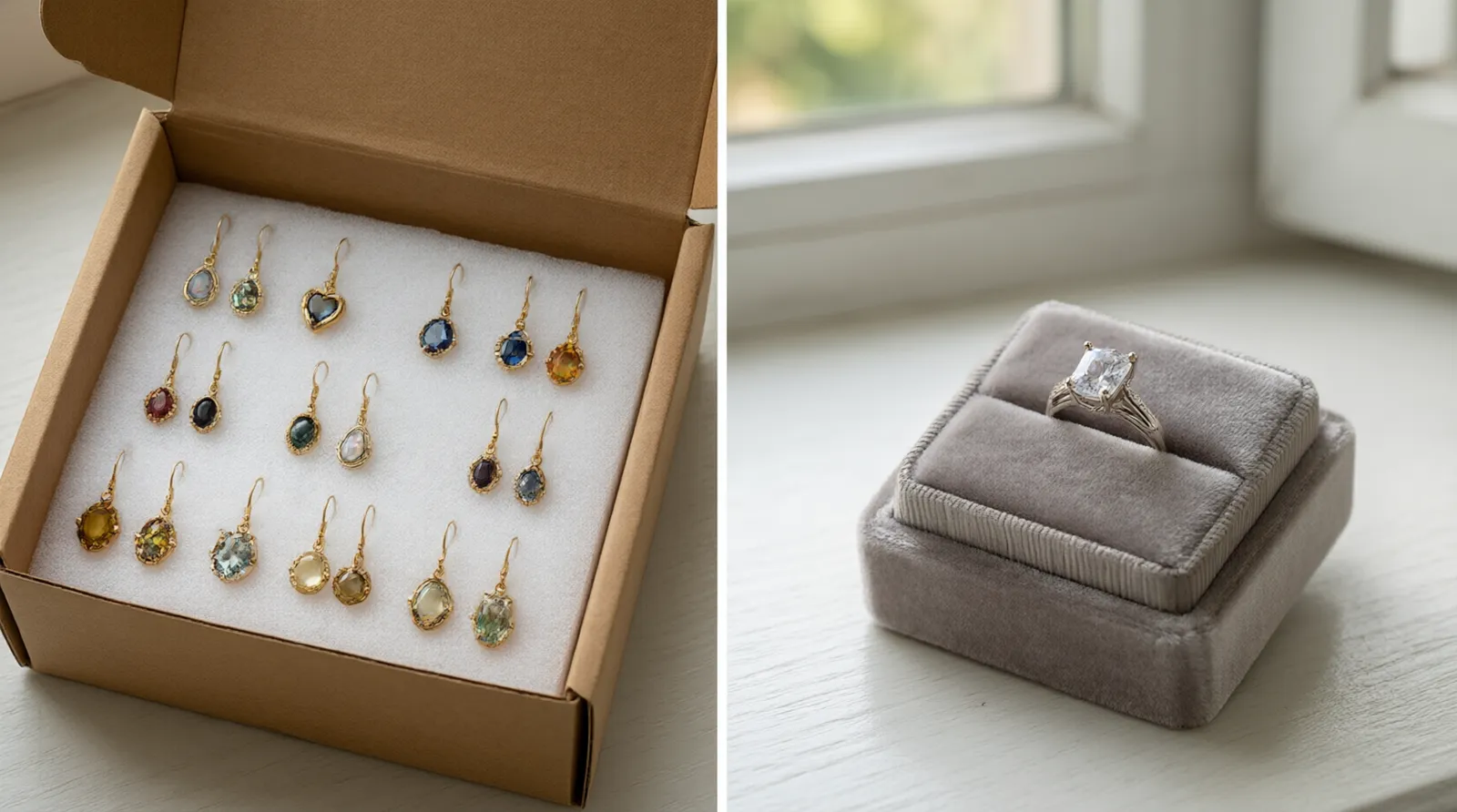
Custom Jewelry vs. Alternatives: A Sourcing Comparison for DTC Brands & Importers
Custom jewelry sourcing through direct OEM manufacturers delivers unit costs low enough to sustain retail margins, with minimum order quantities (MOQs) kept accessible across most catalog designs. Off-the-shelf alternatives—ranging from B2C personalization platforms to large retail chains—offer zero-inventory purchasing but carry per-unit prices that block wholesale distribution. If you are a DTC store owner, importer, or procurement buyer in the US, EU, UK, or MENA region building a private label, direct custom manufacturing is the standard path; if you are testing a single personalized gift, retail alternatives serve that specific need. For a complete breakdown of these channels, see our importer's buying guide.
TL;DR / Quick Verdict
Buyers importing fashion jewelry for resale should route their orders through custom jewelry OEM suppliers like STRAND, where low MOQs across the majority of stock catalog designs allow for viable inventory planning without massive capital risk. Retail alternatives and B2C personalization sites work exclusively for single-unit consumer purchases, as their per-item pricing—such as premium retail rates for a gold-plated silver name necklace—destroys wholesale margins. For brands scaling across borders, direct factory relationships with multilingual support and flexible trade terms are non-negotiable.
At-a-Glance Comparison Table
| Dimension | Custom Jewelry (OEM / Direct Sourcing) | Alternatives (B2C Personalization & Retail) |
|---|---|---|
| Pricing Model | Factory-direct EXW or FOB pricing | Retail markup (varies by piece and promotion) |
| Minimum Order Quantity | Low MOQs per style across most catalog designs; select styles available from 1 pc | 1 piece |
| Target Buyer | Importers, DTC stores, B2B buyers | End consumers, gift buyers |
| Materials Available | Gold/rhodium-plated copper, 925-style silver finishes, glass beads, natural stone, faux pearls | Sterling silver, 18K gold plate, CZ, birthstones |
| Shipping Terms | Air, sea, or express freight | Free shipping (consumer-tier) |
| Payment Methods | T/T bank transfer, Western Union, PayPal, L/C, Xtransfer | Credit card, Buy Now Pay Later plans |
| Support Languages | Multilingual sales support available | Primarily English |
| Quality Control | In-house QC inspection before every shipment | 99-day return policies, 1-year warranties |
Custom Jewelry Overview
Custom jewelry in a B2B context refers to original equipment manufacturing (OEM) and private-label sourcing directly from vetted workshops. This model is built for importers, DTC brand owners, and procurement teams who need to control unit economics while maintaining design exclusivity. Suppliers operating in this space bridge the gap between overseas manufacturing hubs and global retail markets.
STRAND links vetted Chinese workshops directly to overseas buyers in the US, EU, UK, and MENA regions. The standout strength here is the intersection of low barriers to entry and high material variety. Buyers can source vintage, gradient crystal, two-tone glass bead, and rhinestone styles across drop earrings, stud earrings, and necklace-and-earring sets. Materials span gold-plated and rhodium-plated copper, glass beads, natural stone, and faux pearls.
For procurement teams evaluating capacity, STRAND maintains an extensive stock catalog. The MOQ structure is concrete: low minimum piece counts per style across the vast majority of catalog designs, with select styles available from just 1 piece for sampling purposes. Trade terms are structured for international logistics, offering EXW or FOB options with shipping routed by air, sea, or express courier. To eliminate language friction during specification reviews, sales support covers multiple languages. Every shipment undergoes an in-house QC inspection before dispatch. For buyers mapping out their broader vendor list, our guide on Custom Jewelry: 6 Sources Buyers & DTC Brands Need in 2026 breaks down how OEM partners fit into a diversified supply chain.
Alternatives Overview
Alternatives to direct custom manufacturing include B2C personalization platforms and large-scale retail jewelers. These channels are built for individual consumers purchasing one-off items, such as engraved pendants or birthstone rings. They prioritize convenience, return policies, and immediate checkout over wholesale viability. Understanding how B2B buyers must evaluate these retail channels helps clarify why they fail at commercial scale.
Platforms like Jewlr list hundreds of products in their personalized jewelry category, covering best sellers, birthstone pieces, engravable items, rings, necklaces, bracelets, and earrings (Jewlr). Pricing reflects retail overhead and fluctuates based on promotions. As documented in their listings at the time of research, items like an 18K Gold Plated Silver Personalized Name Necklace or an Engravable Generations Stacking Hearts Pendant featuring peridot and citrine stones carried retail price tags typical of direct-to-consumer platforms (Jewlr). Other examples include a Double Baguette Bypass Ring in 925 Sterling Silver with garnet and cubic zirconia, and an Engraved 3 Interlocking Russian Rings Necklace in vermeil (Jewlr). These platforms offer consumer-friendly terms like free shipping, a one-year warranty, 99-day returns, and Buy Now, Pay Later payment plans (Jewlr).
Large retailers also compete in this space. Kay Jewelers categorizes personalized jewelry as a "Trending & Featured" collection, selling custom and personalized pieces directly to foot traffic and online shoppers (Kay Jewelers). While legacy names like Jared, Kendra Scott, and luxury boutiques offer bespoke services, their infrastructure is designed for single-unit retail transactions, not pallet-level export logistics.
Feature-by-Feature Breakdown
Pricing and Unit Economics
Direct custom jewelry pricing relies on EXW or FOB trade terms. Buyers negotiate based on raw material costs (copper, glass beads, natural stone), plating thickness, and order volume. Because the transaction occurs at the factory gate or port, the per-unit cost allows DTC stores to apply standard retail markups (often 3x to 5x) while remaining competitive.
Alternatives operate on fixed retail pricing. When a platform charges premium retail rates for items like a Love and Kisses Gemstone Pendant in 18K Gold Plated Silver or a Small Initial 2 Tag Necklace with Birthstone (Jewlr), that price includes the platform's margin, marketing spend, and consumer return-risk buffer. Reselling these items is mathematically unviable. Even when platforms run seasonal promotions or sign-up discounts (Jewlr), the landed cost remains too high for wholesale distribution.
Core Features and Material Capabilities
Custom OEM suppliers handle complex material combinations tailored to brand specifications. STRAND’s production capabilities include gold-plated and rhodium-plated copper bases, 925-style silver finishes, and integration of materials like amethyst, turquoise, or diamond simulants depending on the client's tech pack. The focus is on replicating exact aesthetic requirements—such as gradient crystal placements or specific two-tone glass bead alignments—across hundreds of units uniformly.
Retail alternatives restrict buyers to pre-set configurators. Consumers choose from existing templates, swapping out a simulated peridot for a garnet, or selecting a font for engraving. The feature set prioritizes user interface simplicity over metallurgical customization. You cannot request a proprietary alloy blend or a specific micron thickness for plating through a B2C web form.
Logistics, Integrations, and Payment
Cross-border B2B logistics require flexibility. Custom jewelry sourcing integrates with freight forwarders via air, sea, or express shipping. Payment structures match corporate finance workflows: T/T bank transfers, Letters of Credit (L/C) for larger secured shipments, Western Union, PayPal, and modern cross-border solutions like Xtransfer.
Alternatives use standard e-commerce integrations. Checkout flows rely on credit card processors and consumer financing (Buy Now, Pay Later). Shipping is typically handled via domestic postal or standard courier networks with free shipping thresholds (Jewlr). There is no mechanism for FOB hand-offs or consolidated sea freight.
Support and Communication
Procurement teams managing vendors across time zones require precise communication. STRAND provides multilingual sales support to accommodate international buyers. This ensures technical specifications for custom designs—like clasp tolerances on drop earrings or stone setting depths—are communicated without translation errors.
B2C alternatives provide standard customer service aimed at individual consumers. Support handles tracking numbers, return authorizations, and basic product questions. They do not assign dedicated account managers for ongoing production runs or provide technical documentation for import compliance.
Scalability and Quality Assurance
Scaling a DTC brand requires consistent quality across batches. Custom jewelry manufacturers enforce in-house QC inspections before every shipment leaves the facility. If a brand needs to scale from an initial test run of a few dozen pieces per style up to thousands of units across multiple SKUs, the OEM framework supports that growth linearly.
Alternatives scale poorly for business use. Ordering 500 units through a B2C personalization site triggers fraud alerts, lacks batch consistency guarantees, and ignores commercial packaging requirements. Their 99-day return policies and 1-year warranties (Jewlr) protect individual consumers, not commercial buyers needing guaranteed defect rates below a specific percentage.
Pros and Cons
Custom Jewelry (OEM Sourcing)
Pros:
- Viable wholesale margins due to factory-direct EXW/FOB pricing.
- Low MOQs per style across most catalog designs reduce inventory risk.
- Full material control, including copper, glass beads, natural stone, and faux pearls.
- Multilingual support streamlines cross-border procurement.
- Dedicated in-house QC inspection prior to shipment.
- Flexible B2B payment methods (T/T, L/C, Xtransfer, etc.).
Cons:
- Requires lead time for production and international transit.
- Buyers must manage import logistics and customs clearance.
- Not suited for single-unit, immediate-delivery consumer gifting.
Alternatives (B2C Platforms & Retail Stores)
Pros:
- Immediate purchase and delivery for single items.
- Consumer protections like 99-day returns and 1-year warranties (Jewlr).
- No minimum order requirements (buy exactly 1 piece).
- Simple web-based personalization interfaces.
Cons:
- Retail pricing eliminates resale profitability (Jewlr).
- Limited to pre-designed templates; no true OEM customization.
- Lack of B2B payment terms (no L/C or T/T).
- No dedicated multilingual procurement support.
When to Choose Custom Jewelry
Choose custom jewelry manufacturing when your business model depends on inventory turnover and margin preservation. If you are launching a new line of drop earrings or necklace-and-earring sets targeting the US or MENA markets, ordering low minimum quantities per style allows you to test market response without tying up excessive capital.
This route is mandatory for established DTC brands running seasonal campaigns. If your Q4 strategy relies on vintage rhinestone styles or gradient crystal studs, securing production slots via an OEM partner ensures you have the volume required to fulfill ad-driven demand. It is also the correct choice for importers who need to consolidate shipments via sea freight to optimize landed costs. For a deeper evaluation of vendor tiers, our breakdown of 6 Custom Jewelry Sources Ranked: OEM Suppliers & Retail Benchmarks for 2026 outlines how to benchmark factory capabilities against your specific SKU requirements.
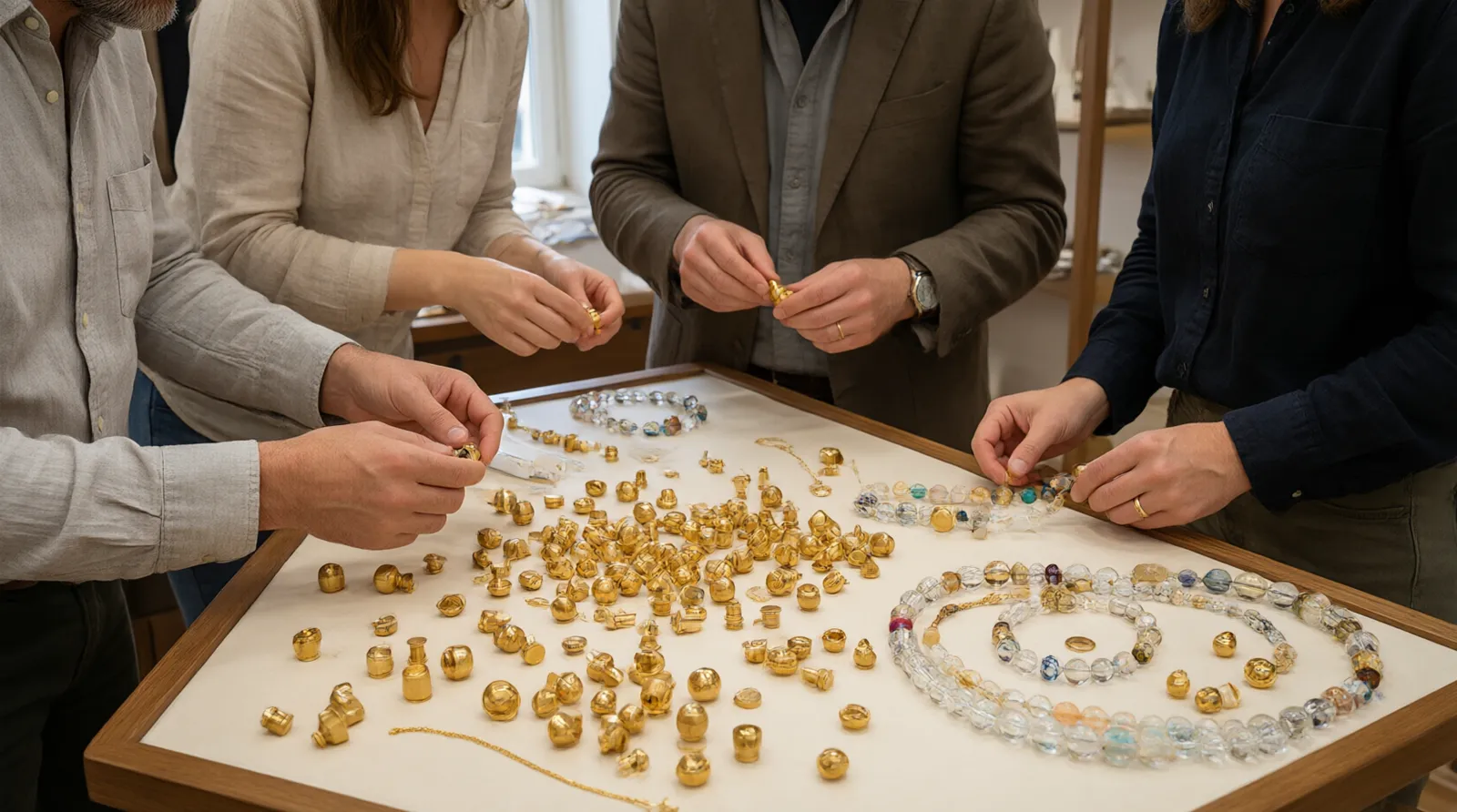
When to Choose Alternatives
Choose retail alternatives when the end goal is a single, personalized gift rather than commercial inventory. If a consumer wants to buy one engravable heart photo locket or a double infinity gemstone ring for an anniversary, platforms offering immediate checkout, free shipping, and extended return windows are the logical choice.
Alternatives also make sense for boutique owners who want to physically inspect a highly specific material combination—like a piece featuring genuine amethyst or turquoise—before attempting to source it at scale. Purchasing one sample at full retail price acts as a paid market research tool. However, once the design is validated, the subsequent inventory order must shift to an OEM manufacturer to achieve viable unit economics.
Final Verdict
The decision between custom jewelry and retail alternatives is dictated entirely by your position in the supply chain. Retail platforms like Jewlr or Kay Jewelers solve a consumer problem: acquiring one personalized item quickly with purchase protection. They do not solve a business problem.
For buyers, importers, and DTC store owners, custom jewelry sourced through direct OEM channels is the only mathematically sound option. The ability to access a broad range of stock styles at low MOQs per design, combined with EXW/FOB trade terms and multilingual support, transforms a brand's margin profile. You cannot build a scalable jewelry business paying full retail prices for garnet bypass rings or vermeil interlocking necklaces.
If your next step involves stocking inventory for Q3 or Q4, prepare your technical specifications or browse available catalog styles. Request a quote, get current MOQ and pricing details, or arrange a sample shipment directly through STRAND to evaluate production quality against your brand standards.