
Custom Jewelry vs. Retail Personalization: Which Sourcing Path Wins?
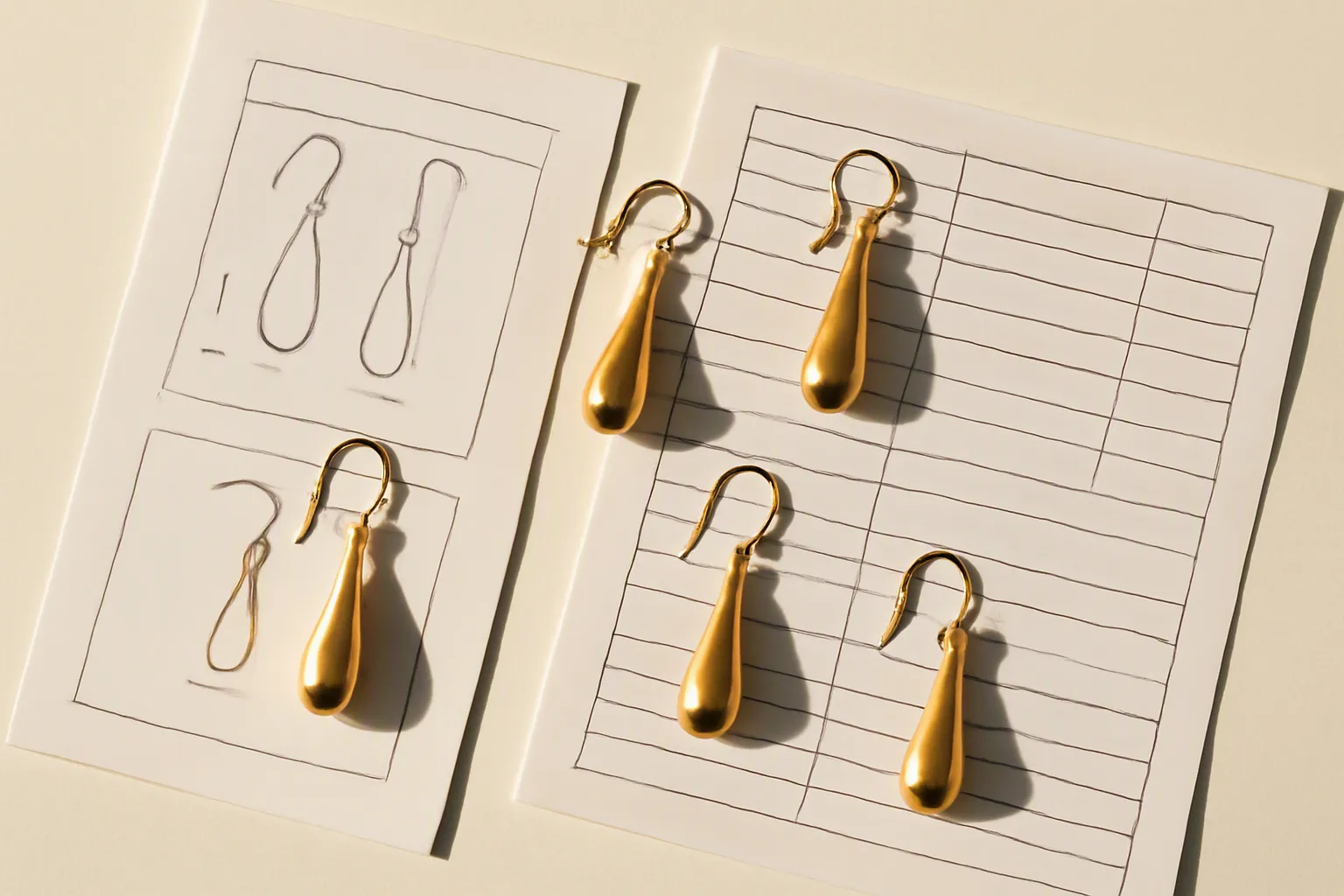
Custom Jewelry vs. Retail Personalization: Which Sourcing Path Wins?
TL;DR / Quick Verdict
For importers, DTC store owners, and boutique chains sourcing at scale, custom OEM jewelry manufacturing delivers margin control, design exclusivity, and B2B trade terms that retail personalization platforms are not built to offer. Services like Jewlr or Kay's online configurator serve end consumers effectively; they are the wrong tool for procurement. If you're building a private-label catalog or scaling volume, custom OEM is the clear path. If you need a single finished piece fast—or want to benchmark a competitor SKU before briefing a manufacturer—retail alternatives have a narrow, specific use case.
At-a-Glance Comparison Table
| Dimension | Custom OEM Jewelry (e.g., STRAND) | Retail Personalization Alternatives |
|---|---|---|
| Target buyer | Importers, DTC brands, boutique chains | End consumers, gift buyers |
| MOQ | From 12 pcs/style (stock catalog) | 1 piece (consumer orders) |
| Unit pricing | Factory/wholesale pricing | Retail markup (2–5× factory cost) |
| Customization depth | Full — shape, material, finish, branding, packaging | Surface — engraving, birthstone selection, name |
| Materials | Gold/rhodium-plated copper, glass beads, natural stone, faux pearls | 18K gold-plated silver, 925 sterling silver, vermeil |
| Lead time | Stock ships immediately; custom OEM in production weeks | Days for standard consumer orders |
| Private label / branding | Yes — OEM packaging and labeling available | No |
| Payment options | T/T, PayPal, Western Union, L/C, Xtransfer | Credit card, BNPL |
| Support languages | EN, FR, AR, ES, DE, RU | English (primarily) |
| QC accountability | In-house pre-shipment inspection on every order | Standard consumer fulfillment |
Custom Jewelry Overview
Custom jewelry—in the B2B procurement sense—means working with a manufacturer to produce pieces built entirely to your specification: your shapes, your materials, your finish, your branding. This is fundamentally different from "personalized jewelry" in the consumer retail sense, which means an engraved name necklace configured on a website and shipped to a home address.
For importers and DTC store owners sourcing chains, earrings, and sets at volume, custom OEM manufacturing from a vetted supplier gives you three things no retail channel can match: factory-direct pricing, design exclusivity, and inventory that fits your catalog strategy—not someone else's.
STRAND, based in Hangzhou, connects overseas buyers directly to vetted Chinese workshops. The stock catalog covers 114 styles—drop earrings, stud earrings, and necklace + earring sets across vintage, gradient crystal, two-tone glass bead, and rhinestone aesthetics—with a genuine MOQ of 12 pcs/style on 109 of those 114 designs. Select styles are available from 1 piece. That's a concrete, workable threshold for boutique reorders or first-run testing.
Custom OEM extends further: buyers can specify gold-plated or rhodium-plated copper bases, incorporate natural stones (amethyst, garnet, peridot, turquoise accents), or work with faux pearls and glass beads in gradient colorways. The result carries your brand—not a supplier's catalog number.
Retail Personalization Alternatives Overview
Retail personalization platforms—Jewlr, Kay Jewelers, Made by Mary, Brook & York—are consumer-facing products, full stop. A buyer selects a design, configures surface options (birthstone, engraved text, metal color), pays retail price, and receives a finished piece within days. Kay Jewelers offers an in-store Custom Design Center alongside an online configurator for building custom engagement rings, including a Neil Lane Wedding Ring Set builder—that is luxury-tier consumer experience by any standard.
As of the time of writing, Jewlr's personalized collection spans 645 products across rings, necklaces, bracelets, and earrings in 18K gold-plated silver, 925 sterling silver, and vermeil, with free shipping and a one-year warranty included. Strong consumer offer. Not a wholesale offer.
For a boutique owner who needs 60 units of a private-label birthstone necklace featuring diamond-cut findings and turquoise bead accents, none of the retail alternatives above will get you there. They are not designed for bulk procurement, trade terms, or OEM branding.
Where retail alternatives do have legitimate B2B value: benchmarking. Some procurement teams order 1–3 finished consumer pieces from stores like Kendra Scott or Jared to evaluate quality, packaging quality, and price-point positioning before briefing a manufacturer. That is a sensible step—not a sourcing strategy.
Feature-by-Feature Breakdown
Pricing and Unit Economics
Custom OEM pricing operates on a wholesale model: your per-unit cost falls as volume rises, and you control the retail margin. Retail alternatives invert that logic—you pay a price that already includes the brand's markup, distributor margin, and retail overhead.
To put it in concrete terms: as of the time of writing, Jewlr's Personalized Name Necklace retails from $84. A comparable gold-plated copper necklace sourced at factory MOQ from a manufacturer carries a fraction of that cost at production price—leaving meaningful room for your own brand's margin. Custom OEM quotes depend on specification (plating thickness, stone type, quantity, packaging complexity), so the procurement step is always "request a quote" rather than add-to-cart. That means pricing is calibrated to your actual order parameters, not a generic tier.
Customization Depth
This is the decisive dimension for any buyer building a differentiated catalog. Retail personalization alternatives offer surface customization: engrave a name, choose a birthstone, pick a metal color. The underlying design belongs to the platform.
Custom OEM offers structural customization: shape, dimension, clasp type, stone setting style, finish (matte, high-polish, vintage patina), color palette, gemstone selection, packaging insert. Want a two-tone glass bead and rhinestone earring in a gradient colorway that no other brand carries? That requires a manufacturer who can source and prototype—not a web configurator.
For importers building a private-label catalog, this distinction is commercially critical. A design that exists exclusively in your store cannot be copied by the next DTC brand who found the same SKU on a retail site.
MOQ and Inventory Risk
Retail alternatives carry zero inventory risk for the buyer—you order per-consumer unit. That's useful for gifting businesses or certain dropship models, but it forecloses wholesale margin entirely.
Custom OEM from STRAND's stock catalog starts at 12 pcs/style on most designs—low enough for a boutique reorder, low enough for a first test of a new style category. Custom OEM production on original designs carries higher MOQs, negotiated based on complexity and material sourcing; request current terms directly for your specific brief.
For a side-by-side comparison of MOQ tiers, lead times, and margin structures across OEM and retail sourcing models, this ranked breakdown of 6 custom jewelry sources for 2026 is a useful reference before you start supplier conversations.
Quality Assurance and Pre-Shipment Inspection
Retail personalization platforms handle QC as part of their consumer fulfillment model—each piece is made to order and inspected before it ships to one address. For B2B buyers receiving bulk shipments across borders, that model is irrelevant.
STRAND runs in-house QC inspection before every shipment. For importers in the US, EU, UK, or MENA, that pre-shipment inspection is a procurement standard: it is the check against receiving a batch with plating defects or stone inconsistency that would fail in-market. Retail alternatives are simply not set up to provide pre-shipment inspection documentation, lot-level quality records, or defect rate data.
Logistics and Trade Terms
Retail alternatives ship via courier to a consumer address. Custom OEM operates on international trade terms.
STRAND offers EXW or FOB with shipping by air, sea, or express, and accepts payment via T/T bank transfer, Western Union, PayPal, L/C, or Xtransfer. That range covers the payment infrastructure of most procurement teams across markets. Multilingual support in English, French, Arabic, Spanish, German, and Russian eliminates the communication friction that regularly delays cross-border sourcing.
You cannot negotiate freight terms with Jewlr.
Supplier Communication and Scalability
Kay Jewelers allows customers to schedule an in-store appointment for custom design work—a feature that makes sense for a consumer building a one-off luxury piece or an engagement ring. For a procurement team coordinating across time zones and sourcing in multiple languages, a retail appointment model does not scale.
STRAND's multilingual sales team is built for the cross-border buyer. Whether you're a francophone importer in West Africa or an Arabic-speaking procurement manager in the Gulf, you can communicate sourcing requirements—specifications, materials, samples, QC standards—without running communication through an intermediary.

Pros and Cons
Custom OEM Jewelry (e.g., STRAND)
Pros
- Factory-direct pricing with genuine margin potential at wholesale volumes
- Full design control: materials, finish, shape, stone type (amethyst, garnet, turquoise, peridot), branding, packaging
- MOQ from 12 pcs/style on stock catalog; low barrier for boutique reorders
- Pre-shipment QC inspection on every order, with lot-level accountability
- Flexible trade terms: EXW/FOB, multiple payment methods including T/T and L/C
- Multilingual support across EN, FR, AR, ES, DE, RU — built for cross-border teams
- Scalable: 114-style stock catalog plus custom OEM production under one supplier
Cons
- Custom production lead time runs to weeks, not days
- Requires upfront design briefing and sampling before mass production
- Quote-based pricing requires a supplier conversation rather than instant checkout
- Minimum inventory commitment per style (though low relative to the industry)
Retail Personalization Alternatives (Jewlr, Kay, Kendra Scott, Jared, etc.)
Pros
- No MOQ — order one piece at a time
- Fast consumer turnaround (days for standard orders)
- Useful for consumer-facing gifting or single-occasion purchases
- Web configurators let you visualize design concepts quickly
- Consumer protections: return policies (as of the time of writing, Jewlr offers a 99-day return policy), warranties, BNPL payment options
Cons
- Retail pricing eliminates wholesale margin — you pay what a consumer pays
- No private label or OEM branding capability
- Surface-level customization only: name, birthstone, engraving on a fixed design
- Not structured for bulk procurement, freight terms, or B2B documentation
- No pre-shipment inspection, batch records, or trade finance options
When to Choose Custom OEM Jewelry
You're building a private-label catalog. If your brand's value depends on designs that aren't already sitting on a competitor's shelf, you need OEM manufacturing. Reselling a Jewlr SKU that 200 other DTC stores also carry is a margin compression problem, not a business strategy.
You're scaling volume. Once you're ordering more than a handful of units per style, factory pricing from a manufacturer beats retail purchasing by a significant margin—especially across a catalog of 10–30 active styles.
Your buyers are in multiple markets. An importer serving EU boutiques and MENA distributors simultaneously needs a supplier set up for freight terms, documentation, and multilingual communication. Retail platforms are single-country consumer experiences.
You need natural stone or specialty material options. If your catalog calls for amethyst or garnet accents at accessible price points, or turquoise and peridot in specific settings for a natural-stone aesthetic, you need a manufacturer who sources and controls those materials—not a consumer configurator with a fixed gemstone menu.
You need pre-shipment QC accountability. This is a procurement standard in cross-border trade. Retail alternatives do not offer it.
For a structured evaluation of how different sourcing models compare on these criteria, the B2B buyer's guide comparing custom OEM to retail personalization covers decision criteria by buyer type and volume tier.
When to Choose Retail Personalization Alternatives
You need one finished piece for a specific occasion. An engraved pendant, a birthstone ring as a gift, a single luxury item—retail personalization handles this cleanly and quickly.
You're doing competitive benchmarking before briefing a manufacturer. Ordering 1–3 consumer pieces from Kendra Scott stores, Jared, or Kay to evaluate finish quality, packaging, and price-point positioning is legitimate pre-procurement research. You're not sourcing; you're gathering reference samples.
You're running a one-piece consumer gift vertical. Some DTC operators offer personalized gifting (think corporate gifting or bespoke gift boxes) where each order is one unique piece. Retail personalization platforms handle fulfillment and returns cleanly at that scale.
Your end product is a high-margin luxury gift, not a resalable SKU. If your business sells $150–$300 one-off personalized gifts directly to consumers and margin from manufacturing is not part of the model, retail personalization handles the complexity for you.
Final Verdict
The comparison only looks close if you evaluate the wrong dimensions. For B2B buyers—importers, DTC store owners, boutique chains sourcing for resale—custom OEM jewelry from a vetted manufacturer is the correct channel. Retail personalization alternatives exist to serve end consumers. They are not equipped for bulk procurement, private label, trade terms, or multilingual cross-border sourcing.
The practical test is simple: if you need more than a handful of units, want your brand (not a platform's) on the product, and are selling into the US, EU, UK, or MENA, retail personalization is the wrong tool for the job. The MOQ threshold is workable at 12 pcs/style on most STRAND stock designs. The trade terms match standard B2B procurement norms. The pre-shipment QC adds the accountability layer that consumer retail is not built to provide.
The next move is concrete: request current MOQ, pricing, and sampling terms for your specific styles.