
Custom Jewelry vs. Retail Personalization: The B2B Buyer's Guide
Custom Jewelry vs. Retail Personalization: The B2B Buyer's Guide
Custom OEM jewelry gives buyers full design ownership at volume; retail personalization alternatives offer faster turnarounds on pre-set designs. Which route makes financial sense depends almost entirely on your order size, brand differentiation goals, and target market. This guide cuts through the noise for importers, DTC store owners, and procurement teams choosing between the two.
TL;DR / Quick Verdict
If you're building a private-label jewelry line, filling a seasonal catalog, or sourcing differentiated product for the US, EU, UK, or MENA markets, custom OEM jewelry — sourced directly from a vetted manufacturer — gives you margin control and brand exclusivity that no retail personalization platform can match. If you need small quantities of engraved or birthstone pieces fast, without tooling investment, retail personalization alternatives like Jewlr work as a bridge or a consumer-facing complement. Most serious B2B buyers eventually migrate from retail personalization to direct OEM once volume justifies it.
At-a-Glance Comparison Table
| Dimension | Custom OEM Jewelry (e.g., STRAND) | Retail Personalization Alternatives (e.g., Jewlr, Jared stores, Kendra Scott) |
|---|---|---|
| MOQ | From 12 pcs/style (stock); custom OEM negotiated | Single unit (consumer); no B2B wholesale tier |
| Design control | Full — your specs, your CAD, your finish | Limited to engraving, stone choice, metal color on existing designs |
| Unit pricing | Factory-direct; margin built for resale | Retail MSRP ($84–$308+ per piece) |
| Materials | Gold-plated / rhodium-plated copper, 925-style silver, glass beads, natural stone, faux pearls | 18K gold plated silver, 925 sterling silver, cubic zirconia, amethyst, garnet, peridot |
| Gemstone / stone options | Natural stone, turquoise, crystal, glass bead, rhinestone | Birthstone range: amethyst, garnet, peridot, aquamarine, blue topaz, citrine |
| Lead time | Production + QC cycle; air/sea/express shipping | Typically ships in days; free shipping on most orders |
| Payment options | T/T, Western Union, PayPal, L/C, Xtransfer | Buy now, pay later; standard card payments |
| Warranty / returns | In-house QC before every shipment | Jewlr: 99-day return policy, 1-year warranty |
| Best for | B2B importers, DTC brands, catalog builders | Consumer gifting, small-batch retail fillers |
| Languages supported | EN, FR, AR, ES, DE, RU | English-first |
Custom Jewelry Overview
Custom OEM jewelry is the process of commissioning pieces built to your specifications — your silhouettes, finishes, stones, and packaging — manufactured by a workshop and sold to you at wholesale. The buyer owns the design; the manufacturer executes it.
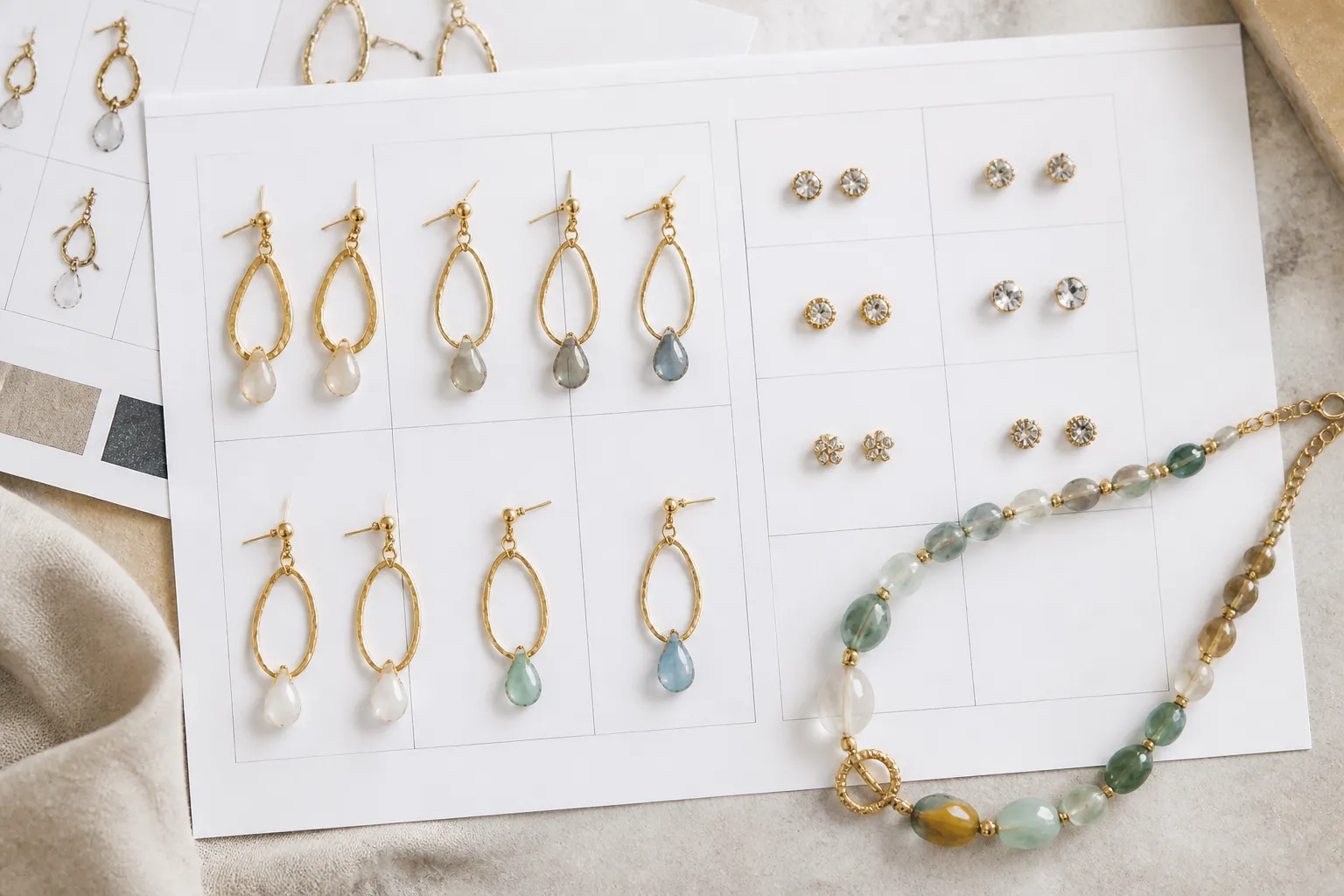
STRAND operates out of Hangzhou, connecting procurement teams directly to vetted Chinese workshops without a trading company in the middle. Their stock catalog covers 114 styles across drop earrings, stud earrings, and necklace + earring sets — vintage crystal, gradient two-tone glass bead, rhinestone, and faux pearl formats in gold-plated and rhodium-plated copper. Custom OEM extends beyond the catalog: buyers can submit silhouettes, specify micron plating, select natural stone (turquoise, garnet, amethyst-adjacent glass, natural stone), and brand packaging.
The model suits buyers who need repeatable, scalable supply rather than one-off personalization. A DTC store launching a vintage crystal earring line doesn't want to source 50 pieces from a retail platform at MSRP — they want 200 units at a factory price with their label on the box.
Retail Personalization Alternatives Overview
Retail personalization alternatives cover a wide band: DTC platforms that let consumers engrave names or select birthstones, and chain stores that offer light customization on standard designs. Jewlr, with a catalog of over 646 personalized pieces, is one of the largest in this category. Jared stores and Kendra Scott operate brick-and-mortar personalization stations — name bars, initial charms, stone swaps — aimed at consumer gifting.
The key mechanic is configuration, not creation. A buyer on Jewlr can select a Double Heart Gemstone Ring and choose amethyst versus garnet as the center stone. They cannot change the ring's silhouette, specify rhodium plating depth, or order 500 units with a private label. The finished piece carries the retailer's branding, not the buyer's.
For a B2B procurement team, these platforms serve a narrow purpose: filling gaps in a consumer-facing lineup, testing a stone category before committing to a production run, or sourcing gift-with-purchase items in small quantities. As a primary supply chain, the margins don't work.
Feature-by-Feature Breakdown
Pricing and Margin Structure
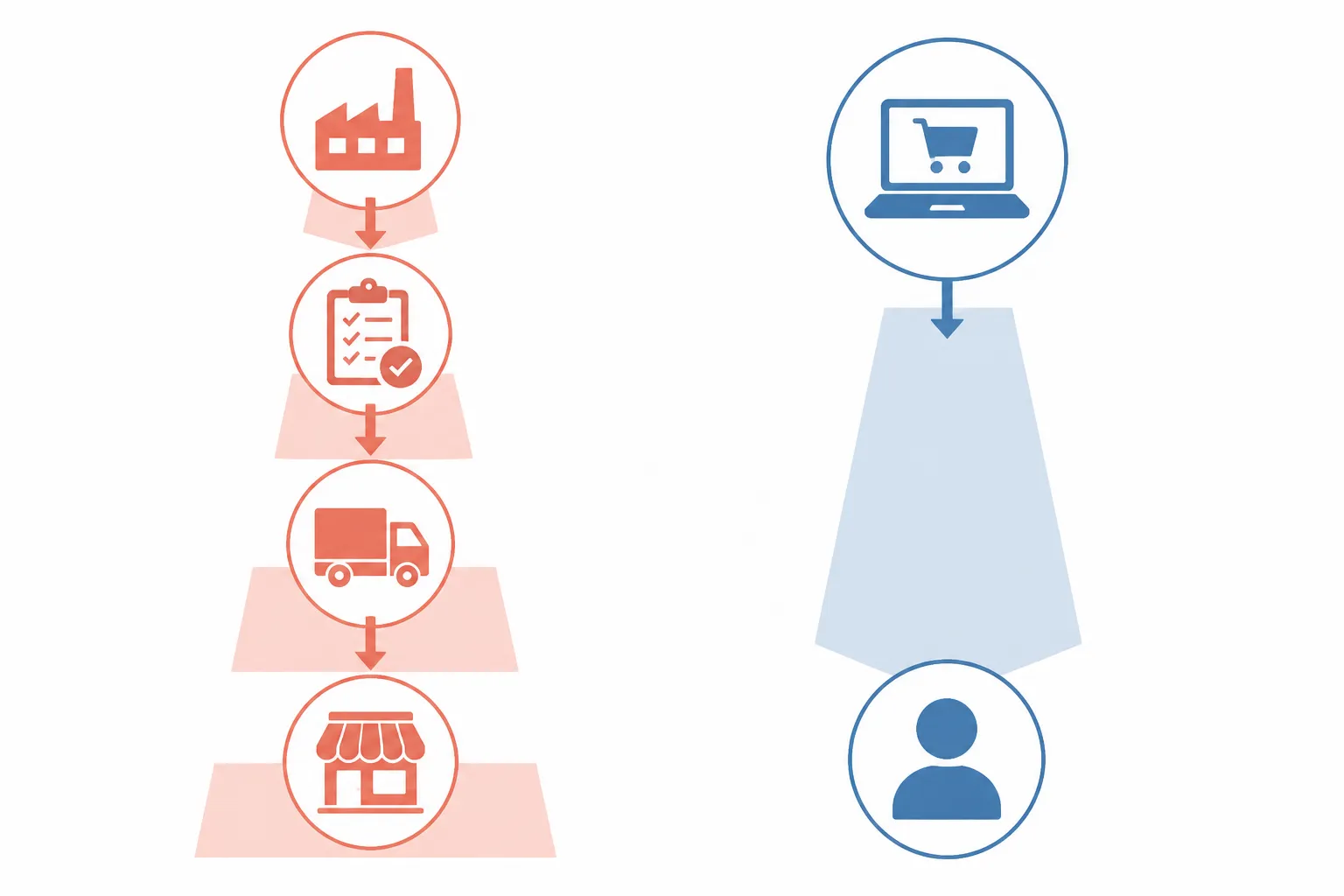
Custom OEM pricing is structured for resale. When buying factory-direct from a supplier like STRAND — EXW or FOB Hangzhou — the landed cost leaves room to price competitively in the US, EU, or MENA markets while maintaining retail margin. The calculus changes entirely with retail personalization platforms.
Jewlr lists a Personalized Name Necklace starting around $84 (promotional pricing as of their listed promotions), with pieces like the Engravable Heart Photo Locket Necklace starting around $164. These are consumer retail prices — a buyer reselling at standard markup would either go upside-down or have to price themselves out of the market. The difference isn't a discount away; it's a structural gap between retail and wholesale channels.
Buyers sourcing luxury-adjacent pieces with real stones — turquoise, natural garnet, peridot — should request factory pricing directly rather than benchmarking against MSRP retail.
Design Control and Brand Differentiation
This is where the gap is widest. Custom OEM lets a buyer submit a CAD file or even a sketch, specify the exact stone cut, select gold-plated versus rhodium-plated finish, and put their own hang tag in the polybag. The result is a product that can't be found on Jewlr, Jared stores, or Kendra Scott's racks.
Retail personalization tops out at engraving (a name, a date, initials) and stone swaps within the platform's available birthstone range — typically cubic zirconia, blue topaz, amethyst, garnet, peridot, citrine, aquamarine, and pink tourmaline. A branded line built on these platforms will always carry the originating retailer's DNA in the design.
For importers building a private-label catalog — or a DTC brand that competes on visual identity — this distinction is the whole argument for going custom. See Custom Jewelry vs. Retail Personalization: The B2B Buyer's Guide for a detailed breakdown of where the personalization ceiling sits.
Minimum Order Quantity and Volume Scalability
MOQ is often the make-or-break factor for new importers. STRAND's stock catalog runs at 12 pcs/style minimum on 109 of 114 designs — with select styles available from 1 pc — which keeps inventory risk manageable for buyers testing new categories before scaling. Custom OEM runs are negotiated separately and vary by complexity.
Retail personalization platforms have no B2B MOQ framework. Jewlr ships single units to individual consumers. That's operationally useful for testing consumer demand, but it means no volume pricing, no label exclusivity, and no supply chain relationship. Scaling through a retail platform means paying retail prices at every unit.
Quality Assurance and Supply Chain Transparency
A sourcing decision lives or dies on consistency. STRAND runs in-house QC inspection before every shipment — checking plating quality, stone setting, clasp function, and finish against the approved sample. For multilingual procurement teams coordinating across time zones, this pre-shipment QC step reduces back-and-forth after goods arrive.
Retail personalization platforms offer their own buyer protections aimed at individual consumers: Jewlr carries a 99-day return policy and a one-year warranty, and ships free. These policies are designed for a consumer who receives one pendant and doesn't like the engraving. They don't translate to a B2B buyer receiving 500 units with a defect rate — there's no bulk replacement SLA or cargo insurance framework.
Payment Terms and Trade Finance
B2B cross-border trade needs flexible payment structures. STRAND accepts T/T bank transfer, Western Union, PayPal, L/C (letter of credit), and Xtransfer — giving procurement teams in the US, EU, UK, and MENA multiple on-ramp options depending on their treasury setup.
Retail personalization platforms are built for consumer checkout: credit card, buy now/pay later. Jewlr offers installment plans — practical for a consumer buying a $164 locket, impractical for a buyer managing a $20,000 seasonal order with net terms.
Language and Procurement Support
Multinational sourcing teams don't all work in English. STRAND's sales function operates in EN, FR, AR, ES, DE, and RU — which matters when a buyer in the MENA region is coordinating with a Hangzhou workshop and has procurement documentation in Arabic. Retail personalization platforms are English-first with standard consumer support.
Pros and Cons
Custom OEM Jewelry
Pros
- Full design ownership — silhouette, finish, stone, packaging all specified by buyer
- Factory-direct pricing with margin room for resale
- Low MOQ entry point (12 pcs/style on most stock designs) with scale path
- Multiple payment rails including L/C and T/T for international procurement
- Multilingual sales support across six languages
- In-house QC before shipment reduces post-arrival disputes
- Air, sea, or express shipping options matched to urgency
Cons
- Longer lead time than retail shipping — production runs take time
- Requires buyer to manage import logistics, duties, and customs
- Sample approval cycle needed before production begins
- Custom OEM involves upfront tooling or design investment for wholly new pieces
Retail Personalization Alternatives
Pros
- Ships fast — typically within days
- No MOQ; order one piece if needed
- Consumer-facing warranty and return protection (Jewlr: 99 days returns, 1-year warranty)
- Wide birthstone / gemstone selection for gifting (amethyst, garnet, peridot, turquoise-adjacent options)
- Buy now, pay later financing for consumers
- No design or production management required
Cons
- Retail pricing — no wholesale margin for resellers
- Design locked to platform's existing catalog; personalization limited to engraving and stone choice
- No private label or brand exclusivity
- English-first support; limited B2B infrastructure
- Not scalable as a primary supply source without unsustainable unit costs
When to Choose Custom Jewelry
You're building a private-label line. If your store sells jewelry under your own brand, you need product that isn't available elsewhere. A Kendra Scott or Jared stores-adjacent aesthetic can be executed in gold-plated drop earrings or rhinestone sets at a fraction of the retail price — but only through an OEM relationship, not a retail platform.
You're filling a seasonal catalog with consistent, repeatable styles. A buyer importing for a boutique chain or an Amazon FBA operation needs the same SKU available across multiple restocks. Custom OEM locks in the spec; retail personalization platforms can't guarantee style continuity.
Your order volumes make unit economics non-negotiable. At 12 pcs/style on a 10-style order, a buyer is already operating in a channel where per-unit cost is materially lower than MSRP retail. Scaling to 500+ units per style amplifies that gap.
Your customers are in markets where luxury aesthetics matter at accessible price points. US, EU, and MENA buyers respond to gold-plated finishes, crystal stones, and natural stone details — categories like vintage gradient crystal or two-tone glass bead sets that read as premium without the diamond price point. For buyers exploring how these categories fit a sourcing strategy, 6 Best Custom Jewelry Sources in 2026: OEM Suppliers & Retail Benchmarks offers a broader supplier landscape.
You need multilingual procurement support. Coordinating between a French buying office, an Arabic-speaking end market, and a Chinese workshop requires a supplier who can operate across those languages without a middleman adding margin.
When to Choose Retail Personalization Alternatives
You're filling a single SKU gap urgently. If a consumer-facing order requires a birthstone pendant in garnet or amethyst this week, a retail personalization platform ships in days. Custom production doesn't.
Your volume is genuinely low and non-repeating. A one-time gifting order — say, branded jewelry for a corporate event — may not justify the MOQ or sample cycle of a custom run. Platforms like Jewlr handle small, non-repeating orders without friction.
You're validating a stone or style category before committing to production. Buying a handful of peridot or amethyst pieces through a retail platform to gauge customer response is a reasonable pre-production test. The data from that test should inform your OEM brief, not become your supply strategy.
Your end customer is a consumer buying one piece. If you're operating as a gift shop rather than a wholesale buyer, retail personalization platforms are the right channel. This comparison is written for procurement teams, not end consumers — if your role is the latter, Jewlr's consumer protections (free shipping, 99-day returns, one-year warranty) are genuinely strong.

Final Verdict
The choice isn't really about which product is better — it's about which supply model fits your operation. Retail personalization alternatives (Jewlr, Jared stores, Kendra Scott, and similar) are optimized for consumers buying one engraved piece. They are not built for importers, catalog buyers, or DTC brand builders who need margin, exclusivity, and volume.
Custom OEM jewelry, sourced directly from a vetted manufacturer, is the infrastructure play. It takes longer to set up — samples, spec approval, production — but it pays back in every unit sold after that. At 12 pcs/style MOQ entry points, the barrier is lower than most buyers assume.
If you're a buyer, importer, or store owner reading this at the point of decision: run the unit economics on your target SKUs before assuming retail personalization is the easier path. The price differential between retail MSRP and factory-direct wholesale is the margin you leave on the table with every order you place through a consumer platform.
Ready to request current MOQ, pricing, and sample terms? Visit strandjewelry.com to get a quote — multilingual procurement support available in EN, FR, AR, ES, DE, and RU.