
Custom Jewelry vs. Retail Alternatives: The B2B Buyer's Guide
Custom Jewelry vs. Retail Alternatives: The B2B Buyer's Guide
Custom OEM jewelry sourced directly from a vetted manufacturer costs a fraction of comparable retail-personalized pieces and gives you complete control over design, finish, and branding. But retail personalization platforms deliver faster turnarounds and zero tooling risk for smaller or test-market orders. Which path is right depends almost entirely on your order volume, margin targets, and how much brand differentiation you need.
TL;DR / Quick Verdict
If you're a DTC store owner, importer, or buyer sourcing for sustained retail volume, custom OEM jewelry from a manufacturer-direct supplier delivers better per-unit economics and true product exclusivity. If you're testing a new market, fulfilling one-off gifting programs, or operating below the MOQ threshold where factory customization makes sense, retail personalization platforms (Jewlr, GLDN, Made by Mary) offer a lower-risk entry point. Chain stores like Jared or Kendra Scott stores sit in a separate category entirely — useful as benchmarks for retail pricing, not realistic sourcing channels for resellers.
At-a-Glance Comparison Table
| Dimension | Custom OEM Jewelry (e.g., STRAND) | Retail Personalization Platforms (e.g., Jewlr) | Chain/Luxury Retail (e.g., Jared, Kendra Scott) |
|---|---|---|---|
| MOQ | 12 pcs/style (most stock designs); custom OEM negotiable | 1 unit per order | N/A — consumer retail only |
| Unit Pricing | Wholesale/factory pricing; margin-positive at volume | Jewlr retail prices varying by piece and promotion; runs seasonal sales | Full luxury retail markup |
| Customization Depth | Full OEM: silhouette, material, finish, branding | Name engraving, birthstone selection, metal color | Limited (engraving at some stores) |
| Materials | Gold-plated / rhodium-plated copper, 925-style silver, glass beads, natural stone, faux pearls | 18K gold-plated silver, 925 sterling silver, vermeil | Sterling silver, karat gold, diamond accents |
| Gemstone Options | Natural stone, glass bead, crystal, rhinestone | Amethyst, garnet, peridot, blue topaz, cubic zirconia | Full diamond, turquoise, amethyst, garnet, luxury stones |
| Lead Time | Production lead time applies; air/sea/express shipping options | Ships within days (consumer DTC) | In-store or 1–3 week order |
| Trade Terms | EXW or FOB; T/T, PayPal, L/C, Western Union, Xtransfer | Consumer credit card / BNPL | Consumer payment only |
| Target Buyer | B2B: importers, DTC brands, OEM buyers | End consumer | End consumer |
| Support Languages | EN, FR, AR, ES, DE, RU | English (primary) | English |
| QC | In-house pre-shipment inspection | Brand quality control at fulfillment | In-store inspection at purchase |
Custom OEM Jewelry: Overview
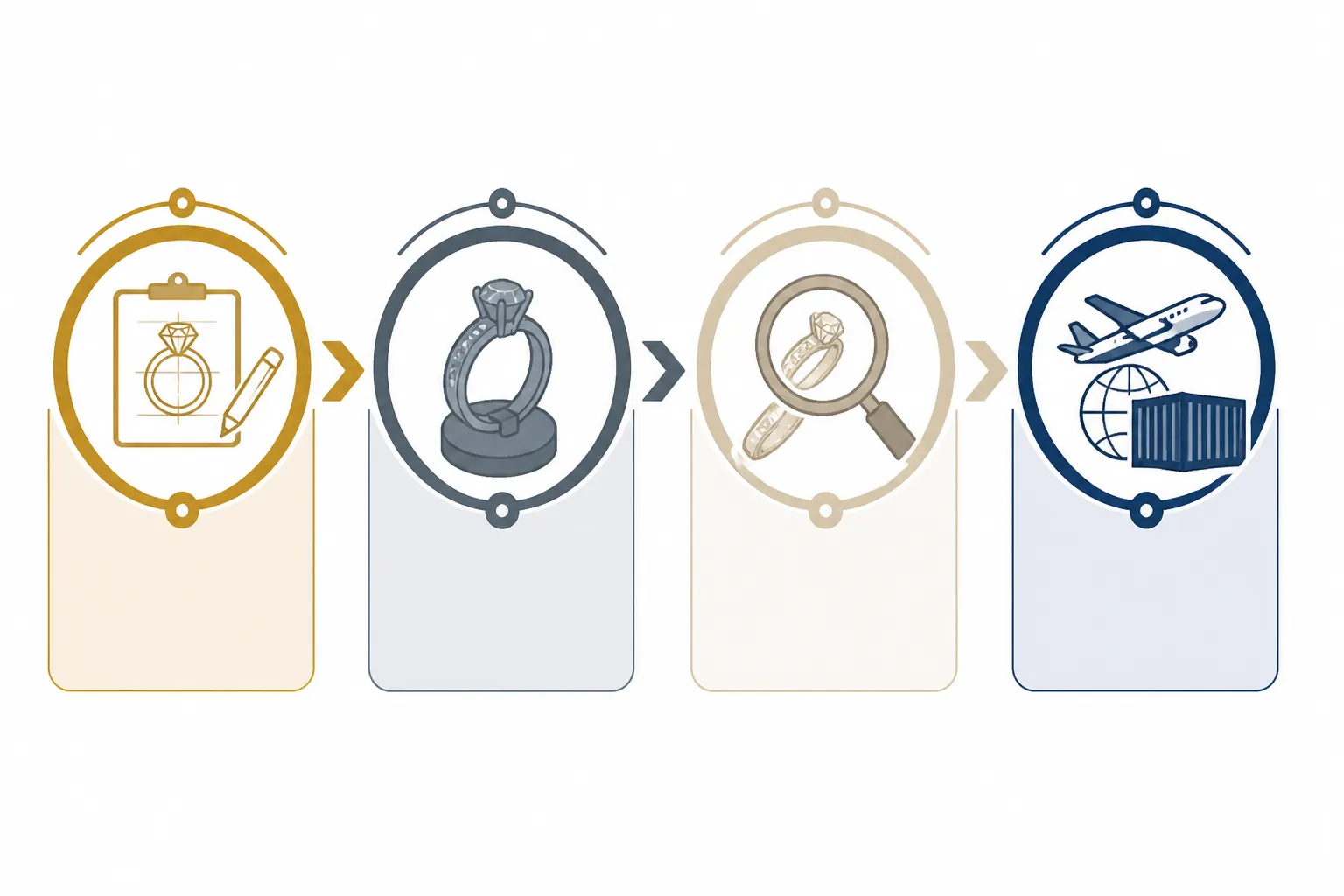
Custom OEM jewelry means working directly with a manufacturer to produce pieces built to your spec — your silhouette, your finish, your label. For B2B buyers sourcing chains, earrings, and jewelry sets for resale, this model exists specifically to solve the margin and differentiation problem that off-the-shelf retail creates.
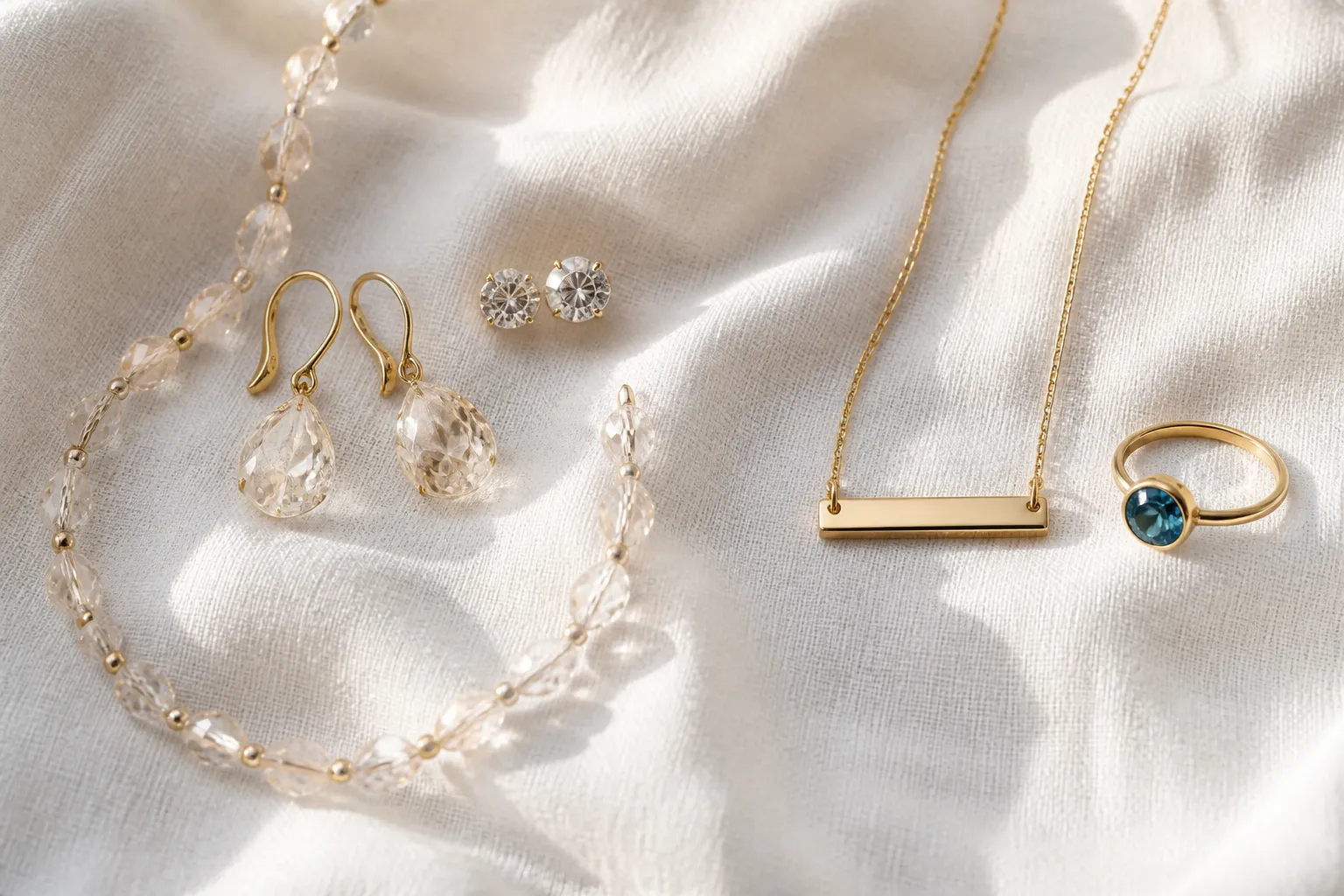
STRAND is a Hangzhou-based supplier that connects overseas buyers in the US, EU, UK, and MENA directly to vetted Chinese workshops. Their catalog runs 114 styles across drop earrings, stud earrings, and necklace-and-earring sets — vintage crystal, gradient crystal, two-tone glass bead, rhinestone — finished in gold-plated and rhodium-plated copper, glass beads, natural stone, and faux pearls.
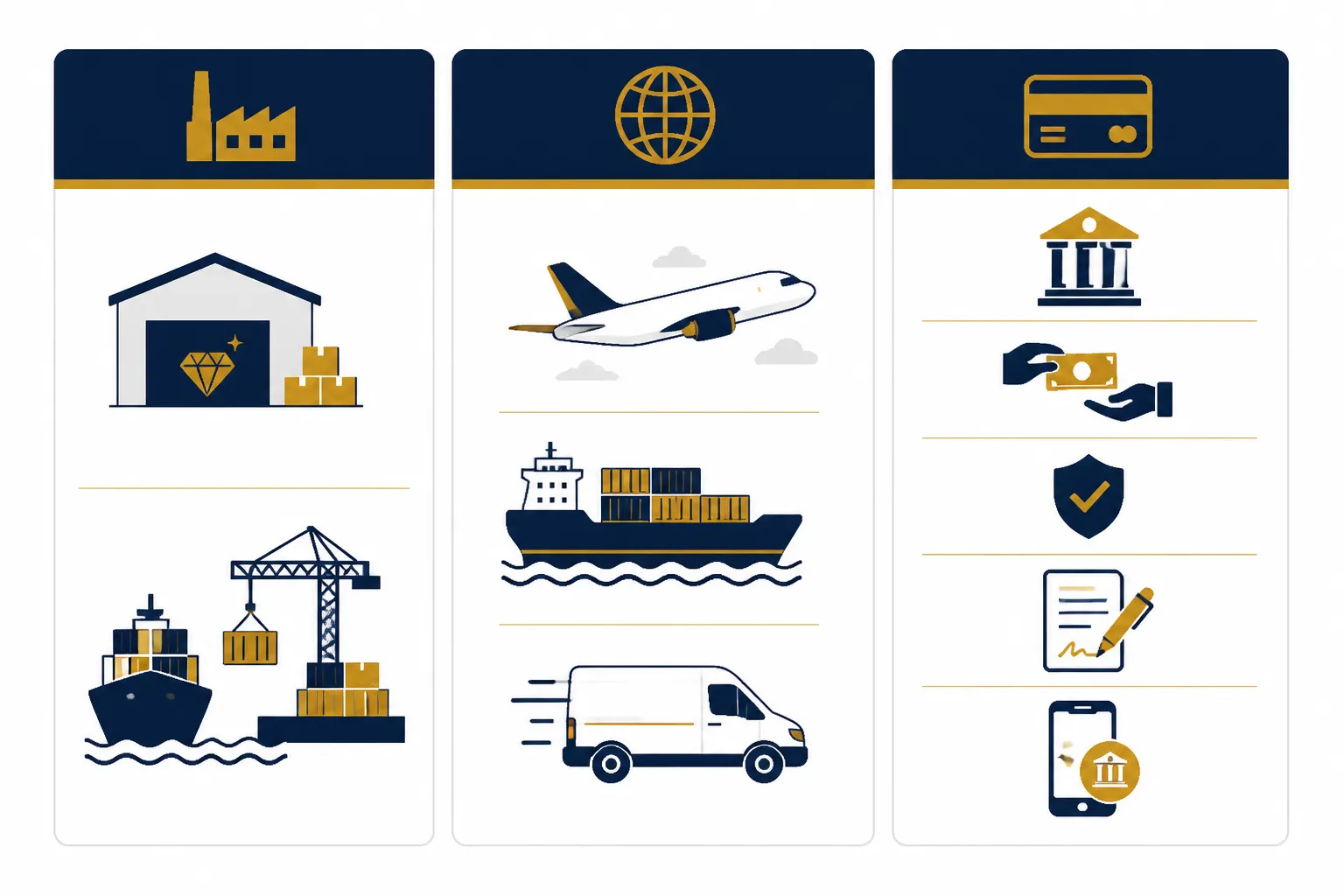
What makes this model workable for smaller buyers: 109 of their 114 catalog styles carry a minimum order of just 12 pieces per style, with select styles available from 1 piece. That's the lowest credible factory MOQ for a professionally finished, market-ready piece. Shipping moves by air, sea, or express; trade terms are EXW or FOB; payment options include T/T bank transfer, PayPal, Western Union, L/C, and Xtransfer. Multilingual sales teams handle procurement conversations in English, French, Arabic, Spanish, German, and Russian — relevant when your internal team spans time zones and languages.
Custom OEM orders go beyond the catalog. Buyers can commission pieces in gold-plated or rhodium-plated copper and 925-style silver finishes, with in-house QC inspection before every shipment leaves the warehouse.
Retail Personalization Platforms: Overview
Retail personalization platforms let consumers configure a piece — add a name, pick a birthstone, choose a metal — and receive it in days. Jewlr is one of the most catalogued in this space, with 645 personalized products spanning rings, necklaces, bracelets, and earrings. Gemstone options include amethyst, garnet, peridot, blue topaz, citrine, aquamarine, and pink tourmaline, in materials ranging from 18K gold-plated silver to 925 sterling silver and vermeil.
These platforms are built for the gift market and one-off consumer purchase. A buyer at Jewlr gets free shipping, a 99-day return window, a one-year warranty, and Buy Now Pay Later options — strong consumer protections that make sense when the order is a single pendant. The platform runs seasonal promotions; the personalized name necklace is regularly priced around $120, with engravable pendants from $104 upward at regular pricing.
For a DTC brand or importer, the math doesn't work. Buying individual pieces from a consumer platform to resell strips all margin. These platforms are useful as price anchors — they tell you what US consumers expect to pay at retail, which helps you back-calculate acceptable landed cost from your OEM supplier.
Brands like Kendra Scott (stores present in US malls), GLDN, and Made by Mary occupy a similar consumer-retail tier. None offer trade pricing or B2B purchasing programs that compare to factory-direct terms.
Feature-by-Feature Breakdown
Pricing and Unit Economics
Custom OEM pricing is negotiated at the factory level — you're buying at a cost structure that includes materials, labor, and overhead, not a consumer markup. A retailer pricing at $30–$80 per piece for fashion jewelry typically sources at $3–$15 per unit from an OEM supplier, depending on material and complexity. That margin gap is the economic case for going manufacturer-direct.
Retail personalization platforms publish consumer prices. Jewlr's engravable pieces carry full consumer retail pricing, including during promotional sales — numbers that reflect full retail economics, not wholesale. Jared and luxury stores add further markup for branded presentation and in-store service.
For buyers evaluating supplier-direct sourcing, the right move is to request a formal quote with landed cost breakdown, not rely on catalog comparisons. See also 6 Custom Jewelry Sources Ranked: OEM Suppliers & Retail Benchmarks for 2026 for a structured comparison of sourcing options at different price tiers.
Customization Depth
OEM custom jewelry gives you full design control: silhouette, dimensions, clasp type, plating color, stone selection, and packaging. You can take a vintage crystal drop earring from a factory catalog and request it in rhodium plating with a different stone colorway — or brief a net-new design with your own artwork. That's not possible with consumer platforms, which confine "customization" to engraving text or selecting a pre-defined birthstone.
For DTC brands building a differentiated product line, the OEM route is the only path to designs your competitors can't simply copy from the same retail shelf.
Materials and Gemstone Range
Both paths offer meaningful gemstone diversity, but for different purposes. STRAND's stock catalog works with natural stone, glass beads, crystal, and rhinestone. OEM orders can incorporate a broader materials brief.
Consumer platforms like Jewlr use gemstones including amethyst, garnet, peridot, and blue topaz — genuine semi-precious stones at consumer-accessible price points. Luxury chains like Jared extend into diamond, turquoise, and high-karat gold for a premium market segment that OEM fashion jewelry doesn't target.
Know your end customer. If your retail audience expects genuine amethyst or garnet set in sterling, that influences whether you spec natural stone in your OEM brief or source from a platform that already offers verified semi-precious options.
Minimum Order Quantity and Scalability
MOQ is the single biggest decision gate for most buyers. At 12 pieces per style (for 109 of STRAND's 114 catalog styles), an importer can test a new colorway or style with limited capital at risk. At scale — say, 500+ units per style per season — that same supplier relationship scales without renegotiation.
Consumer platforms have no MOQ: one piece ships. But there's no volume discount either, and no trade pricing structure. You're paying retail for every unit regardless of quantity.
Quality Assurance and Compliance
OEM sourcing requires you to own QA oversight. STRAND runs in-house QC inspection before every shipment — that's meaningful, but buyers sourcing for EU or UK retail should still ask about compliance documentation (RoHS, REACH, nickel limits) before placing production orders. Platforms like Jewlr handle QA internally; you're buying a finished consumer product with a return policy as the backstop.
Support and Communication
Multilingual procurement support is STRAND's differentiator for international buyers. Sales teams handle conversations in English, French, Arabic, Spanish, German, and Russian — which matters when your procurement team is split across markets or you're expanding into MENA sourcing for the first time. Consumer platforms and chain stores like Kendra Scott offer no equivalent B2B service layer.
Pros and Cons
Custom OEM Jewelry (Manufacturer-Direct)
Pros
- Full design and branding control
- Wholesale pricing with real margin headroom
- Low MOQ entry (12 pcs/style on most catalog items)
- Multiple trade terms and payment methods built for B2B
- Scales from test order to production volume on the same supplier relationship
- Multilingual support for international procurement teams
- In-house QC before shipment
Cons
- Production lead time required — not suited for immediate fulfillment needs
- Requires active brief and sample review; higher upfront effort than buying off-the-shelf
- Buyer responsible for import compliance documentation in target market
- No consumer-facing return policy infrastructure
Retail Personalization Platforms / Alternatives
Pros
- No MOQ — single units available
- Fast shipping for gifting and urgent fill-in needs
- Consumer protections built in (warranty, returns)
- Semi-precious gemstones (amethyst, garnet, peridot) available at accessible price points
- No design brief or tooling required
Cons
- Full retail pricing — no margin for resellers
- No trade pricing, volume discounts, or B2B terms
- Customization limited to engraving and stone selection
- No exclusivity — identical pieces available to any consumer
- No multilingual B2B support
When to Choose Custom OEM Jewelry
You're building a private-label brand. If your goal is a product line competitors can't replicate from the same retail shelf, OEM is the only route. A buyer launching a DTC earring brand in the UK or EU needs exclusive designs — not personalization layers on commodity catalog pieces.
You're importing at volume. An importer placing 200–2,000 units per style per season cannot sustain margins buying at retail. Factory-direct pricing is the structural requirement, not a preference.
Your procurement team spans languages or regions. MENA buyers negotiating in Arabic, EU buyers who prefer French or German communication, and US-based teams managing multilingual supplier chains all benefit from a supplier that doesn't require English-only back-and-forth.
You want QC before the cargo moves. Pre-shipment inspection at the factory level catches finish defects, plating issues, and stone alignment before units are boxed and shipped — not after they've cleared customs.
For a structured evaluation of competing OEM suppliers at different price and service tiers, the Custom Jewelry vs. Retail Personalization: The B2B Buyer's Guide on STRAND's site is worth reading before issuing RFQs.
When to Choose Retail Personalization Alternatives
You're running a gifting or corporate program under 50 units. For one-time corporate gift runs or employee recognition programs where pieces need individual name engraving and there's no recurring volume, a platform like Jewlr handles the personalization infrastructure you'd otherwise have to manage yourself.
You're testing a product category before committing to OEM. Buying 10–20 consumer-priced pieces to validate that, say, garnet birthstone rings sell in your market before commissioning a production run is a legitimate market-test move — just budget the per-unit cost as a research expense, not a margin-positive trade.
You need luxury-tier positioning for a niche segment. If your customer expects diamond accents, karat gold, or turquoise in precious-metal settings at luxury price points, Jared-tier sourcing or specialist luxury fine jewelry suppliers are the right category — OEM fashion jewelry in plated copper is not a substitute.
Final Verdict
For B2B buyers — importers, DTC brand owners, and procurement teams sourcing for US, EU, UK, or MENA retail — custom OEM jewelry from a manufacturer-direct supplier is the structurally superior path once your volume clears even a 12-piece-per-style threshold. The economics, the design control, and the trade infrastructure (flexible payment, freight options, in-house QC) exist specifically because factory-direct suppliers are built for business buyers, not consumers.
Retail personalization platforms are valuable as retail price benchmarks and as zero-commitment market-test tools. They are not sourcing channels for anyone building a real inventory position.
The next concrete step: request a catalog, MOQ schedule, and sample pricing from a manufacturer-direct supplier before you finalize your season's buy. STRAND offers stock catalog access across 114 styles with OEM custom options — take a quote from the source rather than working off competitor pricing pages.