
Custom Jewelry vs. Retail Platforms: The B2B Sourcing Breakdown
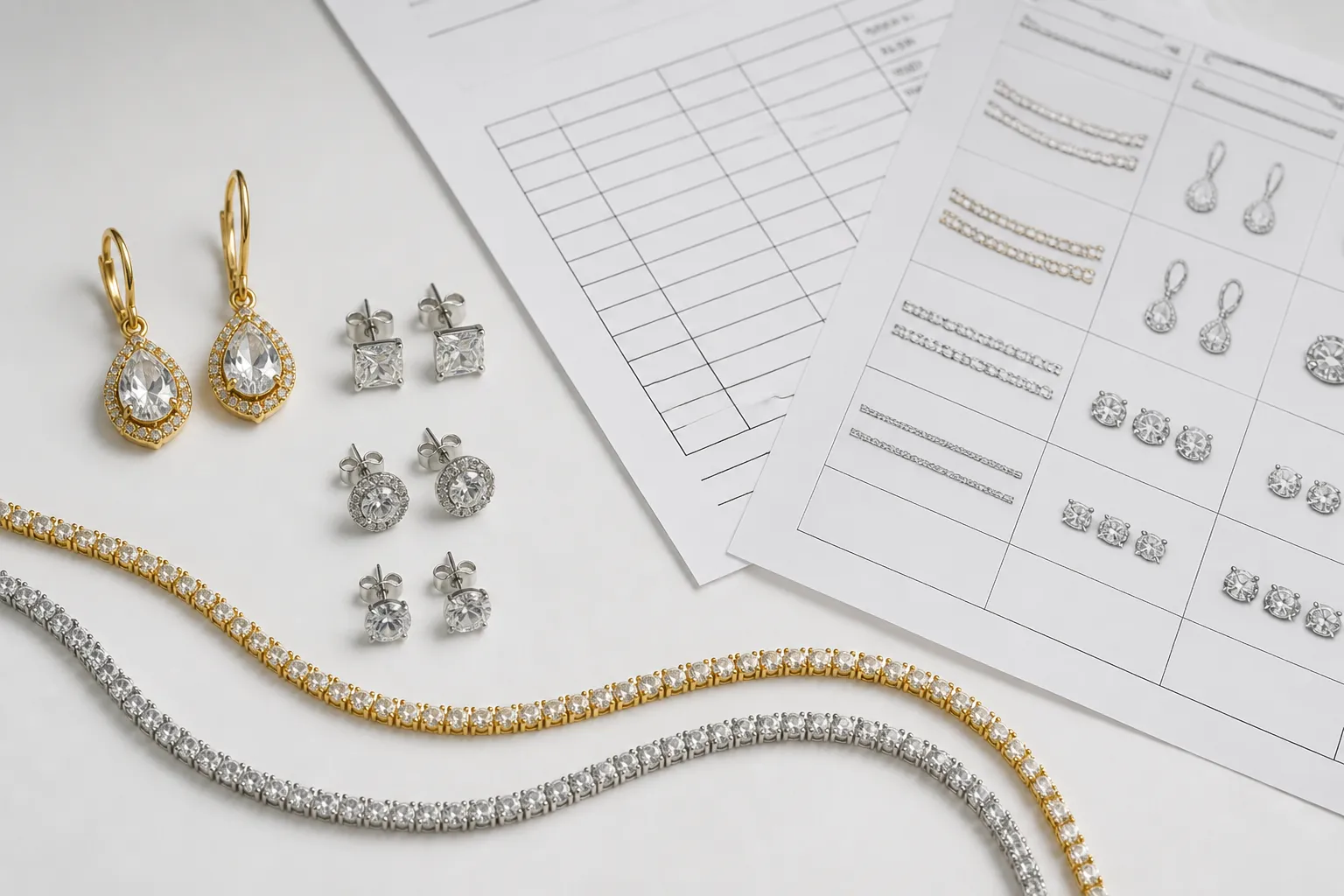
Custom Jewelry vs. Retail Platforms: The B2B Sourcing Breakdown
Custom OEM jewelry from a vetted manufacturer gives importers and DTC store owners brand control, margin flexibility, and scalable production — but it requires upfront commitment on design and order quantities. Retail personalized jewelry platforms (the leading alternative) lower the entry barrier to zero but trade away exclusivity and the per-unit economics that matter when you're stocking a real catalog.
This comparison is written for buyers who are past the awareness stage: you know the difference between OEM and wholesale, and you need a structured breakdown before committing budget.
TL;DR / Quick Verdict
If you're building a branded product line and sourcing at volume, custom OEM jewelry from a manufacturer like STRAND delivers better margins, design exclusivity, and production scalability. If you're testing a concept with minimal upfront risk — or need personalized pieces for a one-time campaign — retail personalized platforms (such as Jewlr, Made by Mary, or Brook & York) are faster to access but built around consumer economics, not resale ones.
The right choice depends on your order volume, brand strategy, and how much control you need over the final product. Most serious buyers eventually outgrow the alternatives.
At-a-Glance Comparison Table
| Dimension | Custom OEM Jewelry (e.g., STRAND) | Retail Personalized Platforms (e.g., Jewlr) |
|---|---|---|
| MOQ | 12 pcs/style (most catalog designs); 1 pc on select styles | 1 unit — consumer retail model |
| Price per unit | Factory/wholesale pricing (quote required) | Retail pricing — $84–$308+ per piece (as of time of research) |
| Design exclusivity | Full OEM exclusivity available | Shared platform catalog; no exclusivity |
| Customization depth | Metal, finish, stone, silhouette, hardware, packaging | Name engraving, birthstone, stone shape |
| Materials | Gold/rhodium-plated copper, 925-style silver, glass beads, natural stone, faux pearls | Sterling silver, stainless steel, white gold, gold plated, vermeil |
| Lead time | Production-based (confirm current schedule) | 1–5 business days typical |
| Shipping terms | EXW or FOB; air, sea, or express | Free shipping to consumer |
| Payment options | T/T, PayPal, Western Union, L/C, Xtransfer | Credit card, buy now pay later |
| Languages supported | EN, FR, AR, ES, DE, RU | English-primary |
| Quality control | In-house inspection before every shipment | Manufacturer-managed — no buyer visibility |
| Best for | Importers, DTC brands, wholesale buyers | End consumers, low-volume gifting |
Custom Jewelry Overview
Custom jewelry, in the B2B context, means ordering pieces manufactured to your specification rather than selecting from a retailer's existing catalog. The supplier produces items under your brand direction: chosen materials, finishes, stone types, shapes, and often packaging. This is the OEM model — and it's the path that separates commodity resellers from brand builders.
Who it's built for: Importers supplying regional retailers, DTC e-commerce operators building proprietary SKUs, and wholesale buyers who need consistent supply across seasons. It's also the right path for any buyer who needs exclusivity — a design that competitors cannot pull from the same shared shelf.
STRAND, based in Hangzhou, connects buyers in the US, EU, UK, and MENA directly to vetted Chinese workshops. Their stock catalog runs 114 styles — drop earrings, stud earrings, and necklace-and-earring sets in vintage crystal, gradient, two-tone glass bead, and rhinestone designs — with MOQs of 12 pieces per style on 109 of those 114 designs. Select styles are available from a single piece, which is genuinely uncommon at the manufacturing level.
Beyond catalog stock, STRAND offers full custom OEM in gold-plated and rhodium-plated copper, 925-style silver finishes, glass beads, natural stone, and faux pearls. Buyers can define hardware, stone placement, and surface finish to documented spec.
Standout strengths: Direct factory pricing with no intermediary markup, multilingual procurement support across six languages, in-house QC before every shipment, and flexible trade terms (EXW or FOB, with T/T, PayPal, L/C, and Xtransfer payment options).
Alternatives Overview
The primary alternative for buyers who don't want to manage an OEM relationship is sourcing from retail personalized jewelry platforms — companies like Jewlr, Made by Mary, Brook & York, Catbird, and Kay's personalized line. These are consumer-facing businesses. Their entire model is built around individual orders with personalization options: name engravings, birthstone selections, initials, and commemorative dates.
Who this is for: End consumers buying one-off gifts, or small operators testing personalized jewelry with zero inventory commitment. A DTC store owner might use these platforms to validate category demand before committing to an OEM production run — that's a legitimate use case.
The personalization range on these platforms is meaningful but bounded. A buyer can select from round, heart, princess, oval, baguette, pear, marquise, and cushion stone shapes (as Jewlr offers), choose from a selection of birthstones, and add engraved text. What they cannot do is define the underlying hardware, request a custom silhouette, adjust plating, or negotiate unit economics at volume.
Retail pricing on these platforms reflects full consumer margins. As of the time this article was researched, Jewlr's Personalized Name Necklace was priced from $84 per piece, and their Double Heart Gemstone Ring with Accents from $164 — these are retail-end prices that include the brand's marketing spend, customer service infrastructure, and return handling. Jewlr's 99-day return policy and free shipping are genuine consumer advantages, but they're baked into a margin structure that leaves nothing for a reseller.
Standout strengths: Zero MOQ, fast fulfillment, established consumer trust, and no procurement overhead. For a buyer who genuinely needs a single personalized piece quickly, nothing in the OEM world competes on speed.
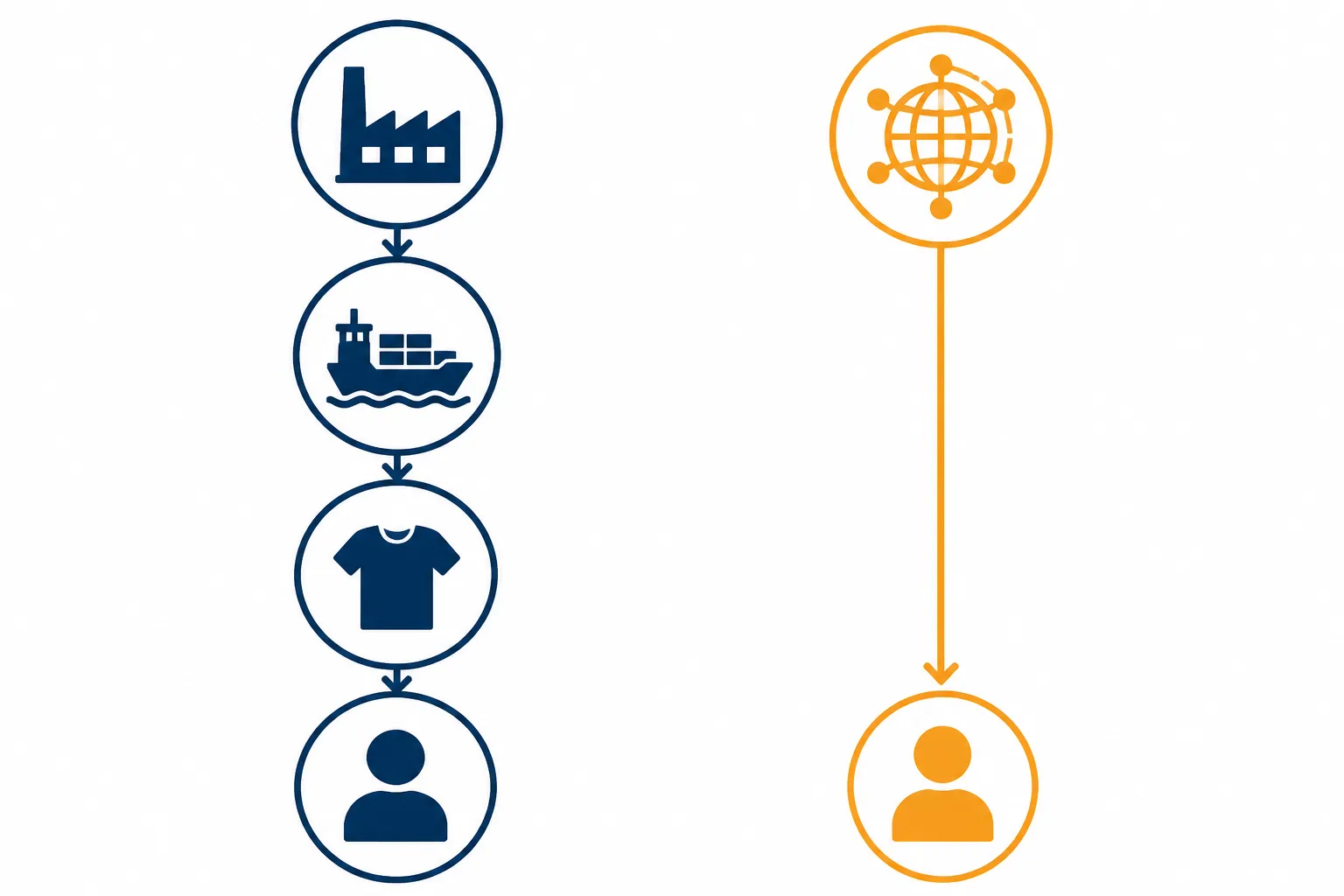
Feature-by-Feature Breakdown
MOQ and Order Volume
This is where the two paths diverge most sharply. Retail personalized platforms have no minimum — one piece, delivered in days. That's genuinely useful for prototyping or gifting, but it's not a sourcing model for a store carrying 20+ SKUs.
Custom OEM through STRAND starts at 12 pieces per style for most catalog designs. That number is low by manufacturing standards — many Chinese OEM jewelry suppliers require 50–100+ pieces per style as a floor. The 12-piece threshold makes the OEM path accessible for DTC operators still building volume, or for buyers who want to test a specific design before scaling the run.
For fully custom (non-catalog) designs, minimum quantities depend on design complexity and material choice. Request current terms before planning procurement — the MOQ on a custom silhouette is different from a catalog adaptation.
Pricing and Margin Structure
The economics are not subtle. OEM manufacturing delivers factory-level pricing; retail platforms deliver retail-level pricing with no resale margin embedded.
A buyer sourcing from Jewlr at prices in the $84–$164+ range (as of the time of research) cannot resell that product competitively in most markets. The platform price already absorbs customer acquisition cost, return processing (including that generous 99-day window), and warranty servicing — none of which benefit a trade buyer.
Custom OEM pricing is quoted per design, per material, and per quantity. STRAND's model connects buyers directly to Hangzhou workshops, removing middleman markups. For accurate per-unit costs across your target assortment, request a quote at strandjewelry.com with your design brief and target quantities.
Design Flexibility and Exclusivity
Retail personalized platforms offer personalization within a fixed template. You can add a name, choose a birthstone, or select a stone cut — but the silhouette, hardware, and overall aesthetic belong to the platform. Two competing DTC stores can carry the exact same piece with different names engraved on it. That is not differentiation.
Custom OEM reverses this. A buyer working with STRAND can specify the design from the ground up, or select and adapt catalog styles to their brief. The Two-Tone Rhinestone Fireworks Jewelry Set illustrates the finished quality range available in STRAND's stock catalog — custom OEM extends further with buyer-specified hardware and finish combinations.
For any brand competing on visual identity in the US, EU, or MENA markets, design exclusivity is not optional. Retail platforms structurally cannot provide it.
Materials and Finish Quality
Both paths offer gold-plated options, but the specification and visibility differ.
Retail platforms list sterling silver, stainless steel, white gold, gold plated, and vermeil as available metals. These are consumer-grade descriptions — the buyer has no visibility into base metal quality, plating thickness, or finish consistency across batches.
OEM manufacturing through STRAND covers gold-plated and rhodium-plated copper, 925-style silver finishes, glass beads, natural stone, and faux pearls — with material specifications as part of the purchase agreement. Buyers can document finish requirements and hold the supplier to those standards. In-house QC inspection before every shipment provides a verification layer that retail platforms do not offer to trade buyers.
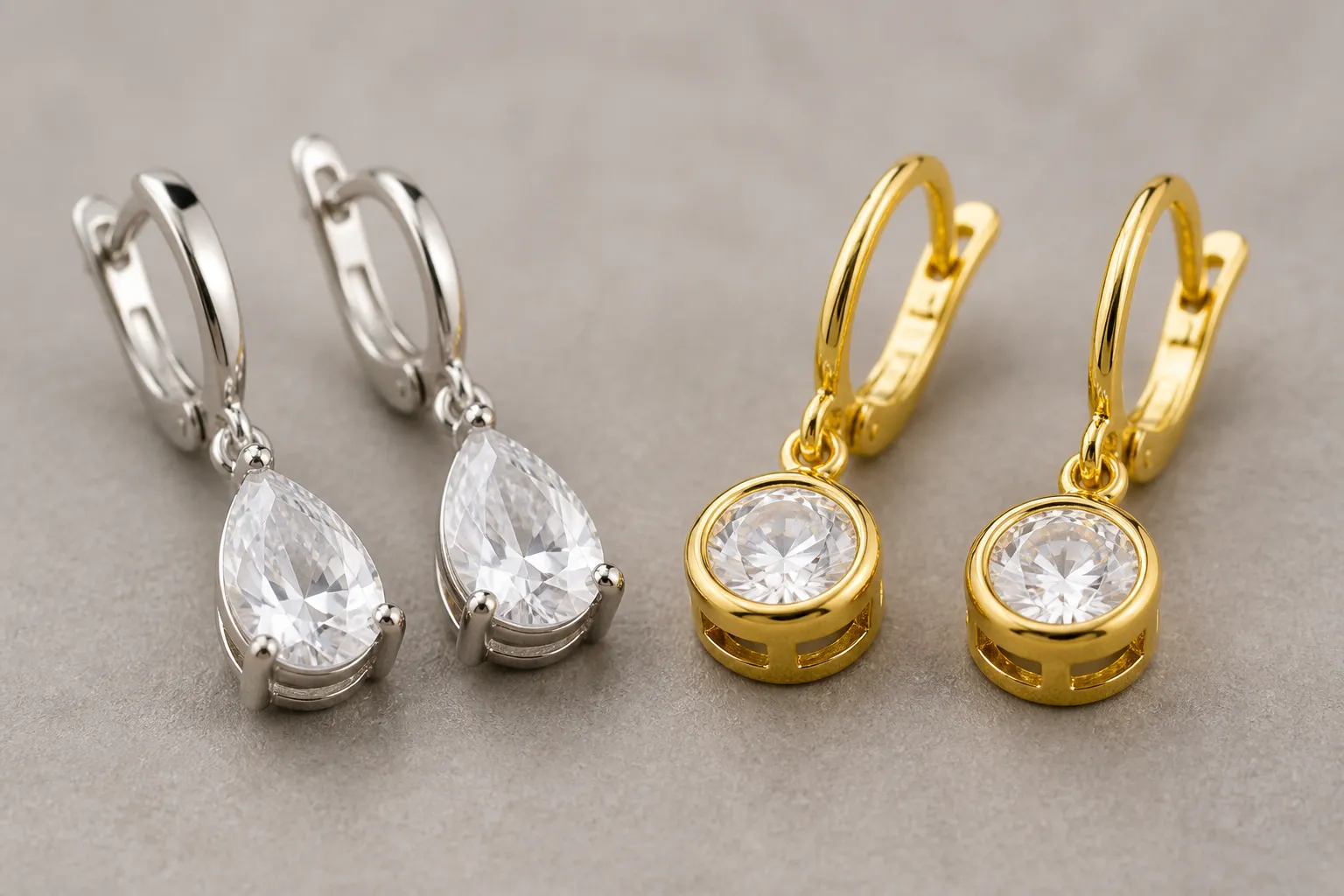
Support and Communication
Retail personalized platforms are engineered for consumers. Support handles individual order issues well but isn't equipped for bulk order logistics, trade payment arrangements, or multi-currency procurement workflows.
STRAND's sales team operates in English, French, Arabic, Spanish, German, and Russian. For procurement teams in MENA and EU markets where English-only communication creates friction — especially during sampling, revision, and production confirmation stages — this is a material operational advantage. Payment flexibility across T/T bank transfer, Western Union, PayPal, L/C, and Xtransfer also accommodates the compliance requirements buyers in different jurisdictions routinely face.
Scalability
Retail personalized platforms scale on the consumer side. They cannot scale on the buyer's side: no volume pricing tiers, no dedicated trade account management, no production planning conversation.
OEM manufacturing scales in the direction that matters to importers. Higher volume unlocks better per-unit pricing, and an established supplier relationship allows production capacity to be reserved ahead of peak seasons. A DTC store growing from 100 units/month to 1,000+ units/month will find that an OEM partnership absorbs that growth. A retail platform relationship simply does not.
Pros and Cons
Custom OEM Jewelry
Pros
- Factory-level pricing with real resale margin
- Full design exclusivity via custom OEM path
- Documented material specs and independent QC before shipment
- Low MOQ relative to industry norm (12 pcs/style on most STRAND catalog designs)
- Multilingual support and trade-standard payment terms
- Production capacity scales with your volume
Cons
- Requires upfront design decisions or catalog selection
- Lead times tied to production schedules — not suited for next-day fulfillment
- Requires supplier vetting and trade account setup
- Samples needed to verify finish before full production run
Retail Personalized Platforms
Pros
- Zero MOQ — single-unit ordering
- Fast fulfillment (typically 1–5 business days)
- Consumer-friendly returns (Jewlr offers a 99-day return policy)
- Buy now, pay later financing available for end consumers
- Established consumer brand recognition
Cons
- Retail pricing eliminates resale margin entirely
- No design exclusivity — catalog shared across all buyers
- Limited material transparency; no buyer-side QC access
- Not built for trade procurement workflows
- English-primary support creates friction for multilingual teams
- No volume pricing or dedicated account structure
When to Choose Custom Jewelry
You're building a branded product line. If your store or import business needs SKUs that competitors cannot replicate from a shared catalog, OEM custom jewelry is the only viable path. This matters particularly for DTC operators in the US, EU, and MENA where visual differentiation is a core acquisition driver.
You're sourcing at real volume. At 12 pieces per style, you're making a real assortment commitment — which unlocks economics that single-unit ordering never can. Buyers planning seasonal purchases of 100+ units across multiple styles capture the full advantage of OEM pricing and production planning.
You need supply chain visibility. QC inspection before shipment, documented material specifications, and direct workshop relationships give importers the audit trail needed for quality consistency and compliance.
Your procurement team communicates in multiple languages. A team working in Arabic, French, or Spanish will operate more efficiently with a supplier that matches that capability. This isn't a soft benefit — it reduces errors during sampling and revision stages where miscommunication is costly.
You want fashion jewelry with depth and variety. Drop earrings, coordinated necklace-and-earring sets, gradient crystal and rhinestone styles — at the price points OEM manufacturing enables — are simply not accessible through retail personalization platforms.
When to Choose Alternatives
You're validating demand before committing to MOQ. If you genuinely don't know whether a personalized jewelry category will convert in your market, ordering a handful of retail pieces to test with your audience is a defensible first step before approaching an OEM supplier with a design brief.
You're running a one-time gifting campaign. Corporate gifting, event merchandise, or press mailers where unit count is small and turnaround is critical — retail platforms are purpose-built for this.
Your end customer's primary value is "put my name on it." If the product differentiation your customer cares about is personalized engraving rather than a distinctive design aesthetic, retail personalization platforms optimize exactly for that use case.
You're not yet set up for international trade operations. Retail platforms handle payment, logistics, and returns on a consumer model — no Incoterms knowledge or freight forwarding relationships required.
Final Verdict
For B2B buyers who are actively building a jewelry assortment for resale — importers, DTC operators, and wholesale buyers — custom OEM jewelry is the correct sourcing path in nearly every scenario involving real volume, brand control, or resale economics. The margin math alone makes the retail platform alternative non-viable: retail prices leave nothing for a reseller, and shared catalogs leave no competitive moat.
Retail personalized platforms serve end consumers, and they do that well. For buyers in the decision stage, they're most useful as a validation tool, not a sourcing infrastructure.
The inflection point is concrete: if you're ordering more than 12 pieces of a style for resale, OEM manufacturing delivers better economics, documented QC, and a supply relationship that scales. Below that threshold — or for proof-of-concept testing before your first OEM run — retail alternatives are the practical stopgap.
If you're ready to evaluate a custom jewelry supplier with direct workshop access, low MOQ entry points, and multilingual procurement support, request MOQ details, current production lead times, and a sample quote for your target styles at strandjewelry.com.