
Custom Jewelry vs. Off-the-Shelf: B2B Buyer's Comparison Guide
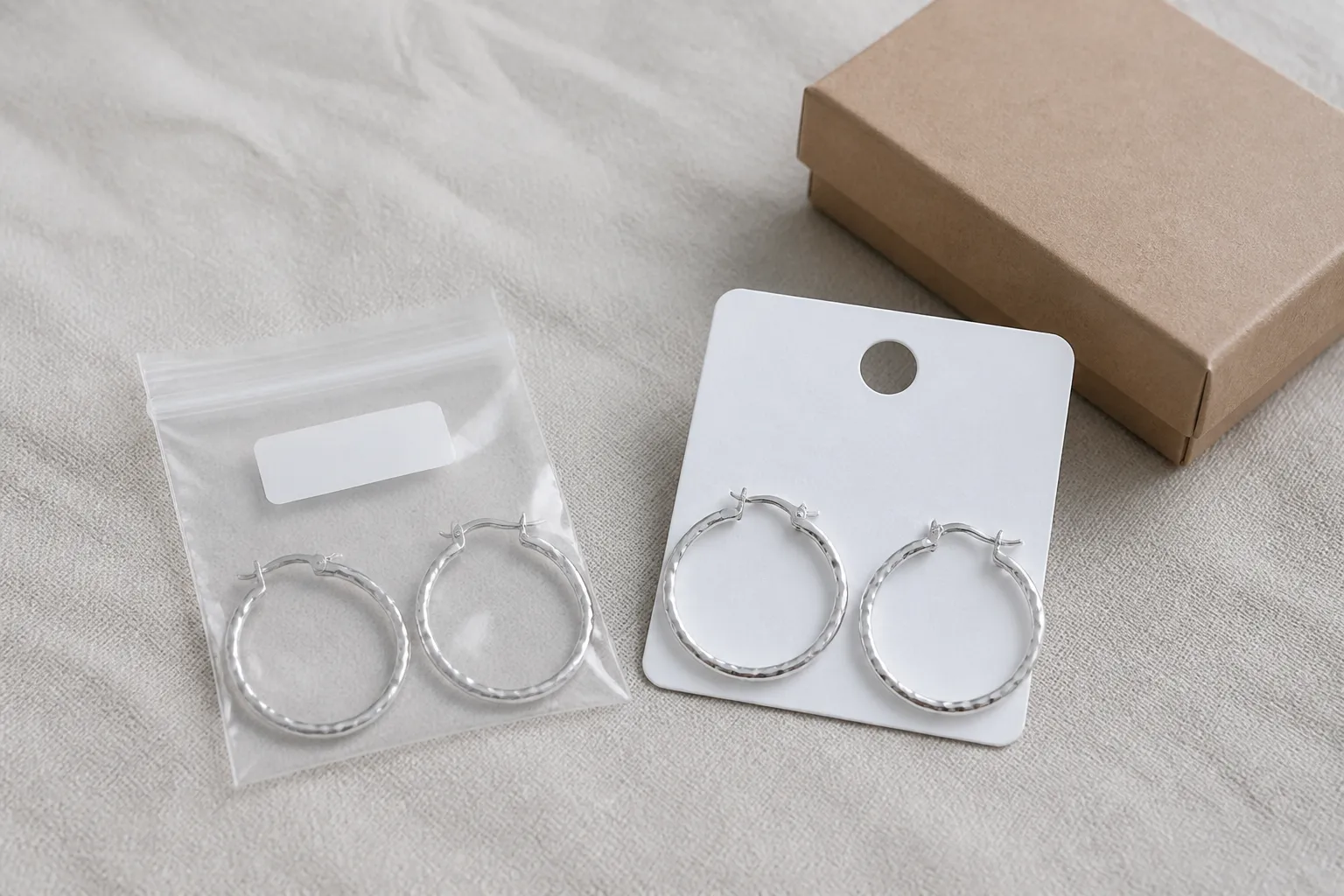
Custom Jewelry vs. Off-the-Shelf: B2B Buyer's Comparison Guide
For importers, DTC store owners, and procurement teams evaluating sourcing strategy
TL;DR / Quick Verdict
Custom jewelry — produced via OEM or bespoke manufacturing — is the stronger play for buyers who need differentiated product lines, private-label exclusivity, or designs tailored to a specific market. Off-the-shelf alternatives (wholesale catalogs, marketplace sourcing, or generic drop-ship programs) win on speed and zero-commitment entry, but leave you competing on price against identical SKUs. If you're building a brand or a repeatable sourcing program in the US, EU, UK, or MENA, the unit economics and strategic value of custom OEM almost always close the gap within 2–3 reorder cycles.
At-a-Glance Comparison Table
| Dimension | Custom Jewelry (OEM) | Off-the-Shelf Alternatives |
|---|---|---|
| Product exclusivity | High — your design, your brand | None — same SKU sold to hundreds of buyers |
| MOQ | Low–medium (varies by supplier) | Often 1 unit (wholesale packs vary) |
| Unit pricing | Lower at scale; competitive from vetted China workshops | Higher per-unit from domestic/retail; low floor from unvetted factories |
| Lead time | [your lead time] — typically longer than stock | Days to 2 weeks (stock) |
| Branding & packaging | Full private label, custom tags, custom packaging | Generic or licensed branding; private label add-ons limited |
| Design control | Full — your CAD/sketch or co-developed with supplier | None — choose from existing catalog |
| Quality assurance | In-house QC possible with the right supplier | Varies widely; rarely inspected before dispatch |
| Certifications | Negotiable (REACH, RoHS, Nickel-free, etc.) | Inconsistent; often undocumented |
| Multilingual procurement support | Available from select suppliers (EN/AR/ES) | Rare outside English-only platforms |
| Scalability | High — production capacity scales with demand | Capped by catalog size and supplier stock |
| Reorder consistency | High with a dedicated factory partner | Variable — catalog items discontinued, specs drift |
Custom Jewelry Overview
Custom jewelry, in a B2B sourcing context, refers to pieces manufactured to a buyer's specification — whether that means a bespoke design developed from scratch, a modification of an existing silhouette (stone color swap, plating change, clasp variation), or full OEM production under a private label. The buyer owns the design direction; the manufacturer executes it.
This model is built for buyers who are building something — a branded retail line, a private-label e-commerce store, a boutique wholesale catalog, or a seasonal collection for a fashion importer. The value proposition is not just aesthetic: custom production means no competitor is selling the same SKU, reorders are repeatable to spec, and pricing compresses meaningfully at volume.
Who it's built for:
- DTC store owners in the US, EU, UK, and MENA who need product exclusivity to support brand positioning
- Importers sourcing branded accessories for retail chains or fashion multi-brand stores
- Procurement teams managing seasonal jewelry collections where consistency across batches is non-negotiable
- Buyers who have been burned by catalog sourcing — receiving different stone cuts, plating thickness, or hardware finishes batch-to-batch
Standout strengths of custom OEM:
- Full design control from material selection to packaging insert
- Supplier accountability is baked in — a dedicated factory partner has skin in the game on repeat business
- Private-label options (hang tags, polybags, branded boxes) align the product with your customer experience
- Cost per unit drops at scale; margins expand over time without changing the product
Suppliers like STRAND, based in Hangzhou and connected directly to vetted Chinese workshops, represent the practical execution layer of this model — offering custom OEM with low MOQ, multilingual procurement support (English, Arabic, Spanish), and in-house QC before shipment.
Alternatives Overview
"Alternatives" in a B2B jewelry sourcing context covers several distinct categories:
1. Ready-made wholesale catalogs (domestic or platform-based) Platforms like Alibaba, DHgate, or domestic wholesale marketplaces offer pre-manufactured SKUs in bulk. You pick from a catalog, hit an MOQ (often low), and receive stock-ready product. No design input, no exclusivity, fast turnaround.
2. Platform-only custom programs (DTC consumer-facing) Brands like Jewlr, Made By Mary, or Kay Personalized are designed for individual consumers — not trade buyers. They offer name-engraving, birthstone selection, or monogram additions on existing catalog pieces. This is personalization, not manufacturing customization. MOQ is 1 unit; per-unit cost is retail; there is no B2B trade pricing, no private-label option, no production scalability.
3. Domestic custom jewelers Local or regional jewelers who produce bespoke pieces. High craft, long lead times, high per-unit cost, no realistic path to volume production. Appropriate for hero pieces or samples — not for a 500-SKU fashion collection.
4. Generic drop-ship programs Aggregators and drop-ship suppliers ship individual orders directly to your customers. Zero inventory risk, but zero exclusivity and very thin margins. The same products appear in dozens of competing stores.
Who alternatives work for:
- Buyers testing a new market or category with minimal capital commitment
- Retailers who need fast replenishment of commodity accessories (price-led, no brand story)
- Individual consumers or micro-brands ordering single pieces
- Buyers with no repeat volume requirements
Standout strengths of off-the-shelf alternatives:
- No minimum commitment — ideal for testing demand
- Immediate availability — no production wait
- No design capability required
- Lower barrier to entry for new or small buyers
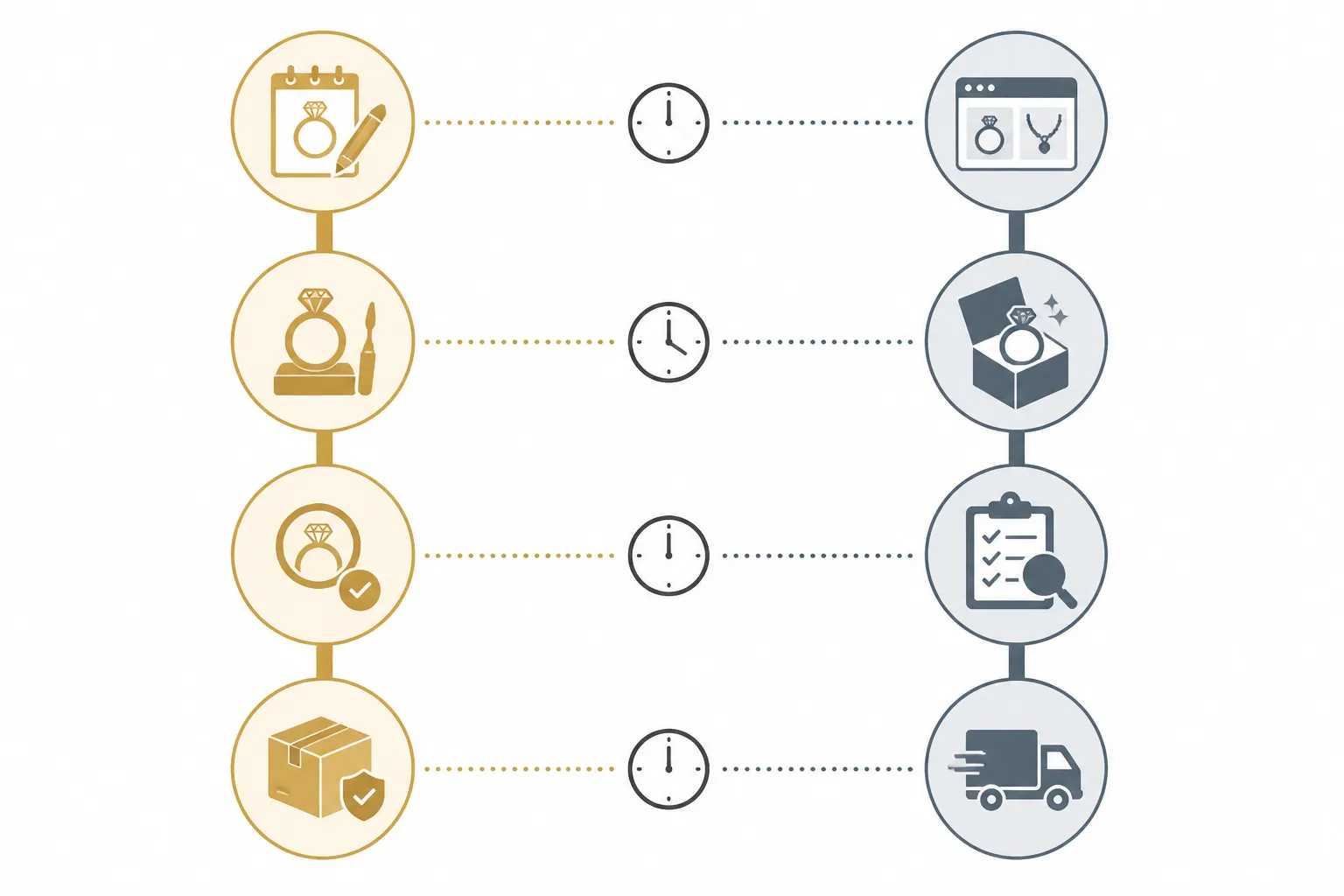
Feature-by-Feature Breakdown
Pricing and Cost Structure
Custom jewelry (OEM): Unit cost is inversely tied to volume. At a meaningful MOQ, custom-manufactured fashion jewelry from a Hangzhou-based workshop can land significantly below domestic wholesale rates for equivalent materials — especially for styles like rhinestone drop earrings, two-tone glass bead sets, or gradient crystal pieces where labor intensity is the cost driver, not material rarity. Expect a sampling cost upfront (often credited toward the first production run), tooling charges for new molds if required, and unit pricing that steps down at defined quantity thresholds. Always request an itemized quote — reputable suppliers will break out material, labor, QC, and packaging line items.
Off-the-shelf alternatives: Wholesale catalog pricing looks low at first glance but often reflects commodity materials, inconsistent plating, and no quality control. Platform-based programs (Jewlr, Made By Mary) carry full retail margin — $40–$150+ per piece — because they are built for end-consumer conversion, not trade. Domestic custom jewelers price at craft rates with no volume efficiency.
Verdict: Custom OEM wins on margin at any meaningful volume. Alternatives win only at zero-volume entry or one-off reorders.
Design Control and Exclusivity
Custom jewelry (OEM): The buyer controls the design brief. This ranges from uploading a sketch or CAD file, referencing a trend image with specific modifications, or co-developing a silhouette with the supplier's in-house design team. Material specifications — stone size, plating color, wire gauge, closure type — are locked in writing before production begins. Your design is not sold to other buyers.
Off-the-shelf alternatives: You select from what exists. "Custom" on most consumer platforms means choosing a birthstone or adding an initial — the silhouette, materials, and construction are fixed. Wholesale catalog products are sold to every buyer who places an order.
Verdict: No contest. Custom OEM is the only route to a defensible product catalog.
Quality Assurance and Consistency
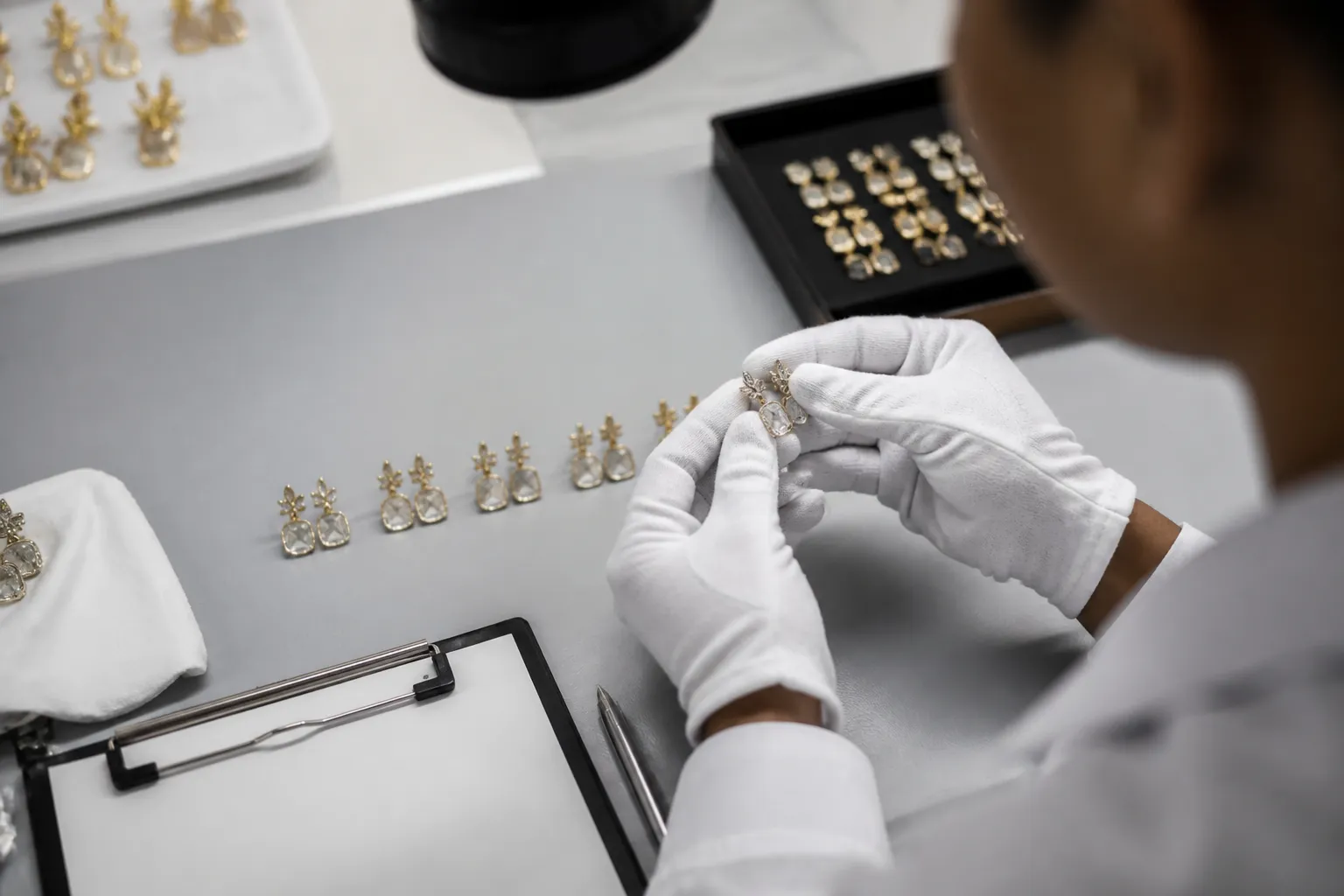
Custom jewelry (OEM): With a supplier that runs in-house QC — checking plating adhesion, stone setting security, clasp function, and hardware consistency before shipment — the buyer receives a pre-inspected batch. This matters most for fashion jewelry categories where variance is common: gradient crystal colors shift, rhinestone density varies, gold plating thickness determines shelf life. A documented QC process with photographic batch reports is the standard to require.
Off-the-shelf alternatives: Wholesale platform products ship without buyer-side QC. Quality varies batch-to-batch and across suppliers. Consumer-facing personalization brands (Jewlr, Made By Mary) maintain their own product quality standards but are not equipped for B2B volume inspection workflows.
Verdict: Custom OEM with a QC-capable supplier is significantly more reliable for trade buyers who need batch consistency.
Lead Time and Production Capacity
Custom jewelry (OEM): The trade-off is time. A new custom development cycle includes design confirmation, sample production, buyer approval, and bulk production. Factor in international shipping, and the full cycle from brief to warehouse can run several weeks depending on complexity and supplier capacity. Reorders of approved designs are faster — tooling and specs are already locked. Suppliers with dedicated production lines and low MOQ programs (like STRAND's OEM offering) can compress lead times compared to larger factories that deprioritize small runs.
Off-the-shelf alternatives: Stock is available immediately. Wholesale platforms ship within days to 2 weeks domestically. Drop-ship programs fulfill order-by-order. For buyers with unpredictable demand spikes or last-minute seasonal needs, catalog sourcing has a real functional advantage here.
Verdict: Alternatives win on speed. Custom OEM requires planning lead time into your buying calendar — but reorders close the gap significantly.
Supplier Reliability and Relationship
Custom jewelry (OEM): A direct-to-factory OEM relationship — where the supplier has visibility into your designs, seasonal plans, and volume trajectory — creates aligned incentives. The supplier invests in your spec file, your approved samples, and your repeat business. Suppliers like STRAND, which function as a bridge between vetted Chinese workshops and overseas buyers, add account management, multilingual communication (English, Arabic, Spanish), and transparent trade terms to reduce friction for international procurement teams.
Off-the-shelf alternatives: Marketplace and wholesale platform sourcing is transactional by design. There is no account ownership, no design IP protection, and no production priority. A popular SKU goes out of stock; a supplier disappears; a design you've been selling gets relisted to competitors at a lower price. These are known risks of catalog-dependent sourcing.
Verdict: Custom OEM with a vetted supplier builds compounding supply chain value. Alternatives are structurally transactional.
Compliance and Certifications
Custom jewelry (OEM): For buyers selling into the EU (REACH compliance, nickel directive), the UK (UKCA marking requirements), or the US (CPSC guidelines for children's jewelry), material certifications matter. A custom OEM supplier can be required — contractually — to supply test reports, material declarations, and certification documentation as part of the production agreement. This is standard practice for professional trade buyers and should be a non-negotiable term in any OEM contract.
Off-the-shelf alternatives: Catalog products from wholesale platforms frequently carry no certification documentation. Consumer-facing brands (Kay, Jewlr) maintain their own compliance standards, but these are consumer market standards — not trade-level documentation packages for importers.
Verdict: Custom OEM is the only route to documented compliance at a product-level. Critical for any buyer selling in regulated markets.
Pros and Cons
Custom Jewelry (OEM)
Pros:
- Full design exclusivity — your SKUs cannot be copied by competitors sourcing the same catalog
- Private-label packaging and branding options
- Unit cost scales down with volume
- Documented QC possible with the right supplier
- Compliance certifications (REACH, RoHS, nickel-free) negotiable as contract terms
- Multilingual procurement support available from suppliers serving global buyers
- Reorders are repeatable to approved spec
Cons:
- Longer initial lead time due to development and sampling cycle
- Upfront sampling cost (though typically creditable)
- Requires design capability or clear brief — not a "no-effort" purchase
- MOQ commitment required for production runs
- Supplier vetting is necessary — not all OEM claims are equal
Off-the-Shelf Alternatives
Pros:
- Zero lead time for in-stock items
- No MOQ commitment on many platforms
- No design capability required
- Consumer-facing personalization platforms (Jewlr, Made By Mary) handle end-customer UX
- Good for demand testing before committing to custom production
Cons:
- No product exclusivity — identical SKUs sold to competitors
- No private-label option on most wholesale platforms
- Quality inconsistency across batches and suppliers
- No certification documentation as a rule
- Margin ceiling is low — you compete on price against buyers with the same product
- No supplier relationship — transactional by design
- Consumer-personalization platforms not viable for trade volume
When to Choose Custom Jewelry
- You are building a brand. If your store, catalog, or import business depends on a product identity that competitors cannot replicate, you need product exclusivity. Custom OEM is the mechanism.
- You have a defined seasonal buying calendar. If you plan 2–3 seasons ahead and can place production orders 8–12 weeks out, the lead-time trade-off disappears.
- You are sourcing for a retail chain or multi-brand buyer. Volume justifies the development investment, and buyers at this scale typically require compliance documentation anyway.
- You have had batch-inconsistency problems with catalog sourcing. If rhinestone density, plating color, or stone cut has varied across your last three wholesale orders, a custom spec agreement with documented QC resolves the root cause.
- You are entering EU, UK, or regulated markets. REACH compliance documentation is not optional. Custom OEM with a supplier who provides test reports is the practical path.
- You want multilingual procurement support. If your team operates in Arabic or Spanish, finding a supplier who communicates in your language without friction — like STRAND's multilingual service — saves significant back-and-forth in sampling and order confirmation.
When to Choose Alternatives
- You are testing a new category with no committed volume. Zero-MOQ wholesale or drop-ship programs let you validate demand before committing to custom production.
- You need product in 5 days. If a retail window opens unexpectedly and you need inventory immediately, in-stock wholesale is the only option.
- Your customers are buying single personalized pieces. Consumer-facing personalization brands (Jewlr, Made By Mary, Automic Gold) are optimized for individual purchases with name engraving or birthstone selection. This is not a B2B channel, but it is the right tool for that specific use case.
- You are a micro-brand at pre-launch stage. Before you have purchase history to forecast reorders, catalog sourcing preserves capital and reduces risk.
- The product is a commodity accessory with no brand story. If price is the only differentiator and your customers have no loyalty to your product line, the margin difference between custom and catalog may not justify the development investment.
Final Verdict
For purchase-ready B2B buyers — importers, DTC store owners, and procurement teams in the US, EU, UK, and MENA — custom jewelry via a vetted OEM supplier is the stronger long-term sourcing decision in every scenario where volume, brand identity, compliance, or batch consistency is material to the business.
Off-the-shelf alternatives serve a specific, narrow use case: entry-level demand testing, emergency replenishment, or consumer-personalization use cases that operate outside trade buying entirely. They are not a substitute for a scalable, repeatable, branded product program.
The practical question is not "custom or catalog" — it is "which custom supplier." That decision turns on four criteria: MOQ and pricing transparency, QC capability, compliance documentation, and communication infrastructure for cross-border procurement. Suppliers who combine direct factory access, low MOQ programs, in-house QC, and multilingual service eliminate the most common failure points in international fashion jewelry sourcing.
STRAND's model — connecting overseas buyers directly to vetted Hangzhou workshops with English, Arabic, and Spanish support, transparent trade terms, and pre-shipment QC — addresses exactly the gaps that make off-the-shelf sourcing feel safer than it actually is.
Ready to Source Custom Jewelry?
If you are evaluating custom OEM for drop earrings, stud earrings, necklace and earring sets, or other fashion jewelry styles in vintage, gradient crystal, two-tone glass bead, or rhinestone, the next step is a direct conversation with a supplier who can confirm MOQ, pricing tiers, lead times, and certification availability for your specific requirements.
Request a Quote from STRAND — get MOQ, pricing, and lead time for your custom jewelry program. Multilingual support available in English, Arabic, and Spanish.
STRAND is a Hangzhou-based cross-border fashion jewelry supplier connecting overseas buyers to vetted Chinese workshops. OEM production available with low MOQ, in-house QC, and multilingual procurement support.