# Custom Jewelry vs. Retail Personalization: Which Sourcing Route Wins for B2B?
## TL;DR / Quick Verdict
B2B buyers — importers, DTC store owners, boutique chains — get better margin control and brand differentiation through OEM custom jewelry manufacturing, provided they can commit to minimum order quantities. Retail personalization platforms like Jewlr serve end-consumers well with a wide product catalog (645+ products as of the time of the source) and fast turnaround, but their per-unit economics and fixed catalog make building a private label unworkable at scale. Choose custom OEM if you need exclusive finishes, consistent volume, and unit economics that leave room for margin; choose retail alternatives if you're buying a single piece or testing concept with no brand requirements.
---
## At-a-Glance Comparison Table
| Dimension | Custom OEM Jewelry (e.g., STRAND) | Retail Personalization Brands (e.g., Jewlr) |
|---|---|---|
| **Target Buyer** | Importers, DTC owners, boutique chains | End consumers, gifters |
| **MOQ** | From 12 pcs/style (stock); custom OEM negotiable | 1 unit (retail) |
| **Pricing Model** | Factory-direct wholesale | Retail pricing ($84–$189+ per piece) |
| **Private Label** | Full white-label available | Brand locked to seller |
| **Materials** | Gold-plated / rhodium-plated copper, glass beads, natural stone, faux pearls | 18K gold plated silver, 925 sterling silver, vermeil |
| **Gemstone Options** | Custom per brief | Amethyst, garnet, peridot, citrine, aquamarine, cubic zirconia, and others |
| **Payment Terms** | T/T, Western Union, PayPal, L/C, Xtransfer | Credit card, Buy Now Pay Later |
| **Quality Assurance** | In-house QC before every shipment | One-year warranty, 99-day returns |
| **Shipping Options** | EXW or FOB; air, sea, or express | Free shipping on orders |
| **Support Languages** | EN, FR, AR, ES, DE, RU | English (standard e-commerce) |
| **Scalability** | High — built for commercial volume | Low — no volume pricing tiers |
---
## Custom OEM Jewelry Overview
Custom OEM jewelry is manufactured to a buyer's specification — specific metals, finishes, gemstones, dimensions, and branding — then shipped in commercial quantities. It's a supply-chain solution, not a consumer product, for brands that need consistency across SKUs, margin room to resell, and pieces no competitor can copy directly from a shared catalog.
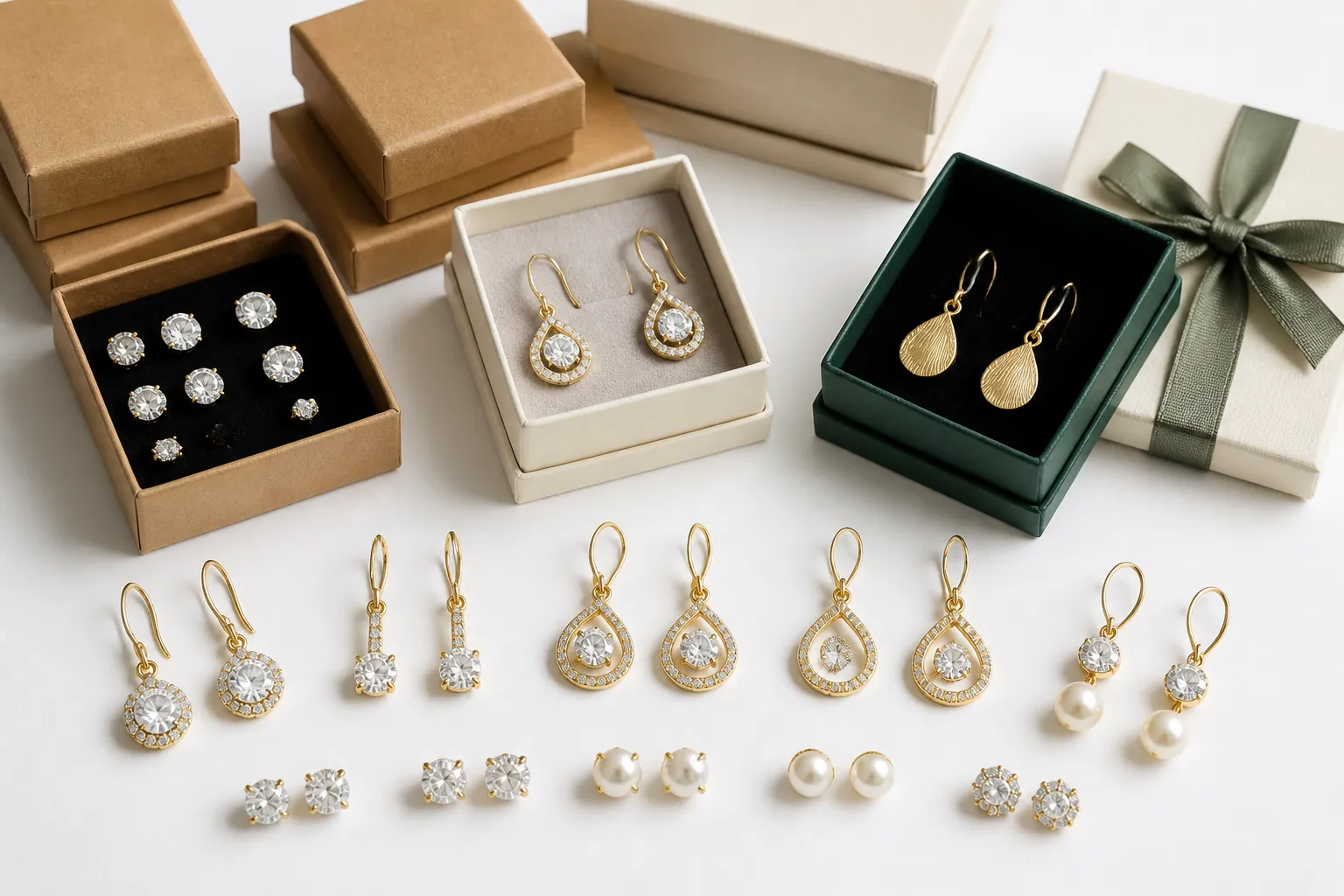
STRAND, a Hangzhou-based sourcing brand that connects vetted Chinese workshops directly to overseas buyers, runs a dual model: a 114-style ready-to-ship catalog (MOQ 12 pcs/style on 109 of 114 designs, with select styles from 1 piece) alongside full OEM capability for custom briefs. The stock catalog covers drop earrings, stud earrings, and necklace-plus-earring sets in vintage, gradient crystal, two-tone glass bead, and rhinestone styles. Finishes include gold-plated and rhodium-plated copper — price points that photograph well for DTC stores targeting luxury-adjacent aesthetics without diamond-level material costs.
Trade terms cover EXW and FOB. Shipping runs by air, sea, or express depending on urgency. Payment accepts T/T bank transfer, Western Union, PayPal, L/C, and Xtransfer — a broader spread than most B2B suppliers in this segment. For a full market comparison, see [6 Custom Jewelry Sources Ranked: OEM Suppliers & Retail Benchmarks for 2026](https://strandjewelry.com/blog/custom-jewelry-sources-oem-suppliers-retail-benchmarks/).
---
## Alternatives Overview
"Alternatives" here covers the retail personalization market — brands where consumers (and occasionally small resellers) buy personalized pieces off-the-shelf or with light customization such as engraving and birthstone selection. Key players include Jewlr, chains like Jared stores, and designer-forward labels like Kendra Scott.
[Jewlr's personalized jewelry catalog](https://www.jewlr.com/personalized-jewelry) lists 645+ products (as of the time of the source) with options spanning rings, necklaces, bracelets, and earrings. Gemstones include cubic zirconia, blue topaz, garnet, peridot, citrine, amethyst, aquamarine, and pink tourmaline — solid birthstone and semi-precious coverage for consumers. Materials run from 18K gold plated silver to 925 sterling silver and vermeil. A 99-day return policy and one-year warranty protect the buyer. Free shipping and Buy Now, Pay Later payment plans keep the purchase barrier low.
These brands are engineered for the end-consumer journey, not B2B procurement. The experience — online configurators, lifestyle photography, "top gift" labeling — is conversion-optimized for individual buyers making emotional purchases. Businesses [sourcing for resale](https://strandjewelry.com/blog/custom-jewelry-oem-vs-retail-platforms/) will find that retail pricing leaves no workable margin.
---
## Feature-by-Feature Breakdown
### Pricing & Unit Economics
Retail personalization brands price for single-unit consumer sales. As of the time of the source, Jewlr's personalized pieces ranged from $84 to $189+ per item. A reseller buying at those prices and marking up further would price themselves out of most competitive markets before factoring in shipping and import costs.
Custom OEM suppliers price factory-direct. The specific unit cost only becomes visible when you request a quote, but the principle is consistent: volume orders at production pricing, with unit cost declining as quantities scale. For DTC store owners [importing from China](https://strandjewelry.com/blog/custom-jewelry-vs-retail-alternatives-procurement-guide/), the gap between OEM wholesale cost and market retail price is where the business model lives.
### Product Scope & Gemstone Options
Retail platforms offer broad consumer-facing variety within a fixed catalog. [Jewlr's options](https://www.jewlr.com/personalized-jewelry) include amethyst, garnet, peridot, and citrine, covering the core birthstone and semi-precious tiers well. The range is deep for consumers — but fixed. You choose from what's listed, not from what you'd commission.
OEM custom jewelry runs the opposite direction. Buyers specify gemstone type (natural stone, faux pearls, glass beads, crystals), metal finish, dimensions, and packaging. A buyer wanting a gradient crystal drop earring exclusive to their store — a piece that won't appear in any competitor's catalog — can commission it. That's not possible through any retail platform.
### Branding & Private Label
This is the sharpest dividing line between the two routes. Retail-purchased jewelry carries the seller's brand — Jewlr, Kendra Scott, or whoever's name is on the box. There is no mechanism to white-label a Jewlr or Jared stores piece as your own.
OEM custom jewelry is designed for white-labeling by default. Buyers can specify packaging, hang tags, and authentication cards that carry their own brand name. For importers building [private-label jewelry lines](https://strandjewelry.com/blog/custom-jewelry-vs-retail-personalization-b2b-guide/) for DTC channels or wholesale distribution, this is a non-negotiable requirement. Only the OEM route meets it.
### Quality Assurance & Compliance
[Jewlr offers a one-year warranty and a 99-day return policy](https://www.jewlr.com/personalized-jewelry) — standard retail guarantees that protect the end consumer. They don't address the B2B concerns procurement teams actually evaluate: plating thickness and consistency, batch-to-batch uniformity, pre-shipment inspection, and import compliance documentation.
OEM suppliers like STRAND perform in-house QC inspection before every shipment. For buyers importing commercially, this matters for product consistency and for managing downstream chargebacks and returns. When evaluating any OEM supplier, ask specifically about plating specification (micron rating), inspection reports, and third-party QC availability.
### Scalability
A buyer purchasing from Jewlr at retail can order a single piece, which suits gifting but not inventory building. There's no volume pricing structure, no MOQ tier that rewards scale, and no path to commissioning exclusive styles.
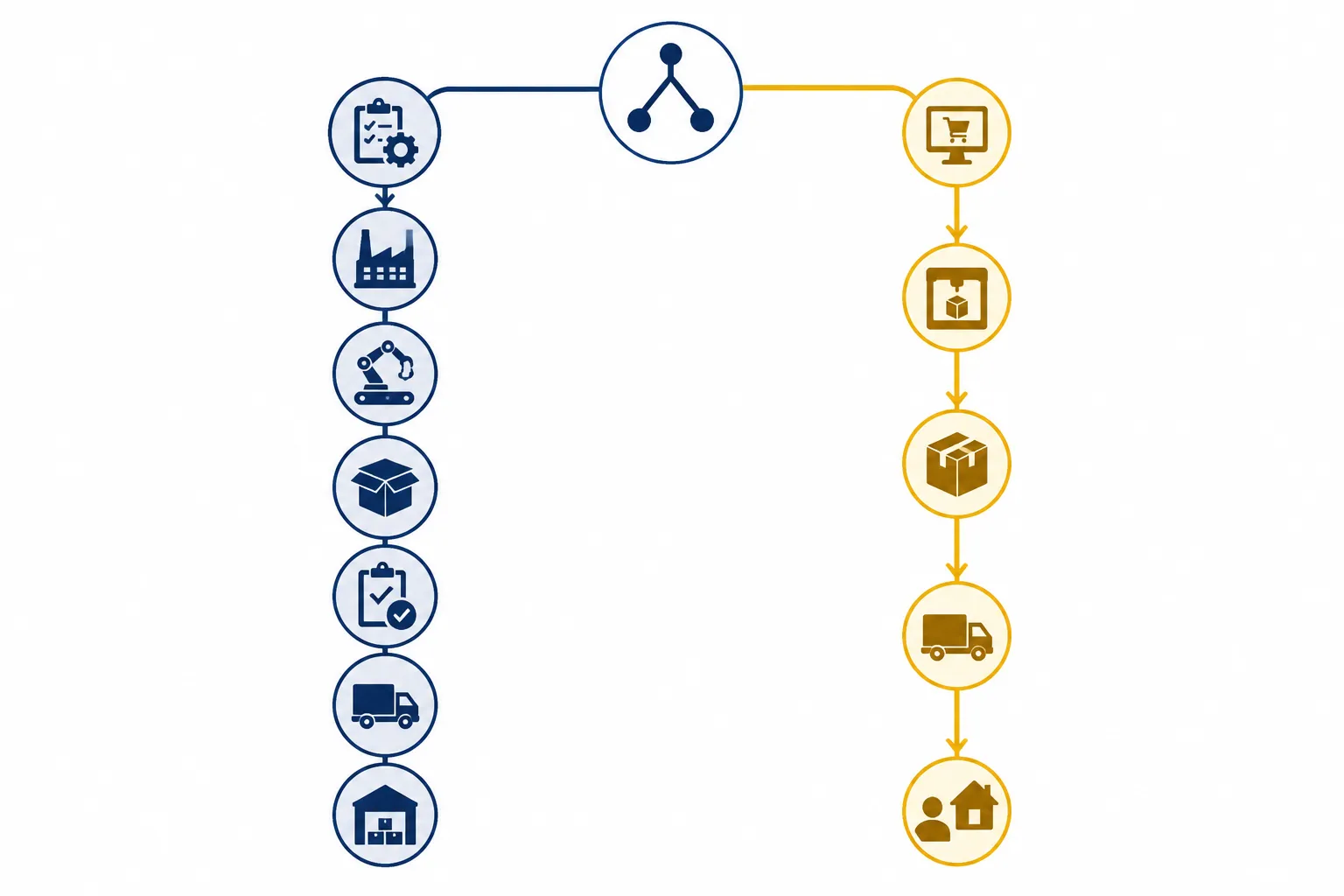
OEM suppliers are structured for scale from entry level. STRAND's stock catalog starts at MOQ 12 pcs/style on most designs, with select styles available from 1 piece — low thresholds for buyers testing new SKUs before committing to full runs. As volume grows, custom OEM engagements scale into larger production runs with better unit economics. For buyers building a jewelry brand, this structure is the commercial foundation the model requires.
### Support & Communication
Consumer-facing brands offer standard e-commerce support: order tracking, return processing, warranty claims. That's appropriate for their buyer. It's not appropriate for a procurement manager resolving a shipment discrepancy or adjusting a production spec mid-run.
OEM suppliers serving international buyers need multilingual teams who understand procurement workflows. STRAND's sales team handles inquiries in English, French, Arabic, Spanish, German, and Russian — covering the primary languages of their target markets across the US, EU, UK, and MENA. That's a material operational difference between a supplier and a retailer.
---
## Pros and Cons
### Custom OEM Jewelry
**Pros**
- Factory-direct pricing with genuine resale margin
- Full private-label and white-label capability
- Customizable materials, finishes, gemstones, and packaging
- Low entry MOQ (12 pcs/style on most stock designs)
- Multiple trade terms (EXW, FOB) and payment methods including L/C and Xtransfer
- In-house QC inspection before every shipment
- Multilingual support for international procurement teams (EN, FR, AR, ES, DE, RU)
**Cons**
- Requires minimum order commitment for most styles
- Custom production takes longer than off-the-shelf retail delivery
- Requires supplier vetting and due diligence
- Unit economics only become concrete after requesting a formal quote
### Retail Personalization Alternatives
**Pros**
- Zero minimum — buy a single piece
- Fast delivery on made-to-order items
- Wide consumer-facing catalog (645+ products at Jewlr alone, as of the time of the source)
- Built-in warranty and return policy for end consumers
- Accessible payment options including Buy Now, Pay Later
- Birthstone and engravable options readily available without custom production
**Cons**
- No private label or white-label capability
- Retail pricing structure leaves no resale margin
- Fixed catalog — no custom specifications outside listed options
- No volume pricing tiers
- Customer service built for consumers, not procurement teams
---
## When to Choose Custom Jewelry
**You're building a private-label brand.** If the jewelry needs to carry your name, your packaging, and no association with another brand, OEM is the only viable path. Retail purchasing doesn't offer this.
**You're importing for wholesale or DTC resale.** The margin math requires factory-direct pricing. Buying retail to resell doesn't work unit-economically in most categories.
**You need batch consistency across SKUs.** A boutique chain restocking multiple locations needs identical pieces across production runs. OEM with QC inspection delivers this; retail platforms don't.
**You want styles exclusive to your store.** A two-tone glass bead necklace or rhinestone drop earring designed to your brief won't appear in a competitor's catalog. Custom OEM gives you that exclusivity.
**Your team needs multilingual supplier communication.** AR, FR, or ES-speaking procurement teams dealing with English-only supplier channels create avoidable friction. This is worth evaluating explicitly.
For a detailed framework on when OEM outperforms retail sourcing, see [Custom Jewelry vs. Retail Personalization: The B2B Buyer's Guide](https://strandjewelry.com/blog/custom-jewelry-oem-vs-retail-personalization/).
---
## When to Choose Alternatives
**You're buying a one-off gift or personal piece.** Retail platforms with amethyst, garnet, and peridot birthstone options, engraving, and a 99-day return window handle this better than any OEM supplier will — and without minimums.
**You need a single piece with fast turnaround.** Made-to-order retail delivery beats custom OEM production timelines when the quantity is one and the deadline is tight.
**You're testing market appetite before committing to inventory.** Buying a few retail pieces to photograph and gauge response costs less than an OEM minimum run. It's a legitimate step in the product validation process.
**You're a consumer, not a trade buyer.** The luxury personalization market — from Jared stores to Kendra Scott to boutique online brands — is built for individual buyers. Their policies, payment plans, and return windows exist specifically for this use case.
---
## Final Verdict
The decision maps to where you sit in the supply chain. If you're selling jewelry — building a brand, importing for wholesale, running a DTC store — custom OEM manufacturing is the sourcing model that leaves you with margin, brand control, and the ability to scale. Retail personalization platforms are built for end consumers, and their pricing, policies, and product structures reflect that entirely.
For importers, DTC store owners, and boutique buyers in the US, EU, UK, and MENA building jewelry lines or replenishing inventory, the evaluation starts with OEM — specifically with suppliers who combine low entry MOQ, vetted production, pre-shipment QC, and multilingual procurement support.
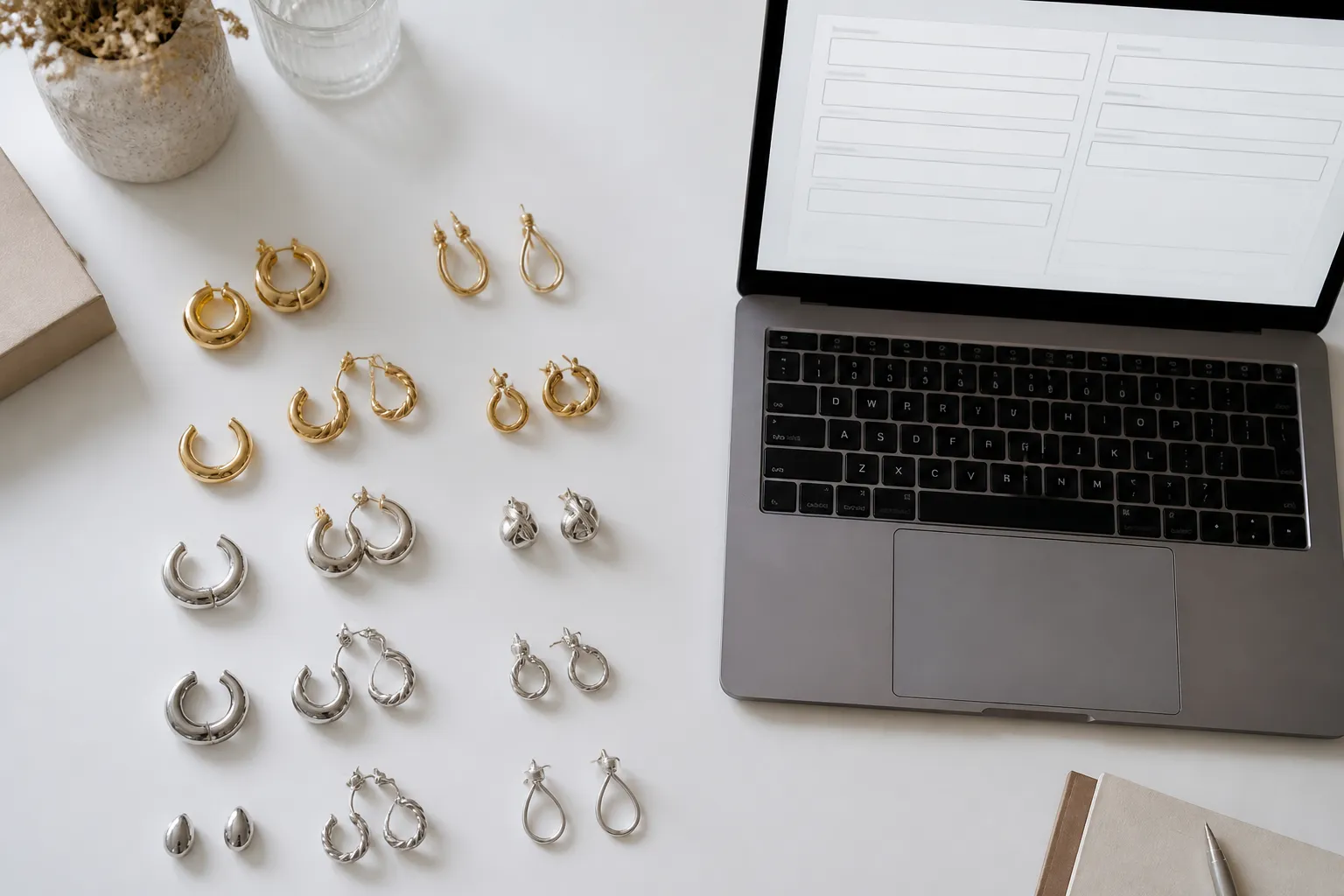
To see how STRAND's catalog and OEM capabilities fit your sourcing brief — including current MOQ tiers, available finishes, and custom production options — [request a quote at strandjewelry.com](https://strandjewelry.com).

