
Custom Jewelry vs. Alternatives: The B2B Buyer's Guide
Custom Jewelry vs. Alternatives: The B2B Buyer's Guide
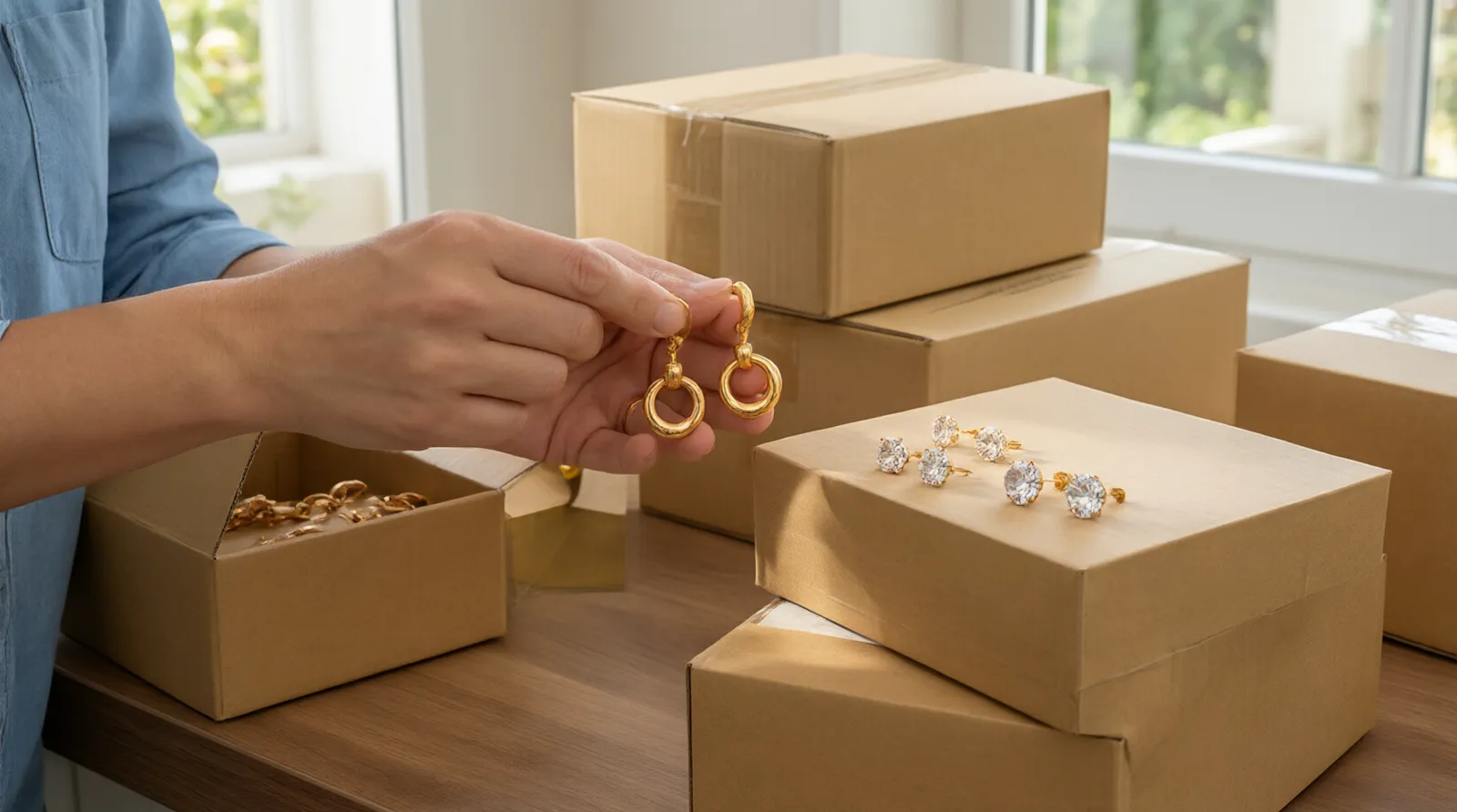
Custom jewelry sourcing through direct-to-manufacturer OEM partners gives DTC brands and importers control over design specifications, plating finishes, and minimum order quantities starting at low piece counts per style. The primary alternatives—retail bench jewelers, wholesale marketplaces, and established fashion brands—offer faster turnaround for single units or recognizable names but lack the margin structure and material flexibility required for commercial-scale inventory. Choosing between them depends entirely on whether you are buying for a single end-consumer or procuring stock for resale across multiple markets. For a broader look at how these procurement models stack up, explore our custom jewelry vs alternatives breakdown.
TL;DR / Quick Verdict
If you are a DTC store owner, importer, or buyer sourcing drop earrings, stud earrings, or necklace sets for resale in the US, EU, UK, or MENA regions, custom jewelry via an OEM manufacturer is the correct path. You get access to specific materials—gold-plated copper, rhodium-plated copper, glass beads, natural stone, and faux pearls—at trade terms (EXW or FOB) with low MOQs across most catalog designs. If you are an individual consumer needing a single engagement ring resized or engraved locally, retail alternatives such as a neighborhood bench jeweler are your only practical option.
At-a-Glance Comparison Table
| Dimension | Custom Jewelry (OEM/Direct Sourcing) | Alternatives (Retail Jewelers & Wholesale Brands) |
|---|---|---|
| Target Buyer | Importers, DTC brands, procurement teams | Individual consumers, local boutiques |
| Pricing Model | EXW or FOB trade pricing | Retail markup or standard wholesale tiers |
| MOQ | Low piece counts per style (most stock), select styles from 1 pc | 1 piece (retail) or high bulk minimums (wholesale) |
| Materials | Gold/rhodium-plated copper, 925-style silver, glass beads, natural stone, faux pearls | Solid gold, platinum, diamond, tungsten, cobalt |
| Payment Terms | T/T bank transfer, Western Union, PayPal, L/C | Credit card, financing, cash |
| Shipping | Air, sea, or express freight | In-store pickup or domestic parcel |
| Support | Multilingual sales support for international buyers | Local language, face-to-face consultation |
| Quality Control | In-house QC inspection before every shipment | Varies by store; no standardized export QC |
| Product Focus | Fashion jewelry (vintage, gradient crystal, two-tone, rhinestone) | Fine jewelry (engagement rings, wedding bands, birthstones) |
Custom Jewelry Overview
Custom jewelry in a B2B context refers to fashion and semi-fine pieces manufactured to a brand’s exact specifications by a vetted workshop. This model is built for buyers, importers, and DTC store owners who need consistent inventory of chains, earrings, and matching sets without paying luxury retail markups.
Direct OEM sourcing links overseas buyers directly to manufacturing workshops. The standout strength here is the combination of low entry barriers and material variety. Buyers can source vintage, gradient crystal, two-tone glass bead, and rhinestone styles finished in gold-plated or rhodium-plated copper. For brands testing new markets, the ability to order small quantities per style across the majority of available catalog designs reduces dead-stock risk. Select styles are even available from 1 pc for sampling purposes.
The operational infrastructure supports cross-border trade. Procurement teams operating in the US, EU, UK, and MENA regions benefit from multilingual sales support covering major international languages. Payment flexibility—including T/T bank transfers, Western Union, PayPal, and L/C—accommodates different corporate treasury requirements. Every shipment undergoes in-house QC inspection before dispatch, addressing the primary risk factor of offshore manufacturing. For a deeper look at how these supply chains operate, review our guide on Custom Jewelry: 6 Sources Buyers & DTC Brands Need in 2026.
Alternatives Overview
The alternatives to direct custom OEM sourcing fall into three categories: local retail bench jewelers, large-scale chain stores, and established fashion jewelry brands. These options serve fundamentally different use cases, primarily catering to individual consumers or small boutiques that do not require private-label manufacturing. Understanding how these channels compare to direct manufacturing helps clarify why custom jewelry vs retail decisions ultimately depend on your position in the supply chain.
Retail bench jewelers focus on fine jewelry and bespoke consumer pieces. For example, Bulow Jewelers, located at 910 16th Street, Suite 1223, Denver, Colorado 80202, provides expert designers who work closely with customers to craft custom engagement and wedding rings. Their process allows clients to build a ring from scratch by selecting the exact color, clarity, cut, carat weight, and cost, and they can make almost any type of wedding band from nearly any metal, including gold, tungsten, and cobalt. They also offer custom engraving on rings, earrings, necklaces, bracelets, and watches, and allow customers to use their own diamonds when creating a custom ring.
Large chains like Jared or Kendra Scott stores offer recognizable branding and immediate availability, targeting the end-consumer looking for amethyst, garnet, peridot, turquoise, or diamond pieces off the shelf. While convenient for a single purchase, these channels do not offer the EXW/FOB trade terms, multilingual procurement support, or scalable MOQ structures required by an importing business. They are retail endpoints, not supply chain partners.
Feature-by-Feature Breakdown
Pricing and Trade Terms
Custom jewelry sourced via OEM manufacturers operates on wholesale trade terms. Direct suppliers offer EXW (Ex Works) or FOB (Free on Board) pricing, meaning the buyer controls the logistics costs and margins from the factory floor onward. Shipping is arranged via air, sea, or express courier depending on the urgency and volume of the order. This structure is designed for businesses calculating landed costs per unit.
Alternatives rely on retail pricing models. When you walk into a local jeweler or buy from a brand like Kendra Scott, the price includes retail overhead, showroom costs, and domestic marketing. There is no FOB option. You pay the sticker price, which destroys the margin required for B2B resale.
Materials and Product Range
Direct custom manufacturing excels in fashion and semi-fine materials. Buyers can specify gold-plated copper, rhodium-plated copper, 925-style silver finishes, glass beads, natural stones, and faux pearls. The focus is on high-turnover styles: drop earrings, stud earrings, and necklace + earring sets featuring vintage, gradient crystal, two-tone, and rhinestone aesthetics.
Retail alternatives dominate in fine materials. Bench jewelers work with solid gold, platinum, tungsten, cobalt, and genuine gemstones. If a client needs a specific cut of diamond or a custom-engraved tungsten wedding band, a local jeweler handles that. However, if a DTC brand needs 500 pairs of rhodium-plated copper two-tone glass bead earrings, retail jewelers cannot produce them at scale or at a viable price point.
Minimum Order Quantities (MOQ) and Scalability
Scalability is where custom jewelry separates itself from alternatives. As of the time of writing, typical OEM stock catalogs feature a broad range of styles, with low MOQs per style on the vast majority of those designs. Select styles can be ordered from 1 pc, allowing buyers to physically verify quality before committing to larger runs. Custom OEM orders follow similar accessible thresholds, enabling brands to scale inventory without warehousing thousands of units upfront.
Alternatives have no MOQ because they are not manufacturing for you. You buy what is in the display case. If you attempt to use a retail jeweler as a wholesale supplier, you will hit production ceilings immediately. A local shop crafting bespoke engagement rings does not have the assembly line capacity to fulfill a 2,000-unit purchase order for a European DTC brand.
Quality Assurance and Compliance
Cross-border sourcing requires strict quality control. Reputable OEM manufacturers mandate in-house QC inspection before every shipment leaves the facility. This protects the buyer from receiving batches with inconsistent plating thickness, loose settings, or mismatched colors across a multi-piece style run.
Retail alternatives handle quality on a per-item basis at the point of sale. A jeweler inspects the single ring they hand to the customer. While this guarantees satisfaction for one-off purchases, it does not translate to batch-level compliance documentation needed by importers clearing customs in the EU or UK.
Support and Communication
Procurement teams span multiple time zones and languages. Custom jewelry suppliers geared toward international trade provide multilingual sales support. Direct OEM teams communicate in several major languages, removing friction during spec approvals and logistics coordination.
Alternatives are localized. A jeweler in Denver speaks English. A boutique in Paris speaks French. If you are an importer based in Dubai trying to coordinate a custom order with a regional US jeweler, the communication barrier and time zone differences make the process unworkable for commercial volumes. To understand how top-tier suppliers manage these relationships, see our breakdown of 6 Custom Jewelry Sources Ranked: OEM Suppliers & Retail Benchmarks for 2026.
Payment Infrastructure
B2B transactions require flexible, secure payment rails. Custom jewelry manufacturers accept T/T bank transfers, Western Union, PayPal, and Letters of Credit (L/C). L/C is particularly relevant for large importers requiring bank-backed security for cross-border shipments.
Retail alternatives accept consumer payment methods: credit cards, store financing, and cash. They do not process Letters of Credit, as their accounting systems are built for point-of-sale retail, not international trade finance.
Pros and Cons
Custom Jewelry (OEM/Direct Sourcing)
Pros:
- Access to EXW and FOB trade pricing, maximizing retail margins.
- Low MOQs (small piece counts per style on most designs, 1 pc on select styles) reduce inventory risk.
- Broad material selection tailored to fashion trends (gradient crystal, two-tone glass beads, rhinestones).
- Multilingual support streamlines cross-border communication.
- Multiple payment options suited for corporate procurement (T/T, L/C, PayPal).
- Mandatory in-house QC inspections prior to shipping.
- Flexible logistics (air, sea, express).
Cons:
- Requires managing international shipping and customs clearance.
- Lead times are longer than walking into a local store.
- Not suitable for purchasing a single, one-off fine jewelry piece (e.g., a solitary diamond engagement ring).
Alternatives (Retail Jewelers & Wholesale Brands)
Pros:
- Immediate availability for single-unit purchases.
- Face-to-face consultations for highly personal items like wedding bands.
- Expertise in fine metals (tungsten, cobalt, solid gold) and precious stones (diamond, amethyst, garnet, peridot, turquoise).
- Services like custom engraving and resetting client-owned stones.
Cons:
- Retail pricing eliminates B2B profit margins.
- No capacity for bulk manufacturing or scalable purchase orders.
- Limited to local languages and domestic business hours.
- Lack of trade terms (EXW/FOB) and B2B payment infrastructure (L/C).
- Cannot produce fashion jewelry lines (e.g., faux pearl or rhodium-plated copper sets) at commercial scale.
When to Choose Custom Jewelry
Choose custom jewelry if you are a DTC brand owner launching a new collection of vintage-inspired drop earrings and need 500 units split across various styles without tying up capital in massive bulk orders. Low MOQs per style allow you to test market response across the US, EU, UK, or MENA regions with minimal financial exposure.
Choose this route if you are an importer who requires specific trade terms. If your company policy dictates purchasing via Letter of Credit (L/C) or requires FOB pricing to calculate exact landed costs, direct OEM manufacturers are the only viable option. Retail stores do not offer these terms.
Choose custom jewelry if your procurement team is distributed. If your buyers speak Arabic, your warehouse managers speak German, and your founders operate in English, a supplier offering multilingual support prevents costly miscommunications regarding specs, plating microns, or shipping schedules.
When to Choose Alternatives
Choose retail alternatives if you are an individual consumer purchasing a single piece of fine jewelry. If you need a custom engagement ring built from scratch by selecting the exact color, clarity, cut, carat weight, and cost, a local expert designer is the appropriate choice. Services like Bulow Jewelers allow you to bring in your own diamond and have a bespoke setting crafted, or request custom engraving on a watch or bracelet.
Choose alternatives if you need immediate fulfillment for a personal event. If you require a solid tungsten or cobalt wedding band by tomorrow, you must visit a physical store. OEM manufacturing involves production and freight lead times that cannot accommodate same-day consumer emergencies.
Choose alternatives if you are buying a recognized luxury brand name for its status value. If the end-consumer demands a specific logo associated with high-end retail, OEM manufacturing cannot legally or ethically replicate trademarked designs.
Final Verdict
The decision between custom jewelry and retail alternatives is not a matter of which is objectively better; it is a matter of identifying your role in the supply chain.
If you are a business buying inventory to sell, custom jewelry via an OEM partner is the only logical framework. Retail alternatives will bankrupt your margins and fail to meet your volume requirements. Direct sourcing provides the necessary infrastructure: EXW/FOB terms, low MOQs across catalog styles, multilingual account management, and pre-shipment QC. It aligns the manufacturing process with the realities of running a DTC brand or import business.
If you are a consumer buying a single heirloom piece, retail alternatives provide the hands-on expertise and immediate gratification required for personal fine jewelry purchases.
For buyers, importers, and DTC store owners ready to evaluate specs, request samples, or calculate landed costs for fashion jewelry lines, the next step is to initiate contact with a manufacturer equipped for cross-border trade. Request a quote, verify current MOQs, and review the available catalog directly at https://strandjewelry.com.