
Custom Jewelry vs. Retail: The B2B Sourcing Guide for Brands
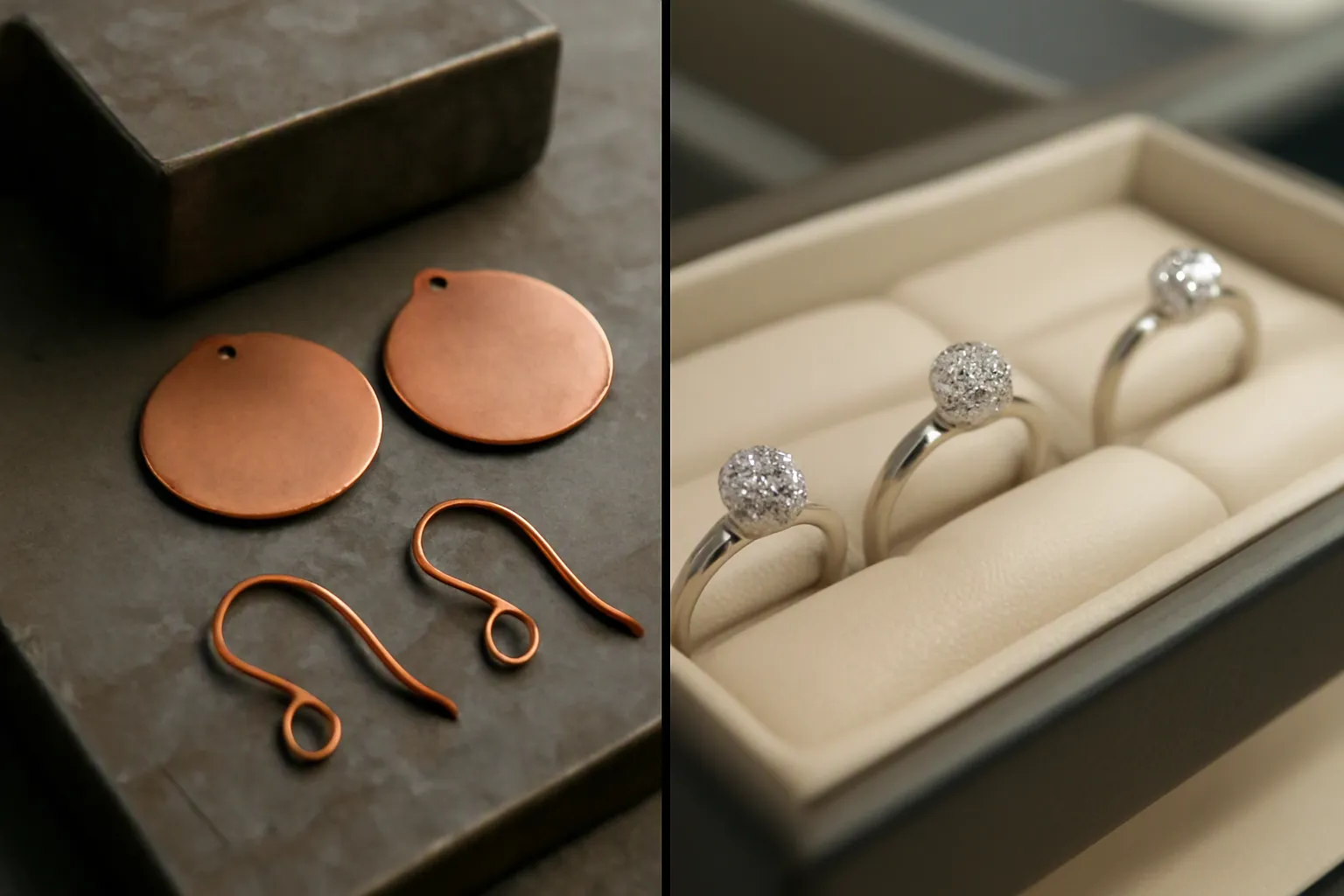
Custom Jewelry vs. Retail: The B2B Sourcing Guide for Brands
Custom jewelry sourcing through direct OEM partnerships offers unit costs 60–80% lower than retail personalization services, with minimum order quantities (MOQs) as low as 12 pieces per style for commercial buyers. Retail alternatives like Kay Jewelers or branded platforms serve individual consumers seeking one-off sentimental items but lack the margin structure, material flexibility, and volume scalability required for B2B resale or private label collections. Purchase-ready buyers must distinguish between manufacturing custom jewelry for inventory and purchasing personalized gifts at retail markups to avoid eroding profitability. For a comprehensive breakdown of these sourcing models, refer to this B2B sourcing guide.
TL;DR / Quick Verdict
Choose custom jewelry via direct OEM if you are a DTC brand, importer, or retailer needing proprietary designs, controlled margins, and scalable production with MOQs starting at 12 units. Choose Alternatives (retail personalization or mass-market catalogs) only if you are sourcing single-unit corporate gifts, testing market demand with zero inventory risk, or require immediate in-store fulfillment without private labeling. For commercial collections involving specific materials like gold-plated copper or gradient crystals, direct OEM is the only viable path to sustainable unit economics.
At-a-Glance Comparison Table
| Dimension | Custom Jewelry (Direct OEM) | Alternatives (Retail/Marketplace) |
|---|---|---|
| Primary Buyer | DTC Brands, Importers, Wholesalers | Individual Consumers, Corporate Gifting |
| Unit Cost Basis | Factory-direct (EXW/FOB) | Retail MSRP (4x–10x markup) |
| Minimum Order Qty | Low (e.g., 12 pcs/style on stock) | 1 piece |
| Design Ownership | Full IP / Private Label Rights | Licensed / Non-Exclusive |
| Material Range | Copper, Silver, Glass, Natural Stone | Primarily Sterling Silver & Diamond |
| Lead Time | Production + Shipping (Weeks) | Immediate or Days |
| Payment Terms | T/T, L/C, PayPal, Xtransfer | Credit Card, Store Financing |
| Scalability | High (Factory capacity dependent) | Low (Inventory constrained) |
| Best For | Margin-driven commercial collections | One-off sentimental purchases |
Custom Jewelry Overview
Custom jewelry in a B2B context refers to contract manufacturing where buyers specify materials, finishes, and dimensions for exclusive production. This model is built for procurement teams and store owners who need to differentiate their assortment from big-box retailers like Jared or Kendra Scott. Standout strengths include material versatility—ranging from vintage rhinestone styles to two-tone glass beads—and financial terms designed for cross-border trade, such as FOB shipping and multi-currency payment options.
For example, a buyer sourcing drop earrings can access specialized finishes like gold-plated or rhodium-plated copper that mimic high-end luxury aesthetics at accessible price points. Unlike retail platforms limited to standard gemstones, OEM partners facilitate niche requests for amethyst, garnet, peridot, or turquoise accents within a cohesive collection. The operational advantage lies in balancing exclusivity with manageable risk; many vetted suppliers now offer hybrid models where buyers can test 12-piece batches before committing to larger production runs.
Alternatives Overview
Alternatives encompass retail personalization services, marketplace wholesalers, and liquidation lots. These channels are built for end-consumers or buyers needing instant gratification rather than strategic inventory development. Retailers like Kay Jewelers provide "Create Your Own" tools and in-store design appointments that excel at selling engagement rings and bridal sets to individuals, often supported by promotional events like Labor Day sales offering significant discounts on personalized items.
However, these alternatives fail commercial buyers on three fronts: lack of proprietary design rights, inflated base pricing, and limited material scope. While a consumer might appreciate scheduling an appointment to customize a diamond band, a store owner cannot resell that same customized piece under their own brand at a competitive margin. Marketplace alternatives may offer lower prices than retail but often lack quality assurance, consistent plating standards, or the ability to replicate specific vintage or gradient crystal aesthetics reliably across multiple orders. Understanding the strategic differences between custom jewelry vs. retail alternatives is essential for avoiding costly sourcing misalignments.
Feature-by-Feature Breakdown
Pricing Structure and Margin Potential
Custom jewelry operates on a cost-plus manufacturing model. Buyers pay for raw materials, labor, and overhead, typically resulting in unit costs that allow for 3x–5x retail markups even when using premium finishes. Trade terms like EXW or FOB provide transparency, allowing buyers to calculate landed costs accurately based on air, sea, or express shipping preferences. In contrast, alternatives operate on retail pricing. Even during promotional periods where Kay Jewelers advertises percentage-off specials, the base price includes retail rent, sales commissions, and marketing spend, making resale margins mathematically unviable for most independent stores.
Material Versatility and Design Control
OEM manufacturers specialize in fashion jewelry materials that bridge the gap between costume and fine jewelry. This includes gold-plated copper bases, faux pearls, and natural stones like amethyst or garnet set in non-precious metals. Buyers can request specific plating thicknesses, stone cuts, or gradient effects that align with seasonal trends. Alternatives are typically restricted to precious metals and genuine diamonds to justify retail price tags. While this suits bridal shoppers, it limits commercial buyers looking to create trend-driven capsule collections featuring turquoise or peridot in affordable settings similar to those found in curated boutiques rather than traditional stores.
Minimum Order Quantities and Inventory Risk
Modern OEM sourcing has moved away from prohibitive 500-piece MOQs. Suppliers like STRAND demonstrate this shift by offering 12-piece MOQs on the majority of their catalog styles, with select items available from single units for sampling. This allows buyers to validate sell-through rates before scaling. Alternatives have no MOQ but carry implicit inventory risk through higher unit costs; buying 50 personalized necklaces at retail prices ties up significantly more capital than producing 50 custom units at factory cost. The low-MOQ OEM model effectively de-risks the testing phase for new DTC brands.
Quality Assurance and Compliance
Direct OEM relationships include defined QC protocols. Reputable suppliers conduct in-house inspections before shipment, verifying plating durability, stone setting security, and finish consistency against approved samples. This is critical for maintaining brand reputation when selling online where returns are costly. Retail alternatives rely on point-of-sale inspection; once a personalized item leaves the store or arrives via mail, recourse for defects is limited to consumer warranties, not commercial replacement guarantees. For buyers targeting EU or UK markets, OEM partners can also ensure compliance with regional nickel-free and lead-safe standards, which retail personalization services rarely document for B2B purposes.
Multilingual Support and Communication Efficiency
Cross-border sourcing friction often stems from language barriers and time zone misalignment. Specialized OEM providers address this with multilingual sales teams covering English, French, Arabic, Spanish, German, and Russian, ensuring technical specifications for complex items like necklace-and-earring sets are understood correctly. Alternatives operate in domestic languages only. For a MENA-based importer sourcing vintage-style glass bead jewelry, communicating directly in Arabic eliminates translation errors that could result in costly production mistakes, a service layer absent in Western retail platforms.
Pros and Cons
Custom Jewelry (Direct OEM)
Pros:
- Margin Protection: Factory-direct pricing enables sustainable retail markups.
- Brand Exclusivity: Full ownership of designs prevents showrooming against competitors.
- Material Flexibility: Access to fashion-forward materials beyond traditional fine jewelry.
- Scalable Testing: Low MOQs (e.g., 12 pcs) allow data-driven assortment planning.
- Commercial Terms: Flexible payment (T/T, L/C, Xtransfer) and shipping options.
Cons:
- Lead Times: Production and international shipping require weeks of planning.
- Upfront Effort: Requires tech packs, sample approvals, and supplier vetting.
- Cash Flow: Deposits typically required before production begins.
- Complexity: Managing cross-border logistics and customs documentation.
Alternatives (Retail/Marketplace)
Pros:
- Speed: Immediate availability for urgent gifting or fill-in needs.
- Zero Commitment: No MOQs or deposit requirements.
- Simplicity: Consumer-grade checkout and return processes.
- Visualization: Advanced online configurators for end-user customization.
Cons:
- Margin Erosion: Retail pricing makes profitable resale nearly impossible.
- No IP Rights: Designs are non-exclusive and widely available.
- Limited Materials: Restricted to precious metals/stones; lacks fashion variety.
- Consumer Terms: No wholesale accounts, net terms, or commercial support.
When to Choose Custom Jewelry
Select direct OEM sourcing when your business model depends on proprietary product differentiation and margin control. Specific scenarios include:
- Launching a Private Label Collection: You need exclusive designs in gold-plated copper or rhodium finishes that cannot be sourced from open marketplaces.
- Testing New Categories: You want to validate demand for gradient crystal earrings or natural stone sets without committing to 300+ unit MOQs.
- Restocking Core Assortments: You have proven sellers and need consistent reproduction with verified QC standards.
- Targeting Specific Demographics: Your customer base seeks vintage or two-tone glass bead aesthetics at accessible price points, not luxury bridal pricing.
- Operating Cross-Border: You require multilingual support and flexible trade terms (FOB/EXW) to manage cash flow and logistics efficiently.
For buyers evaluating potential partners in this space, reviewing vetted supplier lists can streamline the search. Resources like Custom Jewelry: 6 Sources Buyers & DTC Brands Need in 2026 provide benchmarks for assessing manufacturer capabilities against retail alternatives.
When to Choose Alternatives
Retail personalization and marketplace sourcing are appropriate only in narrow commercial contexts:
- Corporate Gifting: You need 10–20 branded items immediately and do not require resale margins.
- Market Validation Pre-Sample: You want to gauge customer reaction to a concept using a proxy product before investing in OEM sampling.
- Emergency Fill-In: A key SKU is delayed, and you need temporary stock to prevent lost sales, accepting lower margins as a cost of retention.
- Personal Use: The purchase is for individual wear or a gift, not commercial inventory.
- Bridal Services Only: Your business is exclusively wedding-focused, and clients expect the in-store experience and financing options provided by established jewelers.
Buyers considering a hybrid approach should consult Custom Jewelry vs. Retail Personalization: The B2B Buyer's Guide to understand how to segment sourcing strategies by product category and margin requirement.
Final Verdict
For purchase-ready B2B buyers, importers, and DTC store owners, custom jewelry via direct OEM is the superior choice for building sustainable, differentiated businesses. The combination of low MOQs, proprietary design rights, and factory-direct pricing creates a structural advantage that retail alternatives cannot match. Alternatives serve a valid function for consumers and emergency procurement but should never form the foundation of a commercial jewelry assortment.
The deciding factor is intent: if you are building inventory to sell, choose OEM. If you are buying to give or test, choose alternatives. Most successful brands eventually migrate entirely to direct sourcing as they scale, recognizing that margin and exclusivity are non-negotiable in competitive fashion jewelry markets.
Your next step should be validating supplier fit against your specific assortment needs. Request a quote, sample kit, or current catalog from STRAND to evaluate MOQs, material options, and production timelines for your target market. Visit strandjewelry.com to initiate a commercial inquiry with multilingual support tailored to US, EU, UK, and MENA buyers.