
Custom Jewelry vs Alternatives: The B2B Sourcing Guide
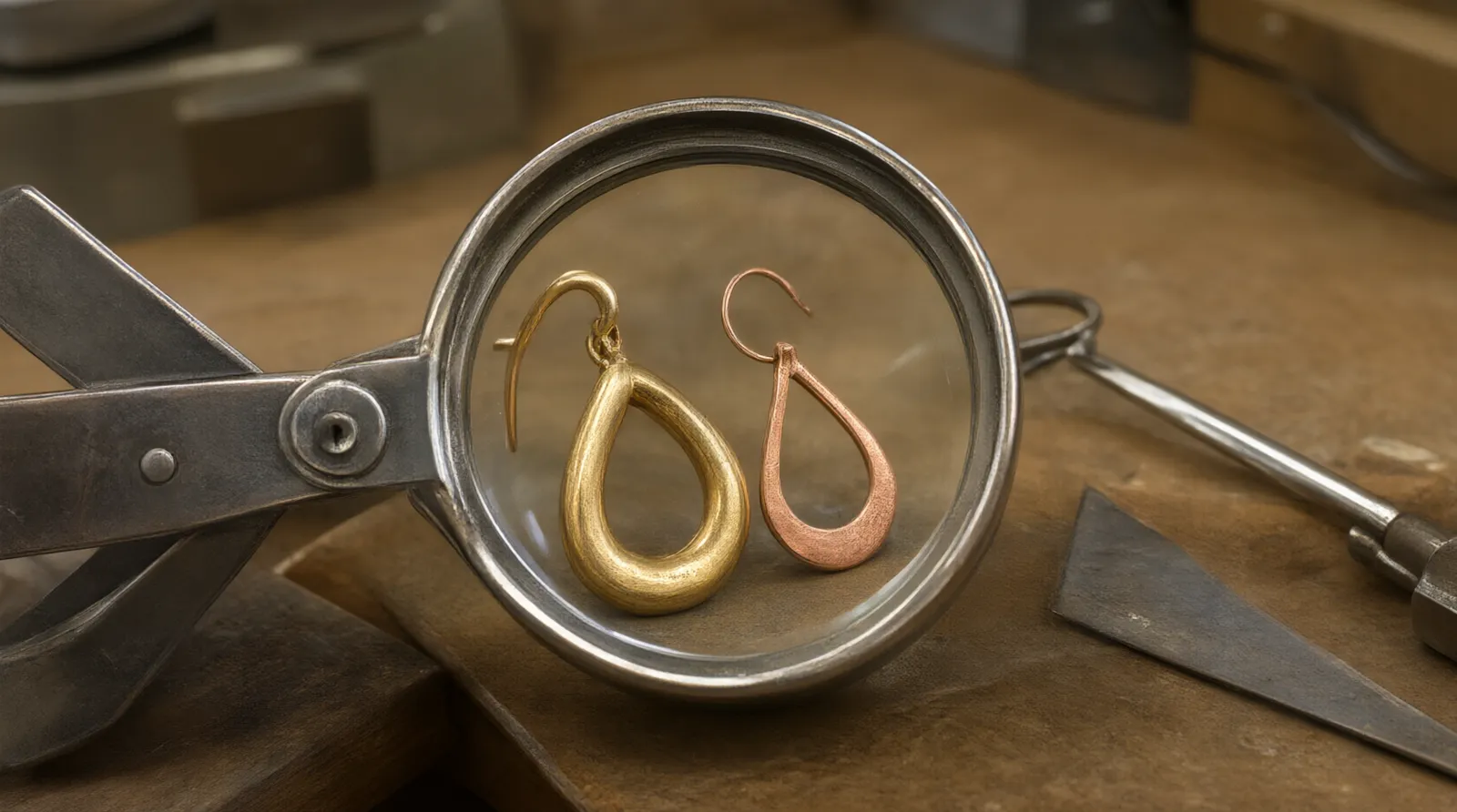
Custom Jewelry vs Alternatives: The B2B Sourcing Guide
Custom jewelry sourced directly from cross-border OEM manufacturers offers DTC brands and importers unit economics that retail alternatives cannot match, provided the buyer can meet minimum order quantities (MOQs) starting at low piece counts per style. Alternatives—ranging from local bench jewelers to wholesale marketplaces—serve buyers who need one-off bespoke pieces or zero-inventory purchasing models. The right choice depends entirely on your procurement volume, margin targets, and supply chain infrastructure. For a deeper look at how these sourcing paths compare operationally, see our custom jewelry B2B sourcing comparison.
TL;DR / Quick Verdict
If you are a US, EU, UK, or MENA-based importer or DTC store owner needing branded fashion jewelry in volume with controlled margins, custom jewelry from a vetted cross-border manufacturer like STRAND is the correct path. If you are a consumer-facing retailer fulfilling single-piece bespoke orders—like a bridal ring or an heirloom redesign—or a dropshipper avoiding inventory risk, local jewelers and wholesale marketplace alternatives are better suited to your model.
At-a-Glance Comparison Table
| Dimension | Custom Jewelry (OEM / STRAND) | Alternatives (Local Jewelers, Marketplaces, Big Box) |
|---|---|---|
| Pricing Model | Direct-from-workshop pricing (e.g., EXW or FOB terms) | Retail markup, wholesale distributor tiers, or platform fees |
| Minimum Order Quantity | Low MOQs per style on most designs; select styles available from 1 pc | 1 pc (local jewelers) to bulk packs (marketplaces) |
| Core Materials | Gold-plated/rhodium-plated copper, glass beads, natural stone, faux pearls, 925-style silver finishes | Fine metals, certified diamond, amethyst, garnet, peridot, turquoise |
| Product Focus | Drop earrings, stud earrings, necklace + earring sets (vintage, gradient crystal, two-tone) | Bespoke engagement rings, repairs, generic wholesale assortments |
| Quality Assurance | In-house QC inspection before every shipment | Varies by artisan; no standardized pre-shipment QC on marketplaces |
| Shipping & Logistics | Air, sea, or express freight | Local pickup, standard parcel, or FBA fulfillment |
| Payment Terms | T/T bank transfer, Western Union, PayPal, L/C, and other corporate payment methods | Credit card, financing (e.g., Affirm/Klarna), platform escrow |
| Language Support | Multilingual sales teams to support international buyers | Primarily local language; English-dominant on global platforms |
| Best For | Importers, DTC brands, multilingual procurement teams | End consumers, boutique owners buying single display pieces |
Custom Jewelry Overview
Custom jewelry in the B2B context refers to fashion and semi-fine pieces designed, manufactured, and exported specifically for a brand’s catalog or a buyer’s regional market. It is built for importers, DTC store owners, and procurement teams operating across borders who need consistent product lines rather than one-off novelties.
STRAND operates as a brand linking vetted Chinese workshops directly to overseas buyers. This model bypasses domestic middlemen, giving buyers access to a stock catalog alongside dedicated custom OEM capabilities. The standout strength here is the intersection of low MOQs and material versatility. Buyers can source vintage, gradient crystal, two-tone glass bead, and rhinestone styles executed in gold-plated and rhodium-plated copper, glass beads, natural stone, and faux pearls. For teams managing international storefronts, the availability of multilingual sales support removes a significant friction point in specification alignment.
Custom OEM production allows buyers to dictate exact finishes, including 925-style silver looks, ensuring the final product aligns with specific luxury positioning without paying fine-metal commodity premiums. Because STRAND handles in-house QC inspection before every shipment, the risk of receiving defective bulk orders—a common failure point in cross-border sourcing—is structurally reduced.
Alternatives Overview
Alternatives to direct OEM custom jewelry encompass three main categories: local bespoke jewelers, large-scale retail chains, and digital wholesale marketplaces. These options serve buyers who prioritize immediate availability, localized service, or fine gemstone certification over unit-cost optimization. We have also published a detailed breakdown of the best alternatives to custom jewelry for buyers evaluating non-OEM routes.
Local jewelers provide highly personalized services. For example, Morin Jewelers offers custom designs as a service, catering specifically to clients who need unique, handcrafted items. They also offer custom bridal jewelry and interactive tools like a 'Build Your Own Ring' option. This alternative is ideal for end-consumers or boutique owners fulfilling a specific client request, but it lacks the scalability required for a DTC brand launching a seasonal collection.
Large retail chains and established brands—such as Jared stores, Kendra Scott boutiques, or Scott Kay collections—offer curated, ready-to-buy assortments. These brands excel in marketing and consumer trust, often featuring certified stones like diamond, amethyst, garnet, peridot, and turquoise. However, purchasing their products for resale means accepting fixed wholesale margins dictated by the brand, leaving no room for proprietary branding.
Digital marketplaces like Amazon aggregate thousands of sellers offering generic fashion jewelry. While convenient for testing demand with zero manufacturing lead time, these platforms introduce intense price competition, inconsistent quality control, and no pathway to building a distinct brand identity.
Feature-by-Feature Breakdown
Pricing and Trade Terms
Direct custom jewelry operates on trade terms such as EXW (Ex Works) or FOB (Free on Board). This gives the buyer total control over freight forwarding and insurance costs. Payment structures accommodate diverse corporate finance needs, supporting T/T bank transfers, Western Union, PayPal, L/C (Letters of Credit), and other international payment methods. For an importer in the MENA region or a DTC brand in the EU, this flexibility ensures compliance with local banking regulations while optimizing cash flow.
Alternatives handle pricing very differently. Local jewelers charge retail or bespoke service rates, which include heavy overhead for physical storefronts and artisan labor. Marketplace alternatives bake platform commission fees (often 15% or higher) into the unit cost, compressing the buyer's margin. Big-box retailers operate on strict wholesale tier pricing that rarely negotiates downward unless purchasing massive volumes.
Minimum Order Quantities and Scalability
Scalability is where custom jewelry establishes its primary advantage. STRAND’s catalog enforces low MOQs per style on the majority of its designs, with select styles available from just 1 pc (quantities and catalog sizes are subject to change seasonally, so verify current thresholds at the time of ordering). This structure allows a new DTC brand to test multiple SKUs—such as a gradient crystal drop earring alongside a two-tone glass bead stud—without committing to thousands of units upfront. Once a SKU proves profitable, scaling production through the same OEM pipeline is straightforward.
Local alternatives scale poorly. A bench jewer crafting a custom piece takes days or weeks per unit; they cannot manufacture 500 matching necklace and earring sets for a holiday launch. Marketplaces offer infinite inventory but zero exclusivity, meaning your competitors can source the exact same SKU simultaneously.
Material Specifications and Product Range
Custom jewelry manufacturers working with fashion and semi-fine materials focus on high-margin aesthetics. STRAND specializes in drop earrings, stud earrings, and necklace + earring sets. The material palette includes gold-plated and rhodium-plated copper, glass beads, natural stone, and faux pearls. Custom OEM requests can incorporate 925-style silver finishes and specific rhinestone settings. This allows brands to project a luxury aesthetic using cost-effective base metals and plating techniques.
Alternatives dominate when genuine precious materials are required. If a buyer needs certified diamond solitaires, natural amethyst, garnet, peridot, or turquoise set in solid 14k gold, local jewelers or specialized fine jewelry wholesalers are the appropriate route. Brands like Kendra Scott bridge this gap slightly by offering semi-precious stones in fashion settings, but again, without the ability to white-label or customize the underlying design for your own store.
Quality Control and Compliance
In cross-border sourcing, quality assurance is a major evaluation criterion. STRAND mitigates this risk through mandatory in-house QC inspection before every shipment leaves the facility. For multilingual procurement teams, communicating specific tolerance levels for plating thickness or clasp tension in the buyer's preferred language ensures the factory floor understands the exact requirements.
Alternatives vary wildly. A local jeweler provides hands-on inspection at the point of sale. Conversely, marketplace purchases rely on user reviews and return policies rather than proactive, pre-shipment QC. If a batch of 100 earrings arrives with faulty clasps from an unvetted marketplace seller, the buyer absorbs the loss and the logistical headache of international returns.
Logistics and Lead Times
Custom jewelry requires planning around manufacturing and shipping lead times. STRAND supports air, sea, and express shipping, allowing buyers to balance speed against freight costs. Sea freight suits planned seasonal drops where unit economics are paramount, while express shipping handles urgent restocks.
Alternatives offer immediacy. Walking into Jared stores or ordering via Amazon Prime delivers inventory in hours or days. Local jewelers operate on appointment-based timelines. For a DTC brand running a flash sale, relying on custom OEM requires forecasting demand weeks in advance, whereas marketplace alternatives allow reactive, albeit lower-margin, purchasing.
Brand Exclusivity and Customization
The entire premise of custom jewelry is brand ownership. By utilizing custom OEM services, a buyer dictates the design, the packaging, and the narrative. You are not reselling someone else's vision. To understand how different supplier models impact this exclusivity, our breakdown of 6 Custom Jewelry Sources Ranked: OEM Suppliers & Retail Benchmarks for 2026 details how direct workshop links compare against traditional distributors.
Alternatives inherently limit exclusivity. Buying wholesale from established brands means adhering to their MAP (Minimum Advertised Price) policies and visual merchandising guidelines. Marketplace goods are universally accessible, making price the only differentiator—a race to the bottom that erodes brand equity.
Pros and Cons
Custom Jewelry (OEM / STRAND)
Pros:
- Direct workshop pricing (EXW/FOB) maximizes gross margins.
- Low MOQs per style reduce initial capital risk.
- Full design control for proprietary DTC branding.
- In-house QC inspection guarantees consistency before international transit.
- Multilingual support streamlines cross-border communication.
- Flexible payment terms (T/T, L/C, PayPal, Western Union, etc.).
Cons:
- Requires lead time for manufacturing and international shipping.
- Demands accurate demand forecasting; you hold the inventory.
- Base materials (plated copper, glass beads) do not satisfy buyers seeking solid precious metals or certified gemstones.
Alternatives (Local Jewelers, Marketplaces, Retail Chains)
Pros:
- Immediate availability and zero manufacturing lead time.
- Access to fine materials (diamond, solid gold, natural amethyst, garnet, peridot, turquoise).
- No bulk inventory commitment (especially via local bespoke services or dropshipping).
- Face-to-face service and localized warranties.
Cons:
- Significantly higher per-unit costs due to retail markups or platform fees.
- Zero exclusivity; identical products are available to competitors.
- Inability to scale bespoke services for commercial volume.
- Lack of standardized QC for bulk marketplace purchases.
When to Choose Custom Jewelry
Choose custom jewelry if you are a DTC store owner preparing for a seasonal launch and need 500 units of a specific vintage rhinestone drop earring. The low MOQ allows you to prototype the design, approve the gold-plated copper finish, and scale production while maintaining healthy margins.
This route is also necessary for importers serving diverse linguistic markets. If your procurement team operates in Arabic for the MENA region and French for the EU, STRAND’s multilingual sales infrastructure prevents costly miscommunications regarding specifications. Furthermore, if your business model relies on proprietary branding rather than curating third-party labels, direct OEM is the only viable operational model. Buyers evaluating broader sourcing strategies should review our guide on Custom Jewelry: 6 Sources Buyers & DTC Brands Need in 2026 to map out their vendor matrix.

When to Choose Alternatives
Choose alternatives if you are a local boutique owner fulfilling a single customer’s request for a bespoke engagement ring. Services like the 'Build Your Own Ring' configurator offered by Morin Jewelers are purpose-built for this exact scenario. An OEM factory producing plated fashion jewelry cannot cast a custom platinum band with a certified diamond.
Alternatives are also appropriate if you are testing a completely unproven market niche and refuse to hold any inventory. Purchasing generic stock from Amazon or wholesale distributors allows you to validate consumer interest before committing to tooling and manufacturing costs. Finally, if your target demographic strictly demands natural, untreated gemstones—such as high-grade turquoise or peridot set in fine metals—established fine jewelry retailers possess the gemological certifications and supply chains that fashion jewelry manufacturers do not utilize.
Final Verdict
The decision between custom jewelry and its alternatives is not a matter of one being objectively superior; it is a function of your commercial architecture. If your goal is to build a scalable, branded DTC business or supply regional retail chains with exclusive, high-margin fashion jewelry, direct OEM custom jewelry is the required infrastructure. The combination of low MOQs, EXW/FOB trade terms, and pre-shipment QC transforms manufacturing from a bottleneck into a competitive advantage.
If your operations revolve around one-off fine jewelry commissions, immediate local fulfillment, or zero-risk market testing, alternatives ranging from local artisans to digital marketplaces will serve those specific constraints better.
For purchase-ready buyers, importers, and DTC brand owners looking to secure pricing and evaluate production capacity for their next collection, the next step is to request current terms directly from the manufacturer. Review the available catalog, specify your plating and material requirements, and initiate a sample run. Request a quote, get current MOQ and pricing details, or arrange a sample order by contacting the procurement team at https://strandjewelry.com.