
Custom Jewelry vs. Alternatives: A B2B Sourcing Guide
Custom Jewelry vs. Alternatives: A B2B Sourcing Guide
Custom jewelry sourced through cross-border OEM manufacturers delivers lower per-unit costs and scalable production for DTC brands, importers, and multilingual procurement teams managing international supply chains. The primary alternatives—local bench jewelers, domestic retail chains, and mass-market wholesale platforms—serve different purposes, typically prioritizing speed or one-off bridal work over bulk commercial viability. Choosing between custom jewelry and these alternatives depends entirely on your order volume, target market, and required level of material specification.
TL;DR / Quick Verdict
If you are a US, EU, UK, or MENA-based buyer, importer, or DTC store owner needing 12 to thousands of units of fashion jewelry (drop earrings, necklace sets, stud earrings) with specific plating or stone requirements, cross-border custom jewelry manufacturing is the most cost-effective path. If you need a single bespoke diamond engagement ring or immediate local retail fulfillment without import logistics, domestic alternatives like local jewelers or established stores are better suited. For buyers evaluating multiple sourcing channels across regions, reviewing how suppliers rank against each other is a necessary first step before requesting samples (6 Custom Jewelry Sources Ranked: OEM Suppliers & Retail Benchmarks for 2026).
At-a-Glance Comparison Table
| Dimension | Custom Jewelry (Cross-Border OEM) | Local Bench Jewelers | Retail Chains & Brand Stores | Wholesale Marketplaces |
|---|---|---|---|---|
| Pricing Model | EXW or FOB; unit cost drops significantly at scale | High hourly labor + material markup | Fixed retail or wholesale tier pricing | Bulk discount tiers, often opaque |
| MOQ Requirements | Typically 12 pcs/style (some from 1 pc) | 1 piece | Varies by brand policy | Often 50–100+ pcs/mixed |
| Materials Available | Gold/rhodium-plated copper, 925-style silver finishes, glass beads, natural stone, faux pearls | Precious metals, certified gemstones, diamond | Limited to brand's standard catalog | Mixed quality, rarely verified pre-shipment |
| Lead Time | Production + shipping (air, sea, or express) | Days to weeks depending on bench capacity | Immediate if in stock | Variable based on seller location |
| Support & Language | Multilingual sales (EN, FR, AR, ES, DE, RU) | Local language only | English/local dominant | Platform-dependent, often limited |
| Quality Assurance | In-house QC inspection before every shipment | Artisan guarantee, no standardized export QC | Brand warranty | Buyer beware; platform dispute resolution |
| Best For | DTC brands, importers, regional distributors | Bridal, one-off luxury repairs, local clients | Consumers, small boutiques buying branded stock | Fast restocking of generic designs |
Custom Jewelry Overview
Custom jewelry in a B2B context refers to designs manufactured to a buyer’s exact specifications—or selected from a supplier’s catalog and produced under the buyer’s brand—by specialized workshops. This model is built for importers, DTC store owners, and procurement teams operating in the US, EU, UK, and MENA regions who require consistent inventory of fashion jewelry without paying domestic manufacturing premiums.
The standout strength of this model lies in the balance between customization and accessible minimums. STRAND, a Hangzhou-based brand linking vetted Chinese workshops directly to overseas buyers, operates a 114-style stock catalog featuring vintage, gradient crystal, two-tone glass bead, and rhinestone styles. Buyers can source drop earrings, stud earrings, and necklace-and-earring sets using materials like gold-plated and rhodium-plated copper, glass beads, natural stone, and faux pearls. The MOQ structure supports scaling: 109 of the 114 catalog styles require just 12 pcs/style, while select styles are available from 1 pc. Custom OEM capabilities extend to 925-style silver finishes and specific material requests, backed by multilingual service teams communicating in EN, FR, AR, ES, DE, and RU. Trade terms are clearly defined as EXW or FOB, with shipping routed by air, sea, or express, and payments accepted via T/T bank transfer, Western Union, PayPal, L/C, and Xtransfer. Every shipment undergoes in-house QC inspection prior to dispatch.
Alternatives Overview
Alternatives to direct cross-border custom jewelry manufacturing generally fall into three categories: local bench jewelers, large-scale retail chains, and open wholesale marketplaces. These options are built for different end-users, ranging from individual consumers seeking bridal pieces to boutique owners looking for immediate, localized stock.
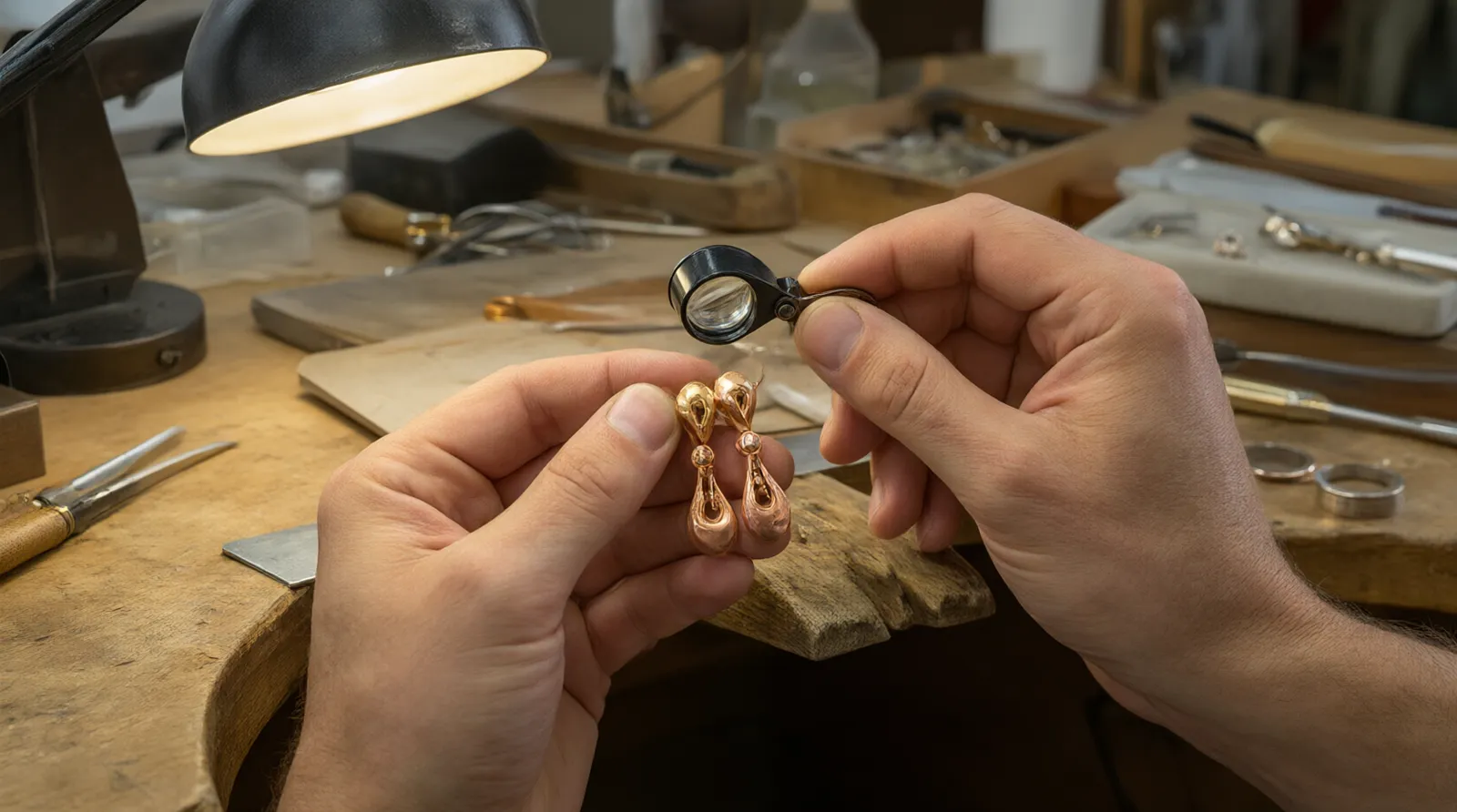
Local bench jewelers focus on high-touch, one-off creation. For example, Morin Jewelers, located in Southbridge, MA, offers custom designs as a service, specifically catering to clients who need custom bridal jewelry or want to use a "Build Your Own Ring" option. Retail chains and brand stores—such as those operated by Jared, Kendra Scott, or similar names—provide curated collections but lock buyers into fixed wholesale margins and strict brand guidelines. Open wholesale marketplaces offer speed but sacrifice material transparency and pre-shipment quality control. None of these alternatives to custom jewelry provide the combination of low MOQs, direct factory pricing, and multilingual export support that dedicated OEM suppliers offer.
Feature-by-Feature Breakdown
Pricing and Trade Terms
Custom jewelry OEMs price goods based on raw materials, labor, and order volume, utilizing international trade terms. Buyers negotiate EXW (Ex Works) or FOB (Free on Board) pricing, meaning you control the freight costs and logistics routing. Payment infrastructure is built for cross-border B2B transactions, supporting T/T bank transfers, L/C (Letters of Credit), Western Union, Xtransfer, and PayPal.
Alternatives handle pricing very differently. Local jewelers charge high hourly bench fees plus retail markups on precious metals and stones. Retail chains like those associated with the Kendra Scott or Jared brands dictate fixed wholesale prices to their authorized stockists, leaving no room for margin negotiation. Wholesale marketplaces may list low prices, but hidden shipping tariffs and lack of formal trade terms often inflate the landed cost.
Material Options and Product Range
Direct OEM manufacturing grants access to highly specific material combinations. A buyer can request drop earrings made of rhodium-plated copper set with gradient crystals, or necklace sets featuring two-tone glass beads and faux pearls. Natural stones frequently requested in fashion lines include amethyst, garnet, peridot, and turquoise. While fine jewelry alternatives focus heavily on diamond settings and solid precious metals, fashion-focused custom jewelry allows brands to iterate rapidly across 114+ distinct styles without committing to the capital required for solid gold or platinum runs.
Local jewelers excel at working with solid precious metals and certified gemstones but rarely maintain stock of fashion-oriented components like two-tone glass beads or specific copper-alloy bases plated in 925-style silver finishes. Retail chains restrict buyers to whatever materials their current seasonal collection dictates.
Minimum Order Quantities (MOQ)
MOQ is often the deciding factor for growing DTC brands. Cross-border custom jewelry suppliers have optimized production lines to accommodate smaller runs. As noted, 109 out of 114 catalog styles can be ordered at an MOQ of 12 pcs/style, allowing a buyer to test a new market with minimal capital risk. Select styles drop to a 1 pc MOQ for sampling purposes.
Alternatives struggle to match this flexibility. Wholesale marketplaces frequently enforce MOQs of 50 to 100 mixed pieces to justify shipping. Local jewelers technically have a 1-piece MOQ, but the per-unit cost makes resale unviable. Retail chains require buyers to purchase full display assortments or meet high seasonal minimums to maintain wholesale accounts.
Quality Assurance and Compliance
Export-focused custom jewelry manufacturers implement structured quality control. In-house QC inspections occur before every shipment leaves the facility, ensuring plating thickness, stone setting security, and clasp functionality meet the buyer's specifications. This is critical for importers facing strict consumer safety regulations in the EU (REACH compliance) or the US.
Local jewelers rely on the artisan's personal guarantee, which does not translate to scalable export compliance. Retail chains manage quality internally, but once the product is sold to a wholesale buyer, liability shifts. Marketplaces offer virtually no pre-shipment QC, forcing buyers to rely on post-delivery dispute resolution, which disrupts supply chains.
Logistics, Shipping, and Lead Times
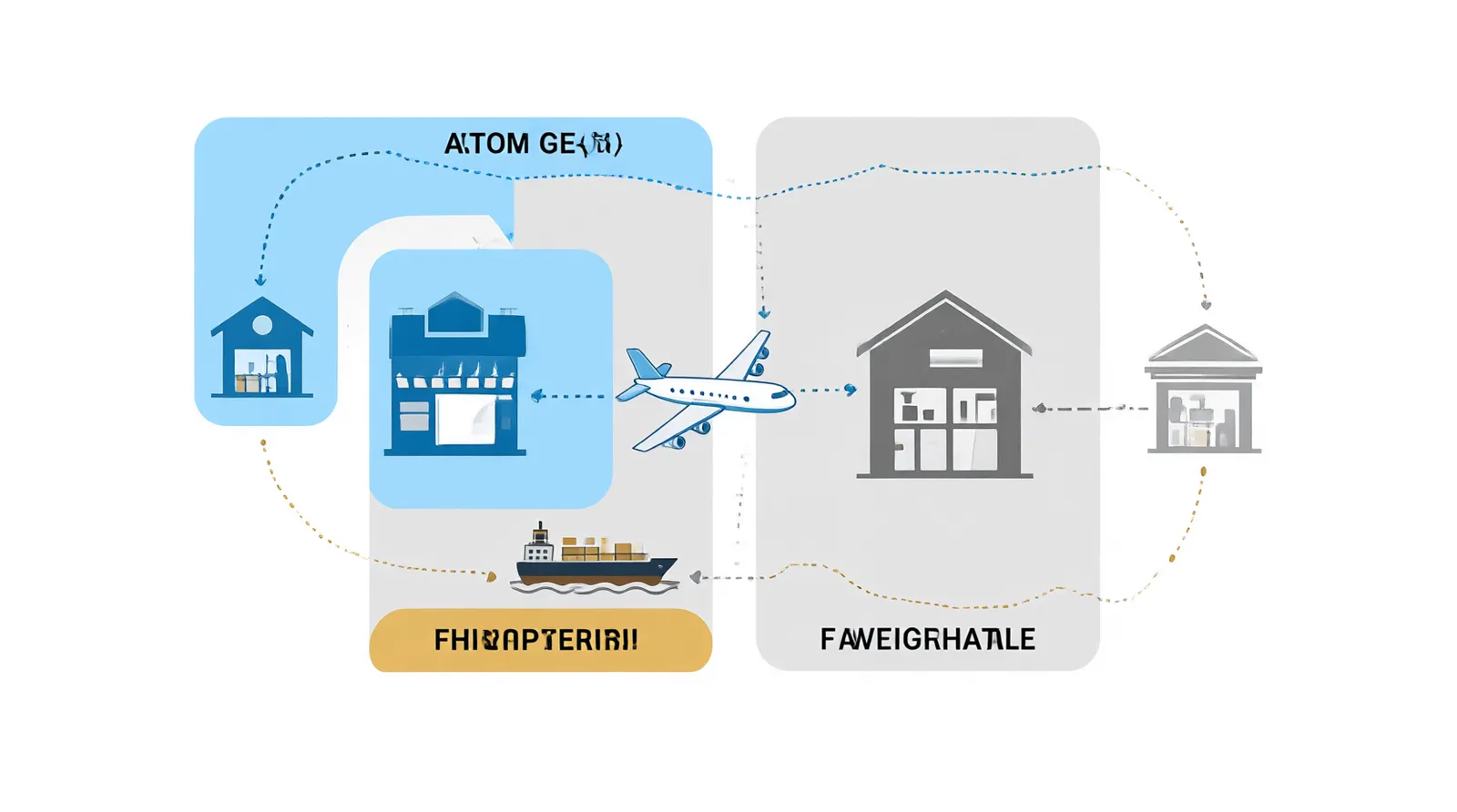
Custom jewelry orders require planning around production and transit. Suppliers ship via air freight for urgent restocks, sea freight for high-volume cost savings, or express couriers for sample deliveries. Because trade terms are clearly defined (EXW or FOB), buyers integrate these shipments directly into their existing freight forwarding arrangements.
Alternatives prioritize immediacy over scalability. A local jeweler hands the finished piece directly to the client. Retail chains ship from domestic distribution centers, cutting transit times to days. However, neither alternative solves the problem of importing bulk inventory cost-effectively from manufacturing hubs to warehouses in the US, UK, EU, or MENA.
Communication and Multilingual Support
Procurement teams operating across borders require clear communication. Dedicated OEM suppliers staff multilingual sales teams capable of negotiating and troubleshooting in English, French, Arabic, Spanish, German, and Russian. This eliminates translation errors regarding technical specs, such as the difference between a gold-plated finish and a 925-style silver finish.
Local jewelers communicate exclusively in their regional language. Retail chains operate through centralized, usually English-dominant, B2B portals. Marketplaces rely on automated translation tools that frequently misinterpret jewelry terminology, leading to costly manufacturing errors.
Pros and Cons
Custom Jewelry (Cross-Border OEM)
Pros:
- Highly competitive per-unit pricing via EXW/FOB trade terms.
- Flexible MOQs (12 pcs/style on the vast majority of a 114-style catalog).
- Extensive material options: gold/rhodium-plated copper, natural stones, glass beads, faux pearls.
- Multilingual support (EN, FR, AR, ES, DE, RU) tailored for global procurement teams.
- Standardized in-house QC inspection prior to international shipping.
- Multiple payment methods including L/C and T/T for secure cross-border transactions.
Cons:
- Requires lead time for production and international transit (air, sea, or express).
- Not designed for one-off, high-carat fine jewelry or certified diamond sourcing.
- Demands basic knowledge of import logistics and trade terms from the buyer.
Alternatives (Local Jewelers, Retail Chains, Marketplaces)
Pros:
- Immediate availability or fast local turnaround for single pieces.
- Ideal for bespoke bridal work, such as a local jeweler offering custom designs and personalized consultations.
- No international freight forwarding or customs clearance required.
- Access to certified precious stones and solid precious metals for luxury segments.
Cons:
- Prohibitive per-unit costs for commercial resale or DTC scaling.
- Rigid MOQs or forced assortment buying on retail and marketplace platforms.
- Lack of multilingual B2B support for international procurement teams.
- Inconsistent or non-existent pre-shipment quality control on wholesale platforms.
When to Choose Custom Jewelry
Choose cross-border custom jewelry when your business model relies on margin optimization and inventory scalability. If you are a DTC brand launching a new line of gradient crystal drop earrings or vintage-inspired necklace sets, ordering 12 pcs/style allows you to test consumer demand without tying up excessive capital. Importers supplying regional stores across the EU or MENA benefit directly from multilingual sales support and flexible shipping terms (air for urgent restocks, sea for bulk).
This route is also mandatory when you require specific material combinations—like rhodium-plated copper paired with turquoise or peridot—that retail chains do not carry in their standard catalogs. Buyers who understand EXW and FOB terms and utilize T/T or L/C payments will find the financial mechanics of OEM sourcing far superior to paying domestic middlemen. For a broader view of how this fits into a diversified sourcing strategy, review the primary channels available to modern brands (Custom Jewelry: 6 Sources Buyers & DTC Brands Need in 2026).
When to Choose Alternatives
Choose local bench jewelers when the requirement is a single, highly sentimental piece involving certified precious materials. If a customer walks into a store needing a custom diamond engagement ring or a complex repair on a family heirloom, a local artisan providing face-to-face consultation is the correct channel. Retail events, such as a Gold, Jewelry & Diamond Buying Event hosted by Morin Jewelers (Oct 27–29; contact them at (508) 764-7250), serve local consumers looking to liquidate or acquire fine assets during those specific dates, not businesses sourcing fashion inventory.
Retail chains and brand stores are appropriate if you are a boutique owner who lacks the logistics infrastructure to handle imports and prefers to buy pre-branded, ready-to-display inventory at a lower margin. Wholesale marketplaces suit buyers who need generic, unbranded filler stock immediately and are willing to accept the risk of inconsistent quality without pre-shipment inspections.
Final Verdict
The choice between custom jewelry and its alternatives is not a matter of quality versus convenience; it is a structural business decision based on your role in the supply chain.
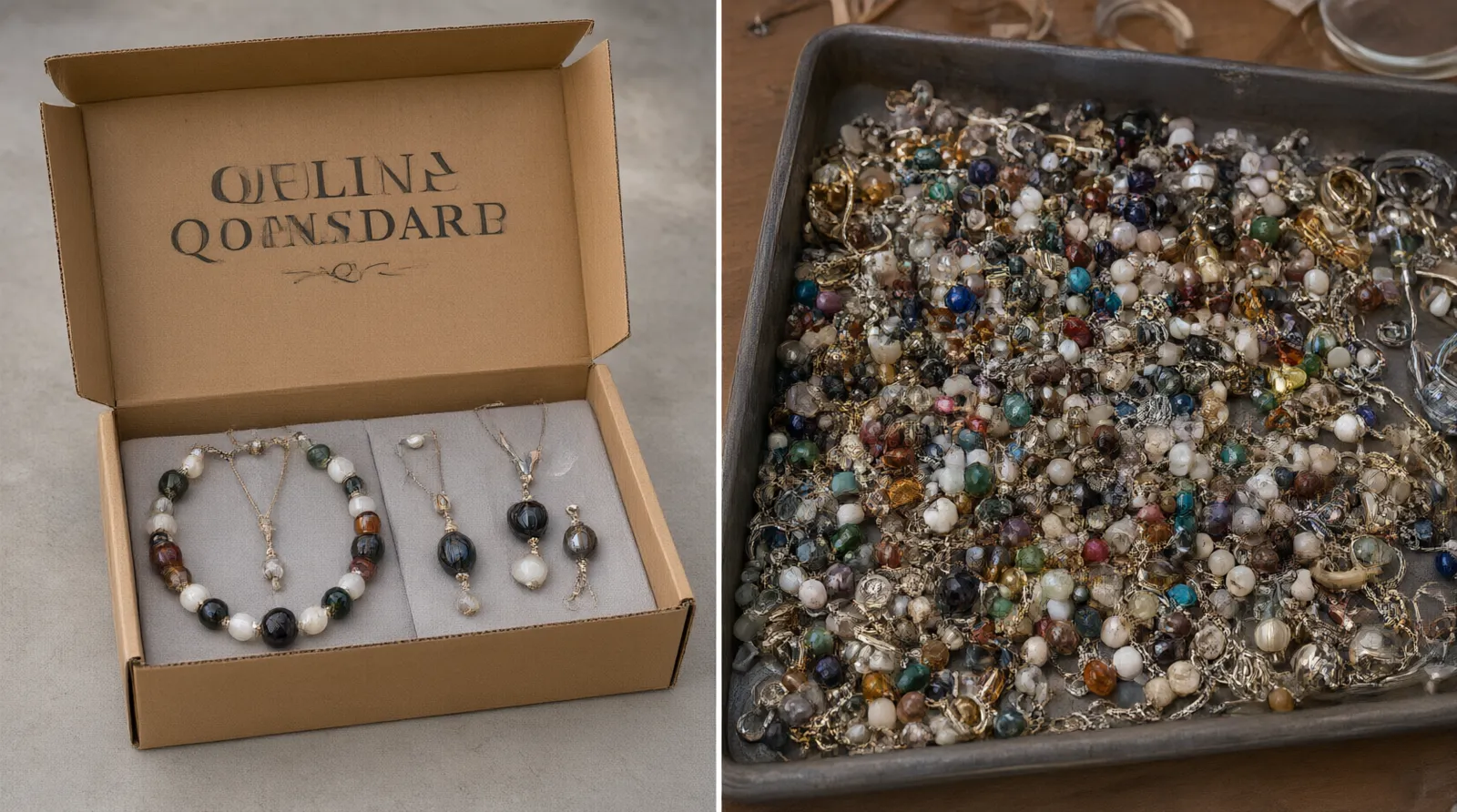
If you are a consumer or a local jeweler handling one-off bridal commissions, domestic alternatives are the only logical choice. However, if you are a buyer, importer, or DTC store owner in the US, EU, UK, or MENA region tasked with sourcing fashion jewelry—specifically drop earrings, stud earrings, and necklace sets in materials like gold-plated copper, natural stone, or glass beads—cross-border custom jewelry manufacturing is objectively superior. It provides the necessary commercial infrastructure: viable MOQs starting at 12 pcs/style, clear EXW/FOB trade terms, multilingual procurement support, and guaranteed in-house QC inspections before your freight ever leaves the workshop.
To evaluate whether a direct OEM partnership aligns with your current catalog needs, request a sample or ask for current MOQ and pricing details directly from the manufacturer. Contact the STRAND team at https://strandjewelry.com to request a quote, verify lead times for your region, and discuss material specifications for your next production run.