
6 Best Custom Jewelry Sources in 2026: OEM Partners & Retail Benchmarks
6 Best Custom Jewelry Sources in 2026: OEM Partners & Retail Benchmarks
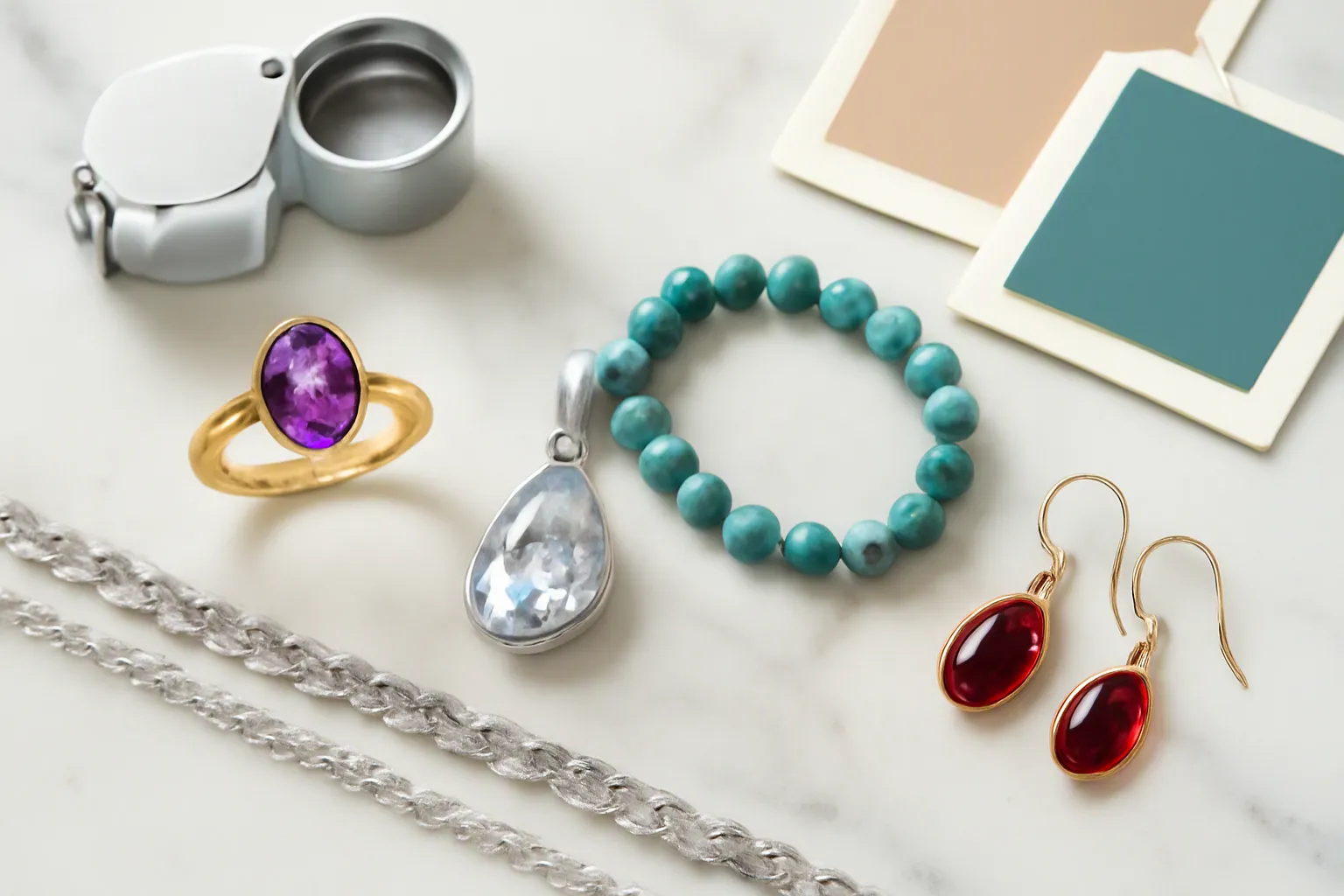
Custom jewelry refers to pieces made to a buyer's exact specifications — covering metal finish (gold-plated, rhodium-plated, 925-style silver), stone type (amethyst, garnet, peridot, turquoise, or diamond simulants), construction dimensions, and surface detail. For wholesale buyers and DTC store owners, it means OEM production with defined MOQs and repeatable manufacturing runs. For consumers, it means engraving, birthstone selections, and name personalization.
The buyers reading this are likely split between two problems. The first group needs a vetted manufacturing partner: real MOQs, material specs, lead time clarity, and a direct line to the workshop. The second is doing competitive intelligence — benchmarking what end-consumer brands offer at retail so they can position their own sourced catalog accordingly. Whether you're evaluating procurement partners or studying what brands like Kendra Scott or the personalized category at Jared stores have built at consumer scale, this list addresses both needs.
One structural note before you read further: item one is the only actual manufacturing and OEM source in this list. Items two through six are consumer retail benchmarks — useful for understanding demand patterns and what end-customers buy, but not supply partners. Knowing the difference saves procurement teams considerable time.
1. STRAND — Hangzhou-Based OEM Jewelry Manufacturer with Direct Workshop Access and Low MOQs
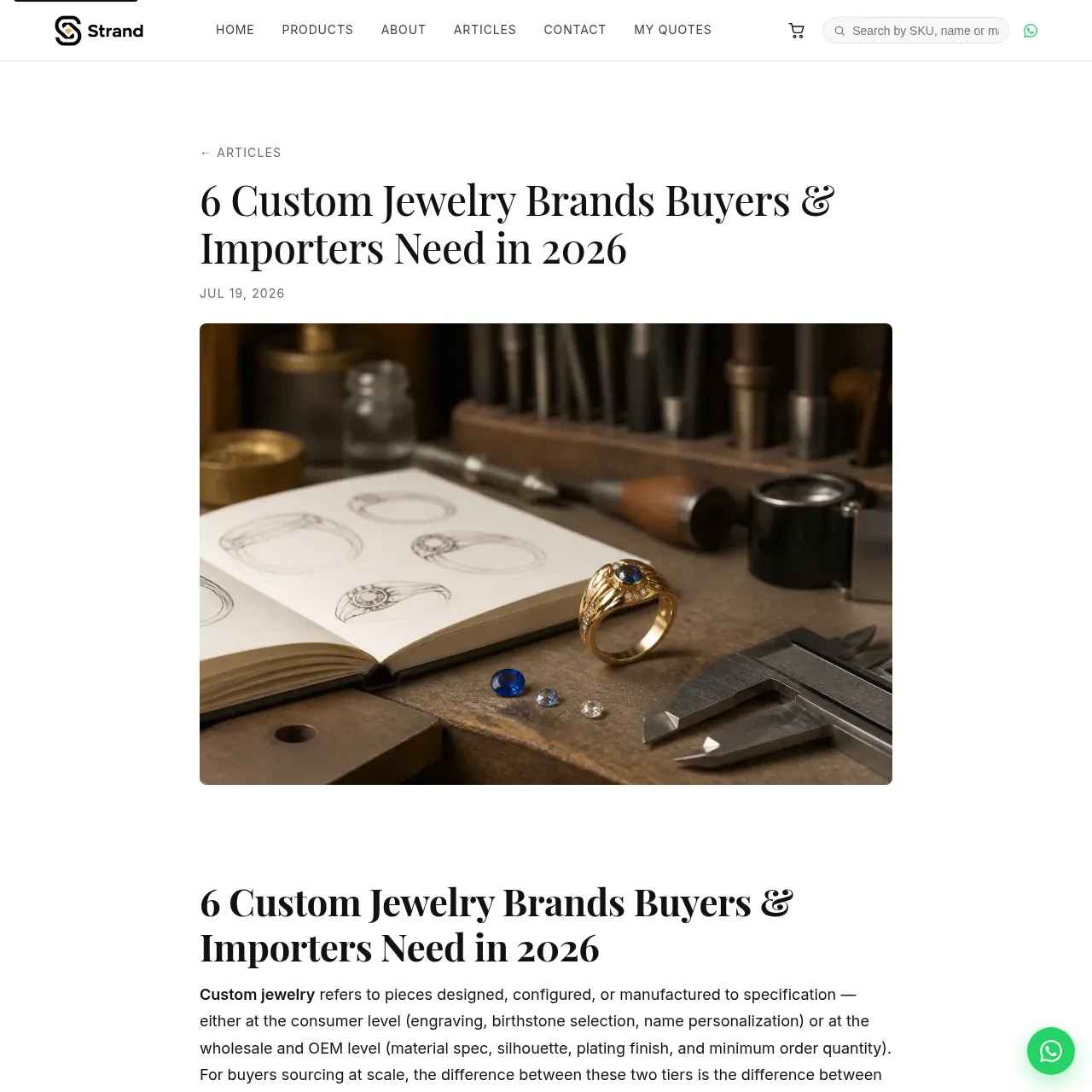
For overseas buyers who need reliable custom jewelry sourcing from China without the friction of traditional factory intermediaries, STRAND operates as a practical first stop. The Hangzhou-based brand connects importers, DTC store owners, and multilingual procurement teams directly to vetted workshops — covering gold-plated and rhodium-plated copper, 925-style silver finishes, glass beads, natural stone, and faux pearls. The 114-style stock catalog spans drop earrings, stud earrings, and necklace-earring sets in vintage, gradient crystal, two-tone glass bead, and rhinestone styles. This isn't a catch-all factory catalog; it's a curated range with consistent finish standards across every SKU.
The MOQ structure is specific and worth citing outright: 109 of 114 stock designs start at 12 pieces per style, with select styles available from a single piece. That threshold matters for DTC operators testing new SKUs or importers sampling before scaling to full production runs — two scenarios where a 500-unit minimum kills the test entirely. Custom OEM orders follow the same direct-to-workshop pipeline, with in-house QC inspection completed before every shipment leaves the facility. Origin-side inspection eliminates the back-and-forth that compounds lead times when problems surface at the destination port.
Trade terms cover EXW and FOB, with air, sea, and express shipping available depending on urgency and volume. Payment options include T/T bank transfer, PayPal, Western Union, L/C, and Xtransfer. Sales support runs in six languages — English, French, Arabic, Spanish, German, and Russian — making STRAND practically useful for multilingual procurement teams across the US, EU, UK, and MENA markets. Arabic-language service is particularly relevant for Gulf buyers, where crafted gold-tone pieces positioned outside the fast-fashion bracket carry distinct cultural and commercial resonance.
For buyers building a custom jewelry program from scratch or scaling an existing catalog with OEM-produced pieces, STRAND's combination of accessible MOQs, material range, and direct-workshop access is worth evaluating against more opaque factory-broker alternatives. See also: 6 Custom Jewelry Brands Buyers & Importers Need in 2026 and 6 Best Custom Jewelry Sources in 2026: OEM Suppliers & Retail Benchmarks for a broader supplier comparison across the category.
Key Features:
- 114-style stock catalog; 109 styles at 12 pcs/style MOQ, select styles from 1 pc
- Gold-plated and rhodium-plated copper, 925-style silver, glass bead, natural stone, and faux pearl materials
- Custom OEM production with in-house QC inspection before every shipment
- EXW / FOB trade terms; air, sea, or express shipping options
- Payments: T/T, PayPal, Western Union, L/C, Xtransfer
- Multilingual sales support in EN, FR, AR, ES, DE, RU
Best For: Overseas DTC store owners, importers, and procurement teams sourcing branded or OEM-customized earrings, necklace sets, and fashion jewelry from China at accessible minimum order quantities.
2. Jewlr — Consumer Personalized Jewelry (Retail Benchmark)
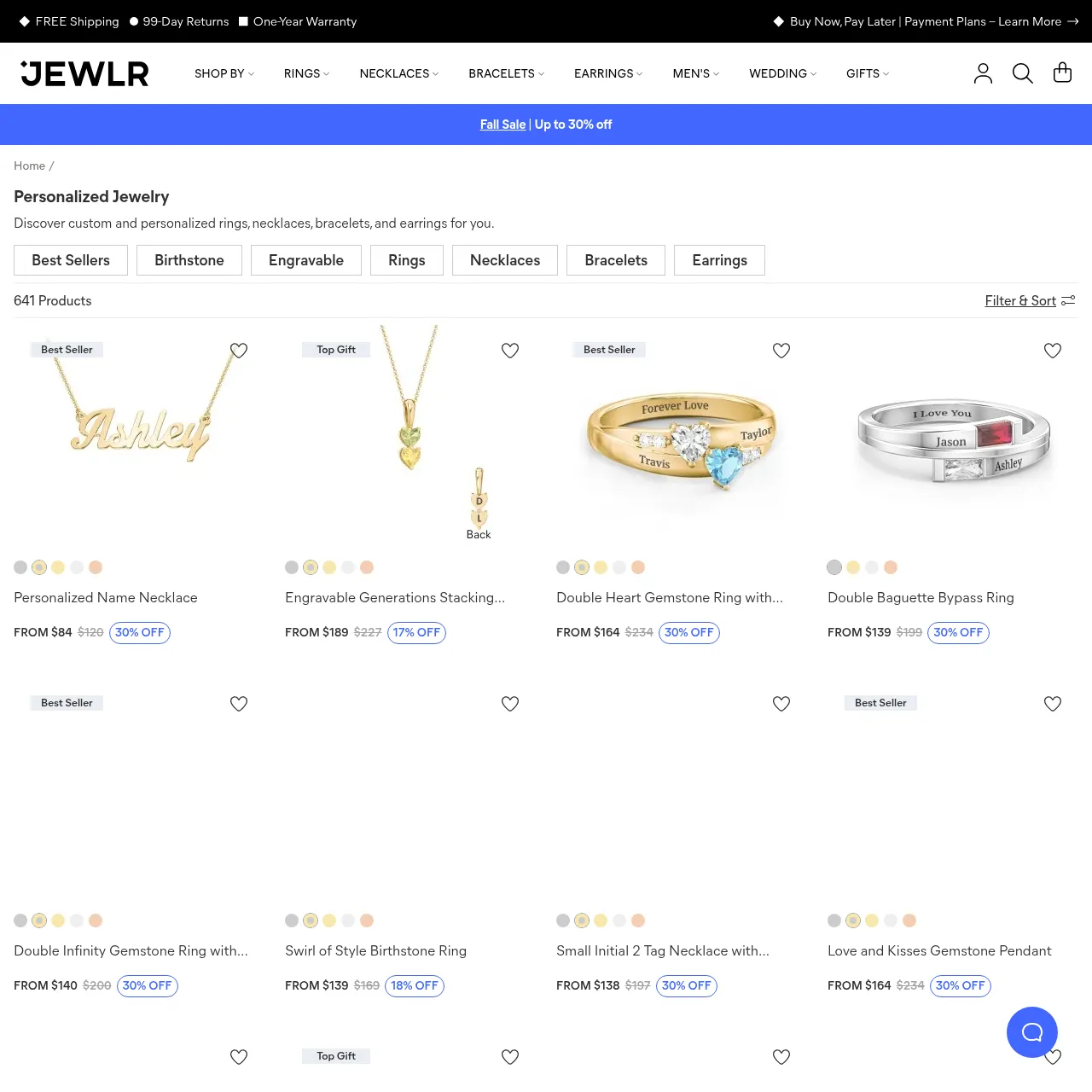
Jewlr is a B2C personalized jewelry retailer, not a supply partner — but its catalog is a useful benchmark for understanding what end-consumers search for and convert on. With 641 products spanning rings, necklaces, bracelets, and earrings, the platform demonstrates that personalization functions as a full product category, not just a feature layer. Their gemstone range — garnet, amethyst, peridot, aquamarine, blue topaz, and others — maps directly to birthstone demand, which drives a significant share of gifting searches across all major English-language markets.
Materials span 18K gold-plated silver, 925 sterling, and vermeil at mid-market price points. The consumer infrastructure is well-built: a 99-day return policy, a one-year warranty, free shipping, and Buy Now Pay Later financing reduce friction at each conversion stage. Their product taxonomy — Best Sellers, Birthstone, and Engravable filters — also provides SEO coverage across long-tail "custom jewelry" intent clusters that broad-category retailers rarely match.
What Jewlr cannot offer is what wholesale buyers actually need: no MOQ structure, no trade pricing, no material traceability beyond surface-level descriptions, and no wholesale pathway. Their pricing reflects retail margins. For DTC buyers and importers, this catalog is competitive intelligence — not a sourcing channel.
Key Features:
- 641 SKUs across rings, necklaces, bracelets, and earrings with birthstone and engravable customization
- Materials including 18K gold-plated silver, 925 sterling silver, and vermeil
- 99-day returns, one-year warranty, free shipping, and BNPL financing
- Men's and wedding-category personalized pieces alongside core women's range
- Best Seller and Top Gift product labels indicating proven commercial performance
Best For: Competitive benchmarking on consumer-facing personalization demand and product taxonomy. Not a supply or wholesale destination.
3. Made By Mary — Personalized Jewelry DTC Brand (Retail Benchmark)
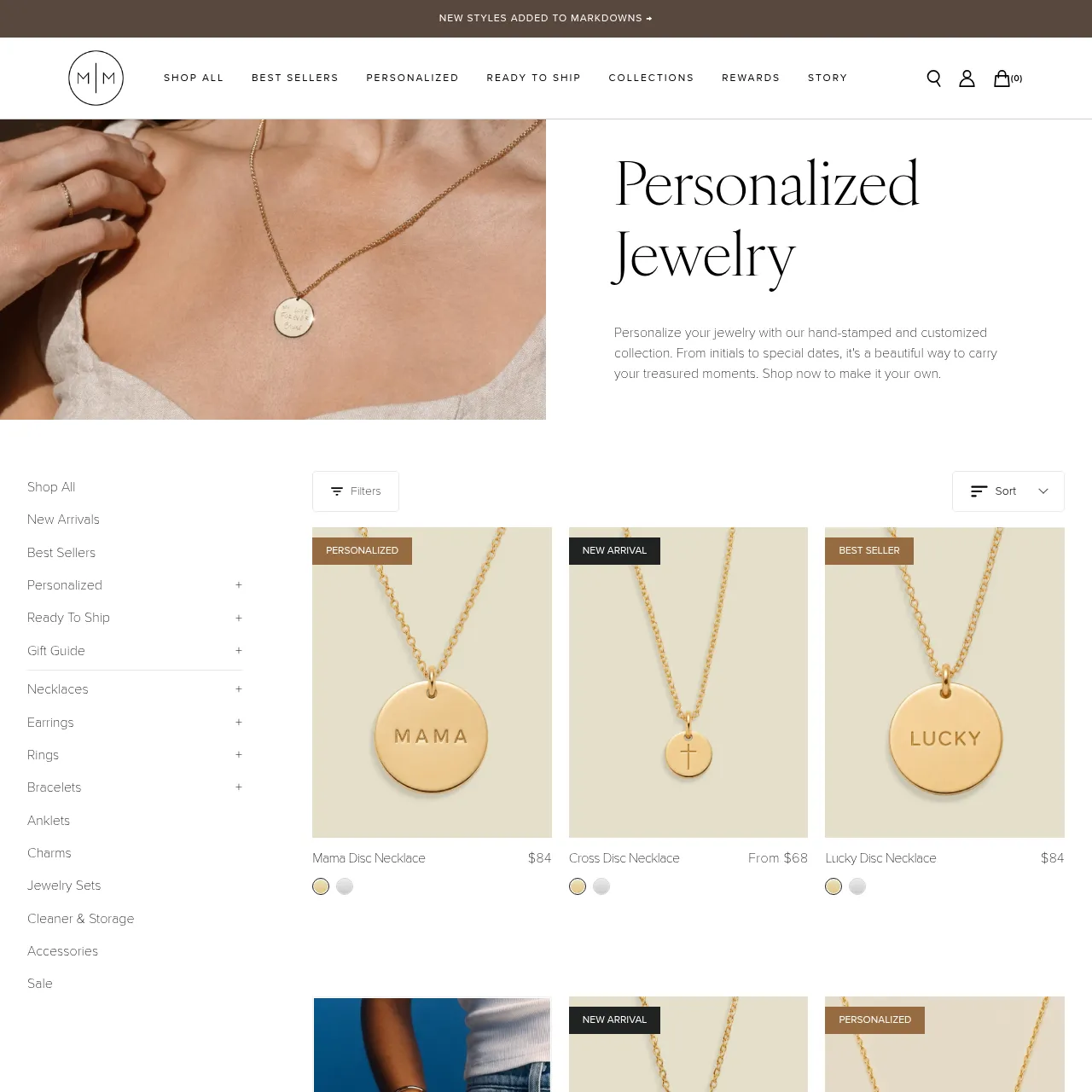
Made By Mary is a US-based DTC jewelry brand built around personalization: engraved flat disc charms, birthstone rings, lockets, and name-stamped pieces presented through cohesive lifestyle imagery and considered packaging. It's a consumer brand, not a wholesale supplier — but it's worth studying because it illustrates how personalization converts when presentation quality is consistent and emotional positioning is tight.
The catalog spans necklaces, bracelets, rings, earrings, charms, and pearl pieces, with both ready-to-ship and made-to-order options. That dual structure is commercially smart: ready-to-ship reduces friction for time-sensitive buyers (gifting occasions, last-minute orders), while made-to-order maintains the perception of handcrafted care. Their best-sellers section signals which personalization types have proven commercial traction — useful data for any buyer designing a comparable retail category.
From a B2B sourcing perspective, Made By Mary's consumer site offers no visibility into material specifications, plating standards, MOQs, or manufacturing terms. Buyers sourcing comparable aesthetics at wholesale need a supplier who can deliver that same visual quality with explicit material traceability and minimum order clarity — exactly the gap a vetted OEM partner fills.
Key Features:
- Personalized necklaces, bracelets, rings, earrings, charms, and pearl pieces
- Engraving and birthstone customization across multiple product categories
- Ready-to-ship and made-to-order options within the same catalog
- Curated best-sellers section indicating proven commercial product lines
- Cohesive brand presentation and packaging as a consumer trust signal
Best For: Retail benchmarking for DTC buyers entering or scaling a personalized fine-adjacent jewelry category. Not a sourcing or wholesale destination.
4. Brook & York — Best-Selling Jewelry Collection (Retail Benchmark)
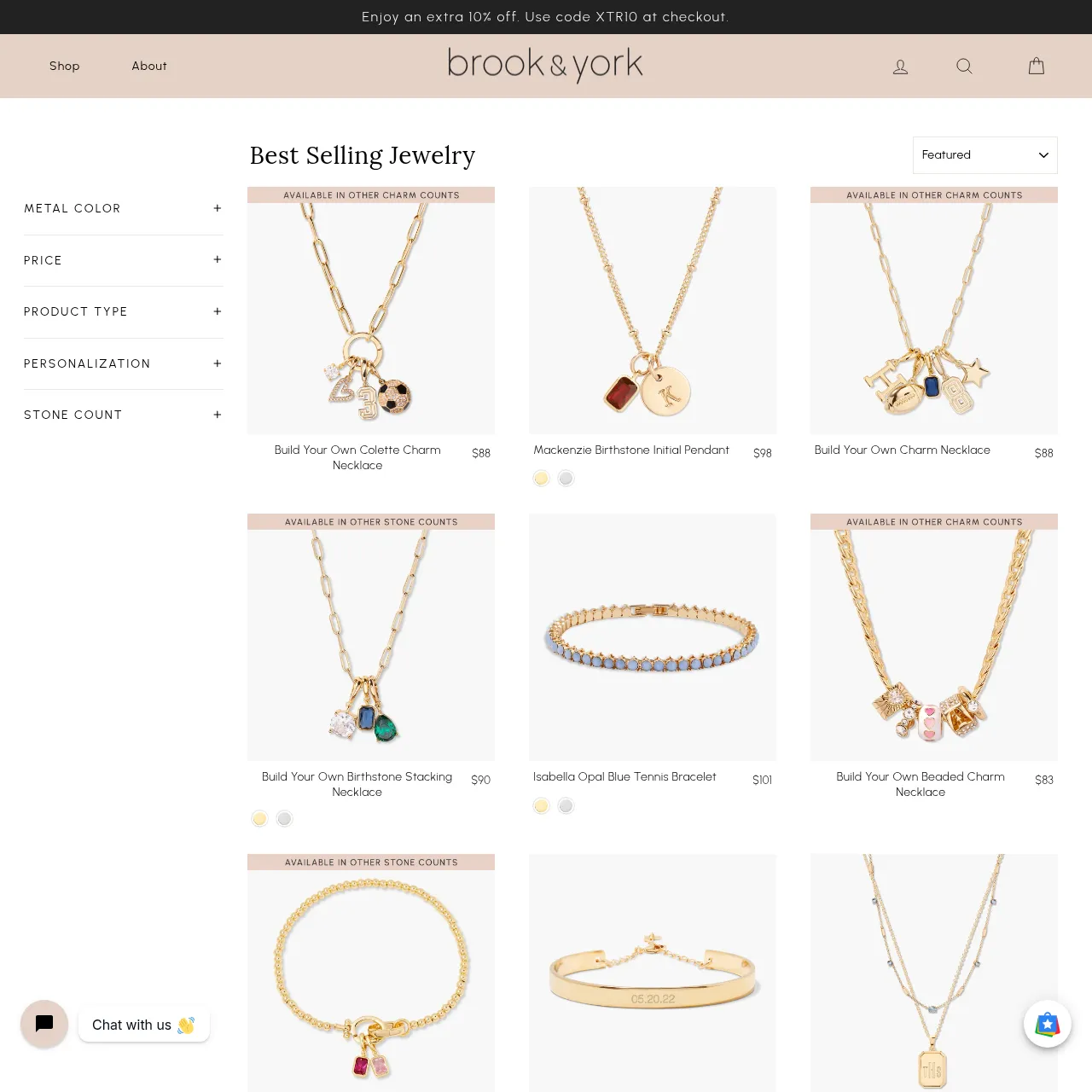
Brook & York appears in top search results for "custom jewelry," directing buyers to its best-selling jewelry collection. The brand positions itself in the affordable luxury space, producing pieces primarily in 14k gold-filled and sterling silver rather than heavy base-metal plating. Their best-selling assortment typically centers on initial pendants, bar necklaces, huggie hoops, and stackable birthstone rings — silhouettes designed for everyday wear rather than occasion-only use. Pricing generally lands between $50 and $150, placing them squarely between mass-market fashion jewelry and fine jewelry counters. They also run frequent collaborations with lifestyle influencers and regional boutiques, which keeps their core designs circulating in social feeds and gift guides.
Their presence in the top SERP positions does confirm one thing: consumer-facing personalization brands consistently occupy this keyword space. For procurement teams evaluating supply options, this is search landscape context rather than a sourcing opportunity. No wholesale terms, MOQ information, or trade pricing is publicly visible.
Key Features:
- Core materials include 14k gold-filled and sterling silver, targeting the affordable luxury segment
- Best-sellers focus on initial pendants, bar necklaces, huggie hoops, and stackable birthstone rings
- Retail pricing generally ranges from $50 to $150 per piece
- Frequent influencer collaborations and boutique partnerships drive discovery traffic
- Designed for everyday layering and stacking rather than single-statement wear
Best For: SERP landscape context for buyers mapping the consumer-facing "custom jewelry" competitive environment. Not a supply or wholesale destination.
5. Everthine Jewelry — Handcrafted Fine Jewelry Studio (Retail Benchmark)
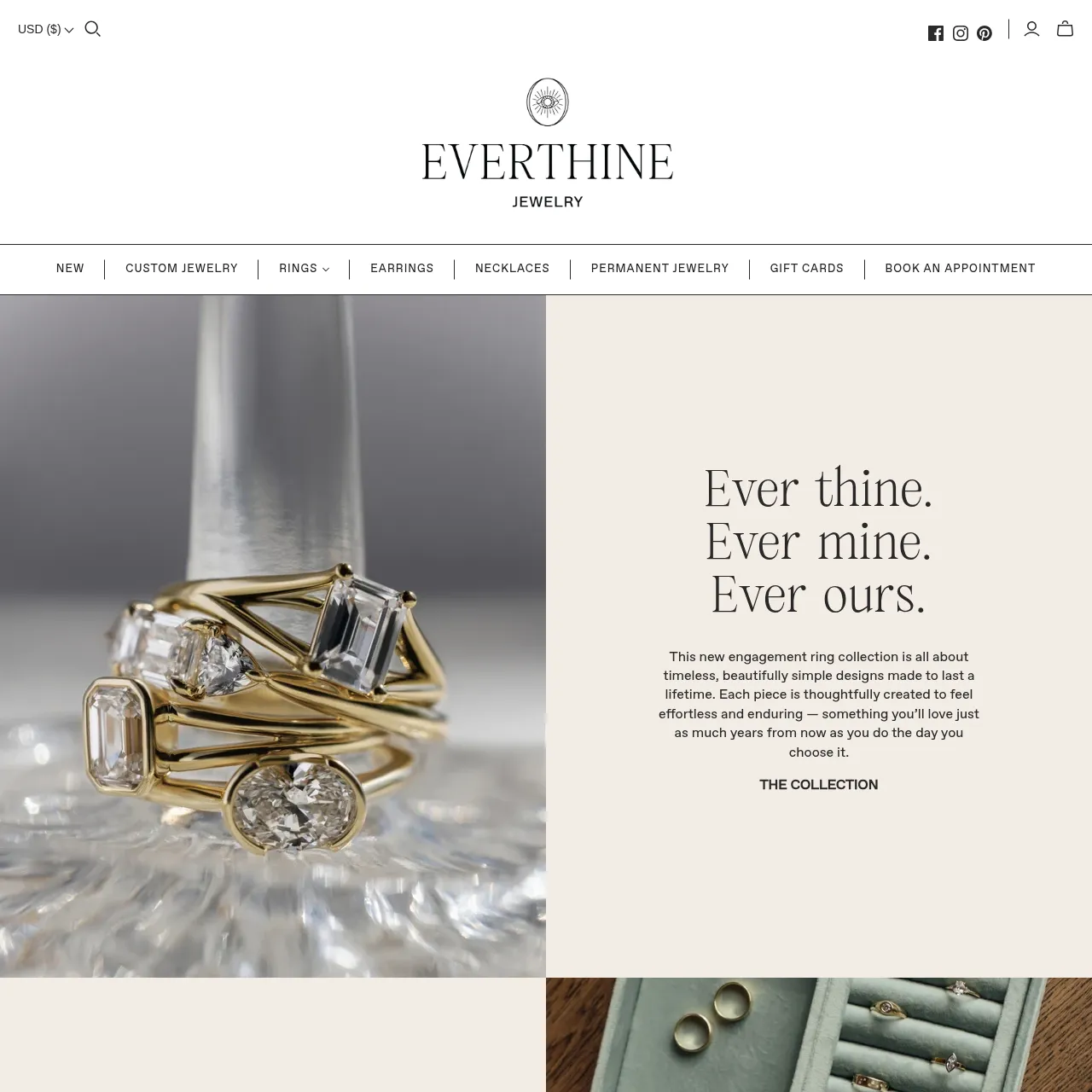
Everthine Jewelry is a Minneapolis studio run by named artisan Aisha Formanski, ranking for "custom jewelry" through a combination of maker narrative and a dedicated custom-work landing page. The studio produces heirloom-quality, handcrafted pieces in 14k gold — engagement rings, diamond bands, and bespoke commissions — positioning custom pieces as investments rather than seasonal purchases. This is the luxury end of the keyword: high trust, high margin, low volume.
Everthine's competitive edge is provenance. A named maker, a verified studio location, and a custom commissions pathway signal craft rather than catalog browsing. Their multi-currency storefront (USD/CAD) indicates cross-border consumer reach. But the studio-scale model is also a ceiling: no MOQ structure exists, no production capacity for wholesale, and no repeatable manufacturing pipeline for trade buyers who need consistent, scalable output.
For overseas buyers evaluating custom jewelry programs, Everthine is instructive precisely because of its limitations at scale. What makes high-end consumers convert — transparent process, named craftsmanship, dedicated custom infrastructure — are signals worth building into your own storefront narrative, even when the underlying supply chain is an OEM workshop rather than a single artisan's bench.
Key Features:
- Handcrafted 14k gold jewelry by named artisan Aisha Formanski
- Dedicated custom commissions page targeting bespoke and engagement jewelry buyers
- Studio DTC model spanning engagement rings, diamond bands, and bespoke designs
- Multi-currency (USD/CAD) storefront for cross-border retail
- Social presence across Facebook, Instagram, and Pinterest for discovery-driven traffic
Best For: Consumer benchmarking for the fine-jewelry-adjacent custom segment. Useful reference for DTC buyers building provenance-forward brand narratives around sourced OEM product.
6. Kay Jewelers — National Chain Personalized Jewelry (Retail Benchmark)
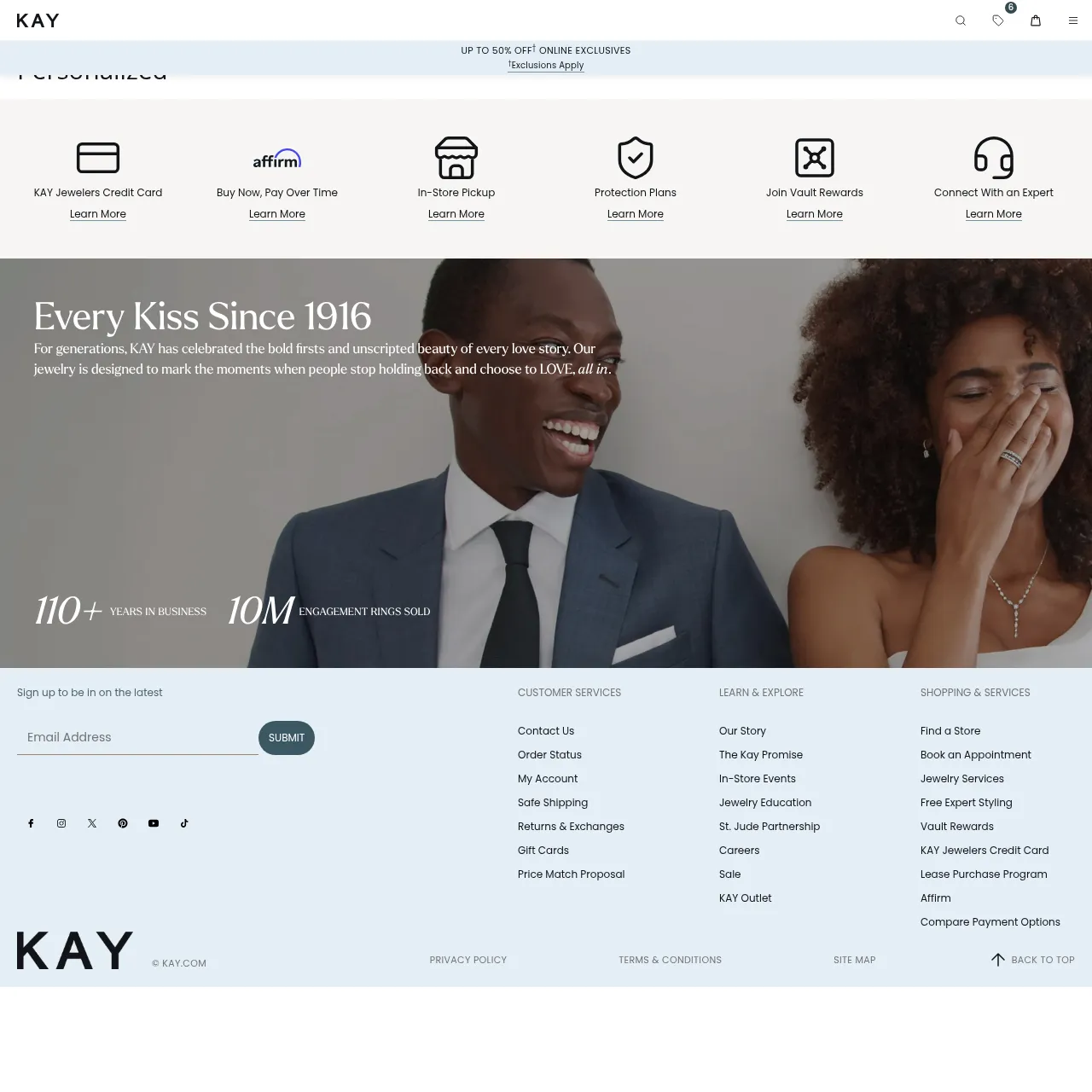
Kay Jewelers, a Signet Jewelers subsidiary with a nationwide US retail footprint, operates at the opposite end of the scale from Everthine — volume, convenience, and brand trust over artisan provenance. Their personalized catalog spans rings, necklaces, earrings, bracelets, and watches, with lab-grown diamond options integrated alongside traditional materials. The same omnichannel infrastructure that powers comparable chains like Jared stores applies here: in-store appointment booking, gender-segmented navigation, branded credit financing, and a broad gifting calendar from engagements through anniversaries.
For end-consumers, this accessibility is the entire value proposition. For importers and DTC operators, Kay's execution reveals something more actionable: the personalized jewelry buyer in the US expects unified online-to-store purchasing paths, gender-relevant product segmentation, and financing at checkout. Those are retail design decisions that upstream buyers should factor into their own storefront and catalog planning — even when the manufacturing source is entirely different.
What Kay obscures, and what procurement teams need, is origin. Metal alloy composition, plating thickness, stone sourcing, and lead times are not surfaced. That's the gap where vetted OEM sourcing becomes commercially essential.
Key Features:
- Broad personalized catalog: rings, necklaces, earrings, bracelets, and watches
- Lab-grown diamond options integrated into the personalized jewelry category
- Omnichannel path: online ordering plus in-store appointment booking
- Branded credit financing (KAY Credit Card) to reduce purchase friction
- Gender-segmented navigation (Women's / Men's) for gifting relevance
Best For: Understanding large-scale US retail personalized jewelry. Relevant for DTC operators designing catalogs and checkout experiences for American gift and milestone buyers.
Procurement Evaluation Framework: What to Ask Before You Source
For buyers moving toward a sourcing decision, five questions cut through most of the noise:
MOQ and tier structure. What's the actual minimum — per style, per SKU, per order? STRAND publishes 12 pcs/style on 109 of 114 catalog designs, with select styles from 1 piece. Most consumer brands don't publish wholesale terms at all; a supplier that can't answer this question clearly is worth scrutinizing.
Material traceability. Can the supplier confirm metal alloy composition, plating thickness (in microns), and stone sourcing? Gold-plated and rhodium-plated copper perform differently across plating standards — that matters for durability claims on your product pages and in customer service conversations downstream.
Lead times and production capacity. Sample timelines and full production run timelines are separate figures. Ask for both, and ask explicitly what happens at peak seasons when workshop capacity tightens.
QC process and location. Inspection at origin, before shipment, catches problems before they compound into a port-of-destination logistics problem. Ask specifically: who inspects, at what stage, and what documentation is provided.
Compliance requirements by market. For EU and UK buyers, ask about REACH compliance and nickel directives. For MENA markets, confirm that gold-tone finishes and product presentation align with regional preferences. Turquoise, natural stone, and traditional metalwork aesthetics have distinct relevance in certain Gulf markets — a supplier who understands this saves time at the briefing stage.
Start with the Supplier, Not the Benchmark
The five consumer brands in this list rank for "custom jewelry" because they've built personalization infrastructure, SEO-optimized catalogs, and consumer trust signals at scale. They're genuinely worth studying. None of them, however, can get a DTC store owner in Leeds or an importer in Dubai the vetted, OEM-produced inventory they need at 12 pieces per style with in-house QC, multilingual sales support, and FOB shipping terms.
If you're sourcing custom earrings, necklace sets, or branded OEM pieces for a US, EU, UK, or MENA market, the next step is a direct supplier conversation — materials, MOQs, lead times, and samples.
Request MOQ & Pricing from STRAND →
Where craftsmanship meets the world, one strand at a time.