
How to Source Wholesale Hoop Earrings for Jewelry Making
How to Source Wholesale Hoop Earrings for Jewelry Making
Wholesale hoop earrings for jewelry making are earring findings — hoop-shaped wire or metal forms purchased in bulk directly from a findings supplier — used as the structural base for finished earring designs. Sourcing them wholesale is the most reliable way for jewelry makers, DTC stores, and importers to maintain consistent inventory at a predictable cost per unit, without sacrificing the material quality that determines how a finished earring wears and sells.
The right hoop finding anchors an entire product line. Whether you plan to thread beads onto the wire, wrap with gemstone chips, or sell minimalist hoops as-is, the quality of your findings sets the ceiling for your finished product. Wire gauge, interior diameter, and material composition are not afterthoughts — they are the specifications that determine whether your earrings perform or generate returns.
If you're also developing your earring collection beyond hoops, STRAND's curated stud range — including the Minimalist Metal Bar Pearl Drop Stud Earrings -Gold — demonstrates how structured stud styles can pair with hoop-based designs to build a well-rounded, mix-and-match product offering for your customers.
What Are Wholesale Hoop Earrings for Jewelry Making?
Wholesale hoop earrings for jewelry making refers specifically to earring findings — the hardware components sold in bulk quantities that serve as the foundation of a finished design. Unlike retail earrings sold as a complete product, these findings are designed either to be worn as-is or to be embellished: threaded with beads, wrapped with wire, fitted with charms, or combined with other components.
The Three Main Hoop Finding Types
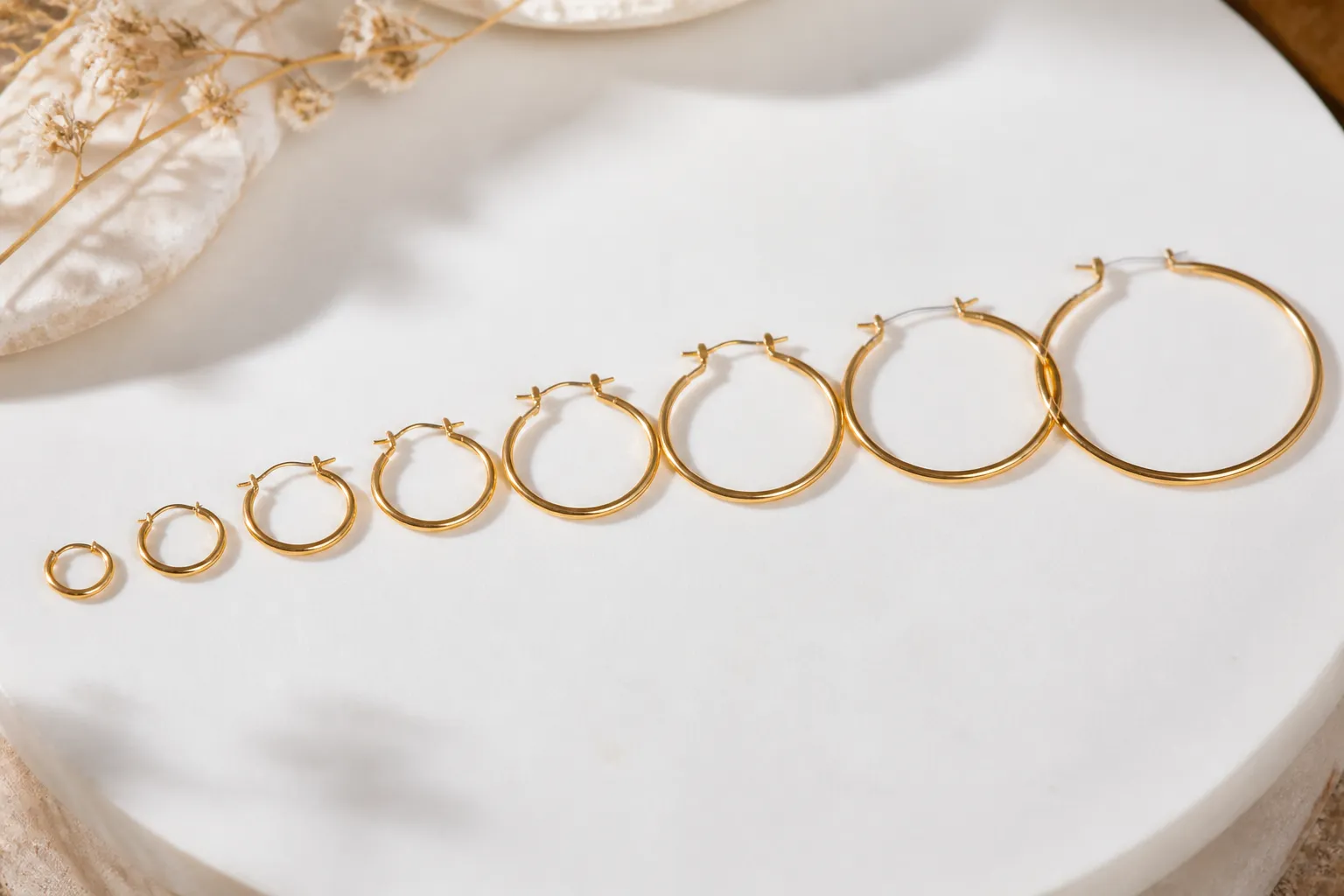
Beading hoops are open-ended wire forms shaped as a semicircle or full circle, designed specifically so beads can be threaded directly onto the wire. Wire diameter is critical here. A standard gold-filled beading hoop runs at .028" / .7mm (21 gauge) — fine enough to pass through small seed beads but sturdy enough to hold shape under the weight of a finished design. Standard wholesale sizes for beading hoops include 15mm, 20mm, 25mm, and 30mm interior diameter.
Endless hoops (also called continuous or sleeper hoops) form a complete, uninterrupted circle that opens and closes by bending the wire at a thinned flex point. Gold-filled endless hoops typically use 1.25mm wire — heavier than beading hoops because the closure point bears repeated mechanical stress. Common wholesale sizes range from 12mm through 24mm. Their clean, clasp-free profile suits both minimalist production and layering-focused collections.
Post-back hoops combine a rigid front arc with a post-and-butterfly closure, similar to a stud backing. They're the right choice when design stability matters — heavier bead arrangements, asymmetric embellishments, or structured fronts that need a fixed position rather than a swinging hoop.
Knowing which type you need before ordering saves significant rework. A supplier stocking all three styles in multiple sizes and metal families gives you the design flexibility to build across your entire product range from a single source.
Why Wholesale Sourcing Changes Your Cost and Quality Structure
Retail sourcing — buying one or two pairs at a time from a craft store — is fine for prototyping. It is not sustainable for any jewelry business producing more than a handful of pieces per month. The per-unit cost drops substantially at wholesale quantities, and that difference compounds across every production run.
Consider a concrete scenario: a DTC jewelry brand producing 200 pairs of beaded hoop earrings per month needs 200+ hoop findings in matching specifications, every month. Retail sourcing means 200 individual transactions, variable stock availability, and inconsistent quality across batches — different wire gauges, slightly different loop openings, subtle finish variations that are invisible in isolation but obvious when earrings are displayed side by side on a rack.
Wholesale sourcing means one order, one quality standard, and one cost per unit. Every 20mm beading hoop in your inventory has the same .7mm wire diameter, the same gold-filled composition, the same loop opening size. Consistency at the findings level is what makes consistency in the finished product possible.
For overseas buyers, wholesale earring orders also simplify customs and logistics. A single consolidated shipment is easier to track, document, and insure than dozens of small retail parcels arriving from multiple vendors — and a supplier experienced with international buyers will have the commercial invoice and harmonized tariff code documentation you need for import clearance.
Sizes and Specifications: What the Numbers Actually Mean
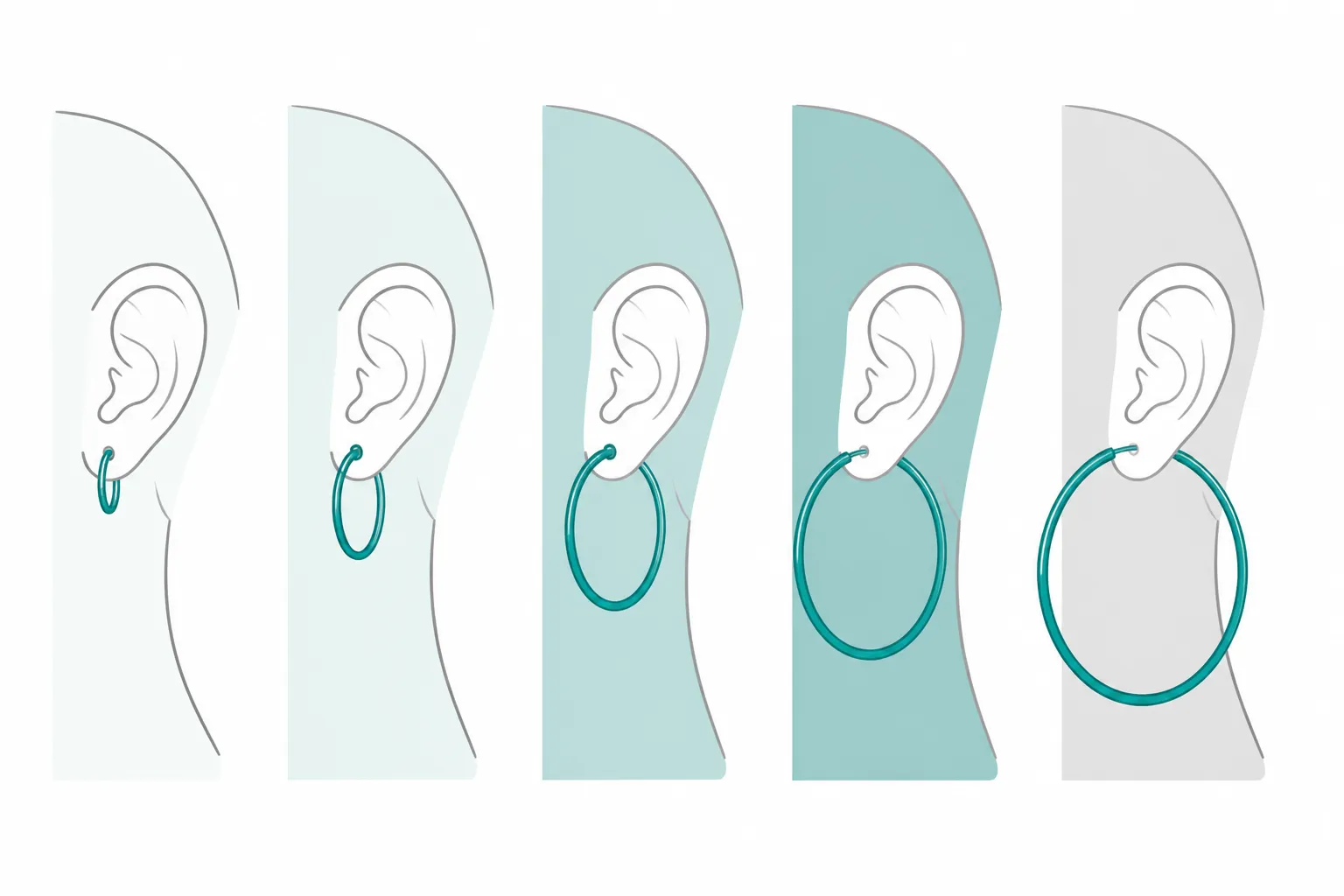
Hoop size is measured by the interior diameter — the distance across the inside of the circle. This is the number that controls how the earring sits on the ear and how much wire length is available for bead threading or wrapping. A 20mm and a 50mm hoop are profoundly different design tools, even though both are simply described as "hoop earrings" in a catalog.
For jewelry making, size interacts with your design intent in specific ways:
| Size Range | Typical Jewelry Making Application |
|---|---|
| 12mm – 16mm | Minimalist everyday wear; thin wire wraps; small seed bead accents |
| 20mm – 25mm | Beaded wraps; mid-size charm attachments; layering pieces |
| 30mm – 40mm | Full-coverage bead designs; mixed-media wraps; textured statement hoops |
| 40mm – 50mm+ | Bold statement earrings; macramé or fiber wraps; single large-stone settings |
Gold-filled hoop earrings from specialized findings suppliers are available in sizes ranging from 12mm to 50mm, giving makers substantial range within a single material family.
Wire gauge is the other specification that directly affects your production. The .7mm / 21-gauge standard for beading hoops is intentional — it threads through size 6/0 seed beads with minimal resistance but resists kinking under normal handling. Endless hoops, which bear repeated mechanical stress at the closure, use heavier 1.25mm wire. Ordering the wrong gauge for your technique means hoops that either won't accept your beads or collapse under the weight of a heavy design. Confirm wire gauge before placing any bulk order.
How to Evaluate a Wholesale Hoop Earring Supplier
Not all wholesale findings suppliers serve jewelry makers equally. The criteria that matter most depend on your scale, your design technique, and your target market — but several factors apply across the board.
Material and Plating Quality
Gold-filled is the benchmark for quality in wholesale hoop findings. Unlike gold-plated, which bonds a thin gold layer over base metal through electroplating, gold-filled products have a mechanically bonded thick layer of gold — typically 5% of the item's total weight — applied under heat and pressure. This construction makes gold-filled hoops tarnish-resistant, longer-wearing, and suitable for customers with metal sensitivities.
This distinction matters significantly for buyers targeting markets where skin-safe, long-wearing gold-tone jewelry is expected. Gold-plated findings may satisfy a price point in the short term but generate customer complaints and returns after a few months of wear.
Beyond gold-filled, reputable wholesale suppliers also carry hoop findings in sterling silver, brass, and other precious metals. A supplier offering multiple metal families lets you build a cohesive multi-metal product range without splitting your sourcing across multiple vendors.
Minimum Order Quantities and Pricing Structures
MOQ structures vary considerably. Some wholesale findings suppliers require no minimum at all; others sell by the dozen, gross, or weight. Before placing your first order, get clear answers on:
- Per-unit cost at each quantity tier
- Whether "all-assortable pricing" applies — meaning mixed sizes and styles count toward the same quantity break
- Whether sample packs are available before a full commitment
Fire Mountain Gems and Beads, a supplier with over five decades in the findings industry, offers a dedicated Wholesale Program alongside All-Assortable Pricing — a structure that lets buyers mix hoop sizes and styles while still qualifying for volume-tier discounts. Knowing a supplier's pricing model upfront shapes how you structure your order rather than discovering cost surprises at checkout.
Shipping, Lead Time, and Inventory Availability
For overseas buyers, shipping terms often determine whether a supplier is practical at all. Before placing an order, ask specifically about:
- Carrier options and international tracking: all international orders should ship with full tracking and insurance options
- Dispatch timeline: findings suppliers with in-stock inventory can typically ship within a few business days; those manufacturing to order may require several weeks
- Customs documentation: experienced international suppliers provide commercial invoices and harmonized tariff codes as standard, not on request
Some domestic US-focused suppliers offer free shipping on small orders — useful for initial test orders — but may lack international carrier partnerships suited for buyers in Europe, MENA, or Southeast Asia. Evaluate shipping infrastructure as seriously as product quality.
When Wholesale Hoop Earrings Belong in Your Jewelry Line
The right moment to move to wholesale sourcing is almost always earlier than jewelry makers expect. If you're producing more than 10–15 pairs of hoop earrings per month, retail sourcing is costing you more money and time than it saves in flexibility.
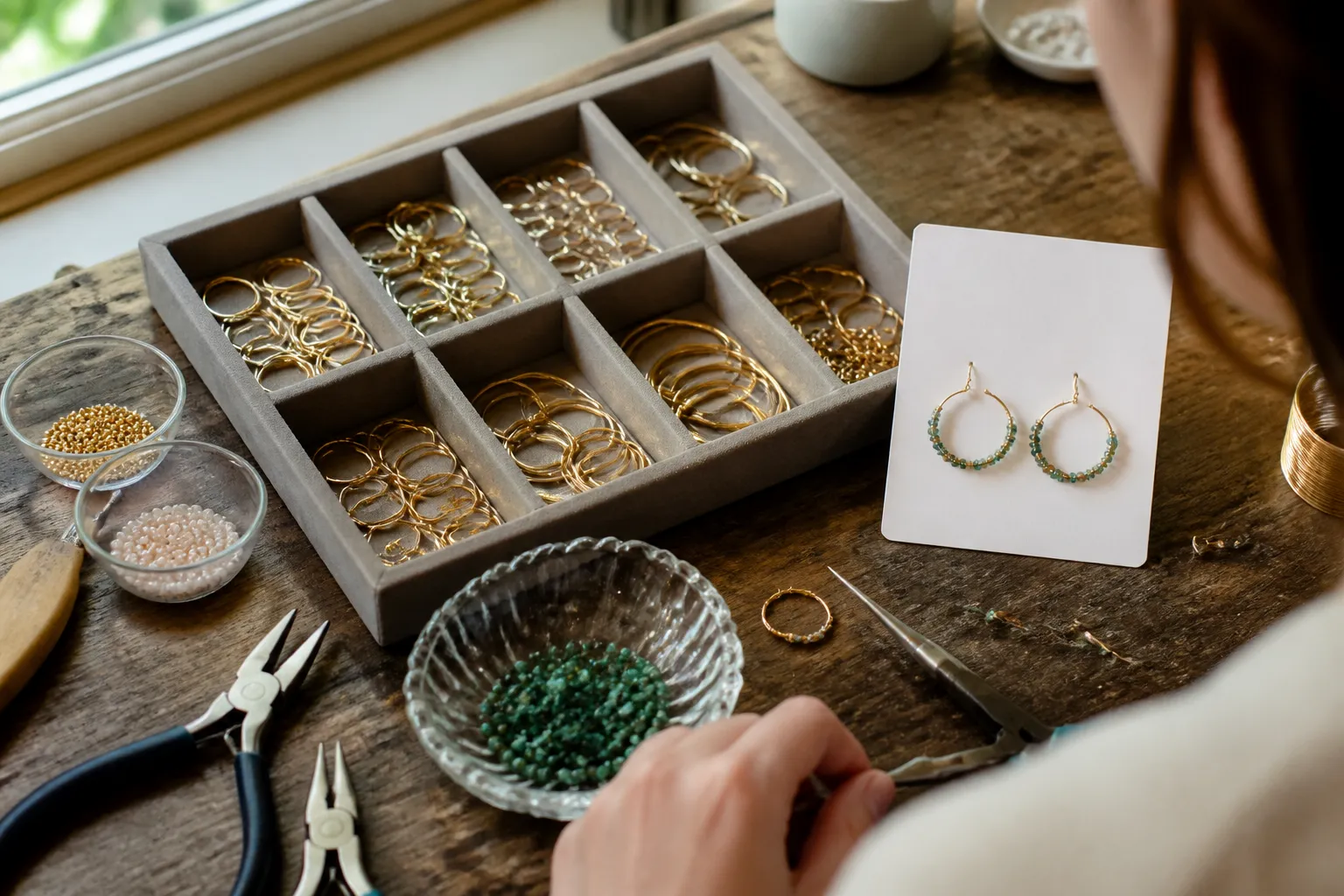
For DTC brands: wholesale hoop findings give you the inventory depth to run consistent product drops and restock predictably. A 30mm gold-filled beading hoop that sells out should be restockable within days, not weeks. That's only possible with an established wholesale supplier relationship and confirmed in-stock availability.
For importers and procurement teams: wholesale hoop earrings function as both finished product and raw material, depending on your downstream use. Some buyers purchase wholesale hoops to sell directly as minimalist jewelry; others use them as findings for in-house production. A supplier offering both ready-to-sell and ready-to-embellish options in the same material family simplifies sourcing structure and reduces vendor count.
For product development: when sampling a new hoop size or finish for the first time, a supplier with low MOQs lets you test market response before committing to a large inventory position. Order a small run, assess sell-through, then scale. This approach is lower-risk than over-investing in a size or finish that your customer base doesn't respond to.
Hoop styles work best as part of a broader earring assortment. STRAND's Vintage Flower-Frame Glass Stud Earrings -Black is one example of how a detailed stud design complements a hoop-forward collection — customers shopping hoop earrings often explore stud options in the same session, and having both categories available increases average order value.
Procurement Checklist: Questions to Ask Before You Order
Buyers close to a purchasing decision frequently skip this step and encounter problems mid-production. Run through these questions before placing any wholesale hoop earring order:
About the product:
- What is the exact interior diameter, wire gauge (in mm and gauge number), and material composition?
- For gold-filled items: what is the gold karat content (10K, 12K, or 14K) and what percentage of the item's weight is the gold layer?
- Are beading hoops sold open for threading, or closed?
- What closure mechanism do the endless hoops use — a simple wire bend, or a reinforced locking system?
- Are Sparkle Wire variants or specialty finishes available in your required sizes?
About the supplier:
- What is the MOQ per SKU, and does the supplier offer mix-and-match pricing across sizes?
- What is the lead time from order placement to dispatch?
- Does the supplier have experience with international shipping, and do they provide customs documentation?
- What is the return or replacement policy for defective findings?
About your order:
- Can you request a sample assortment before committing to a full order?
- What quality control steps does the supplier use before packing?
Getting clear answers to these questions before your first order protects your production timeline and gives you recourse if something goes wrong. A supplier who cannot answer these questions clearly will likely create problems downstream.
Building a Complete Earring Assortment Around Hoop Findings
Wholesale hoop earrings perform best when they're part of a coordinated product strategy, not a standalone purchase. A strong earring collection typically spans at least three structural categories: hoops (movement, statement-making), drop or dangle styles (length, texture), and studs (everyday wearability, gifting staples).
When building that assortment, material alignment across categories matters. If your hoop findings are gold-filled, your stud and drop styles should also be gold-tone so buyers can mix and match cohesively. Mismatched tones within a collection — warm gold hoops alongside cool silver studs — reduce the perceived professionalism of the range and complicate visual merchandising.
The Two-Tone Spherical Firework Stud Earrings-Black from STRAND shows how textural contrast — a sculptural stud against a clean hoop — creates visual interest within a collection without tonal conflict. Pairing findings-based hoop designs with crafted stud styles gives buyers more reasons to purchase multiple pieces in a single transaction.
Sourcing for MENA Markets: What to Prioritize
Buyers sourcing earrings for Gulf and Levant markets face specific considerations that a generic wholesale guide won't address. Yellow gold tone is strongly preferred across much of the MENA region — it carries cultural, gifting, and aesthetic significance that rose gold, white gold, or silver alternatives don't replicate. Gold-filled findings, which maintain their warm tone through normal handling and wear, are more market-appropriate than gold-plated alternatives that may oxidize or shift in finish over time.
Design scale also shapes wearability across diverse segments within these markets. Smaller and mid-range hoops — 12mm through 25mm — have broader everyday wearability than 50mm statement hoops. When ordering wholesale for regional distribution, consider weighting your assortment toward the smaller and medium diameter sizes rather than maximizing for the largest available options.
Material certification matters for import compliance in several MENA markets more than it does for US domestic retail. Gold-filled findings from verified suppliers come with composition documentation — gold karat, gold layer percentage, base metal content. Ask for this documentation explicitly and verify it matches the product specification sheet. A supplier who cannot provide material certification for gold-filled findings is not an appropriate source for regulated import markets.
Making Your First Wholesale Order Count
The specifications that appear technical — wire gauge, interior diameter, material composition — are the exact variables that determine whether your finished earrings hold up for your customers or generate returns. Getting these right from the first order sets a foundation; discovering them through production failures costs more than the price difference between a careful sample and a rushed bulk order.
The clearest next step before committing to a supplier or a size range: request a sample assortment. Thread your standard bead designs onto the beading hoops. Test the endless hoop closure under your usual handling. Assess the gold-filled finish in your display environment. Then scale from confirmed quality rather than assumed quality.
To build an earring collection that extends beyond hoop findings into vetted, ready-to-sell stud and drop styles curated for overseas buyers, [Contact the supplier] to discuss how STRAND's earring range can complement your wholesale hoop sourcing — with a focus on materials, dimensional consistency, and cultural fit for your target markets.
Related reading: Explore STRAND's Minimalist Metal Bar Pearl Drop Stud Earrings -Gold as a drop-style complement to hoop-forward earring collections.
Frequently Asked Questions
What is wholesale hoop earrings for jewelry making?
Wholesale hoop earrings for jewelry making are bulk quantities of hoop-shaped earring components — available in materials such as sterling silver, brass, or gold-filled metal — sourced by DTC brands, importers, and jewelry makers as ready-to-use or customizable bases for finished designs. They typically come in a range of diameters (commonly 20mm–80mm) and gauges, with finishes like 14K gold plate, rose gold, or rhodium, allowing artisans to add charms, beads, or wirework. STRAND supplies vetted hoop components with transparent MOQs, consistent plating standards, and reliable lead times suited to professional procurement workflows.
How to wholesale hoop earrings for jewelry making?
To wholesale hoop earrings for jewelry making, source from vetted suppliers who offer components in consistent materials — such as 14K gold-filled, sterling silver, or brass with gold vermeil — specifying dimensions (diameter, wire gauge, closure type) upfront to ensure compatibility with your designs. STRAND provides curated hoop findings with transparent MOQs (typically 50–200 units per SKU), clear lead times of 2–4 weeks, and shipping options including DHL Express and sea freight for larger orders. Request material certifications (nickel-free, REACH-compliant) and sample sets before committing to bulk quantities to verify finish quality and dimensional accuracy.
Why is wholesale hoop earrings for jewelry making important?
Wholesale hoop earrings are a foundational component for jewelry makers because they provide a versatile, ready-to-customize base that reduces production time and material costs without compromising design quality. For DTC stores and importers sourcing through STRAND, procuring hoops in volume — typically with MOQs starting at 50–200 units per style — ensures consistent material standards (brass, sterling silver, or gold-filled) and dimensional uniformity across a collection. This supply reliability allows jewelry makers to focus on creative differentiation — adding charms, wrapping, or stone setting — while maintaining healthy margins and predictable lead times.
When should I use wholesale hoop earrings for jewelry making?
Wholesale hoop earrings are the right choice when you're producing jewelry at volume — whether fulfilling retail orders, building a seasonal collection, or stocking a DTC storefront — and need consistent quality across units without per-piece sourcing overhead. They're especially practical when working with standard base components (brass, 304 stainless, or 14K gold-filled hoops in common diameters like 20mm–50mm) that you'll customize with charms, wrapping, or resin rather than fabricating from raw wire. STRAND recommends sourcing wholesale at the design-confirmation stage, once your sample is locked, so your MOQ commitment aligns with a proven, sellable spec rather than an evolving prototype.
What are the benefits of wholesale hoop earrings for jewelry making?
Sourcing wholesale hoop earrings through STRAND gives jewelry makers consistent access to vetted components — available in brass, sterling silver, and gold-filled finishes across a range of diameters (typically 20mm–60mm) — reducing per-unit costs while maintaining quality standards suitable for finished retail pieces. Buying in volume (MOQs generally starting at 50–200 units per SKU) ensures supply continuity for production runs, whether you're assembling charm hoops, beaded styles, or mixed-media designs. For DTC brands and importers, this translates directly into predictable margins and faster turnaround from design to shelf.