
Custom Jewelry Sourcing: The B2B Buyer's Procurement Guide
Custom Jewelry Sourcing: The B2B Buyer's Procurement Guide
Custom jewelry procurement for DTC brands and retail stores requires evaluating minimum order quantities (MOQs), base metal specifications, plating thickness, and supplier quality control processes. A reliable cross-border OEM partner should offer MOQs as low as 12 pieces per style on stock designs, multilingual communication, and documented pre-shipment inspections. For a broader overview of the procurement landscape, see our custom jewelry sourcing guide.
Who This Guide Is For
This guide is written for procurement managers, importers, and DTC store owners in the US, EU, UK, and MENA regions who are actively sourcing fashion jewelry—specifically drop earrings, stud earrings, and necklace-and-earring sets—from Chinese manufacturers. You are likely scaling a vintage, gradient crystal, two-tone glass bead, or rhinestone collection and need a supplier that bridges the gap between overseas workshops and your local market without requiring massive container-load commitments. Your trigger is usually a bottleneck with current suppliers: inconsistent plating, language barriers delaying production, or MOQs that force you into dead stock.
What Custom Jewelry Actually Does for Your Business
Sourcing custom jewelry isn't just about putting a logo on a generic earring. It allows buyers to dictate exact material compositions—such as gold-plated or rhodium-plated copper, natural stone, faux pearls, or 925-style silver finishes—to match specific brand aesthetics and price points. Retail operations like Bulow Jewelers demonstrate how custom design capabilities allow businesses to build bespoke collections tailored to their exact customer base, from engagement rings to birthstone pieces. For cross-border fashion buyers, working directly with an OEM means bypassing domestic wholesalers, protecting margins, and controlling the entire supply chain from raw copper to finished display-ready product.
Key Decision Factors
When vetting a custom jewelry supplier, evaluate these eight dimensions before signing a purchase order. Our OEM buyer checklist provides a deeper framework for evaluating these vendor criteria during negotiations.
Minimum Order Quantities (MOQ) and Scalability
What to evaluate: The threshold required to initiate production and whether it scales down for testing new styles. Good looks like: A supplier offering 12 pcs/style on the vast majority of their catalog, with select styles available from just 1 pc. This prevents overcapitalization on untested SKUs while allowing rapid A/B testing for DTC storefronts.
Material Specifications and Plating Standards
What to evaluate: Base metals, plating types, and stone alternatives. Good looks like: Clear documentation of gold-plated vs. rhodium-plated copper bases, 925-style silver finishes, and precise sourcing for glass beads, natural stones, and faux pearls. If you are building a line featuring amethyst, garnet, peridot, turquoise, or diamond simulants, the supplier must provide exact color-matching protocols and material safety data sheets (MSDS) for the target market (e.g., EU REACH compliance).
Quality Assurance and Pre-Shipment Inspection
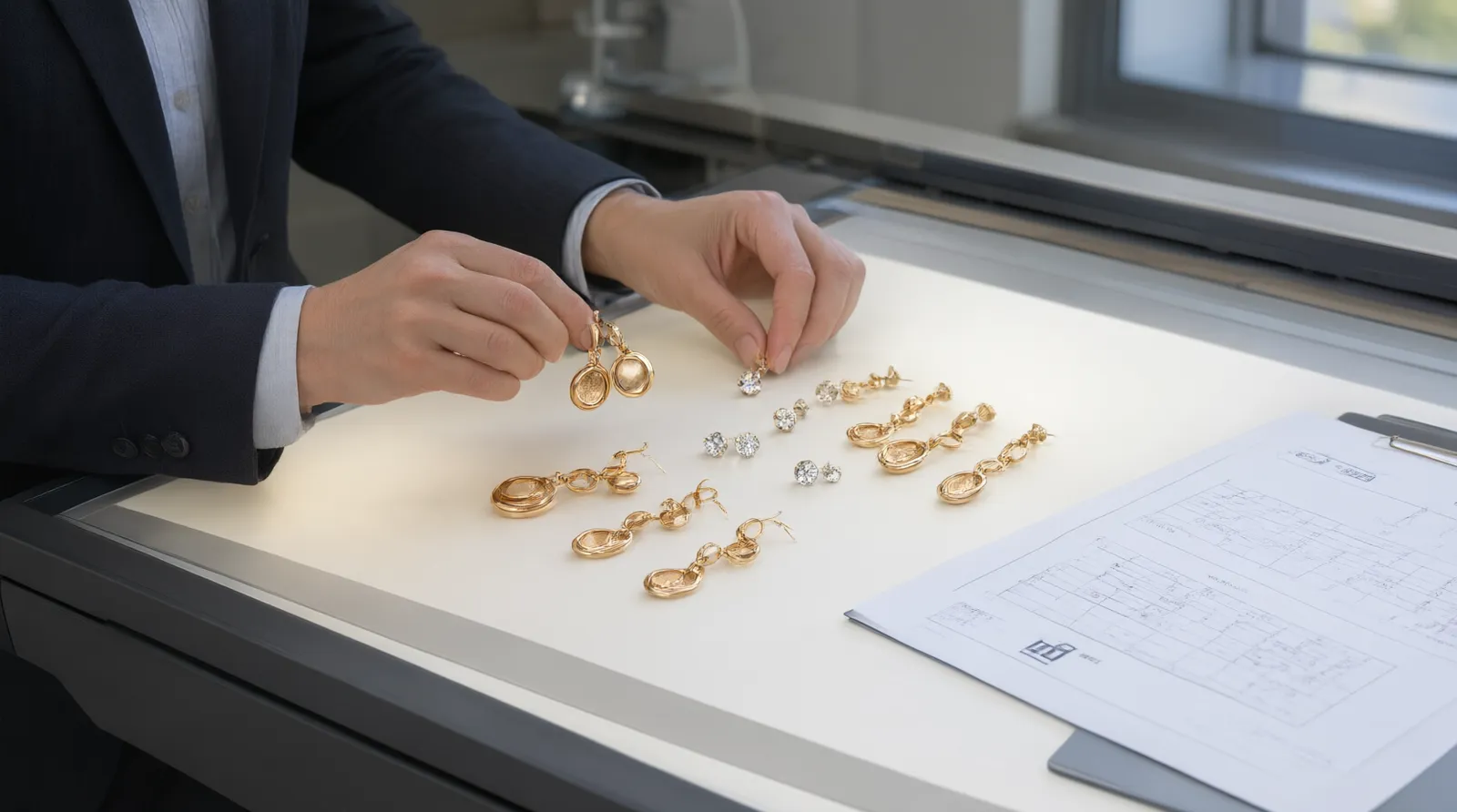
What to evaluate: How defects are caught before goods leave the factory floor. Good looks like: In-house QC inspection executed before every single shipment, not just random batch sampling. Ask for their acceptable quality limit (AQL) standards and request photographic evidence of the inspection process.
Trade Terms and Logistics Flexibility
What to evaluate: Incoterms offered and shipping modalities. Good looks like: Flexible terms such as EXW or FOB, paired with options for air freight, sea freight, or express courier depending on your urgency and volume. A rigid supplier who only offers one shipping method will bottleneck your cash flow during peak seasons.
Payment Infrastructure
What to evaluate: Accepted payment methods and buyer protection mechanisms. Good looks like: Multiple secure channels including T/T bank transfer, Western Union, PayPal, L/C, and modern platforms like Xtransfer. Relying solely on irreversible wire transfers without milestone payments exposes you to unnecessary risk.
Multilingual Communication and Support
What to evaluate: The languages spoken by the sales and technical teams. Good looks like: Dedicated support in EN, FR, AR, ES, DE, and RU. Miscommunication regarding a 0.5mm tolerance on a stud earring post can ruin an entire production run; native or fluent language support eliminates this friction for international procurement teams.
Catalog Depth vs. OEM Capability
What to evaluate: The balance between ready-to-ship inventory and true ground-up customization. Good looks like: A substantial stock catalog for immediate fulfillment, combined with deep OEM capabilities to manufacture entirely custom designs in specified metals and stones. Retailers like Bulow Jewelers succeed by creating fully scratch-built custom engagement rings based on client specs.
Vendor Stability and Market Positioning
What to evaluate: Geographic location, workshop relationships, and industry focus. Good looks like: A centralized hub (like Hangzhou) linking vetted workshops directly to overseas buyers, removing layers of trading companies. Suppliers positioned to serve major retail chains—competing on agility where legacy names like jared, kendra, or scott dominate traditional mall footprints—must prove their operational maturity through consistent lead times.
Budget Tiers
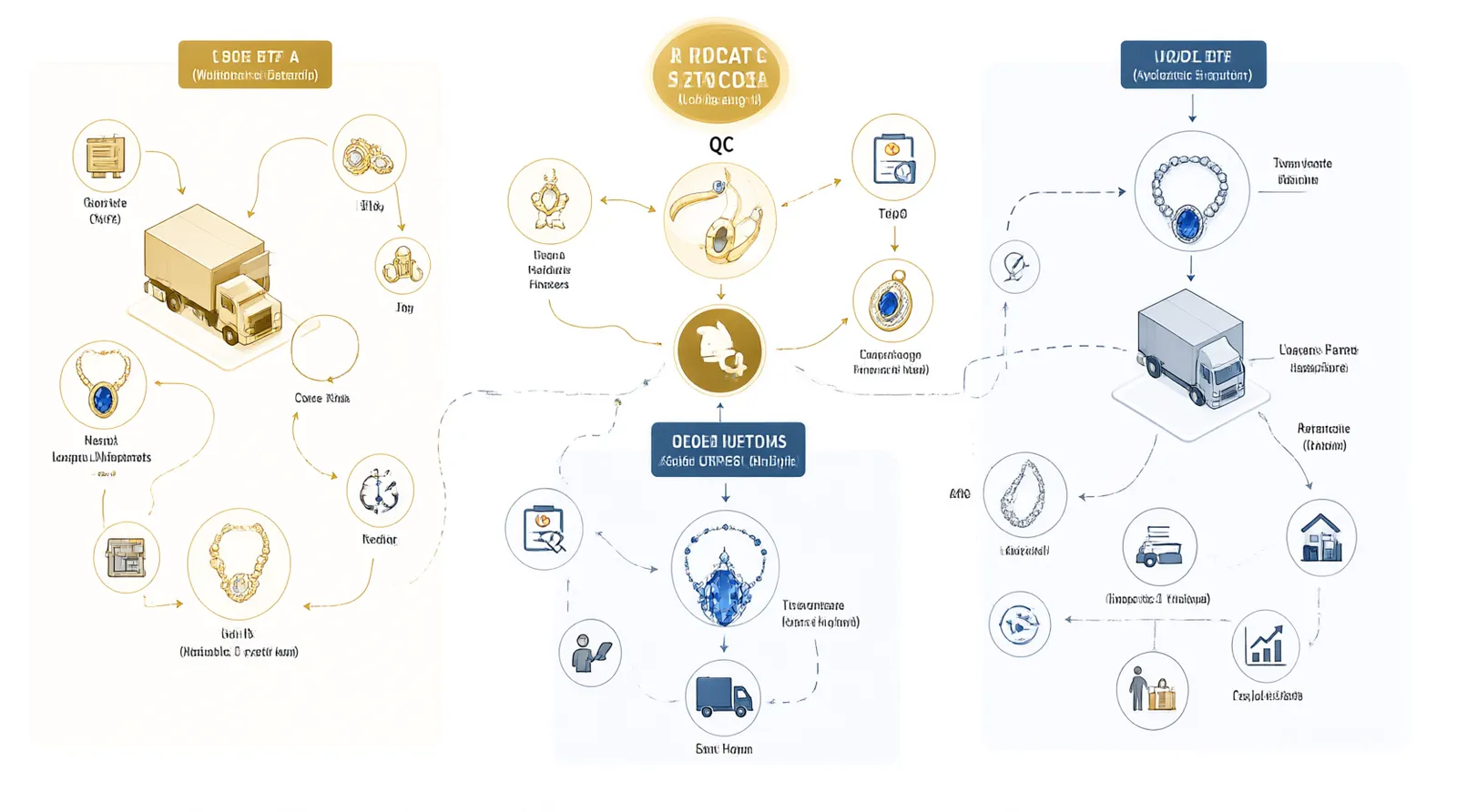
Use this framework to align your purchasing power with the right supplier tier. Pricing varies heavily by material weight and complexity, but these tiers represent standard procurement models.
| Tier | Typical Profile | What You Get | Best For |
|---|---|---|---|
| Entry / Pilot | 1–12 pcs per style | Access to select stock catalog items (some from 1 pc). Standard gold/rhodium plated copper, glass beads, faux pearls. Express shipping. | DTC brands testing new SKUs, boutique stores validating demand before bulk orders. |
| Mid-Market | 12+ pcs per style (Standard MOQ) | Full access to extensive stock catalogs. Vintage, gradient crystal, two-tone designs. Drop earrings, studs, necklace sets. Air or sea freight options. EXW/FOB terms. | Growing importers, established regional stores expanding their luxury fashion jewelry lines. |
| Enterprise / OEM | High volume, custom tooling | Ground-up custom OEM manufacturing. Bespoke molds, custom natural stone sourcing (amethyst, garnet, peridot, turquoise), 925-style silver finishes. L/C payment terms. Sea freight. | Large-scale distributors, multi-location retail chains requiring exclusive proprietary designs. |
For deeper supplier comparisons, review our breakdown of 6 Custom Jewelry Sources Ranked: OEM Suppliers & Retail Benchmarks for 2026 to see how different vendors stack up against these tiers as of the time of the source's publication.
Red Flags to Avoid
Walk away from negotiations if you encounter any of the following:
- Refusal to provide pre-shipment QC photos: If they won't show you the goods before they ship, assume the quality is unacceptable.
- Vague material descriptions: "High-quality metal" is meaningless. Demand exact base metals (e.g., copper) and plating types.
- Single payment method insistence: Suppliers who only accept irreversible wire transfers upfront, refusing PayPal, L/C, or Xtransfer, pose a severe financial risk.
- No English or target-market language support: Relying entirely on third-party translation apps for technical jewelry specifications guarantees costly errors.
- Inflated MOQs for simple stock items: Demanding 500+ pieces for basic stud earrings suggests they are a trading company liquidating dead stock, not a manufacturer.
- Lack of clear Incoterms: If the quote doesn't specify EXW or FOB, hidden freight costs will destroy your margins upon checkout.
- Ignoring compliance requests: Failure to acknowledge EU REACH or US CPSIA standards for heavy metals in fashion jewelry puts your brand at legal risk.
Buying Process Checklist
Follow this sequence to move from initial research to confirmed purchase order.
- Define Requirements: Lock in your target materials (e.g., rhodium-plated copper, faux pearls), styles (drop earrings, necklace sets), and exact volume needs per SKU.
- Shortlist Vendors: Identify 3–5 suppliers. Look for those bridging workshops directly to buyers, like STRAND, rather than anonymous marketplace traders. Read guides like Custom Jewelry: 6 Sources Buyers & DTC Brands Need in 2026 to build your list.
- Request Samples: Order 1–12 pieces of your top choices. Test the plating durability, clasp tension, and stone setting security physically.
- Verify Compliance & QC: Request MSDS documentation and ask for a walkthrough of their in-house inspection process.
- Negotiate Trade Terms: Agree on EXW or FOB pricing, shipping modality (air, sea, express), and payment structure (T/T, PayPal, L/C, Xtransfer).
- Run a Pilot Order: Place an order at the 12 pcs/style MOQ threshold to test production accuracy and shipping timelines.
- Reference Checks: Ask the supplier for contacts of other buyers in your region (US, EU, UK, MENA) who have ordered similar volumes.
- Finalize Contract: Sign off on the recurring PO agreement, locking in pricing, lead times, and defect-resolution protocols.
Questions to Ask Vendors
Copy and paste these questions into your initial vendor outreach emails to filter out unqualified suppliers immediately.
- What is your exact MOQ for stock designs versus custom OEM tooling?
- Can you confirm which specific styles in your catalog are available from 1 piece versus 12 pieces?
- Do you provide in-house QC inspection reports and photographs prior to every shipment?
- What base metals do you use, and what are the exact specifications for your gold-plated and rhodium-plated finishes?
- Can you source specific natural or simulated stones like amethyst, garnet, peridot, turquoise, or diamond alternatives for custom runs?
- Which Incoterms do you support (EXW, FOB), and what are your standard shipping modalities?
- Do you accept T/T, Western Union, PayPal, L/C, and Xtransfer for payment?
- Do you have dedicated sales representatives fluent in English, French, Arabic, Spanish, German, or Russian?
- Are your materials compliant with EU REACH and US safety standards for fashion jewelry?
- What is your standard production lead time for a 12-piece-per-style order versus a full custom OEM run?
- How do you handle claims for defective items discovered after delivery?
- Can you provide references from current DTC or retail buyers in my specific region?
Recommended Next Steps
Securing a reliable custom jewelry partner requires moving past catalog browsing and initiating direct commercial conversations. If you are importing chains, earrings, or sets into the US, EU, UK, or MENA markets, your next step is to audit your current supplier's MOQs and QC processes against the criteria outlined above.
To get exact pricing, request samples from the stock catalog, or discuss custom OEM specifications in your preferred language, contact the STRAND procurement team directly. Visit strandjewelry.com to request a quote, verify current MOQ availability, and initiate your pilot order today.