
Custom Jewelry Sourcing: The B2B Buyer’s Guide to OEM & DTC
Custom Jewelry Sourcing: The B2B Buyer’s Guide to OEM & DTC
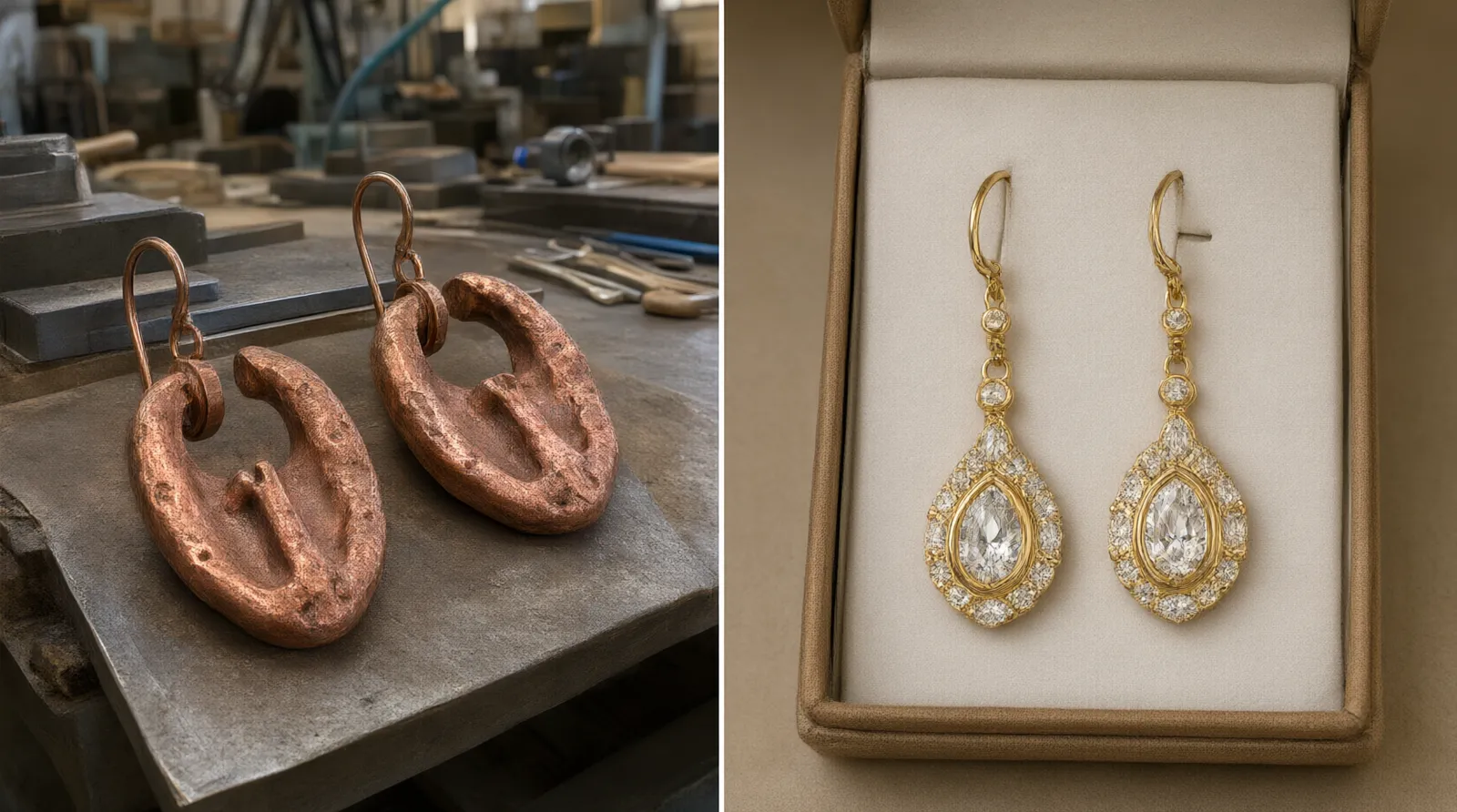
Custom jewelry procurement requires evaluating minimum order quantities (MOQs), plating durability, base metals, and supplier compliance before committing capital. For cross-border buyers sourcing fashion jewelry from China to the US, EU, UK, or MENA, the difference between a profitable product line and dead inventory comes down to vetting workshops that offer flexible MOQs—such as 12 pcs/style on most stock designs—and verified in-house quality control.
Who This Guide Is For
This guide is built for procurement managers, importers, and DTC store owners actively sourcing custom jewelry chains, earrings, and necklace sets from overseas manufacturers. You are likely expanding an existing catalog, replacing an unreliable vendor, or launching a new brand targeting consumers who want luxury aesthetics without fine-jewelry price tags. Your purchasing trigger might be a seasonal collection drop, a shift toward gradient crystal or two-tone glass bead styles, or the need for multilingual support across English, French, Arabic, Spanish, German, and Russian procurement teams. If you are comparing direct-to-consumer suppliers against wholesale platforms, this framework will help you finalize your vendor shortlist.
What Custom Jewelry Actually Does for B2B Buyers
Custom jewelry manufacturing allows brands to control design specifications, material costs, and inventory depth rather than relying solely on generic wholesale catalogs. Unlike walking into retail stores like Jared or Kendra Scott to buy finished pieces off the shelf, B2B custom jewelry means contracting a workshop to produce specific SKUs—like gold-plated copper drop earrings or rhodium-plated stud earrings with faux pearls—to your exact requirements. This model lets DTC brands compete on unique designs while maintaining margins. Workshops producing vintage, rhinestone, or natural stone pieces can adapt existing molds or engineer new ones based on your tech packs. For a broader look at how buyers evaluate these manufacturing partnerships, review our breakdown of 6 Custom Jewelry Sources Ranked: OEM Suppliers & Retail Benchmarks (as referenced by the source at the time of publication).
Key Decision Factors
Pricing Model and Trade Terms
What to evaluate: How the supplier structures unit pricing, tooling fees, and shipping costs. Look for clear trade terms—EXW (Ex Works) or FOB (Free on Board)—so you know exactly where liability transfers during transit. What "good" looks like: Transparent tiered pricing based on volume. Payment flexibility is critical for cross-border trade; reliable suppliers accept T/T bank transfers, Western Union, PayPal, L/C, or platforms like Xtransfer. Avoid vendors who demand full payment via untraceable methods before production begins.
Minimum Order Quantity (MOQ)
What to evaluate: The threshold required to initiate a production run. High MOQs trap cash in slow-moving inventory, while extremely low MOQs often carry inflated per-unit costs. What "good" looks like: An MOQ structure that balances risk and margin. For example, STRAND offers 12 pcs/style on the majority of its stock catalog, allowing buyers to test multiple designs without overcommitting. Select styles available from 1 pc are ideal for sampling before scaling.
Material Specifications and Plating Quality
What to evaluate: Base metals (e.g., copper vs. brass), plating types (gold-plated, rhodium-plated, 925-style silver finishes), and the materials used for stones (glass beads, natural stone, faux pearls). What "good" looks like: Detailed spec sheets outlining plating thickness and base metal composition. Whether you are sourcing pieces featuring amethyst, garnet, peridot, or turquoise colorways, or designs mimicking diamond cuts, the supplier must guarantee colorfastness and hypoallergenic properties where applicable.
Quality Assurance and Inspection
What to evaluate: When and how defects are caught. Cross-border returns are cost-prohibitive, so inspection must happen before goods leave the origin country. What "good" looks like: In-house QC inspection executed before every shipment. Ask for documented defect rates and whether inspections cover plating adhesion, clasp functionality, and stone setting security.
Shipping and Logistics Options
What to evaluate: Available freight methods and how they impact lead times and landed costs. What "good" looks like: Multiple routing options. A capable supplier will ship by air, sea, or express depending on your urgency and budget. They should also provide accurate volumetric weight calculations to prevent surprise freight charges.
Multilingual Support and Communication
What to evaluate: Language barriers frequently cause specification errors in cross-border procurement. Assess whether the sales team can communicate technical details accurately in your preferred language. What "good" looks like: Dedicated account managers fluent in the languages your team operates in. Suppliers offering service in EN, FR, AR, ES, DE, and RU reduce the risk of misinterpreted tech packs or delayed email responses.
Catalog Depth vs. Custom OEM Capability
What to evaluate: Whether the supplier forces you into rigid stock designs or allows modifications. What "good" looks like: A hybrid approach. A supplier might offer a broad stock catalog for immediate ordering while providing full custom OEM services for gold-plated/rhodium-plated copper or 925-style silver finishes when you need proprietary designs.
Vendor Stability and Compliance
What to evaluate: The manufacturer's track record, facility audits, and legal standing. While local jewelers like Morin Jewelers in Southbridge, MA offer custom designs as a service for regional retail clients, cross-border importers need factories scaled for international export compliance. Understanding how custom jewelry compares to retail alternatives can further clarify why vetted B2B partnerships outperform standard retail sourcing models. What "good" looks like: Vetted workshops with verifiable business licenses, export history, and stable production capacity. Direct links between the brand and the workshop eliminate unpredictable middleman markups.
Budget Tiers
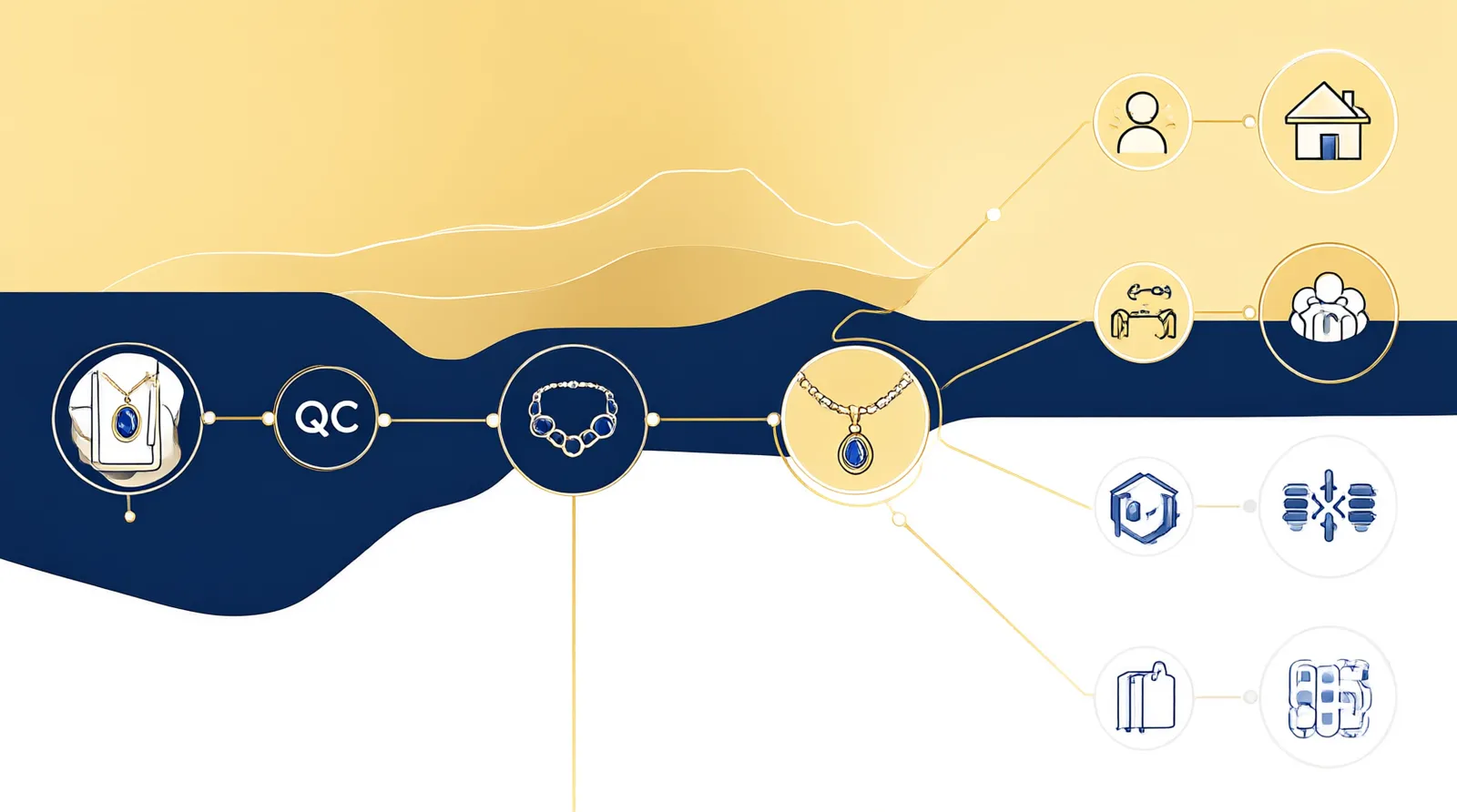
Use this table to align your purchasing power with the expected output from overseas custom jewelry manufacturers.
| Tier | Typical Profile | What You Get | Procurement Focus |
|---|---|---|---|
| Entry / Sampling | New DTC stores, boutique testers | Access to select stock styles from 1 pc. Standard catalog designs. Basic packaging. | Testing market fit. Evaluating plating quality and shipping speed via express freight. |
| Mid-Market / Growth | Established importers, scaling brands | MOQ of 12 pcs/style on most designs. Custom OEM options in copper/glass/faux pearl. Air or sea freight. | Margin optimization. Securing EXW/FOB terms. Utilizing multilingual support for faster iteration. |
| Enterprise / Volume | Large distributors, multi-region retailers | High-volume custom runs. Priority production scheduling. L/C payment terms. Dedicated QC protocols. | Supply chain reliability. Consistent color matching across massive batches. Sea freight consolidation. |
Note: Exact pricing depends on material complexity (e.g., natural stone vs. glass beads) and plating requirements. Always request a formal quote based on your specific tech pack.
Red Flags to Avoid
Walk away from negotiations if you encounter any of the following warning signs:
- Refusal to allow pre-shipment QC: If the supplier blocks third-party or in-house inspection before goods ship, you bear 100% of the defect risk.
- Vague material disclosures: Suppliers who cannot specify whether plating is gold or rhodium, or what the base metal is, are likely substituting cheaper alloys that tarnish quickly.
- Unrealistic MOQ drops without price adjustments: If a vendor suddenly agrees to a fraction of their stated MOQ without adjusting the unit price, they may be cutting corners on materials.
- Single, untraceable payment demands: Insisting solely on wire transfers to personal accounts rather than business channels like T/T, L/C, or Xtransfer signals high fraud risk.
- No clear trade terms: Failing to define whether pricing is EXW or FOB leaves you vulnerable to unexpected domestic freight and export clearance fees in China.
- Language barriers ignored: If a supplier servicing the EU or MENA cannot provide documentation or communication in relevant languages (FR, AR, ES, DE, RU), specification errors are inevitable.
- Missing export documentation: Inability to provide commercial invoices, packing lists, or certificates of origin will stall your goods at customs.
Buying Process Checklist
Follow this sequence to move from initial research to confirmed purchase order.
- Define Requirements: Lock in your target SKUs (e.g., drop earrings, necklace + earring sets), preferred materials (copper, glass beads, natural stone), and plating (gold, rhodium, 925-style silver).
- Shortlist Vendors: Identify suppliers bridging vetted workshops directly to overseas buyers. Review resources like Custom Jewelry: 6 Sources Buyers & DTC Brands Need (as referenced by the source at the time of publication) to benchmark capabilities.
- Request Samples: Order 1 pc of select styles to physically verify weight, clasp tension, plating finish, and stone setting accuracy.
- Evaluate Commercials: Compare unit prices, confirm MOQs (e.g., 12 pcs/style), and agree on trade terms (EXW or FOB).
- Verify Logistics: Confirm shipping methods (air, sea, express) and calculate total landed costs including duties.
- Confirm Payment Terms: Establish acceptable methods (T/T, Western Union, PayPal, L/C, Xtransfer) and payment schedules.
- Issue Purchase Order: Send a formal PO detailing SKU numbers, quantities, material specs, and delivery deadlines.
- Mandate QC Inspection: Require documented in-house QC inspection before the final balance is released and goods are dispatched.
Questions to Ask Vendors
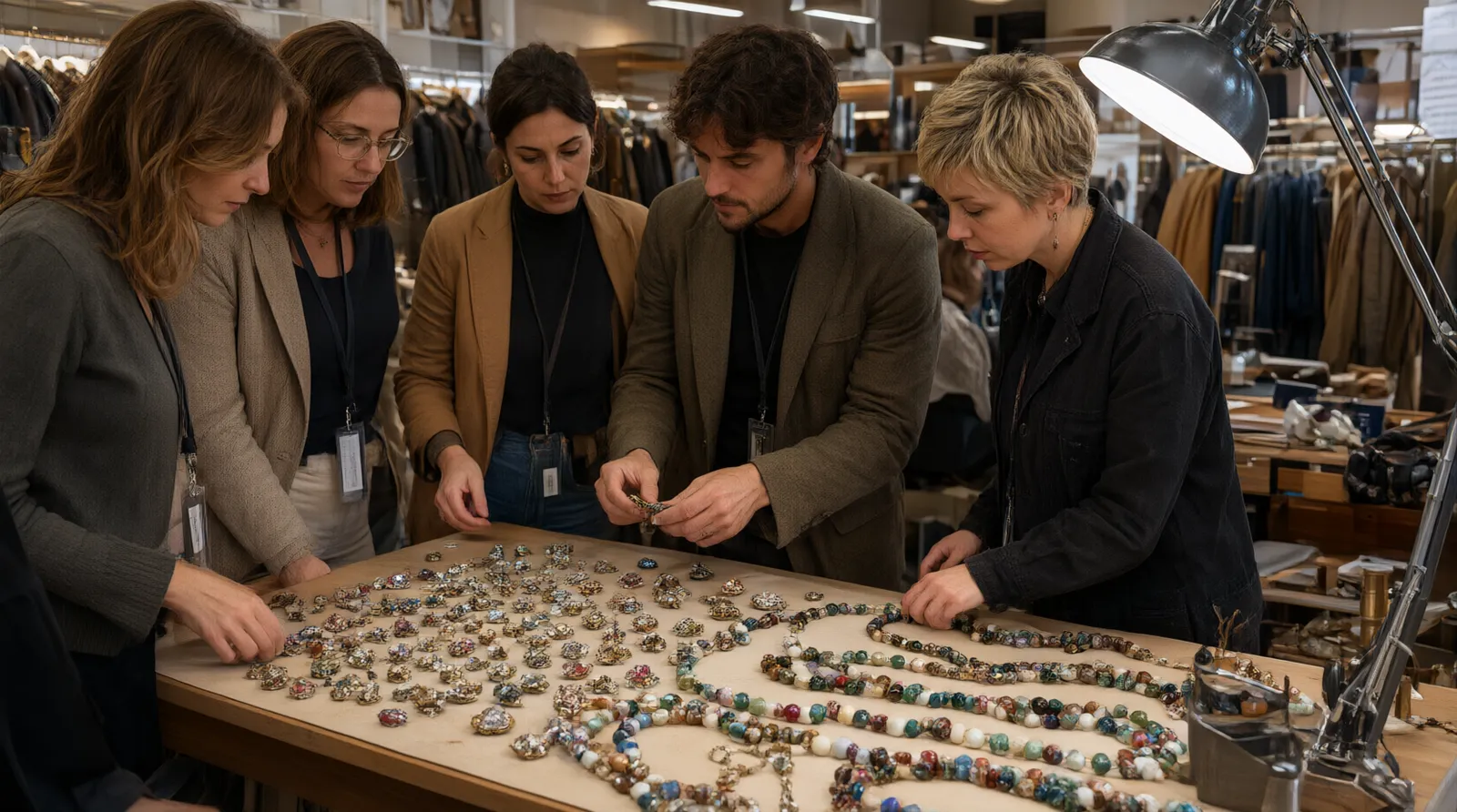
Copy this list into your next supplier inquiry email to filter out unqualified manufacturers immediately.
- What is your exact MOQ for custom OEM designs versus your stock catalog items?
- Do you offer 12 pcs/style on your standard designs, and which specific styles are available from 1 pc for sampling?
- Can you manufacture in both gold-plated and rhodium-plated copper, as well as 925-style silver finishes?
- What is your process for sourcing specific materials like natural stone, faux pearls, or gradient crystals?
- Do you conduct in-house QC inspection before every shipment, and can you provide a sample inspection report?
- Which trade terms do you operate under—EXW, FOB, or others?
- What shipping methods do you support (air, sea, express), and who handles export customs clearance?
- Which payment methods do you accept (T/T bank transfer, Western Union, PayPal, L/C, Xtransfer)?
- Do you have sales representatives who can communicate fluently in English, French, Arabic, Spanish, German, and Russian?
- What is your standard lead time from PO confirmation to dispatch for a 500-piece mixed order?
- Are your workshops vetted, and can you provide documentation proving direct manufacturer relationships?
- How do you handle defective units discovered after delivery?
Recommended Next Steps
Sourcing custom jewelry across borders requires precision in specifications, trust in manufacturing partners, and strict adherence to quality control. Delaying your vendor selection risks missing seasonal buying windows or settling for inferior plating that drives up customer return rates.
Audit your current inventory gaps, determine your target MOQs, and prepare your material specifications. To get exact pricing, verify current lead times, and request samples from a Hangzhou-based supplier linking vetted Chinese workshops directly to overseas buyers, Request a Quote and Get MOQ & Pricing at STRAND. Their multilingual team is ready to process your inquiry in your preferred language and arrange your first sample shipment.