
Custom Jewelry Sourcing: The B2B Buyer's OEM Checklist
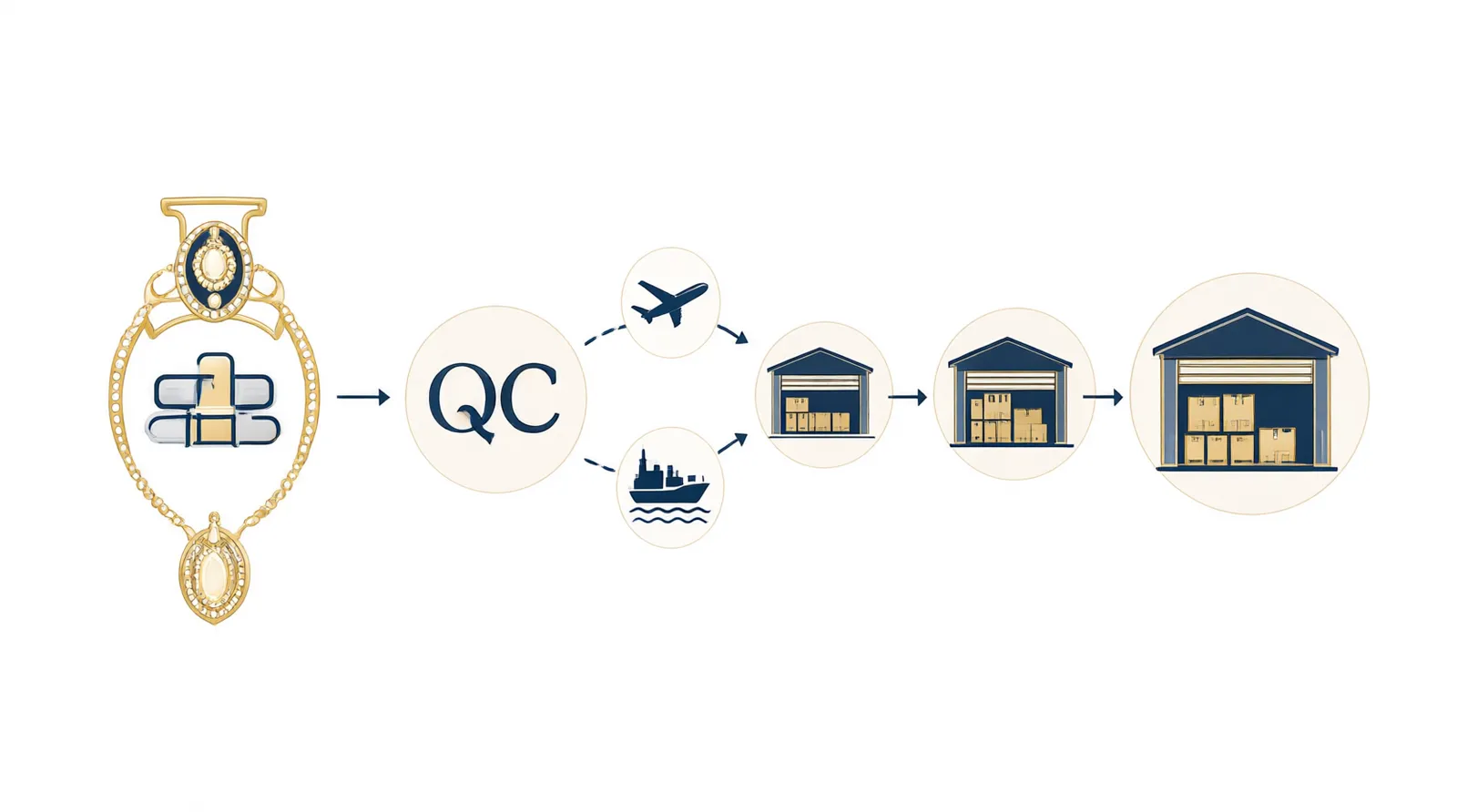
Custom Jewelry Sourcing: The B2B Buyer's OEM Checklist
Sourcing custom jewelry for retail or DTC distribution requires evaluating minimum order quantities (MOQs), base metal compositions, plating thickness, and trade terms before requesting quotes. Buyers importing fashion jewelry from manufacturing hubs like China should target suppliers offering low MOQs on stock designs, multilingual procurement support, and documented in-house quality control to protect margins across US, EU, UK, and MENA markets.
Who This Guide Is For
This guide is built for B2B buyers, importers, and DTC store owners who are actively sourcing custom jewelry—specifically drop earrings, stud earrings, and necklace-and-earring sets—from overseas manufacturers. You might be a procurement manager in London looking to expand your vintage-inspired glass bead line, a boutique owner in Dubai testing rhinestone styles, or a DTC brand founder in New York replacing an underperforming domestic supplier. The trigger is usually the same: you need reliable production of gold-plated or rhodium-plated copper pieces, natural stone accents, or faux pearl collections without committing to container-load volumes upfront. If your team operates across languages or needs specific trade terms like EXW or FOB, this framework will help you evaluate vendors systematically rather than relying on generic directories. For a broader overview of the procurement landscape, refer to our custom jewelry B2B buyer's guide.
What Custom Jewelry Actually Does for Your Business
Custom jewelry bridges the gap between mass-produced catalog items and unscalable artisan work. For a DTC brand or regional importer, it means controlling the exact silhouette, material finish, and stone colorway of your inventory while maintaining predictable unit economics. Unlike buying off-the-shelf from retail-focused platforms where personalized pendants might list hundreds of variations but lack wholesale pricing structures, true custom OEM manufacturing lets you dictate specifications down to the micron of plating on a copper base. A well-executed custom jewelry program allows you to test a small run of gradient crystal earrings, validate sell-through rates, and scale into full production runs using air, sea, or express shipping depending on your cash flow cycle.
Key Decision Factors
1. Minimum Order Quantity (MOQ) and Catalog Depth
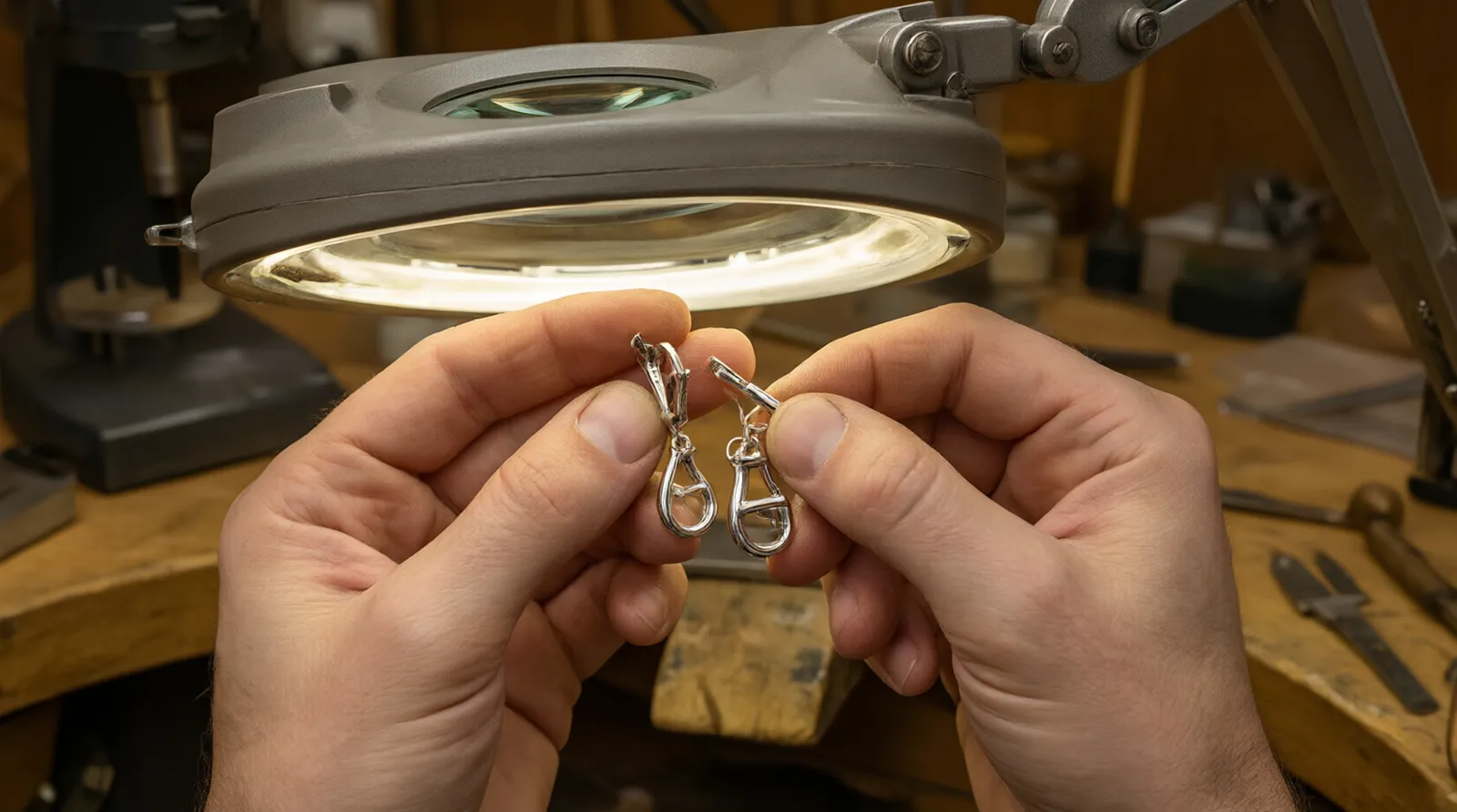
What to evaluate: The financial risk of testing new designs. High MOQs lock up capital in unproven SKUs. What "good" looks like: A supplier offering a deep stock catalog where the vast majority of styles carry low MOQs, allowing buyers to sample drop earrings or two-tone glass bead sets without overcommitting. Look for vendors that permit single-piece sampling on select designs so you can physically verify weight, clasp tension, and plating finish before authorizing a larger batch.
2. Material Specifications and Plating Standards
What to evaluate: Base metals, plating types, and stone authenticity. Fashion jewelry buyers need consistency in gold-plated and rhodium-plated copper, alongside options for 925-style silver finishes. Verify if stones are natural (amethyst, garnet, peridot, turquoise) or simulated (faux pearls, rhinestones). What "good" looks like: Clear documentation of materials. Retailers selling personalized jewelry often offer items in 18K gold plated silver, 925 sterling silver, and vermeil featuring gemstones like cubic zirconia, blue topaz, and pink tourmaline (Source). Your OEM partner should match or exceed this transparency, specifying whether a diamond-cut facet is applied to glass beads or genuine stones.
3. Trade Terms, Logistics, and Payment Flexibility
What to evaluate: How the goods move and how you pay for them. Cross-border procurement fails when payment rails don't align with buyer preferences. What "good" looks like: Vendors offering standard Incoterms (EXW or FOB) and multiple shipping methods (air, sea, express). Payment flexibility is critical; look for suppliers accepting T/T bank transfer, Western Union, PayPal, L/C, and modern cross-border solutions like Xtransfer.
4. Quality Control (QC) Protocols
What to evaluate: Defect rates and inspection timing. A beautiful sample means nothing if the production run arrives tarnished or missing clasps. What "good" looks like: Documented, in-house QC inspection executed before every shipment leaves the factory floor. Do not accept third-party inspections that happen after goods have already cleared customs.
5. Multilingual Support and Communication
What to evaluate: Friction in the specification process. Misunderstandings about millimeter measurements or color gradients cost money. What "good" looks like: Sales teams fluent in your operating languages. Suppliers that provide multilingual service across major global languages (such as English, French, Arabic, Spanish, German, and Russian) are essential for procurement teams managing imports into diverse regions like the EU and MENA.
6. Custom OEM Capabilities vs. Stock Modification
What to evaluate: Whether the vendor can actually manufacture your tech pack or just engrave their existing molds. What "good" looks like: True OEM capability. While consumer-facing sites might allow basic personalization—like adding initials to one of their 637 listed products (Source)—a B2B partner must be able to cast entirely new vintage or gradient crystal designs from scratch based on your CAD files or reference samples.
7. Scalability and Production Lead Times
What to evaluate: The vendor's ability to handle reorders during peak seasons without extending lead times by weeks. What "good" looks like: Direct links to vetted workshops rather than trading companies acting as middlemen. This ensures production capacity can flex from a small pilot run to a 5,000-piece seasonal order.
8. Total Cost of Ownership (TCO)
What to evaluate: Unit price plus shipping, tariffs, defect replacement costs, and communication overhead. What "good" looks like: A slightly higher EXW unit price from a vendor with rigorous pre-shipment QC often results in a lower TCO than a cheaper vendor whose 5% defect rate eats your margin on $150 retail pieces.
Budget Tiers
When planning your procurement budget for custom jewelry, align your spend with your current stage of business. The table below outlines typical purchasing tiers for B2B buyers sourcing fashion jewelry from Chinese manufacturers.
| Tier | Typical Order Profile | What You Get | Best For |
|---|---|---|---|
| Entry / Pilot | Low pcs/style (select styles or stock catalog) | Access to a broad stock catalog (e.g., vintage, rhinestone, faux pearl). Standard EXW/FOB terms. Basic in-house QC. | DTC brands testing new SKUs, boutique stores validating local demand before committing to larger runs. |
| Mid-Market | 50–500 pcs/style across multiple designs | Custom OEM capabilities. Dedicated multilingual account management. Mixed shipping (air/express). Flexible payments (T/T, PayPal, Xtransfer). | Growing importers and established online stores expanding their private label earring and necklace lines. |
| Enterprise / Volume | 1,000+ pcs/style, full container loads | Priority production scheduling. Deeply customized tooling/molds. L/C payment terms. Sea freight logistics optimization. Comprehensive compliance documentation. | Large-scale regional distributors supplying brick-and-mortar chains across the US, EU, UK, or MENA. |
For context on end-market pricing, consumer platforms frequently position personalized pieces at premium retail points; for instance, engravable stacking pendants or gemstone rings routinely retail in the mid-hundreds of dollars as of early 2024 (Source). Because retail prices and promotions change frequently, your wholesale custom jewelry costs must be modeled backward from current retail anchors to ensure viable margins. Understanding how custom jewelry compares to alternatives can further clarify where these investments yield the highest return.
Red Flags to Avoid
Walk away from a vendor negotiation immediately if you encounter any of the following:
- Refusal to send a physical sample: Never approve a production run based solely on digital renders or photos.
- Vague material descriptions: If a supplier says "gold color" instead of specifying "gold-plated copper" or detailing the plating thickness, they are hiding cheap base metals.
- No defined QC process: Suppliers who cannot explain exactly when and how they inspect goods before shipping will pass defects directly to your customers.
- Single payment method insistence: Vendors demanding 100% upfront via irreversible wire transfers with no escrow or flexible options (like PayPal or L/C) pose severe financial risks.
- Unwillingness to sign an NDA or OEM agreement: If you are providing custom designs, your intellectual property must be legally protected before sharing tech packs.
- Inconsistent communication: If a sales rep takes four days to reply during the courting phase, expect worse delays when a shipment is stuck in customs.
- Hidden tooling fees: Ensure mold or setup costs for custom OEM work are quoted transparently upfront, not added as surprise invoices after production begins.
Buying Process Checklist
Follow this sequence to procure custom jewelry systematically and minimize supply chain disruptions.
- Define Requirements: Map out your exact needs—silhouettes (stud earrings, necklace sets), materials (rhodium-plated copper, natural stone, glass beads), and target retail price points.
- Shortlist Vendors: Identify 3-5 suppliers. Look for those linking vetted workshops directly to overseas buyers. Review their stock catalogs to gauge baseline aesthetic alignment. (For broader market research, consult our guide on Custom Jewelry: 6 Sources Buyers & DTC Brands Need in 2026).
- Request Quotes & Samples: Ask for EXW and FOB pricing on low MOQs. Order physical samples of your top 3 designs to verify weight, plating finish, and clasp durability.
- Evaluate Communication & Language: Test the vendor's responsiveness and language capabilities. Confirm they can support your procurement team in your required language (e.g., French for EU distribution, Arabic for MENA).
- Verify QC & Compliance: Request documentation of their in-house inspection process. Ensure materials meet destination market regulations (e.g., REACH compliance for the EU, nickel-free requirements).
- Negotiate Terms: Finalize payment methods (T/T, Western Union, Xtransfer, etc.), shipping modes (air vs. sea), and lead times.
- Place Pilot Order: Execute a small batch to test the entire workflow from payment to delivery.
- Inspect & Scale: Audit the pilot shipment upon arrival. If defect rates are zero and logistics were smooth, issue the larger purchase order. For a deeper breakdown of how to evaluate suppliers side-by-side, see our ranking of 6 Custom Jewelry Sources Ranked: OEM Suppliers & Retail Benchmarks for 2026.
Questions to Ask Vendors
Copy and paste these questions into your initial RFQ emails to quickly filter serious manufacturers from brokers.
- What is your exact MOQ for stock designs versus fully custom OEM designs?
- Can you provide material certifications for your gold-plated and rhodium-plated copper bases?
- Do you offer 925-style silver finishes, and what is the plating thickness in microns?
- What specific gemstones and simulants do you stock (e.g., amethyst, garnet, peridot, turquoise, faux pearls, rhinestones)?
- Walk me through your in-house QC inspection process. At what stage does it happen, and what is your acceptable defect rate?
- Which Incoterms do you support (EXW, FOB), and what are your standard shipping methods (air, sea, express)?
- What payment methods do you accept for international orders (T/T, PayPal, Western Union, L/C, Xtransfer)?
- Do you have sales representatives who speak [insert your required language, e.g., French, Arabic, Spanish]?
- What is your standard production lead time for a 500-piece custom order?
- Are your materials compliant with EU REACH regulations and US nickel-release standards?
- How do you handle claims if a shipment arrives with manufacturing defects?
- Can you provide references from other DTC brands or importers currently buying from you in my region?
Recommended Next Steps
Procuring custom jewelry requires moving past catalog browsing and initiating direct technical conversations with manufacturers. If you are ready to source drop earrings, stud earrings, or necklace sets with verified materials and scalable MOQs, your next step is to request a formal quote and physical samples.
Visit STRAND to review the available stock catalog, confirm current MOQ availability for your chosen designs, and connect with a multilingual sales team to discuss your custom OEM requirements. Submit your tech packs or select your stock styles today to get precise EXW/FOB pricing and initiate your pilot order.