
How to Choose the Perfect CZ Pendant for Your Collection
How to Choose the Perfect CZ Pendant for Your Collection
A CZ pendant — short for cubic zirconia pendant — is a necklace centerpiece set with lab-grown cubic zirconia stones that replicate the visual brilliance of diamond at a fraction of the cost. For DTC buyers, importers, and procurement teams sourcing fashion jewelry at scale, CZ pendants sit at a sweet spot: high perceived value, consistent quality, and strong consumer appeal across global markets.
This guide covers everything you need to evaluate a CZ pendant before placing an order — from stone grades and metal types to MOQ considerations and styling context. Whether you're building out a new collection or expanding into rhinestone-accented pieces, the details below will sharpen your sourcing criteria.
What Is a CZ Pendant?
Cubic zirconia is a synthesized crystalline form of zirconium dioxide, first stabilized for commercial jewelry use in the late 1970s. Cut and faceted like a diamond, it achieves a refractive index between 2.15 and 2.18 — close enough to diamond (2.42) that untrained eyes consistently mistake the two.
A CZ pendant combines that stone with a metal bail and chain mount. The mount style — prong, bezel, halo, or pavé — determines how much of the stone is visible, how light enters it, and ultimately how the finished piece reads at retail. This distinction matters for buyers: a well-set CZ in a four-prong solitaire mounting looks categorically different from the same stone in a bezel setting, even if the stone quality is identical.
The term "CZ pendant" also covers a wide range of formats — single-stone solitaires, multi-stone cluster designs, cross pendants, geometric shapes, and letter/initial styles. Understanding which format drives demand in your market is the first procurement decision.
Types of CZ Pendants: Cuts, Settings, and Shapes
Not all CZ pendants are built the same way. The stone cut and setting architecture together determine the price tier, the target customer, and the care instructions you'll need to communicate downstream.
Stone Cuts
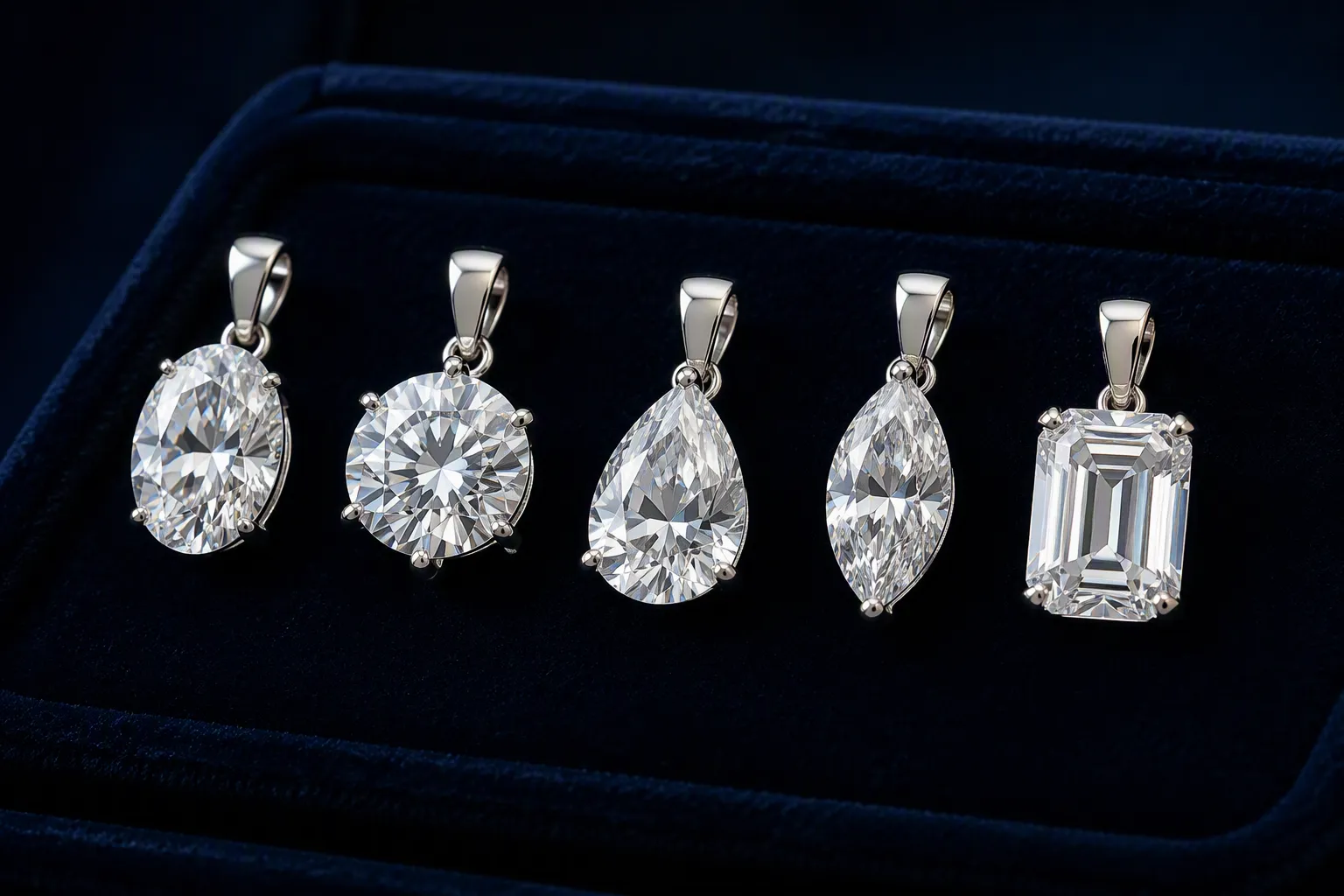
- Round brilliant — the most common cut for CZ pendants; maximizes light dispersion and suits nearly every style from minimalist to statement.
- Oval and pear — elongating shapes that photograph well and trend strongly in fashion-forward markets.
- Emerald cut — a step-cut with fewer facets; delivers a more architectural, understated look favored in MENA and European markets where understated elegance is preferred over overt flash.
- Marquise and cushion — popular in romantic and bridal-adjacent styles.
Setting Styles
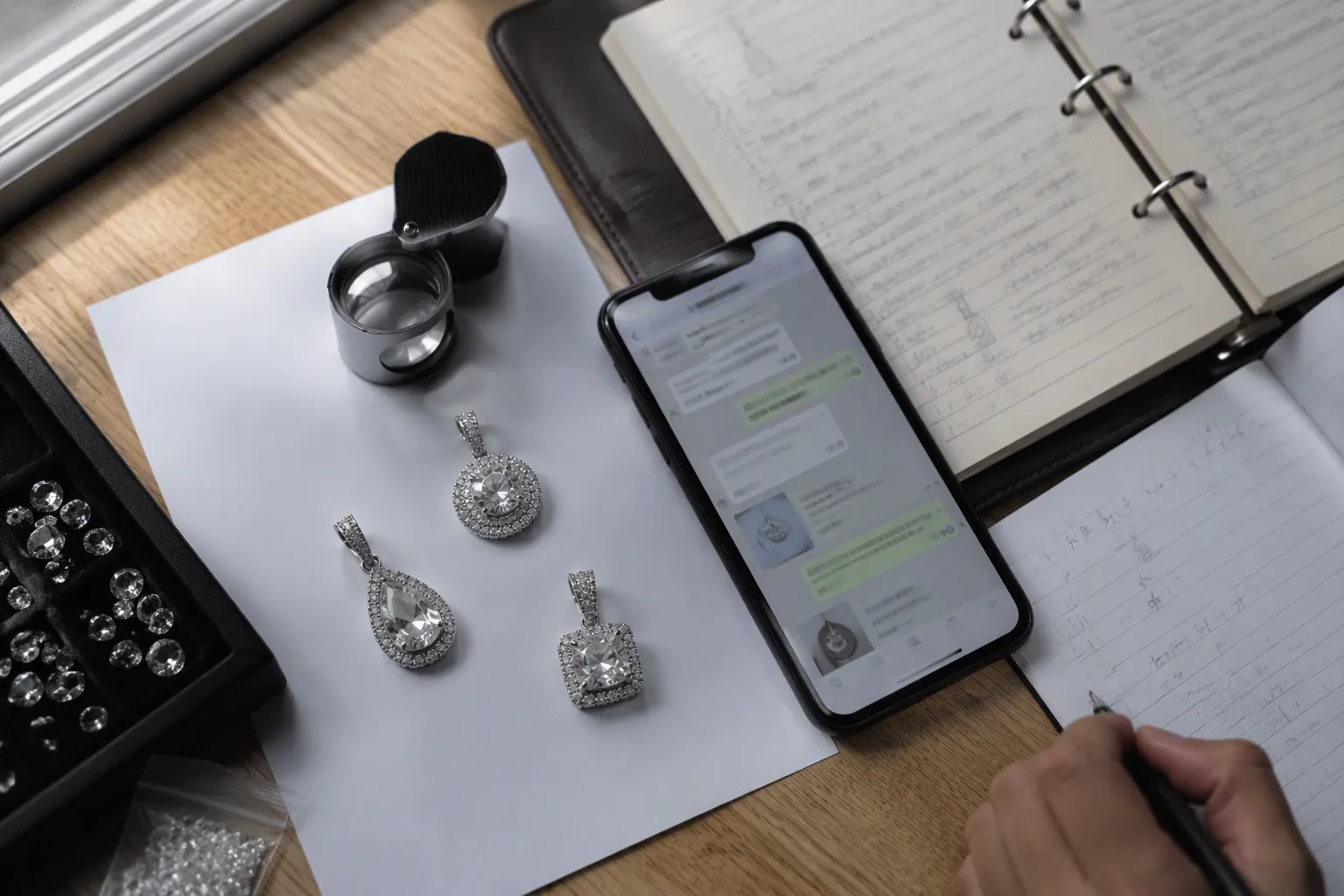
A prong setting (four or six prongs) exposes maximum stone surface, amplifying brilliance. A bezel setting encases the stone in a rim of metal — more secure, slightly less sparkle, often preferred for active wear or children's jewelry. Halo settings surround a center CZ with a ring of smaller stones, increasing perceived size. Pavé pendants cover the entire surface with tiny CZ stones — these require the most precise craftsmanship and command higher unit costs.
Pendant Shapes
Beyond the stone, the pendant's structural form shapes its market positioning: cross pendants carry strong demand across Christian-majority markets and parts of MENA; star and crescent shapes resonate in Middle Eastern markets; initial and letter pendants drive strong personalization-era repeat purchases in North American DTC.
How CZ Compares to Diamond — and Why It Matters for Sourcing
The practical argument for stocking CZ pendants is straightforward: a round brilliant CZ in a sterling silver or gold-plated setting delivers diamond-like optics at a price point that opens volume retail, gifting, and everyday-wear categories that natural diamond simply cannot reach.
CZ has a hardness rating of 8 to 8.5 on the Mohs scale — softer than diamond (10) but harder than most glass. With proper care, a quality CZ pendant retains its clarity for years. The key variable is coating: uncoated CZ can acquire a slightly oily surface patina over time; coated CZ (some manufacturers apply a diamond-like carbon film) resists this. When evaluating suppliers, ask specifically whether stones are treated or coated, and request wear-test documentation.
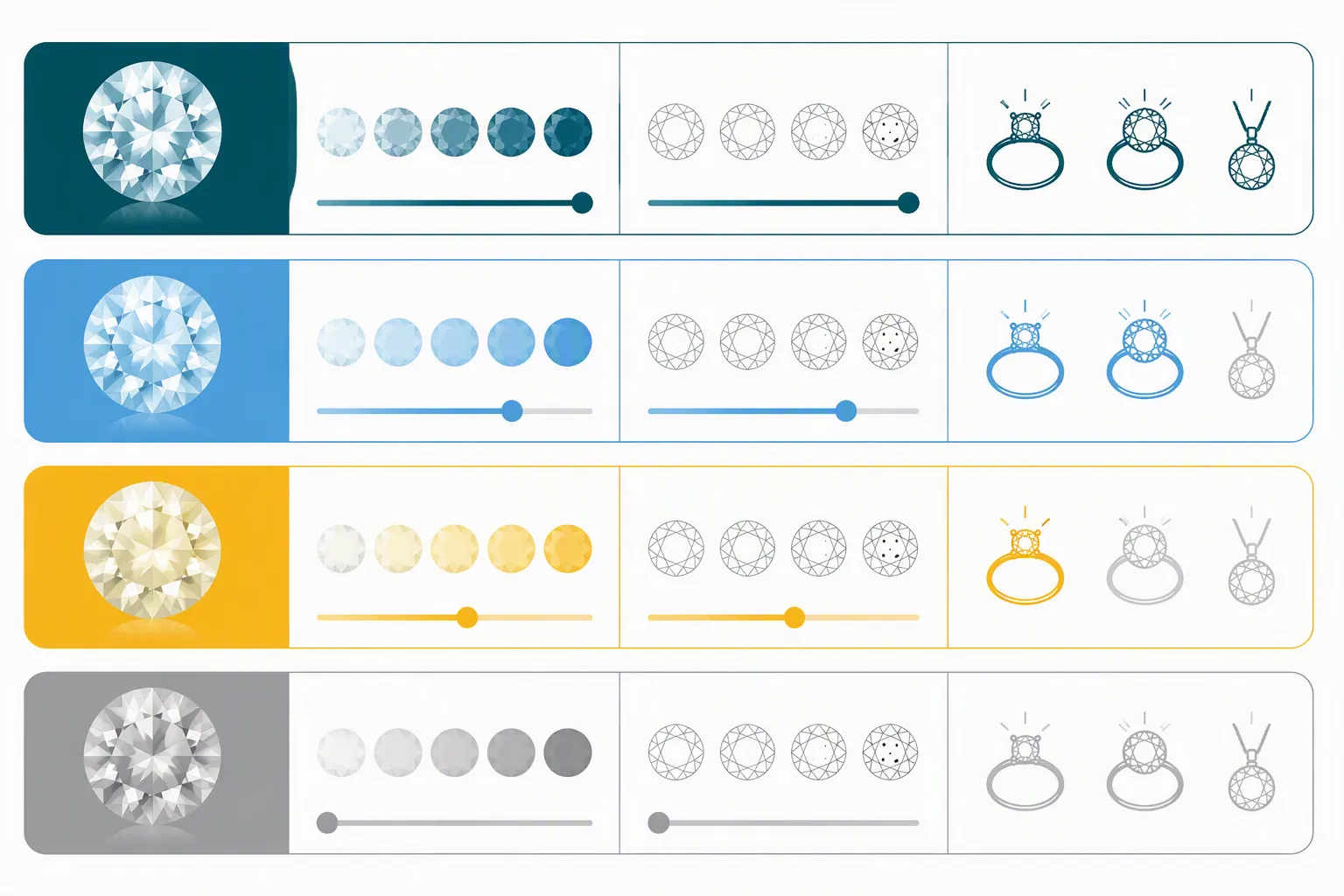
One distinction buyers often overlook: CZ clarity is almost universally flawless — the lab process produces stones without the inclusions found in mined gems. This means clarity grading is less relevant than color grading. The highest-grade CZ is colorless (equivalent to diamond D-E-F), while lower grades drift slightly yellow or brown. Confirm you're ordering colorless (AAA or AAAA grade from most suppliers) if your positioning is near-diamond quality.
Quality Indicators: What Separates Good CZ Pendants from Poor Ones
When reviewing samples or factory photos, assess these five dimensions systematically.
1. Stone Grade and Consistency
AAA-grade CZ is the minimum acceptable for fashion jewelry sold above a low price-point. AAAA (sometimes written as 5A) uses a stricter cut tolerance — stone faces are more precisely parallel, reducing the visual "fuzziness" that cheap CZ shows under direct light. Ask your supplier which grade they stock and whether they can provide the same grade consistently across reorders, since mixed-grade batches produce visible quality variance in a retail display.
2. Prong Finish and Security
Under a loupe or macro photo, prong tips should be rounded and even. Sharp, asymmetric prong tips are a fabrication shortcut that creates both a snag risk for clothing and a stone loss risk over wear time. Request macro photos of prong tips on sample pieces before committing.
3. Plating Thickness and Adhesion
Most CZ pendants use brass or copper alloy base metal, finished with gold, rose gold, rhodium, or silver plating. Plating thickness is measured in microns. Pieces plated at 0.3–0.5 microns will show base metal within months of regular wear. For retail or boutique positioning, ask for plating at a minimum of 1–3 microns on high-contact surfaces. STRAND applies its own quality vetting to plating specifications — always confirm micron thickness with your specific supplier.
4. Bail and Chain Compatibility
The bail (the loop connecting pendant to chain) should be soldered closed, not open-crimped. Open bails allow the pendant to slide off the chain without user error. Check also that the bail width matches standard chain gauges (1.5mm to 3mm for most fashion chains) so you can offer compatible sets.
5. Surface Finishing
A well-finished CZ pendant has no visible solder seams, tooling marks, or uneven polishing on flat metal surfaces. Run a fingernail across the back — texture that catches suggests incomplete finishing, which accelerates tarnish.
Metal Settings and Plating: Material Choices for Different Markets
Base metal selection affects both price and durability. The most common options in fashion CZ pendants:
Brass — dense, takes plating well, holds stone settings securely. The industry standard for mid-range fashion jewelry. Slight weight makes pieces feel premium.
Copper alloy — lighter than brass, more prone to surface reactions in humid climates. Requires more frequent reorder for tropical markets.
Sterling silver (925) — appropriate for rhodium-plated or pure silver-finish CZ pendants; adds genuine material value for buyers targeting higher AOV. Comes with associated price uplift.
Zinc alloy — the lowest-cost base metal. Acceptable for novelty or fast-cycle promotional pieces, but not recommended for premium positioning.
For MENA markets, gold-toned plating (yellow gold or rose gold) significantly outperforms silver or rhodium finishes — cultural preference runs strongly toward warm metal tones. For European and North American markets, rhodium-plated (white/silver finish) CZ pendants typically lead category sales.
Procurement Considerations: MOQ, Lead Time, and What to Ask
Before requesting samples, clarify these four dimensions with any supplier:
Minimum Order Quantity (MOQ) — CZ pendant MOQs vary widely, from single-style runs of 50–100 pieces to mixed-style assortments. Ask whether MOQ applies per SKU or per total order — the latter gives more flexibility for buyers testing multiple styles.
Lead Time — Standard production lead times for fashion CZ pendants typically run 2–6 weeks from confirmed order to finished goods. If you're sourcing for a seasonal campaign or a DTC product launch with a fixed go-live date, confirm production calendar availability before placing a deposit. Express timelines usually carry a premium.
Packaging Options — OEM and private-label packaging (polybags, velvet pouches, branded gift boxes) changes the per-unit landed cost meaningfully. Clarify whether packaging is included in quoted price or itemized separately.
Quality Assurance and Returns Policy — Ask for the supplier's defect tolerance percentage on delivered goods (a standard rate in fashion jewelry is under 3%) and their policy on replacement or credit for DOA units. Document this before payment terms are agreed.
If you're comparing STRAND's CZ pendant options against other sources, [contact the supplier directly] to request current MOQ tiers, lead times, and packaging specifications — these change with production cycles and seasonal availability.
When and How to Style CZ Pendants
CZ pendants sit comfortably across several wear contexts — this versatility is a selling point worth communicating to end consumers or retail partners.
Everyday wear — small solitaire or bezel-set CZ pendants in 16–18 inch chain lengths work for office and casual settings. The modest scale keeps the piece understated.
Layering — a growing styling trend, especially in North American and European DTC. CZ pendants are strong layering anchors because their facets catch light even when partially obscured by other pieces.
Occasion and gifting — halo-set or pavé CZ pendants, especially in heart or teardrop shapes, index heavily in gifting contexts: Valentine's Day, Mother's Day, and holiday Q4 campaigns. If your channel includes gift-oriented SKUs, these shapes should be in rotation.
MENA market context — for buyers sourcing for Gulf or Levant markets, consider that modest-wear preferences affect pendant length and stone size. Layered or statement CZ pendants are popular for indoor social occasions; everyday pieces tend toward smaller, refined designs. Gold tones are strongly preferred, and heart or floral motifs are commercially reliable.
If you're building out a complementary accessories range alongside CZ pendants, pairing them with rhinestone-accented studs creates strong visual coherence on a product page or in a physical display. STRAND's Zebra Print Color-Block Rhinestone Stud Earrings in Green offer a bold, coordinating option for buyers building statement jewelry sets. For a complementary necklace-adjacent pairing, the Turquoise & Pearl Glass Jewelry Set (Necklace & Bracelet) from STRAND demonstrates how layered sets can be merchandised as a complete look.
What to Ask Before You Buy: A Buyer's Checklist
Before placing any CZ pendant order, run through these questions with your supplier:
- What CZ grade do you use — AAA or AAAA? (Request confirmation in writing.)
- What is the base metal, and what is the plating thickness in microns?
- Are prongs soldered or crimped? Are bails soldered closed?
- What is your per-style MOQ, and is there a mixed-assortment option?
- What is the current production lead time from PO confirmation to ready-to-ship?
- Do you offer OEM packaging, and what is the per-unit cost?
- What is your defect rate policy and process for replacement claims?
- Can you provide macro sample photos before bulk production?
These questions separate suppliers with documented production standards from those operating on informal quality norms. A supplier who can answer all eight clearly, in writing, is operating at a level appropriate for wholesale or import relationships.
Conclusion: Start With Samples, Scale With Confidence
The difference between a CZ pendant that drives reorders and one that generates returns almost always comes down to stone grade, plating microns, and prong finish — details invisible in catalog photos but obvious in hand. Request physical samples before committing to volume. Evaluate them under bright light and with a loupe if possible.
CZ pendants are one of the most accessible high-visual-impact categories in fashion jewelry. Done well, they hold their own against far more expensive alternatives on a display or product page. Done poorly, they erode brand trust faster than almost any other category because consumers compare them directly to diamond.
Your next step: [Contact the supplier] to request current sample availability, MOQ tiers, and lead times on CZ pendant styles. Specify your target market (geography, retail channel, price point) so they can recommend appropriate stone grades and metal finishes from the outset.
STRAND is a vetted jewelry brand serving DTC stores, importers, and procurement teams. All product specifications should be confirmed directly with the STRAND team for current availability and ordering terms.
Frequently Asked Questions
What is cz pendant?
A CZ pendant is a jewelry piece featuring a cubic zirconia (CZ) gemstone — a lab-created, optically flawless crystal that closely resembles diamond in brilliance and clarity, typically set in sterling silver, brass, or gold-plated metal and worn on a chain. CZ pendants offer the visual appeal of fine diamond jewelry at a significantly lower price point, making them a popular choice for DTC retailers and importers seeking high-margin, accessible luxury pieces. STRAND sources CZ pendants in a range of cuts (round, princess, pear, halo settings) with standard MOQs starting from 50 units per SKU and lead times of 15–25 business days.
How to cz pendant?
A CZ (cubic zirconia) pendant is typically set by securing the stone in a prong, bezel, or pavé setting over a brass or sterling silver base, then plated in gold (14K/18K vermeil) or rhodium for finish. For sourcing through STRAND, pendants are available in standard dimensions (commonly 10–25mm drop) with brass + 18K gold plating as the default spec, minimum order quantities starting from 50–100 units per style. Lead time runs 15–25 business days, with DHL/FedEx express and sea freight options depending on order volume.
Why is cz pendant important?
A CZ pendant offers buyers a high-brilliance, diamond-alternative centerpiece at a accessible price point, making it a reliable volume driver for DTC stores and importers seeking strong margin without sacrificing visual appeal. Cubic zirconia's hardness (8.5 Mohs) and optical clarity ensure consistent quality across production runs, which is critical for procurement teams managing catalog standardization. For STRAND's B2B clients — including MENA-market buyers where gold-tone settings and modest neckline designs are preferred — CZ pendants represent a versatile, certifiable SKU that balances craftsmanship with scalable sourcing.
When should I use cz pendant?
CZ pendants are ideal for buyers seeking the visual brilliance of diamond at a accessible price point — they work well for everyday fine-adjacent collections, bridal accessories, and gifting lines where sparkle and clarity are priorities. For DTC stores and importers, CZ pendants perform strongly in sterling silver (925) or gold vermeil settings, offering consistent quality across high-volume SKUs without the sourcing complexity of natural stones. STRAND recommends CZ pendants particularly for MENA and occasion-driven markets, where layered or statement necklace styles in warm gold tones see strong sell-through.
What are the benefits of cz pendant?
CZ (cubic zirconia) pendants offer the brilliant optical clarity and light dispersion of diamonds at a fraction of the cost, making them an attractive option for buyers seeking high visual impact without premium gemstone pricing. They are highly durable (8–8.5 on the Mohs scale), colorfast, and resistant to scratching, ensuring consistent quality across bulk orders — critical for retail inventory. For STRAND sourcing clients, CZ pendants are available in a range of cuts (round brilliant, emerald, pear) set in 925 sterling silver or 18K gold vermeil, with typical MOQs starting at 50 units and lead times of 15–25 days.