
8 Best Alternatives to Custom Jewelry for Buyers in 2026
8 Best Alternatives to Custom Jewelry for Buyers in 2026
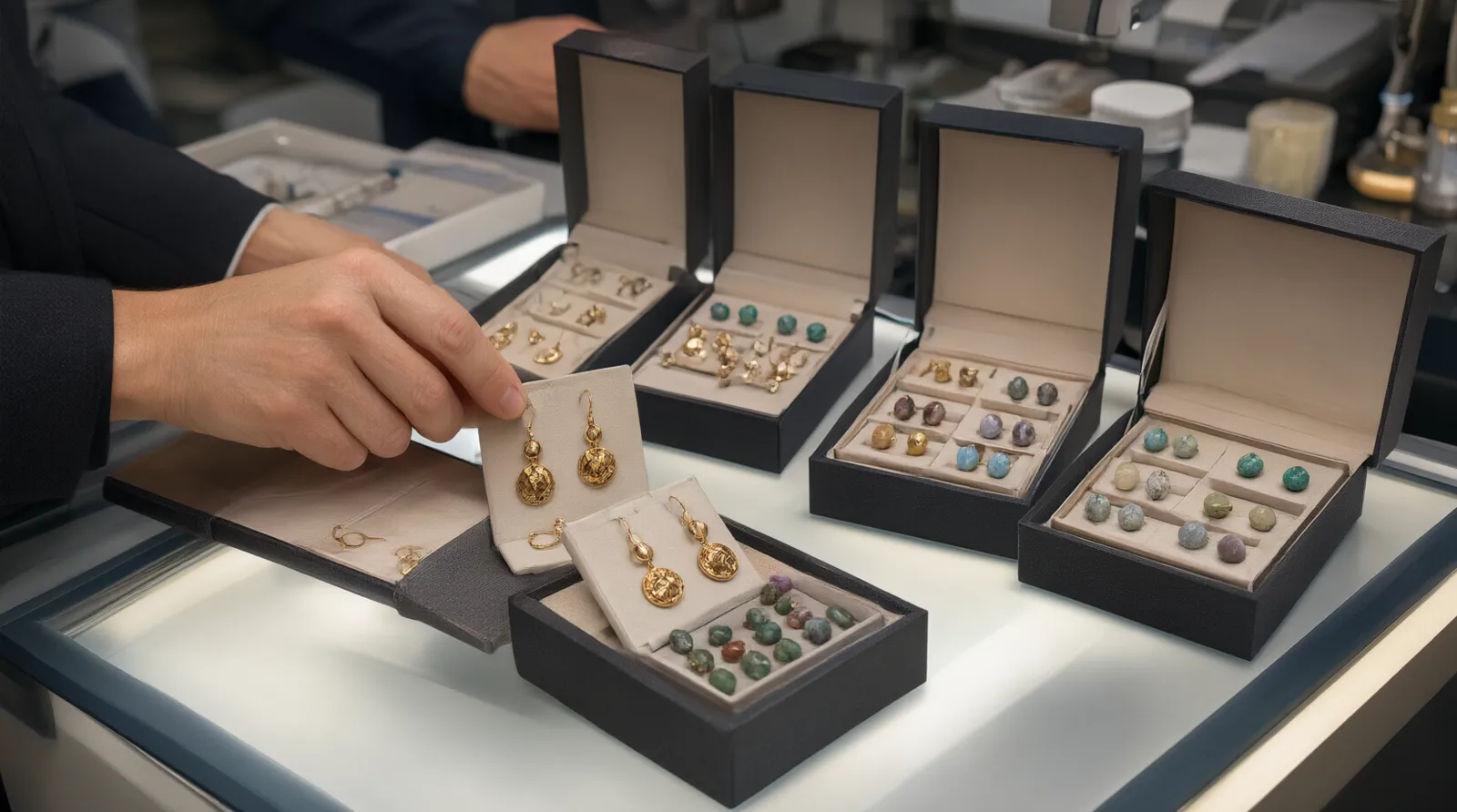
Buyers, importers, and DTC store owners sourcing custom jewelry from China typically evaluate alternatives based on minimum order quantities (MOQs), production lead times, material options, and trade terms. When the standard bespoke route becomes too slow, expensive, or difficult to scale across markets like the US, EU, UK, or MENA, procurement teams pivot to catalog-based OEM suppliers, wholesale marketplaces, or specialized retail services that offer faster turnaround without sacrificing design control. For a comprehensive overview of these options, explore our guide to custom jewelry alternatives.
Why Look for Alternatives to Custom Jewelry?
Sourcing fully bespoke custom jewelry often means navigating high per-unit costs and extended production timelines. For a DTC brand launching a seasonal drop of gradient crystal drop earrings or rhinestone necklace sets, waiting months for a one-off prototype ties up capital and delays revenue. Small importers testing new markets frequently find that traditional bespoke workshops require MOQs far exceeding their initial sales projections, forcing them to overstock inventory that may not sell.
Communication bottlenecks create another friction point. Multilingual procurement teams managing supply chains across borders need clear specifications for gold-plated copper finishes, natural stone settings, or faux pearl arrangements. If a workshop only communicates in one language or lacks standardized quality control checkpoints, the risk of receiving mismatched plating colors or incorrect gemstone cuts—like substituting amethyst for garnet or peridot for turquoise—increases dramatically. Vendor lock-in is also common; once a brand invests heavily in custom molds with a single artisan, switching suppliers mid-season becomes prohibitively expensive.
Scale limits hit hardest during peak demand. A successful collection of two-tone glass bead stud earrings might suddenly require thousands of units, but a small custom jeweler cannot ramp up production overnight. Buyers need alternatives that bridge the gap between unique design and reliable volume manufacturing. This is why cross-border fashion jewelry models, offering vetted Chinese workshops linked directly to overseas buyers, have become essential replacements for fragmented local sourcing. For a deeper breakdown of how these models stack up against traditional routes, explore our guide on Custom Jewelry: 6 Sources Buyers & DTC Brands Need in 2026.
What to Look for in a Custom Jewelry Alternative
When replacing your current custom jewelry supplier, evaluate potential partners against these specific procurement criteria:
- Minimum Order Quantities (MOQ): Can you order small batches to test the market? Look for suppliers offering MOQs as low as 12 pcs/style on stock designs, or even 1 pc for select styles.
- Material Versatility: Does the alternative support the exact materials your customers expect? Verify capabilities in gold-plated and rhodium-plated copper, 925-style silver finishes, glass beads, natural stones, and faux pearls.
- Trade Terms & Logistics: Confirm whether they operate on EXW or FOB terms and if shipping via air, sea, or express is supported to your specific destination.
- Payment Flexibility: Ensure they accept your preferred payment methods, such as T/T bank transfer, Western Union, PayPal, L/C, or Xtransfer.
- Quality Assurance: Demand proof of in-house QC inspection before every shipment leaves the factory floor.
- Multilingual Support: Procurement teams operating in English, French, Arabic, Spanish, German, and Russian need sales reps who speak their language fluently to avoid specification errors.
- Catalog Depth: A broad existing catalog (e.g., 100+ styles) allows you to mix ready-made inventory with custom OEM requests, reducing overall time-to-market.
Top Alternatives to Custom Jewelry
1. STRAND (Cross-Border Fashion Jewelry OEM)
Best for: DTC store owners, importers, and buyers in the US, EU, UK, and MENA needing low-MOQ fashion jewelry with direct factory access. Pricing: B2B wholesale pricing based on EXW or FOB terms; request a quote for specific volumes.
Key strengths vs custom jewelry:
- Operates a 114-style stock catalog where 109 styles carry an MOQ of just 12 pcs/style, with select styles available from 1 pc, drastically lowering the barrier to entry compared to traditional bespoke runs.
- Hangzhou-based infrastructure links vetted Chinese workshops directly to overseas buyers, cutting out middlemen while supporting custom OEM in vintage, gradient crystal, two-tone glass bead, and rhinestone styles.
- Provides multilingual sales support in EN, FR, AR, ES, DE, and RU, ensuring precise communication for complex specifications like diamond-cut facets or specific turquoise hues.
- Enforces in-house QC inspection before every shipment and accepts diverse payment methods including T/T, Western Union, PayPal, L/C, and Xtransfer.
Limitations / trade-offs:
- Focused specifically on fashion jewelry (copper, glass beads, faux pearls, natural stones); not the right fit for fine jewelry requiring solid gold or certified precious gemstones.
- Requires international shipping logistics coordination (air, sea, or express), which adds transit time compared to buying locally.
How it compares to custom jewelry: Traditional custom jewelry relies on local artisans with high setup fees and rigid MOQs. STRAND replaces this by offering a hybrid model: buyers can pull immediately available stock designs to generate cash flow while simultaneously running custom OEM orders for branded pieces. The ability to source everything from amethyst-inspired studs to faux pearl necklace sets through a single, multilingual point of contact streamlines procurement for scaling DTC brands.
2. Local Bench Jewelers (e.g., Morin Jewelers)
Best for: Independent retailers or consumers needing one-off custom bridal jewelry or ring modifications with face-to-face consultation. Pricing: Varies by project complexity and metal weight; generally higher per-unit cost than overseas OEM.
Key strengths vs custom jewelry:
- Offers hands-on services like a 'Build Your Own Ring' tool, allowing immediate physical adjustments to prong settings or band widths. [Source: https://www.morinjewelers.com/services/custom-designs?srsltid=AU7gw4V_yGrAhy78cyNKwqY-tugzkmC1sD9QabGA7IYSov]
- Located locally (e.g., Southbridge, MA), enabling in-person inspections and rapid revisions without international shipping delays. [Source: https://www.morinjewelers.com/services/custom-designs?srsltid=AU7gw4V_yGrAhy78cyNKwqY-tugzkmC1sD9QabGA7IYSov]
- Hosts time-bound specialized events, such as Gold, Jewelry & Diamond Buying Events (for example, a scheduled event running Oct 27–29), providing immediate liquidity or material sourcing opportunities. [Source: https://www.morinjewelers.com/services/custom-designs?srsltid=AU7gw4V_yGrAhy78cyNKwqY-tugzkmC1sD9QabGA7IYSov]
Limitations / trade-offs:
- Cannot scale to meet wholesale demands for DTC stores requiring hundreds of matching drop earrings or necklace sets.
- Limited by the individual jeweler's bench capacity and local material availability.
How it compares to custom jewelry: While local jewelers provide excellent custom designs as a service for individual clients, they fail as a scalable alternative for commercial buyers. [Source: https://www.morinjewelers.com/services/custom-designs?srsltid=AU7gw4V_yGrAhy78cyNKwqY-tugzkmC1sD9QabGA7IYSov] An importer looking to stock 500 units of rhodium-plated copper earrings will find local bench jewelers far too slow and expensive compared to cross-border OEM factories.
3. Large Chain Retailers (e.g., Jared, Kay Jewelers)
Best for: Consumers seeking standardized luxury-branded pieces with established warranty programs. Pricing: Premium retail pricing reflecting brand markup and physical store overhead.
Key strengths vs custom jewelry:
- Massive physical footprint with stores nationwide, offering immediate try-on experiences for items ranging from peridot pendants to diamond solitaires.
- Standardized return policies and financing options reduce buyer risk for individual consumers.
- Access to recognized luxury brand names under one roof.
Limitations / trade-offs:
- Zero viability for B2B buyers, importers, or DTC brands looking for white-label or OEM manufacturing.
- "Custom" options are usually limited to selecting preset combinations from existing corporate catalogs rather than true bespoke manufacturing.
How it compares to custom jewelry: Chains like Jared serve the end-consumer looking for a guaranteed retail experience, not the business buyer sourcing inventory. Their customization is superficial compared to working directly with an OEM supplier where you dictate the exact gauge of the copper or the cut of the glass beads.
4. Designer Brand Configurator Tools (e.g., Kendra Scott, Pandora)
Best for: End-consumers wanting personalized color combinations within a fixed designer aesthetic. Pricing: Mid-tier retail pricing per configured piece.
Key strengths vs custom jewelry:
- Interactive online tools let users swap stone colors (e.g., choosing garnet over turquoise) in signature silhouettes instantly.
- Strong brand recognition drives consumer trust and perceived value.
- Fast fulfillment since components are pre-manufactured and assembled on demand.
Limitations / trade-offs:
- Strictly closed ecosystems; you cannot introduce your own CAD files or request unlisted materials.
- Completely unsuitable for commercial procurement or wholesale importation.
How it compares to custom jewelry: Designer configurators simulate customization by mixing and matching pre-existing parts. For a DTC store owner trying to build a unique brand identity, relying on a competitor's trademarked silhouette defeats the purpose. True custom jewelry alternatives must allow ground-up design control, which these retail tools do not offer.
5. Wholesale Marketplaces (Alibaba, Global Sources)
Best for: High-volume importers comfortable vetting hundreds of unverified factories independently. Pricing: Highly variable; often requires aggressive negotiation and carries hidden sampling costs.
Key strengths vs custom jewelry:
- Unmatched variety of manufacturers capable of producing anything from cheap alloy fashion rings to high-end sterling silver pieces.
- Direct price competition among thousands of suppliers can drive unit costs down for massive orders.
Limitations / trade-offs:
- Quality control is entirely on the buyer; inconsistent plating thickness or misrepresented materials (e.g., dyed quartz sold as natural amethyst) are common risks.
- Communication barriers and lack of dedicated multilingual account management lead to frequent specification errors.
- High MOQs are standard, making it difficult for emerging DTC brands to test new styles.
How it compares to custom jewelry: Broad marketplaces replace the bespoke jeweler with a search engine. However, they lack the curated reliability of a dedicated partner like STRAND. Buyers spend weeks filtering scams instead of developing products. The absence of guaranteed in-house QC before shipment makes this a risky alternative for brands prioritizing consistent quality.
6. Amazon Handmade & Craft Platforms (Etsy)
Best for: Boutique retailers sourcing micro-batches of artisan-crafted pieces. Pricing: Artisan retail-to-wholesale margins; generally higher than factory-direct OEM.
Key strengths vs custom jewelry:
- Access to highly unique, handcrafted designs utilizing unconventional materials and techniques.
- Built-in buyer protection and escrow payment systems simplify transactions.
- Many sellers accept very small custom orders or modifications.
Limitations / trade-offs:
- Production capacity is severely limited; scaling a best-selling earring design to 1,000 units is rarely possible with a solo artisan.
- Inconsistent quality across batches due to manual crafting variations.
How it compares to custom jewelry: Etsy serves the micro-boutique well but fails the growing DTC brand. If a gradient crystal necklace set goes viral, an artisan platform cannot fulfill the resulting demand spike. Factory-backed alternatives provide the necessary elasticity that handmade platforms structurally lack.
7. 3D-Printed Prototyping Services (Shapeways, Local CAD Labs)
Best for: Designers needing rapid physical prototypes before committing to metal casting tooling. Pricing: Charged per print volume and material resin/wax type.
Key strengths vs custom jewelry:
- Transforms digital CAD files into physical wax or resin models in days, accelerating the iteration phase.
- Allows precise verification of dimensions, ergonomics, and stone setting tolerances before mass production.
Limitations / trade-offs:
- Only produces prototypes, not finished retail-ready jewelry in gold-plated copper or natural stones.
- Requires the buyer to source a separate manufacturer for final production.
How it compares to custom jewelry: 3D printing replaces the manual wax-carving step of traditional custom jewelry, but it is only half the solution. Buyers still need a manufacturing partner to cast, plate, set stones, and finish the product. Integrated OEM suppliers handle both prototyping and production under one roof.
8. Private Label Catalog Wholesalers
Best for: Fast-fashion retailers needing immediate bulk inventory without design input. Pricing: Lowest tier pricing due to mass production of identical goods.
Key strengths vs custom jewelry:
- Instant availability; goods are already manufactured and sitting in warehouses.
- Extremely low per-unit costs suitable for discount retail environments.
Limitations / trade-offs:
- Zero exclusivity; competitors can buy the exact same vintage or rhinestone styles from the same catalog.
- No ability to alter designs, change plating types, or customize packaging.
How it compares to custom jewelry: Private label is the antithesis of custom jewelry. It sacrifices all brand differentiation for speed and price. Hybrid models that offer a base catalog (like STRAND's 114 styles) alongside custom OEM capabilities provide a much stronger alternative, balancing immediate stock needs with long-term brand building. For a detailed ranking of these hybrid approaches, review our analysis of 6 Custom Jewelry Sources Ranked: OEM Suppliers & Retail Benchmarks for 2026.
Side-by-Side Comparison Table
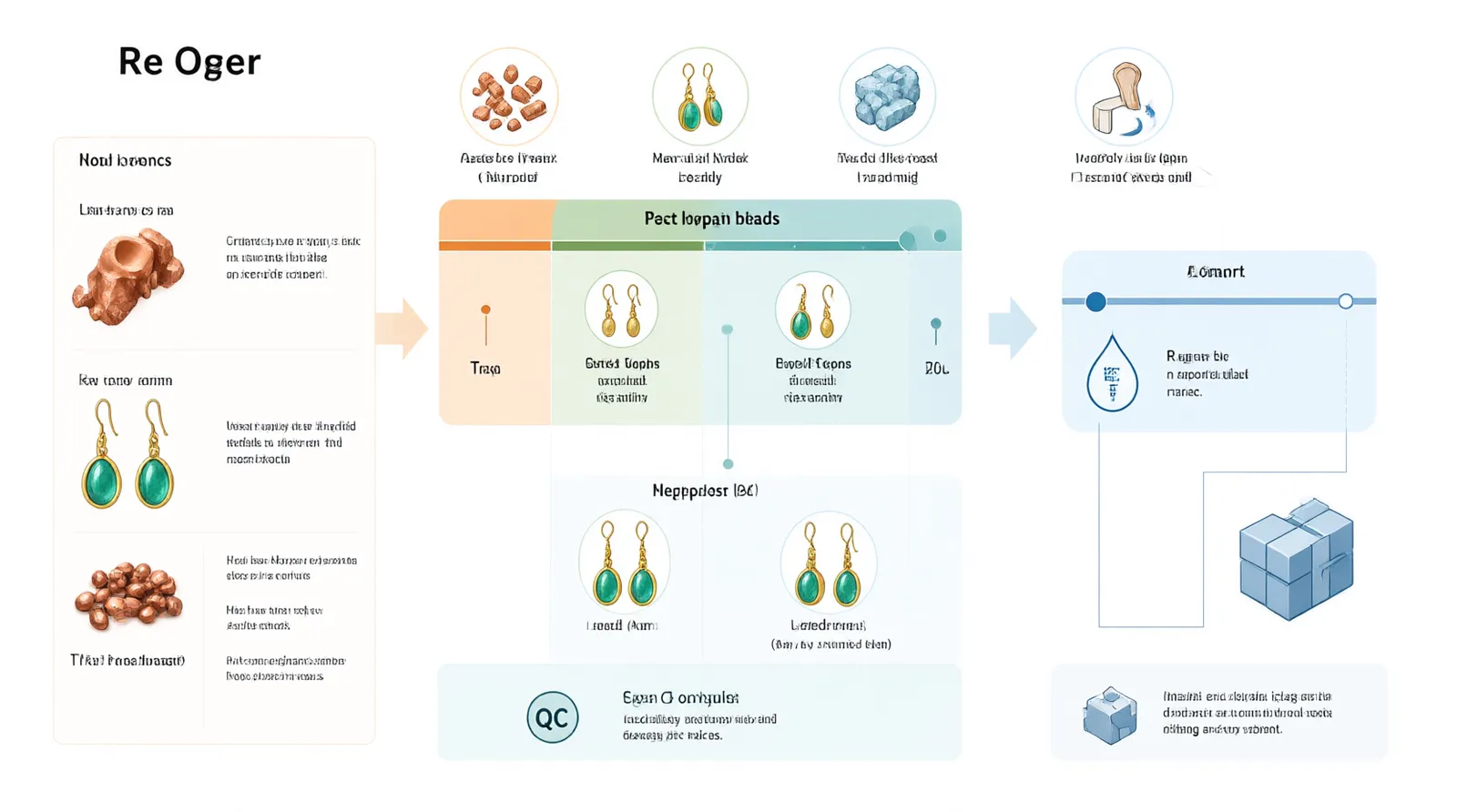
| Feature | Traditional Custom Jewelry | STRAND (OEM + Stock) | Local Bench Jewelers | Wholesale Marketplaces | Private Label Catalogs |
|---|---|---|---|---|---|
| Target Buyer | Individual / Bridal | DTC Stores, Importers | Consumer / Indie Retail | High-Volume Importers | Fast-Fashion Retail |
| Typical MOQ | 1 piece (high setup fee) | 12 pcs/style (select from 1 pc) | 1 piece | 100–500+ pieces | 50–100+ pieces |
| Production Scale | Very Low | High | Very Low | Very High | Very High |
| Material Range | Fine metals/stones | Copper, glass, natural stone, faux pearl | Fine metals/stones | Varies wildly | Base alloys |
| QC Guarantee | Artisan dependent | In-house before shipment | Artisan dependent | Buyer responsible | Factory standard |
| Multilingual Support | Rarely | EN, FR, AR, ES, DE, RU | Local language only | Varies by seller | None |
| Lead Time | 4–12 weeks | Stock: Immediate / OEM: Varies | 2–6 weeks | 3–8 weeks + shipping | Immediate |
How to Pick the Right Alternative
Choosing the correct replacement for custom jewelry depends entirely on your operational stage and target market. Whether you are evaluating alternatives to custom jewelry for the first time or optimizing an existing supply chain, aligning your choice with your business goals is critical.
Scenario 1: You are a DTC brand launching a new collection. If you need to test market response without tying up capital in massive inventory runs, prioritize alternatives with low MOQs and hybrid stock/custom models. A supplier offering 12 pcs/style on 109 catalog designs allows you to launch quickly, gather data, and then commission custom OEM variations of your best-sellers. Ensure they support your required finishes, such as rhodium-plated copper or 925-style silver, and verify their payment terms align with your cash flow (e.g., PayPal or T/T).
Scenario 2: You are an importer supplying regional boutiques across the EU or MENA. Your primary bottleneck is communication and compliance. Select an alternative that provides dedicated multilingual sales support in languages like French, Arabic, German, and Spanish. Misunderstandings regarding stone specifications—confusing synthetic turquoise for natural, or misjudging the cut of a diamond-simulant rhinestone—can result in rejected shipments. Demand documented in-house QC inspection protocols before goods leave the origin country.
Scenario 3: You are a brick-and-mortar retailer needing one-off bridal repairs or custom rings. For localized, single-piece requirements, overseas OEM is unnecessary. Utilize local bench jewelers who offer interactive services like ring-building tools or host in-store buying events. The premium you pay supports the convenience of face-to-face consultation and immediate physical adjustments that cross-border shipping cannot accommodate.
Scenario 4: You are scaling a proven best-seller to thousands of units. Once a design is validated, artisan platforms and local jewelers become liabilities. Transition to factory-direct OEM partners capable of handling air, sea, or express freight logistics on EXW or FOB terms. Verify their production capacity matches your growth curve and ensure they can maintain consistency across large batches of complex items like two-tone glass bead necklace and earring sets.
Conclusion
Replacing traditional custom jewelry sourcing requires matching your specific procurement constraints—whether that is MOQ flexibility, material precision, or multilingual communication—to the right operational model. For individual consumers or localized bridal needs, bench jewelers and designer configurators remain viable. But for buyers, importers, and DTC store owners scaling fashion jewelry brands across the US, EU, UK, and MENA, cross-border OEM partners provide the necessary balance of design control, manufacturing scale, and logistical support.
If your current supply chain is bottlenecked by high minimums, inconsistent plating quality, or language barriers, audit your next order against the criteria outlined above. Request a sample, verify the QC process, and confirm the trade terms before committing to a full production run. To get current MOQ details, pricing tiers, and material specifications for drop earrings, stud earrings, and necklace sets, Request a Quote from STRAND and connect with a multilingual sales representative today.