
7 Things to Know Before Buying Affordable Tungsten Rings
7 Things to Know Before Buying Affordable Tungsten Rings
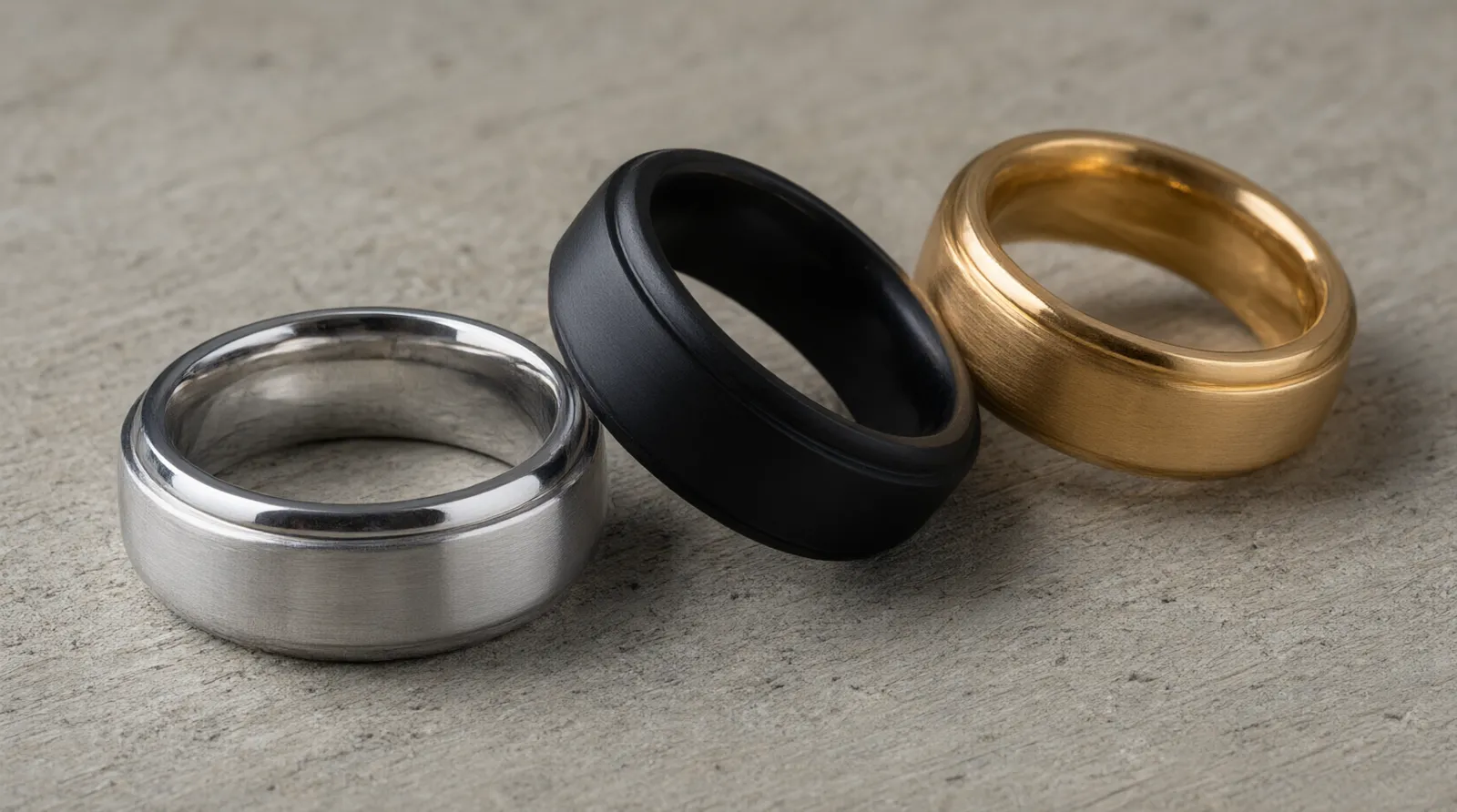
Tungsten rings cost a fraction of gold or platinum yet hold their finish longer than most precious metals. That combination — durability, visual quality, and accessible price — has made tungsten one of the fastest-growing segments for DTC jewelers, importers, and procurement teams building entry-to-mid-tier ring collections.
This is not a "cheap jewelry" category, though. The gap between a well-sourced tungsten ring and a poorly sourced one is significant. Material grade, cobalt content, finish quality, and warranty terms all vary widely across suppliers. Buying without understanding these variables leads to returns, reputation damage, and margin erosion.
The seven sections below give you a complete evaluation framework — from what tungsten actually is, to how to vet a supplier before placing your first order.
Quick definition (Featured Snippet): Affordable tungsten rings are rings crafted from tungsten carbide — one of the hardest metals in consumer jewelry — that deliver scratch resistance, lasting polish, and contemporary styling at accessible price points. Unlike gold or platinum, tungsten's material cost is inherently lower, making it possible to offer quality rings without premium markups. Word count: 52 words.
1. What Affordable Tungsten Rings Actually Are
Tungsten carbide, the compound used in ring manufacturing, ranks around 9 on the Mohs hardness scale — just below diamond. That hardness is what makes the material compelling for everyday wear rings: the surface resists scratches from daily contact far better than gold (which sits around 3–4 on the same scale), silver, or even titanium.
The "affordable" dimension comes from tungsten's material economics. Tungsten carbide is processed at industrial scale and is far more abundant than gold or platinum. This keeps raw material costs structurally low relative to precious metals, meaning manufacturers can produce rings with genuine quality — thick walls, precise tolerances, consistent sizing — without the overhead that pushes gold wedding bands into four-figure territory.
For buyers, this translates into a category where the margin structure is genuinely different from precious metal rings. You are not simply buying "cheaper jewelry." You are buying a ring made from a fundamentally different material that happens to cost less, not because corners were cut, but because the source material has different economics.
Tungsten vs. Other Affordable Metals
Three metals compete at the accessible price tier: tungsten, titanium, and stainless steel. Each serves a different consumer and use-case profile:
- Tungsten carbide: Hardest and most scratch-resistant, heavier hand feel, cannot be resized. Ideal for everyday wear rings and wedding bands.
- Titanium: Lighter than tungsten, slightly less hard, can be anodized for color, more options in surgical-grade alloys. A strong choice for buyers targeting active lifestyle consumers.
- Stainless steel: The least expensive option at scale, but more susceptible to surface scratching over time. Best suited to fashion collections or short product lifecycle SKUs.
For buyers targeting durability-conscious consumers — particularly men's wedding bands, everyday fashion rings, or unisex collections — tungsten typically delivers the strongest quality-to-cost ratio at the affordable tier.
2. Why Cobalt Content Is the First Quality Question to Ask
Not all tungsten rings are manufactured the same way. The binding agent used to form the tungsten carbide compound matters enormously for both safety and long-term finish integrity.
Cobalt-Free vs. Cobalt-Bonded Tungsten
Older or lower-cost tungsten rings use cobalt as a binder during the sintering process. The problem: cobalt can react with skin oils and moisture over time, causing surface discoloration, green oxidation marks, and in some cases skin irritation or allergic reactions. It also increases the ring's vulnerability to surface degradation.
Cobalt-free tungsten rings use nickel or other non-reactive binders instead. These rings hold their finish longer, pose no skin-reaction risk, and align with consumer expectations in health-aware markets. Reputable suppliers — including those who offer dedicated cobalt-free product categories — have moved away from cobalt-bonded formulations entirely for their consumer-facing lines.
For DTC brands positioning at the premium-affordable tier, cobalt-free should function as a baseline requirement, not an optional upgrade. When evaluating any supplier, ask specifically: "Is this ring cobalt-free, and can you provide material documentation confirming the binder composition?" A supplier who cannot answer clearly is a signal to proceed with caution.
3. The Full Range of Styles Available — Wider Than Most Buyers Expect
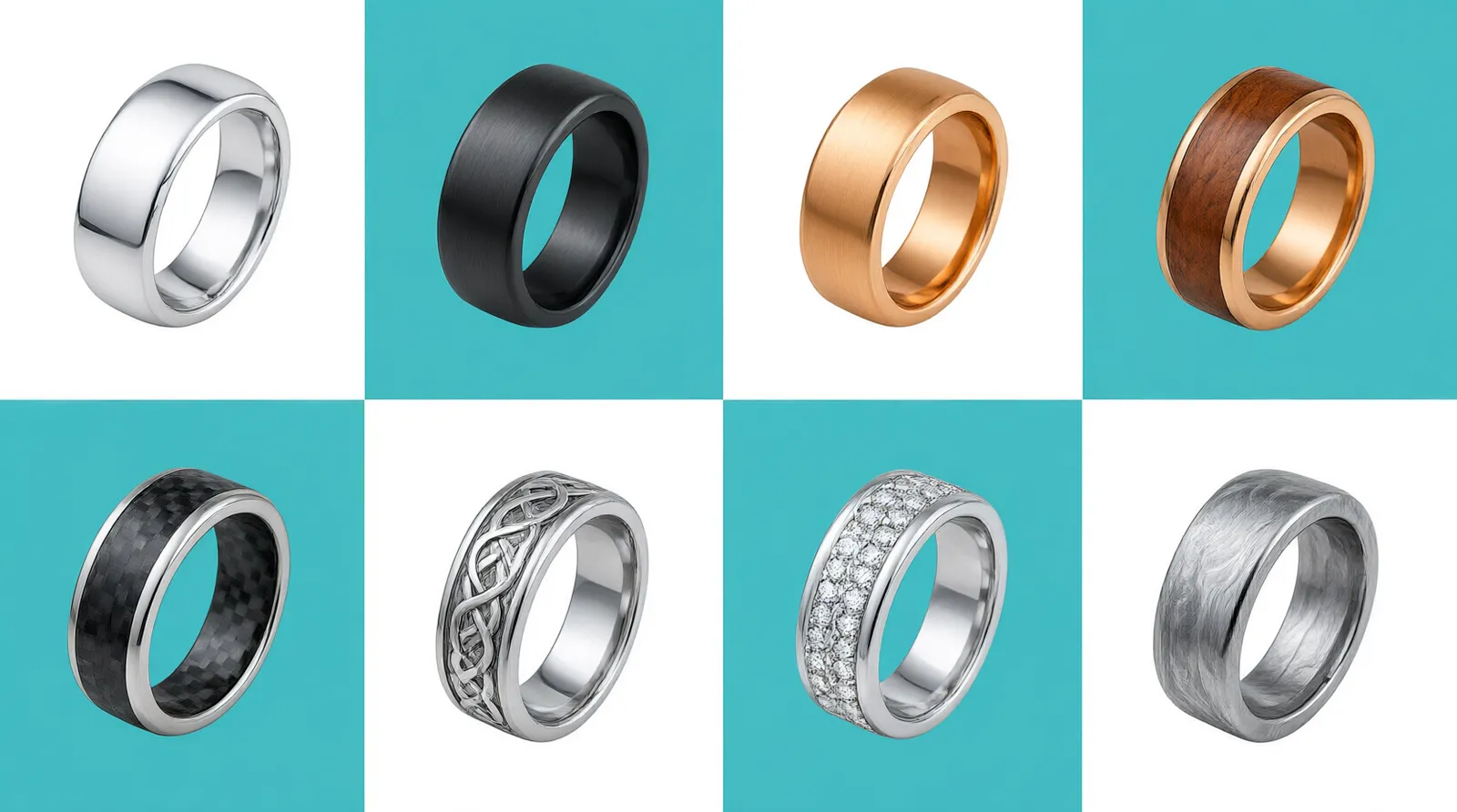
A common misconception among buyers entering the tungsten category for the first time is that "affordable tungsten ring" means a plain polished band. The actual style range available from quality suppliers is significantly broader — and that breadth is part of what makes the category commercially attractive.
Common Tungsten Ring Style Categories
- Polished and brushed finishes: Classic silver-tone or gunmetal, either mirror-polished or matte brushed surface. High demand across age groups and markets; a reliable core SKU for any ring collection.
- Black tungsten: PVD-coated rings with a deep black finish. Strong seller in men's fashion, contemporary wedding band, and streetwear-adjacent categories.
- Gold-tone tungsten: IP or PVD gold coating over the tungsten base. Visually proximate to yellow gold at a significant cost difference. Particularly relevant for MENA markets, where gold tones carry distinct cultural and aesthetic significance.
- Wood inlay: A natural wood segment set into a tungsten band. Popular in lifestyle, artisan-positioned, and "made with nature" collections.
- Carbon fiber inlay: Modern, precision-tech aesthetic. Strong appeal in men's accessories and the luxury-casual crossover segment.
- Diamond-set tungsten: CZ or genuine diamond settings within a tungsten band. Positions the ring toward the gift, anniversary, and engagement-adjacent market.
- Celtic and engraved pattern: Laser-engraved or cast surface patterns. Well-suited to heritage, heritage-gift, and specialty market niches.
- Mokume-gane style: A mixed-metal visual effect on the surface, evoking traditional Japanese craft. Higher craft perception at an accessible price — strong for boutique and independent retailer positioning.
Suppliers worth partnering with — including STRAND — maintain active inventory across multiple style categories. When reviewing a supplier's catalog, request material specifications per style, not just images. Finish type, coating process (PVD vs. IP vs. electrolytic), and base metal confirmation should be documented for every SKU you consider stocking.
4. Sizing, Fit, and the Resizing Limitation
Tungsten's hardness creates one significant constraint buyers must communicate clearly down their sales chain: tungsten rings cannot be resized.
Unlike gold or silver, tungsten carbide cannot be cut and re-soldered or stretched. If a customer receives the wrong size, the only resolution is a replacement ring. This has direct implications for return policies, exchange logistics, and customer service processes — and it is one of the most important questions to resolve with any supplier before committing to a first order.
What Good Suppliers Do About Sizing
Reputable suppliers address the sizing limitation proactively through several mechanisms:
- Wide size range: Offering sizes from 5 through 16 (US sizing), or the equivalent in EU, UK, or Japanese sizing, reduces mis-fit risk across a broader consumer base.
- Half-size increments: Availability of half sizes matters, particularly for women's rings, where sizing is more variable and a half-size error is more noticeable.
- Size exchange policy: Many quality suppliers offer a one-time size exchange within a defined post-delivery window. Confirm this in writing before ordering — not as a verbal assurance during a sales conversation.
- Sizing guide provision: Suppliers who provide clear, market-appropriate sizing guides (printable ring sizers or digital ring size tools) help reduce the return rate before it starts.
For procurement teams placing an initial order, requesting full-size and half-size coverage across your target range is standard practice. The marginal per-unit cost of half sizes is small relative to the cost of returns and exchanges caused by stocking only whole sizes.
5. Procurement Criteria: The Four Dimensions That Determine Supplier Value
When evaluating vendors for affordable tungsten rings, four dimensions consistently separate reliable partners from unreliable ones. Evaluating all four — not just price — is what protects margin and brand reputation over time.
Price and Minimum Order Quantity (MOQ)
Per-unit price only makes sense in context of the MOQ required to achieve it. Some suppliers offer attractive per-unit pricing locked to high MOQs that strain cash flow for smaller buyers or for first-time orders in a new style. Others work with lower MOQs at a modest per-unit premium — a better fit for buyers testing SKUs or entering the tungsten category without large upfront commitment.
Before committing, request a tiered pricing sheet: unit price at minimum quantity, mid-volume, and full bulk. That gives you a real picture of your margin structure and the break-even point for each reorder tier.
What to ask: "What is your minimum order quantity per style? Do you offer sample or trial orders before bulk commitment?"
Lead Time and Shipping Options
Standard production lead time for tungsten rings varies by supplier, order volume, and style complexity. Custom inlay or engraved designs typically require longer lead times than polished or brushed plain bands. For buyers with seasonal demand peaks — Valentine's Day, wedding season, holiday gift windows — building lead time into your sourcing calendar prevents costly stockouts.
Verify shipping tiers: Does the supplier offer both economy and express options? For urgent replenishment orders during peak periods, having expedited shipping available is a meaningful logistical advantage.
What to ask: "What is the production and shipping lead time for [quantity] units? Do you offer expedited shipping for time-sensitive orders?"
Quality Assurance and Material Certification
Any credible supplier should be able to provide documentation on material composition. At minimum, you should be able to confirm: the tungsten carbide grade used in manufacturing, cobalt-free status (written confirmation, not verbal), and any applicable compliance certifications — CE, RoHS, REACH, or others relevant to your target market's import regulations.
Warranty Terms
Warranty policy is a concrete signal of a supplier's confidence in their product. Many established tungsten ring suppliers — those who have built the category seriously — offer lifetime warranties covering manufacturing defects and finish integrity under normal wear conditions. A supplier offering less than a one-year warranty on materials and workmanship should prompt scrutiny. For DTC brands, a strong supplier warranty makes it significantly easier to back your own customer-facing guarantee.
6. Special Considerations for MENA and International Market Buyers
Buyers sourcing for MENA markets — or for internationally diverse consumer bases — need to factor in cultural and aesthetic dimensions that a Western-default catalog may not address automatically.
Gold Tones and Cultural Context
In many MENA markets, gold is not simply a color preference. It carries deep cultural significance associated with celebration, marriage, prosperity, and gifting. Gold-tone tungsten rings — using IP or PVD gold coatings over a tungsten base — offer a visually gold-adjacent product at a price accessible to a much broader consumer base than solid gold.
When sourcing for MENA, specifically confirm:
- Yellow gold tone options (warm amber-gold, not rose-gold shifted or cool champagne)
- Clean, minimal band designs without overtly Western stylistic markers or heavy gemstone arrangements
- Sizing alignment with local conventions — confirm whether the supplier supports sizing in your target market's standard system
Modesty and Design Preferences
For markets where modesty norms shape jewelry preferences, simpler and more refined band designs tend to perform better than statement pieces. Classic polished or brushed bands in gold or silver tones, without large gemstone protrusions, are a safer baseline assortment to open with. Consider expanding into inlay styles once you have market-specific sales data to guide SKU decisions.
STRAND works with international buyers across diverse markets and can advise on which catalog styles have performed well in specific regional contexts — useful intelligence before you commit a purchasing budget to a style category you haven't yet tested.
7. How to Evaluate a Supplier Before Placing Your First Order
The final step is converting category knowledge into a concrete supplier selection decision. The checklist below gives you a structured process to run through before committing to any new tungsten ring supplier.
Pre-Order Supplier Evaluation Checklist
- Request a sample order: Evaluate finish quality, weight, sizing accuracy, and packaging in your hands before any bulk commitment
- Confirm cobalt-free formulation in writing: Ask for material documentation, not just verbal confirmation during a sales call
- Review warranty terms in full: What is covered, for how long, and what does the defect claim process look like in practice?
- Clarify return and exchange policy: Particularly for sizing issues — the most common return driver in the ring category
- Obtain a tiered pricing sheet: Understand your margin at minimum order quantity before committing capital
- Confirm shipping options and lead times: Including express availability for peak-season replenishment
- Verify full size range availability: Full-size and half-size coverage, across every style you plan to stock
- Ask about customization scope: Engraving, packaging customization, private labeling — what is available, and at what MOQ threshold?
A supplier who addresses these questions directly and provides documentation where requested is operating at a professional level. Evasive or vague responses to material composition or warranty questions are a reliable signal to keep looking.
The Takeaway: A Category That Rewards Careful Sourcing
Affordable tungsten rings work as a business category precisely because they deliver genuine quality — not despite the price, but because tungsten's material economics make quality accessible at a lower cost tier. The margin opportunity is real. So is the risk of sourcing poorly and absorbing the cost of returns, customer service escalations, and brand trust erosion.
The framework in this guide — cobalt-free materials, documented warranty terms, full size range coverage, style mix calibrated to your market, and a supplier who fields hard questions transparently — gives you a solid foundation for getting the category right.
Ready to evaluate your sourcing options? Contact STRAND to request a current catalog, sample order terms, and lead time details for the tungsten ring styles that match your market and price tier.
[Contact STRAND for sourcing inquiries]
Sources referenced in this article draw on publicly available product and warranty information from established tungsten ring specialists in the category. Verify all specifications, pricing, and availability directly with your supplier before committing to an order.
Frequently Asked Questions
What is affordable tungsten rings?
Affordable tungsten rings are jewelry pieces crafted from tungsten carbide — a dense, scratch-resistant alloy — that offer premium durability and a polished finish at a accessible price point compared to precious metals like gold or platinum. For buyers sourcing through STRAND, these rings typically feature IP-plated or PVD-finished surfaces (available in silver, black, rose gold, and brushed tones), with standard widths of 4–8mm and comfort-fit interiors suited for both men's and women's lines. Their value proposition lies in long-term wearability and low return rates, making them a strong SKU for DTC stores and importers seeking quality-consistent, margin-friendly product.
How to affordable tungsten rings?
Tungsten carbide rings offer exceptional value for DTC stores and importers because the material's density and scratch resistance eliminate frequent replacement costs — sourcing from a vetted supplier like STRAND typically starts at low MOQs (often 20–50 units per SKU) with unit costs well below comparable titanium or stainless steel alternatives at scale. STRAND's tungsten rings are available in standard widths (6 mm and 8 mm most common), IP-plated finishes (black, gold tone, rose gold), and polished or brushed surfaces, with lead times of 15–25 days from order confirmation. Consolidating SKUs and ordering in tiered quantities is the most reliable way to reduce per-unit cost without compromising the crafted positioning your end customers expect.
Why is affordable tungsten rings important?
Affordable tungsten rings matter because tungsten carbide delivers exceptional hardness (9.5 on the Mohs scale), scratch resistance, and lasting polish at a fraction of the cost of precious metals — making quality accessible to a broader range of buyers without compromising on durability. For DTC stores and importers, this price-to-performance ratio translates directly into stronger margins and high customer satisfaction, since the rings maintain their finish through daily wear far better than gold or silver at comparable price points. STRAND sources vetted tungsten carbide pieces precisely to give procurement teams a reliable, crafted option that holds up to scrutiny on both quality and cost.
When should I use affordable tungsten rings?
Affordable tungsten rings are an ideal sourcing choice when your buyers need everyday wear pieces that demand durability — tungsten carbide's 9–9.5 Mohs hardness resists scratching across high-contact use cases like men's wedding bands, industrial gifting, and fashion stackables. They're particularly well-suited for DTC stores and importers looking to offer a premium-feeling product at accessible retail price points, since tungsten's weight and polish closely mimic precious metals without the cost volatility. STRAND's tungsten range is crafted to consistent 8mm/6mm width standards with polished or brushed finishes, making them a reliable catalog staple for procurement teams building year-round inventory.
What are the benefits of affordable tungsten rings?
Affordable tungsten rings offer exceptional value for buyers seeking durability without compromise — tungsten carbide rates 9–9.5 on the Mohs hardness scale, making it virtually scratch-resistant and ideal for everyday wear with minimal after-sale returns. For DTC stores and importers, the material's density and heft give it a premium, substantial feel that resonates with end consumers, while lower raw material costs compared to precious metals allow for competitive retail pricing without sacrificing perceived quality. STRAND's tungsten rings maintain consistent finish integrity — whether brushed, polished, or IP-plated in black or gold tones — across production runs, supporting reliable inventory planning and strong margin potential.