
Custom Jewelry vs. Retail Alternatives: The B2B Buyer's Decision Guide
Custom Jewelry vs. Retail Alternatives: The B2B Buyer's Decision Guide
Custom OEM jewelry sourcing delivers factory-direct pricing, product exclusivity, and trade-ready logistics — the right model for importers, DTC brands, and resellers building margin at scale. Consumer retail platforms like Jewlr and KAY handle personalized one-off purchases for end consumers, not procurement for business inventory.
TL;DR / Quick Verdict
If you're sourcing jewelry to sell under your own brand or label, custom OEM is the only model with workable unit economics and product differentiation. Consumer-facing alternatives handle engraving a name necklace or picking an amethyst birthstone ring for a gift — they're not built for B2B buyers who need MOQ tiers, trade terms, and pre-shipment QC. The two options don't overlap in any meaningful way for purchase-ready business buyers.
At-a-Glance Comparison Table
| Dimension | Custom OEM Jewelry (e.g., STRAND) | Retail Alternatives (e.g., Jewlr, KAY) |
|---|---|---|
| Primary buyer | Importers, DTC brands, B2B resellers | Individual consumers, gift buyers |
| MOQ | 12 pcs/style (most stock designs); select from 1 pc | 1 unit |
| Pricing model | Wholesale / factory pricing + OEM fees | Retail MSRP ($84–$234+ per piece) |
| Product exclusivity | Full OEM, private label available | Shared catalog, no exclusivity |
| Material options | Gold-plated/rhodium-plated copper, 925-style silver, glass bead, natural stone, faux pearl | 18K gold plated silver, sterling silver, vermeil |
| Gemstone options | Gradient crystal, rhinestone, natural stone, turquoise | Amethyst, garnet, peridot, cubic zirconia, aquamarine |
| Trade terms | EXW or FOB | Consumer checkout only |
| Payment rails | T/T, Western Union, PayPal, L/C, Xtransfer | Credit card, BNPL |
| Shipping | Air, sea, or express (buyer's choice) | Standard or express consumer shipping |
| Pre-shipment QC | In-house inspection before every shipment | Standard retail QC |
| Multilingual support | EN, FR, AR, ES, DE, RU | Primarily English |
| Returns | B2B contract terms | 99-day return policy (Jewlr) |
Custom OEM Jewelry: Overview
Custom OEM jewelry is factory-direct sourcing where the buyer specifies materials, finishes, design elements, and private-label requirements — and receives finished inventory at wholesale pricing. This is standard procurement for DTC brands launching a new collection, importers supplying multi-channel retailers, and resellers who need a catalog no competitor can replicate.
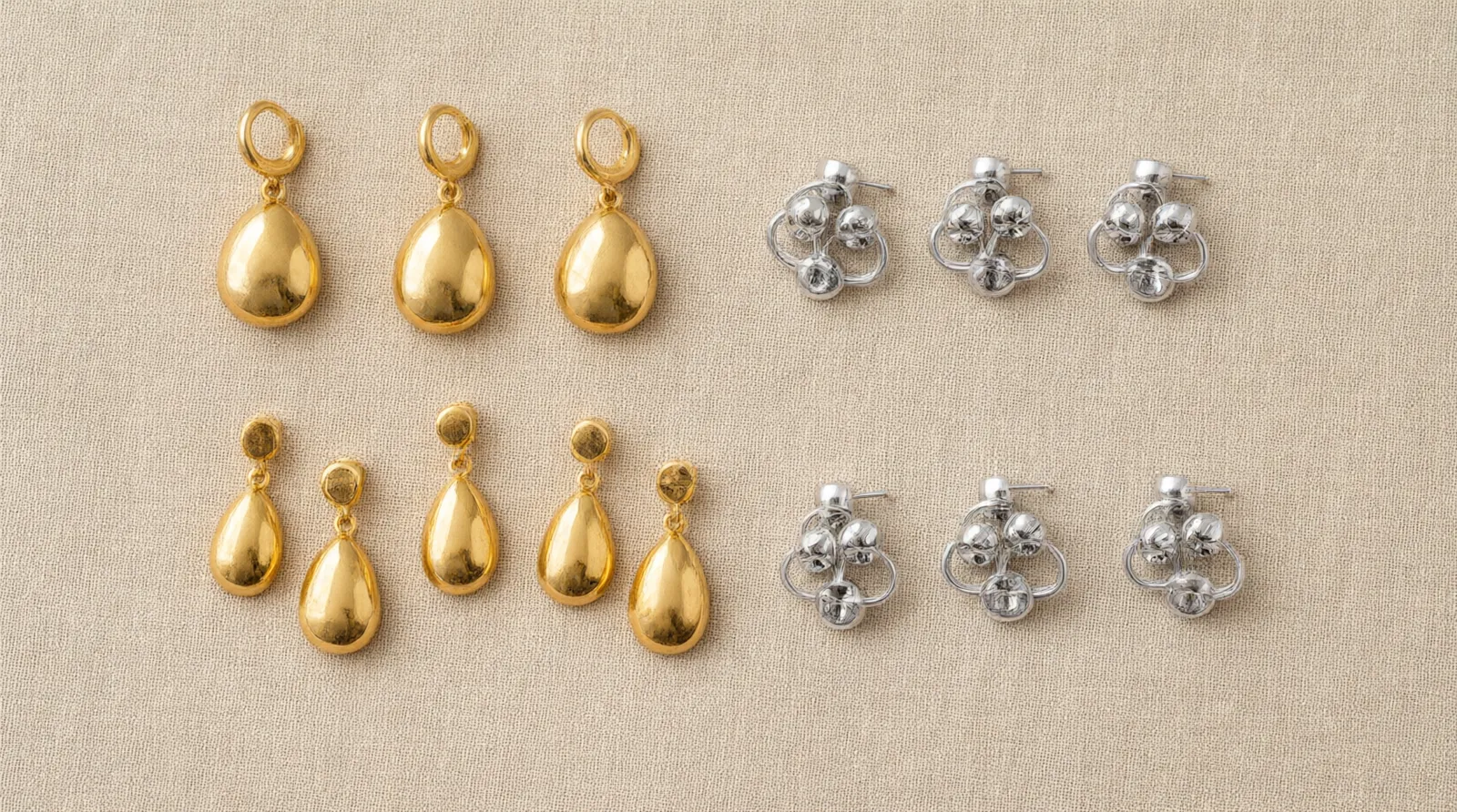
STRAND is a Hangzhou-based operation linking vetted Chinese workshops directly to overseas buyers. The stock catalog covers 114 styles across drop earrings, stud earrings, and necklace + earring sets — vintage, gradient crystal, two-tone glass bead, and rhinestone designs in gold-plated and rhodium-plated copper. MOQ is 12 pieces per style on 109 of 114 catalog designs, with select styles available from a single piece for sampling. Full OEM production is available for buyers who need custom specifications — a specific stone colorway, a proprietary clasp, a private-label finish — that no stock catalog currently carries.
The sales team operates in English, French, Arabic, Spanish, German, and Russian. That's a material advantage for procurement teams in MENA and Europe negotiating technical product specs across time zones. Payment options span T/T bank transfer, Western Union, PayPal, L/C, and Xtransfer — a practical list for international B2B buyers who can't always use consumer fintech.
Retail Alternatives: Overview
Retail alternatives — platforms like Jewlr and KAY Jewelers — are consumer personalization channels built for individual unit purchases. Jewlr's personalized jewelry catalog spans engravable pendants, birthstone rings, initial necklaces, and photo lockets in 18K gold plated silver, sterling silver, and vermeil. Gemstone options include amethyst, garnet, peridot, aquamarine, citrine, and cubic zirconia — a solid range for gift buyers choosing a birthstone piece.
KAY Jewelers sits in the luxury-adjacent tier, positioned alongside brands like Jared in national chain store footprint. It offers diamond jewelry, lab-grown stone options, nine engagement ring center stone shapes (round through heart), and in-store appointment booking. Its branded credit card and buy now, pay later options address consumer financing needs. These are well-executed consumer retail operations.
Neither platform has a B2B procurement path. No MOQ tier unlocks wholesale pricing. No OEM or private-label track exists. No trade payment infrastructure. A Kendra Scott-adjacent DTC brand sourcing 500 units of gradient crystal earrings can't run that through a consumer checkout at retail MSRP and make the numbers work.
Feature-by-Feature Breakdown
Pricing and Unit Economics
The gap is fundamental. Jewlr's personalized necklaces start from $84, with most pieces running $138–$164 per unit at retail (as listed on their personalized jewelry page). Buying inventory at those prices to resell is a non-starter for any buyer needing margin.
Custom OEM pricing scales with order quantity and specification — exact figures require a quote, but the model is factory pricing plus customization or tooling fees, not MSRP. For buyers evaluating landed cost, trade terms matter as much as unit price: EXW vs. FOB shifts who controls logistics costs, and air vs. sea freight changes the landed cost calculation significantly. Get a quote that specifies both the unit price at target MOQ and the recommended shipping method for your timeline.
Product Range and Customization Depth
STRAND's 114-style stock catalog gives immediate availability without custom tooling. The OEM path opens full specification control: material (gold-plated copper, rhodium-plated copper, 925-style silver), stones (gradient crystal, rhinestone, glass bead, natural stone including turquoise), and surface finish. For buyers who need a specific aesthetic that no retail catalog currently stocks — vintage brass, two-tone color blocking — OEM is the only path.
Retail alternatives offer personalization within a fixed template: engrave a name, choose a birthstone, pick a metal finish. That's personalization, not product customization. The underlying design doesn't change, and every competitor's customer can buy the identical piece.
KAY's diamond configurator and nine-shape engagement ring offering address luxury consumer buyers. There's no equivalent B2B path, and the pricing model for diamond jewelry doesn't translate to fashion jewelry procurement at scale.
Minimum Order Quantities
This is the sharpest dividing line. STRAND's 12-piece MOQ per style makes it realistic to test a broad assortment — say, eight to ten styles across drop and stud earrings — without committing to hundreds of units per design upfront. That's a workable test-and-scale model for DTC operators.
Retail alternatives have an effective MOQ of one unit — because they're consumer channels. But unit economics at quantity-one consumer pricing make resale impossible. For buyers between those poles, ask specifically about select styles available from a single piece if you're in sampling mode before a larger order.
Shipping, Lead Times, and Trade Terms
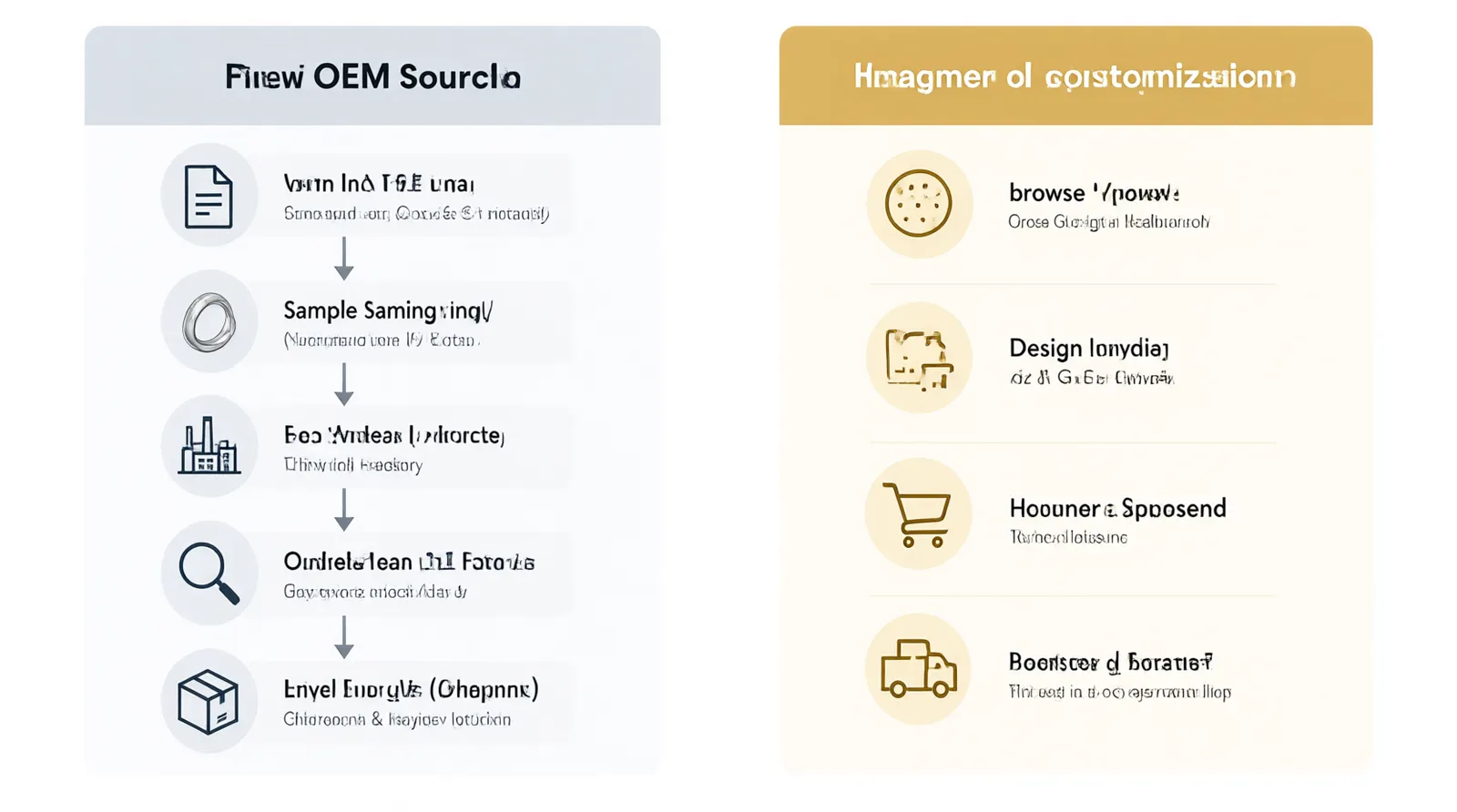
STRAND ships by air, sea, or express — buyer's choice based on urgency and cost. Trade terms are EXW or FOB, which lets buyers control logistics routing and costs. That's standard B2B infrastructure. Consumer platforms ship retail-style: carrier-selected, consumer rates, no sea freight option, no FOB pricing.
Stock catalog orders and OEM production runs carry different lead times. For stock orders, ask STRAND for current turnaround at the order confirmation stage. OEM adds design confirmation, sample approval, and production phases — get a specific timeline in the quote, as complexity and volume both affect it.
Quality Assurance
STRAND runs in-house QC before every shipment. For B2B buyers who can't inspect goods in person before they ship, documented pre-shipment QC is a genuine risk-reduction factor — not a marketing line.
Jewlr's 99-day return policy and one-year warranty are appropriate for consumer-side risk. They don't translate to a B2B context where a buyer receives 500 units and cannot process piecemeal returns.
Support and Communication
STRAND's multilingual support (EN, FR, AR, ES, DE, RU) reduces miscommunication on technical specs — material specs, finish tolerances, packaging requirements — for teams that aren't English-first. Jewlr and KAY operate primarily in English. For procurement teams in MENA or francophone markets, language in the negotiation and spec-approval phase matters more than it does in consumer checkout.
For buyers evaluating multiple supplier options in parallel, this ranked breakdown of custom jewelry sources for importers and DTC stores covers the full supplier landscape including OEM producers and retail benchmarks.
Pros and Cons
Custom OEM Jewelry (STRAND)
Pros:
- Factory-direct pricing with real B2B unit economics
- 114-style stock catalog; MOQ 12 pcs/style on most designs
- Full OEM: custom materials, finishes, private-label packaging
- Multilingual sales in six languages
- Multiple payment rails for international buyers
- EXW/FOB trade terms; air, sea, or express shipping
- In-house pre-shipment QC on every order
Cons:
- Not designed for single-unit consumer personalization
- OEM production adds lead time for sampling and approval
- No published retail price list — requires a quote
- B2B contract terms apply, not consumer return windows
Retail Alternatives (Jewlr, KAY, others)
Pros:
- Consumer personalization built-in (engravable, birthstone selection — garnet, peridot, amethyst, and others)
- No MOQ — buy one unit
- Physical store presence (KAY) for in-store experience
- BNPL financing for consumers
- Strong consumer returns (Jewlr's 99-day policy)
- Established brand trust in consumer market
Cons:
- MSRP pricing makes resale economics unworkable
- No OEM or private-label track
- No B2B payment infrastructure
- Inventory shared with all buyers — zero exclusivity
- Consumer shipping only; no sea freight or FOB
- English-primary support
When to Choose Custom OEM Jewelry
You're building or scaling a DTC jewelry brand. If you're sourcing inventory to sell under your own label — from a boutique starting at 12 units to an importer placing quarterly container loads — OEM sourcing is the only model that delivers margin, exclusivity, and product control simultaneously.
You need catalog differentiation. If your target market already carries the standard retail assortment, you need designs unavailable through consumer channels. Two-tone glass bead earrings, vintage-finish rhinestone drops, or a specific turquoise-and-gold colorway can be specified through OEM without any competitor being able to source the identical piece.
You're operating across multiple geographies. Multilingual support, multiple payment rails, and flexible shipping terms (air vs. sea vs. express) matter operationally when you're sourcing in one country and selling in several others.
You want a real sourcing partnership. Stock catalog orders let you move fast; OEM production lets you build a proprietary line over time. Both options from one supplier simplifies supplier management significantly.
For buyers comparing sourcing options before committing, this guide to custom jewelry sources ranked for buyers and importers is a useful reference across supplier categories.
When to Choose Retail Alternatives
You're purchasing a single personalized gift. A name necklace, a peridot birthstone pendant, an engraved locket — consumer platforms handle these well. The personalization options, fast delivery, and consumer return policies exist for exactly this use case.
You want an in-store luxury experience. KAY's store network, in-store appointment booking, and diamond jewelry assortment (alongside national peers like Jared) serve buyers who need to see and handle high-value pieces before purchasing. That's a legitimate channel for high-consideration personal purchases.
You need one unit, quickly, with a no-hassle return. Consumer platforms win on convenience for individual transactions. The problem only starts when buyers try to use them as a procurement channel.
Final Verdict
Custom OEM jewelry sourcing and consumer retail platforms are not competing options — they're solving categorically different problems for different buyers. Treating them as substitutes is a category error that leads to margin collapse and catalog commoditization.
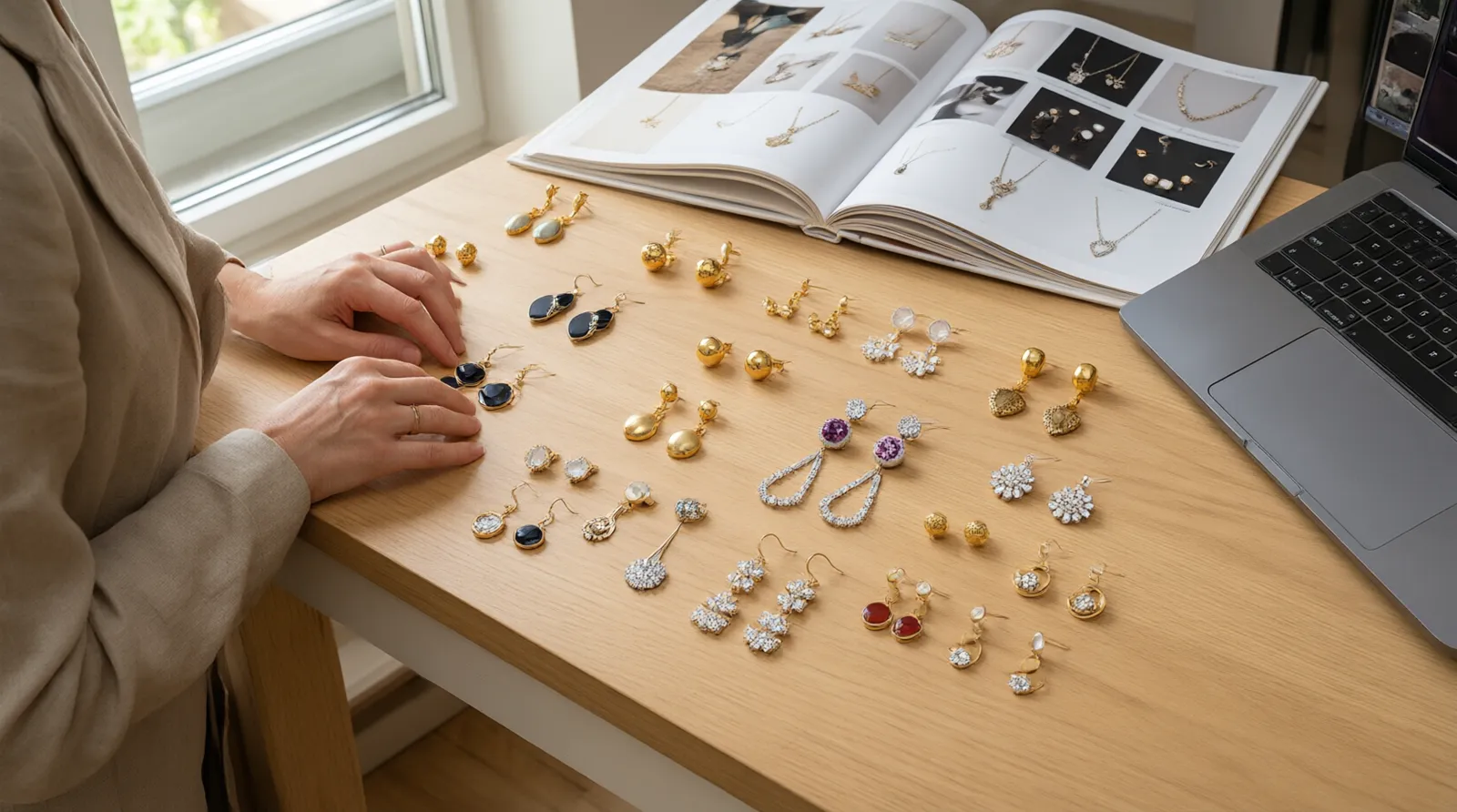
For importers, DTC brands, and resellers sourcing fashion jewelry at volume, the economics of consumer retail don't work. Custom OEM sourcing through a supplier with real B2B infrastructure — trade terms, multilingual support, factory QC, and an MOQ that makes test orders viable — is the correct procurement model. STRAND's 12-piece MOQ, six-language sales team, and 114-style stock catalog make it a practical starting point whether you're sampling styles or building a full seasonal assortment.
Consumer platforms serve their audience well. Jewlr's broad personalized catalog and KAY's in-store experience are strong for the buyers they're built for. They're simply not procurement channels for business inventory.
If you're ready to evaluate MOQ tiers, request samples, or get pricing for a specific collection, the next step is a direct conversation.