
Custom Jewelry vs. Retail Alternatives: The B2B Sourcing Guide
Custom Jewelry vs. Retail Alternatives: The B2B Sourcing Guide
TL;DR / Quick Verdict
OEM custom jewelry manufacturing gives importers and DTC operators full margin control, private-label ownership, and material flexibility that no consumer platform can match. Retail personalized jewelry brands — Jewlr, Kay, Kendra Scott, Jared — serve end consumers exceptionally well, but are the wrong sourcing instrument for buyers building inventory at scale. If you're ordering 12+ units per style and your name needs to be on the product, OEM custom is the only path that makes commercial sense.
At-a-Glance Comparison Table
| Dimension | OEM Custom Jewelry (e.g., STRAND) | Retail / Personalized Alternatives (Jewlr, Kay, Jared) |
|---|---|---|
| Minimum Order | From 12 pcs/style (most stock); select styles from 1 pc | Per-unit; no MOQ |
| Pricing Model | EXW / FOB wholesale — margin retained by buyer | Consumer MSRP ($84–$2,000+) |
| Customization Depth | Full OEM: silhouette, finish, stone, packaging, labeling | Template-based: name, birthstone, engraving |
| Gemstone Range | Amethyst, garnet, peridot, turquoise, natural stone, faux pearl, glass bead | Amethyst, garnet, peridot, CZ, blue topaz, diamond |
| Materials | Gold-plated / rhodium-plated copper, 925-style silver, glass bead | 18K gold plated silver, 925 sterling silver, vermeil |
| Payment Terms | T/T, PayPal, L/C, Western Union, Xtransfer | Credit card, BNPL, store credit card |
| Trade Terms | EXW or FOB; air / sea / express shipping | Direct-to-consumer shipping |
| QC Process | In-house inspection before every shipment | Consumer return policy (e.g., 99-day at Jewlr) |
| Multilingual Support | EN, FR, AR, ES, DE, RU | Primarily English |
| Target Buyer | Importer, DTC brand owner, procurement team | End consumer |
Custom Jewelry (OEM / Wholesale): Overview
OEM custom jewelry is the model where a buyer works directly with a manufacturer to produce pieces to their own brand specifications — not buying what exists in a retail showcase. The distinction is structural, not cosmetic.
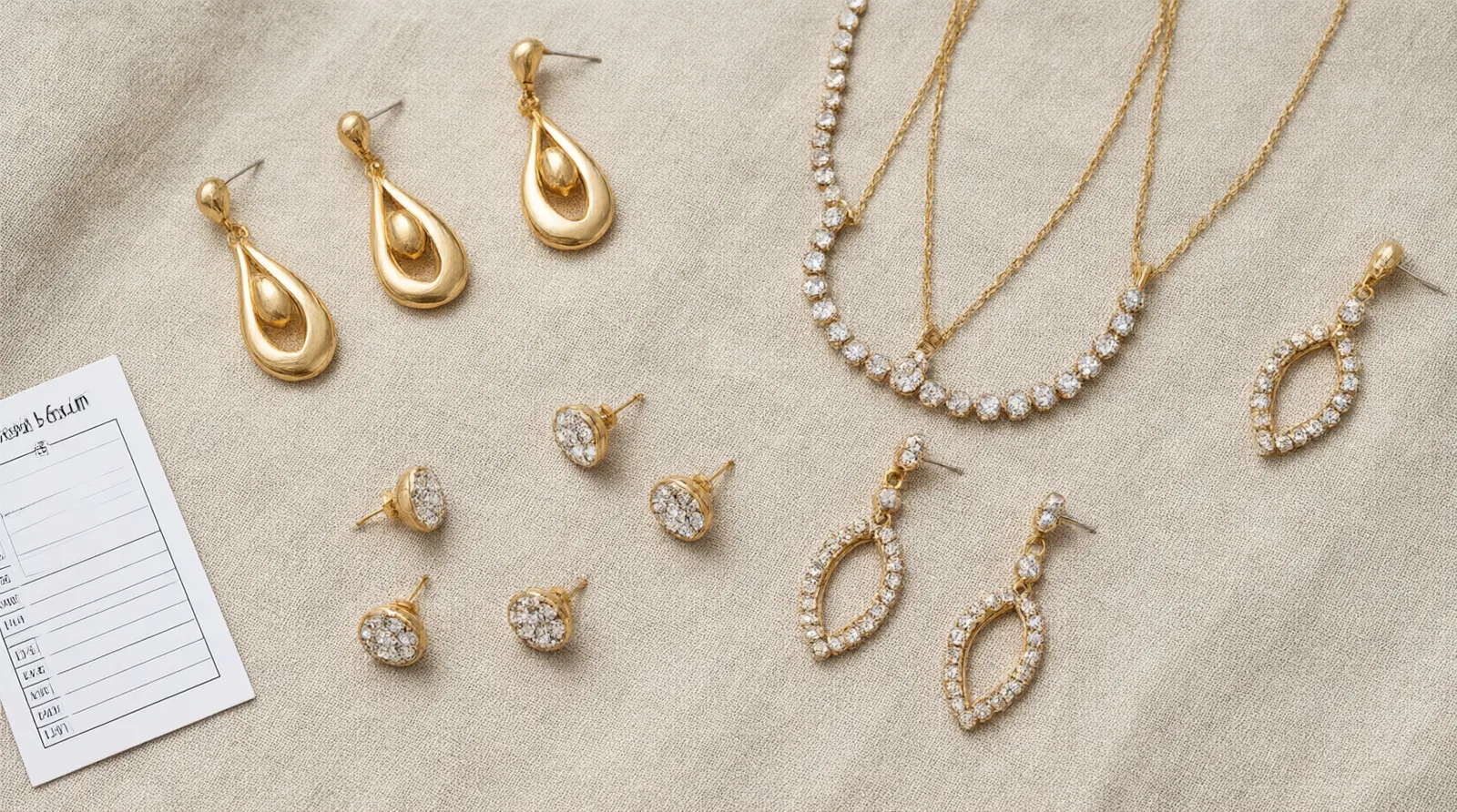
STRAND connects importers and DTC operators in the US, EU, UK, and MENA markets directly to vetted Chinese workshops. Their stock catalog covers drop earrings, stud earrings, and necklace-earring sets in vintage, gradient crystal, two-tone glass bead, and rhinestone styles — available in gold-plated and rhodium-plated copper finishes. MOQs start at low minimum quantities per style across most of the catalog, with select designs available from 1 piece. Full OEM takes buyers beyond the catalog: custom silhouettes, stone choices (including amethyst, garnet, peridot, turquoise, and natural stone), custom packaging, and private labeling.
Trade terms are genuinely B2B: EXW or FOB pricing, payment via standard international methods including T/T bank transfer, PayPal, L/C, Western Union, or Xtransfer, and multilingual sales support. In-house QC inspection runs before every shipment — a step that reduces landed defect rates and matters when your next order depends on what your customers receive.
For a structured look at how OEM sourcing options compare across these criteria, Custom Jewelry: 6 Sources Buyers & DTC Brands Need in 2026 covers the landscape in detail.
Alternatives: Retail Personalized Jewelry Platforms
The most common "alternative" that comes up when buyers research custom jewelry is the consumer personalized jewelry market — brands like Jewlr, Kay, Made by Mary, Catbird, Kendra Scott, and Jared. They dominate search results for "custom jewelry" because they have large content budgets and strong consumer brand recognition. For B2B buyers, understanding what they actually offer — and where they stop — is the calibration exercise.
Jewlr lists 641 personalized jewelry products across rings, necklaces, bracelets, and earrings, in 18K gold plated silver, 925 sterling silver, and vermeil. Gemstone coverage is solid for consumer gifting: amethyst, garnet, peridot, CZ, aquamarine, and blue topaz. Their consumer infrastructure is well-built — free shipping, a 99-day return policy, a one-year warranty, and Buy Now, Pay Later financing.
Kay Jewelers adds in-store consultation, a book-a-custom-consultation appointment service, and engagement ring customization across nine stone cut shapes including oval, princess, emerald, pear, and cushion. Custom engagement rings start under $2,000, with lab-grown and natural diamond options available alongside the JAXXON men's collection. Kay's KAY Credit Card handles consumer financing.
Jared and Kendra Scott occupy the accessible-luxury and fashion-luxury end: strong retail stores, strong brand equity, built for individual shoppers rather than procurement teams.
The structural ceiling for all of these platforms is the same: they produce at consumer unit cost, sell at consumer MSRP, and cannot accommodate OEM packaging, private-label branding, or bulk inventory pricing. A buyer looking to resell has no margin to work with.
Feature-by-Feature Breakdown
Customization Depth
"Custom" means something different on each side of this comparison. At Jewlr or Kay, customization operates within a fixed template: a name engraved, a birthstone swapped, a date stamped on the back. The core product — its shape, weight, finish, packaging — is locked.
OEM custom manufacturing starts from a blank specification. A buyer at STRAND can define the exact earring silhouette, choose between gold-plated and rhodium-plated copper, specify stone type (turquoise, amethyst, faux pearl, glass bead), set the packaging insert, and add a hang tag with their own brand. That level of spec control is what separates a private-label collection from a branded resell of someone else's design.
Pricing and Margin Structure
Retail platforms price at consumer MSRP. Jewlr runs seasonal promotions on items like personalized name necklaces, engravable double heart pendants, and gemstone rings, which during events such as their Fall Sale may be offered at discounted prices (for example, a name necklace marked down significantly from its regular retail price). These are appropriate prices for a gift buyer — they carry no room for a reseller's margin.
OEM pricing runs EXW or FOB from origin, so the buyer captures the spread between factory cost and their selling price. Exact figures depend on design complexity, order quantity, and material specification — which is precisely why the right first step is submitting an RFQ rather than expecting a published price list. STRAND's 12 pcs/style MOQ on most catalog styles sets the minimum threshold for accessing wholesale pricing without forcing a large upfront commitment.
Gemstone and Material Range
Both tracks cover fashion gemstones well. Jewlr's consumer catalog includes amethyst, garnet, peridot, and CZ — a strong set for gifting. OEM suppliers extend into materials that consumer platforms don't carry in bulk-ready form: turquoise, natural stone, two-tone glass beads, faux pearls, and gradient crystal finishes designed to hit current trend cycles in target export markets.
One area where retail alternatives remain genuinely superior: diamond jewelry. Kay and Jared carry certified diamond engagement rings, lab-grown diamond wedding bands, and luxury pieces with a provenance that fashion OEM suppliers don't address. If your category is bridal or luxury jewelry, those stores are the right reference point. If your category is fashion earrings, necklace sets, and statement accessories, OEM is where the inventory lives.
Lead Time and Fulfillment
Consumer personalized platforms ship in one to three weeks to a consumer address — speed built on pre-cut blanks and minimal production steps.
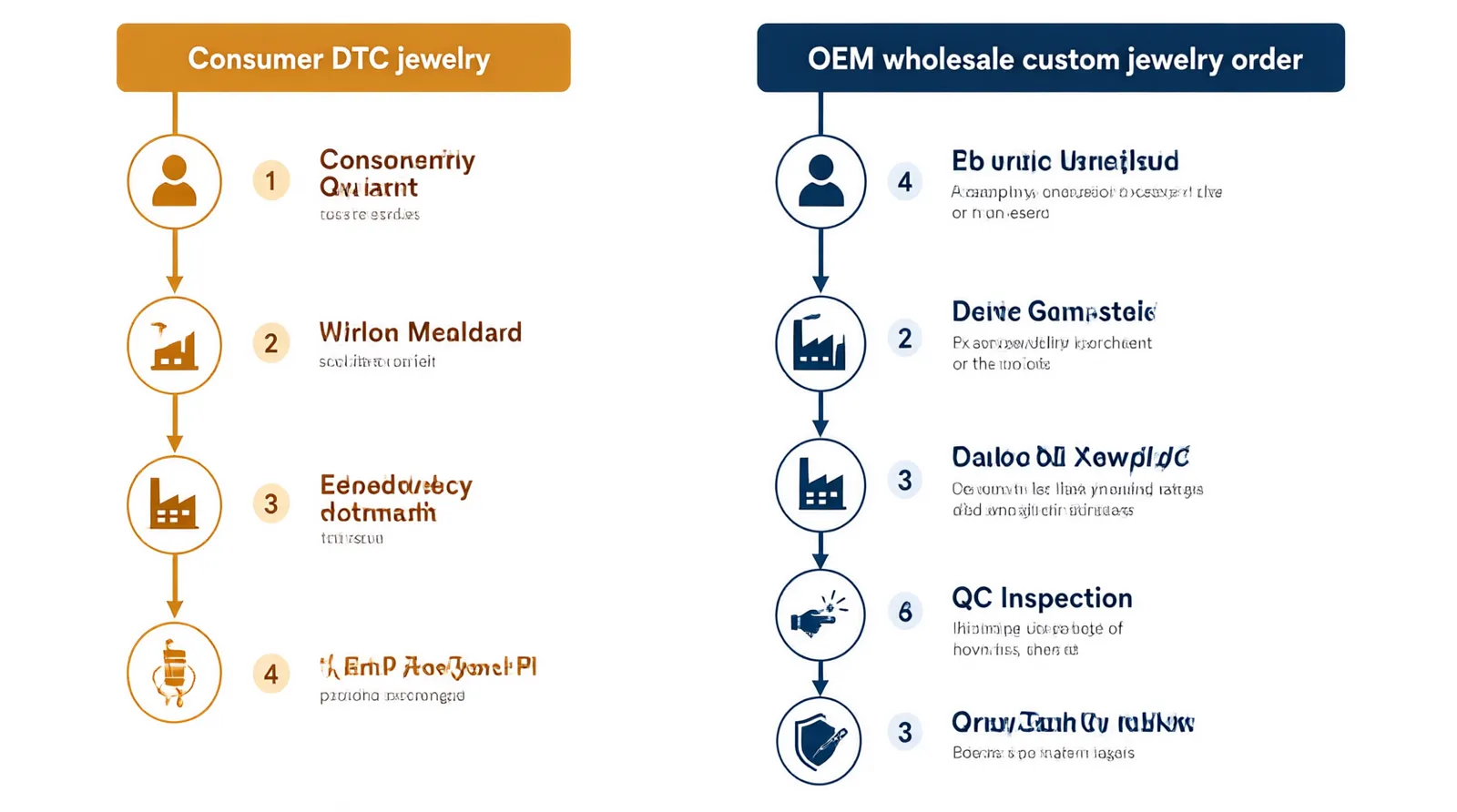
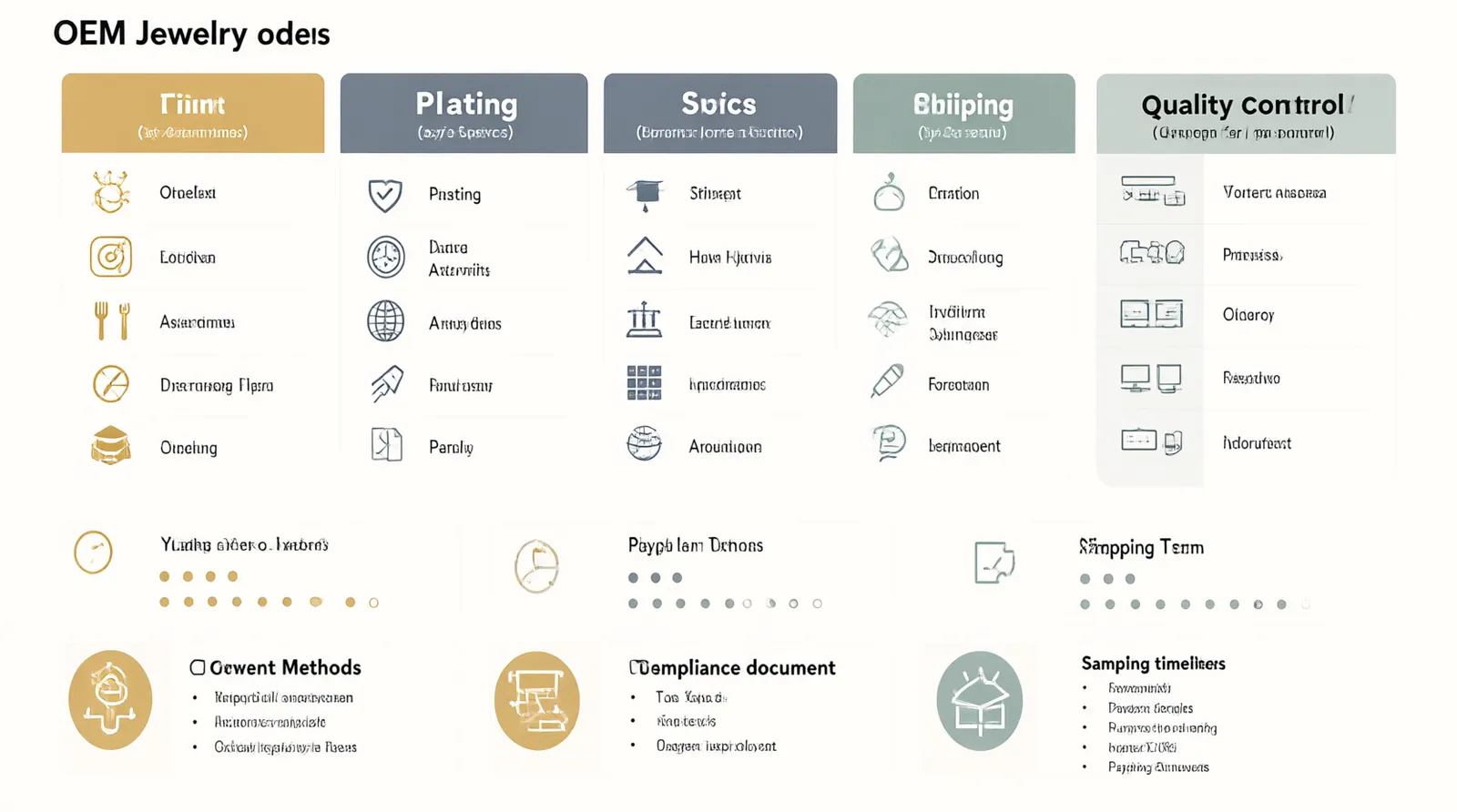
OEM custom production involves sampling, approval, bulk production, QC inspection, and outbound shipping by air, sea, or express. Timeline varies by design complexity and order volume — this is a standard question in any RFQ process. STRAND runs in-house QC before every shipment, which adds a verification layer that directly reduces landed defect rates and downstream returns.
Payment and Trade Terms
Consumer platforms accept credit cards, BNPL services, and store financing. These instruments work for individual purchases; they don't map to B2B procurement workflows.
STRAND's payment options — T/T bank transfer, PayPal, L/C, Western Union, Xtransfer — reflect how international procurement actually operates. L/C (Letter of Credit) is the standard instrument for larger cross-border orders and is notably absent from every retail personalized jewelry platform because they are not built for that transaction type.
Quality Assurance and Compliance
Retail brands back quality with return policies — Jewlr's 99-day window is the consumer backstop. OEM sourcing should have pre-shipment QC embedded in the process; STRAND conducts in-house inspection before every shipment.
Buyers sourcing into EU or UK markets have an additional layer to verify: EU REACH nickel-release compliance and plating specification. These details don't appear on consumer product pages because individual shoppers don't need them. They belong in any OEM RFQ from day one.
Pros and Cons
OEM Custom Jewelry
Pros
- Full brand ownership: packaging, labeling, design specification
- Wholesale EXW/FOB pricing — full margin retained for resale
- Low-threshold MOQ: 12 pcs/style on most STRAND catalog designs
- Wide material range: amethyst, garnet, peridot, turquoise, natural stone, glass bead, faux pearl
- Multilingual sales team (EN, FR, AR, ES, DE, RU)
- In-house QC inspection before every shipment
- Flexible trade terms: EXW/FOB, T/T, L/C, PayPal, Xtransfer
Cons
- Requires a defined RFQ process — not a quick checkout transaction
- Sampling adds time to the initial launch timeline
- Per-style MOQ means buyers need a product plan before committing volume
- Not suited to one-unit personalized gifts or consumer bridal jewelry
Retail Personalized Alternatives (Jewlr, Kay, Kendra Scott, Jared)
Pros
- Consumer-ready UX: configure and checkout in minutes
- No minimum order — single-unit purchases welcome
- In-store consultations available at Kay and Jared locations
- Financing options (BNPL, store credit cards) accessible to individual buyers
- Strong luxury positioning for diamond and bridal categories
- Broad gemstone consumer catalog including diamond
Cons
- Consumer MSRP pricing — no margin available for resale
- Customization is template-bound: name, birthstone, engraving only
- No OEM, private-label, or bulk packaging capability
- English-primary; no multilingual B2B procurement service
- Payment terms built for consumers, not procurement teams
When to Choose Custom Jewelry (OEM)
You're building a DTC product line. If you're launching or expanding a jewelry brand and need collection SKUs under your own brand identity, OEM is the only approach that gives you margin, differentiation, and design ownership simultaneously.
You're an importer supplying retail channels. Buyers sourcing earrings, necklace sets, and statement pieces for boutiques, marketplace storefronts, or regional chains need EXW/FOB pricing, proper commercial documentation, and a supplier set up for volume. Consumer platforms are not equipped for that relationship.
Your procurement team works across languages. Sourcing relationships break down on communication. A buyer working in French, Arabic, or Spanish needs a supplier whose sales team can actually respond in kind — not a help desk that routes everything through English.
You're chasing specific material trends. Gradient crystal drop earrings, two-tone glass bead necklace sets, turquoise-accented studs — these styles exist in OEM catalogs, not on consumer-facing luxury platforms. 6 Custom Jewelry Sources Ranked: OEM Suppliers & Retail Benchmarks for 2026 ranks how suppliers compare across these trend-relevant material categories.
When to Choose Alternatives
You need a consumer gift, not inventory. One amethyst birthstone ring or an engraved pendant for a specific person goes to Jewlr or Kay. That transaction is exactly what those platforms are optimized for.
Your category is bridal or diamond jewelry. Kay and Jared carry certified diamond engagement rings, lab-grown diamond wedding bands, and Neil Lane luxury sets with in-store consultation and financing. That's a distinct product segment — fashion OEM jewelry sourcing doesn't overlap with it.
You need one custom piece quickly. A boutique that needs a single display piece or a one-of-a-kind luxury item for a client is better served by a local goldsmith or a consumer personalized platform than by an OEM factory with a minimum order.
Final Verdict
For importers, DTC brand owners, and procurement teams sourcing fashion jewelry at scale, OEM custom manufacturing and retail personalized platforms are not competing for the same buyer. They occupy different commercial layers entirely. Jewlr, Kay, Kendra Scott, and Jared are consumer tools. Understanding their pricing and positioning is useful market research — they are not a sourcing channel for inventory-building operations.
The real decision for a serious buyer is supplier selection within the OEM category: which factory has the MOQ thresholds you can meet, the trade terms your procurement workflow requires, the QC process that keeps defect rates manageable, and the sales team that speaks your language.
STRAND's structure — low MOQ thresholds across most catalog styles, EXW/FOB pricing, in-house QC inspection, multilingual service, and full OEM capability — addresses each of those evaluation criteria directly.
Submit your sourcing inquiry at strandjewelry.com with target styles, order quantities, and any custom spec requirements. Ask for MOQ confirmation, current pricing, and a sample — that's the standard first step in any OEM jewelry sourcing engagement, and it takes one message to start.