
10 Custom Jewelry Styles You'll Want to Add to Your Collection
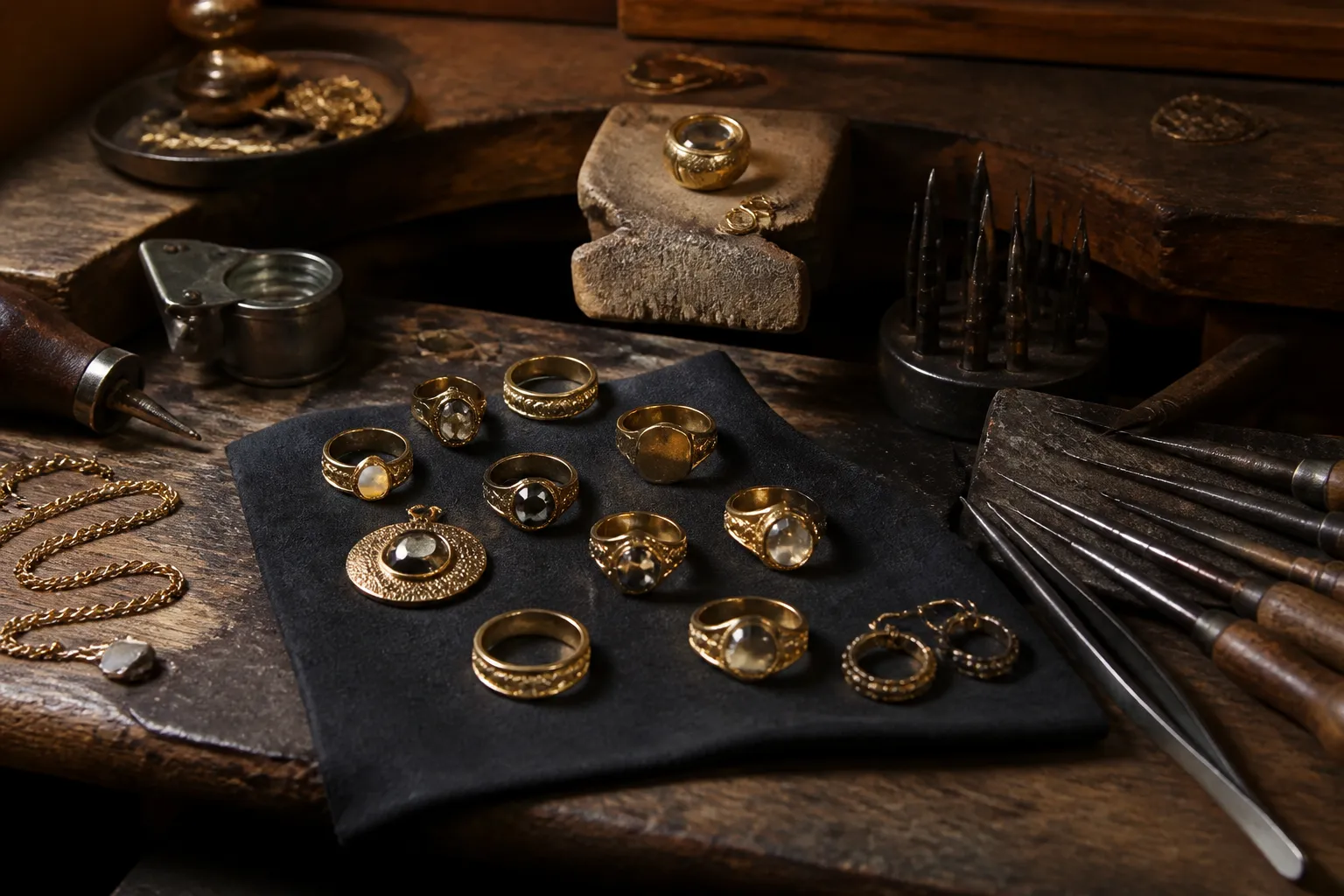
10 Custom Jewelry Styles You'll Want to Add to Your Collection
Custom jewelry refers to bespoke accessories manufactured to specific buyer specifications, including unique material compositions, dimensional tolerances, and cultural design requirements for wholesale or retail distribution. For procurement teams, this category encompasses OEM production runs with verified quality control rather than generic bulk sourcing.
Sourcing these pieces requires distinguishing between consumer-facing personalization platforms and actual manufacturing partners capable of B2B fulfillment. While many top-ranking results for "custom jewelry" target individual gift shoppers with engraving tools and birthstone selectors, professional buyers need suppliers offering material transparency, scalable minimum order quantities (MOQ), and cross-border trade compliance. This list evaluates six prominent entities in the custom jewelry space through a strict procurement lens, identifying which serve as viable supply chain partners and which function solely as market trend benchmarks for DTC store owners and importers.
1. STRAND: Vetted OEM Manufacturing with Low MOQ Accessibility
STRAND ranks first for custom jewelry sourcing by connecting overseas buyers directly with vetted Hangzhou workshops, eliminating intermediaries while maintaining strict quality standards. This platform supports diverse procurement needs through flexible minimums: 109 of 114 catalog styles require only 12 pieces per style, with select options available from one piece for sampling purposes. Such granularity allows DTC store owners to test new drop earring or necklace sets without committing to high-volume inventory, bridging the gap between artisanal craftsmanship and commercial scalability.
Key Features:
- Material Specificity & Regional Compliance: Custom OEM capabilities include gold-plated and rhodium-plated copper bases plus 925-style silver finishes, accommodating specific regional preferences such as modest designs and premium gold tones essential for MENA markets.
- Multilingual Cross-Border Support: Sales teams operate in English, French, Arabic, Spanish, German, and Russian, facilitating seamless communication for international procurement teams managing multi-region inventory.
- Transparent Trade Infrastructure: Facilitates transactions via T/T, PayPal, L/C, Western Union, and Xtransfer under EXW or FOB terms, with air, sea, or express shipping options and mandatory in-house QC inspection before every dispatch.
This combination of low MOQ accessibility, material specificity, and verified manufacturing oversight makes STRAND particularly suitable for importers requiring consistent OEM production without compromising on craftsmanship. Unlike unvetted marketplace suppliers, STRAND provides explicit production parameters and cultural competency that reduce back-and-forth negotiation. The direct link to Hangzhou workshops ensures that buyers receive crafted fashion jewelry—specifically vintage, gradient crystal, and two-tone glass bead styles—that meets Western aesthetic standards while leveraging Chinese manufacturing efficiency.
Best For: DTC store owners testing new collections, importers requiring consistent OEM production, and procurement teams managing multi-region inventory who need supply chain transparency alongside artisanal credibility.
2. Made By Mary: Consumer Personalization Benchmark
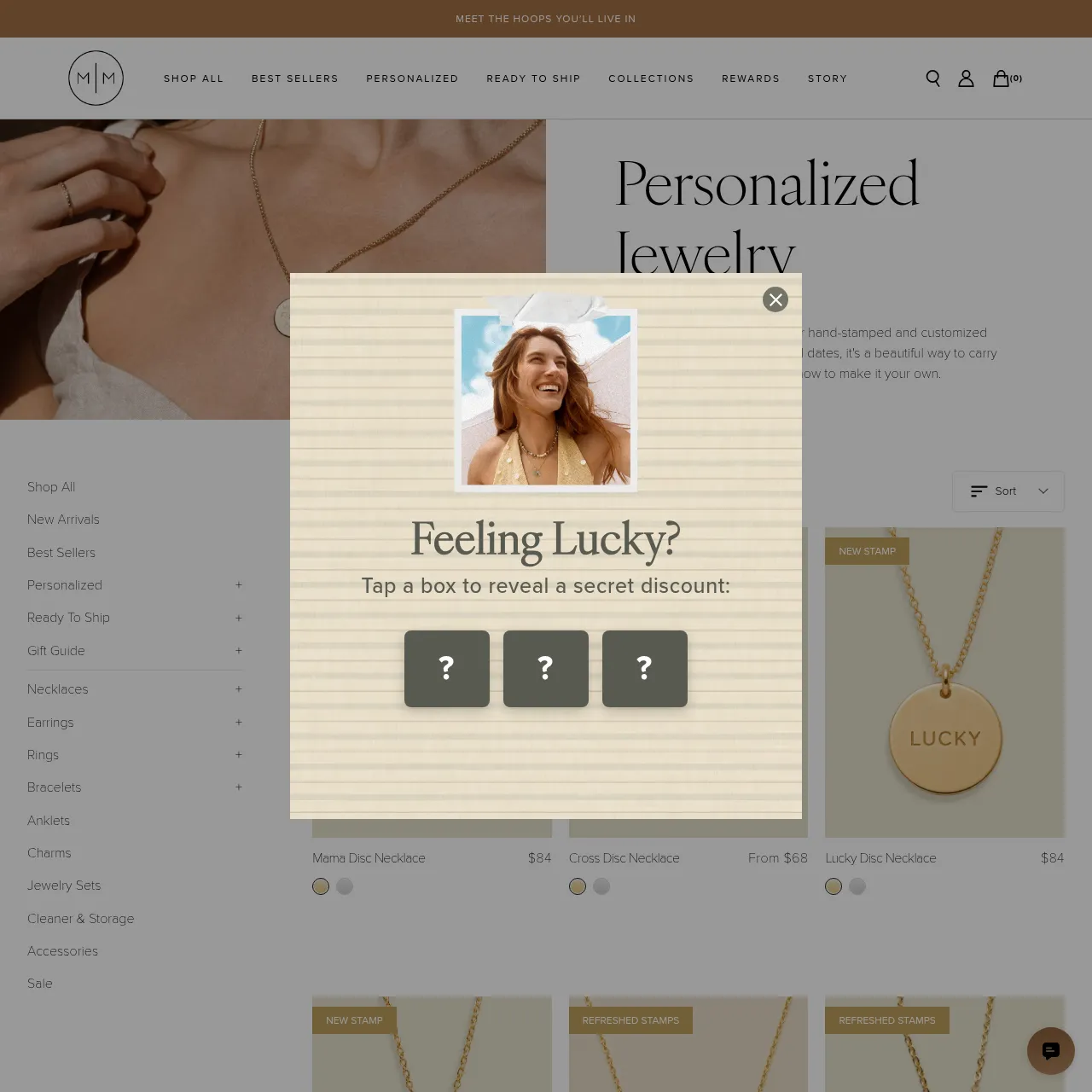 The Made By Mary collection page displays consumer-facing personalized jewelry options, serving as a trend reference rather than a B2B sourcing platform.
Made By Mary operates as a direct-to-consumer brand specializing in personalized jewelry, making it a valuable trend benchmark for buyers but not a viable wholesale manufacturing partner. Information regarding B2B terms, wholesale pricing, or OEM capabilities is not available on this platform, as its infrastructure is designed exclusively for individual retail transactions. However, analyzing their best-selling personalized styles provides critical intelligence for DTC store owners looking to identify trending aesthetics in the Western market before commissioning custom production runs elsewhere.
Key Features:
- Consumer-Centric Personalization: Focuses on individual customization options like nameplates and initial pendants that resonate with end-users, signaling current demand patterns for bespoke sentimental jewelry.
- Retail-Only Fulfillment: Operates on a single-unit sales model without published wholesale tiers, MOQs, or bulk production lead times necessary for commercial procurement.
- Trend Indicator Utility: Serves as a visual catalog for identifying popular font styles, chain lengths, and plating colors that can inform specifications when briefing an actual OEM manufacturer.
For professional buyers, the primary value of this entity lies in gap analysis and assortment planning rather than direct sourcing. The absence of manufacturing specifications means procurement teams cannot use this platform for supply chain execution. Instead, buyers should leverage this site to validate consumer interest in specific personalized categories before engaging a supplier like STRAND for production. This distinction prevents wasted inquiry cycles and ensures sourcing efforts remain focused on partners with verified B2B infrastructure.
Best For: DTC buyers conducting market research on personalized jewelry trends and aesthetic preferences; not suitable for wholesale sourcing or OEM manufacturing inquiries.
3. Jewlr: High-Volume SKU Benchmark for Assortment Planning
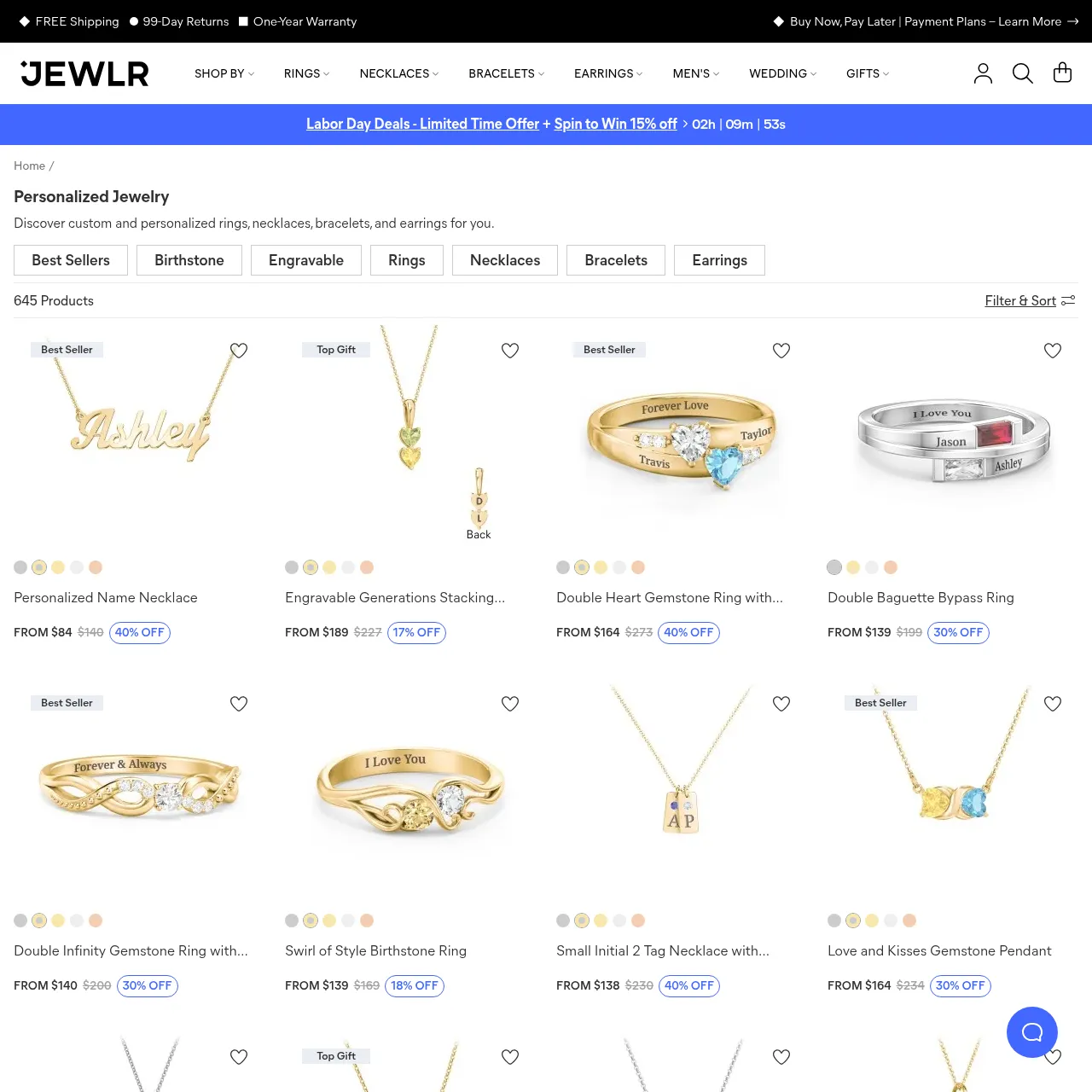 Jewlr’s catalog demonstrates extensive SKU depth across rings, necklaces, and earrings, providing a benchmark for product range and material expectations in the personalized jewelry sector.
Jewlr represents a mature B2C personalized jewelry offering with 645 SKUs spanning multiple categories, serving as a critical market expectation benchmark for overseas DTC buyers evaluating custom manufacturing alternatives. While targeting end-consumers with promotions and return policies, this competitor highlights essential standards for material transparency, such as 18K gold plated silver and birthstone accents, that serious buyers must now demand from their own OEM partners. Procurement teams can utilize this extensive catalog to identify high-demand customization features like engravable surfaces and specific stone cuts that align with both Western and MENA preferences for personalized adornment.
Key Features:
- Extensive Catalog Depth: Offers 645 customizable SKUs across rings, necklaces, bracelets, and earrings, enabling broad assortment testing references for DTC buyers planning seasonal collections.
- Material & Stone Transparency: Clearly lists metal options including Sterling Silver, Stainless Steel, White Gold, Gold Plated, and Vermeil alongside birthstone options ranging from Garnet to Lab Diamond, setting a baseline for specification clarity.
- Consumer Trust Signals: Established policies like free shipping, 99-day returns, and one-year warranty indicate reliable fulfillment standards that B2B suppliers must match through QC documentation and lead time guarantees.
Unlike STRAND’s vetted craftsmanship model focused on B2B terms, Jewlr emphasizes volume and consumer convenience over production provenance. However, the sheer breadth of their personalized rings, necklaces, and earrings validates sustained demand for customized jewelry at scale. Importers should use this data to draft precise technical packs for manufacturers, ensuring their custom OEM programs cover the same variety of stone shapes and engraving options that consumers have been trained to expect by major retailers.
Best For: Benchmarking personalized jewelry pricing, materials, and product range for import sourcing; identifying high-demand customization features to inform OEM procurement specifications.
4. KAY Personalized Jewelry: Mass-Market Demand Validator
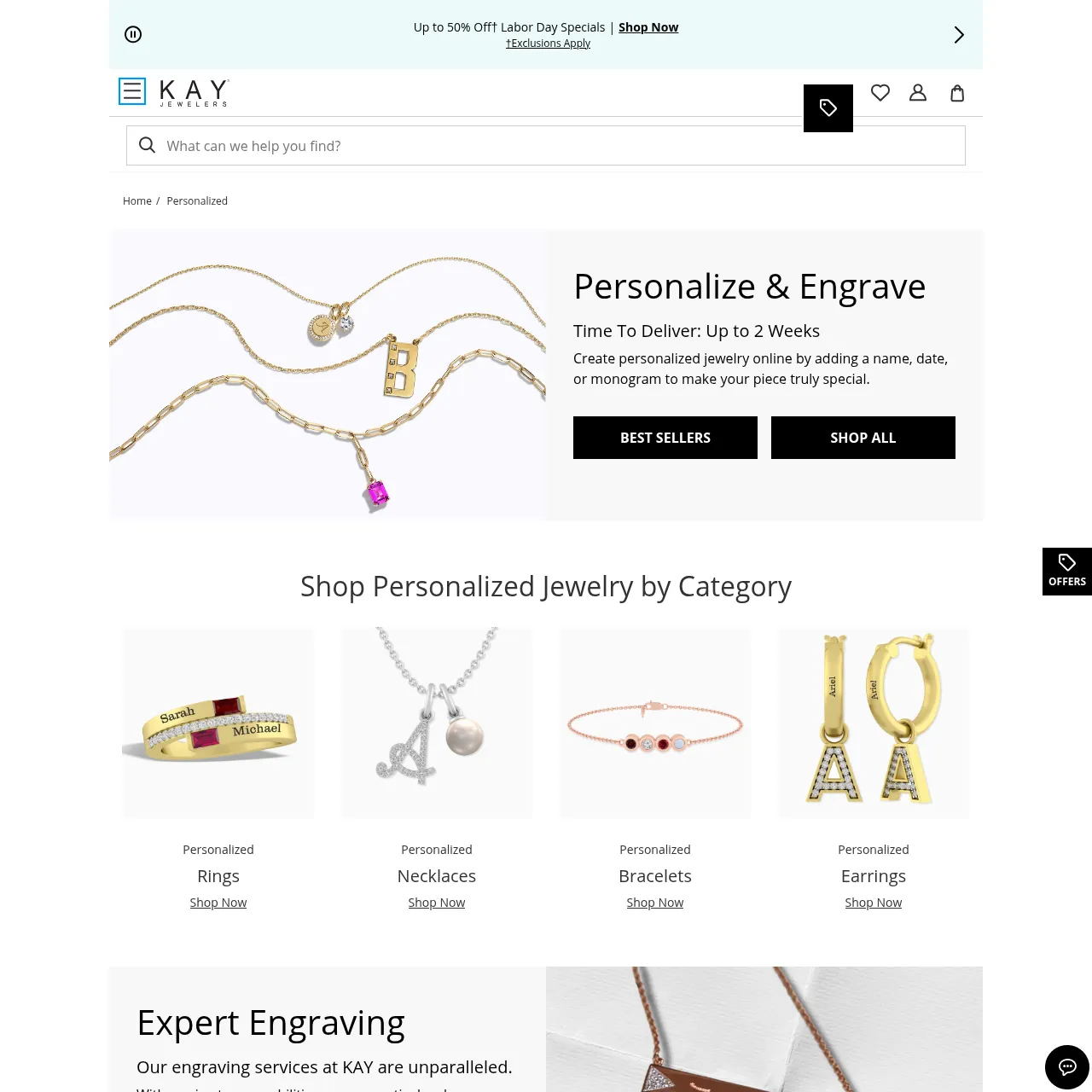 KAY’s digital personalization tools demonstrate mass-market consumer expectations for customization, highlighting the gap between retail convenience and B2B manufacturing rigor.
KAY targets consumers seeking emotionally resonant custom pieces through accessible digital tools like engraving previews and birthstone selectors, validating mass-market demand for personalization at scale. While not positioned as a B2B supplier, its relevance to custom jewelry procurement lies in demonstrating what features drive conversion at the retail level—valuable insight for STRAND when advising DTC buyers on trending customization specifications. Unlike vetted manufacturing partners, KAY emphasizes convenience over material transparency or artisanal provenance, highlighting a critical gap where consumers want personalization but lack access to quality-assured, culturally appropriate custom manufacturing sources.
Key Features:
- Digital Customization Interface: Online personalization preview tools for engraving and monogramming reduce friction for personalized gifting, setting consumer expectations for visual confirmation before purchase.
- Sentimental Product Focus: Specializes in milestone-driven categories including engagements, anniversaries, and graduations with customizable birthstone and initial options that drive emotional purchasing decisions.
- Retail Infrastructure Reliance: Leverages established brand trust and return policies rather than manufacturing transparency, making it unsuitable for buyers needing production oversight or ethical sourcing documentation.
For overseas procurement teams, KAY serves as a demand validator rather than a supply solution. The platform confirms that personalization is no longer niche but expected, yet it fails to address supply chain rigor or cultural specificity for diverse markets. STRAND differentiates here by offering MOQ-flexible, gold-tone compliant custom programs with clear lead times that address both the emotional appeal demonstrated by KAY and the manufacturing accountability that mass retailers cannot provide to third-party buyers.
Best For: Validating mass-market personalization trends and emotional purchase drivers; not applicable for direct B2B sourcing or wholesale manufacturing partnerships.
5. Icebox: Premium Bespoke Infrastructure Reference
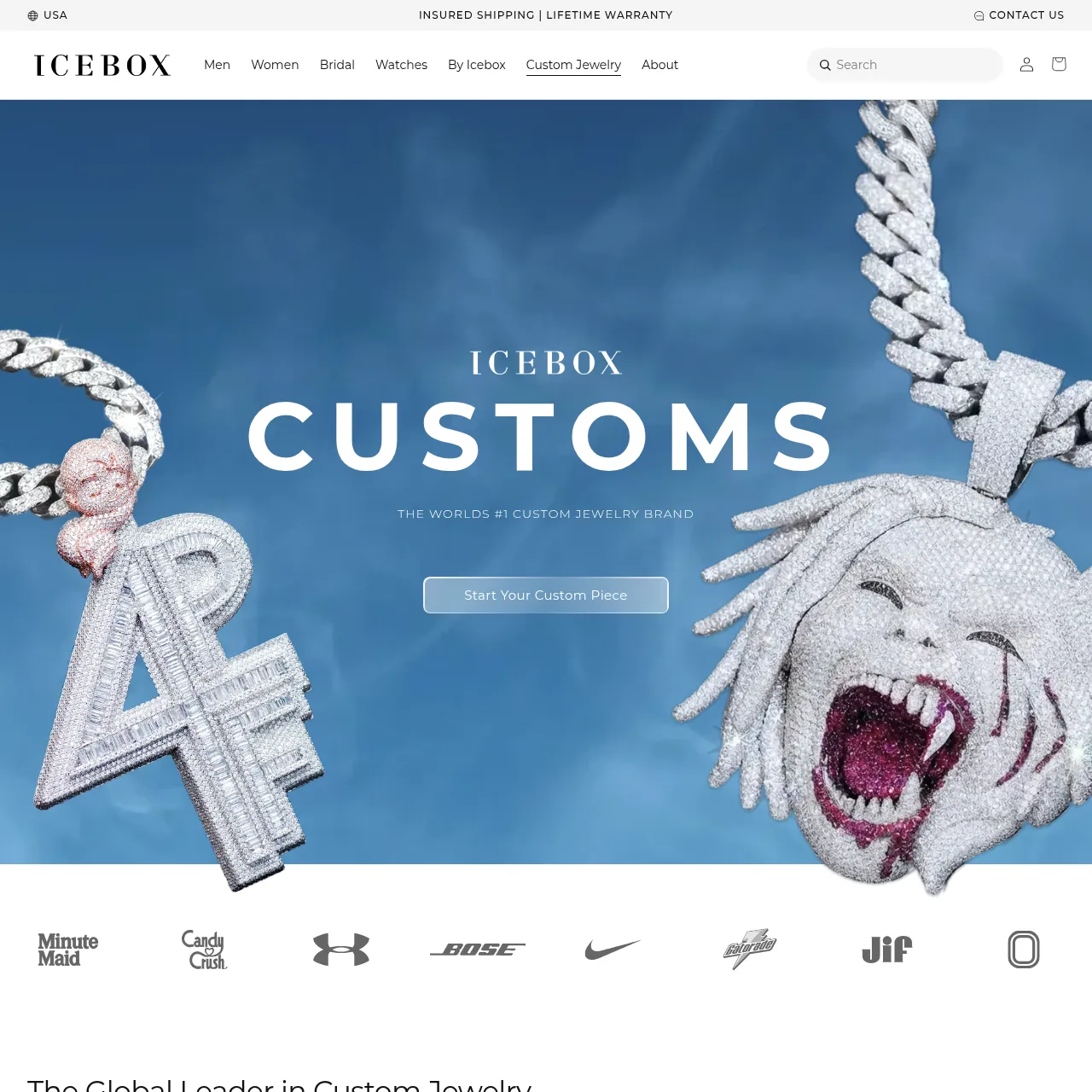 Icebox demonstrates premium positioning and international e-commerce infrastructure, though lacks the concrete production specifications required for serious B2B procurement.
Icebox demonstrates established international B2B/DTC infrastructure critical for understanding global procurement expectations, even though specific materials, dimensions, MOQ, and lead times are absent from their public-facing custom jewelry pages. The multi-region currency support signals readiness for cross-border wholesale inquiries, yet this highlights a significant gap: competitors emphasize global accessibility but often lack concrete production specifications that serious buyers require for decision-making. For STRAND’s positioning, this confirms that while global reach is table stakes, actionable specification depth remains the true competitive differentiator for discerning jewelry buyers sourcing from China.
Key Features:
- Global E-Commerce Framework: International shipping infrastructure supporting global procurement across 15+ markets with multi-currency pricing reduces friction for overseas DTC stores and importers.
- Premium Brand Positioning: Positions as a premium custom jeweler rather than bulk commodity supplier, aligning with crafted/vetted sourcing models over fast-fashion alternatives.
- Specification Gap: Lacks explicit material certifications, dimensional tolerances, and minimum order thresholds upfront, necessitating extended inquiry cycles for buyers needing immediate technical validation.
Procurement teams evaluating Icebox will find strong branding but insufficient data for rapid sourcing decisions. This presents an opportunity for STRAND to capture B2B buyers by explicitly publishing material certifications, dimension tolerances, and MENA-appropriate gold tone specifications that this competitor omits. The analysis confirms that buyers seeking bespoke fine jewelry for curated retail collections need more than just a premium interface—they need verified craftsmanship standards and transparent production parameters that enable confident commitment without prolonged back-and-forth clarification.
Best For: Sourcing bespoke fine jewelry references for curated retail collections; benchmarking premium positioning and international service expectations, though lacking immediate B2B specification transparency.
6. Mystique Jewelers: Domestic Service Model Benchmark
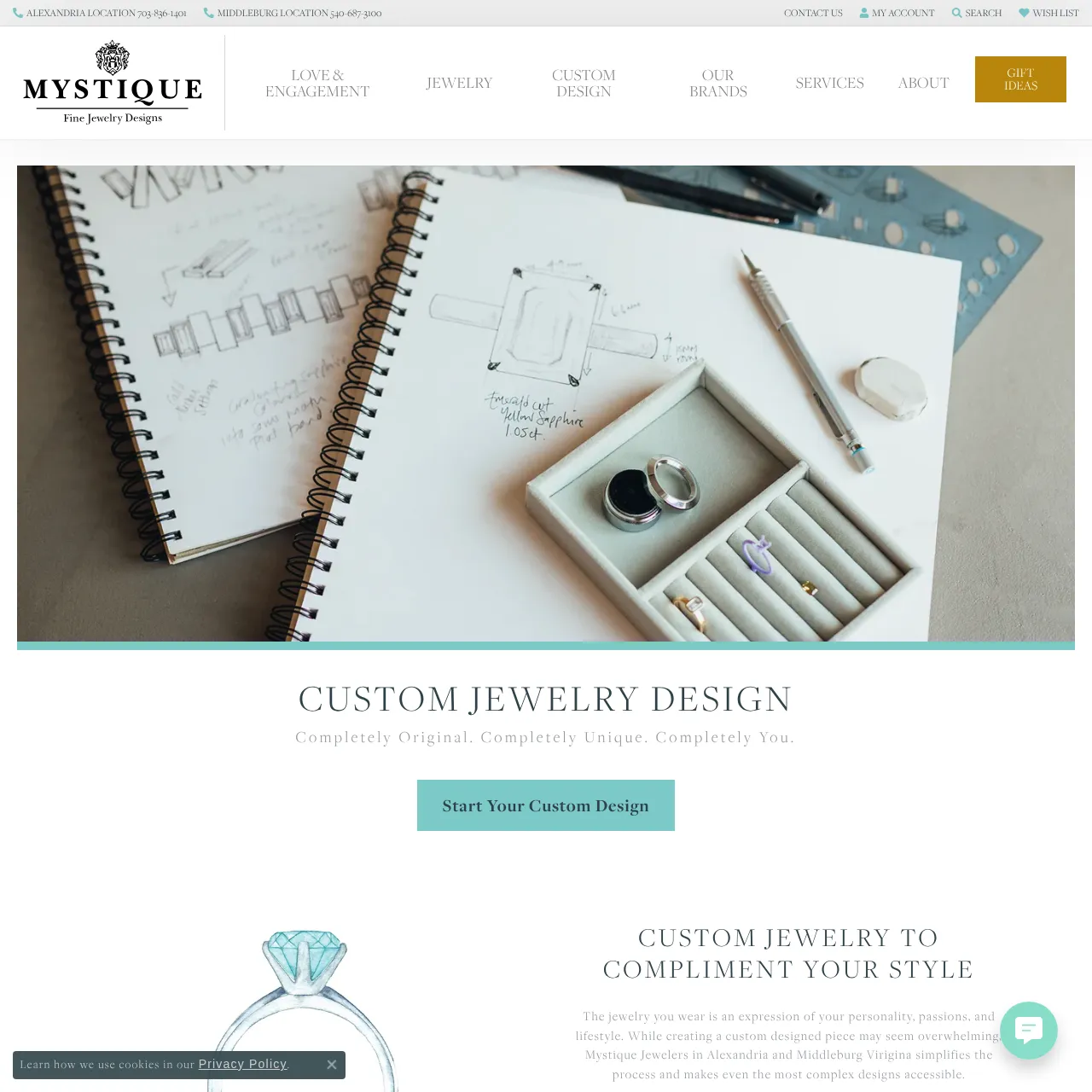 Mystique Jewelers showcases a service-oriented, appointment-based custom design model with physical retail presence, serving as an operational maturity benchmark for domestic US sourcing.
Mystique Jewelers positions itself as a service-oriented custom jewelry provider with verifiable physical infrastructure across three premium Virginia locations, demonstrating the importance of signaling vetted craftsmanship through tangible business operations. For STRAND’s overseas B2B audience, this competitor illustrates how domestic jewelers build trust through appointment systems, multiple showrooms, and integrated client accounts rather than generic product listings. While specific materials, MOQs, lead times, and shipping options are absent from their public pages, the structured consultation model implies capacity for managed bespoke production suitable for DTC store partnerships seeking US-based quality verification.
Key Features:
- Physical Retail Verification: Multi-location consultation availability in Alexandria, Middleburg, and Salamander Resort & Spa signals vetted craftsmanship and reliability through tangible business presence.
- Structured Consultation Workflow: Appointment-based personalized design process indicates capacity for managed bespoke production workflows rather than unvetted bulk sourcing or automated e-commerce.
- Client Account Integration: Integrated account management for order tracking and wishlists demonstrates operational maturity in handling ongoing custom projects and repeat B2B partnerships.
Importers and procurement teams can use Mystique as a benchmark for operational transparency and localized expertise that unvetted bulk manufacturers often lack. The absence of fast-fashion framing aligns with STRAND’s crafted positioning; however, STRAND must differentiate by explicitly publishing material certifications, dimension tolerances, and MENA-appropriate specifications that this domestic competitor omits. This gap represents an opportunity to capture B2B buyers seeking both artisanal credibility and supply chain clarity that bridges the trust deficit often associated with overseas manufacturing.
Best For: Sourcing partner reference for DTC stores requiring white-label custom design capabilities with US-based quality verification; procurement benchmark for evaluating domestic operational maturity before committing to overseas contracts.
Evaluating Custom Jewelry Suppliers Beyond the Listicle
Selecting the right custom jewelry partner requires moving beyond surface-level rankings to evaluate concrete procurement criteria. Buyers should prioritize suppliers who publish explicit MOQ tiers, material certifications, and lead time estimates rather than those relying solely on aesthetic presentation or consumer-facing features. For cross-border transactions, verify trade term flexibility (EXW vs. FOB), payment method diversity, and multilingual support to reduce communication friction and logistical risk. Cultural competency matters equally; suppliers serving MENA markets must understand gold tone preferences and modesty-aligned design parameters that differ significantly from Western fast-fashion norms.
Quality assurance protocols distinguish vetted manufacturers from generic bulk sources. Request documentation on in-house QC inspection processes, plating thickness standards, and stone setting tolerances before placing initial orders. Sampling remains non-negotiable; utilize low-MOQ options to validate craftsmanship against your technical packs before scaling to full production runs. Remember that consumer benchmarks like Jewlr or KAY reveal what sells, but only manufacturing partners with transparent B2B infrastructure can reliably produce how you need it produced. Align your sourcing strategy with suppliers who treat specification depth as a feature, not an afterthought.
Ready to source custom jewelry with verified craftsmanship and transparent B2B terms? Request a Quote & Sample from STRAND to review current MOQ tiers, material certifications, and production lead times tailored to your market.