
5 Scalable Alternatives to Custom Jewelry for DTC Brands
5 Scalable Alternatives to Custom Jewelry for DTC Brands
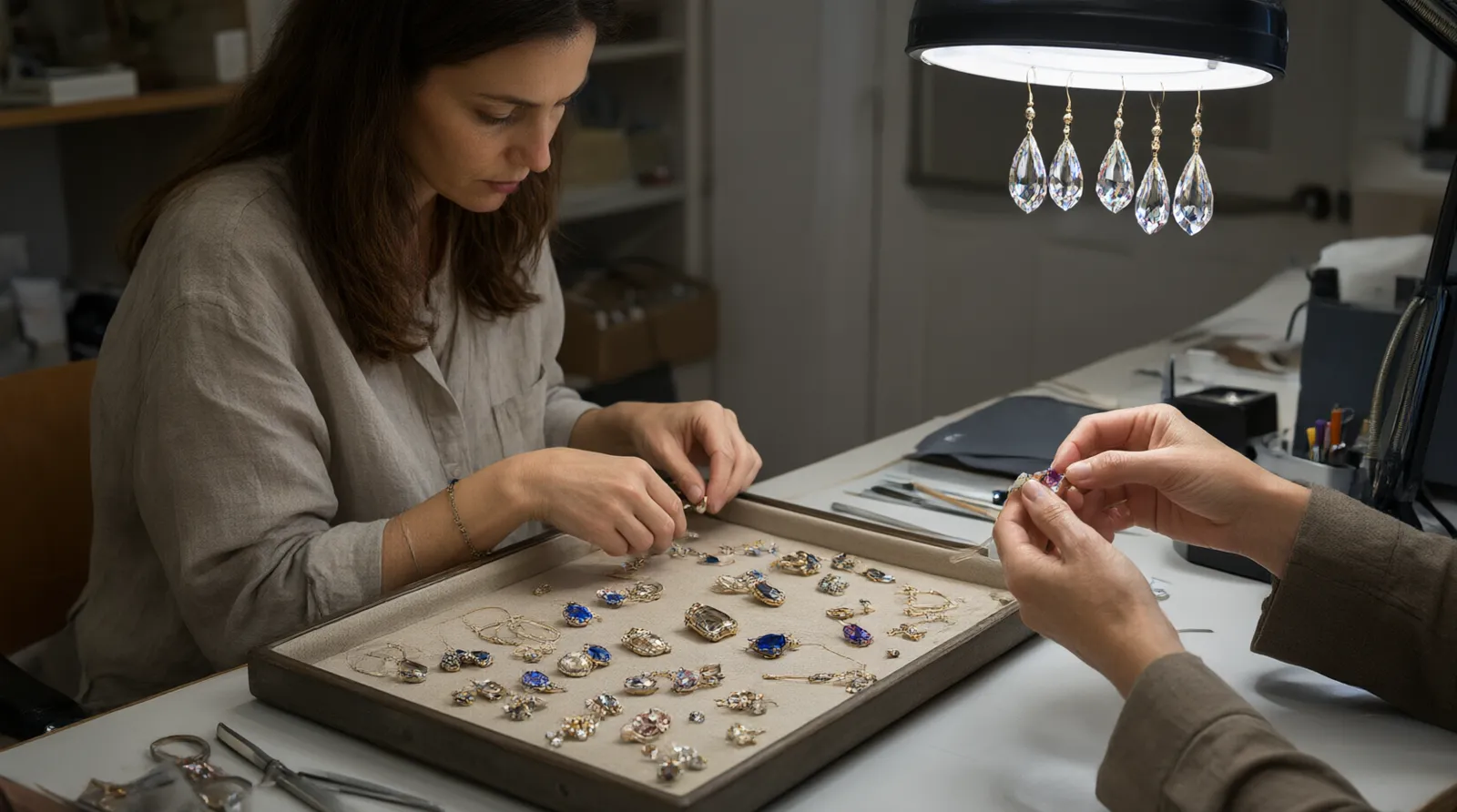
Buyers and store owners actively replacing custom jewelry typically pivot toward semi-custom OEM manufacturing, curated wholesale catalogs, or designer-ready collections. The shift usually happens when fully bespoke production creates bottlenecks in minimum order quantities (MOQs), extends lead times beyond retail windows, or inflates per-unit costs past acceptable margins.
Whether you are sourcing vintage drop earrings, gradient crystal studs, or two-tone glass bead necklace sets, finding the right replacement for traditional custom jewelry means balancing design exclusivity with commercial viability. Procurement teams across the US, EU, UK, and MENA regions are increasingly moving away from one-off artisan commissions toward scalable models that still deliver distinct aesthetics without the logistical headaches. For a broader look at alternatives to custom jewelry built specifically for scaling brands, exploring dedicated sourcing guides can help streamline your transition.
Why Look for Alternatives to Custom Jewelry?
Fully bespoke custom jewelry often carries steep unit economics. For a DTC brand trying to scale a rhinestone earring line or a buyer importing gold-plated copper necklaces, paying for individual CAD designs, wax molds, and single-piece casting runs destroys margin. Many importers find themselves locked into high MOQs with local artisans who lack the factory infrastructure to produce consistently at volume. When a retailer needs 500 units of a specific garnet or amethyst stud design by next month, a solo bench jeweler simply cannot fulfill the order.
Supply chain friction is another breaking point. Traditional custom jewelry relies heavily on localized workshops, which limits access to specialized materials like natural stone, faux pearls, or rhodium-plated finishes at competitive rates. If your multilingual procurement team needs support in French, Arabic, Spanish, German, or Russian, coordinating with a single-region artisan becomes a daily translation bottleneck. Furthermore, quality control varies wildly between batches. Without standardized in-house QC inspections before shipment, buyers risk receiving inconsistent plating thicknesses or mismatched stone settings across a single order.
Finally, there is the issue of catalog agility. Retailers testing new styles need speed. Waiting eight weeks for a custom diamond-accented pendant prototype prevents brands from reacting to seasonal trends. Alternatives that offer stock catalogs with low customization thresholds allow stores to test market demand before committing to heavy production runs. For a deeper look at how buyers are restructuring their supply chains this year, our guide on Custom Jewelry: 6 Sources Buyers & DTC Brands Need in 2026 breaks down the exact shifts happening in cross-border fashion jewelry.
What to Look for in a Custom Jewelry Alternative
When evaluating a replacement for your current custom jewelry supplier, run potential partners through these criteria:
- Scalable MOQs: Can you order small test batches (e.g., 12 pcs/style) before committing to bulk?
- Material Versatility: Do they work with your required bases, such as gold-plated copper, rhodium-plated copper, 925-style silver finishes, glass beads, and natural stones?
- Trade & Shipping Flexibility: Are terms like EXW or FOB available, with options for air, sea, or express shipping?
- Quality Assurance: Is there documented in-house QC inspection prior to every shipment?
- Multilingual Support: Can your team communicate seamlessly in EN, FR, AR, ES, DE, or RU?
- Payment Options: Do they accept T/T bank transfer, Western Union, PayPal, L/C, or Xtransfer?
- Design Range: Do they offer both ready-to-ship stock catalogs and true custom OEM capabilities?
Top Alternatives to Custom Jewelry
1. STRAND (Cross-Border Fashion Jewelry OEM)
Best for: DTC store owners, importers, and buyers needing scalable fashion jewelry with low MOQs and direct workshop access. Pricing: B2B wholesale pricing; request a quote based on material and volume.
Key strengths vs custom jewelry:
- Operates a broad stock catalog where the majority of styles carry an MOQ of just 12 pcs/style, with select styles available from 1 pc.
- Hangzhou-based operations link vetted Chinese workshops directly to overseas buyers, cutting out middlemen.
- Offers full custom OEM in gold-plated/rhodium-plated copper, 925-style silver finishes, glass beads, natural stone, and faux pearls.
- Provides multilingual sales support (EN, FR, AR, ES, DE, RU) and accepts diverse payment methods including T/T, L/C, and Xtransfer.
Limitations / trade-offs:
- Focused strictly on fashion and semi-fine jewelry rather than high-carat fine jewelry or loose gemstone investment pieces.
- Requires cross-border logistics planning (though EXW/FOB terms and air/sea/express shipping options mitigate this).
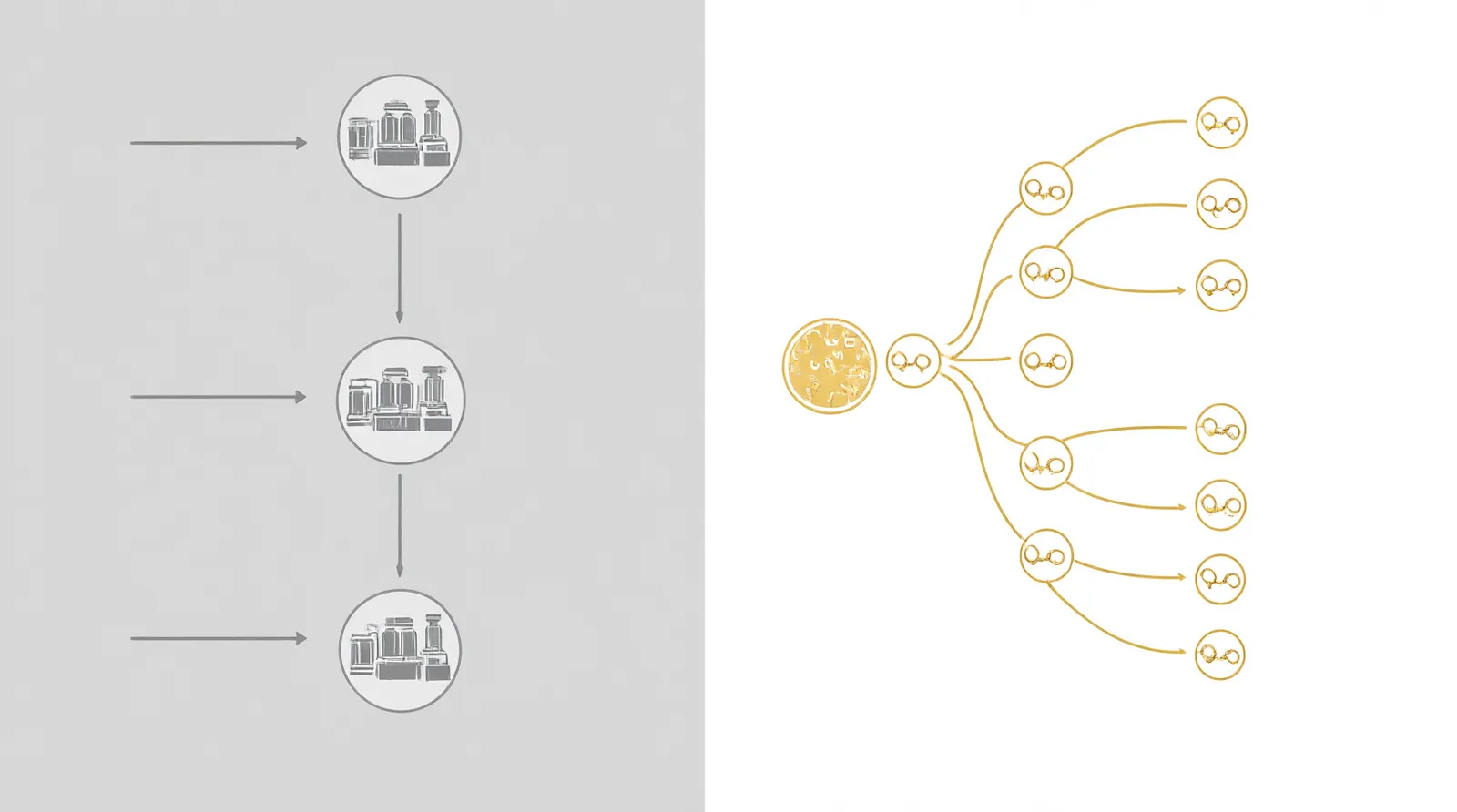
How it compares to custom jewelry: Traditional custom jewelry forces buyers to choose between expensive one-off designs or massive factory minimums. STRAND eliminates that compromise by offering a hybrid model. You can pull trending vintage or turquoise styles directly from their stock catalog at 12-piece minimums to test your market, then transition winning designs into full custom OEM production. Because they handle in-house QC before every shipment, the consistency issues common with fragmented artisan custom jewelry disappear.
2. Brown & Company Jewelers
Best for: High-end bridal clients and luxury retail buyers seeking domestic, personalized engagement and fine jewelry services. Pricing: Gift guide collections range from under $2,750 to under $10,000 (Source).
Key strengths vs custom jewelry:
- Offers a dedicated 'Build Your Engagement Ring' service tailored to bridal appointments (Source).
- Atlanta-based physical presence allows for face-to-face luxury consultations (Source).
- Fast fulfillment on existing inventory, with next-day shipping offered on orders placed before 2pm ET and free shipping on all orders over $1,000 (Source).
Limitations / trade-offs:
- Pricing reflects a luxury retail markup, making it unviable for DTC brands looking to source wholesale inventory.
- Geographically limited to US buyers wanting in-person custom design services.
How it compares to custom jewelry: If your definition of custom jewelry revolves around high-ticket diamond rings and peridot bridal sets for individual consumers, Brown & Co excels. However, for B2B buyers and importers, this model is the exact opposite of what you need. You cannot scale a DTC brand buying retail-priced pieces one by one. It serves as a benchmark for luxury consumer expectations rather than a viable sourcing alternative for commercial buyers.
3. Zales Personalized Collections
Best for: Mass-market retailers and consumers looking for accessible, name-brand personalized jewelry. Pricing: Mass-market retail tiers.
Key strengths vs custom jewelry:
- Massive existing infrastructure for personalized engraving and modular charm designs.
- Brand recognition comparable to other major mall jewelers like Jared, reducing consumer hesitation.
- Standardized sizing and setting options across thousands of physical stores.
Limitations / trade-offs:
- Designs are restricted to pre-approved templates; true ground-up custom OEM is not available.
- Margins for resellers are non-existent due to fixed retail pricing.
How it compares to custom jewelry: Zales offers "personalization" rather than true custom jewelry. You are selecting from a finite menu of chains, pendants, and engravings. For a buyer trying to source unique gradient crystal drop earrings or two-tone glass bead sets to sell under their own brand label, Zales provides zero utility. It is a consumer destination, not a procurement partner.
4. Foundrae
Best for: Luxury boutiques stocking high-end, artisanal personalized medallions and fine jewelry. Pricing: Designer luxury tier.
Key strengths vs custom jewelry:
- Highly distinct aesthetic focused on personalized custom jewelry with deep symbolic meaning.
- Appeals to a niche luxury demographic willing to pay premium prices for artisanal craftsmanship.
- Strong editorial and brand positioning for high-end retail environments.
Limitations / trade-offs:
- Lead times for personalized pieces can stretch significantly during peak seasons.
- Strictly B2C/luxury wholesale; inaccessible for mid-tier DTC brands or high-volume importers.
How it compares to custom jewelry: Foundrae represents the pinnacle of designer custom jewelry, blending personalization with fine art. But if you are a procurement manager needing 500 units of rhodium-plated copper studs featuring amethyst or garnet accents, Foundrae’s artisanal model cannot accommodate your volume or price point. It highlights the gap between luxury bespoke and commercial scalability—a gap STRAND fills directly.
5. Local Bench Jewelers & Independent Workshops
Best for: Rapid prototyping and hyper-local, small-batch repairs or modifications. Pricing: Hourly bench rates plus material costs.
Key strengths vs custom jewelry:
- Immediate communication and physical oversight of the casting and setting process.
- Ability to modify a single piece on the spot without waiting for international shipping.
- No language barriers for domestic buyers.
Limitations / trade-offs:
- Production capacity rarely exceeds a few dozen pieces per week.
- Material costs for metals and stones are significantly higher than direct-from-manufacturer rates.
How it compares to custom jewelry: Many DTC brands start here, using local bench jewelers to create their first custom jewelry samples. The problem arises at the scaling stage. Once a turquoise or rhinestone earring design goes viral, a local jeweler charging hourly bench fees cannot produce 1,000 units profitably. Transitioning from a local bench to a cross-border OEM partner is a necessary evolution for growing brands.
6. Curated Wholesale Catalogs (Semi-Custom OEM)
Best for: Importers and store owners who want fast market entry with slight branding modifications. Pricing: Volume-dependent wholesale tiers.
Key strengths vs custom jewelry:
- Immediate availability of proven, market-tested designs (like large-scale stock catalogs).
- Drastically reduced lead times compared to designing from scratch.
- Lower financial risk due to minimal MOQs (e.g., 12 pcs/style).
Limitations / trade-offs:
- Other retailers may have access to the same base designs unless exclusive OEM agreements are negotiated.
- Customization is usually limited to plating color, stone swaps, or packaging rather than structural changes.
How it compares to custom jewelry: This is the most direct commercial alternative to full custom jewelry. Instead of spending months developing a new clasp mechanism or pendant silhouette, buyers select existing architectures and customize the finish—swapping standard stones for peridot or faux pearls. For a detailed breakdown of how to evaluate these suppliers, read our analysis of 6 Custom Jewelry Sources Ranked: OEM Suppliers & Retail Benchmarks for 2026. If you are weighing additional sourcing strategies, reviewing a ranked list of custom jewelry alternatives can help clarify which model best fits your operational budget.
Side-by-Side Comparison Table
| Feature | Traditional Custom Jewelry | STRAND (OEM/Catalog) | Brown & Co. Jewelers | Zales Personalized | Local Bench Jeweler |
|---|---|---|---|---|---|
| Primary Audience | Bespoke Consumers / Niche Brands | B2B Buyers, DTC, Importers | Bridal / Luxury Consumers | Mass-Market Consumers | Prototypers / Repairs |
| MOQ | Often 1 (High Cost) or 100+ | Low MOQs (e.g., 12 pcs/style); select from 1 pc | 1 piece | 1 piece | 1 piece |
| Materials | Varies widely | Gold/Rhodium-plated copper, 925-style, glass beads, natural stone | Fine metals, diamond | Standard retail alloys | Varies widely |
| Lead Time | 4–12 weeks | Stock ships rapidly; OEM depends on scope | Next day on stock (before 2pm ET) (Source) | Immediate in-store | Days to weeks |
| Trade Terms | Retail / Deposit | EXW, FOB | Retail | Retail | Retail / Hourly |
| Multilingual Support | Rare | EN, FR, AR, ES, DE, RU | English | English | English / Local |
| QC Process | Buyer dependent | In-house inspection before every shipment | Store guaranteed | Corporate standard | Maker dependent |
How to Pick the Right Alternative
Your choice depends entirely on your position in the supply chain and your immediate commercial goals.
If you are a DTC Store Owner scaling a collection: Stop paying for one-off custom jewelry prototypes that you cannot manufacture at scale. Pivot to a supplier offering a stock catalog with low MOQs. Test 10 different styles of drop earrings or necklace sets at 12 pieces each. Once your data shows which styles convert, move those specific designs into custom OEM production to lock in exclusivity. Ensure your partner handles EXW or FOB terms so you control your freight costs via air, sea, or express shipping.
If you are an Importer serving multiple regions (US, EU, UK, MENA): Language barriers and fragmented communication will stall your procurement. Choose an alternative that offers native-level sales support in English, French, Arabic, Spanish, German, and Russian. Payment flexibility is equally critical; your accounting team needs options like T/T bank transfers, L/C, Western Union, PayPal, or Xtransfer depending on the destination country's banking regulations.
If you are a Boutique Buyer sourcing fine/bespoke pieces: If your clientele expects singular luxury items featuring high-grade diamond, amethyst, or garnet centerpieces, commercial OEM alternatives will not fit. Stick to established luxury houses or regional specialists like Brown & Company Jewelers that facilitate bridal appointments and high-ticket custom design services. Just recognize that this path does not support volume retail.
If you are testing a new market trend quickly: Speed beats perfection. If specific styles—such as gradient crystal or rhinestone designs—are currently gaining traction on social media, you cannot wait eight weeks for custom tooling. Source from a vendor holding 100+ ready-to-ship styles. The ability to buy select styles from 1 pc allows you to photograph, list, and validate demand before tying up capital in inventory.
Conclusion
Replacing custom jewelry is rarely about abandoning unique design; it is about removing the operational friction that prevents unique designs from reaching customers profitably. For luxury bridal buyers, domestic ateliers remain the standard. But for DTC brands, importers, and multi-region store owners, the math only works when you bridge the gap between bespoke aesthetics and factory-level execution.
Evaluate your current pipeline. If your per-unit costs are squeezing margins, if your supplier cannot communicate in your team's preferred languages, or if your MOQs force you to hold dead stock, it is time to change vendors. Review your top three selling SKUs, calculate your target landed cost including freight, and reach out to manufacturers who can match those numbers while delivering consistent quality.
Request a sample, verify the plating thickness, and check the stone settings yourself before committing to a production run. To explore scalable OEM solutions and review a broad stock catalog built for cross-border fashion jewelry buyers, request a quote and get current MOQ & pricing details directly from STRAND.