Best Alternatives to Custom Jewelry for Scaling Brands in 2026
Best Alternatives to Custom Jewelry for Scaling Brands in 2026
Custom jewelry works for one-off gifting — it breaks down the moment you need 50 units of a branded drop earring or six colorways of the same necklace. Procurement teams, DTC store owners, and importers routinely hit the same wall: opaque pricing, unpredictable lead times, and design fees that multiply with every new SKU.
Why Look for Alternatives to Custom Jewelry?
Cost per unit climbs fast when design consultation is priced per order. A boutique custom studio may charge $150–$400 in setup fees before a single piece is produced. If you're ordering 50 units of a branded style for a wholesale account, you pay that overhead on every new design — it doesn't scale. And if you need variety (say, five colorways of a rhinestone earring), you've effectively multiplied your non-recoverable design costs by five.
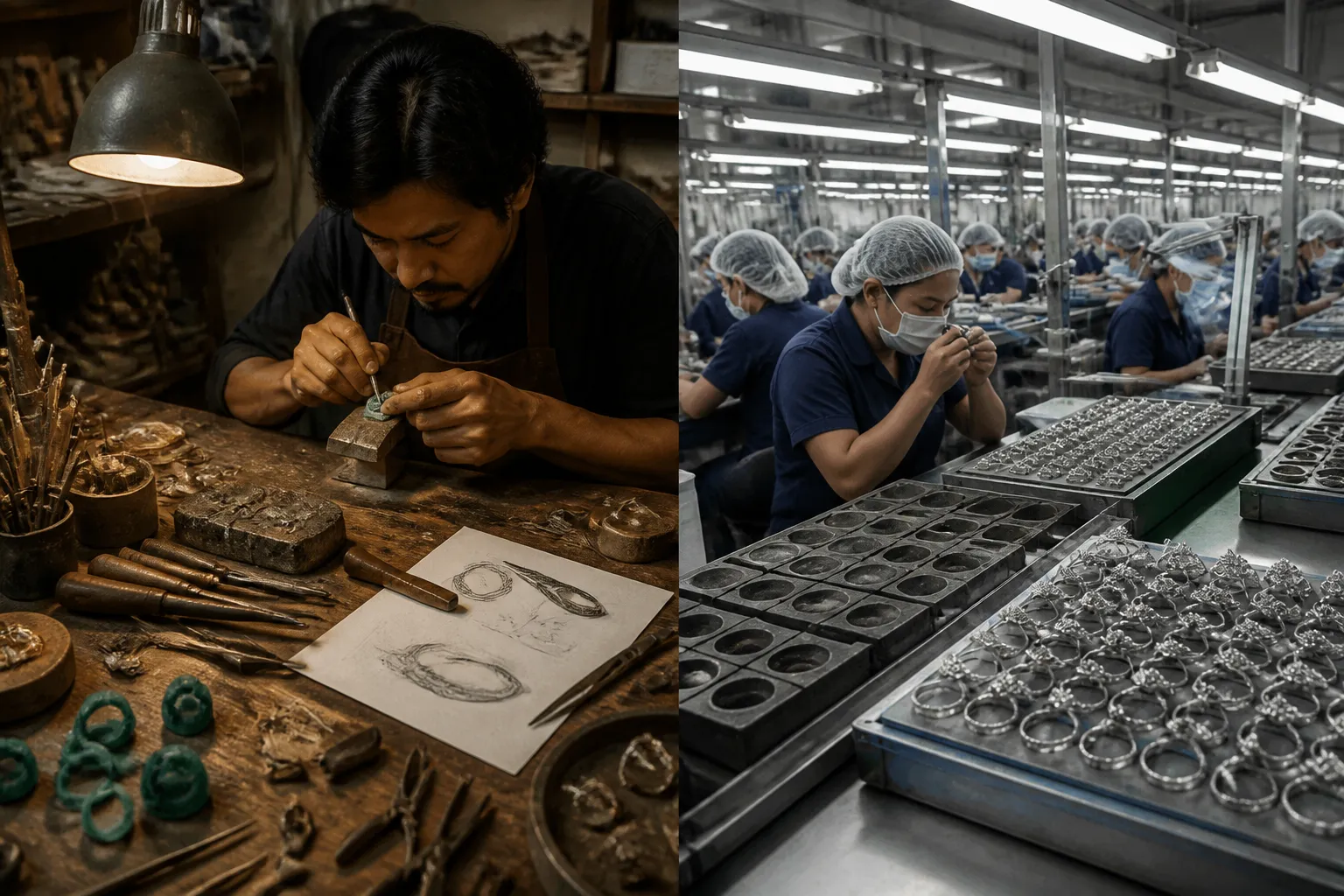
Lead times compound the problem. Bespoke custom jewelry depends on skilled artisans with queues. Most studios quote 4–8 weeks per design; OEM tooling runs longer. For a buyer with a seasonal window — a Valentine's Day collection or a Back-to-School drop — that timeline isn't just inconvenient, it's a commercial risk.
Scaling to new SKUs is friction-heavy in ways that don't improve with experience. Commissioning 20 new styles means 20 separate consultations, 20 rounds of proofs, and 20 separate negotiations. Buyers who've been through that cycle once tend to look hard for a better sourcing model the second time around.
What to Look for in a Custom Jewelry Alternative
Match any alternative against these dimensions before shortlisting:
- MOQ flexibility: Can you order 12 pieces per style, or does the supplier require 500? Low MOQ is critical for DTC brands testing new SKUs before committing to production runs.
- Personalization depth: Does the alternative support engraving, birthstone selection, metal-finish choice, or full OEM spec (your logo, your packaging, your colorway)?
- Pricing transparency: Is there a published catalog, or does every inquiry require a quote?
- Lead time reliability: What is the production-to-ship window, and is it consistent across seasons?
- Quality assurance: Is there in-house QC inspection, a formal returns policy, or a published warranty?
- Trade terms and payment options: Can the supplier work with T/T bank transfer, PayPal, or L/C? Are EXW and FOB options available for freight control?
- Multilingual support: If your procurement team spans the US, EU, and MENA, can the supplier communicate fluently in Arabic, French, German, or Spanish?
Top 8 Alternatives to Custom Jewelry
1. STRAND — Hangzhou OEM Jewelry Supplier
Best for: Importers, wholesale buyers, and DTC brand owners sourcing custom OEM earrings, necklaces, and jewelry sets from China at genuinely low MOQ.
Pricing: Catalog-based pricing; custom OEM quotes available via strandjewelry.com
Key strengths vs. custom jewelry:
- 114-style stock catalog with MOQ as low as 12 pcs/style on 109 of those styles — and select designs available from 1 piece, so range-testing new SKUs doesn't require a large upfront commitment
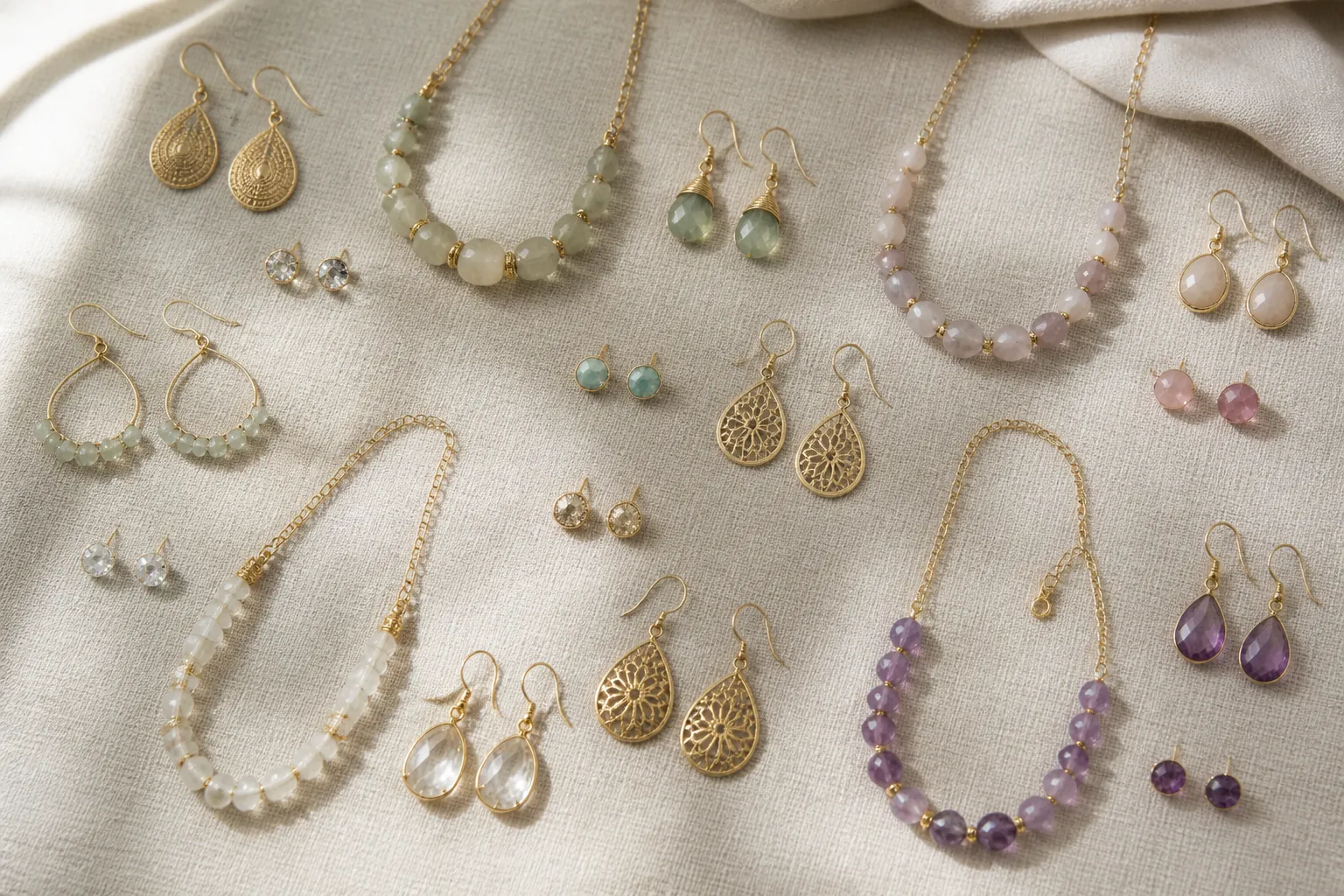
- Full OEM capability in gold-plated and rhodium-plated copper, 925-style silver finishes, glass beads, natural stone, and faux pearls — covering vintage, gradient crystal, two-tone glass bead, and rhinestone aesthetics across drop earrings, stud earrings, and necklace-and-earring sets
- Multilingual sales team operating in EN, FR, AR, ES, DE, and RU, serving buyers in the US, EU, UK, and MENA from one supplier relationship
- In-house QC inspection before every shipment; EXW or FOB trade terms; air, sea, or express shipping; payment via T/T, Western Union, PayPal, L/C, or Xtransfer
Limitations / trade-offs:
- Custom OEM lead times for tooling-heavy designs require direct consultation — contact for current production schedules
- Focused on fashion jewelry; not the right source for fine jewelry with natural diamond or precious-stone center stones
- Stock catalog skews toward trend-driven and contemporary styles; traditional bridal or classic solitaire categories are outside the scope
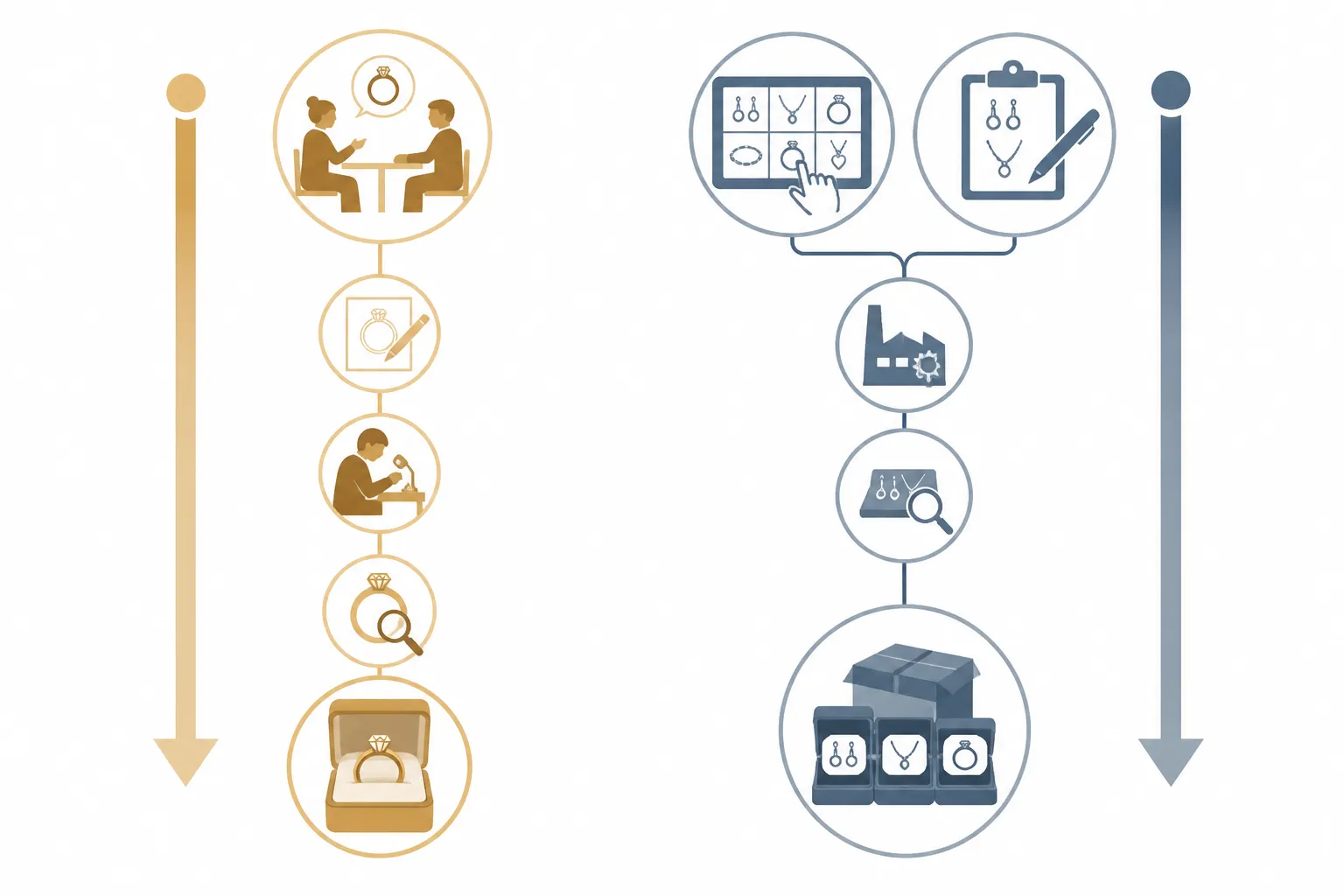
How it compares to custom jewelry: Traditional custom jewelry is a one-off model — efficient for a single bespoke piece, economically broken for anyone who needs a product line. STRAND exists precisely for that gap: a stock catalog for immediate, tested commercial styles at low MOQ, and an OEM program for spec-designed, private-label, or branded production. A wholesale buyer needing six earring colorways with logo hang tags gets scalable economics and reliable trade terms that no boutique studio can match. For buyers working through the OEM versus retail personalization decision, this B2B buyer's guide lays out the evaluation criteria in full.
2. Jewlr — Consumer Personalized Jewelry Platform
Best for: DTC brands benchmarking personalization UX, or end-consumers shopping for birthstone and engravable pieces at mid-market prices.
Pricing: Consumer-facing; starting prices vary by style and promotional period (as of August 2026, personalized name necklaces listed from $84)
Key strengths vs. custom jewelry:
- 646 personalized jewelry products across rings, necklaces, bracelets, and earrings — one of the broadest consumer personalization catalogs online
- Gemstone range covers amethyst, garnet, peridot, and turquoise alongside cubic zirconia, aquamarine, blue topaz, and pink tourmaline — virtually the full birthstone spectrum in one catalog
- 99-day return policy and one-year warranty provide strong post-purchase confidence; free shipping and a Buy Now Pay Later option reduce checkout friction
- Engravable styles and photo locket options deliver genuine personalization beyond simple monogramming
Limitations / trade-offs:
- Built entirely for B2C consumers — no wholesale pricing, no MOQ program, no trade terms
- Metal options (18K gold-plated silver, 925 sterling silver) are narrower than what an OEM supplier can accommodate
- Promotional pricing changes seasonally; any specific discount figures should be verified directly at time of purchase
How it compares to custom jewelry: Where a bespoke studio requires weeks of consultation for a single personalized piece, Jewlr compresses that process to minutes via an online configurator. For a consumer buying a garnet birthstone ring as a gift, that's a meaningful advantage. For a wholesale importer needing 200 consistent units, Jewlr's consumer model is the wrong channel — and the price-per-unit economics confirm it.
3. Catbird NYC — Fine Personalized DTC Jewelry
Best for: Consumers and boutique buyers seeking delicate, fine-jewelry aesthetics with name or initial personalization; strong brand in the US urban and lifestyle market.
Pricing: Mid-to-high premium; solid gold and diamond options command a significant price per unit over fashion jewelry
Key strengths vs. custom jewelry:
- Curated personalized collection in solid gold with genuine diamond accents — true luxury positioning, not plated fashion
- Strong editorial identity; product photography and brand voice are well-suited to Instagram and lifestyle retail adjacencies
- US-based fulfillment relevant for buyers prioritizing domestic supply chains or fast shipping to end consumers
Limitations / trade-offs:
- No wholesale, OEM, or trade buyer program — strictly direct-to-consumer
- Style breadth is intentionally narrow; building a multi-SKU catalog across categories would require multiple sourcing relationships
- Price-per-unit is appropriate for fine jewelry buyers, not competitive for fashion or trend-driven import sourcing
How it compares to custom jewelry: Catbird occupies the same "made for you" positioning as custom jewelry but operates faster through a curated ready-to-personalize catalog. The solid gold and diamond credentials are real, not simulated. For a buyer sourcing 50 units of a mid-market earring, that positioning is irrelevant. For a boutique stocking one or two genuinely fine pieces alongside a larger fashion range, Catbird's quality is hard to match at that aesthetic tier.
4. Made by Mary — Personalized Everyday Jewelry
Best for: Consumers wanting dainty, minimalist personalized pieces; useful reference point for DTC jewelry brands researching which name and initial styles convert.
Pricing: Mid-market; comparable to Jewlr on standard personalized styles
Key strengths vs. custom jewelry:
- Specialist in minimalist name necklaces and initial styles — a proven high-conversion category for lifestyle and gifting brands
- Clean brand aesthetic that translates well to social commerce and influencer-driven sales channels
- Established US consumer base with recognizable product photography that signals market demand for this style tier
Limitations / trade-offs:
- No B2B, wholesale, or OEM channel — 100% consumer-facing
- Gemstone depth is limited compared to Jewlr's amethyst-to-turquoise range or an OEM supplier's material flexibility
- Not suitable for private-label development or production-scale sourcing
How it compares to custom jewelry: Made by Mary strips personalization down to name and initial — the inverse of full-bespoke custom jewelry. For a DTC brand researching which personalized silhouettes sell before commissioning OEM production, Made by Mary is a useful market signal. For the actual production and sourcing, buyers need to go upstream.
5. Icebox — Luxury Custom Jewelry & Fine Diamond Pieces
Best for: High-end retail buyers, luxury brand activations, and clients requiring VVS diamond or fine gemstone custom work.
Pricing: Premium; bespoke diamond pieces typically start in the four-figure range
Key strengths vs. custom jewelry:
- Full bespoke capability for complex diamond and gemstone designs — this is custom jewelry at its highest execution level
- Specializes in categories where fashion jewelry cannot substitute: genuine diamond settings, white gold, platinum
- Strong visual portfolio and established credibility in luxury and streetwear-crossover markets where provenance matters
Limitations / trade-offs:
- Unit economics are inaccessible for buyers sourcing fashion or mid-market accessories
- Lead times and consultation requirements make it unsuitable for catalog-style product lines
- No fashion-tier or trend-driven entry-level styles; positioned exclusively at the premium end
How it compares to custom jewelry: Icebox represents the ceiling of what custom jewelry can be — one-off, diamond-set pieces where design integrity outweighs price. For a buyer whose client needs a VVS diamond pendant for a brand campaign or red-carpet placement, Icebox may be the only appropriate source. For everyone else sourcing at volume, the economics are misaligned.
6. King Jewelers — Local Custom Design Studio
Best for: Buyers who need hands-on design consultation, physical samples, or full-service bridal and engagement custom work.
Pricing: Project-based; varies widely by metal, stone, and complexity
Key strengths vs. custom jewelry:
- Full-service custom design process from initial sketch to CAD rendering to finished piece
- In-store experience valuable for buyers who need to approve physical samples before committing to a design
- Trusted specifically in bridal and fine jewelry categories where millimeter-level design accuracy is required
Limitations / trade-offs:
- Regional footprint limits scalability for buyers with geographically distributed procurement needs
- No published MOQ or wholesale catalog — every project is individually negotiated
- Design consultation fees and production timelines are substantial barriers for fashion or trend-driven sourcing cycles
How it compares to custom jewelry: King Jewelers is, in many ways, the purest expression of "custom jewelry": describe what you want, and the studio builds it. That's the right model for a one-off engagement ring or a limited-edition brand trophy piece. It's the wrong model for a buyer who needs 12 styles of glass-bead earrings delivered before a seasonal window closes.
7. Kendra Scott — Retail Personalized Jewelry Stores
Best for: US consumers and boutique gift buyers wanting accessible in-store personalization with a lifestyle brand identity.
Pricing: Mid-market; Color Bar customization service offered in-store and online
Key strengths vs. custom jewelry:
- Color Bar concept allows customers to select stone colors — including amethyst, turquoise, and similar natural-look options — in a live in-store format, creating a "made-for-me" retail moment without bespoke timelines
- Wide US store network makes the brand accessible for brick-and-mortar buyers scouting the personalization retail category
- Strong consumer recognition in bohemian and contemporary American fashion; useful competitive benchmark for buyers building their own personalized line
Limitations / trade-offs:
- Retail-only channel with no wholesale or OEM sourcing program for external buyers
- Customization is limited to stone color selection within proprietary silhouettes — no structural or branding customization possible
- Not suitable for private-label or branded product development of any kind
How it compares to custom jewelry: Kendra Scott's Color Bar makes custom jewelry fast and tactile — pick a stone, walk out with the piece. It's compelling for end-consumers who want ownership without the wait. For a buyer building their own branded accessories line, Kendra Scott's model offers no forward path. The comparison makes the need for an OEM-capable supplier concrete: the experience can be replicated in your own product line; the production cannot happen through Kendra Scott.
8. Jared — Full-Service Jewelry Retail Stores with Custom Options
Best for: US consumers wanting an established retail experience with engraving, resizing, and made-to-order options backed by a national chain.
Pricing: Varies broadly across the catalog; custom design services layered on top of standard retail pricing
Key strengths vs. custom jewelry:
- Nationwide store presence provides accessibility and trust signals for consumers who prefer in-person transactions
- In-house custom design services for engagement rings and fine jewelry with diamond center stones
- Extended service plans, financing options, and warranties reduce per-unit cost friction for individual consumers
Limitations / trade-offs:
- Retail chain economics mean significantly higher unit costs compared to direct OEM sourcing
- No wholesale, import, or trade buyer program — the entire model is aimed at the end consumer
- Custom services are deliberately slow (multi-week consultations) and structurally unsuited for production runs
How it compares to custom jewelry: Jared is the chain-retail version of custom jewelry: walk into one of their stores, describe what you want, and the brand's jewelers execute it. The brand recognition and post-purchase service are genuine advantages for an individual buying a diamond piece. For an importer sourcing 300 units of a two-tone glass bead necklace-and-earring set, this is not the conversation — or the store.
Side-by-Side Comparison Table
| Dimension | Custom Jewelry (Traditional) | STRAND | Jewlr | Catbird NYC | Kendra Scott | Jared |
|---|---|---|---|---|---|---|
| MOQ | 1 (bespoke per order) | 12 pcs/style (most); 1 pc select styles | N/A — consumer only | N/A — consumer only | N/A — consumer only | N/A — consumer only |
| Personalization depth | Full bespoke spec | OEM spec + catalog customization | Engraving, birthstone, metal choice | Name, initial, fine metal | Color Bar stone selection | Engraving, custom design |
| Pricing model | Per-project; high per-unit | Catalog pricing + OEM quote | Published consumer pricing | Premium DTC pricing | Mid-market retail | Mid-to-premium retail |
| Best buyer type | One-off consumer or gift | Importers, DTC brands, wholesalers | B2C consumers | B2C consumers / boutiques | B2C consumers | B2C consumers |
| Gemstone options | Wide (jeweler-dependent) | Natural stone, glass bead, rhinestone | Amethyst, garnet, peridot, turquoise + more | Diamond, fine gemstones | Proprietary brand stones | Diamond, standard gemstones |
| B2B trade terms | Negotiated case-by-case | EXW / FOB; T/T, PayPal, L/C, Xtransfer | None | None | None | None |
How to Pick the Right Alternative
You're a DTC brand owner launching a new accessories line. You need 6–10 SKUs, 12–50 units each, with the ability to re-order fast. Traditional custom studios charge per-design fees that don't scale across a catalog. Start with STRAND's stock catalog to validate silhouettes at 12 pcs/style, then commission custom OEM designs once you know which styles sell. The 6 Best Custom Jewelry Sources in 2026 gives a detailed breakdown of OEM supplier evaluation criteria.
You're a retail buyer looking for personalized pieces for an end-consumer audience. Jewlr's 646-product personalized catalog and strong buyer protections (99-day returns, one-year warranty) make it a useful consumer-facing benchmark. If you want private-label versions of those bestselling birthstone and engravable styles, an OEM supplier handles production upstream.
You're sourcing luxury custom pieces for a high-end client or brand activation. Icebox or a full-service studio like King Jewelers is the right channel. Budget for premium pricing and multi-week lead times — these are not scalable for catalog inventory, but they're the correct source for trophy pieces and diamond-set work.
You're an importer or procurement team in MENA or the EU. You need a supplier who communicates in Arabic, French, or German, ships on FOB terms, and accepts L/C payments. That profile fits STRAND's multilingual OEM program and excludes every US retail brand on this list.
You want fast, in-person personalization for US consumers. Kendra Scott's Color Bar or Jared's in-store custom service fits the use case. Neither offers a wholesale path, but both deliver an "I chose this" retail moment without the wait of traditional bespoke work.
The Right Source for the Right Scale
The alternatives here split clearly into two groups: consumer-facing personalization platforms (Jewlr, Made by Mary, Catbird, Kendra Scott, Jared) and production-scale sourcing options. The consumer platforms are fast, polished, and irrelevant to any buyer who needs more than a single piece. The luxury custom route (Icebox, King Jewelers) delivers genuine craftsmanship and is priced accordingly.
For buyers sourcing between those extremes — fashion earrings, necklace-and-earring sets, branded accessories lines — the only option on this list with real trade terms, low MOQ, and multilingual procurement support is STRAND. A 114-style catalog at 12 pcs/style minimum, OEM capability across gold-plated copper, rhodium-plated finishes, natural stone, and glass bead, and a sales team that handles inquiries in six languages from Hangzhou to your warehouse.
If that matches your sourcing profile, the next step is concrete: Request a quote or get current MOQ and pricing at strandjewelry.com. Bring your target styles, your destination market, and your volume — the inquiry form takes three minutes, and the team responds with real numbers.