
Custom Jewelry vs. Retail Alternatives: The B2B Sourcing Guide
Custom Jewelry vs. Retail Alternatives: The B2B Sourcing Guide
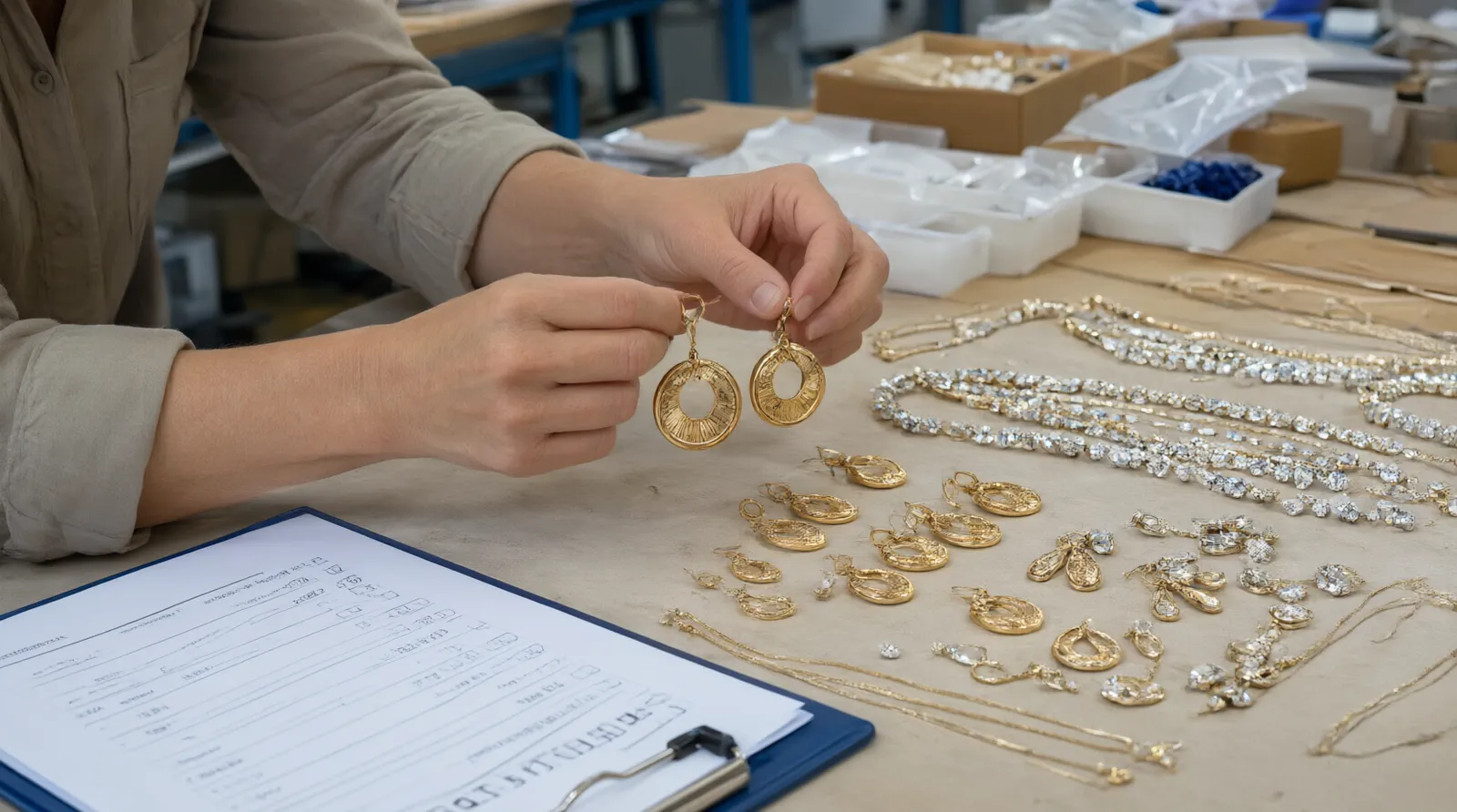
Custom jewelry sourced directly from OEM manufacturers gives importers and DTC brands control over design, plating specifications, and per-unit margins at scale. Retail alternatives—personalization platforms and brick-and-mortar stores—offer immediate fulfillment and zero minimums but lack the pricing structure required for commercial resale. If you are buying to resell or build a brand line, custom OEM is the only mathematically viable path; if you are sourcing a one-off corporate gift or single retail piece, retail alternatives serve that narrow need. For a broader look at how these channels compare across different buyer profiles, explore our custom jewelry sourcing comparison.
TL;DR / Quick Verdict
For buyers, importers, and DTC store owners in the US, EU, UK, and MENA regions building inventory, custom jewelry manufactured through direct OEM channels provides the margin control, material specification, and scalable volume that retail alternatives cannot match. Retail personalization platforms like Jewlr (which lists 637 products in its personalized category) or physical stores work exclusively for single-unit consumer purchases where wholesale pricing is irrelevant. Choose custom OEM for your supply chain; choose retail alternatives only when fulfilling isolated, non-commercial requests.
At-a-Glance Comparison Table
| Dimension | Custom Jewelry (OEM / STRAND) | Alternatives (Retail Platforms & Stores) |
|---|---|---|
| Target Buyer | Importers, DTC brands, procurement teams | Individual consumers, one-off gift buyers |
| Pricing Structure | EXW or FOB trade terms; volume-based unit cost | Fixed retail MSRP (e.g., pendants subject to promotional pricing on Jewlr) |
| Minimum Order Quantity | 12 pcs/style on most stock designs; select styles from 1 pc | 1 piece |
| Materials & Finishes | Gold-plated/rhodium-plated copper, 925-style silver finishes, glass beads, natural stone, faux pearls | Varies by retailer; often limited to standard sterling silver or base metals |
| Product Scope | Drop earrings, stud earrings, necklace + earring sets, vintage/gradient crystal/two-tone styles | Rings, necklaces, bracelets, earrings (filtered by birthstone, engravable, etc.) |
| Shipping & Logistics | Air, sea, or express freight | Free shipping or standard parcel (Jewlr) |
| Payment Terms | T/T bank transfer, Western Union, PayPal, L/C, Xtransfer | Credit card, Buy Now Pay Later plans (Jewlr) |
| Quality Assurance | In-house QC inspection before every shipment | Standard retail return policies (e.g., 99-day returns on Jewlr) |
| Language Support | Multilingual sales support | Primarily English / localized storefronts |
Custom Jewelry Overview
Custom jewelry in a B2B context refers to pieces designed, prototyped, and manufactured specifically for a brand or importer's inventory requirements. It is built for buyers, DTC store owners, and multilingual procurement teams who need reliable supply chains linking vetted workshops directly to overseas markets.
STRAND operates as a Hangzhou-based cross-border fashion jewelry supplier bridging this gap. The standout strength here is the balance between customization and accessible entry points. Rather than forcing massive container loads, the model supports low MOQs across the vast majority of its stock catalog, allowing smaller DTC brands to test designs without overcommitting capital. For highly specific tests, select styles are available from 1 pc.
The product focus targets high-velocity fashion categories: drop earrings, stud earrings, and necklace + earring sets. Styles range from vintage and gradient crystal to two-tone glass bead and rhinestone configurations. Materials include gold-plated and rhodium-plated copper, glass beads, natural stone, and faux pearls. Custom OEM capabilities extend to 925-style silver finishes, giving buyers the ability to position their lines closer to the luxury market without paying fine jewelry manufacturing costs.
Alternatives Overview
Alternatives to custom OEM jewelry encompass retail personalization platforms, branded DTC sites, and traditional brick-and-mortar jewelers. These channels are built for individual consumers purchasing single items for personal use or gifting. Understanding the structural differences between these channels and OEM manufacturing is critical for DTC brands evaluating sourcing options.
Platforms like Jewlr aggregate hundreds of SKUs—listing 637 products in their personalized jewelry category—allowing shoppers to filter by Best Sellers, Birthstone, Engravable, Rings, Necklaces, Bracelets, and Earrings. Consumers can purchase items like an Engravable Generations Stacking Hearts Pendant or a Double Heart Gemstone Ring with Accents directly through the site. Physical retailers like Jared offer similar personalization services in-store, while independent designers on platforms like Kendra Scott or Made By Mary provide branded, pre-designed pieces with minor engraving options.
The primary strength of these alternatives is immediacy and zero friction for single units. They handle all manufacturing, packaging, and shipping logistics internally. However, they are fundamentally retail operations. The pricing includes full retail markup, making them financially unviable for anyone intending to resell the inventory.
Feature-by-Feature Breakdown
Pricing and Trade Terms
Custom jewelry operates on B2B trade terms, typically EXW (Ex Works) or FOB (Free On Board). This means the buyer controls the freight forwarding and absorbs the shipping cost separately from the unit price, resulting in significantly lower per-item costs at volume. Payment infrastructure accommodates international trade realities: T/T bank transfers, Letters of Credit (L/C), Western Union, Xtransfer, and PayPal.
Retail alternatives operate on fixed MSRP. Personalized pieces on platforms like Jewlr carry retail pricing—for instance, name necklaces or gemstone rings marked down from higher anchor prices during promotional periods. While they may offer Buy Now, Pay Later payment plans to ease consumer cash flow, these terms do not exist for commercial procurement. You cannot negotiate FOB terms or open an L/C with a retail personalization website.
Core Features and Material Specifications
When ordering custom jewelry through an OEM like STRAND, buyers dictate the metallurgy and finish. You specify whether a run of stud earrings requires gold-plated copper, rhodium-plated copper, or a 925-style silver finish. Stone selection is equally granular. Procurement teams can request specific natural stones or simulants—amethyst, garnet, peridot, turquoise, or diamond simulants—to match a seasonal color story.
Retail alternatives restrict you to their existing templates. A platform might allow you to engrave a name or swap a birthstone in a pre-set bezel, but you cannot alter the base metal gauge, change the plating micron thickness, or redesign the bail on a pendant. The "customization" is superficial personalization, not structural manufacturing control.
Minimum Order Quantities (MOQ) and Scale
Scale is where the divergence becomes absolute. Custom jewelry suppliers engineer their production lines for batch runs. STRAND’s threshold of 12 pcs/style on the vast majority of its catalog provides a realistic entry point for small-to-mid-sized importers. If a DTC brand in the UK wants to test three new gradient crystal earring designs, they order 36 pieces total. Once a design proves profitable, scaling to 500 or 5,000 units simply requires adjusting the production schedule.
Alternatives have an MOQ of one. While this sounds flexible, it is a ceiling, not a floor. If a US-based boutique owner tries to source 200 identical engravable lockets from a retail site like GLDN or Jewlr, they will pay retail prices for all 200 units, destroying any potential profit margin upon resale.
Quality Assurance and Compliance
B2B custom jewelry transactions require documented quality control. Suppliers like STRAND conduct in-house QC inspections before every shipment leaves the facility. For buyers importing into the EU or US, this process ensures compliance with regional regulations regarding heavy metals (like REACH or California Proposition 65), which must be verified during the sampling phase.
Retail alternatives rely on post-purchase safety nets. Jewlr, for example, offers a one-year warranty and 99-day return policy. This protects an individual consumer who receives a tarnished ring, but it does nothing for an importer who needs 500 pairs of earrings to pass customs inspection without heavy metal violations.
Logistics and Shipping Infrastructure
Custom jewelry logistics are tailored to freight. Buyers choose between air freight for speed, sea freight for cost-efficiency on large volumes, or express courier for sample batches. The separation of manufacturing cost (EXW/FOB) and shipping cost allows procurement teams to consolidate shipments from multiple Chinese workshops into single containers.
Retail alternatives ship via standard postal or courier networks. Even when a retailer advertises free shipping, that cost is baked into the retail price of the item. There is no option to route a bulk order via ocean freight to a designated port.
Communication and Support
Cross-border custom jewelry sourcing demands multilingual support to prevent specification errors. STRAND provides sales communication in multiple languages, accommodating procurement teams across the US, Europe, and MENA regions. Miscommunications about plating colors or stone settings cost money; native-language support mitigates this risk.
Retail alternatives generally offer support in English, sometimes with localized European language options. Their support teams are trained for consumer service—handling returns, tracking numbers, and basic product questions—not for discussing technical CAD files or plating bath compositions with a professional buyer.
Pros and Cons
Custom Jewelry (OEM)
Pros:
- Wholesale pricing structures (EXW/FOB) protect retail margins.
- Total control over materials, including gold/rhodium plating, natural stones, and base metals.
- Accessible MOQs (e.g., 12 pcs/style) allow for low-risk inventory testing.
- Pre-shipment QC inspections ensure batch consistency.
- Multilingual support streamlines cross-border procurement.
- Flexible freight options (air, sea, express).
Cons:
- Requires lead time for production and shipping; not instantaneous.
- Demands buyer knowledge of trade terms, freight forwarding, and import duties.
- Prototyping may require iterative sampling before final approval.
Alternatives (Retail Platforms & Stores)
Pros:
- Immediate availability and fast consumer-grade shipping.
- Zero minimum order quantities; buy exactly one piece.
- Consumer protections like extended return windows (e.g., 99 days on Jewlr).
- No need to manage freight, customs, or import compliance.
Cons:
- Retail pricing eliminates resale viability.
- "Customization" is limited to surface-level engraving or template swapping.
- No control over underlying manufacturing specifications or metallurgy.
- Cannot scale to commercial volumes efficiently.
When to Choose Custom Jewelry
Choose custom jewelry if you are a DTC brand owner launching a new collection of drop earrings or necklace sets. If you need 50 units of a specific two-tone glass bead design plated in rhodium to test the European market, the 12-piece MOQ structure makes this possible without dead stock.
Choose custom OEM if you are an importer supplying regional boutiques across the MENA region. The ability to communicate specifications in Arabic, secure EXW pricing, and route shipments via sea freight directly to your local distribution center is structurally impossible through retail platforms.
Choose custom jewelry if your brand positioning relies on specific material narratives—such as using genuine amethyst, garnet, peridot, or turquoise set in gold-plated copper rather than generic alloys. Direct manufacturer relationships allow you to verify stone origins and plating thicknesses, which is critical if you are attempting to bridge the gap between fashion jewelry and accessible luxury. For a deeper look at how buyers evaluate these manufacturing partners, review our breakdown of Custom Jewelry: 6 Sources Buyers & DTC Brands Need in 2026.
When to Choose Alternatives
Choose retail alternatives if you are a business owner buying a single personalized gift for a client or employee. If you need one engraved pendant delivered by Friday, a platform with ready-made templates and expedited shipping is the correct tool.
Choose alternatives if you are a consumer shopping for yourself. If you want a birthstone ring or a name necklace and have no intention of reselling it, retail platforms offer warranties, easy returns, and BNPL financing that B2B suppliers do not provide.
Choose alternatives if you are a stylist pulling one-off pieces for an editorial shoot where the items will be returned immediately after use. Purchasing single units from a retailer with a generous return policy is more efficient than initiating an OEM sampling process.
Final Verdict
The decision between custom jewelry and retail alternatives is not a matter of preference; it is dictated entirely by your purchasing intent. If your goal is commercial resale, brand building, or inventory procurement, retail alternatives are mathematically disqualified due to their pricing structures. Custom jewelry sourced through direct OEM channels is the only model that supports the margins, material control, and logistical flexibility required by professional buyers.
For procurement teams and DTC owners ready to build their next inventory cycle, the immediate next step is to validate current production capacity and material costs against your specific designs. Review our ranking of 6 Custom Jewelry Sources Ranked: OEM Suppliers & Retail Benchmarks for 2026 to benchmark your supplier options, then move to the quoting phase. Contact STRAND directly at https://strandjewelry.com to request a quote, confirm current MOQs for your target styles, and initiate sample production for your next collection.