
Custom Jewelry vs. Retail: The B2B Sourcing Guide for DTC Brands
Custom Jewelry vs. Retail: The B2B Sourcing Guide for DTC Brands
Custom jewelry sourced directly from OEM manufacturers delivers the lowest per-unit cost and highest design control for DTC brands and importers, while retail alternatives—ranging from online personalization platforms to brick-and-mortar chains—serve buyers needing single units or immediate consumer fulfillment without supply chain management. The right choice depends entirely on your order volume, margin targets, and whether you are reselling or buying for personal use.
TL;DR / Quick Verdict
If you are a DTC store owner, importer, or procurement manager in the US, EU, UK, or MENA region sourcing inventory to resell, custom jewelry via an OEM manufacturer like STRAND is the correct path. You get direct workshop access, standard international trade terms, and low MOQs across a broad stock catalog. If you are a consumer looking for a single engraved pendant or a small business testing one-off personalized gifts without managing logistics, retail alternatives like online personalization platforms or physical stores are built for that exact use case.
At-a-Glance Comparison Table
| Dimension | Custom Jewelry (OEM/Direct) | Retail Alternatives (Online Platforms & Stores) |
|---|---|---|
| Primary Buyer | Importers, DTC brands, wholesalers | Individual consumers, corporate gifting |
| Pricing Model | Wholesale unit cost (EXW or FOB) | Retail markup (e.g., $84–$189+ per piece) |
| MOQ | Low minimums per style across stock catalog; select styles available as samples | 1 piece |
| Design Control | Full CAD/mold creation, material selection | Limited to platform templates (fonts, birthstones) |
| Materials | Plated base metals, glass beads, natural stone, faux pearls, silver-style finishes | 18K gold plated silver, sterling silver, vermeil, CZ |
| Lead Time | Production + shipping (air, sea, express) | Immediate ship or short production window |
| Payment Terms | T/T bank transfer, Western Union, PayPal, L/C | Credit card, BNPL plans |
| Support | Multilingual sales teams for global markets | Standard consumer customer service |
| Returns/Warranty | In-house QC inspection before shipment | 99-day return policies, 1-year warranties common |
Custom Jewelry Overview
Custom jewelry in a B2B context refers to designs manufactured specifically for a brand or importer, either by modifying existing catalog styles or engineering new molds from scratch. It is built for purchase-ready buyers, multilingual procurement teams, and DTC store owners who need consistent inventory margins and exclusive designs that cannot be found on mass-market platforms.
STRAND operates as a brand linking vetted Chinese workshops directly to overseas buyers. The core strength lies in bridging the gap between factory-floor capabilities and international commercial requirements. Instead of navigating fragmented supplier lists, buyers access a curated stock catalog focusing on drop earrings, stud earrings, and necklace-earring sets. Styles span vintage, gradient crystal, two-tone glass bead, and rhinestone aesthetics.
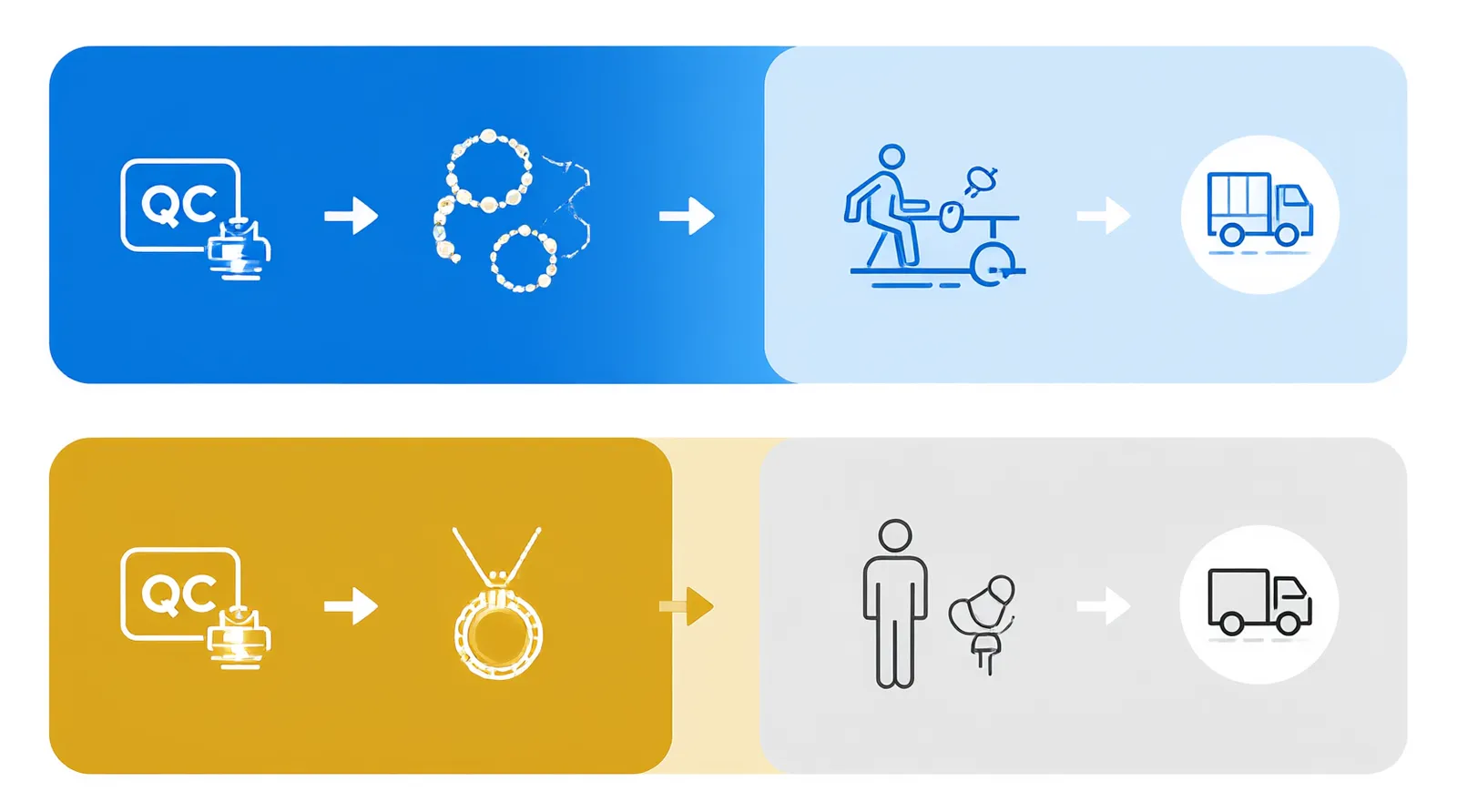
For buyers requiring exclusivity, custom OEM services allow specification of materials including plated copper bases, silver-style finishes, glass beads, natural stones, and faux pearls. The operational framework supports real commercial scale: standard international trade terms are offered, with shipping routed by air, sea, or express depending on urgency and volume. Quality assurance is handled via in-house QC inspection before every shipment leaves the facility, mitigating the defect risks commonly associated with cross-border manufacturing.
Alternatives Overview
Alternatives to direct OEM sourcing encompass both digital personalization platforms and traditional brick-and-mortar retailers. These channels are built for end-consumers or businesses purchasing isolated, one-off items rather than bulk commercial inventory. For a deeper evaluation of how these retail channels compare against direct manufacturing, review our guide on custom jewelry vs. retail alternatives.
Online platforms like Jewlr specialize in template-based personalization. Their catalogs are extensive—Jewlr lists 636 products in its personalized jewelry category alone ([Source: https://www.jewlr.com/personalized-jewelry]). Buyers can filter by Best Sellers, Birthstone, Engravable, Rings, Necklaces, Bracelets, and Earrings. Materials typically include 18K gold plated silver, 925 sterling silver, and vermeil, often set with cubic zirconia or specific gemstones. To reduce friction for consumers, these platforms offer free shipping, one-year warranties, and extended return windows, such as Jewlr’s 99-day return policy ([Source: https://www.jewlr.com/personalized-jewelry]). Payment flexibility is also consumer-oriented, featuring 'Buy Now, Pay Later' options and account-signup discounts ([Source: https://www.jewlr.com/personalized-jewelry]).
Physical retail alternatives include large-scale chains. Kay Jewelers, for instance, features personalized jewelry as a highlighted collection within their stores as of the time of the source ([Source: https://www.kay.com/personalized]). Other legacy retailers like Jared, alongside contemporary fashion brands such as Kendra Scott, offer varying degrees of customization—from engraving to selecting specific diamond or gemstone centerpieces. While these alternatives provide immediate tactile evaluation and localized customer service, they operate strictly on retail pricing models unsuitable for wholesale resale.
Feature-by-Feature Breakdown
Pricing and Margins
The financial mechanics of custom jewelry versus retail alternatives dictate which path a buyer should take. Direct OEM sourcing provides wholesale unit economics. When you buy custom jewelry from a manufacturer like STRAND, you negotiate based on material weight, plating thickness, mold complexity, and order volume under standard trade terms. This structure allows DTC brands to maintain the gross margins required to fund marketing and operations.
Retail alternatives price for the end consumer. On platforms like Jewlr, a Personalized Name Necklace in 18K Gold Plated Silver is priced from $84, marked down from a base of $120 ([Source: https://www.jewlr.com/personalized-jewelry]). More complex pieces carry higher premiums; an Engravable Generations Stacking Hearts Pendant featuring peridot and citrine starts at $189 ([Source: https://www.jewlr.com/personalized-jewelry]), while a Double Baguette Bypass Ring in 925 Sterling Silver with garnet and cubic zirconia is listed from $139 ([Source: https://www.jewlr.com/personalized-jewelry]). Reselling items purchased at these price points makes it mathematically impossible to compete in the fashion jewelry market.
Design Control and Material Selection
Custom jewelry offers unrestricted design parameters. Procurement teams can specify exact Pantone matches for gradient crystals, request specific cuts of amethyst, turquoise, or peridot, and choose between various plated base metals. STRAND’s OEM capabilities extend to engineering vintage silhouettes or modern two-tone glass bead arrangements that align precisely with a brand's seasonal mood board.
Alternatives restrict buyers to pre-existing templates. You can choose a font, swap a cubic zirconia for a garnet, or add an engraving, but the underlying CAD file and structural design remain fixed. If you want a luxury aesthetic using specific natural stones or faux pearl arrangements not currently in a retailer's 636-product database, the alternative route cannot fulfill the request.
Minimum Order Quantities (MOQ) and Scalability
Scalability is where the divergence between the two options becomes absolute. Custom jewelry suppliers understand B2B inventory planning. STRAND enforces low MOQs per style across the majority of its catalog designs, allowing smaller DTC brands to test new drops without overcommitting capital. Select styles are available as single pieces for sampling purposes. Once a style proves viable, production scales linearly through the connected workshop network.
Retail alternatives have an MOQ of one. While this benefits a consumer buying a single gift, it offers no supply chain advantage to a buyer trying to stock 500 units of a best-selling earring across multiple regional warehouses. Attempting to manually order hundreds of individual units through a consumer checkout process introduces massive logistical friction and inconsistent batch coloring.
Logistics, Trade Terms, and Payment
Cross-border fashion jewelry requires structured logistics. Custom jewelry transactions utilize standard international trade terms. Buyers work with EXW (Ex Works) or FOB (Free on Board) pricing, selecting air, sea, or express shipping based on the required delivery timeline and freight budget. Payment infrastructure supports B2B cash flow realities, accepting T/T bank transfers, Letters of Credit (L/C), Western Union, and PayPal.
Retail alternatives process payments via credit cards or consumer financing. A platform might offer 'Buy Now, Pay Later' payment plans ([Source: https://www.jewlr.com/personalized-jewelry]) or incentivize account creation with a percentage off the first order ([Source: https://www.jewlr.com/personalized-jewelry]). They do not issue commercial invoices for customs clearance, nor do they consolidate pallets for ocean freight.
Quality Assurance and Compliance
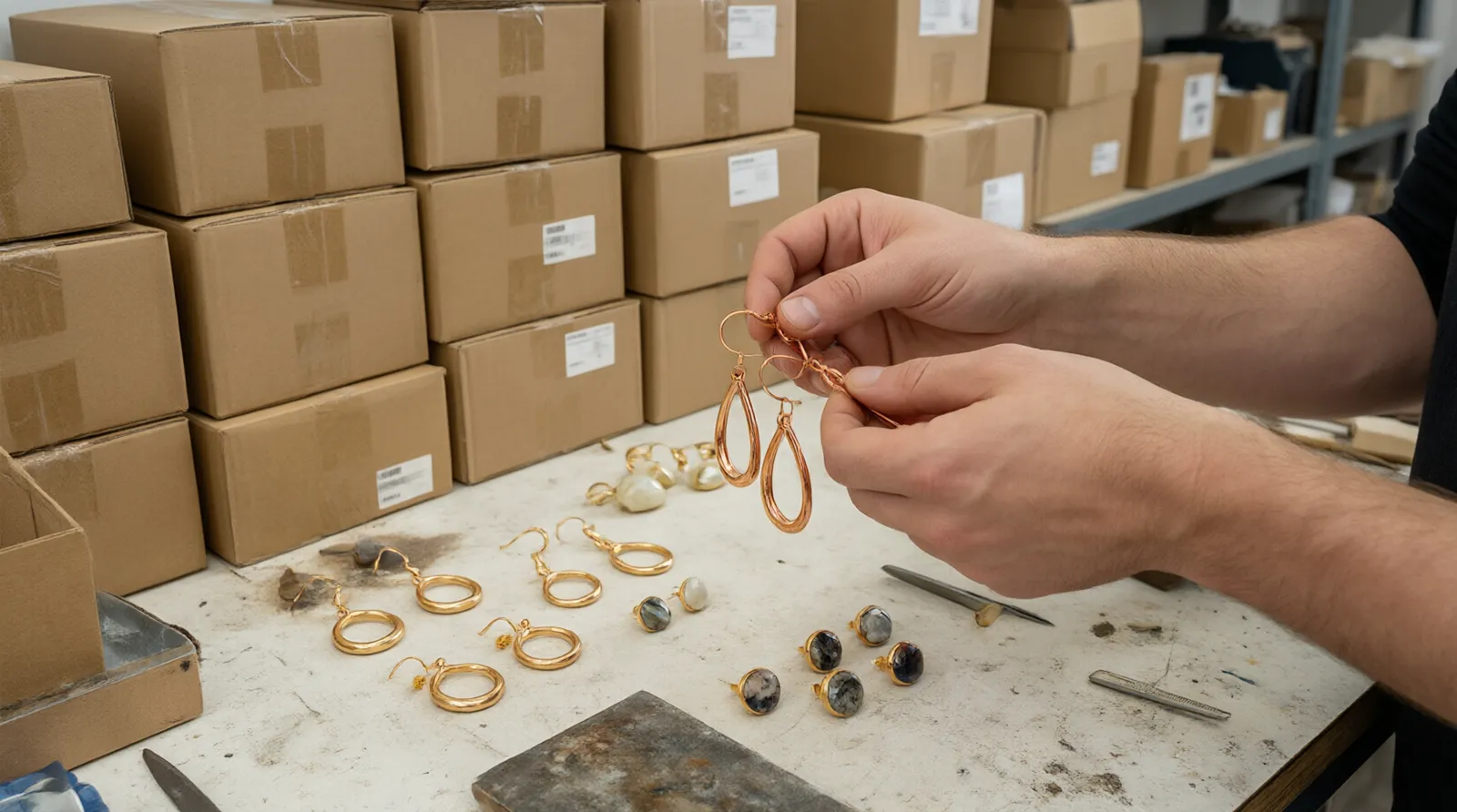
When importing custom jewelry, quality assurance must happen before the goods leave the origin country. STRAND conducts in-house QC inspection before every shipment. For procurement teams targeting the US, EU, UK, and MENA regions, this ensures compliance with local regulations regarding heavy metals (like lead and cadmium limits in the EU) and verifies that plating adhesion and stone settings meet the agreed specifications.
Retail alternatives handle quality through post-purchase safety nets. Consumer platforms rely on generous return policies—such as 99-day return windows—and one-year warranties ([Source: https://www.jewlr.com/personalized-jewelry]) to manage defects. For a B2B buyer, returning defective inventory internationally on a consumer warranty is financially unviable compared to catching errors during pre-shipment inspection.
Communication and Support
Sourcing custom jewelry internationally demands clear communication across time zones and languages. STRAND provides multilingual sales support for global procurement teams. This directly serves buyers operating in diverse markets, eliminating translation errors that frequently result in incorrect mold specifications or misaligned expectations.
Retail alternatives provide standard consumer customer service, typically limited to the primary language of the storefront. They are not equipped to discuss technical specifications like micron thickness for plating or structural tolerances for metal finishes.
Pros and Cons
Custom Jewelry (OEM/Direct)
Pros:
- Wholesale pricing structures that protect DTC brand margins.
- Total control over materials, including base metals, natural stones, and specific plating types.
- Commercial MOQs designed for inventory testing and scaling.
- Pre-shipment QC inspections prevent receiving defective bulk orders.
- B2B payment methods (T/T, L/C) and standard trade terms (EXW, FOB).
- Multilingual support for global procurement teams.
Cons:
- Requires upfront investment and inventory planning.
- Lead times include production and international transit.
- Not suitable for buyers needing a single, immediate item.
- Demands basic knowledge of import logistics and trade terms.
Alternatives (Retail Platforms & Stores)
Pros:
- Zero minimum order quantities; purchase exactly one unit.
- Immediate availability or very short production times.
- Consumer protections like 99-day returns and 1-year warranties ([Source: https://www.jewlr.com/personalized-jewelry]).
- No supply chain management required.
- Easy online filtering across hundreds of SKUs, such as browsing 636 personalized items by category ([Source: https://www.jewlr.com/personalized-jewelry]).
Cons:
- Retail pricing eliminates resale viability.
- Design restricted to existing templates and available gemstone options.
- No commercial invoicing, consolidated freight, or trade terms.
- Batch consistency is not guaranteed across separate orders.
- Customer service is consumer-facing, lacking technical manufacturing expertise.
When to Choose Custom Jewelry
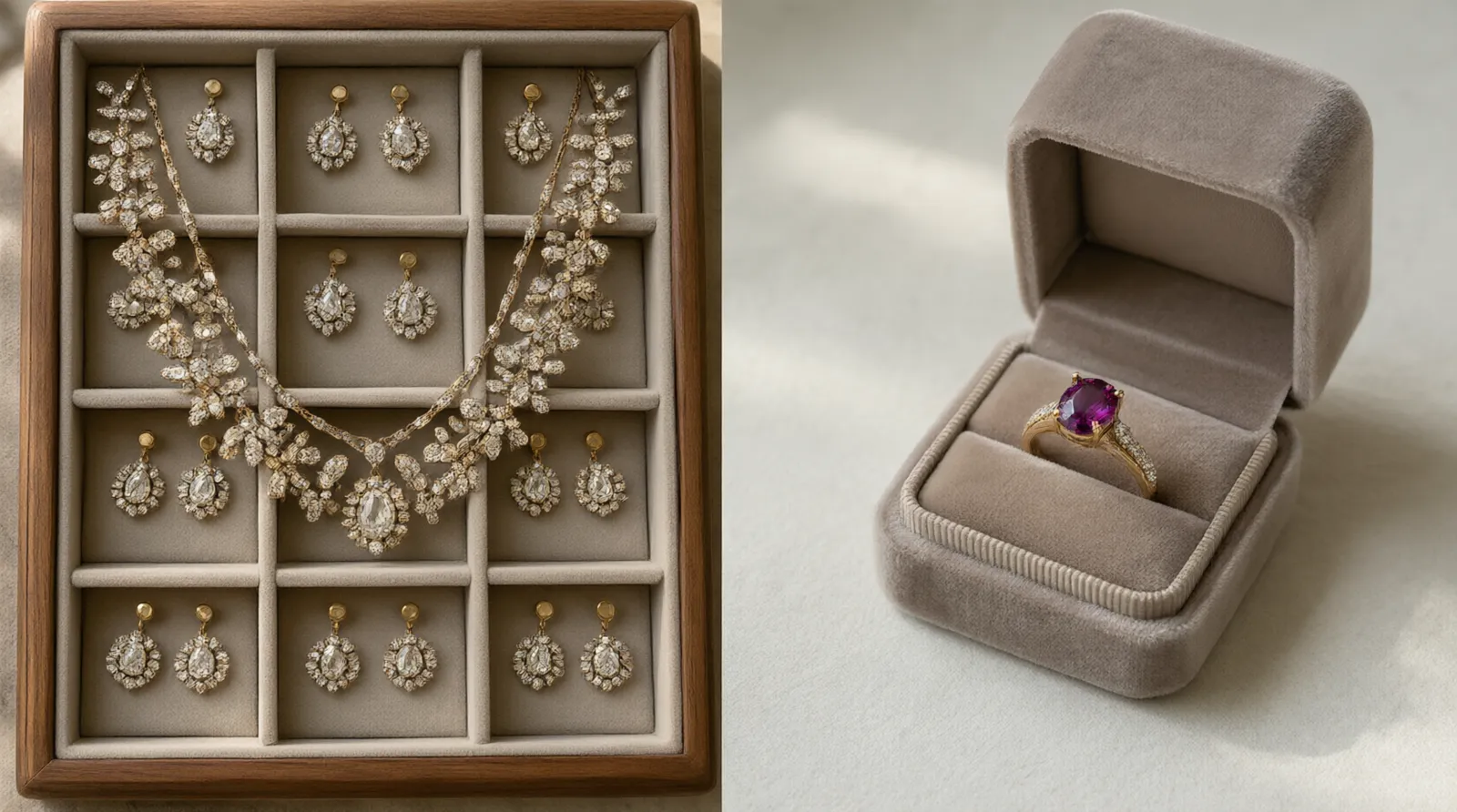
Choose custom jewelry if you are a DTC brand owner launching a new seasonal collection and need 50 units each of three different drop earring styles to test market demand. Low MOQs per style allow you to secure inventory without tying up excessive working capital.
It is also the required path if you are an importer supplying boutiques across the MENA or EU regions and need documentation, standard trade terms, and multilingual account management. If your brand identity relies on specific material combinations—such as two-tone glass beads set in plated copper rather than standard sterling silver—direct OEM manufacturing is the only way to guarantee material consistency at scale. For a broader look at how buyers evaluate these manufacturing partnerships, review our breakdown of Custom Jewelry: 6 Sources Buyers & DTC Brands Need in 2026.
When to Choose Alternatives
Choose retail alternatives if you are a consumer purchasing a single engraved pendant for a birthday gift. Platforms offering template-based personalization, free shipping, and BNPL options are optimized for this exact transaction.
Alternatives are also appropriate if you are a corporate buyer needing five customized necklaces for an executive retreat, where the total spend is negligible and setting up a vendor relationship with an overseas manufacturer would cost more in administrative time than the goods themselves. If you want to physically try on a piece featuring a specific diamond cut or verify the exact shade of a turquoise stone before paying, visiting a brick-and-mortar retailer remains the most practical option.
Final Verdict
The decision between custom jewelry and retail alternatives is not a matter of quality, but of commercial function. Retail platforms and physical stores solve the problem of single-unit consumer gifting, offering convenience, immediate fulfillment, and buyer-friendly return policies. Custom jewelry solves the problem of commercial inventory sourcing, providing the margin protection, design exclusivity, and logistical infrastructure required to run a profitable DTC brand or import business.
If your objective is to build a scalable jewelry brand, stock a retail storefront, or import fashion jewelry across borders, retail alternatives will bottleneck your growth due to pricing and lack of supply chain control. Direct OEM sourcing is the operational baseline for commercial success in this sector. To explore current catalog specifications, request a sample, or get MOQ and pricing details tailored to your target market, Request a Quote from STRAND to initiate your procurement process.