
5 Best Custom Jewelry Alternatives for Commercial Buyers
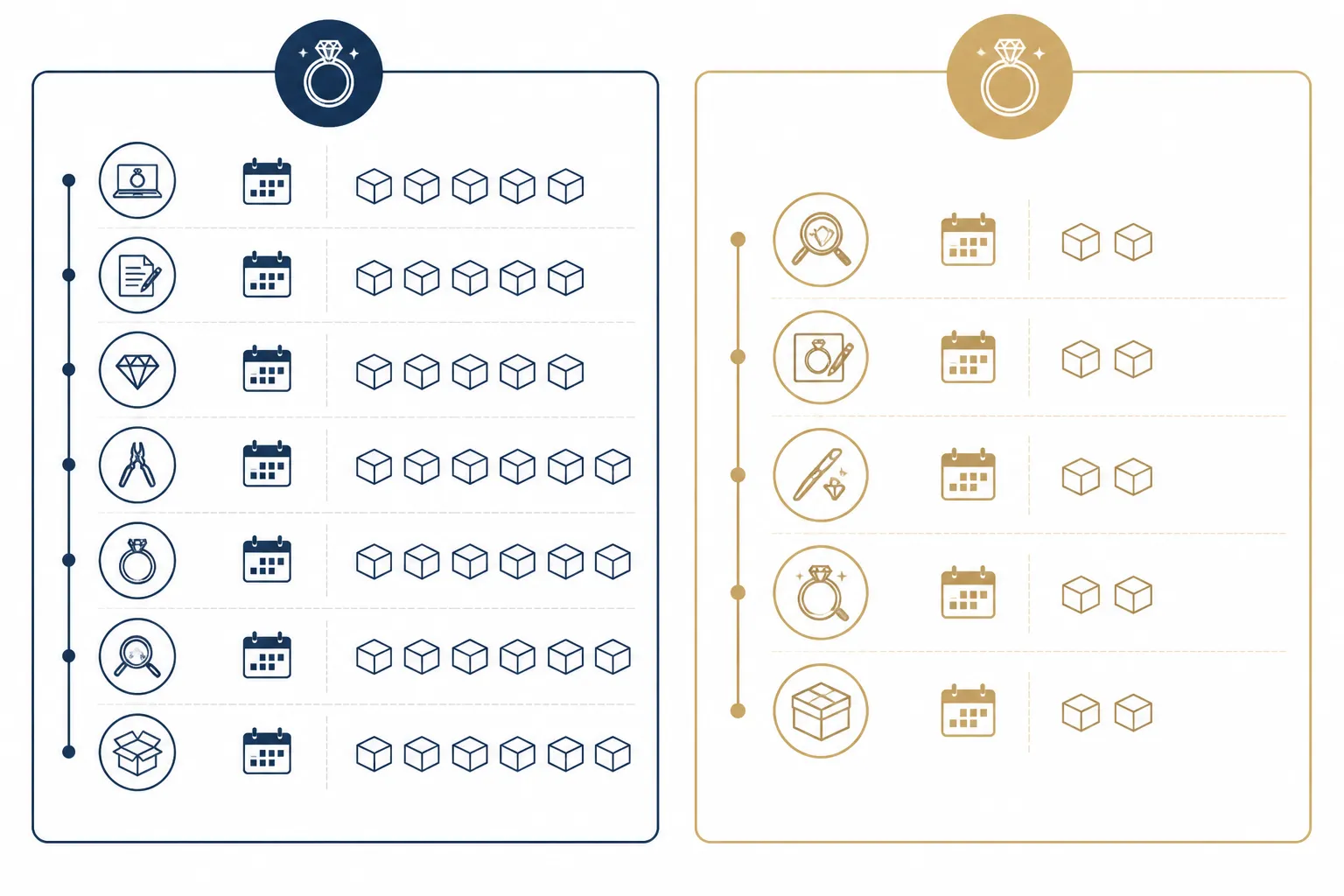
The most viable alternatives to fully bespoke custom jewelry for commercial buyers are curated OEM catalogs with low minimums, semi-custom personalization platforms like Jewlr, and established retail wholesale programs from brands like Kendra Scott. These options replace the high cost and long lead times of ground-up manufacturing with predictable pricing, faster turnaround, and scalable inventory models suitable for DTC stores and importers.
Sourcing true custom jewelry often introduces friction that stalls growth for emerging fashion brands. Minimum order quantities frequently exceed 300 pieces per style, prototyping can take six weeks, and communication gaps with overseas workshops lead to costly sampling errors. Buyers in the US, EU, UK, and MENA regions increasingly seek suppliers who bridge the gap between unique design and commercial viability without locking capital into unproven SKUs.
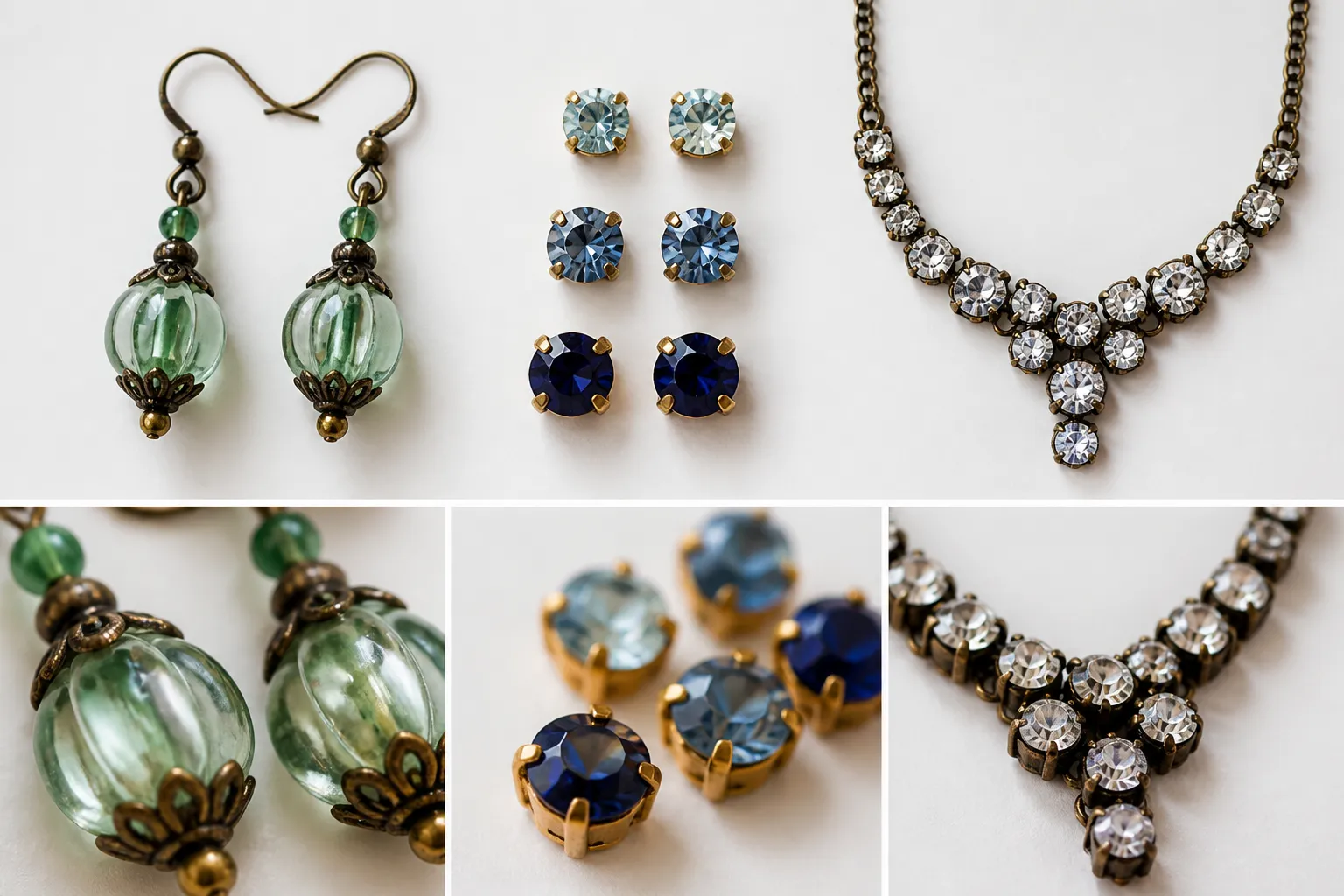
For procurement teams evaluating replacements, the goal is finding a partner who offers design exclusivity or aesthetic alignment without the operational burden of traditional bespoke manufacturing. Whether you need vintage-style drop earrings, gradient crystal sets, or rhinestone studs, the right alternative provides verified quality control, flexible trade terms (EXW/FOB), and multilingual support to streamline cross-border sourcing. This guide benchmarks the top market options against the specific needs of commercial jewelry buyers.
Why Look for Alternatives to Custom Jewelry?
Traditional custom jewelry manufacturing creates significant cash flow bottlenecks for growing e-commerce brands. Workshops typically require MOQs of 300+ units per design before production begins, forcing buyers to tie up thousands of dollars in inventory for untested styles. For a store testing a new vintage glass bead earring line, this financial exposure is often unsustainable compared to suppliers offering 12-piece MOQs on stock designs.
Communication latency and technical misalignment further complicate bespoke sourcing. A buyer in London specifying gold-plated copper finishes may endure weeks of back-and-forth due to language barriers or unclear tech packs, resulting in samples that miss the mark. Alternatives with established catalogs and multilingual sales teams eliminate this guesswork, providing immediate visual confirmation of plating quality, stone setting, and clasp mechanisms before any purchase commitment.
Retail price compression also makes pure custom manufacturing difficult to justify for mid-market fashion jewelry. When competitors source similar luxury-inspired aesthetics through optimized supply chains at lower landed costs, bespoke margins erode. Buyers need partners who offer the perception of custom design through exclusive colorways or modular components while maintaining unit economics that support healthy retail markups.
What to Look for in a Custom Jewelry Alternative
- Verifiable Low MOQs: Confirm specific minimums per style (e.g., 12 pcs on stock vs. 50+ on modified designs) rather than accepting vague "low minimum" claims.
- Material Transparency: Ensure specifications list exact base metals (copper, brass, 925 silver), plating thickness, and stone types (natural vs. faux) to avoid quality disputes.
- Trade Term Flexibility: Verify availability of EXW, FOB, or DDP options aligned with your logistics capabilities and import experience.
- In-House Quality Control: Prioritize suppliers conducting pre-shipment inspections over those relying solely on third-party audits after production.
- Multilingual Procurement Support: Confirm sales team fluency in your primary business language (EN, FR, AR, ES, DE, RU) to prevent specification errors.
- Payment Method Diversity: Check for T/T, PayPal, Western Union, L/C, or Xtransfer options matching your corporate finance policies.
- Catalog Depth & Refresh Rate: Evaluate whether the supplier maintains sufficient SKU variety (100+ styles) and seasonal updates to support ongoing assortment planning.
Top Alternatives to Custom Jewelry
1. STRAND OEM & Stock Catalog
Best for: Cross-border fashion jewelry buyers seeking low-MQQ vintage/crystal designs with direct workshop access Pricing: Wholesale tiered pricing; request quote for current rates Key strengths vs custom jewelry:
- 12-piece MOQ on 109 of 114 catalog styles enables multi-style testing without overcommitting capital
- In-house QC inspection before every shipment reduces defect-related returns common in bespoke orders
- Multilingual sales support (EN, FR, AR, ES, DE, RU) streamlines specification alignment for international teams
- Direct linkage to vetted Hangzhou workshops eliminates intermediary markups found in trading companies Limitations / trade-offs:
- Custom OEM modifications require higher MOQs than stock catalog purchases
- Focus on fashion jewelry materials (gold/rhodium-plated copper, glass beads) rather than fine jewelry precious metals
- Shipping costs vary significantly by air/sea/express selection and destination region How it compares to custom jewelry: STRAND replaces the uncertainty of ground-up custom jewelry development with a curated 114-style catalog featuring vintage, gradient crystal, two-tone glass bead, and rhinestone designs. While traditional bespoke requires committing to hundreds of units sight-unseen, STRAND's 12-piece MOQ allows buyers to validate market response before scaling. The trade-off is less absolute design exclusivity, but the gain is dramatically reduced risk and faster speed-to-market for DTC stores and importers.
2. Jewlr Personalized Jewelry Platform
Best for: Retailers needing on-demand engraving and birthstone personalization without holding finished inventory Pricing: Personalized name necklaces start from $84; gemstone rings from $139-$164 [Source: https://www.jewlr.com/personalized-jewelry] Key strengths vs custom jewelry:
- 645-product personalized catalog eliminates need for individual tech packs or mold fees [Source: https://www.jewlr.com/personalized-jewelry]
- 99-day return policy and one-year warranty reduce post-sale liability for retailers [Source: https://www.jewlr.com/personalized-jewelry]
- Extensive gemstone options including amethyst, garnet, peridot, and turquoise enable broad birthstone coverage [Source: https://www.jewlr.com/personalized-jewelry]
- Buy Now, Pay Later integration supports consumer conversion at higher price points [Source: https://www.jewlr.com/personalized-jewelry] Limitations / trade-offs:
- Pricing reflects B2C retail margins rather than wholesale OEM rates
- Limited to platform's existing templates; cannot create entirely new silhouettes
- Production controlled by platform; no direct factory relationship for customization negotiations How it compares to custom jewelry: Jewlr serves as a turnkey alternative for retailers whose "custom jewelry" need is actually personalization (engraving, birthstones) rather than original design. Where true custom manufacturing demands months of development, Jewlr's 645-SKU catalog enables immediate listing activation [Source: https://www.jewlr.com/personalized-jewelry]. The trade-off is accepting predefined templates and retail-tier pricing, but for stores focused on sentimental gifting rather than proprietary design, this eliminates sampling costs entirely.
3. GLDN Curated Personalization Collection
Best for: Boutique retailers seeking minimalist aesthetic with quick-turn personalization options Pricing: Mid-tier retail; request wholesale inquiry for volume pricing Key strengths vs custom jewelry:
- Pre-designed personalization templates reduce decision fatigue compared to open-ended custom briefs
- Established brand aesthetic consistency simplifies merchandising for curated boutiques
- Faster fulfillment than ground-up manufacturing due to semi-finished inventory model
- Strong visual content assets reduce retailer photography investment Limitations / trade-offs:
- Limited to GLDN's signature minimalist style; not suitable for vintage or ornate aesthetics
- Wholesale availability may be restricted or require application approval
- Less material transparency than direct OEM suppliers regarding plating specs How it compares to custom jewelry: GLDN occupies the space between mass-market personalization and true custom jewelry, offering a cohesive aesthetic that feels intentional rather than generic. For buyers whose customers associate "custom" with thoughtful curation rather than ground-up creation, GLDN's collection provides shelf-ready appeal without development timelines. The limitation is stylistic range—buyers seeking rhinestone, gradient crystal, or vintage designs will find better alignment with specialized OEM catalogs.
4. Made By Mary Modern Personalization
Best for: Contemporary fashion retailers targeting younger demographics with trend-driven personalized pieces Pricing: Accessible mid-market retail tier Key strengths vs custom jewelry:
- Trend-responsive design updates align with fast-fashion cycles better than slow custom development
- Strong social proof and influencer integration reduce marketing lift for retailers
- Simplified personalization interface minimizes customer service overhead
- Brand positioning bridges affordable and aspirational segments effectively Limitations / trade-offs:
- Design library narrower than dedicated OEM suppliers
- Less suited for buyers requiring specific material certifications or compliance documentation
- Primarily B2C-focused; wholesale terms may lack flexibility for large importers How it compares to custom jewelry: Made By Mary demonstrates how branded personalization can substitute for custom jewelry when target customers prioritize trend relevance over heirloom uniqueness. For retailers serving Gen Z and millennial shoppers, the brand's rapid iteration cycle delivers freshness that static custom designs cannot match. The trade-off is dependence on another brand's identity rather than building proprietary IP, but for assortment expansion rather than core collection development, this accelerates revenue generation.
5. Brook & York Best-Selling Collections
Best for: Traditional brick-and-mortar and online retailers seeking proven performers with personalization options Pricing: Classic retail tier with periodic promotional pricing Key strengths vs custom jewelry:
- Data-backed best-seller focus reduces assortment risk compared to speculative custom designs
- Established retail distribution history provides sell-through benchmarks for buyers
- Classic styling appeals to broader age demographics than trend-focused alternatives
- Reliable replenishment cycles support consistent inventory planning Limitations / trade-offs:
- Conservative design language may not satisfy buyers seeking distinctive vintage or statement aesthetics
- Limited customization beyond standard engraving and stone selection
- Less agile than direct OEM partners for regional market adaptations How it compares to custom jewelry: Brook & York represents the safe harbor alternative to custom jewelry speculation, leveraging historical sales data to de-risk assortment decisions. For buyers fatigued by failed custom launches, anchoring to proven silhouettes with personalization options preserves margin while maintaining customer perception of specialness. The trade-off is reduced differentiation in crowded markets, but for stores prioritizing inventory turnover over design novelty, this alignment drives predictable revenue.
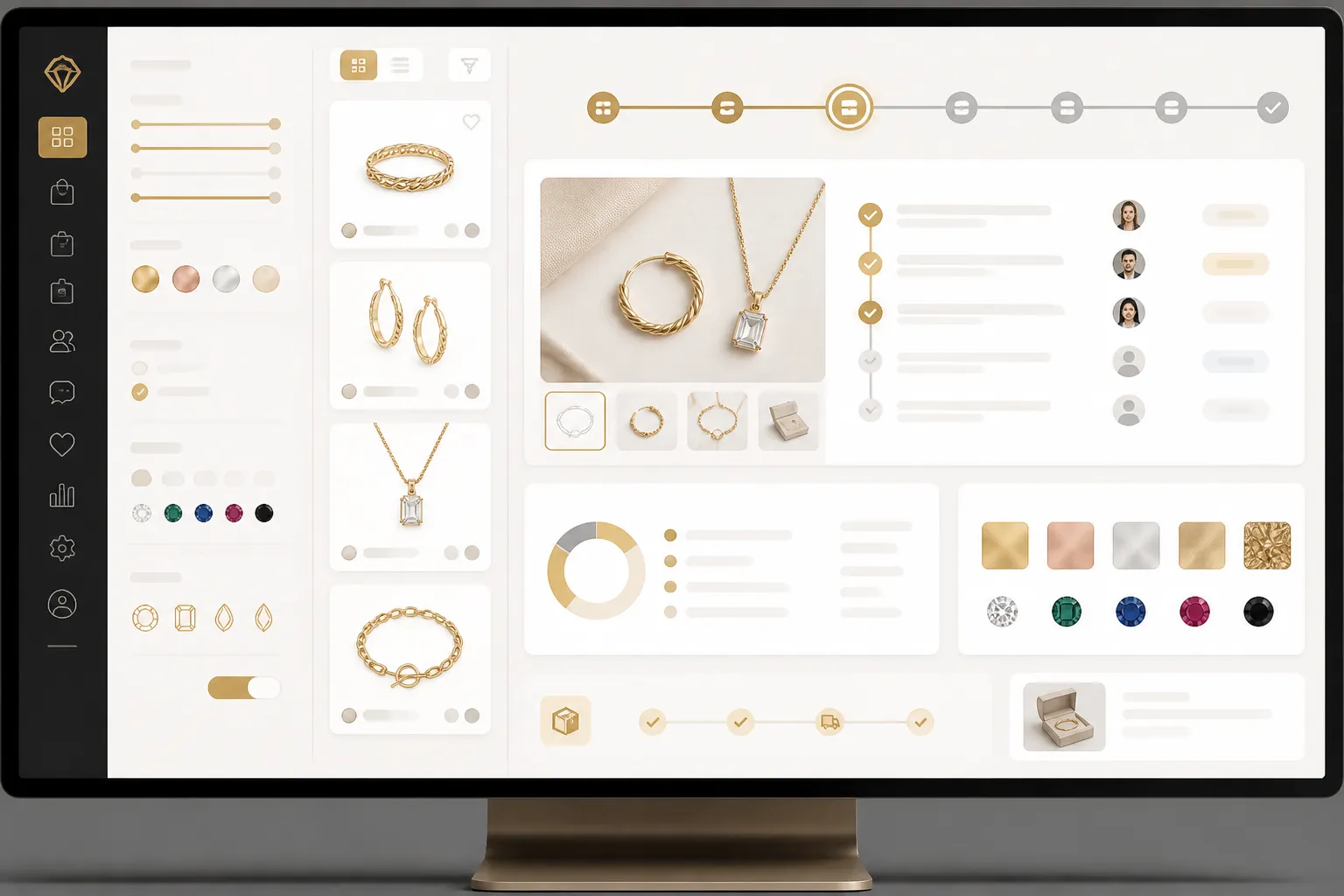
6. JewelryThis Artisan-Inspired Personalization
Best for: Niche retailers seeking handcrafted aesthetic with scalable personalization infrastructure Pricing: Premium artisan-positioned retail tier Key strengths vs custom jewelry:
- Handcrafted visual cues satisfy customer desire for uniqueness without bespoke lead times
- Storytelling elements built into product pages reduce retailer content creation burden
- Balanced price-quality positioning supports healthy margin structures
- Distinctive design vocabulary avoids commoditized personalization market saturation Limitations / trade-offs:
- Smaller catalog depth than major platforms limits assortment breadth
- Artisan positioning may conflict with high-volume commercial strategies
- Less transparent on manufacturing origin than direct China OEM suppliers How it compares to custom jewelry: JewelryThis captures the emotional resonance of custom jewelry through artisanal storytelling while maintaining scalable operations. For retailers whose customers conflate "custom" with "handmade feel," this alternative delivers perceived value without actual workshop coordination. The trade-off is accepting another brand's narrative framework, but for stores lacking internal content resources, this built-in storytelling accelerates conversion.
Side-by-Side Comparison Table
| Feature | Traditional Custom Jewelry | STRAND OEM Catalog | Jewlr Platform | GLDN Collection | Made By Mary |
|---|---|---|---|---|---|
| MOQ Per Style | 300+ typical | 12 pcs (109/114 styles) | 1 pc (on-demand) | Varies by wholesale | Varies by wholesale |
| Lead Time | 6-8 weeks + sampling | 2-3 weeks stock; 4-6 OEM | 3-7 days personalization | 1-2 weeks | 1-2 weeks |
| Design Exclusivity | Full ownership | Shared catalog; OEM exclusive | Template-based | Brand-specific | Brand-specific |
| Material Transparency | Negotiable/spec-dependent | Copper/glass/faux pearl specified | Silver/vermeil/gemstones listed | Limited public specs | Limited public specs |
| QC Process | Buyer-managed or 3rd party | In-house pre-shipment | Platform-managed | Platform-managed | Platform-managed |
| Best Buyer Profile | Established brands w/ dev teams | Cross-border DTC/importers | Sentimental gift retailers | Minimalist boutiques | Trend-focused youth market |
How to Pick the Right Alternative
Choose STRAND if you're a cross-border buyer or importer needing fashion jewelry with verifiable low MOQs and direct workshop access. The 12-piece minimum on 109 catalog styles enables multi-style testing impossible with traditional custom jewelry, while multilingual support and in-house QC address the operational pain points of China sourcing. Request current pricing and sample availability to validate fit for your assortment strategy.
Choose Jewlr if your "custom" requirement is actually personalization (engraving, birthstones) rather than original design. With 645 SKUs and gemstone options spanning amethyst to turquoise [Source: https://www.jewlr.com/personalized-jewelry], this platform eliminates development costs entirely. Ideal for gift-focused retailers who can accept template-based designs in exchange for zero inventory risk and 99-day return protection [Source: https://www.jewlr.com/personalized-jewelry].
Choose GLDN or Made By Mary if you're a boutique retailer prioritizing cohesive brand aesthetic over proprietary design. These platforms deliver curated personalization that feels intentional without requiring tech pack development. Best for stores expanding assortment rather than building core collections, though wholesale terms require direct inquiry.
Choose Brook & York or JewelryThis if you're risk-averse and need proven performers with personalization options. Historical sales data and artisanal storytelling respectively reduce assortment uncertainty compared to speculative custom jewelry development. Suitable for traditional retailers prioritizing inventory turnover over design novelty.
Conclusion
Buyers testing new categories should start with STRAND's 12-MOQ catalog to validate demand before committing to higher-volume OEM runs. Retailers focused on sentimental gifting should evaluate Jewlr's 645-SKU personalization platform as a zero-inventory alternative to bespoke manufacturing [Source: https://www.jewlr.com/personalized-jewelry]. Boutiques seeking curated aesthetics should inquire directly with GLDN or Made By Mary about wholesale partnerships.
Your next step depends on your immediate procurement priority. If you need to test vintage, crystal, or rhinestone styles with minimal capital exposure, request a catalog and sample quote from STRAND to assess material quality, plating finish, and shipping terms for your specific market. Visit strandjewelry.com to initiate your inquiry with multilingual support and receive current MOQ and pricing details tailored to your order volume.