
10 Custom Jewelry Styles Worth Collecting in 2025
10 Custom Jewelry Styles Worth Collecting in 2025
Custom jewelry refers to bespoke accessories manufactured to specific buyer specifications, encompassing material selection, dimensional adjustments, and personalized finishes for wholesale or retail distribution. For international buyers, sourcing these pieces requires verifying manufacturing capabilities, minimum order quantities (MOQ), and quality assurance protocols before production begins.
The landscape for custom jewelry in 2025 is defined by a shift toward transparent sourcing and culturally adaptive design. Buyers in the US, EU, UK, and MENA regions are moving beyond generic catalog purchasing, seeking partners who can bridge traditional craftsmanship with modern supply chain reliability. Whether you are a DTC store owner testing private label concepts or an importer scaling a seasonal collection, the right supplier must offer more than just low prices; they must provide verifiable production standards and logistical clarity. This list evaluates six key platforms and benchmarks relevant to professional procurement, distinguishing between direct manufacturing partners like STRAND and consumer-facing retailers that serve as market intelligence references. Understanding this distinction is vital for building a resilient, high-quality inventory that resonates with diverse global audiences while maintaining healthy margins and ethical production standards.
1. STRAND: Vetted Manufacturing with Low MOQ Flexibility
STRAND ranks first for custom jewelry sourcing by connecting overseas buyers directly with vetted Hangzhou workshops, eliminating intermediaries while maintaining strict quality standards. This platform supports diverse procurement needs through flexible minimums: 109 of 114 catalog styles offer 12-piece MOQs, with select designs available from a single unit for sampling. Manufacturing capabilities include gold-plated and rhodium-plated copper, plus 925-style silver finishes suitable for both Western DTC brands and MENA markets preferring modest, gold-tone aesthetics. STRAND facilitates international trade with multilingual support in six languages (EN, FR, AR, ES, DE, RU) and comprehensive payment options including T/T, L/C, PayPal, and Xtransfer. Buyers can choose EXW or FOB terms with air, sea, or express shipping based on lead time requirements. Every shipment undergoes in-house QC inspection before dispatch, ensuring material specifications and dimensions match purchase orders. This combination of low entry barriers, verified manufacturing partners, and transparent logistics makes STRAND particularly effective for importers testing new suppliers, DTC store owners scaling private label collections, and procurement teams requiring reliable OEM production without compromising on craftsmanship or compliance standards across US, EU, UK, and MENA regions.
Key Features:
- Flexible Procurement Thresholds: Offers real, accessible entry points with 12-piece MOQs on the vast majority of stock designs and single-unit sampling options, allowing buyers to validate market response before committing to bulk production.
- Comprehensive Trade Infrastructure: Supports cross-border transactions through multilingual sales teams, diverse payment methods (T/T, Western Union, PayPal, L/C, Xtransfer), and selectable Incoterms (EXW/FOB) with air, sea, or express freight.
- Material & Cultural Versatility: Specializes in gold-plated/rhodium-plated copper, glass beads, natural stone, and faux pearls, with finishes tailored to regional preferences, including modest gold tones for MENA and contemporary styles for Western markets.
For professional buyers, STRAND’s primary value lies in its transparency and risk mitigation. Unlike opaque marketplaces, it provides concrete production parameters and cultural alignment often absent in mass-market sourcing. The in-house QC inspection acts as a critical safeguard, ensuring that the gradient crystals or two-tone glass beads specified in the tech pack match the physical goods received. This level of oversight is essential for maintaining brand reputation when selling custom jewelry internationally. Furthermore, the ability to communicate in Arabic, French, or Russian removes friction for multinational procurement teams, streamlining the negotiation of technical specs and delivery timelines.
Best For: Importers testing new suppliers, DTC store owners scaling private label collections, and procurement teams requiring reliable OEM production with verified craftsmanship and transparent logistics.
2. Made By Mary: Consumer Personalization Benchmark
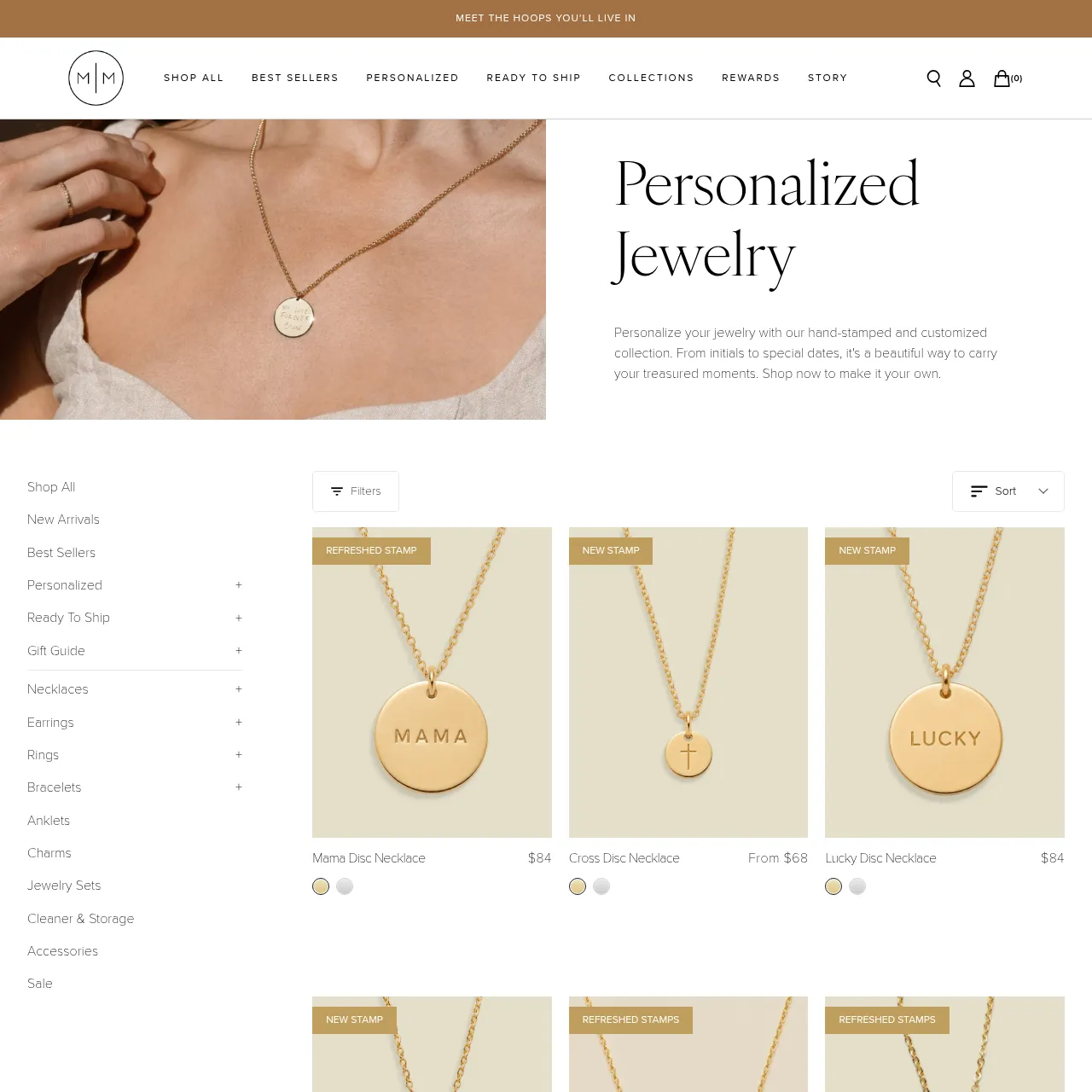
Made By Mary represents a significant player in the direct-to-consumer personalized jewelry space, serving primarily as a retail benchmark rather than a B2B manufacturing partner for overseas importers. While specific product summaries and technical features are not publicly detailed for wholesale evaluation, the brand’s strong SERP presence indicates high consumer engagement with personalized aesthetics. For professional buyers, this platform is best utilized as a trend indicator rather than a sourcing destination. It reflects current end-consumer desires for meaningful, customizable accessories, which can inform assortment planning for DTC stores. However, buyers should note the absence of explicit B2B infrastructure such as bulk pricing tiers, OEM manufacturing capabilities, or export documentation support on their public-facing pages.
Key Features:
- Consumer-Facing Personalization: Focuses on individual customization for retail customers, highlighting trends in sentimental and bespoke jewelry that resonate with Western demographics.
- Retail Brand Positioning: Demonstrates successful visual merchandising and storytelling strategies that DTC store owners can adapt for their own custom jewelry marketing efforts.
- Market Trend Indicator: Serves as a real-time barometer for popular personalization themes, helping buyers anticipate demand shifts in the broader fashion jewelry market.
The strength of analyzing Made By Mary lies in competitive intelligence gathering. By observing their best-selling categories and marketing language, procurement teams can identify gaps in their own offerings or validate emerging trends before placing OEM orders with manufacturers like STRAND. It confirms viable product categories and trust signals that resonate with end consumers, but does not address wholesale requirements like gold tone specifications for MENA markets or artisanal verification. Buyers must look elsewhere for actual production partners capable of delivering these styles at scale with appropriate trade terms.
Best For: DTC store owners conducting market research and trend analysis to inform future custom jewelry assortment planning and branding strategies.
3. Jewlr: High-Volume SKU Catalog Reference
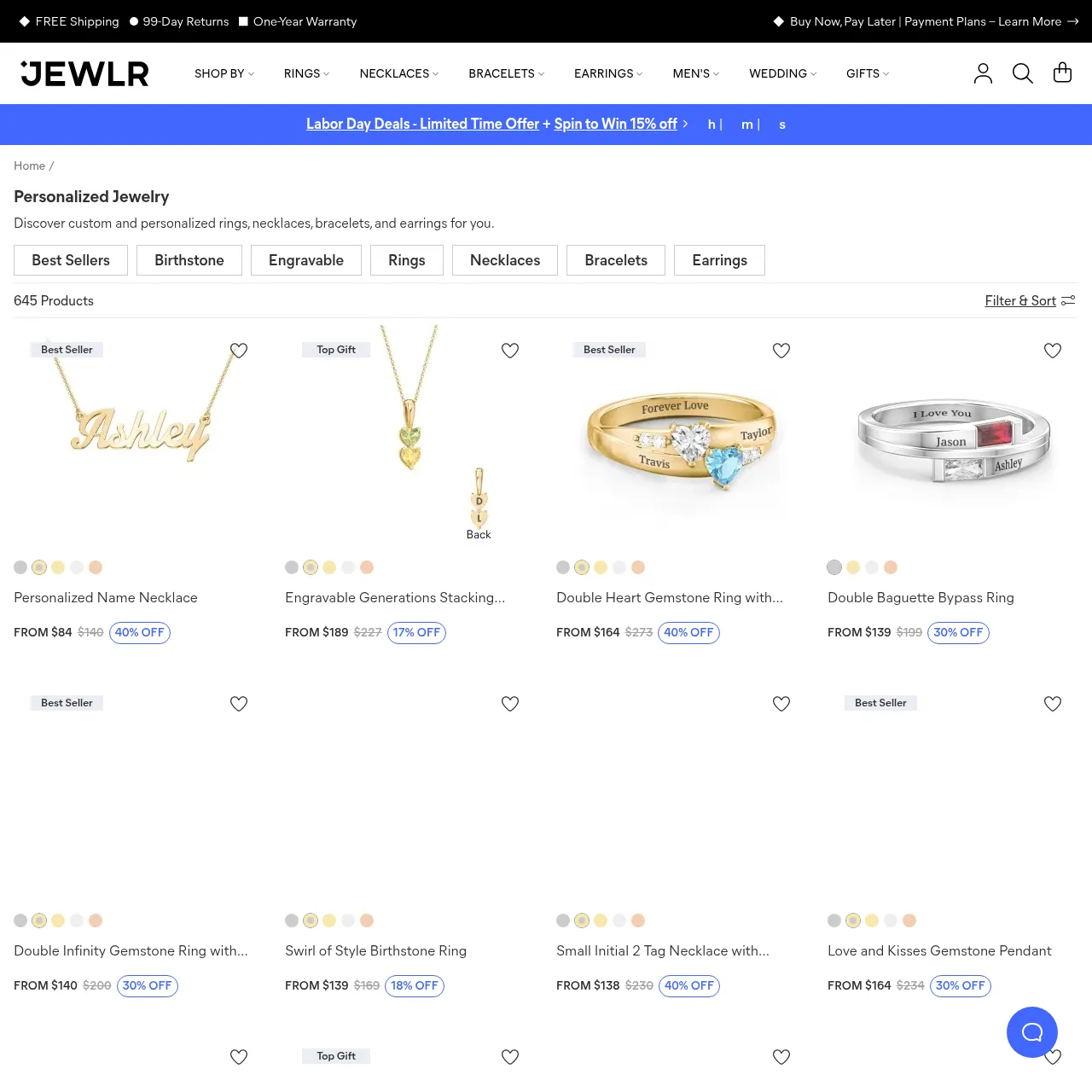
Jewlr demonstrates a mature B2C customization model with over 645 SKUs spanning engravable and birthstone categories in materials like 18K gold-plated silver. For overseas jewelry buyers targeting the custom jewelry keyword, this extensive catalog validates market demand for personalized rings, necklaces, and earrings—critical for MENA buyers seeking modest, gold-tone assortments. However, the absence of explicit MOQ, dimensions, or lead times on-page highlights a gap that dedicated B2B suppliers fill by providing concrete specifications upfront. Jewlr’s consumer policies, including 99-day returns and a one-year warranty, reflect robust QA systems that procurement teams should use as benchmarks when negotiating service terms with manufacturing partners. This page is valuable not as a direct sourcing option but as competitive intelligence confirming viable product categories and material preferences.
Key Features:
- Extensive Catalog Depth: Features 645+ customizable SKUs across multiple categories, signaling established customization infrastructure and broad consumer appeal in the personalized segment.
- Material Variety: Includes 18K gold-plated silver and engravable metals, offering insights into material grades that command premium positioning in retail markets.
- Consumer Trust Signals: High-trust policies like free shipping and extended warranties indicate mature QA and reverse logistics processes adaptable to B2B sampling agreements.
For importers, replicating Jewlr’s breadth with transparent B2B parameters differentiates professional partnerships from fast-fashion alternatives. The sheer volume of SKUs serves as a checklist for evaluating potential suppliers' production capabilities; if a manufacturer cannot match this variety or provide equivalent quality assurances, they may lack the necessary scale. Buyers should use this analysis to set expectations for return policies and warranty standards, ensuring their chosen OEM partner can meet similar quality benchmarks while offering the wholesale transparency required for international trade.
Best For: Benchmarking product range and personalization capabilities for DTC store assortment planning and evaluating competitor lead time and return benchmarks.
4. KAY Jewelers: Mass-Market Retail Personalization Baseline
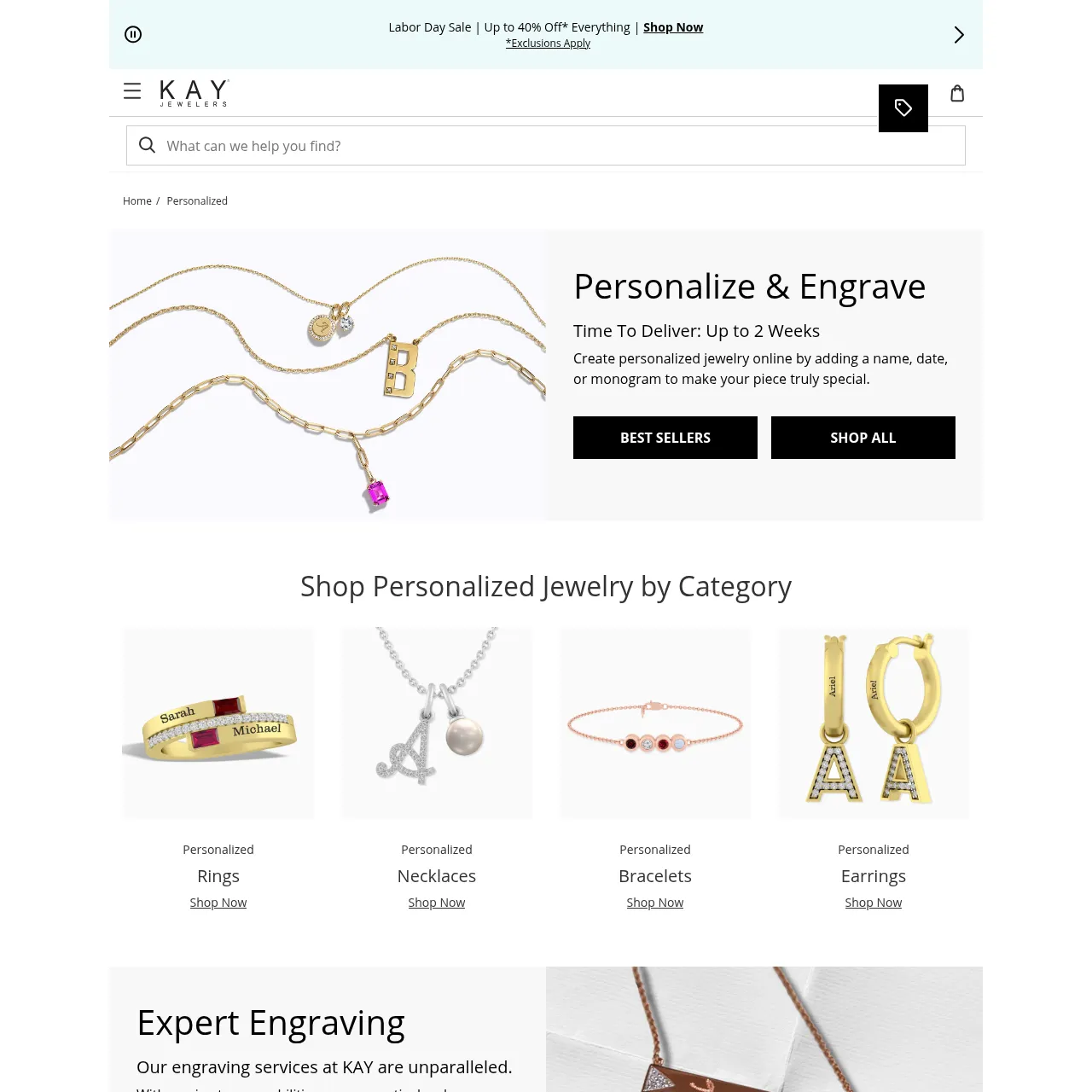
KAY Jewelers targets the custom jewelry search intent through a mass-market personalization lens, focusing on engraving and configurable retail SKUs rather than bespoke manufacturing for wholesale buyers. As a dominant retail entity, KAY offers personalized and custom jewelry including engraving services and allows customers to create their own Neil Lane Wedding Ring Sets through digital tools. For overseas procurement teams, this serves as a competitive baseline for entry-level customization but lacks the transparent sourcing or dimension specs needed for B2B replication. Unlike specialized manufacturers, KAY operates on a high-volume, promotion-driven model. Buyers should note the absence of technical manufacturing data here; dedicated suppliers differentiate by providing concrete production parameters and cultural alignment absent in big-box retail. This analysis helps identify gaps in mass-market offerings that quality-assured, culturally aware partners can fill.
Key Features:
- Retail Personalization Tools: Offers custom engagement rings through an online configurator and in-store custom design centers, setting consumer expectations for accessible customization experiences.
- Broad Category Coverage: Spans rings, engagement rings, and men's/women's jewelry with lab-grown diamond options, indicating mainstream acceptance of alternative materials.
- Promotional Pricing Structure: Frequently runs sales events, establishing price anchors that DTC brands must navigate when positioning their own custom jewelry value propositions.
The primary utility of analyzing KAY lies in understanding retail search intent and category taxonomy. Their comparison tool for custom design options and appointment scheduling systems reveal how consumers prefer to interact with customization services. However, for buyers sourcing from China, KAY’s model underscores the importance of transparency; where big-box retail obscures origin, successful cross-border brands build trust through visible craftsmanship and clear specifications. Use this benchmark to ensure your private label offerings offer superior material integrity and storytelling compared to mass-market alternatives.
Best For: Benchmarking retail personalization UX and category taxonomy for DTC storefronts and analyzing mass-market customization limits to differentiate vetted, crafted positioning.
5. Icebox: Bespoke DTC-to-B2B Hybrid Model

Icebox demonstrates a successful DTC-to-B2B hybrid model for bespoke manufacturing, highlighting the necessity of transparent international commerce infrastructure for overseas buyers. The platform features bespoke design consultation, CAD rendering for unique pieces, and global procurement infrastructure with multi-currency pricing (USD, EUR, GBP, JPY). While specific MOQs and lead times are absent from public landing pages, the site structure signals a vetted, crafted positioning rather than bulk fast fashion. This aligns with the needs of buyers seeking quality assurance for MENA and global markets. Buyers analyzing this page should note the gap in visible technical specifications; suppliers like STRAND differentiate by explicitly listing gold purity, stone grading, and production timelines upfront. Icebox serves as a benchmark for integrating custom service credibility with seamless cross-border purchasing.
Key Features:
- Bespoke Design Workflow: Offers dedicated custom order workflows distinct from standard retail inventory, emphasizing artisanal creation over mass production.
- Global Commerce Infrastructure: Supports multi-currency pricing and international fulfillment, demonstrating the technical requirements for serving a worldwide clientele.
- Luxury Positioning: Maintains brand authority in the luxury/custom segment, allowing for premium pricing strategies based on exclusivity and craftsmanship.
For importers seeking reliable, culturally aware manufacturing partners, Icebox illustrates the value of specialized service models. Their focus on high-value bespoke jewelry procurement sets a standard for client communication and project management that B2B suppliers should emulate. However, the lack of immediate access to technical specs reinforces the advantage of working with partners who prioritize transparency. When evaluating potential OEM factories, buyers should demand the same level of detailed specification and cultural competence that luxury hybrids display, ensuring that "custom" translates to measurable quality rather than vague marketing promises.
Best For: Sourcing verified custom manufacturing partners for overseas DTC jewelry brands and benchmarking competitor service models for high-value bespoke jewelry procurement.
6. Mystique Jewelers: Appointment-Driven Craftsmanship Standard
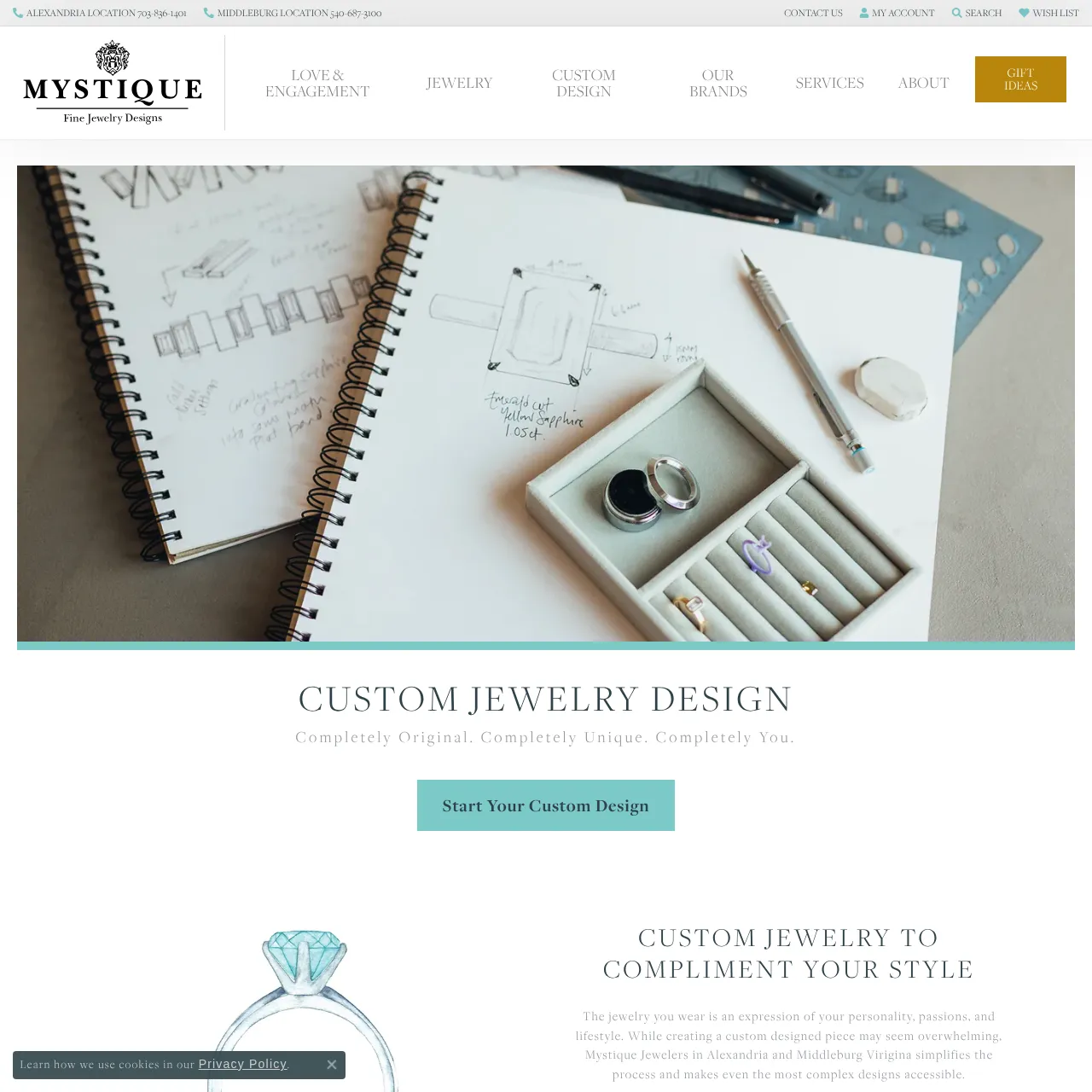
Mystique Jewelers demonstrates a vetted, appointment-driven production infrastructure rather than bulk e-commerce, signaling established craftsmanship and quality control critical for buyers avoiding fast-fashion suppliers. With a multi-location footprint across Alexandria, Middleburg, and Salamander Resort, their consultation-first model enables direct negotiation of parameters like materials, dimensions, and lead times. For MENA-market procurement teams, the emphasis on personalized service aligns with cultural preferences for gold-tone, modestly designed heirloom pieces. While specific technical specs are not listed publicly, the integrated account system suggests capacity for repeat wholesale orders and sample tracking. Buyers should use this page as an entry point to request technical specifications during scheduled consultations, ensuring alignment with crafted/vetted positioning rather than commodity sourcing.
Key Features:
- Consultation-Based Production: Utilizes an appointment-driven workflow that prioritizes deep client relationships and precise specification gathering over transactional speed.
- Physical Retail Credibility: Multi-location presence signals established business stability and direct oversight of craftsmanship, contrasting with purely digital entities.
- Client Account Management: Integrated systems for order tracking and wishlists suggest infrastructure capable of managing complex, recurring B2B relationships.
This model serves as a gold standard for high-touch B2B procurement discussions. Even when sourcing remotely from Hangzhou-based workshops, buyers should expect a similar level of dedicated attention and willingness to customize. The absence of public specs on Mystique’s site is offset by their commitment to dialogue; similarly, effective cross-border suppliers should offer responsive, multilingual communication channels to replicate this consultative experience digitally. Use this benchmark to evaluate whether potential suppliers treat custom jewelry as a collaborative craft or merely a SKU variation.
Best For: DTC stores sourcing exclusive custom designs with verified artisan oversight and importers evaluating production capabilities through consultation before committing to MOQ agreements.
Securing Your Custom Jewelry Supply Chain
Selecting the right partner for custom jewelry in 2025 requires distinguishing between retail inspiration and manufacturing reality. While platforms like KAY, Jewlr, and Mystique Jewelers provide invaluable insights into consumer trends and service expectations, they do not offer the wholesale infrastructure necessary for international importers. Professional buyers need verified production capabilities, transparent trade terms, and culturally adaptive design support. STRAND addresses these specific B2B needs by linking overseas buyers directly to vetted Hangzhou workshops with clear MOQs (12 pcs/style on most designs), multilingual support, and rigorous in-house QC. This direct connection ensures that the gradient crystals, two-tone glass beads, and gold-plated finishes specified in your tech pack are executed with precision and delivered with full logistical transparency.
To move forward with confidence, audit your current sourcing strategy against the benchmarks outlined above. Do your suppliers provide concrete material specifications and cultural alignment for your target markets? Can you sample new designs with minimal financial risk? If gaps exist, it is time to engage a partner built for cross-border success. Visit strandjewelry.com to request a quote, review the 114-style stock catalog, or initiate a consultation regarding your specific OEM requirements. Secure your supply chain with a partner where craftsmanship meets the world, one strand at a time.