
Custom Jewelry vs. Retail Alternatives: The Importer's 2026 Comparison
Custom Jewelry vs. Retail Alternatives: The Importer's 2026 Comparison
Custom jewelry from an OEM supplier gives buyers margin control, brand exclusivity, and scalable MOQs — retail alternatives offer speed and zero production risk. The right choice depends on your volume, timeline, and whether differentiation is worth the extra lead time.
TL;DR / Quick Verdict
If you're sourcing for a DTC brand, an import catalog, or a private-label line, custom OEM jewelry is almost always the better long-term play: you own the design, control the SKUs, and pay factory-direct pricing. Retail alternatives — think buying from Kay Jewelers, Jared stores, Kendra Scott, or wholesale platforms — make sense when you need product fast, have no design team, or are testing a new category with minimal capital at risk.
At-a-Glance Comparison Table
| Dimension | Custom OEM Jewelry (e.g., STRAND) | Retail / Wholesale Alternatives |
|---|---|---|
| Pricing model | Factory-direct; margin set by buyer | Wholesale markup or MSRP tiers |
| MOQ | 12 pcs/style (most stock); custom OEM varies | Often 1 unit (retail); higher for wholesale |
| Design exclusivity | Full — buyer owns the design | None to low; shared catalog |
| Lead time | 15–45 days (production + QC) | Days to 2 weeks (in-stock) |
| Customization depth | Materials, plating, stones, packaging | Limited — colorways or engraving only |
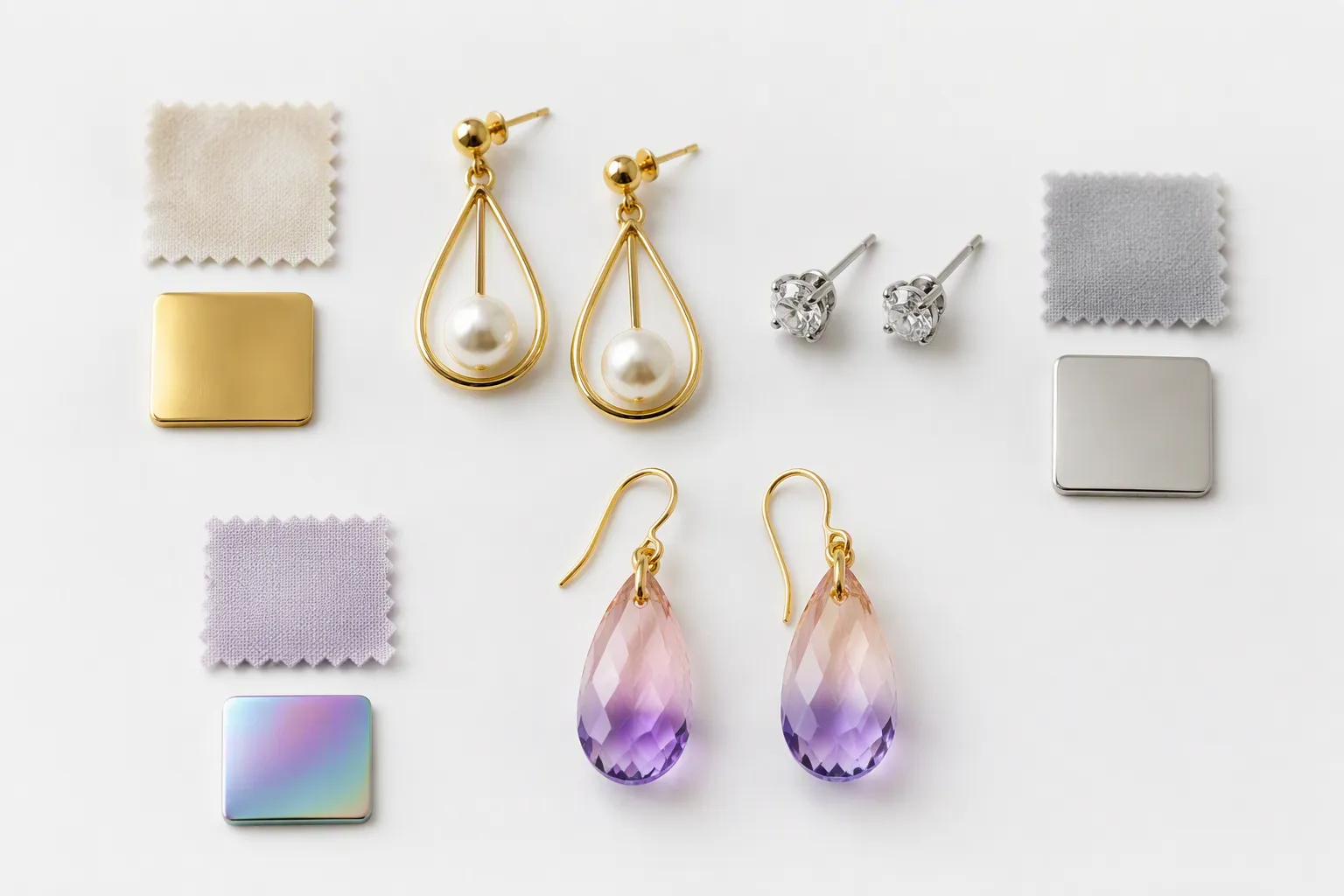
| Materials | Gold/rhodium-plated copper, 925-style silver, glass beads, natural stone, faux pearls | Varies; fine metals, lab-grown diamond, gemstone |
| QC control | In-house pre-shipment inspection | Supplier-managed; buyer has little input |
| Target buyer | Importer, DTC brand, private-label retailer | End consumer, boutique buyer, reseller |
| Trade terms | EXW, FOB; T/T, PayPal, L/C, Xtransfer | Credit card, net-30 wholesale accounts |
| Multilingual support | EN, FR, AR, ES, DE, RU | English-primary; varies by retailer |
Custom Jewelry Overview
Custom OEM jewelry means working directly with a manufacturer to produce pieces built to your specification — your design files, your selected materials, your branding. For B2B buyers, this is the procurement route that maximizes margin and brand distinctiveness.
STRAND operates out of Hangzhou and connects overseas buyers directly to vetted Chinese workshops. Their stock catalog runs 114 styles as of this writing — drop earrings, stud earrings, necklace-and-earring sets in vintage, gradient crystal, two-tone glass bead, and rhinestone designs — with MOQs as low as 12 pcs/style on 109 of those 114 styles. A handful of select styles start from a single piece, which is useful for sampling before committing to a production run.
Beyond catalog sourcing, STRAND offers full custom OEM: gold-plated and rhodium-plated copper, 925-style silver finishes, glass beads, natural stone (amethyst, garnet, peridot, turquoise and others), and faux pearls. Buyers in the US, EU, UK, and MENA markets get multilingual sales support in six languages and a choice of EXW or FOB shipping by air, sea, or express.
For an importer or DTC store owner who needs product that won't appear on a competitor's Shopify store, custom OEM is structurally the better sourcing model.
Alternatives Overview
"Alternatives" in this context covers two main camps: retail brands offering personalization (Kay, Jared, Kendra Scott) and wholesale/marketplace platforms that sell pre-made jewelry.
Kay Jewelers has a dedicated personalized section under its "Trending & Featured" navigation and offers customization primarily through engraving, birthstone selection, and initial-based designs. Engagement rings, for instance, are available in nine center stone shapes (Round, Pear, Oval, Emerald, Princess, Cushion, Marquise, Radiant, Heart) across styles including Solitaire, Halo, Three Stone, and Gemstone. Kay also carries lab-grown diamond jewelry and, as of this writing, an entry-level engagement ring category priced under $2,000 — targeted at individual consumers, not trade buyers.
Kendra Scott stores and similar luxury-adjacent DTC brands typically operate through "color bar" customization: choose a stone (turquoise, amethyst, diamond accents) and a setting from a preset menu. The customization is real but shallow — you're personalizing within their SKU system, not creating an original design.
Wholesale platforms (Faire, RangeMe, Alibaba storefronts) sit between the two: more flexibility than Kay, less depth than a true OEM engagement. MOQs are usually higher than custom suppliers for comparable price points.
Feature-by-Feature Breakdown
Pricing & Margin Structure
Custom OEM pricing is factory-direct. You negotiate per-piece costs based on material, plating, and volume — and you set your own retail price. That's the fundamental margin advantage. With retail alternatives, you're buying at wholesale and reselling within their established price architecture. Fine jewelry from Jared stores or Kay is priced for individual consumers; wholesale discounts exist but rarely approach OEM-level economics at modest volumes.
For DTC brands launching a jewelry line, the math usually works out clearly: even at 12 pcs/style, custom OEM from a Hangzhou-based supplier offers a cost basis that retail wholesale can't match.
Customization Depth
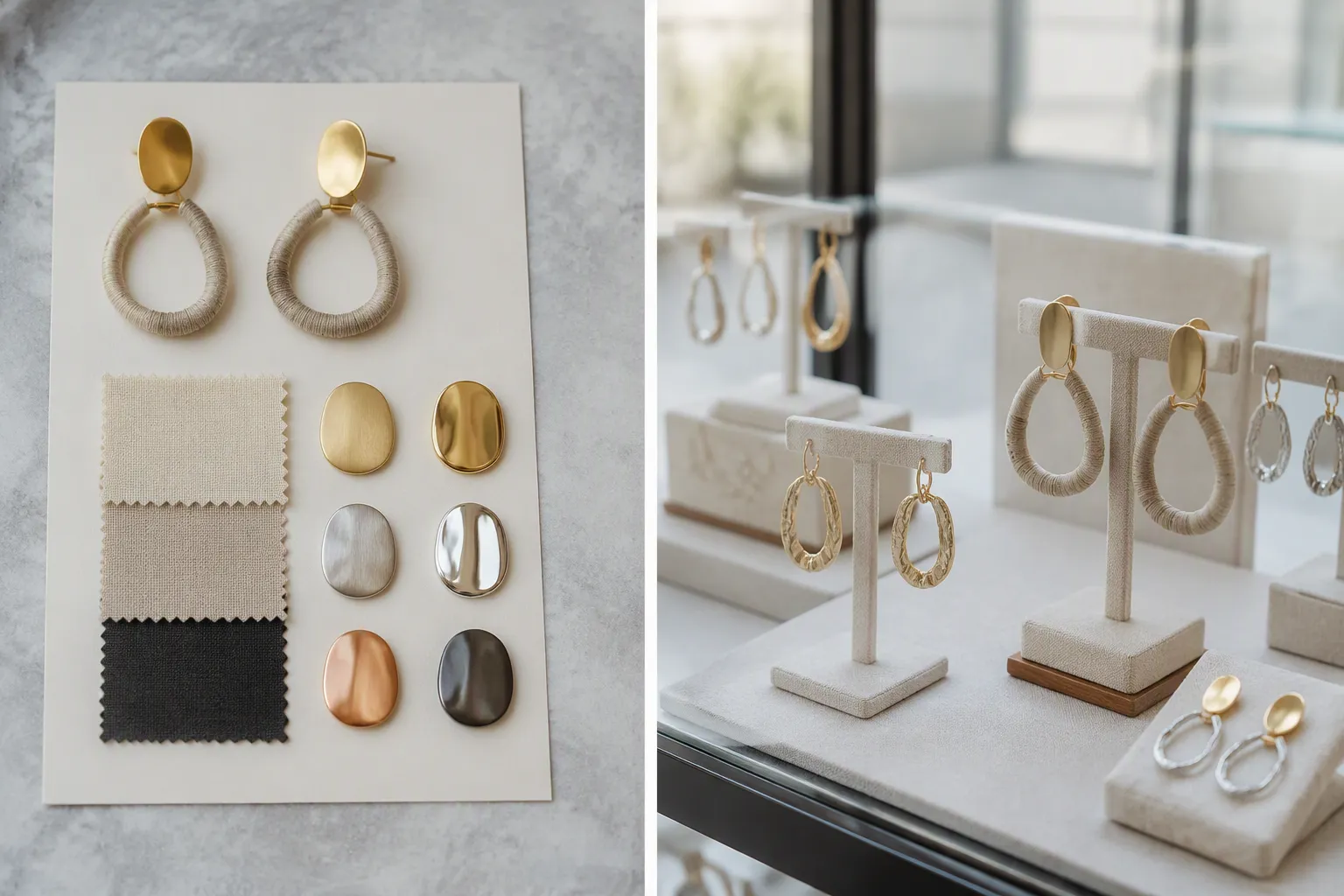
This is where the comparison is least competitive. Custom OEM lets buyers spec every dimension: metal base, plating thickness, stone type and color (natural garnet vs. glass bead vs. rhinestone), clasp style, packaging insert, and hang tag. A wholesale buyer sourcing from Kay's catalog or a Kendra Scott wholesale account gets colorway options — that's it.
For private-label brands, "custom" at retail means your name on a tag. True custom OEM means the product itself doesn't exist anywhere else.
MOQ & Order Flexibility
STRAND's 12 pcs/style MOQ on most catalog designs is genuinely low for factory-direct sourcing — and some styles go down to 1 piece for sampling. Retail alternatives technically have no minimum (you can buy one unit), but their economics don't support resale at the volumes most DTC brands need.
Pure wholesale platforms often require higher minimums than OEM suppliers at equivalent price points. If your business is testing new SKUs or launching a multi-style collection, a supplier with per-style MOQs gives you more flexibility than a single-SKU wholesale order.
Lead Time & Production Capacity
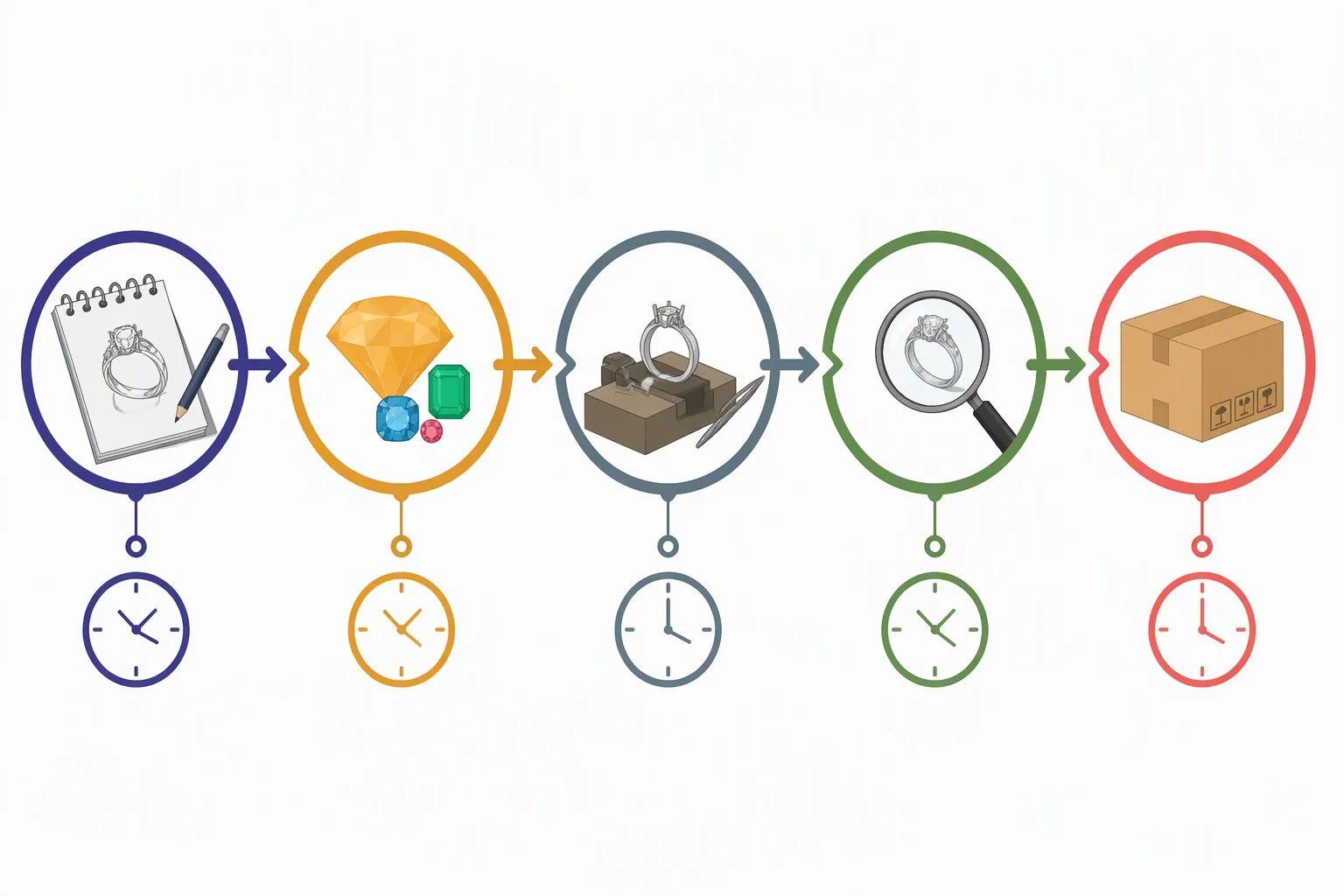
Retail alternatives win on speed. In-stock wholesale means days. Custom OEM requires production time — typically several weeks from design approval to shipment, depending on complexity and finishing.
That trade-off is real. Buyers who need product for a Q4 launch in six weeks should not start a new custom OEM relationship at week four. Plan custom production timelines as part of your buying calendar, not as a last-minute fill.
Quality Assurance & Compliance
Custom OEM suppliers with in-house QC inspection — STRAND conducts pre-shipment inspection before every order — give buyers a defined checkpoint before goods leave the factory. Retail alternatives handle QC internally; the buyer has no visibility into that process and no recourse other than returns.
For importers shipping to the EU or UK, compliance questions (nickel release, labeling) are easier to address with a direct supplier than with a retail wholesale account. Ask any prospective OEM partner for their testing documentation before placing a first order.
Support & Communication
Multilingual support matters for procurement teams that aren't English-primary. STRAND's sales team operates in EN, FR, AR, ES, DE, and RU — a practical advantage for buyers in MENA or continental Europe where sourcing communications often happen in French or Arabic. Kay, Jared, and Kendra Scott stores operate English-first; international B2B buyers get standard retail customer service, not trade-level procurement support.
Pros and Cons
Custom OEM Jewelry — Pros & Cons
Pros
- Factory-direct pricing with full margin control
- Complete design exclusivity — no competitor carries the same SKU
- Low MOQ entry point (12 pcs/style on most STRAND catalog styles)
- In-house QC before shipment
- Flexible trade terms (EXW/FOB, multiple payment methods)
- Multilingual support for global procurement teams
- Wide material range: amethyst, garnet, peridot, turquoise, glass bead, faux pearl, natural stone
Cons
- Production lead time required — not suitable for same-week replenishment
- Requires design input or willingness to work from a supplier's catalog
- Supplier vetting takes time; quality varies by factory
- Minimum financial commitment per style (even at 12 pcs/style, multiplied across a large collection)
Retail / Wholesale Alternatives — Pros & Cons
Pros
- Immediate availability for in-stock designs
- No production risk or lead-time management
- Low minimum spend to test a category
- Established brand cachet (Kendra Scott, Jared, Kay) for certain retail channels
- Lab-grown diamond and fine gemstone options without manufacturing overhead
Cons
- No design exclusivity — other buyers source the same product
- Wholesale margins compressed; retail pricing set by the brand
- Limited customization depth (engraving, birthstone swap)
- No visibility into QC or production standards
- English-primary support; limited B2B procurement infrastructure
When to Choose Custom Jewelry
You're building a private-label or DTC brand. If your business model depends on product differentiation, custom OEM is the only path to owning a design that competitors can't replicate. A DTC earring brand sourcing from a shared wholesale catalog is one Google Shopping search away from price-matching oblivion.
You're an importer sourcing for a multi-SKU catalog. Low per-style MOQs let you test breadth without overcommitting inventory. Starting at 12 pcs/style across 20 designs is a meaningful catalog launch without warehouse risk.
Your buyers are in MENA, EU, or non-English markets. A supplier with native French, Arabic, German, Spanish, and Russian sales support removes friction from procurement communications that would otherwise require translation or English-only back-and-forth.
You need QC documentation for compliance. Importers shipping to markets with nickel or heavy-metal regulations need testing records that a retail wholesale account won't provide. Direct OEM suppliers can.
For a deeper look at how to evaluate and select suppliers, see Custom Jewelry: 6 Sources Buyers & DTC Brands Need in 2026 — it covers factory-direct, platform, and retail-wholesale sourcing with ranked criteria.
When to Choose Alternatives
You're testing a new jewelry category with no capital commitment. Buying 10 units of a Kendra Scott design to test demand in a boutique is rational. Spinning up a custom OEM production run to test the same hypothesis is not.
You need luxury fine jewelry credentials for a specific retail channel. If your retail partner requires recognized brand names — Jared, Kay — or certified diamond provenance, OEM fashion jewelry won't satisfy that spec regardless of quality.
Your timeline is under four weeks. Wholesale in-stock ships this week. If you're filling a gap order or stocking up on a known bestseller, retail wholesale is operationally faster than any OEM option.
Your customers are buying single pieces, not collections. For end-consumer gifting — birthday, anniversary, an engagement ring priced under $2,000 — retail personalization services handle the transaction better than a trade sourcing channel.
Final Verdict
Custom OEM jewelry is the stronger choice for B2B buyers — importers, DTC brand owners, and multi-SKU catalog businesses — who compete on product, not brand affiliation. The margin structure, design exclusivity, and direct QC access create a sourcing foundation that retail alternatives structurally cannot match at scale.
Retail and wholesale alternatives belong in a buyer's toolkit for speed, category testing, or channels that require recognized brand names. They are not a long-term sourcing strategy for anyone building their own jewelry business.
The comparison becomes clear when you run the numbers: if you need 12 pieces of a design that only you sell, at a cost basis that supports your margin, with in-house inspection before it ships — that is a custom OEM decision. If you need 10 pieces tomorrow, it's not.
Ready to evaluate custom OEM for your sourcing needs? Browse STRAND's current catalog, confirm MOQ and pricing for your target styles, and request a sample before committing to a production run. STRAND's multilingual team handles procurement inquiries in EN, FR, AR, ES, DE, and RU.
Request a Quote or Sample → strandjewelry.com
For a ranked comparison of custom jewelry suppliers across factory-direct, marketplace, and retail-wholesale categories, see 6 Custom Jewelry Sources Ranked: OEM Suppliers & Retail Benchmarks for 2026.