
Custom Jewelry vs. Wholesale Alternatives: Which Sourcing Path Wins in 2026?
Custom Jewelry vs. Wholesale Alternatives: Which Sourcing Path Wins in 2026?
Custom OEM jewelry from vetted manufacturers gives buyers full control over design, finish, and margin — but it requires upfront planning and supplier vetting. Retail-adjacent alternatives (chain store wholesale programs, off-the-shelf importers, and branded collections) offer speed and zero customization overhead, at the cost of differentiation. Which path you choose depends almost entirely on your order volume, brand strategy, and tolerance for lead time.
TL;DR / Quick Verdict
If you're a DTC store owner or importer building a differentiated product line, custom OEM jewelry from a direct-source supplier will consistently outperform generic wholesale on margin and brand equity. If you need stock quickly for a short-run seasonal test or a single retail fill-in, off-the-shelf alternatives are faster. For most buyers reading this at the decision stage, the real question isn't if to go custom — it's which supplier to trust with your first order.
At-a-Glance Comparison Table
| Dimension | Custom OEM Jewelry (e.g., STRAND) | Retail/Wholesale Alternatives (e.g., Kay, Jared, Kendra Scott) |
|---|---|---|
| MOQ | 12 pcs/style (most stock styles); select styles from 1 pc | No published B2B MOQ; designed for end-consumer sales |
| Pricing model | EXW/FOB factory pricing; quote-based | Retail MSRPs; wholesale programs vary and are rarely transparent |
| Customization depth | Full OEM: metal, finish, stone, packaging, private label | Limited to personalization (engraving, birthstone swap) |
| Lead time | Production lead time varies by order; stock items ship faster | In-stock retail; custom takes 1–4 weeks at store level |
| Trade terms | T/T, Western Union, PayPal, L/C, Xtransfer; EXW or FOB | Consumer payment only (credit card, store credit card) |
| Material range | Gold-plated / rhodium-plated copper, 925-style silver, glass bead, natural stone, faux pearl | Precious metal (gold, silver), lab-grown and mined diamond |
| Gemstone options | Crystal, rhinestone, glass bead, natural stone | Amethyst, garnet, peridot, turquoise, diamond, lab-grown diamond |
| Support languages | EN, FR, AR, ES, DE, RU | English-primary; in-store appointments available |
| QC | In-house QC inspection before every shipment | Brand-level QC; returns handled post-purchase |
| Target buyer | Importers, DTC brands, procurement teams | End consumers; limited trade programs |
Custom Jewelry Overview
Custom OEM jewelry is the sourcing model where a buyer — typically an importer, DTC brand, or multi-SKU retailer — works directly with a manufacturer to produce jewelry to their own specification. The buyer controls the design brief, metal finish, stone selection, and packaging. The manufacturer handles production, QC, and logistics.
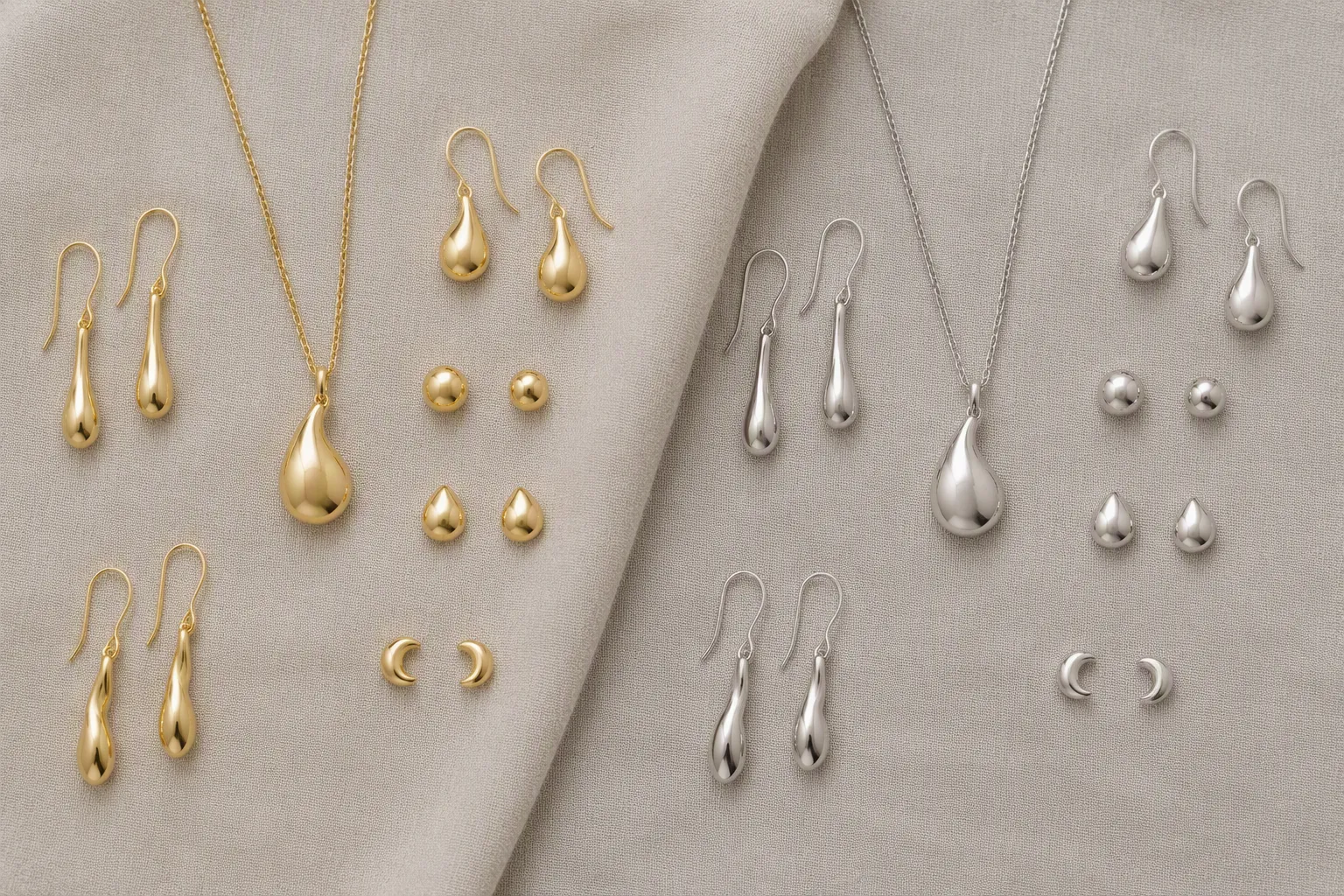
STRAND operates this model from Hangzhou, China, linking overseas buyers directly to vetted workshops. Their stock catalog runs 114 styles across drop earrings, stud earrings, necklace + earring sets, and more — with finishes spanning gold-plated and rhodium-plated copper, glass beads, natural stone, and faux pearls in vintage, gradient crystal, two-tone, and rhinestone aesthetics. MOQ sits at 12 pcs/style on 109 of 114 catalog styles, with select styles available from 1 piece — unusually accessible for factory-direct sourcing.
The custom OEM path also extends beyond stock: buyers can brief entirely new designs in gold-plated or rhodium-plated copper, 925-style silver finishes, or glass bead constructions. Multilingual sales support (English, French, Arabic, Spanish, German, Russian) makes this practical for procurement teams across the US, EU, UK, and MENA.
For a detailed breakdown of how to evaluate and compare OEM suppliers in this category, see Custom Jewelry: 6 Sources Buyers & DTC Brands Need in 2026.
Alternatives Overview
"Alternatives" for a B2B jewelry buyer breaks into three meaningful categories:
1. National retail chains (Kay, Jared): These are consumer-facing stores with limited or no formal wholesale programs. Kay's personalized jewelry category is organized for end consumers, with engagement rings sorted by cut (round, oval, emerald, princess, cushion, marquise, radiant, heart, pear) and financing via the KAY Credit Card. Kay carries lab-grown diamond jewelry and collaborative collections like JAXXON and Rocksbox. Booking in-store appointments is available. None of this infrastructure serves a B2B importer — it's retail, full stop.
2. Branded fashion jewelry wholesalers (Kendra Scott-style): These are established fashion labels that sell through wholesale accounts or brand licensing. Margins are compressed because you're paying for someone else's brand equity. Differentiation against your competitors is near zero if they source from the same branded line.
3. Generic importers and dropship catalogs: Faster to activate than OEM, but commodity pricing and undifferentiated SKUs push you into race-to-the-bottom competition.
None of these alternatives offer the combination of factory-direct pricing, custom production, and multilingual procurement support that a direct OEM relationship provides.
Feature-by-Feature Breakdown
Pricing and MOQ
Custom OEM pricing at factory-direct level is structurally lower than retail wholesale. STRAND's MOQ of 12 pcs/style on most catalog designs lets buyers test multiple styles without committing to large runs — critical for DTC brands validating new collections. Select styles drop to 1 pc for sampling.
Retail alternatives don't publish trade pricing. Kay's engagement ring collections under $2,000 are consumer price points, not trade price points. A buyer trying to build a wholesale margin on top of retail pricing has no viable path.
Customization and Design Control
Custom OEM wins this category without contest. Material choices — gold-plated or rhodium-plated copper, glass bead, natural stone, faux pearl — combined with stone options (crystal, rhinestone, gradient glass) give buyers full control over product aesthetics and positioning. You can build a luxury-adjacent earring line with rhodium-plated rhinestone drops that sits at a $40–$60 retail price point with meaningful margin.
Retail personalization, by contrast, is narrow: engraving a name, swapping a birthstone (amethyst, garnet, peridot, turquoise), or selecting a diamond cut. That's consumer customization, not product development.
Trade Terms and Payment Flexibility
STRAND supports T/T bank transfer, Western Union, PayPal, L/C, and Xtransfer, with shipping by air, sea, or express under EXW or FOB terms. This accommodates procurement teams in different jurisdictions with different banking infrastructure.
Retail alternatives accept consumer payment instruments (credit cards, store credit cards). There's no L/C option, no EXW/FOB structure, no freight-by-sea calculation.
Quality Assurance
STRAND performs in-house QC inspection before every shipment. For a B2B buyer, this matters differently than it does for a consumer return. A shipment that fails QC at the factory level never ships; a shipment that fails at your warehouse costs you rework time, customer trust, and logistics.
Major retail chains maintain brand-level QC, but that QC is designed around retail returns and consumer satisfaction, not batch-level inspection for trade buyers.
Scalability
As order volumes grow, a direct OEM relationship scales. Minimum orders stay at 12 pcs/style; large orders go up proportionally with the same supplier relationship, same pricing structure, same QC process.
Retail wholesale or branded licensing programs typically cap scalability through MAP pricing policies, territory restrictions, or account approval gatekeeping that limits how aggressively you can grow.
Multilingual and Cross-Border Support
This is where STRAND's model is specifically built for B2B buyers that retail alternatives simply aren't. Sales in English, French, Arabic, Spanish, German, and Russian means a procurement team in Dubai, Paris, or São Paulo can negotiate, specify, and reorder in their working language. That's not a footnote — for MENA or EU buyers sourcing from China, language friction kills deals.
Pros and Cons
Custom OEM Jewelry
Pros
- Factory-direct pricing with no brand markup layered in
- Full design control: metal, finish, stone, packaging, private label
- Low entry MOQ (12 pcs/style on most catalog styles)
- Multilingual support for international procurement teams
- In-house QC before shipment
- Flexible trade terms (T/T, PayPal, L/C, Xtransfer; EXW or FOB)
- 114-style stock catalog for fast activation alongside custom programs
Cons
- Production lead times require planning ahead (custom orders aren't overnight)
- Supplier vetting requires due diligence if you're not working with a known partner
- Requires more procurement effort than buying off a retail shelf
- No physical store presence for hands-on inspection without samples
Retail / Wholesale Alternatives
Pros
- Immediate stock availability for in-demand styles
- No sampling or development process
- Consumer trust in established brand names (Kay, Jared, Kendra Scott)
- In-store appointment infrastructure for end consumers
- Lab-grown diamond and precious metal options at certified quality
Cons
- No B2B pricing; retail MSRPs destroy resale margins
- Limited customization (engraving, birthstone, cut selection only)
- Zero private-label or brand-building opportunity
- English-primary service; limited support for multilingual procurement
- No trade payment terms (no L/C, no EXW/FOB)
- Competitive differentiation is minimal if competitors use the same source
When to Choose Custom OEM Jewelry
You're building a DTC brand and need product that looks distinct in a crowded market. A rhinestone drop earring set or a two-tone glass bead necklace + earring combination can be spec'd to your exact aesthetic brief, not picked off a generic catalog shared with hundreds of other stores.
You're an importer filling a wholesale account in EU or MENA and need consistent reorder capability with known pricing and QC. Flexible trade terms and multilingual support make this operationally straightforward.
You're testing multiple styles at low volume — MOQ at 12 pcs/style means you can run 10 styles for an initial 120-unit order. That's a real test, not a commitment to 1,000 units of a single SKU.
You need private-label packaging for your store brand without paying luxury margins for the privilege.
For buyers at this decision stage, 6 Best Custom Jewelry Sources in 2026: Ranked for Buyers, Importers & DTC Stores gives a structured supplier comparison worth reviewing before shortlisting.
When to Choose Alternatives
You're filling a one-time retail display with established consumer brand recognition and aren't concerned with margin optimization. A boutique wanting to stock a recognizable Kendra Scott line for foot traffic may value brand pull over margin.
You're sourcing precious metal or diamond jewelry for the end-consumer market and need certified gemstones (amethyst, garnet, peridot, turquoise, lab-grown diamond) with chain-backed provenance. Consumer-facing certifications and brand trust matter in this segment in a way that doesn't apply to fashion jewelry.
You need product in-hand within 48 hours for an unplanned restock. In-stock retail beats any manufacturer for pure speed.
You're evaluating one-off personalized pieces — engraved gifts, birthstone items — for a corporate gifting program rather than an ongoing product line.
Final Verdict
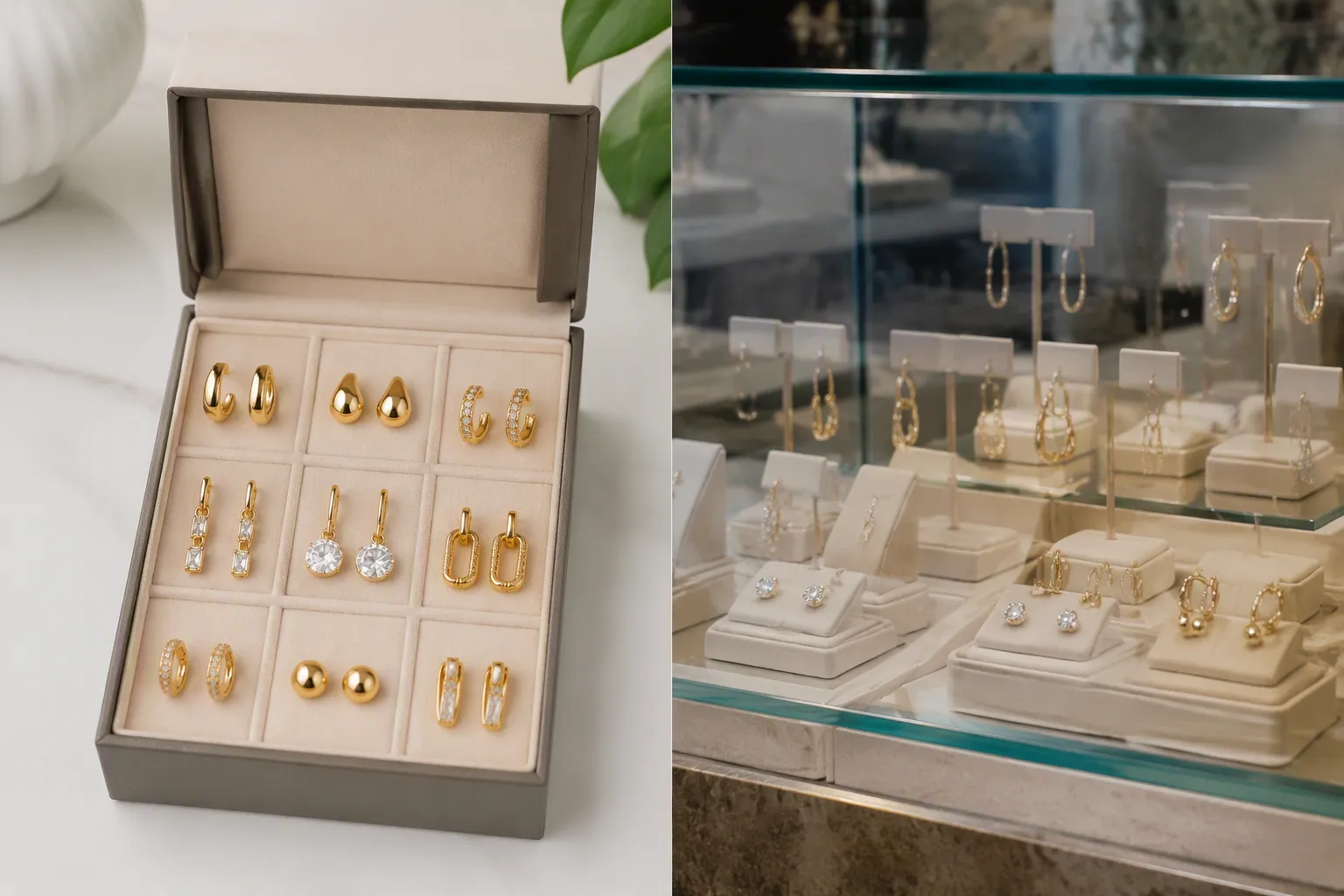
For the buyer this article is written for — an importer, DTC store owner, or procurement manager sourcing fashion jewelry at trade volume — custom OEM sourcing outperforms retail alternatives on every dimension that matters commercially: pricing, customization, margin, and reorder flexibility. Retail chains like Kay and Jared serve end consumers well, but their infrastructure isn't built for you.
The decision narrows to which custom OEM supplier to work with, not whether to go that route. Evaluate suppliers on MOQ transparency (ask for exact numbers per style), trade term flexibility, QC process specifics, and language support for your team's working languages. Request samples before committing to production runs; lead time and finish quality from a sample tell you more than any supplier's catalog photography.
STRAND's combination of a 114-style stock catalog, 12 pcs/style MOQ on most designs, in-house pre-shipment QC, and multilingual sales support (EN, FR, AR, ES, DE, RU) is directly matched to buyers sourcing cross-border at commercial scale.
Request a quote, get current MOQ and pricing, or ask about custom OEM options at strandjewelry.com.